
Chapter 8 Decision Making CONSUMER BEHAVIOR 10 e
Chapter 8 Decision Making CONSUMER BEHAVIOR, 10 e Michael R. Solomon 8 -1 Copyright © 2013 Pearson Education, Inc. publishing as Prentice Hall
Chapter Objectives When you finish this chapter, you should understand why: 1. Consumer decision making is a central part of consumer behavior, but the way we evaluate and choose products varies widely. 2. A decision is actually composed of a series of stages that results in the selection of one product over competing options. Copyright © 2013 Pearson Education, Inc. publishing as Prentice Hall 8 -2
Chapter Objectives (continued) • Decision making is not always rational. • Our access to online sources is changing the way we decide what to buy. • We often fall back on well-learned “rules-of -thumb” to make decisions. • Consumers rely upon different decision rules when evaluating competing options. Copyright © 2013 Pearson Education, Inc. publishing as Prentice Hall 8 -3
Learning Objective 1 • Consumer decision making is a central part of consumer behavior, but the way we evaluate and choose products varies widely. Copyright © 2013 Pearson Education, Inc. publishing as Prentice Hall 8 -4
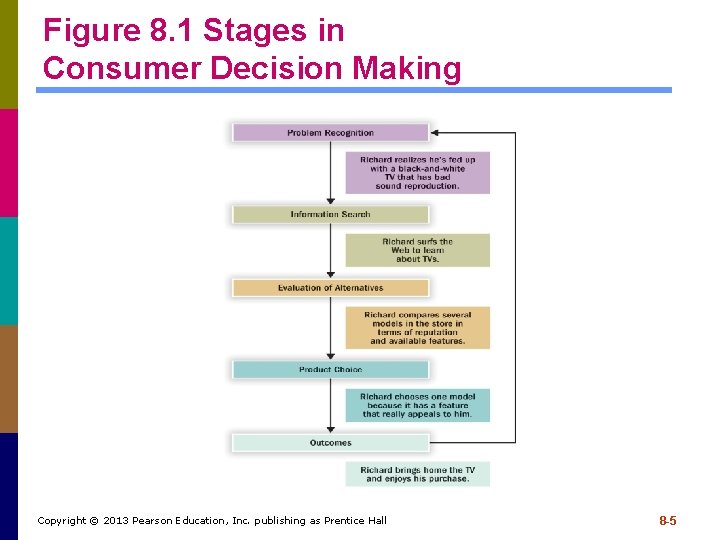
Figure 8. 1 Stages in Consumer Decision Making Copyright © 2013 Pearson Education, Inc. publishing as Prentice Hall 8 -5

Figure 8. 2 Continuum of Buying Decision Behavior Copyright © 2013 Pearson Education, Inc. publishing as Prentice Hall 8 -6

For Reflection • Is it a problem that consumers have too many choices? Would it be better to have less choices? How does it affect consumer decision-making? Copyright © 2013 Pearson Education, Inc. publishing as Prentice Hall 8 -7
Learning Objective 2 • A decision is actually composed of a series of stages that results in the selection of one product over competing options. Copyright © 2013 Pearson Education, Inc. publishing as Prentice Hall 8 -8
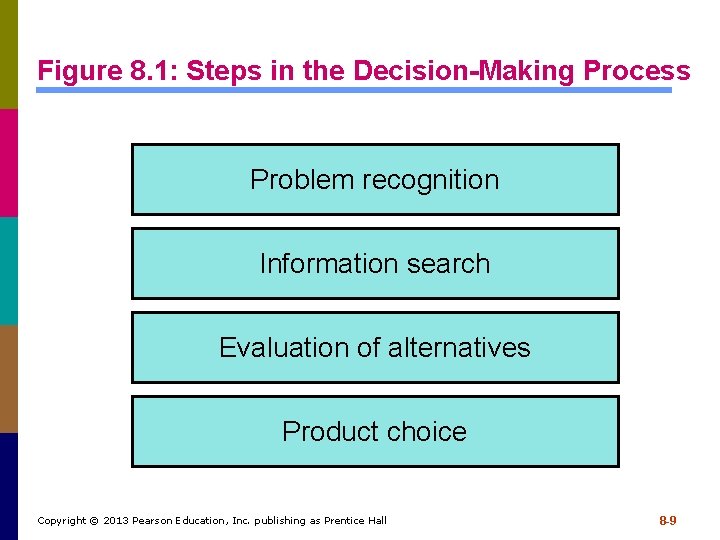
Figure 8. 1: Steps in the Decision-Making Process Problem recognition Information search Evaluation of alternatives Product choice Copyright © 2013 Pearson Education, Inc. publishing as Prentice Hall 8 -9

Figure 8. 3 Problem Recognition Copyright © 2013 Pearson Education, Inc. publishing as Prentice Hall 8 -10
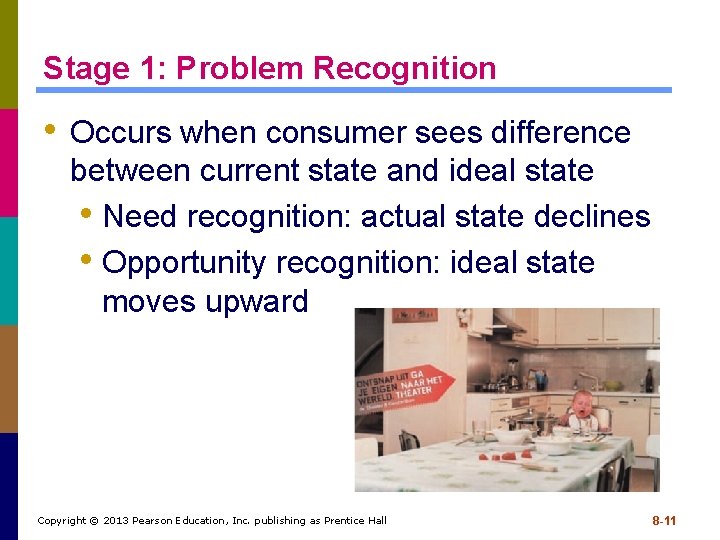
Stage 1: Problem Recognition • Occurs when consumer sees difference between current state and ideal state • Need recognition: actual state declines • Opportunity recognition: ideal state moves upward Copyright © 2013 Pearson Education, Inc. publishing as Prentice Hall 8 -11
Stage 2: Information Search • The process by which we survey the environment for appropriate data to make a reasonable decision • Prepurchase or ongoing search • Internal or external search • Online search Copyright © 2013 Pearson Education, Inc. publishing as Prentice Hall 8 -12
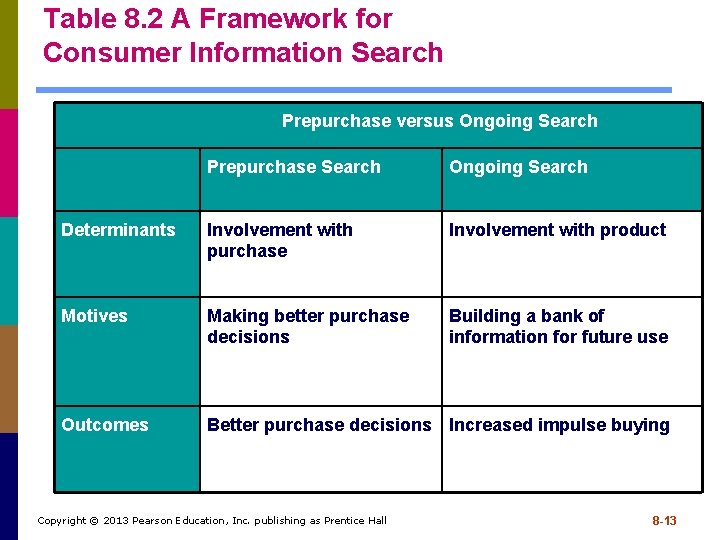
Table 8. 2 A Framework for Consumer Information Search Prepurchase versus Ongoing Search Prepurchase Search Ongoing Search Determinants Involvement with purchase Involvement with product Motives Making better purchase decisions Building a bank of information for future use Outcomes Better purchase decisions Increased impulse buying Copyright © 2013 Pearson Education, Inc. publishing as Prentice Hall 8 -13
Search for Information Internal search: Retrieving knowledge from memory or genetic tendencies External search: Collecting information from peers, family, and the marketplace

CDP Model Need Recognition Internal Search Stimuli Search Exposure Attention Comprehension Acceptance Retention M E M O R Y External Search Peers Family Marketplace

Internal Search
External Search When motivated by an upcoming purchase decision, external search is known as pre-purchase search When information acquisition takes place on a relatively regular basis, regardless of sporadic purchase needs, it is known as ongoing search
Deliberate versus “Accidental” Search • Directed learning: existing product knowledge obtained from previous information search or experience of alternatives • Incidental learning: mere exposure over time to conditioned stimuli and observations of others Copyright © 2013 Pearson Education, Inc. publishing as Prentice Hall 8 -18
What to Search? Choice ALTERNATIVES (brands, offerings) referred to as the external search set and contributes to the “awareness set”, “evoked/retrieval set”, and “consideration set”. Choice CRITERIA that include attributes addressing price, quality, convenience, performance, popularity, eco-friendliness, etc.

Where to Search? The different External SOURCES of informational include:
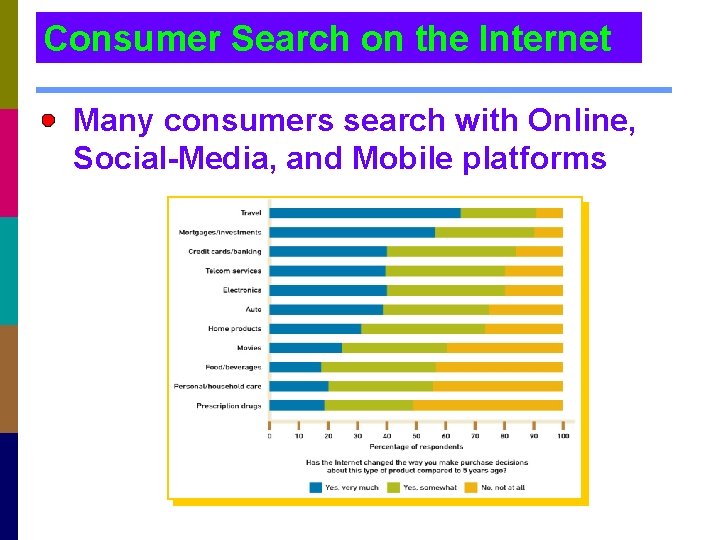
Consumer Search on the Internet Many consumers search with Online, Social-Media, and Mobile platforms
Consumer Search on the Internet/Online search words or phrases used by consumers fall into three categories: 70% Generic terms; representing brand categories 20% Specific retailers; -- Best Buy, Wal-Mart, Amazon 10% Specific products – i. Phone, Beats Headphones, Nike athletic shoes, etc. Social Media search cues are driven by “Likes” and Third Party Evaluations from Google or Amazon. com Mobile search is automated by “Apps” tailored to certain merchandise, service, and store types
How Much to Search? A Cost-Benefit Perspective determines: How Much people search, when the perceived benefit of the new information is greater than perceived cost. This results in an “n-shaped” curve, from “Novice” to “Expert” with an initial rise to peak, then diminishing returns of acquiring the information
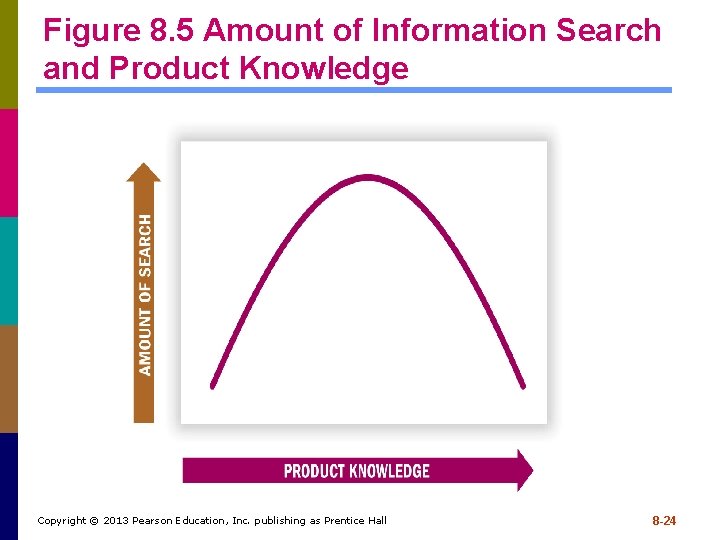
Figure 8. 5 Amount of Information Search and Product Knowledge Copyright © 2013 Pearson Education, Inc. publishing as Prentice Hall 8 -24
Search is NOT Always Rational • Some consumers avoid external search, especially with minimal time to do so and with durable goods (e. g. autos) • Symbolic offerings like jewelry, perfume, or fashion require more subjective search • Brand signaling and switching is a Mental Heuristic used for ambiguous choices • Variety Seeking is used to choose new alternatives over more familiar ones Copyright © 2013 Pearson Education, Inc. publishing as Prentice Hall 8 -25
Biases in Decision-Making SEARCH Process • Mental accounting: framing a problem in terms of gains/losses influences our decisions • Sunk-cost fallacy: We are reluctant to waste something we have paid for • Loss aversion: We emphasize losses over gains • Prospect theory: risk differs for gains vs losses Copyright © 2013 Pearson Education, Inc. publishing as Prentice Hall 8 -26
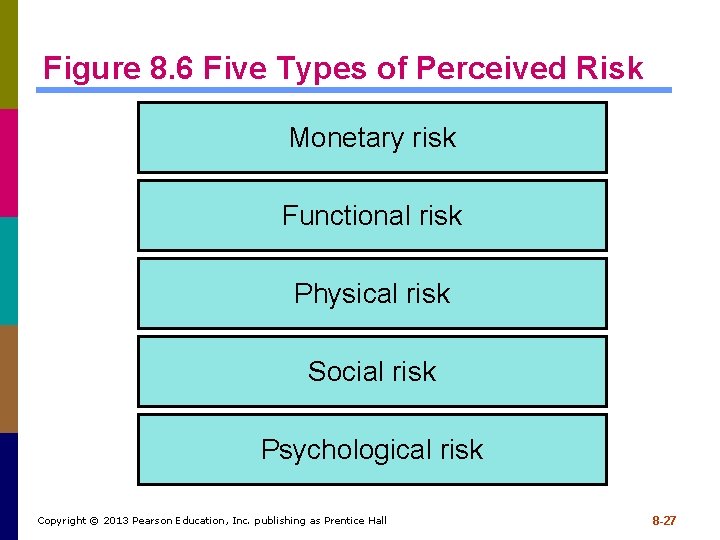
Figure 8. 6 Five Types of Perceived Risk Monetary risk Functional risk Physical risk Social risk Psychological risk Copyright © 2013 Pearson Education, Inc. publishing as Prentice Hall 8 -27
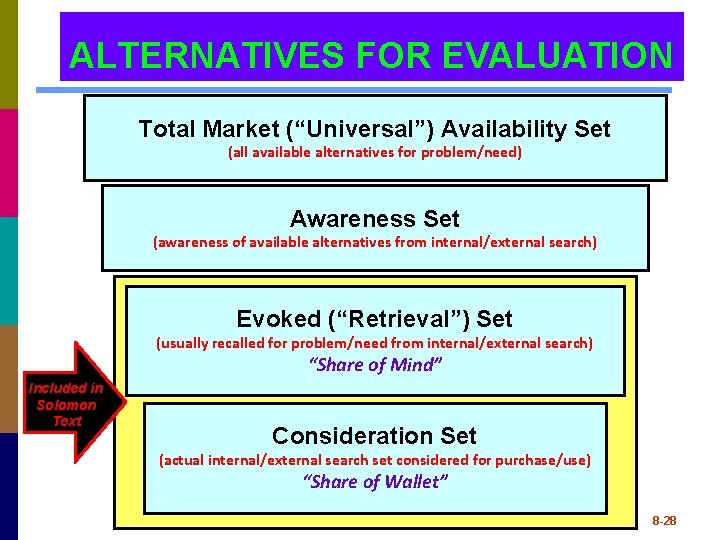
ALTERNATIVES FOR EVALUATION Total Market (“Universal”) Availability Set (all available alternatives for problem/need) Awareness Set (awareness of available alternatives from internal/external search) Evoked (“Retrieval”) Set (usually recalled for problem/need from internal/external search) “Share of Mind” Included in Solomon Text Consideration Set (actual internal/external search set considered for purchase/use) “Share of Wallet” 8 -28

Constructing the Consideration Set Primarily from Memory Retrieval set: consideration set that depends on recall of alternatives from memory Not all alternatives retrieved from memory will be considered Consumers limit their consideration to those alternatives toward which they are favorably predisposed

Pre-purchase Evaluation “EVOKED SET” Alternatives & Evaluation Criteria from Internal & External Search
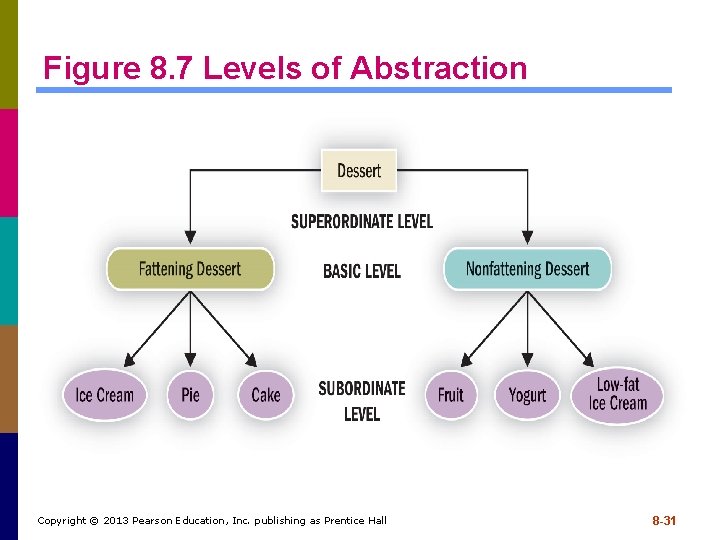
Figure 8. 7 Levels of Abstraction Copyright © 2013 Pearson Education, Inc. publishing as Prentice Hall 8 -31
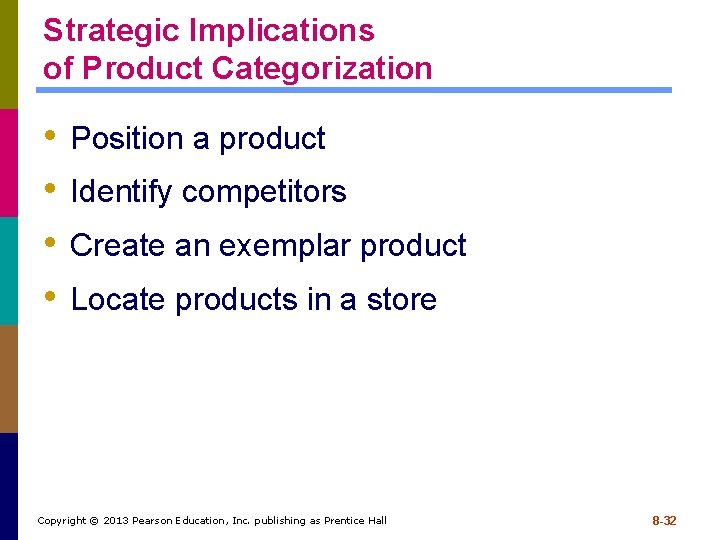
Strategic Implications of Product Categorization • • Position a product Identify competitors Create an exemplar product Locate products in a store Copyright © 2013 Pearson Education, Inc. publishing as Prentice Hall 8 -32
EVALUATION with DECISION RULES: How We Decide On the Best Choice • Once a Search of relevant alternatives and criteria is completed for Problems, using brand categories, we analyze and choose • Decision rules for product choice can be very simple or very complicated -- Prior experience with (similar) product -- Present information at time of purchase -- Beliefs about brands (from advertising) Copyright © 2013 Pearson Education, Inc. publishing as Prentice Hall 8 -33
General EVALUATION Approaches Rely on preexisting product evaluations stored in memory Direct Experience: prior purchase or consumption experiences with product Indirect Experience: experiences or impressions gained second-hand Construct new evaluations based on information acquired through internal or external search
Analyzing Determinant Criterion • It should point out that there are significant differences among brands on the attribute • It should supply the consumer with a decision-making rule, such as “If-Then” • It should convey a rule that is consistent with decisions from prior occasions • Marketers can influence with ads/education Copyright © 2013 Pearson Education, Inc. publishing as Prentice Hall 8 -35
Categorizing for EVALUATION The Categorization Process: the evaluation of a choice alternative based on the evaluation of the category to which it is assigned Categories are general (drinks) or specific (colas) Evaluation of a category can be transferred to a new product assigned to that category Brand extensions allow firms to use categorization to their advantage
EVALUTION Strategies as Decision Rules Noncompensatory Evaluation Strategies: a product’s weakness on one attribute cannot be offset by strong performance on another attribute

EVALUTION Strategies as Decision Rules Noncompensatory Evaluation Strategies Lexicographic strategy: brands are compared initially on the one most important attribute, and the winner is chosen. If more than one is evaluated similarly on that attribute, the second most important is considered, and so on, until a winner is identified. Elimination by aspects: similar to the lexicographic strategy; however, the consumer imposes cutoffs Conjunctive strategy: each brand is compared, one at a time, against a set of cutoffs which is established for each salient attribute. If a brand meets the cutoffs for all attributes, it is chosen.

EVALUTION Strategies as Decision Rules Noncompensatory Evaluation Strategies See also Table 8. 3 for TV sets in the textbook

EVALUTION Strategies as Decision Rules Compensatory Evaluation Strategies: a perceived weakness of one attribute may be offset or compensated for by the perceived strength of another attribute Simple additive: the consumer counts or adds the number of times each alternative is judged favorably in terms of the set of salient evaluative criteria. The alternative with the largest number of positive attributes is chosen. Weighted additive: judgments about an alternative’s attribute performance are weighted by the attribute’s importance. The alternative with the best overall performance is chosen.

EVALUTION Strategies as Decision Rules COMPENSATORY DECISION RULES Simple Additive BRANDS PRICE (1 -5) QUALITY (1 -5) CONVENIENCE (1 -5) TOTAL A 4 2 5 11 B 2 5 2 9 Weighted Additive BRANDS PRICE (20%) (1 -5) QUALITY (50%) (1 -5) CONVENIENCE (30%) (1 -5) TOTAL (100%) A 4 x. 2 = 0. 8 2 x. 5 = 1 5 x. 3 = 1. 5 3. 3 B 2 x. 2 = 0. 4 5 x. 5 = 2. 5 2 x. 3 = 0. 6 3. 5 See also Table 8. 3 for TV sets in the textbook
Neuromarketing • Uses functional magnetic resonance imaging, a brain-scanning device that tracks blood flow as we perform mental tasks • Marketers measure consumers’ reactions to movie trailers, choices about automobiles, the appeal of a pretty face, and loyalty to specific brands Copyright © 2013 Pearson Education, Inc. publishing as Prentice Hall 8 -42
Cybermediaries • The Web delivers enormous amounts of product information in seconds • Cybermediary: helps filter and organize online market information • Examples: Shopping. com, Biz. Rate. com Copyright © 2013 Pearson Education, Inc. publishing as Prentice Hall 8 -43
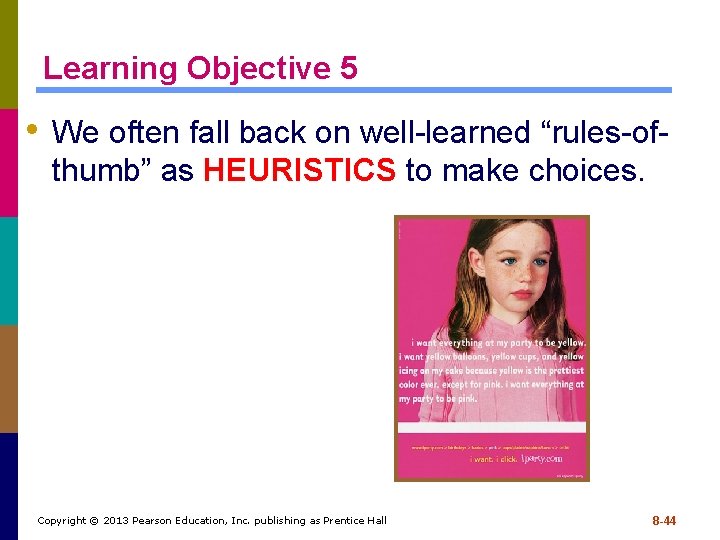
Learning Objective 5 • We often fall back on well-learned “rules-ofthumb” as HEURISTICS to make choices. Copyright © 2013 Pearson Education, Inc. publishing as Prentice Hall 8 -44
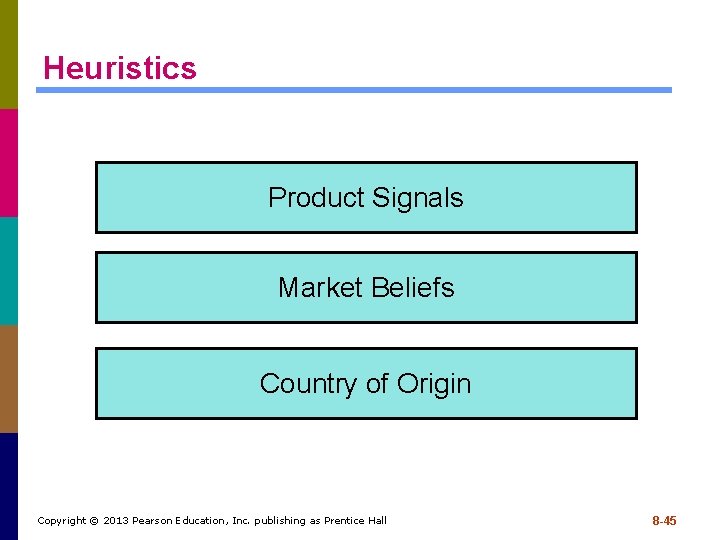
Heuristics Product Signals Market Beliefs Country of Origin Copyright © 2013 Pearson Education, Inc. publishing as Prentice Hall 8 -45
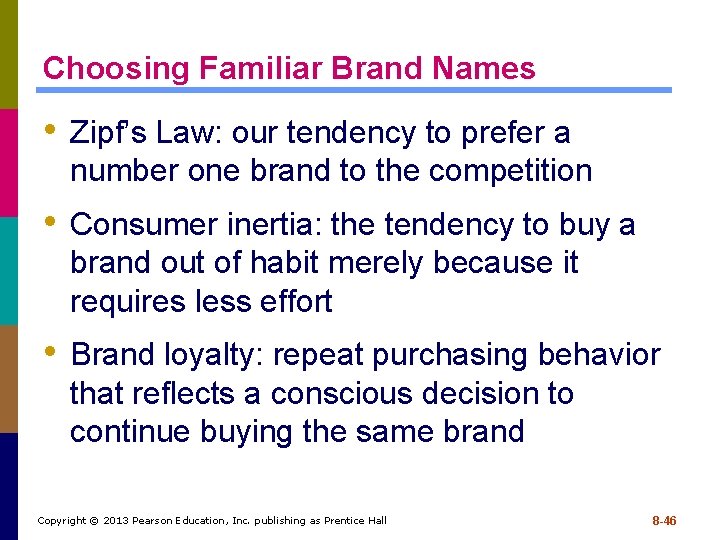
Choosing Familiar Brand Names • Zipf’s Law: our tendency to prefer a number one brand to the competition • Consumer inertia: the tendency to buy a brand out of habit merely because it requires less effort • Brand loyalty: repeat purchasing behavior that reflects a conscious decision to continue buying the same brand Copyright © 2013 Pearson Education, Inc. publishing as Prentice Hall 8 -46
Chapter Summary • Decision making is a central part of consumer behavior and decisions are made in stages • Decision making is not always rational • We use rules of thumb and decision rules to make decisions more efficiently Copyright © 2013 Pearson Education, Inc. publishing as Prentice Hall 8 -47
- Slides: 47