
Chapter 8 Data Analysis Interpretation and Presentation Aims

- Slides: 19
Chapter 8 Data Analysis, Interpretation and Presentation
Aims • Discuss the difference between qualitative and quantitative data and analysis. • Enable you to analyze data gathered from: – Questionnaires. – Interviews. – Observation studies. • Make you aware of software packages that are available to help your analysis. • Identify common pitfalls in data analysis, interpretation, and presentation. • Enable you to interpret and present your findings in appropriate ways. www. id-book. com 2
Quantitative and qualitative • Quantitative data – expressed as numbers • Qualitative data – difficult to measure sensibly as numbers, e. g. count number of words to measure dissatisfaction • Quantitative analysis – numerical methods to ascertain size, magnitude, amount • Qualitative analysis – expresses the nature of elements and is represented as themes, patterns, stories • Be careful how you manipulate data and numbers! www. id-book. com 3
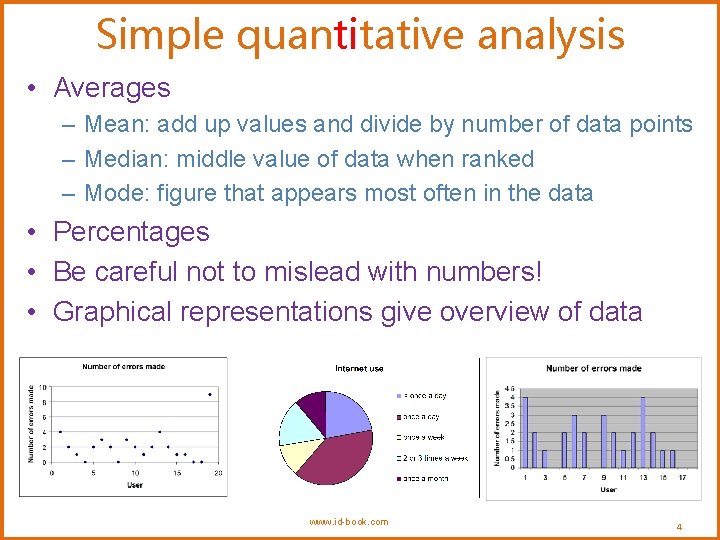
Simple quantitative analysis • Averages – Mean: add up values and divide by number of data points – Median: middle value of data when ranked – Mode: figure that appears most often in the data • Percentages • Be careful not to mislead with numbers! • Graphical representations give overview of data www. id-book. com 4
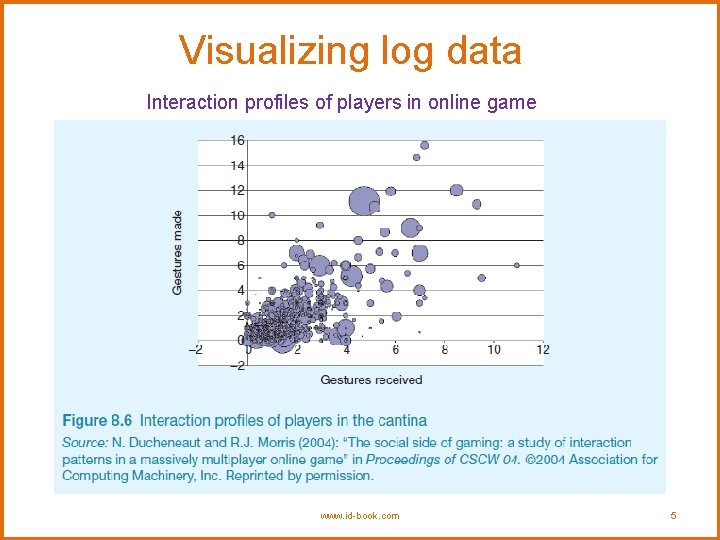
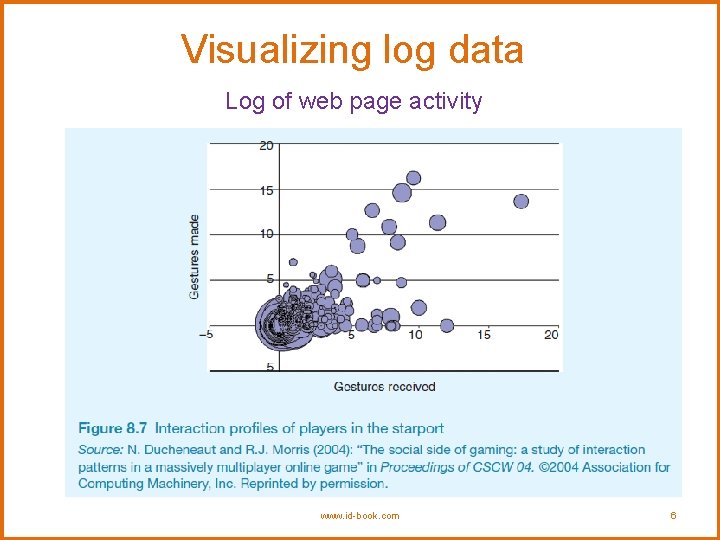
Visualizing log data Interaction profiles of players in online game www. id-book. com 5
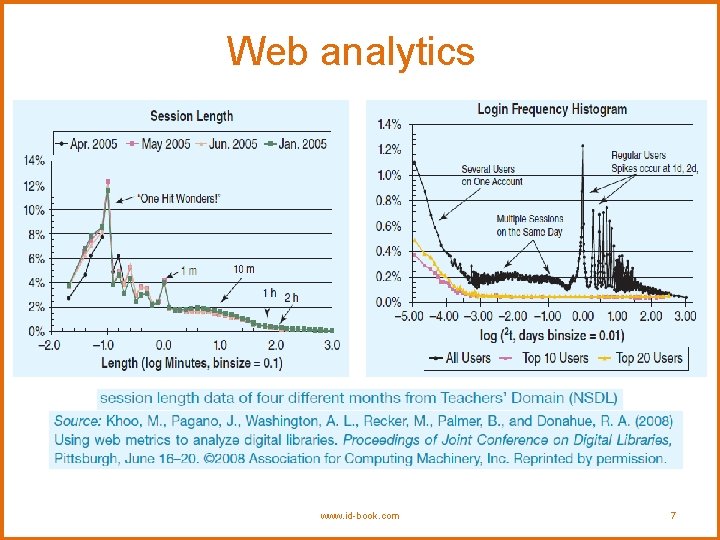
Visualizing log data Log of web page activity www. id-book. com 6
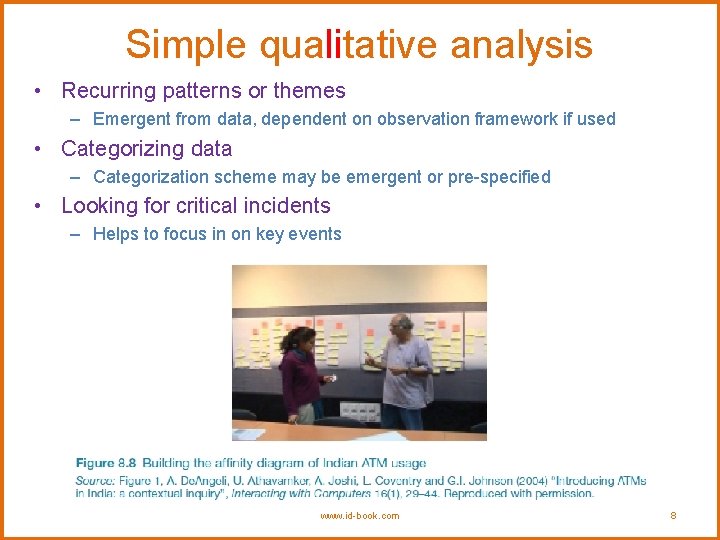
Web analytics www. id-book. com 7
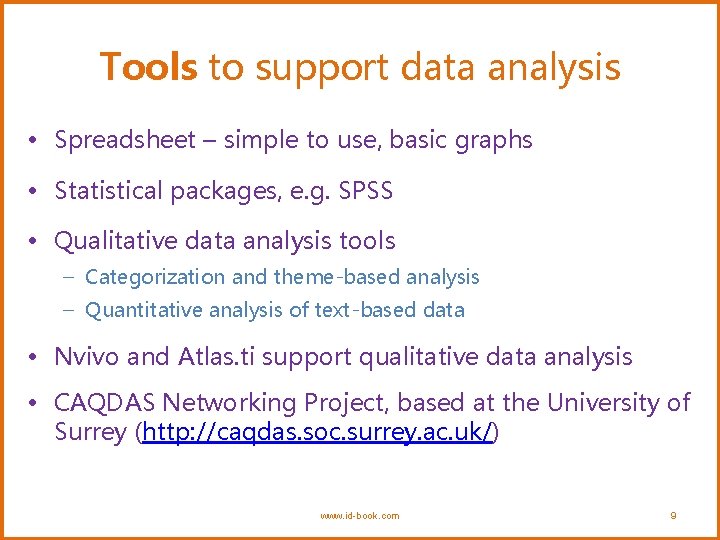
Simple qualitative analysis • Recurring patterns or themes – Emergent from data, dependent on observation framework if used • Categorizing data – Categorization scheme may be emergent or pre-specified • Looking for critical incidents – Helps to focus in on key events www. id-book. com 8
Tools to support data analysis • Spreadsheet – simple to use, basic graphs • Statistical packages, e. g. SPSS • Qualitative data analysis tools – Categorization and theme-based analysis – Quantitative analysis of text-based data • Nvivo and Atlas. ti support qualitative data analysis • CAQDAS Networking Project, based at the University of Surrey (http: //caqdas. soc. surrey. ac. uk/) www. id-book. com 9
Theoretical frameworks for qualitative analysis • Basing data analysis around theoretical frameworks provides further insight • Three such frameworks are: – Grounded Theory – Distributed Cognition – Activity Theory www. id-book. com 10
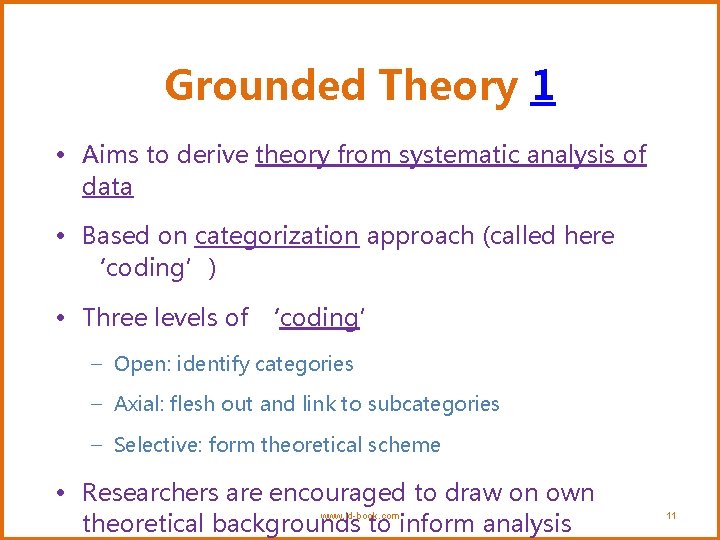
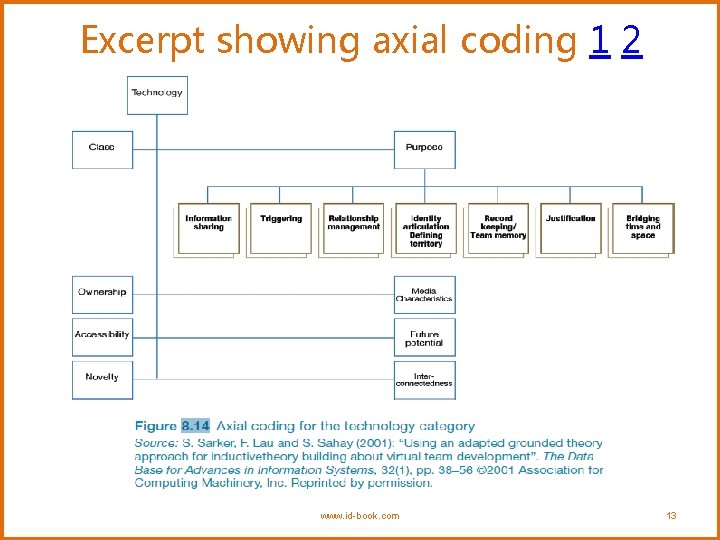
Grounded Theory 1 • Aims to derive theory from systematic analysis of data • Based on categorization approach (called here ‘coding’) • Three levels of ‘coding’ – Open: identify categories – Axial: flesh out and link to subcategories – Selective: form theoretical scheme • Researchers are encouraged to draw on own www. id-book. com theoretical backgrounds to inform analysis 11
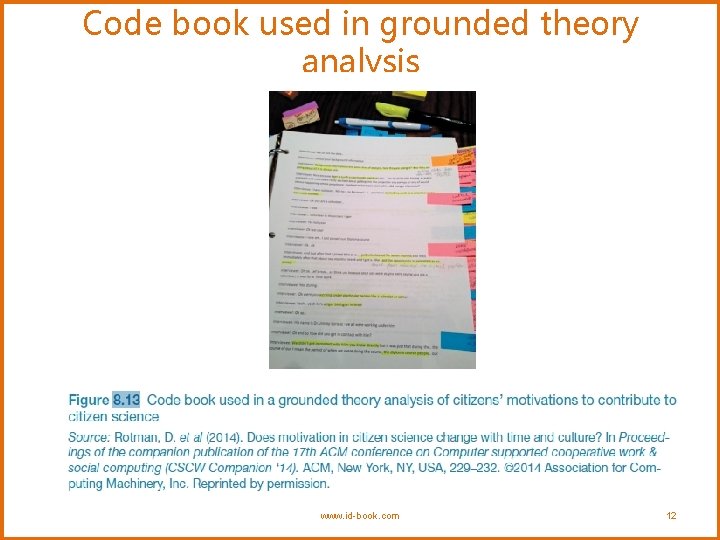
Code book used in grounded theory analysis www. id-book. com 12
Excerpt showing axial coding 1 2 www. id-book. com 13
Distributed Cognition • The people, environment & artefacts are regarded as one cognitive system • Used for analyzing collaborative work • Focuses on information propagation & transformation www. id-book. com 14
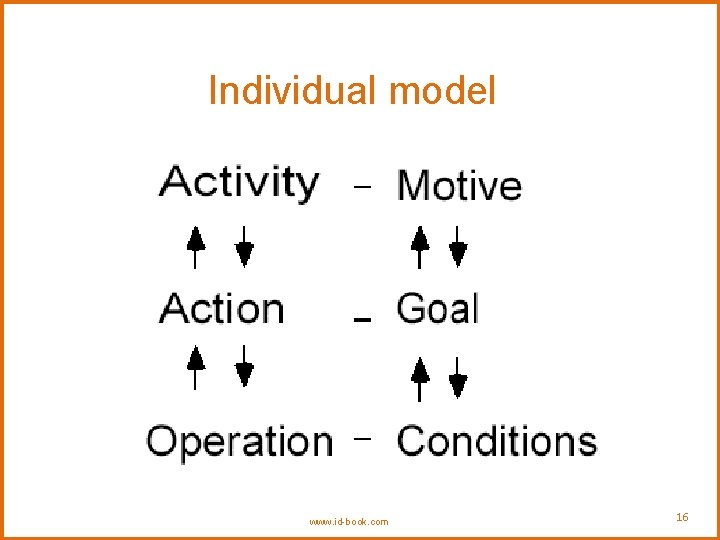
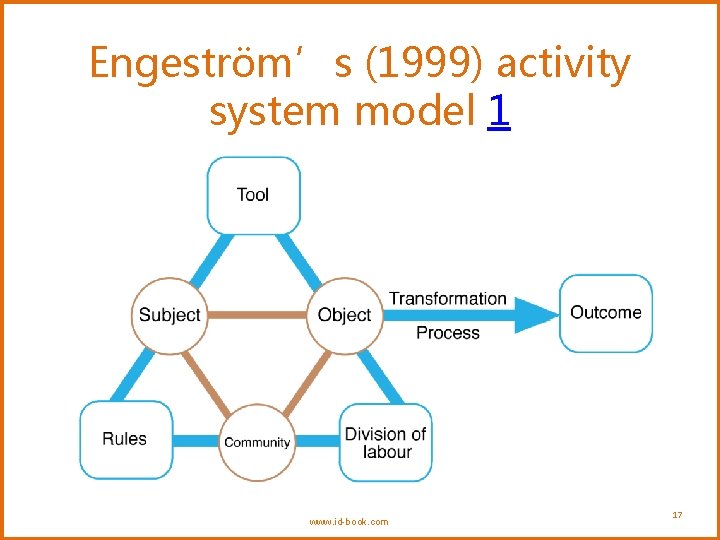
Activity Theory • Explains human behaviour in terms of our practical activity in the world • Provides a framework that focuses analysis around the concept of an ‘activity’ and helps to identify tensions between the different elements of the system • Two key models: one outlines what constitutes an ‘activity’; one models the mediating role of artifacts www. id-book. com 15
Individual model www. id-book. com 16
Engeström’s (1999) activity system model 1 www. id-book. com 17
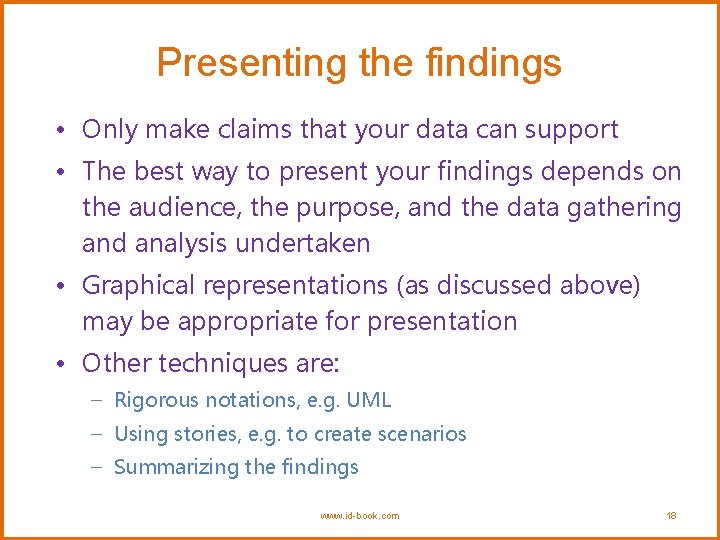
Presenting the findings • Only make claims that your data can support • The best way to present your findings depends on the audience, the purpose, and the data gathering and analysis undertaken • Graphical representations (as discussed above) may be appropriate for presentation • Other techniques are: – Rigorous notations, e. g. UML – Using stories, e. g. to create scenarios – Summarizing the findings www. id-book. com 18
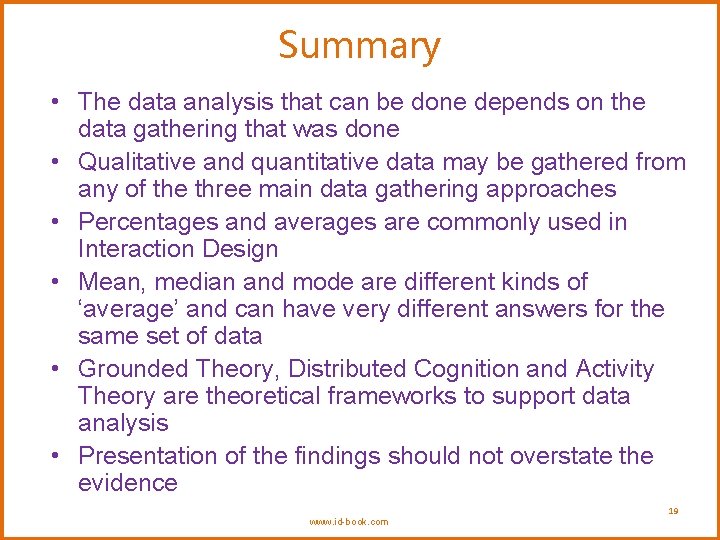
Summary • The data analysis that can be done depends on the data gathering that was done • Qualitative and quantitative data may be gathered from any of the three main data gathering approaches • Percentages and averages are commonly used in Interaction Design • Mean, median and mode are different kinds of ‘average’ and can have very different answers for the same set of data • Grounded Theory, Distributed Cognition and Activity Theory are theoretical frameworks to support data analysis • Presentation of the findings should not overstate the evidence www. id-book. com 19