
CHAPTER 8 CPU and Memory Design Enhancement and
- Slides: 31
CHAPTER 8: CPU and Memory Design, Enhancement, and Implementation The Architecture of Computer Hardware, Systems Software & Networking: An Information Technology Approach 4 th Edition, Irv Englander John Wiley and Sons 2010 Power. Point slides authored by Wilson Wong, Bentley University Power. Point slides for the 3 rd edition were co-authored with Lynne Senne, Bentley College
Current CPU Architectures § Current CPU Architecture Designs § Traditional modern architectures § VLIW (Transmeta) – Very Long Instruction Word § EPIC (Intel) – Explicitly Parallel Instruction Computer § Current CPU Architectures § § IBM Mainframe series Intel x 86 family IBM POWER/Power. PC family Sun SPARC family Copyright 2010 John Wiley & Sons, Inc. 8 -2
Traditional Modern Architectures Problems with early CPU Architectures and solutions: § Large number of specialized instructions were rarely used but added hardware complexity and slowed down other instructions § Slow data memory accesses could be reduced by increasing the number of general purpose registers § Using general registers to hold addresses could reduce the number of addressing modes and simplify architecture design § Fixed-length, fixed format instruction words would allow instructions to be fetched and decoded independently and in parallel Copyright 2010 John Wiley & Sons, Inc. 8 -3
VLIW Architecture § Transmeta Crusoe CPU § 128 -bit instruction bundle = molecule § Four 32 -bit atoms (atom = instruction) § Parallel processing of 4 instructions § 64 general purpose registers § Code morphing layer § Translates instructions written for other CPUs into molecules § Instructions are not written directly for the Crusoe CPU Copyright 2010 John Wiley & Sons, Inc. 8 -4
EPIC Architecture § 128 -bit instruction bundle § 3 41 -bit instructions § 5 bits to identify type of instructions in bundle § § 128 64 -bit general purpose registers 128 82 -bit floating point registers Intel X 86 instruction set included Programmers and compilers follow guidelines to ensure parallel execution of instructions Copyright 2010 John Wiley & Sons, Inc. 8 -5
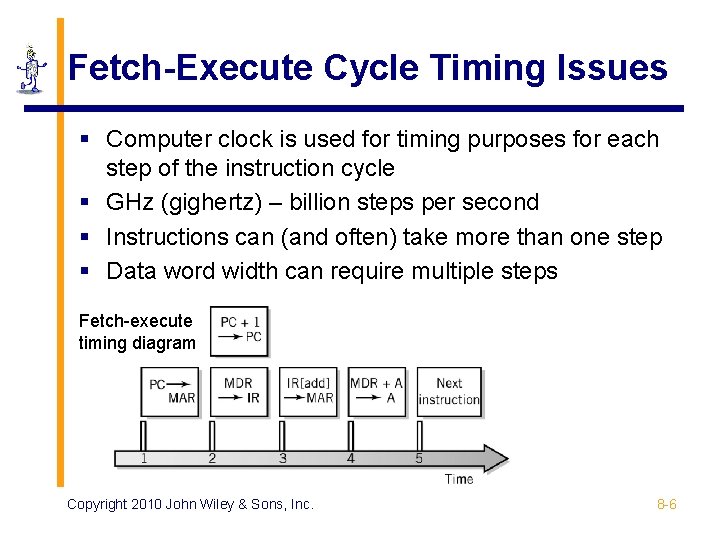
Fetch-Execute Cycle Timing Issues § Computer clock is used for timing purposes for each step of the instruction cycle § GHz (gighertz) – billion steps per second § Instructions can (and often) take more than one step § Data word width can require multiple steps Fetch-execute timing diagram Copyright 2010 John Wiley & Sons, Inc. 8 -6
CPU Features and Enhancements § § § Separate Fetch/Execute Units Pipelining Multiple, Parallel Execution Units Scalar Processing Superscalar Processing Branch Instruction Processing Copyright 2010 John Wiley & Sons, Inc. 8 -7
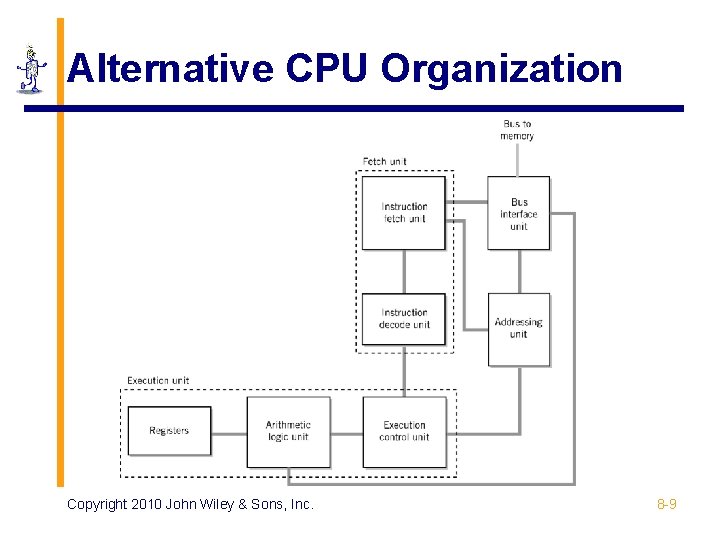
Separate Fetch-Execute Units § Fetch Unit § Instruction fetch unit § Instruction decode unit p p Determine opcode Identify type of instruction and operands § Several instructions are fetched in parallel and held in a buffer until decoded and executed § IP – Instruction Pointer register holds instruction location of current being processed § Execute Unit § Receives instructions from the decode unit § Appropriate execution unit services the instruction Copyright 2010 John Wiley & Sons, Inc. 8 -8
Alternative CPU Organization Copyright 2010 John Wiley & Sons, Inc. 8 -9
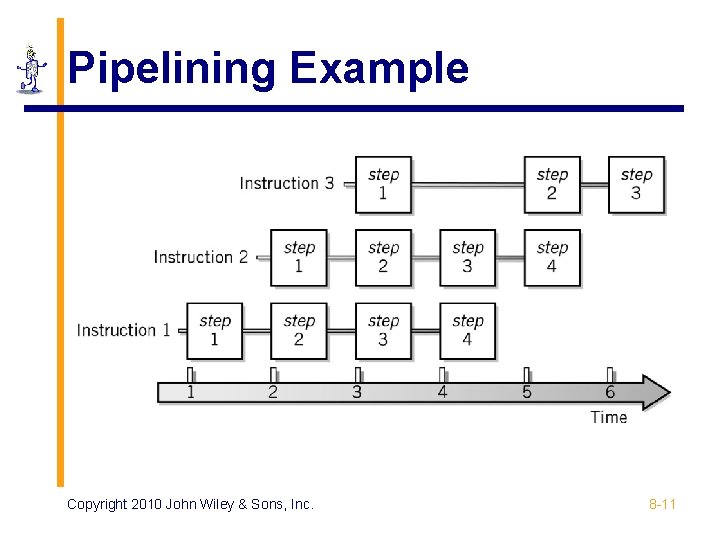
Instruction Pipelining § Assembly-line technique to allow overlapping between fetch-execute cycles of sequences of instructions § Scalar processing § Average instruction execution is approximately equal to the clock speed of the CPU § Problems from stalling § Instructions have different numbers of steps § Problems from branching Copyright 2010 John Wiley & Sons, Inc. 8 -10
Pipelining Example Copyright 2010 John Wiley & Sons, Inc. 8 -11
Branch Problem Solutions § Separate pipelines for both possibilities § Probabilistic approach § Requiring the following instruction to not be dependent on the branch § Instruction Reordering (superscalar processing) Copyright 2010 John Wiley & Sons, Inc. 8 -12
Multiple, Parallel Execution Units § Different instructions have different numbers of steps in their cycle § Differences in each step § Each execution unit is optimized for one general type of instruction § Multiple execution units permit simultaneous execution of several instructions Copyright 2010 John Wiley & Sons, Inc. 8 -13
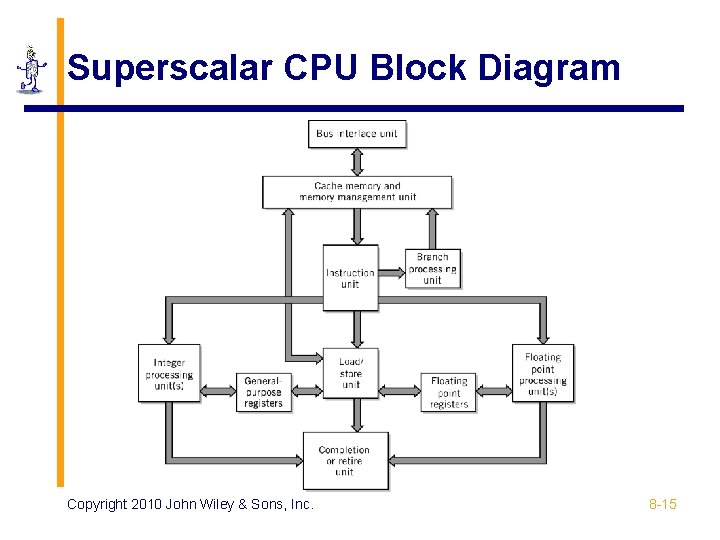
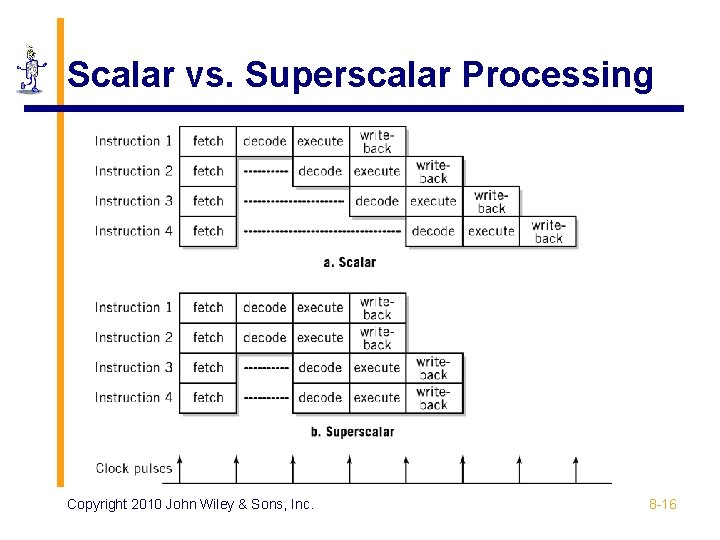
Superscalar Processing § Process more than one instruction per clock cycle § Separate fetch and execute cycles as much as possible § Buffers for fetch and decode phases § Parallel execution units Copyright 2010 John Wiley & Sons, Inc. 8 -14
Superscalar CPU Block Diagram Copyright 2010 John Wiley & Sons, Inc. 8 -15
Scalar vs. Superscalar Processing Copyright 2010 John Wiley & Sons, Inc. 8 -16
Superscalar Issues § Out-of-order processing – dependencies (hazards) § Data dependencies § Branch (flow) dependencies and speculative execution § Parallel speculative execution or branch prediction § Branch History Table § Register access conflicts § Rename or logical registers Copyright 2010 John Wiley & Sons, Inc. 8 -17
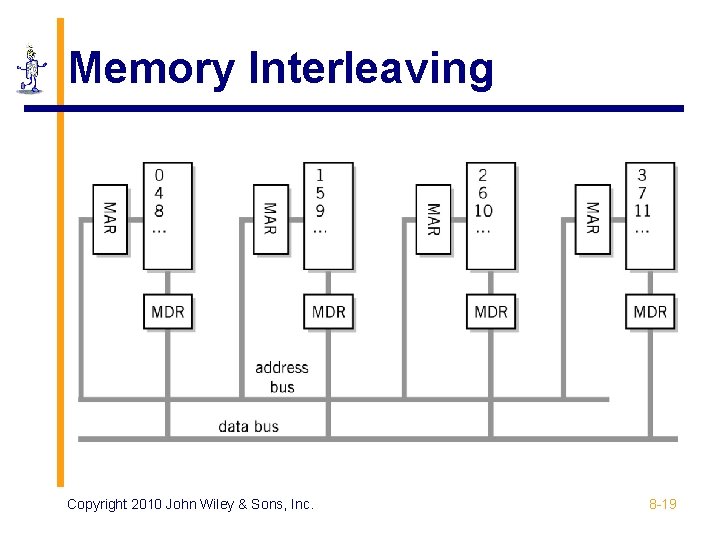
Memory Enhancements § Memory is slow compared to CPU processing speeds! § 2 Ghz CPU = 1 cycle in ½ of a billionth of a second § 70 ns DRAM = 1 access in 70 millionth of a second § Methods to improvement memory accesses § Wide Path Memory Access p Retrieve multiple bytes instead of 1 byte at a time § Memory Interleaving p Partition memory into subsections, each with its own address register and data register § Cache Memory Copyright 2010 John Wiley & Sons, Inc. 8 -18
Memory Interleaving Copyright 2010 John Wiley & Sons, Inc. 8 -19
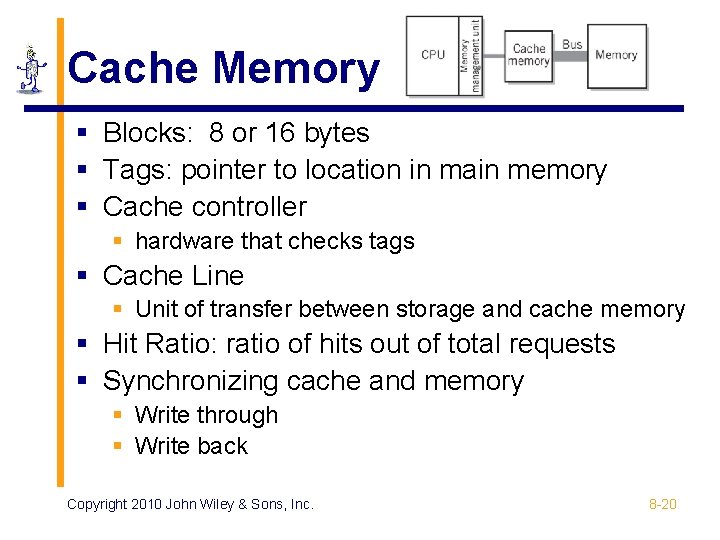
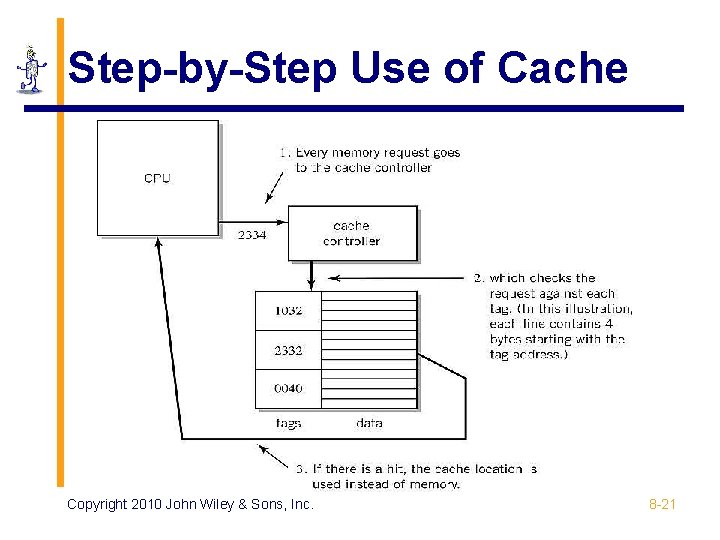
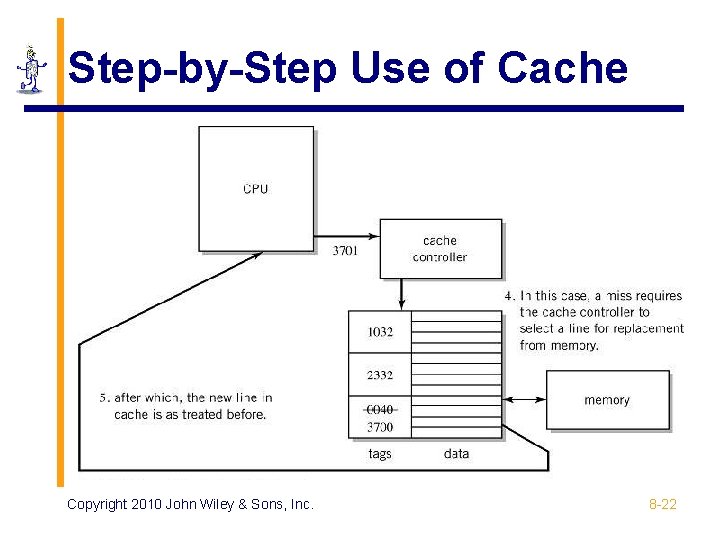
Cache Memory § Blocks: 8 or 16 bytes § Tags: pointer to location in main memory § Cache controller § hardware that checks tags § Cache Line § Unit of transfer between storage and cache memory § Hit Ratio: ratio of hits out of total requests § Synchronizing cache and memory § Write through § Write back Copyright 2010 John Wiley & Sons, Inc. 8 -20
Step-by-Step Use of Cache Copyright 2010 John Wiley & Sons, Inc. 8 -21
Step-by-Step Use of Cache Copyright 2010 John Wiley & Sons, Inc. 8 -22
Performance Advantages § Hit ratios of 90% common § 50%+ improved execution speed § Locality of reference is why caching works § Most memory references confined to small region of memory at any given time § Well-written program in small loop, procedure or function § Data likely in array § Variables stored together Copyright 2010 John Wiley & Sons, Inc. 8 -23
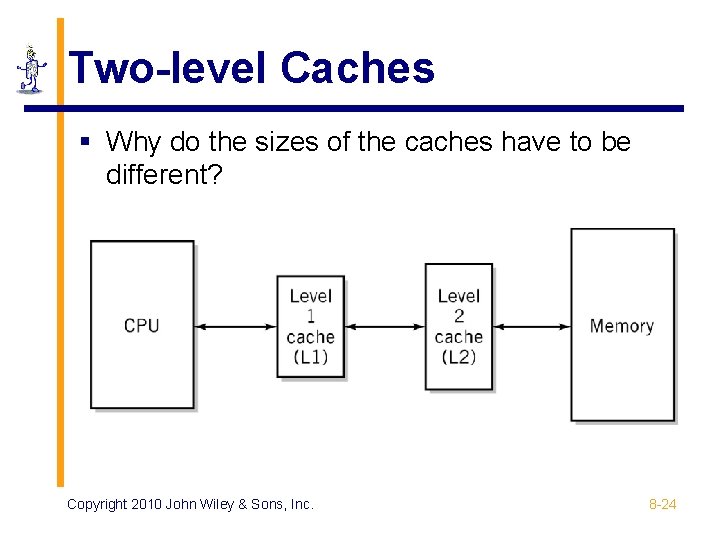
Two-level Caches § Why do the sizes of the caches have to be different? Copyright 2010 John Wiley & Sons, Inc. 8 -24
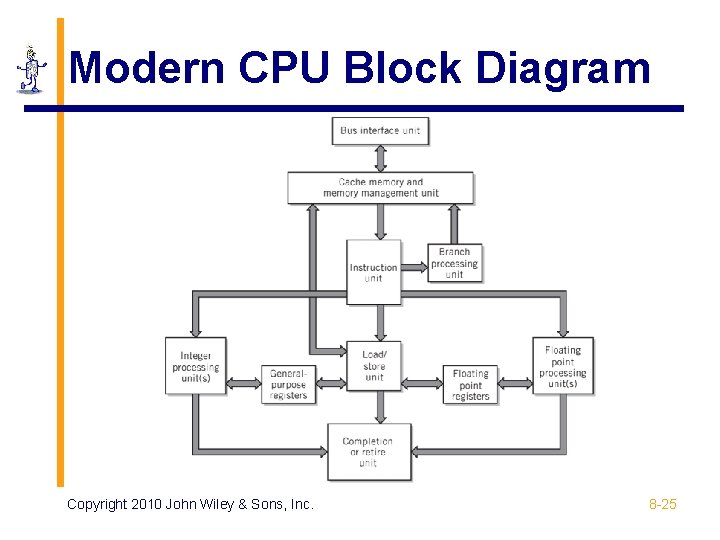
Modern CPU Block Diagram Copyright 2010 John Wiley & Sons, Inc. 8 -25
Multiprocessing § Reasons § Increase the processing power of a system § Parallel processing § Multiprocessor system § Tightly coupled § Multicore processors - when CPUs are on a single integrated circuit Copyright 2010 John Wiley & Sons, Inc. 8 -26
Multiprocessor Systems § Identical access to programs, data, shared memory, I/O, etc. § Easily extends multi-tasking, and redundant program execution § Two ways to configure § Master-slave multiprocessing § Symmetrical multiprocessing (SMP) Copyright 2010 John Wiley & Sons, Inc. 8 -27
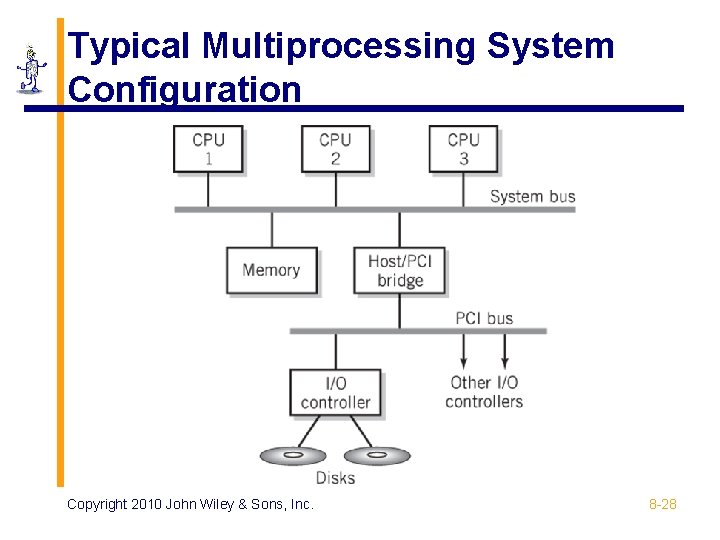
Typical Multiprocessing System Configuration Copyright 2010 John Wiley & Sons, Inc. 8 -28
Master-Slave Multiprocessing § Master CPU § Manages the system § Controls all resources and scheduling § Assigns tasks to slave CPUs § Advantages § Simplicity § Protection of system and data § Disadvantages § Master CPU becomes a bottleneck § Reliability issues – if master CPU fails entire system fails Copyright 2010 John Wiley & Sons, Inc. 8 -29
Symmetrical Multiprocessing § Each CPU has equal access to resources § Each CPU determines what to run using a standard algorithm § Disadvantages § Resource conflicts – memory, i/o, etc. § Complex implementation § Advantages § High reliability § Fault tolerant support is straightforward § Balanced workload Copyright 2010 John Wiley & Sons, Inc. 8 -30
Copyright 2010 John Wiley & Sons All rights reserved. Reproduction or translation of this work beyond that permitted in section 117 of the 1976 United States Copyright Act without express permission of the copyright owner is unlawful. Request for further information should be addressed to the Permissions Department, John Wiley & Sons, Inc. The purchaser may make back-up copies for his/her own use only and not for distribution or resale. The Publisher assumes no responsibility for errors, omissions, or damages caused by the use of these programs or from the use of the information contained herein. ” Copyright 2010 John Wiley & Sons, Inc. 8 -31