
Chapter 8 Class and Stratification in the United









- Slides: 72
Chapter 8 Class and Stratification in the United States
Chapter Outline § § § § What is Social Stratification? Global Systems of Stratification Classical Perspectives on Social Class Contemporary Sociological Models of the U. S. Class Structure Inequality in the United States Poverty in the United States Sociological Explanations of Social Inequality in the United States U. S. Stratification in the Future
What Is Social Stratification § The hierarchical arrangement of large social groups based on their control over basic resources. § Stratification involves patterns of structural inequality associated with membership in these groups. § Resources are anything valued in a society (money, property, medical care, education). § Life chances refers to the extent to which individuals have access to resources.
How Much Do You Know About Wealth, Poverty, and the American Dream? § True or False? § People no longer believe in the American Dream.
How Much Do You Know About Wealth, Poverty, and the American Dream? § False. § The American Dream appears to be alive and well. U. S. culture places a strong emphasis on the goal of monetary success, and many people use legal or illegal means to attempt to achieve that goal.
How Much Do You Know About Wealth, Poverty, and the American Dream? § True or False? § One in three U. S. children will be poor at some point of their childhood.
How Much Do You Know About Wealth, Poverty, and the American Dream? § True. § According to recent data from the Children’s Defense Fund, one in three U. S. children will live in a family that is below the official poverty line at some point in their childhood. § For some of these children, poverty will be a persistent problem throughout their childhood and youth.
Global Systems Of Stratification § § Stratification systems are classified as open or closed. § Open system: Boundaries between levels in hierarchies are flexible and positions are influenced by achieved statuses. § Closed system: Boundaries between levels in hierarchies are rigid, and positions are set by ascribed status. No system is completely open or closed.
Question § _____ refers to the extent to which individuals have access to important societal resources such as food, clothing, shelter, education, and health care. a. life chances b. social stratification c. income inequality d. median income
Answer: a § Life chances refers to the extent to which individuals have access to important societal resources such as food, clothing, shelter, education, and health care.
Question § _______ is the hierarchical arrangement of large social groups based on their control over basic resources. a. income b. social stratification c. wealth d. life chances
Answer: b § Social stratification is the hierarchical arrangement of large social groups based on their control over basic resources.
Social Mobility § § § The movement of individuals or groups from one level in a stratification system to another. Intergenerational mobility is the social movement experienced by family members from one generation to the next. Intragenerational mobility is the social movement of individuals within their own lifetime.
Slavery § § An extreme form of stratification in which some people are owned by others. As practiced in the U. S. , slavery had four primary characteristics: 1. It was for life and was inherited. 2. Slaves were considered property, not human beings. 3. Slaves were denied rights. 4. Coercion was used to keep slaves “in their place”.
Class and Caste Systems § § A caste system is a system of social inequality in which people’s status is permanently determined at birth based on their parents’ ascribed characteristics. The class system is a type of stratification based on the ownership and control of resources and on the type of work people do.
Question § If you were asked to use one of the following four names for your parents' social class, which would you say they belong in? a. Upper class b. Middle class c. Working class d. Lower class
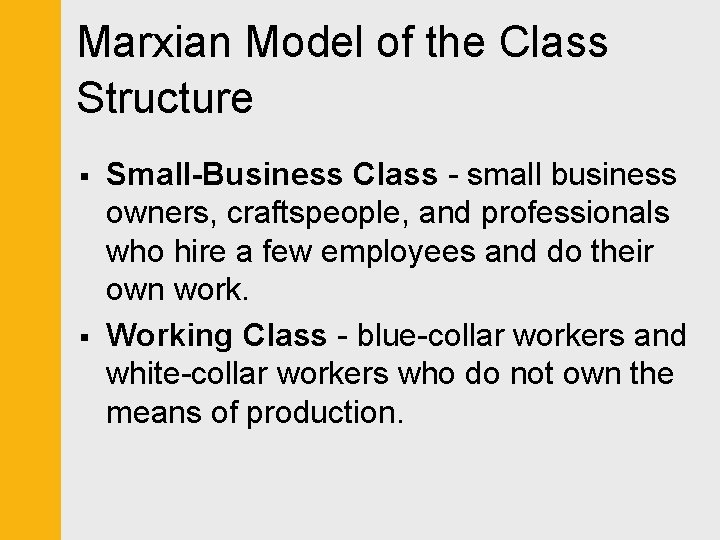
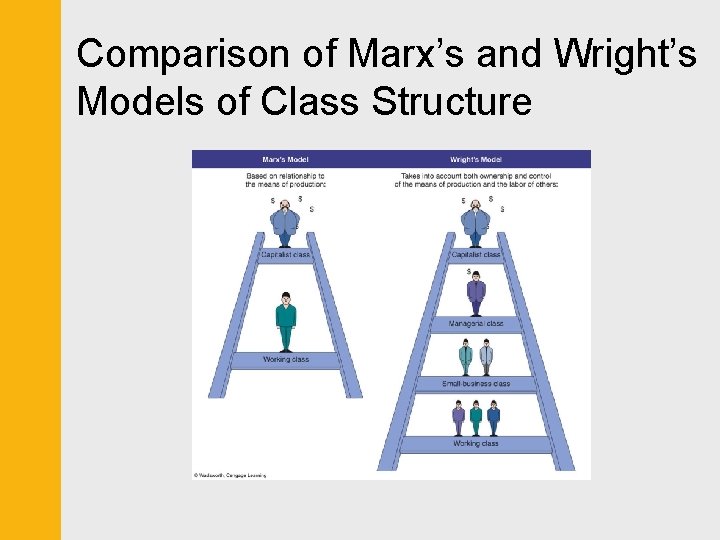
Marxian Model of the Class Structure § § Capitalist Class - those who have inherited fortunes, own corporations, are corporate executives who control company investments. Managerial Class - upper-level managers and lower-level managers who may have control over employment practices.
Marxian Model of the Class Structure § § Small-Business Class - small business owners, craftspeople, and professionals who hire a few employees and do their own work. Working Class - blue-collar workers and white-collar workers who do not own the means of production.
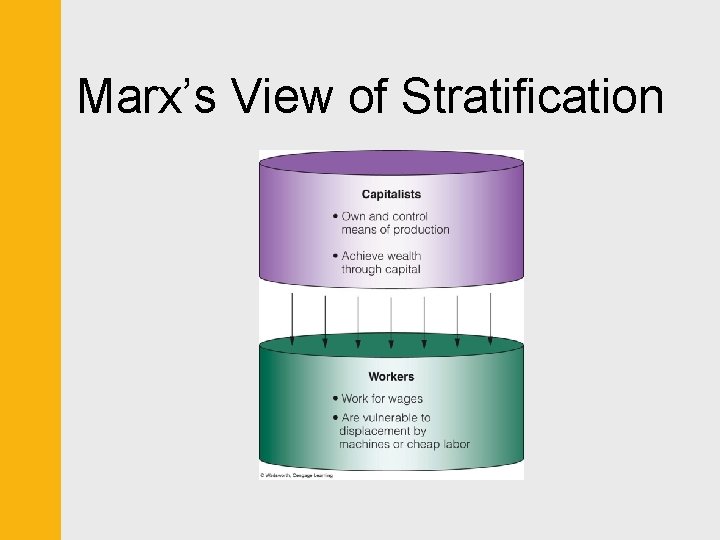
Marx’s View of Stratification
Marxian Criteria for Class Structure 1. 2. 3. 4. Ownership of the means of production. Employing others. Supervising others on the job. Being employed by someone else.
Question § According to Karl Marx's theory of class relations: a. the bourgeoisie consists of those who own the means of production. b. the proletariat consists of those who own the means of production. c. class relationships involve inequality and exploitation. d. wealth, prestige, and power are important in determining a person's class
Answer: c § According to Karl Marx's theory of class relations: class relationships involve inequality and exploitation.
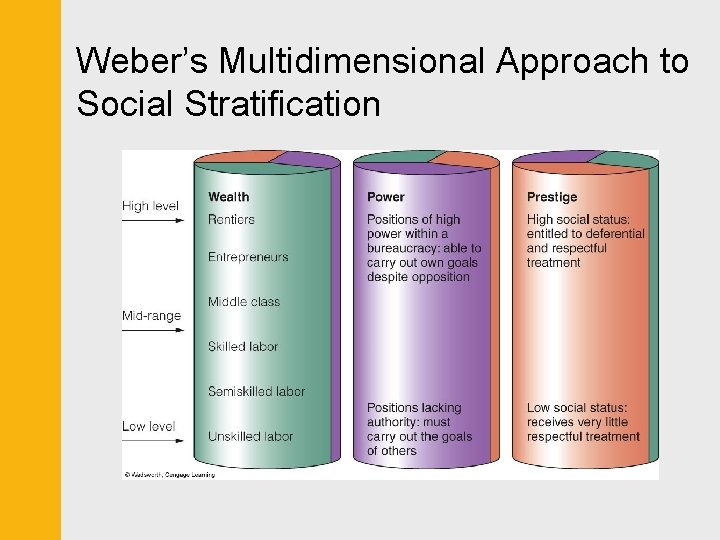
Weber’s Multidimensional Approach to Social Stratification
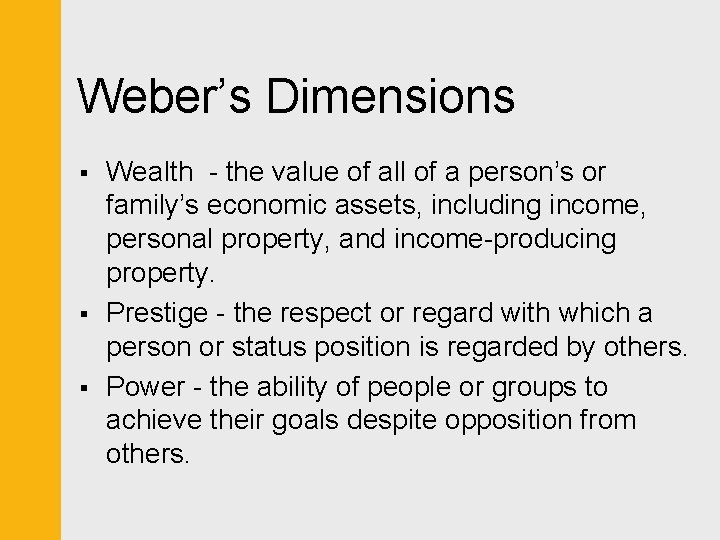
Weber’s Dimensions § § § Wealth - the value of all of a person’s or family’s economic assets, including income, personal property, and income-producing property. Prestige - the respect or regard with which a person or status position is regarded by others. Power - the ability of people or groups to achieve their goals despite opposition from others.
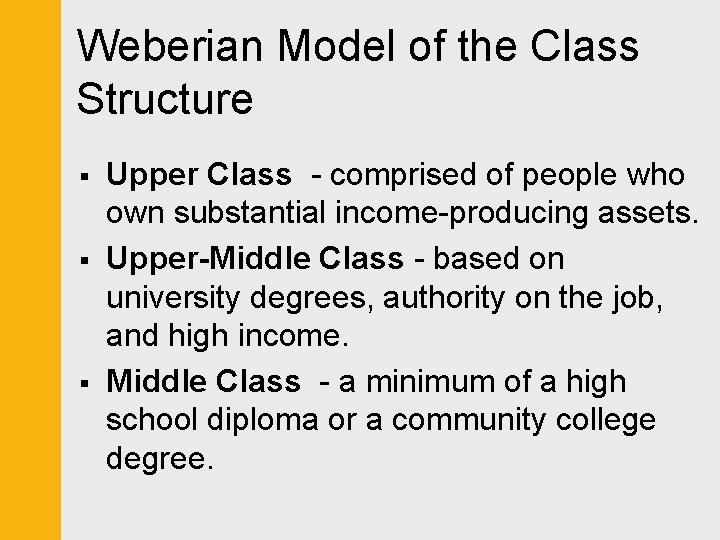
Weberian Model of the Class Structure § § § Upper Class - comprised of people who own substantial income-producing assets. Upper-Middle Class - based on university degrees, authority on the job, and high income. Middle Class - a minimum of a high school diploma or a community college degree.
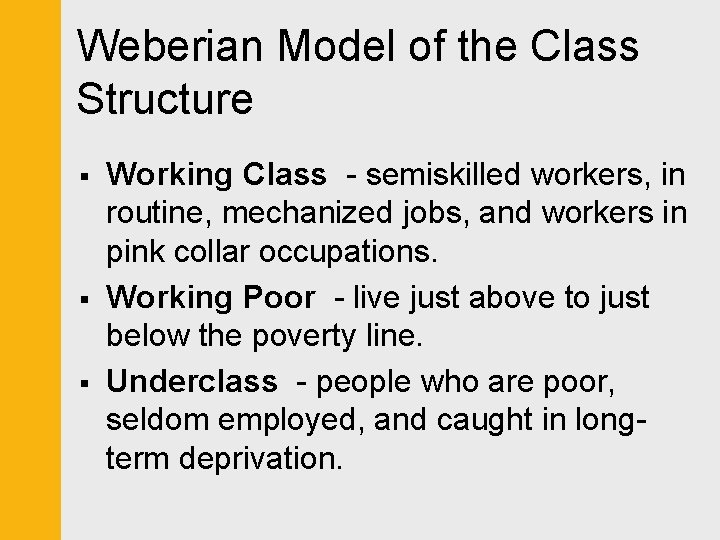
Weberian Model of the Class Structure § § § Working Class - semiskilled workers, in routine, mechanized jobs, and workers in pink collar occupations. Working Poor - live just above to just below the poverty line. Underclass - people who are poor, seldom employed, and caught in longterm deprivation.
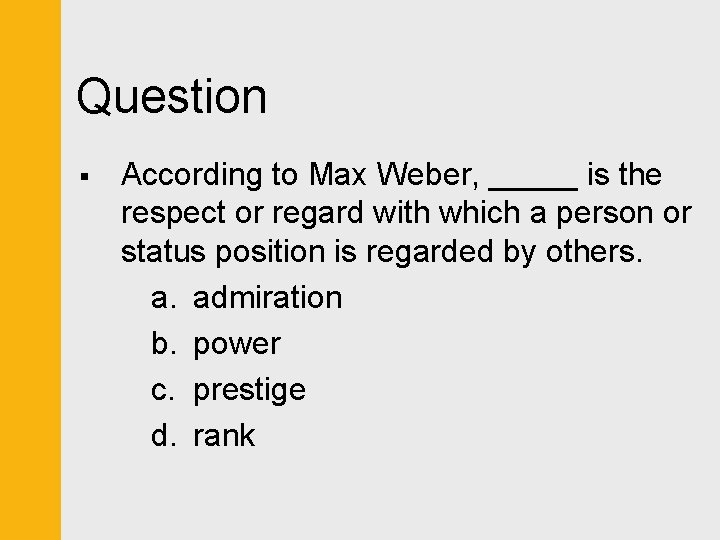
Question § According to Max Weber, _____ is the respect or regard with which a person or status position is regarded by others. a. admiration b. power c. prestige d. rank
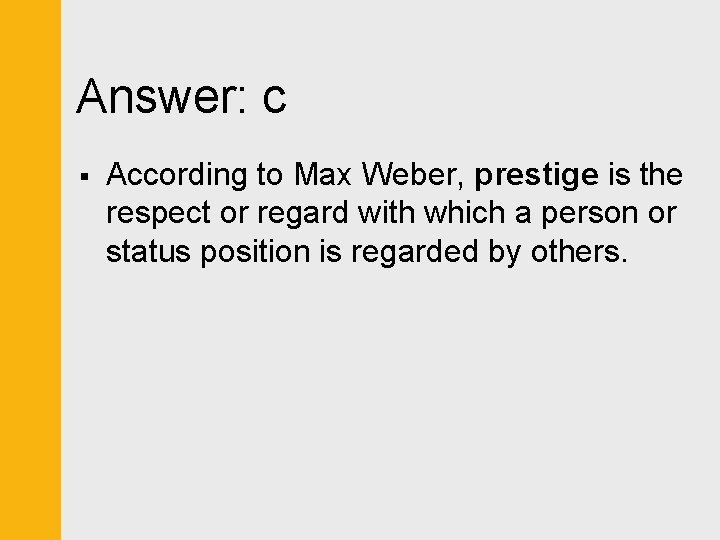
Answer: c § According to Max Weber, prestige is the respect or regard with which a person or status position is regarded by others.
Question § According to the Weberian model of the U. S. class structure, members of the _____ class have are often highly educated professionals. a. upper b. lower upper c. upper middle d. middle
Answer: c § According to the Weberian model of the U. S. class structure, members of the upper middle class are often highly educated professionals.
Stratification Based on Education, Occupation and Income
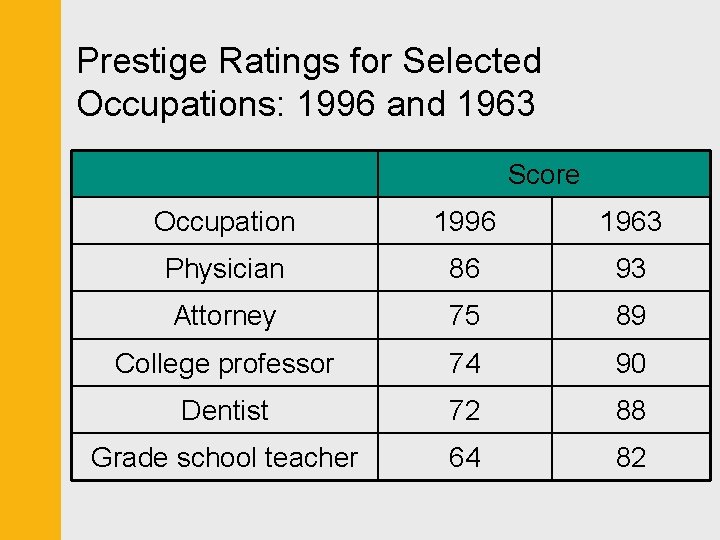
Prestige Ratings for Selected Occupations: 1996 and 1963 Score Occupation 1996 1963 Physician 86 93 Attorney 75 89 College professor 74 90 Dentist 72 88 Grade school teacher 64 82
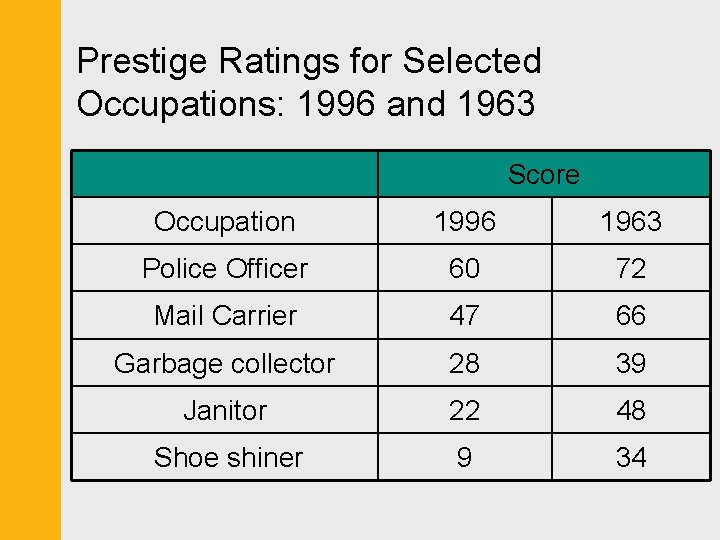
Prestige Ratings for Selected Occupations: 1996 and 1963 Score Occupation 1996 1963 Police Officer 60 72 Mail Carrier 47 66 Garbage collector 28 39 Janitor 22 48 Shoe shiner 9 34
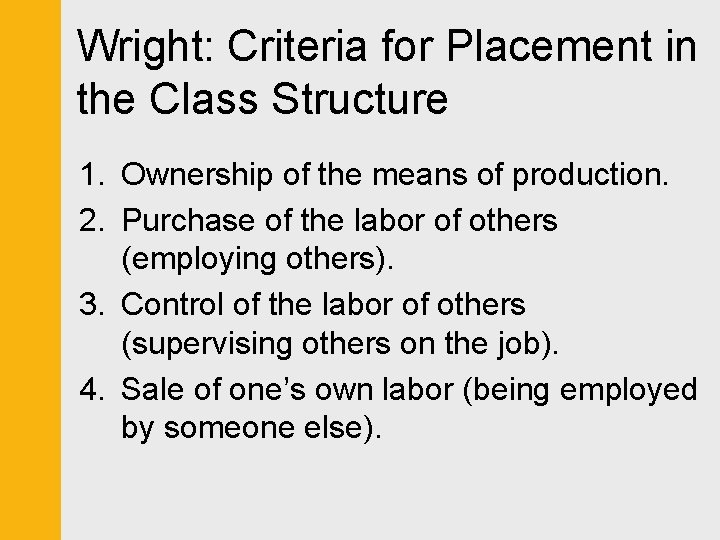
Wright: Criteria for Placement in the Class Structure 1. Ownership of the means of production. 2. Purchase of the labor of others (employing others). 3. Control of the labor of others (supervising others on the job). 4. Sale of one’s own labor (being employed by someone else).
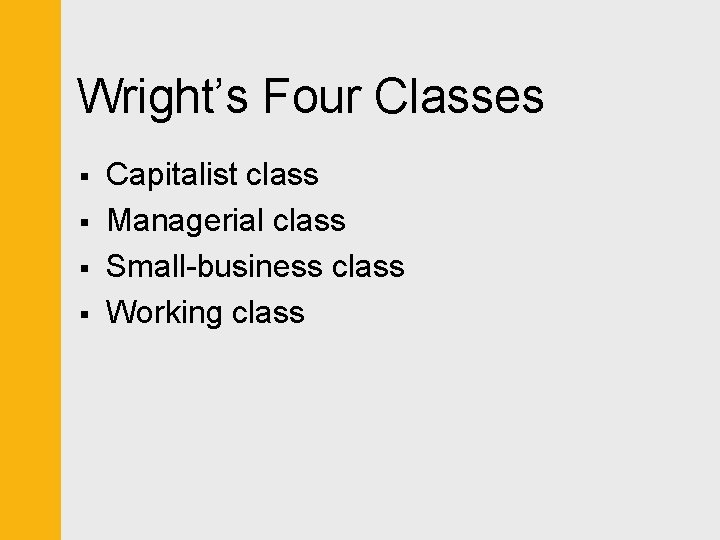
Wright’s Four Classes § § Capitalist class Managerial class Small-business class Working class
Comparison of Marx’s and Wright’s Models of Class Structure
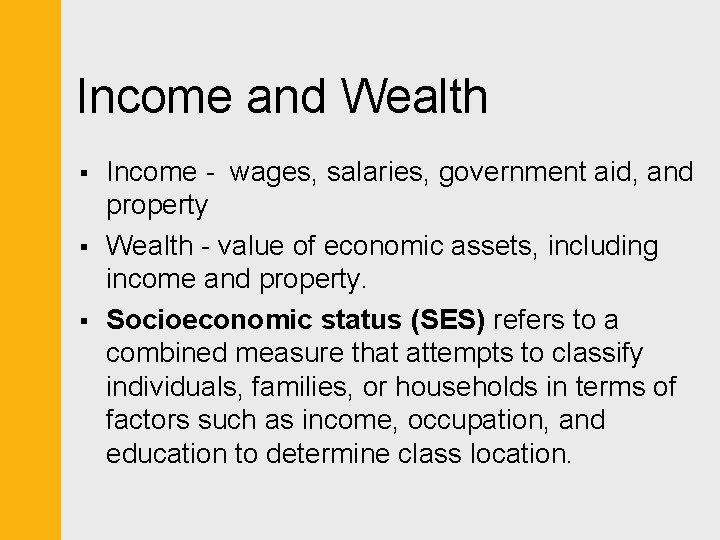
Income and Wealth § § § Income - wages, salaries, government aid, and property Wealth - value of economic assets, including income and property. Socioeconomic status (SES) refers to a combined measure that attempts to classify individuals, families, or households in terms of factors such as income, occupation, and education to determine class location.
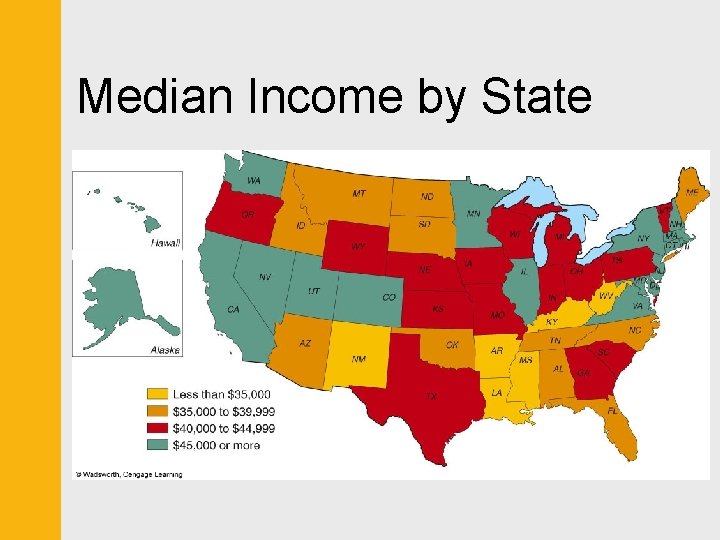
Median Income by State
Question § In which of these groups did your total family income, from all sources, fall last year before taxes, that is? a. $1 K-$14999 b. $15 K-24999 c. 25 K & UP
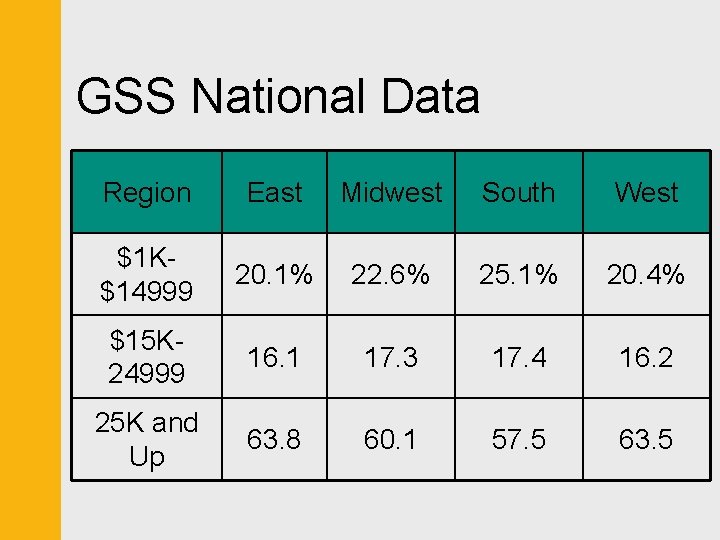
GSS National Data Region East Midwest South West $1 K$14999 20. 1% 22. 6% 25. 1% 20. 4% $15 K 24999 16. 1 17. 3 17. 4 16. 2 25 K and Up 63. 8 60. 1 57. 5 63. 5
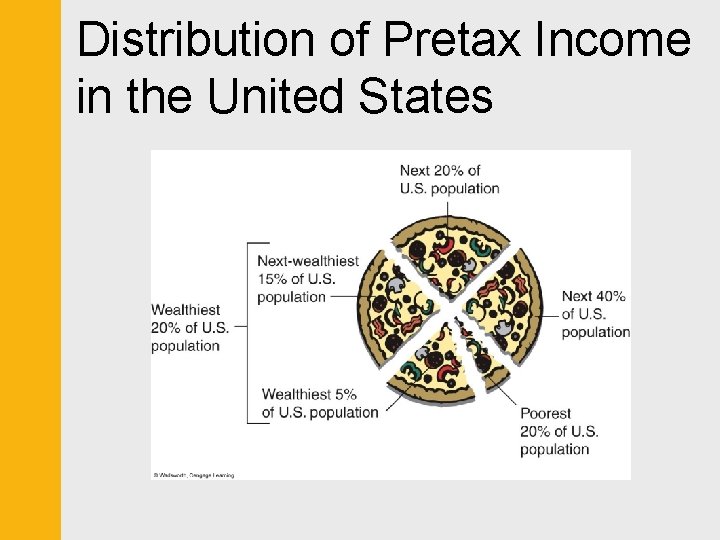
Distribution of Pretax Income in the United States
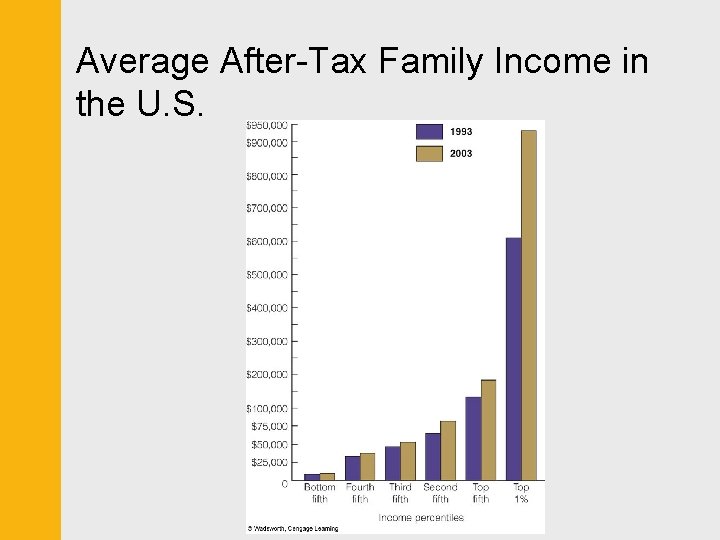
Average After-Tax Family Income in the U. S.
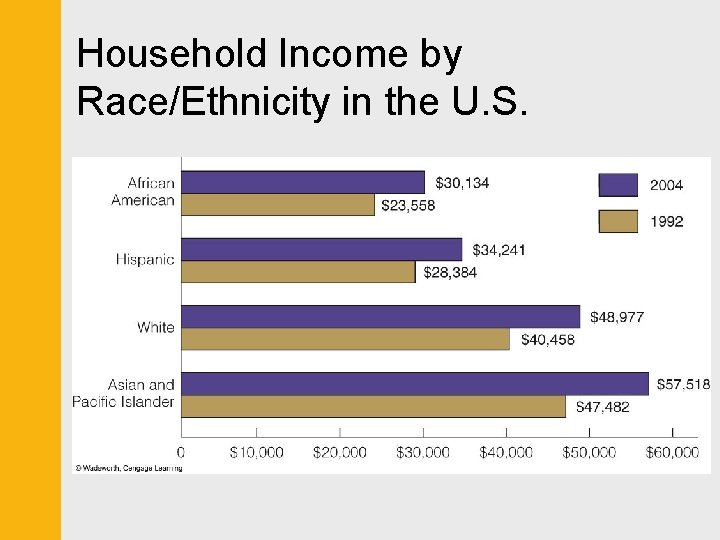
Household Income by Race/Ethnicity in the U. S.
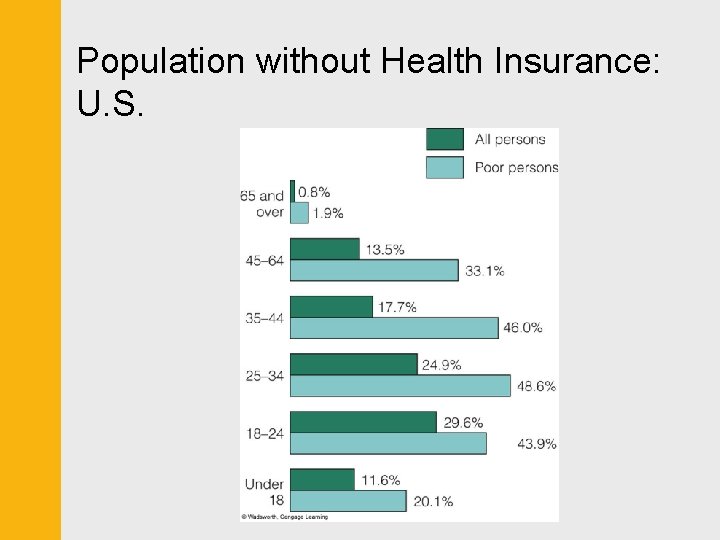
Population without Health Insurance: U. S.
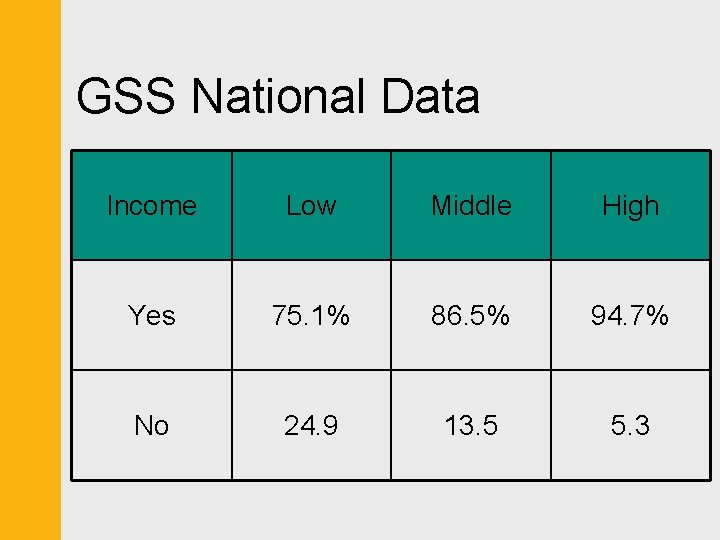
Question § Do you have any health insurance, including Medicare or Medicaid?
GSS National Data Income Low Middle High Yes 75. 1% 86. 5% 94. 7% No 24. 9 13. 5 5. 3
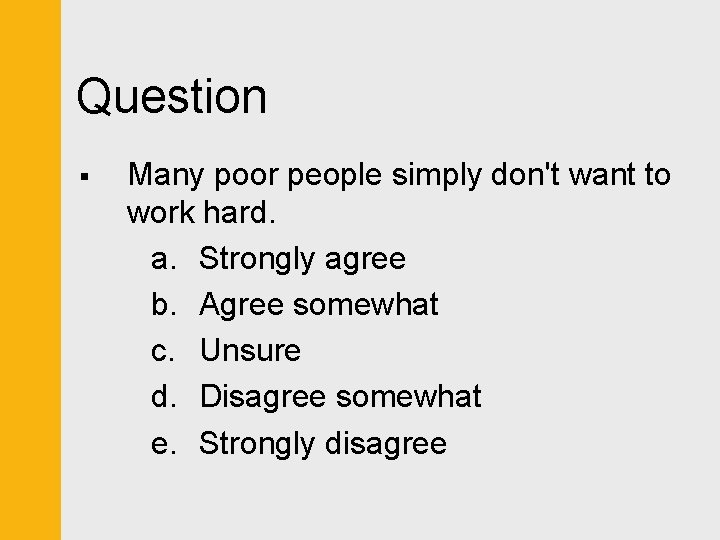
Question § Many poor people simply don't want to work hard. a. Strongly agree b. Agree somewhat c. Unsure d. Disagree somewhat e. Strongly disagree
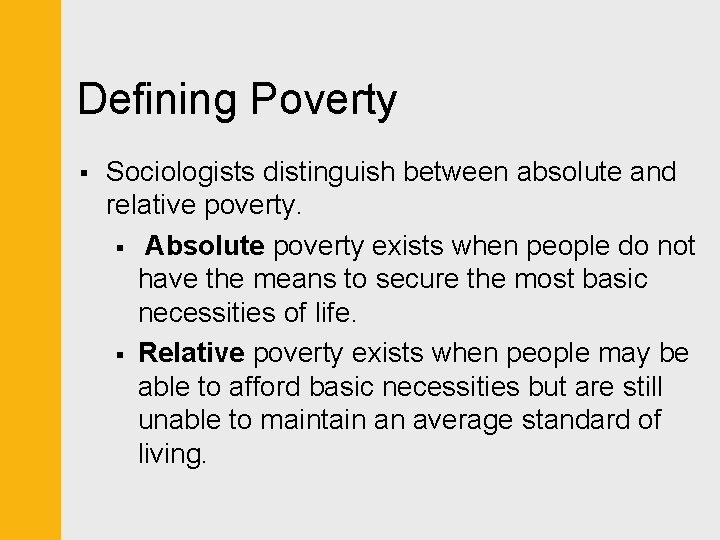
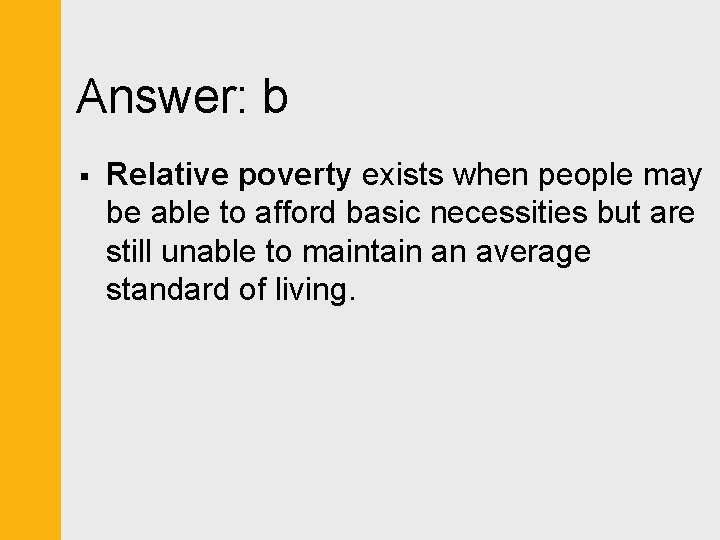
Defining Poverty § Sociologists distinguish between absolute and relative poverty. § Absolute poverty exists when people do not have the means to secure the most basic necessities of life. § Relative poverty exists when people may be able to afford basic necessities but are still unable to maintain an average standard of living.
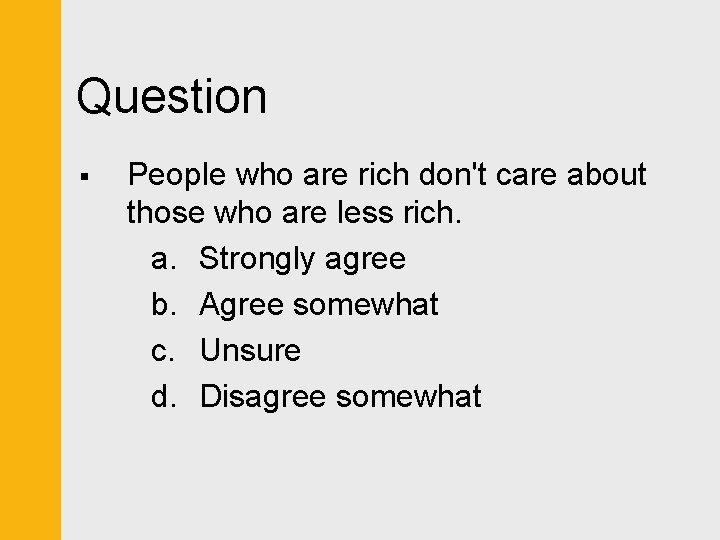
Question § People who are rich don't care about those who are less rich. a. Strongly agree b. Agree somewhat c. Unsure d. Disagree somewhat
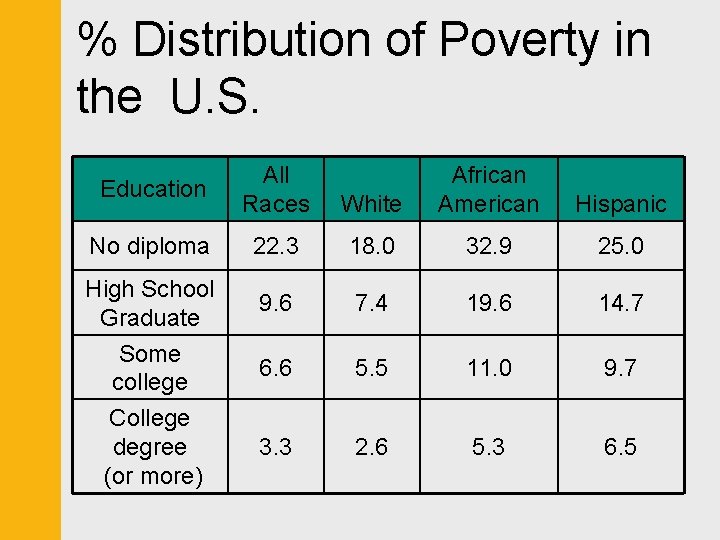
% Distribution of Poverty in the U. S. Education All Races No diploma High School Graduate Some college College degree (or more) White African American Hispanic 22. 3 18. 0 32. 9 25. 0 9. 6 7. 4 19. 6 14. 7 6. 6 5. 5 11. 0 9. 7 3. 3 2. 6 5. 3 6. 5
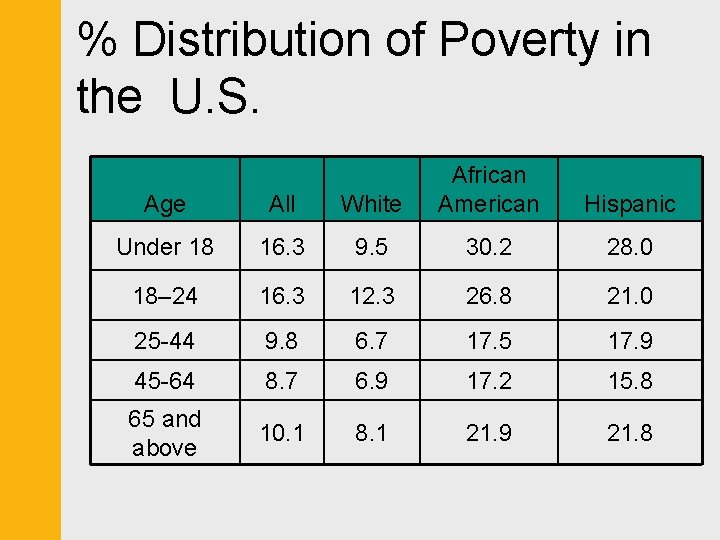
% Distribution of Poverty in the U. S. Age All White African American Under 18 16. 3 9. 5 30. 2 28. 0 18– 24 16. 3 12. 3 26. 8 21. 0 25 -44 9. 8 6. 7 17. 5 17. 9 45 -64 8. 7 6. 9 17. 2 15. 8 65 and above 10. 1 8. 1 21. 9 21. 8 Hispanic
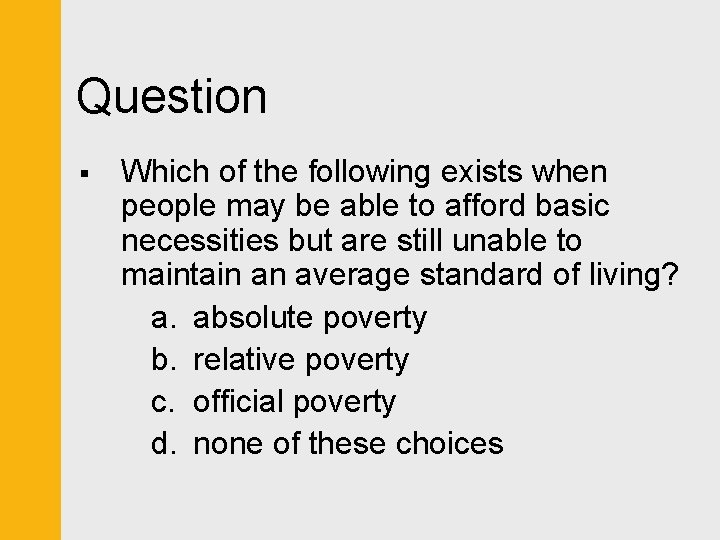
Question § Which of the following exists when people may be able to afford basic necessities but are still unable to maintain an average standard of living? a. absolute poverty b. relative poverty c. official poverty d. none of these choices
Answer: b § Relative poverty exists when people may be able to afford basic necessities but are still unable to maintain an average standard of living.
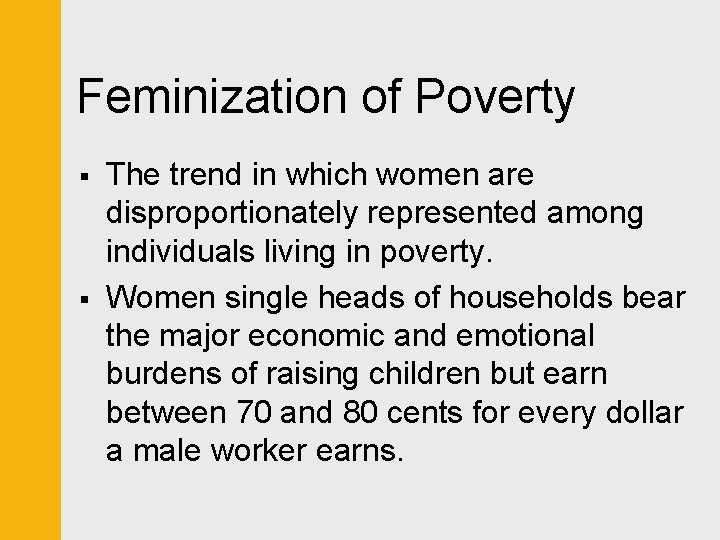
Feminization of Poverty § § The trend in which women are disproportionately represented among individuals living in poverty. Women single heads of households bear the major economic and emotional burdens of raising children but earn between 70 and 80 cents for every dollar a male worker earns.
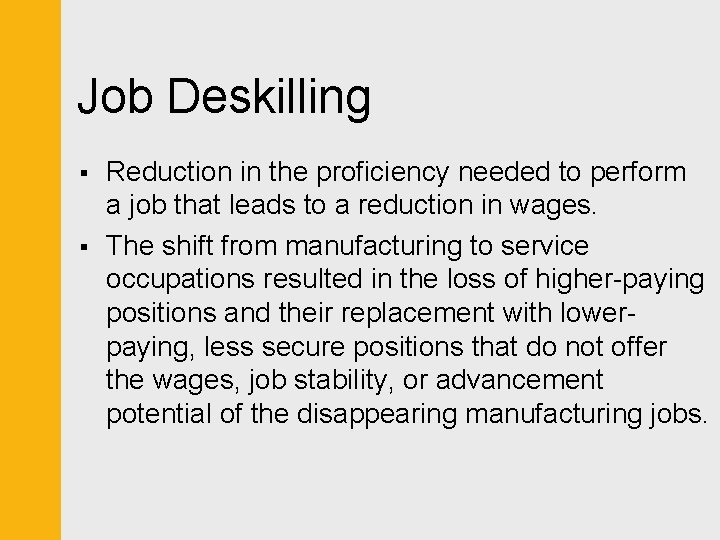
Job Deskilling § § Reduction in the proficiency needed to perform a job that leads to a reduction in wages. The shift from manufacturing to service occupations resulted in the loss of higher-paying positions and their replacement with lowerpaying, less secure positions that do not offer the wages, job stability, or advancement potential of the disappearing manufacturing jobs.
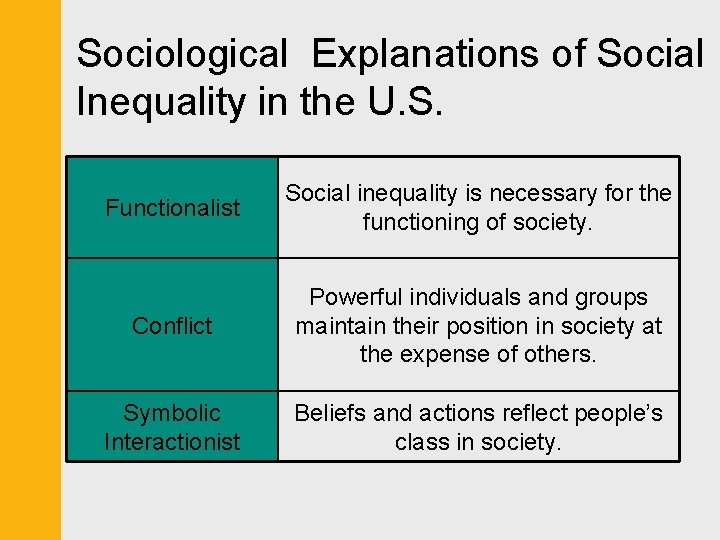
Sociological Explanations of Social Inequality in the U. S. Functionalist Social inequality is necessary for the functioning of society. Conflict Powerful individuals and groups maintain their position in society at the expense of others. Symbolic Interactionist Beliefs and actions reflect people’s class in society.
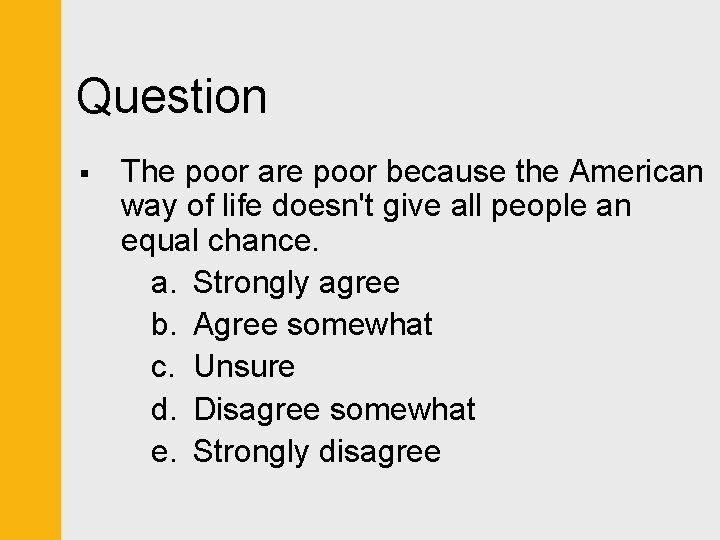
Question § The poor are poor because the American way of life doesn't give all people an equal chance. a. Strongly agree b. Agree somewhat c. Unsure d. Disagree somewhat e. Strongly disagree
Quick Quiz
1. The economic gain derived from wages, salaries, income transfers and ownership of property is: a. wealth b. none of the choices c. status d. income
Answer: d § The economic gain derived from wages, salaries, income transfers and ownership of property is income.
2. The value of all of a person's or family's economic assets, including income, personal property, and incomeproducing property. a. wealth b. none of the choices c. income d. status
Answer: a § The value of all of a person's or family's economic assets, including income, personal property, and income-producing property is wealth.
3. According to Karl Marx, he refers to the workers as the: a. bourgeoisie b. proletariat c. lumpenproletariat d. intellectuals
Answer: b § According to Karl Marx, he refers to the workers as the proletariat.
4. The multidimensional approach of Max Weber included: a. prestige b. wealth c. power d. all of the choices
Answer: d § The multidimensional approach of Max Weber included prestige, wealth and power.
5. People in American no longer believe in the American Dream. a. True. b. False.
Answer: b § People in American still believe in the American Dream
6. A combined measure that attempts to classify individuals, families, or households in terms of factors such as income, occupation, and education to determine class location is called: a. wealth b. socioeconomic status c. income d. prestige
Answer: b § A combined measure that attempts to classify individuals, families, or households in terms of factors such as income, occupation, and education to determine class location is called socioeconomic status.
7. From a conflict perspective: a. education serves to develop equality between children. b. education creates a consensus among the population. c. education perpetuates inequality in society. d. education corrects most social ills.
Answer: c § From a conflict perspective: education perpetuates inequality in society.