
Chapter 8 Chemical Signals Maintain Homeostasis The Importance
- Slides: 11
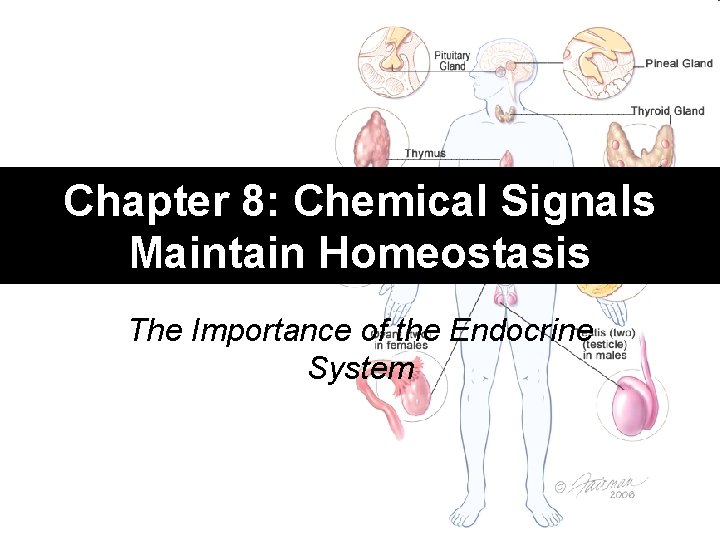
Chapter 8: Chemical Signals Maintain Homeostasis The Importance of the Endocrine System
Sound familiar?
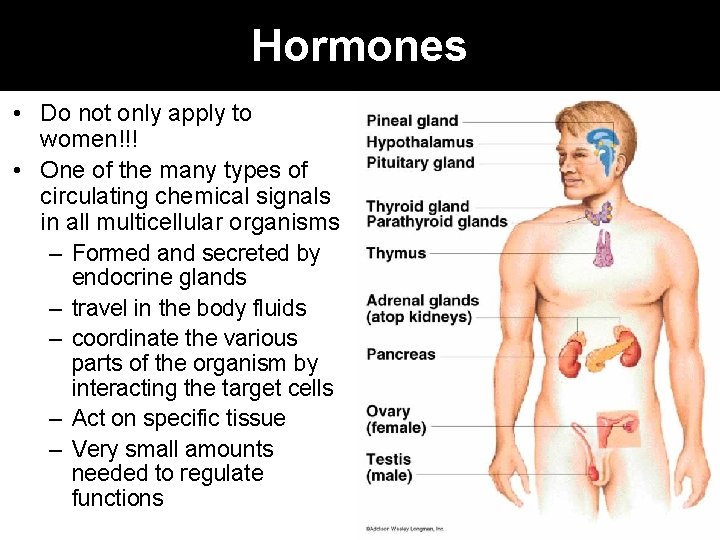
Hormones • Do not only apply to women!!! • One of the many types of circulating chemical signals in all multicellular organisms – Formed and secreted by – – endocrine glands travel in the body fluids coordinate the various parts of the organism by interacting the target cells Act on specific tissue Very small amounts needed to regulate functions
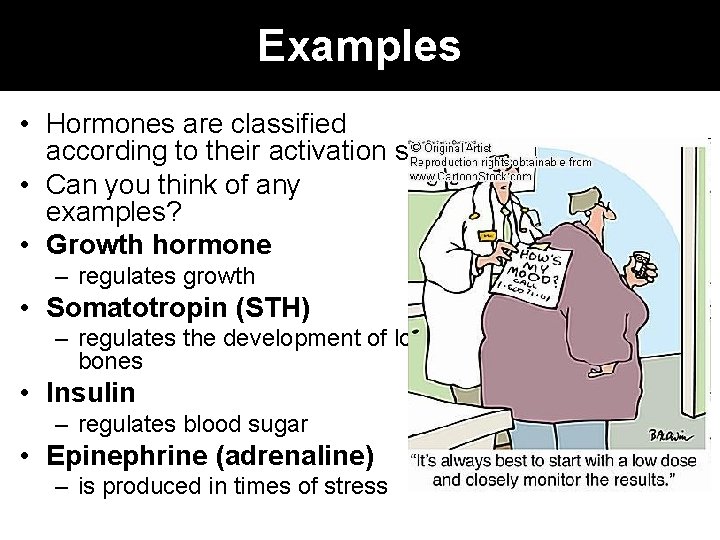
Examples • Hormones are classified according to their activation site • Can you think of any examples? • Growth hormone – regulates growth • Somatotropin (STH) – regulates the development of long bones • Insulin – regulates blood sugar • Epinephrine (adrenaline) – is produced in times of stress
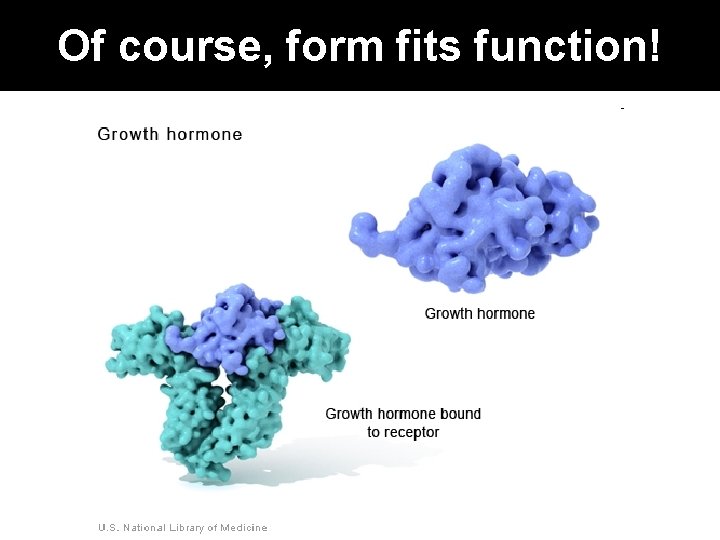
Of course, form fits function!
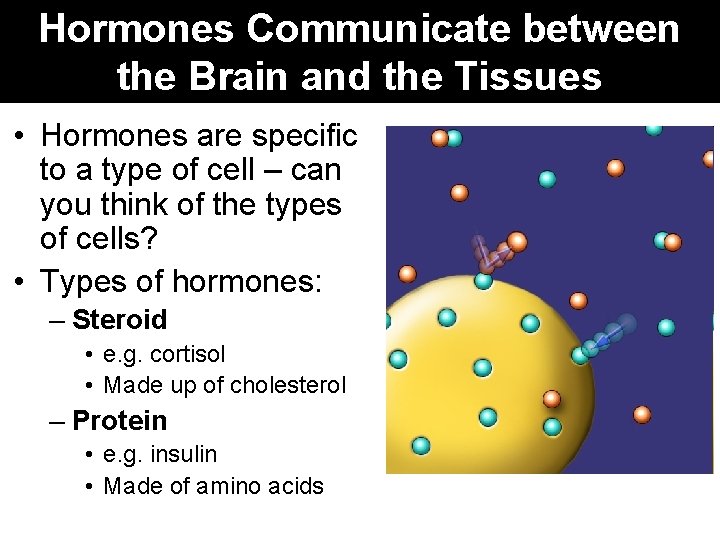
Hormones Communicate between the Brain and the Tissues • Hormones are specific to a type of cell – can you think of the types of cells? • Types of hormones: – Steroid • e. g. cortisol • Made up of cholesterol – Protein • e. g. insulin • Made of amino acids
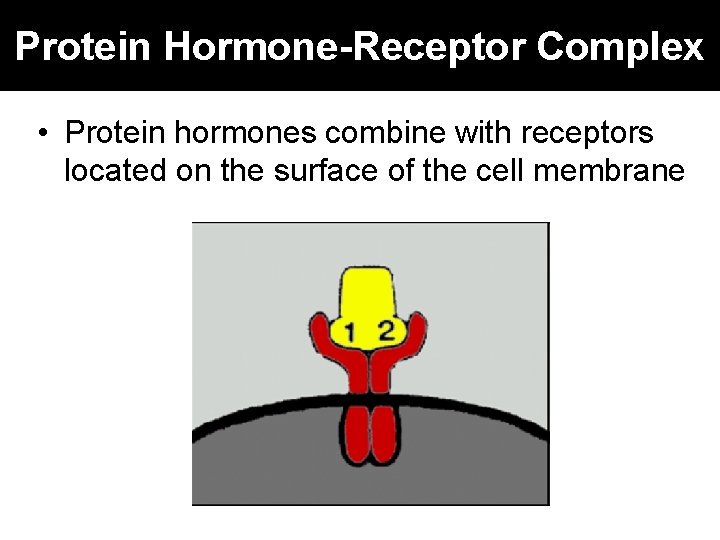
Protein Hormone-Receptor Complex • Protein hormones combine with receptors located on the surface of the cell membrane
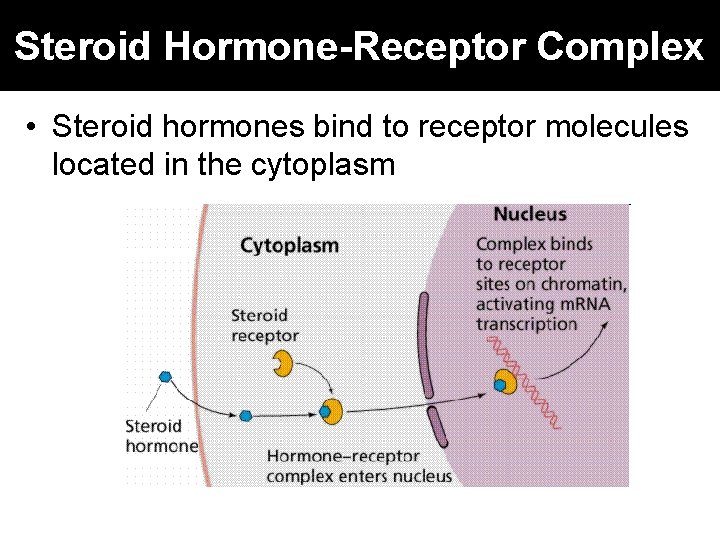
Steroid Hormone-Receptor Complex • Steroid hormones bind to receptor molecules located in the cytoplasm
The Amazing Cell Membrane. . . • Video
Hormone-Receptor Interaction • When a hormone interacts or combines with its specific receptor, the cell receives the signal to transcribe a gene to produce an enzyme OR to activate an enzyme (allosteric interactions) • Why? • Cyclic AMP signal pathway page 375 draw it out!
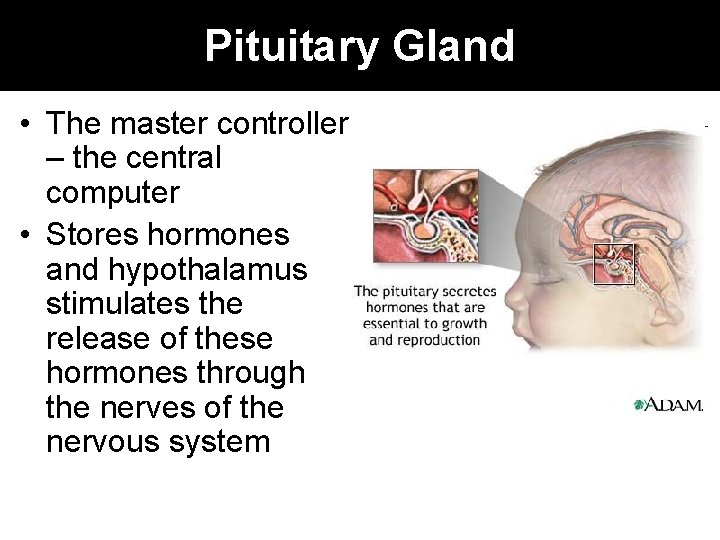
Pituitary Gland • The master controller – the central computer • Stores hormones and hypothalamus stimulates the release of these hormones through the nerves of the nervous system