
Chapter 8 Cellular Reproduction In order for organisms
- Slides: 33
Chapter 8 – Cellular Reproduction
In order for organisms to grow and reproduce, cells must divide.
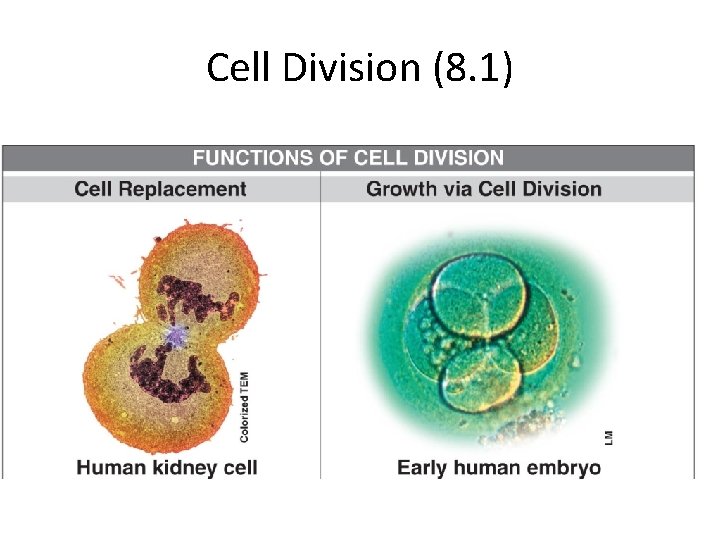
Cell Division (8. 1)
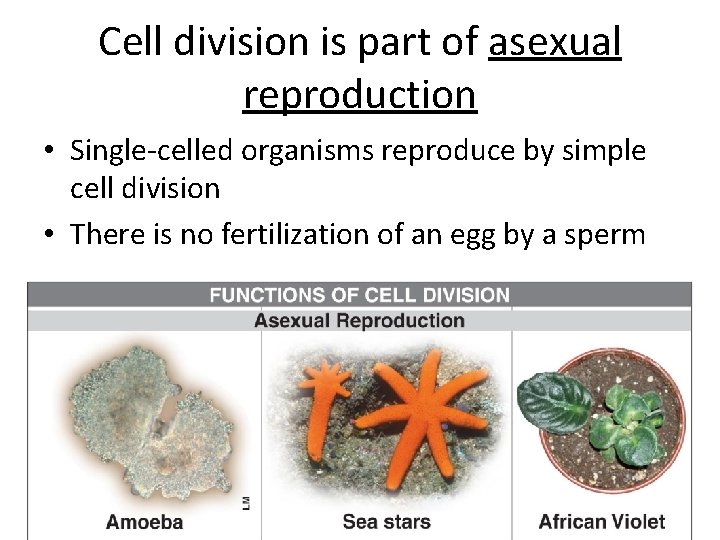
Cell division is part of asexual reproduction • Single-celled organisms reproduce by simple cell division • There is no fertilization of an egg by a sperm
Sexual reproduction • Requires fertilization of an egg by a sperm using a special type of cell division called meiosis. • Thus, sexually reproducing organisms use: – Meiosis for reproduction – Mitosis for growth and maintenance
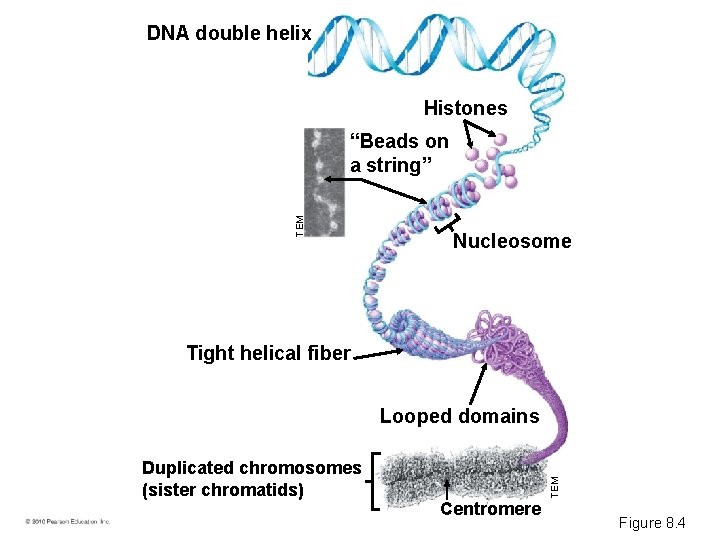
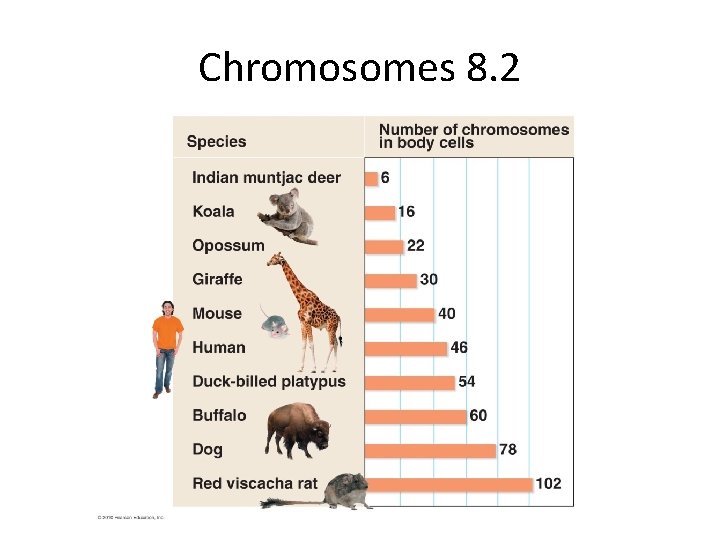
Chromosomes Contain Our Genes • Long stretches of DNA and proteins • Humans have 23 different chromosomes • Diploid – 2 of each chromosome (our body cells) • Haploid – 1 of each chromosome (our sex cells)
DNA double helix Histones TEM “Beads on a string” Nucleosome Tight helical fiber Duplicated chromosomes (sister chromatids) TEM Looped domains Centromere Figure 8. 4
Chromosomes 8. 2
Cell Cycle 1. 2. 3. 4. Cells grow and do “cell” things Cells copy DNA Each copy moves to opposite ends of cell. Cells divide; each new cell has a copy of DNA
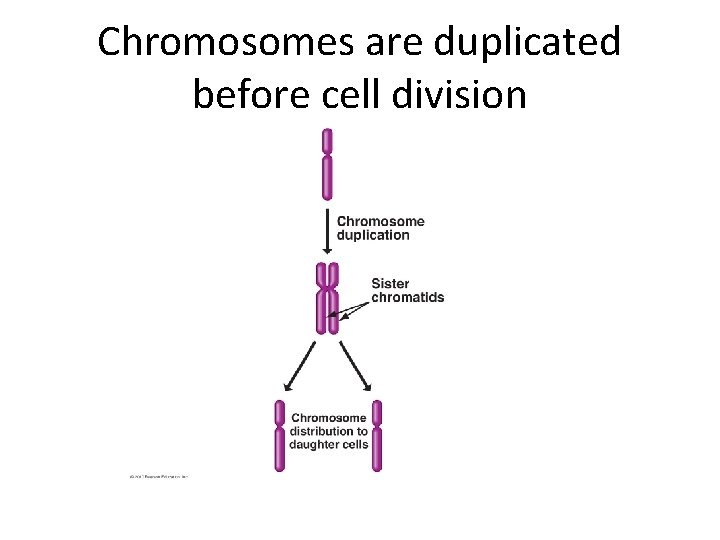
Chromosomes are duplicated before cell division
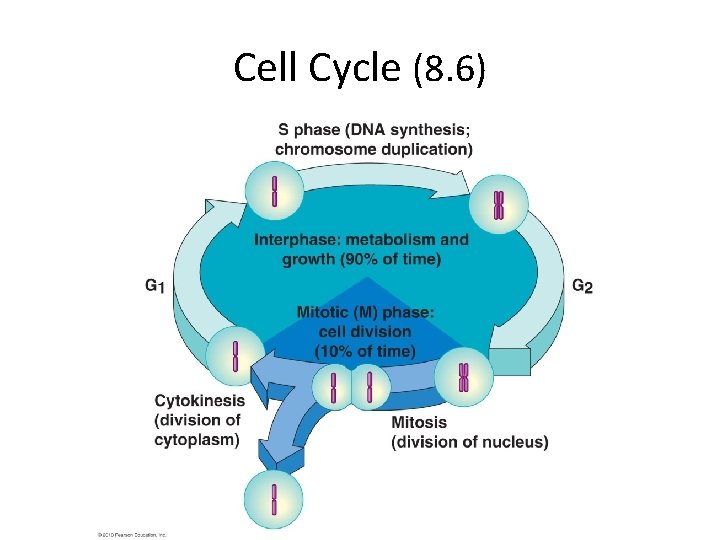
Cell Cycle (8. 6)
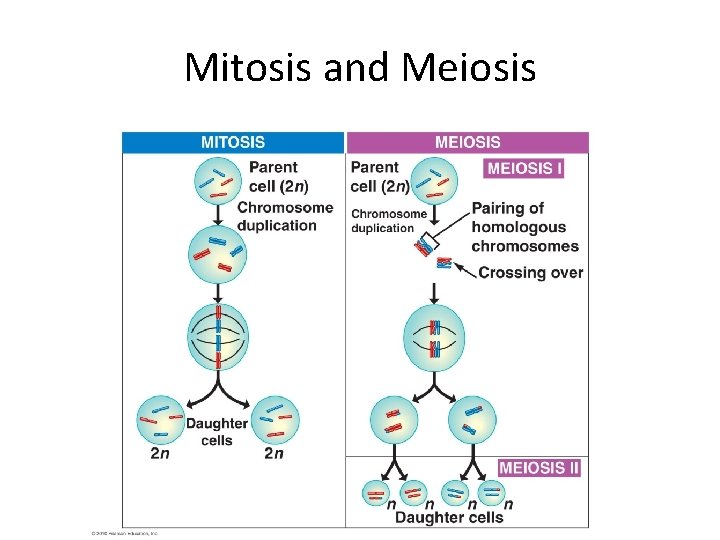
Eukaryote cells divide by mitosis or meiosis • Mitosis – One cell divides producing two identical nuclei followed by cell division – Almost all cell reproduction • Meiosis (only in testes and ovaries) – One cell divides twice to produce four genetically different cells – Produces egg and sperm cells (gametes)
A Cell’s life cycle is divided into phases. • Most of the time a cell is in Interphase • During interphase, a cell: – Performs its normal functions – Doubles everything in its cytoplasm – Grows in size
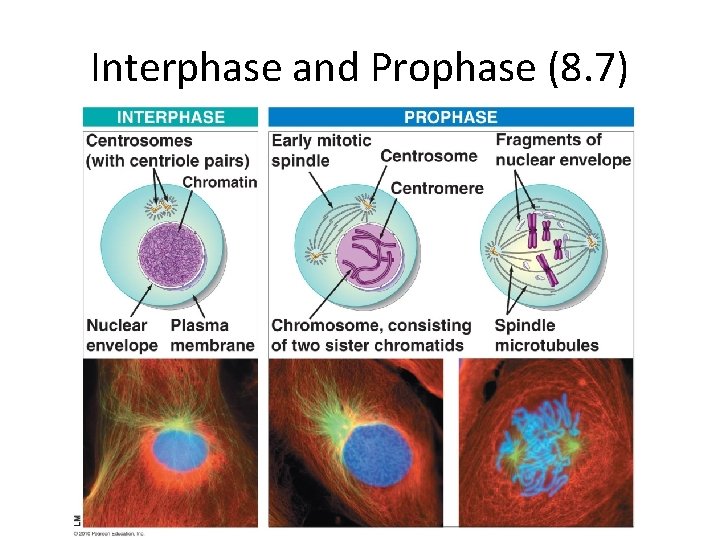
Interphase and Prophase (8. 7)
Prophase • Chromosomes condense and are visible under light microscope • Nuclear membrane breaks down • Spindle microtubules grow from two centrosomes, clouds of cytoplasmic material that in animal cells contain centrioles.
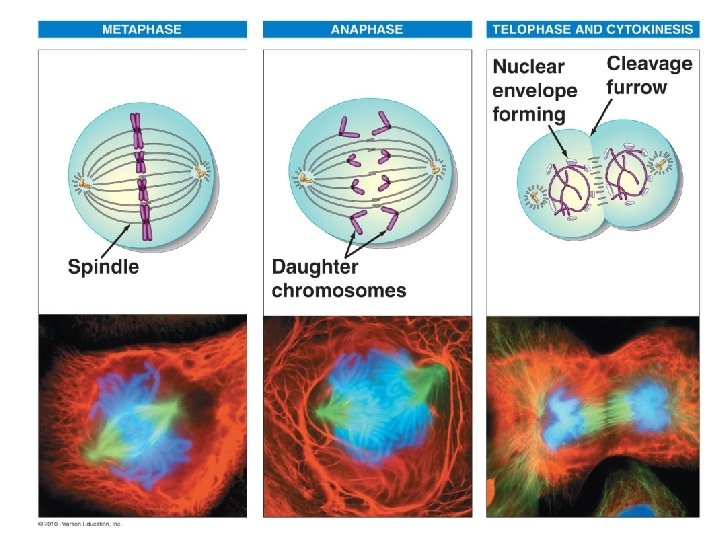
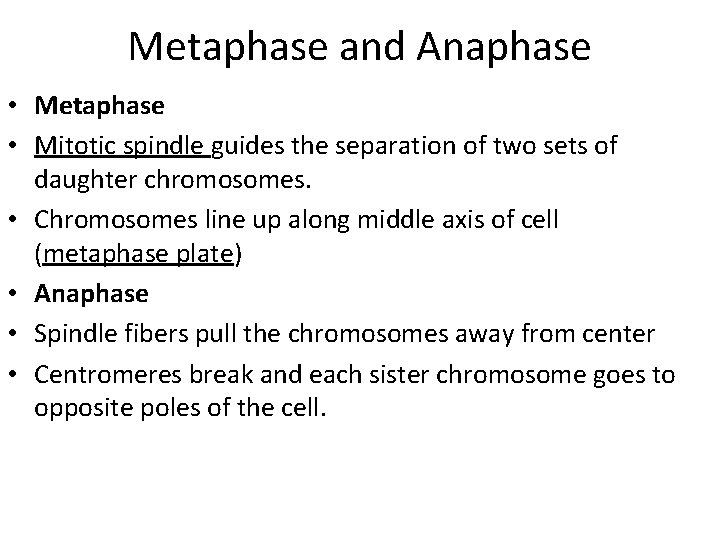
Metaphase and Anaphase • Metaphase • Mitotic spindle guides the separation of two sets of daughter chromosomes. • Chromosomes line up along middle axis of cell (metaphase plate) • Anaphase • Spindle fibers pull the chromosomes away from center • Centromeres break and each sister chromosome goes to opposite poles of the cell.
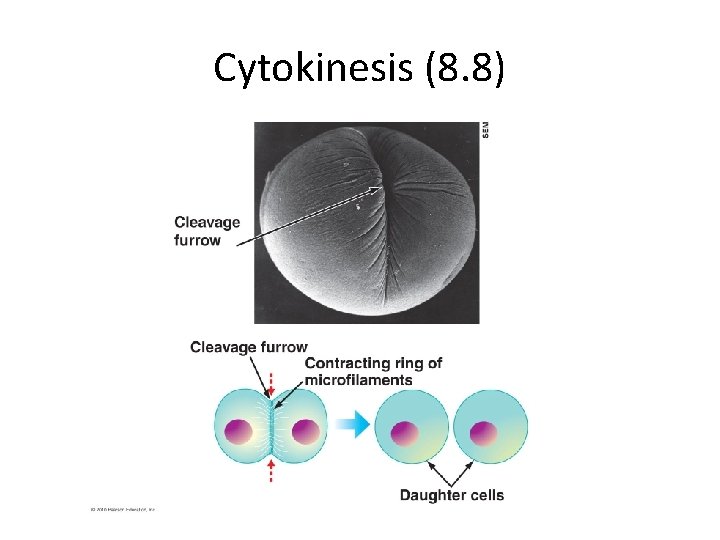
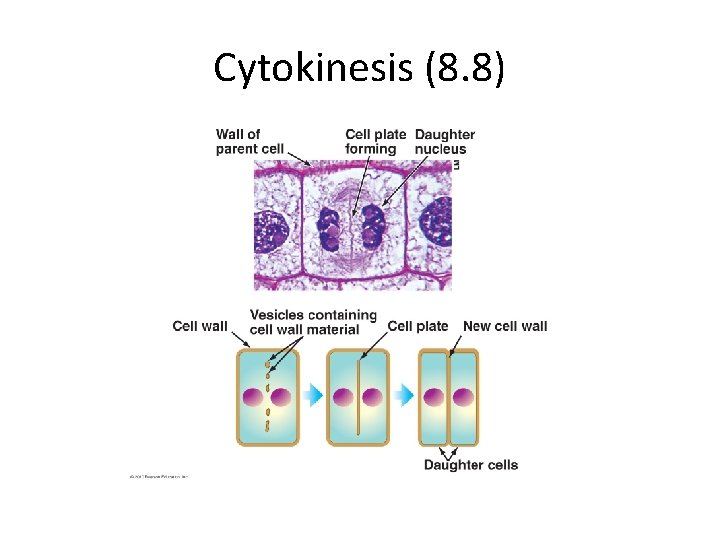
Telophase and Cytokinesis • Chromosomes unwind at the poles • New nuclear membrane forms • Cytokinesis typically: – Occurs during telophase – Divides the cytoplasm – Is different in plant and animal cells
Cytokinesis (8. 8)
Cytokinesis (8. 8)
Meiosis • Two cell divisions (Meiosis I and II) • Four daughter cells result each containing half of the chromosomes as the parent cell • In males meiosis results in the production of 4 sperm cells • In females meiosis results in the production of 1 large egg cell and 3 small polar bodies
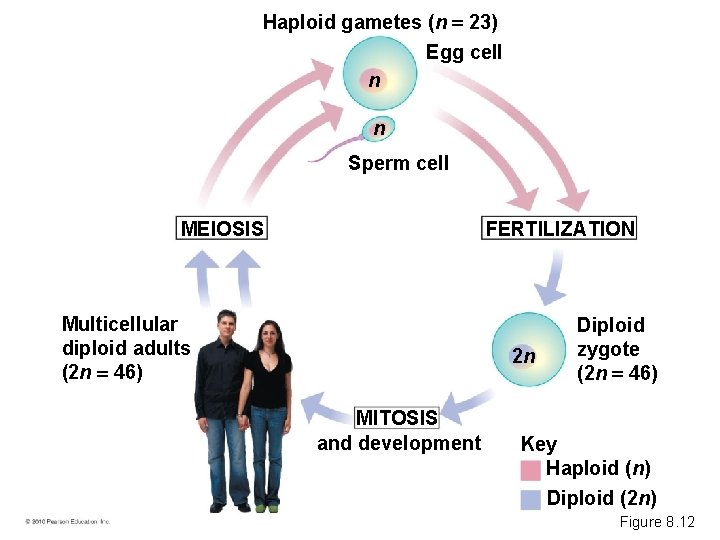
Haploid gametes (n 23) Egg cell n n Sperm cell FERTILIZATION MEIOSIS Multicellular diploid adults (2 n 46) 2 n MITOSIS and development Diploid zygote (2 n 46) Key Haploid (n) Diploid (2 n) Figure 8. 12
Meiosis has two stages • Meiosis II
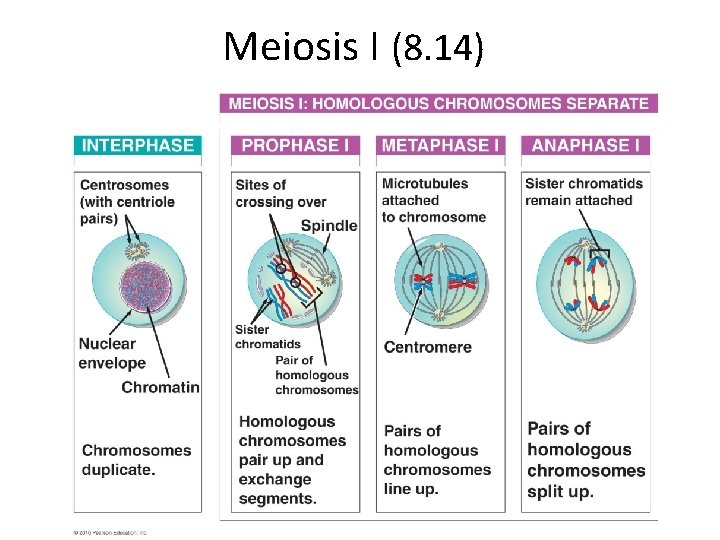
Meiosis I • Similar to mitosis except during first metaphase chromosome pair up side by side • During first anaphase one set of chromosomes move to either pole of the cell. • Sister chromotids stay joined in the new daughter cells
Meiosis I (8. 14)
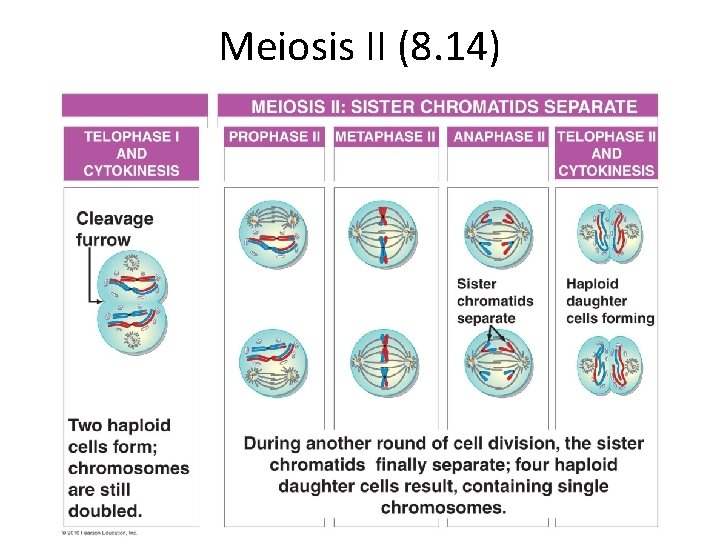
Meiosis II • Anaphase II sister chromotids separate • Daughter cells have only one of each chromosome (Haploid)
Meiosis II (8. 14)
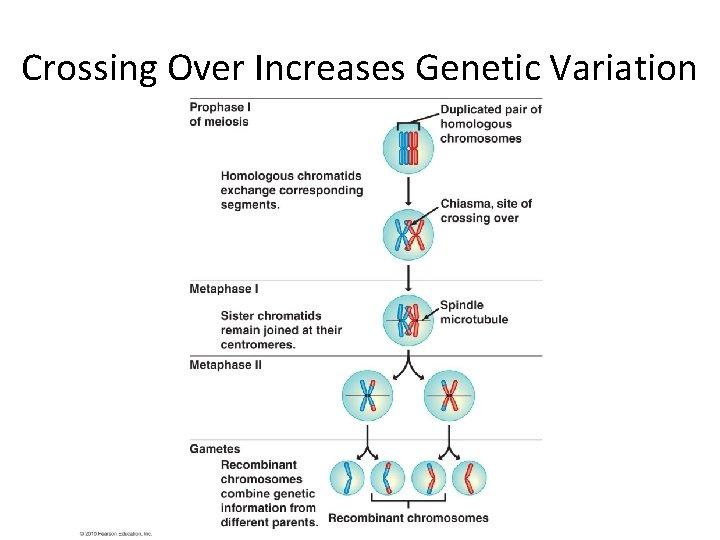
Crossing Over Increases Genetic Variation
The number of times a cell can divide is limited.
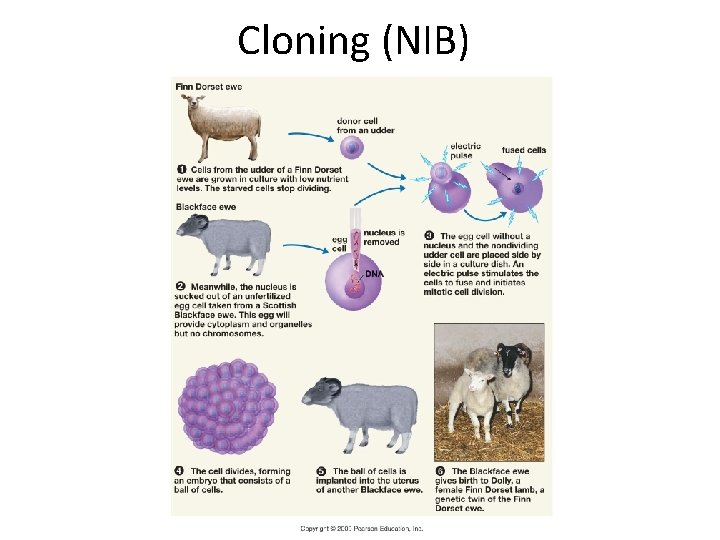
Cloning (NIB)
Dolly was euthanized • When chromosomes replicate they lose part of their ends (telomeres) • Linked to aging • Dolly’s chromosomes came from an adult sheep with already shortened telomeres • Dolly developed age-related illnesses
Dolly taught us a lot about cellular aging.
Mitosis and Meiosis