
Chapter 8 Cell Reproduction Cell Cycle aka a
- Slides: 40
Chapter 8: Cell Reproduction
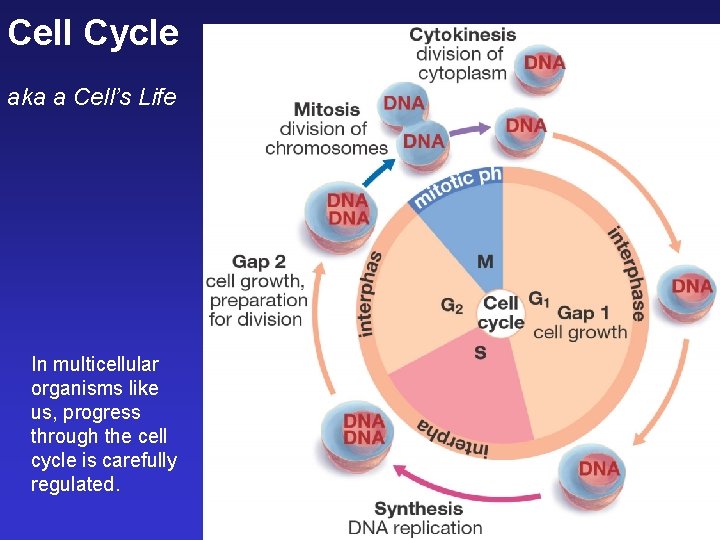
Cell Cycle aka a Cell’s Life In multicellular organisms like us, progress through the cell cycle is carefully regulated.
Steps of Cell Cycle • Interphase – cell growth, DNA duplication, and mitosis preparation • Mitosis – cell division • Cytokinesis –division of the cytoplasm and other cell organelles
Interphase • G 1 phase – Growth • G 0 phase – Cells exit cell cycle – Cells do not copy DNA or prepare for cell division • S phase – DNA replication • G 2 phase – Growth and preparation for cell division
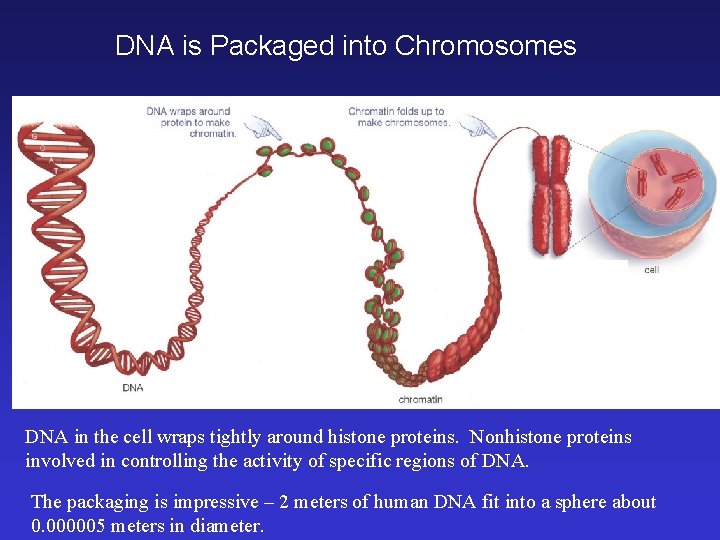
DNA is Packaged into Chromosomes duplicated chromosome chromatin DNA in the cell wraps tightly around histone proteins. Nonhistone proteins involved in controlling the activity of specific regions of DNA. The packaging is impressive – 2 meters of human DNA fit into a sphere about 0. 000005 meters in diameter.
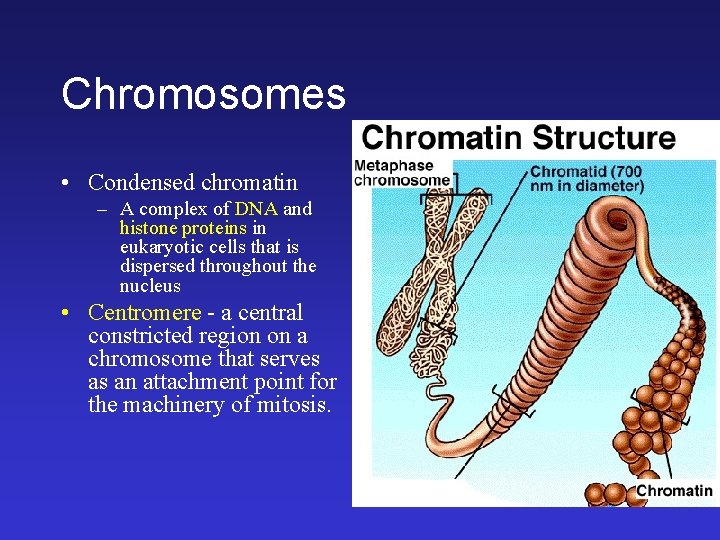
Chromosomes • Condensed chromatin – A complex of DNA and histone proteins in eukaryotic cells that is dispersed throughout the nucleus • Centromere - a central constricted region on a chromosome that serves as an attachment point for the machinery of mitosis.
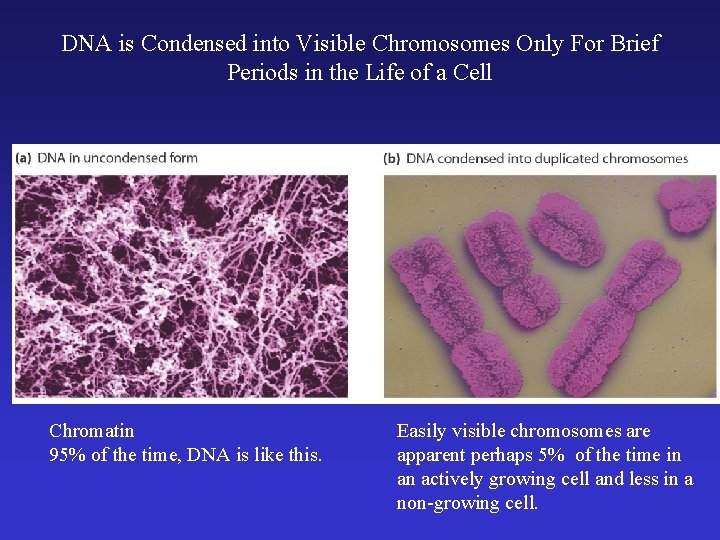
DNA is Condensed into Visible Chromosomes Only For Brief Periods in the Life of a Cell Chromatin 95% of the time, DNA is like this. Easily visible chromosomes are apparent perhaps 5% of the time in an actively growing cell and less in a non-growing cell.
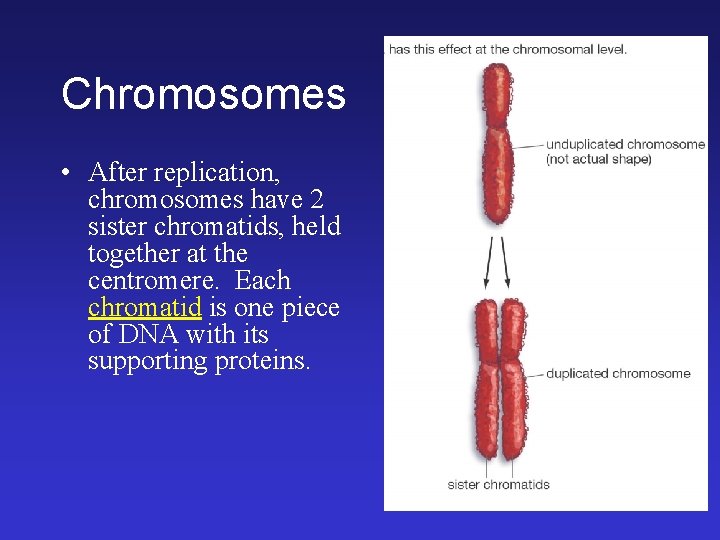
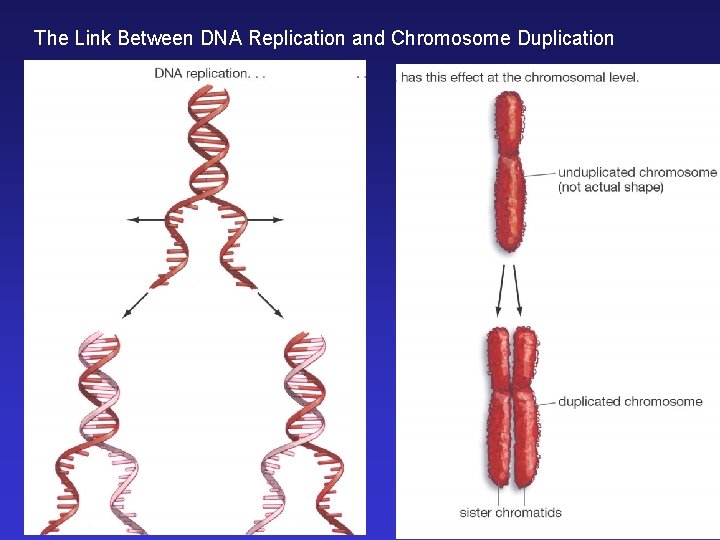
Chromosomes • After replication, chromosomes have 2 sister chromatids, held together at the centromere. Each chromatid is one piece of DNA with its supporting proteins.
The Link Between DNA Replication and Chromosome Duplication
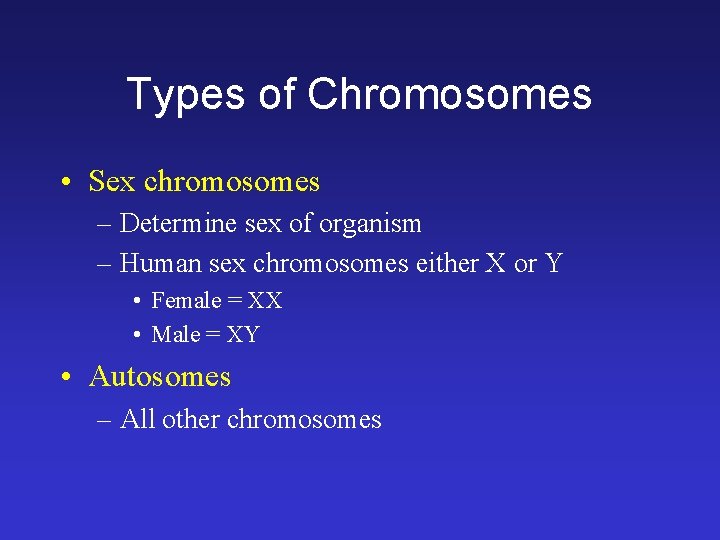
Types of Chromosomes • Sex chromosomes – Determine sex of organism – Human sex chromosomes either X or Y • Female = XX • Male = XY • Autosomes – All other chromosomes
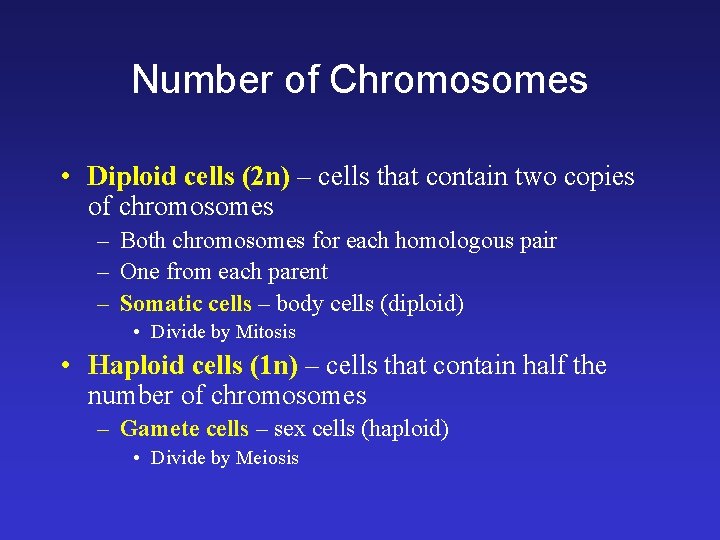
Number of Chromosomes • Diploid cells (2 n) – cells that contain two copies of chromosomes – Both chromosomes for each homologous pair – One from each parent – Somatic cells – body cells (diploid) • Divide by Mitosis • Haploid cells (1 n) – cells that contain half the number of chromosomes – Gamete cells – sex cells (haploid) • Divide by Meiosis
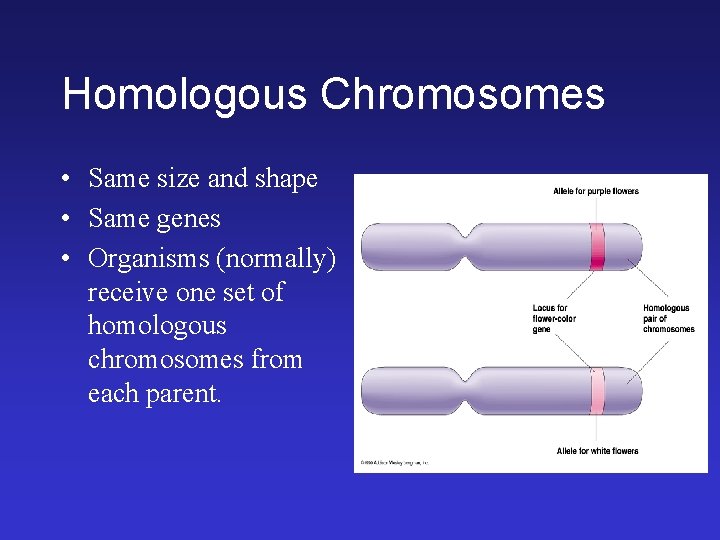
Homologous Chromosomes • Same size and shape • Same genes • Organisms (normally) receive one set of homologous chromosomes from each parent.
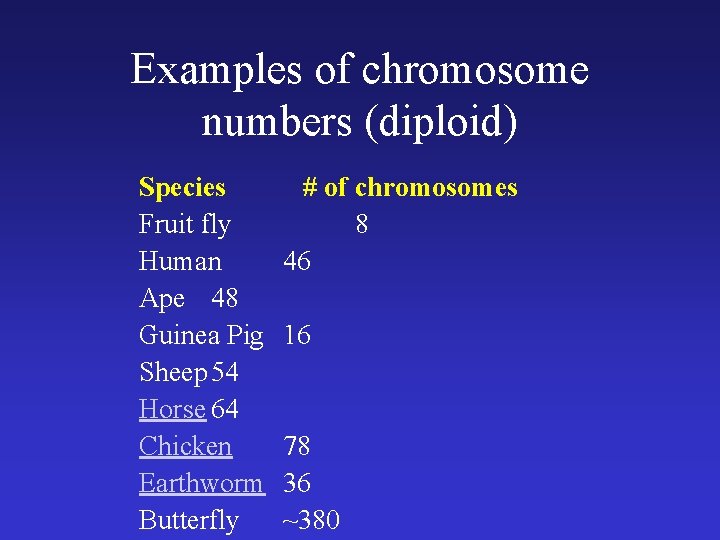
Examples of chromosome numbers (diploid) Species Fruit fly Human Ape 48 Guinea Pig Sheep 54 Horse 64 Chicken Earthworm Butterfly # of chromosomes 8 46 16 78 36 ~380
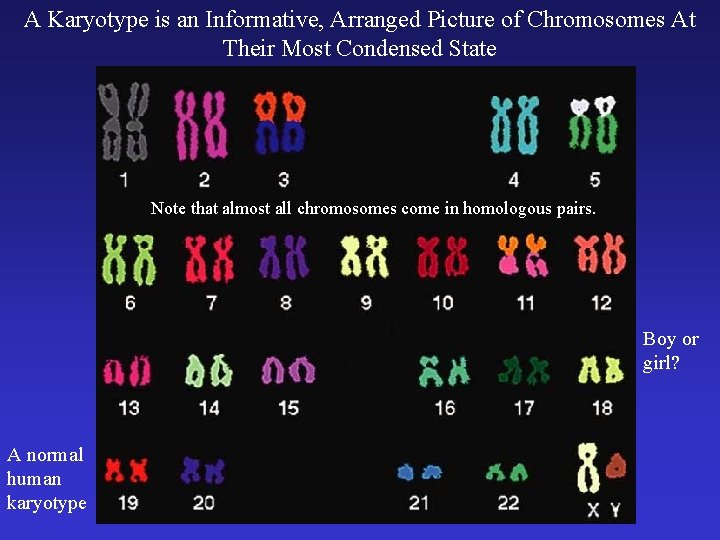
A Karyotype is an Informative, Arranged Picture of Chromosomes At Their Most Condensed State Note that almost all chromosomes come in homologous pairs. Boy or girl? A normal human karyotype
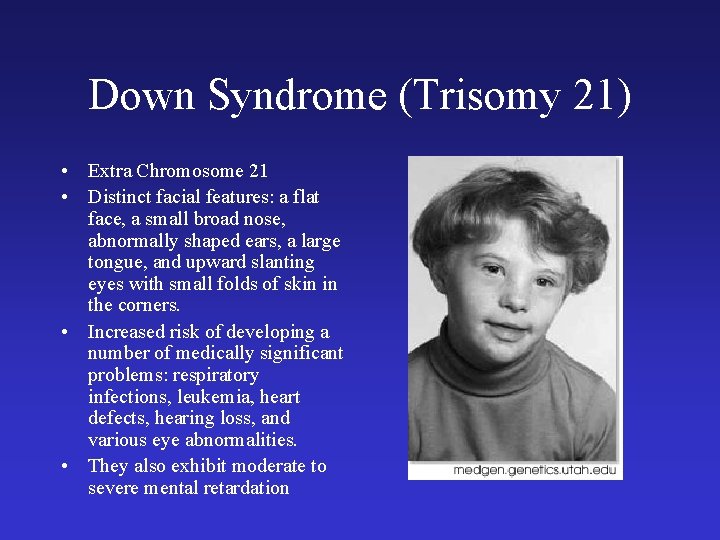
Down Syndrome (Trisomy 21) • Extra Chromosome 21 • Distinct facial features: a flat face, a small broad nose, abnormally shaped ears, a large tongue, and upward slanting eyes with small folds of skin in the corners. • Increased risk of developing a number of medically significant problems: respiratory infections, leukemia, heart defects, hearing loss, and various eye abnormalities. • They also exhibit moderate to severe mental retardation
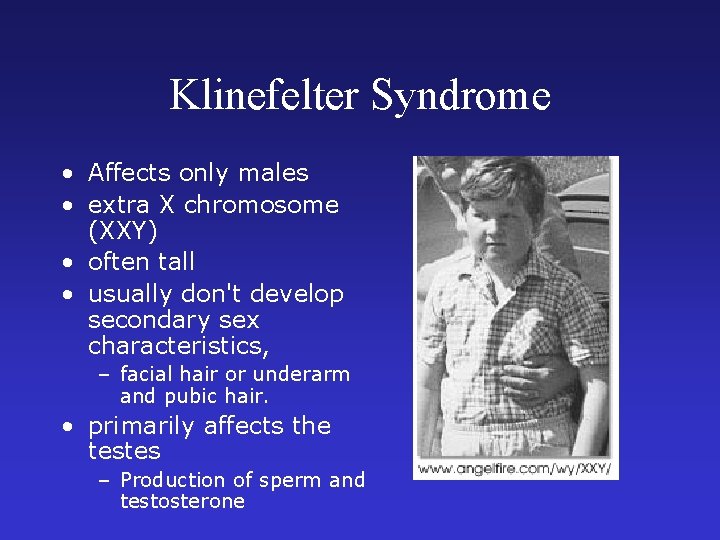
Klinefelter Syndrome • Affects only males • extra X chromosome (XXY) • often tall • usually don't develop secondary sex characteristics, – facial hair or underarm and pubic hair. • primarily affects the testes – Production of sperm and testosterone
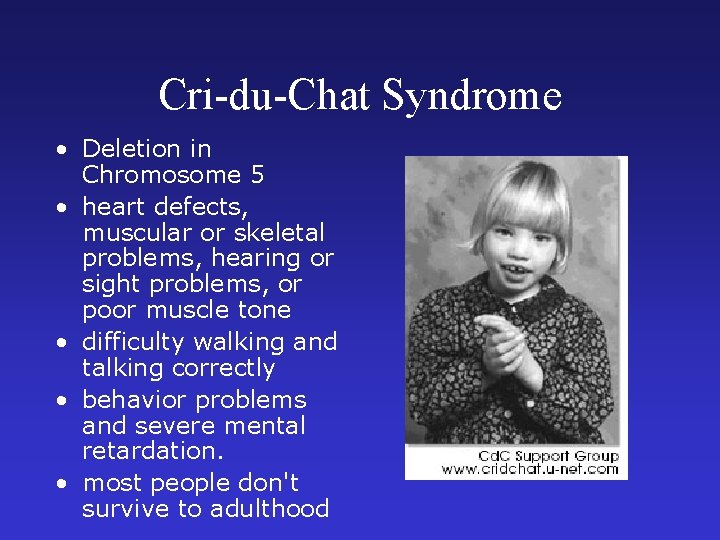
Cri-du-Chat Syndrome • Deletion in Chromosome 5 • heart defects, muscular or skeletal problems, hearing or sight problems, or poor muscle tone • difficulty walking and talking correctly • behavior problems and severe mental retardation. • most people don't survive to adulthood
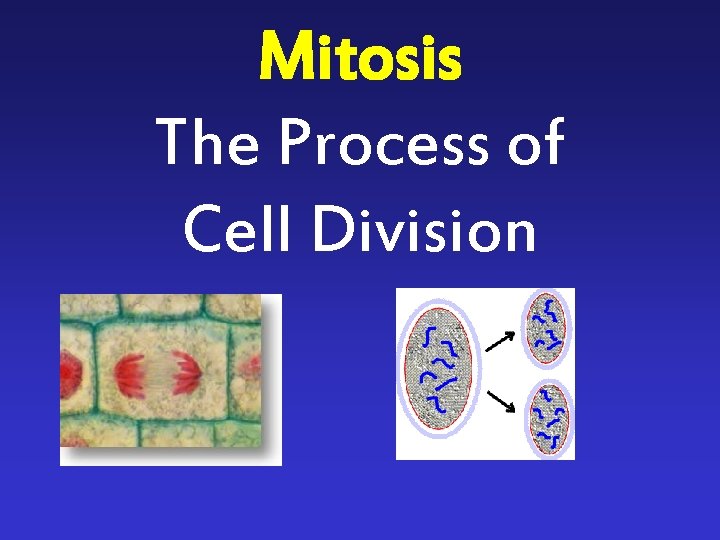
Mitosis The Process of Cell Division
Why do cells divide by Mitosis? • Reproduction – Unicellular organisms – binary fission • Growth – Add cell number • Repair • Differentiation – Add cells with specific function • Regeneration – Plants, starfish
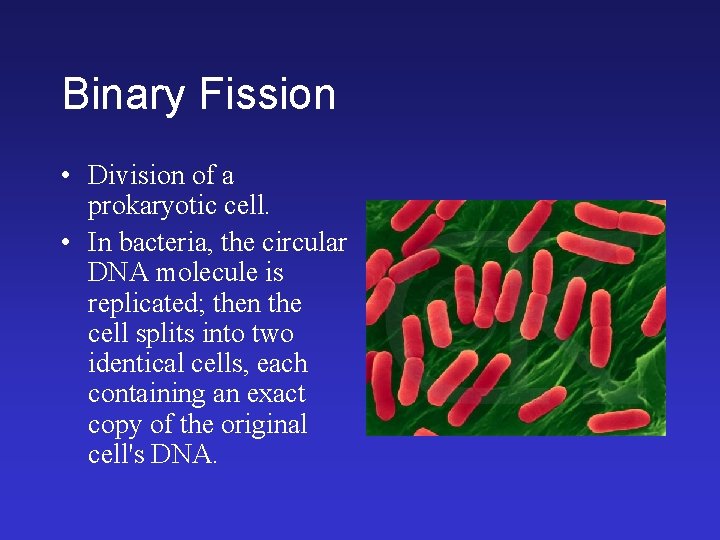
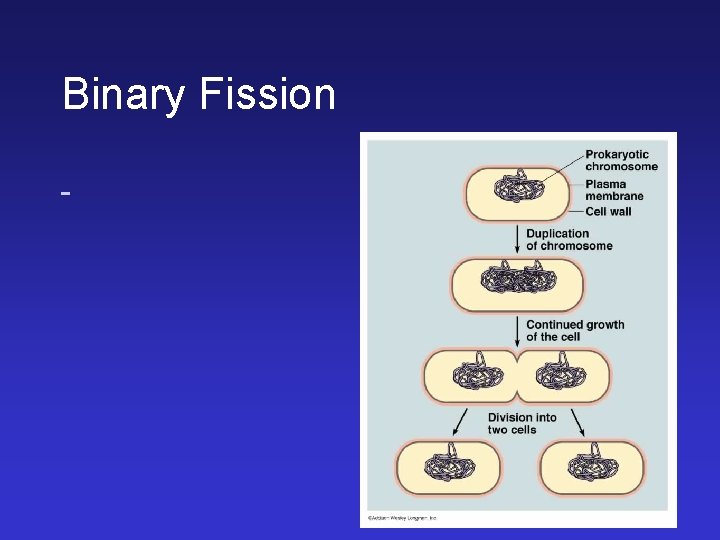
Binary Fission • Division of a prokaryotic cell. • In bacteria, the circular DNA molecule is replicated; then the cell splits into two identical cells, each containing an exact copy of the original cell's DNA.
Binary Fission
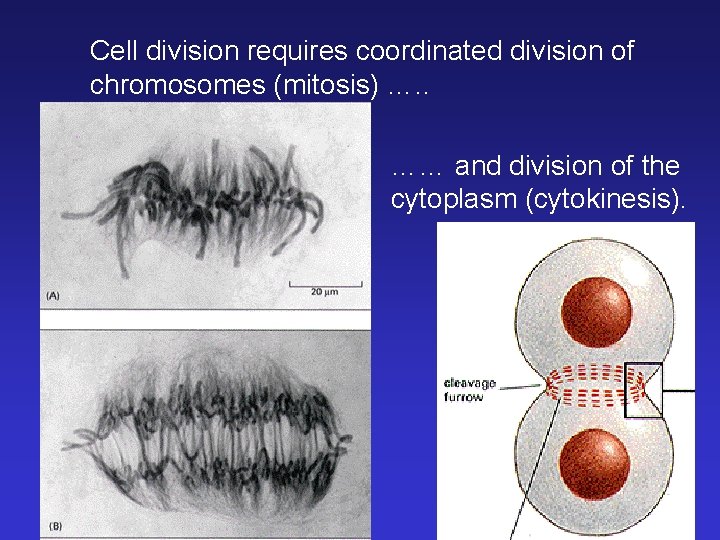
Cell division requires coordinated division of chromosomes (mitosis) …. . …… and division of the cytoplasm (cytokinesis).
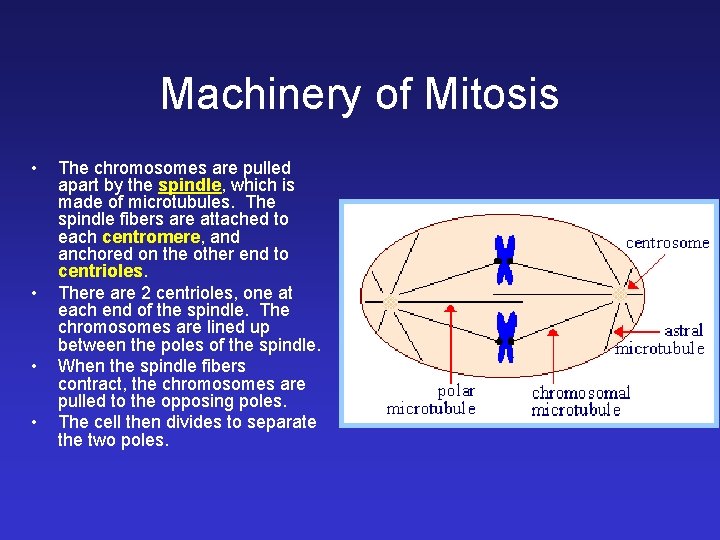
Machinery of Mitosis • • The chromosomes are pulled apart by the spindle, which is made of microtubules. The spindle fibers are attached to each centromere, and anchored on the other end to centrioles. There are 2 centrioles, one at each end of the spindle. The chromosomes are lined up between the poles of the spindle. When the spindle fibers contract, the chromosomes are pulled to the opposing poles. The cell then divides to separate the two poles.
Stages of Mitosis • • Prophase Metaphase Anaphase Telophase
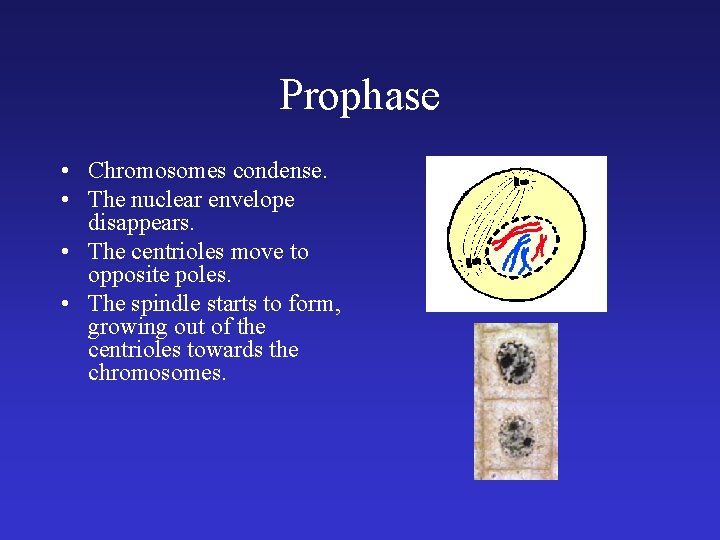
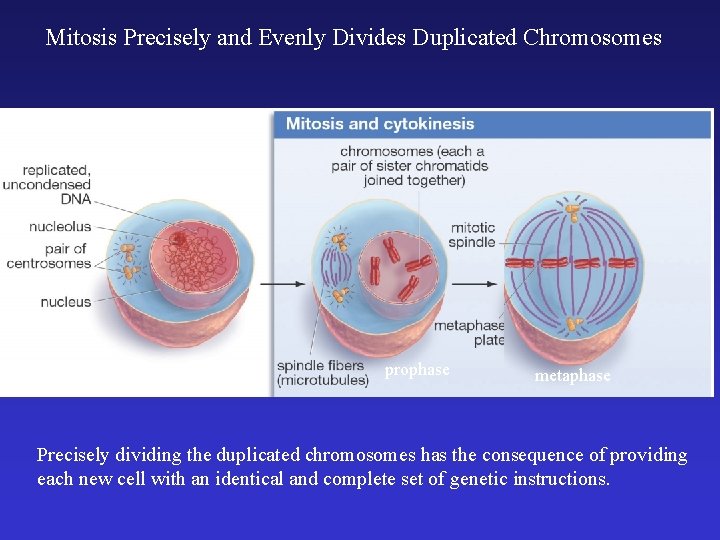
Prophase • Chromosomes condense. • The nuclear envelope disappears. • The centrioles move to opposite poles. • The spindle starts to form, growing out of the centrioles towards the chromosomes.
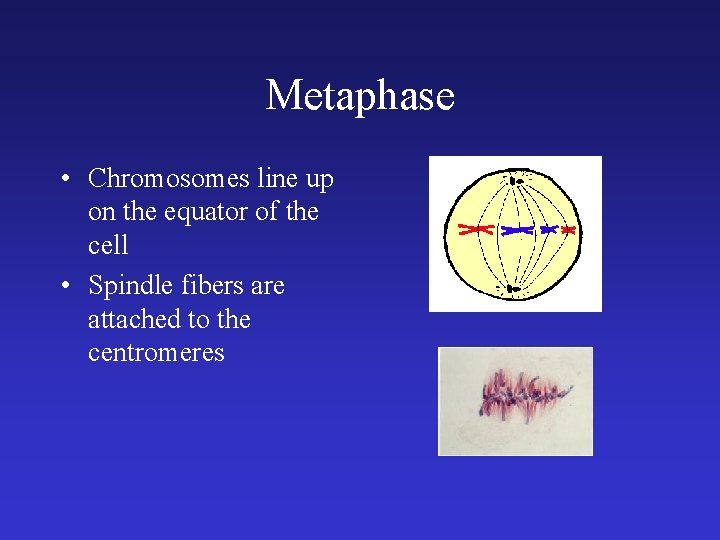
Metaphase • Chromosomes line up on the equator of the cell • Spindle fibers are attached to the centromeres
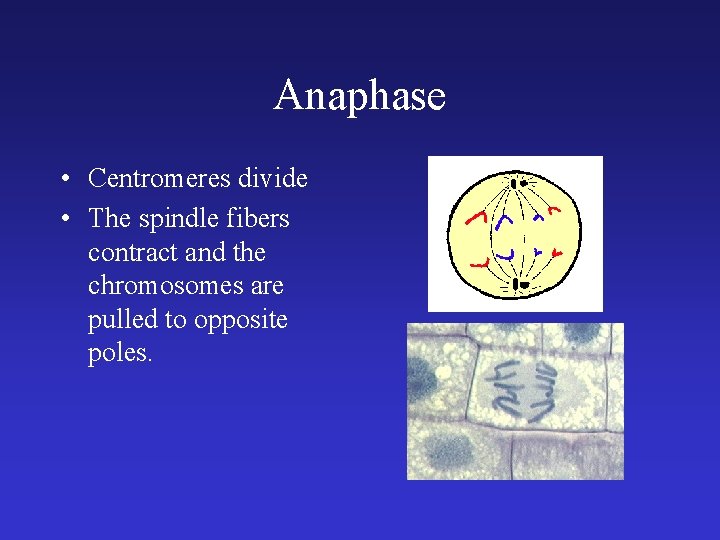
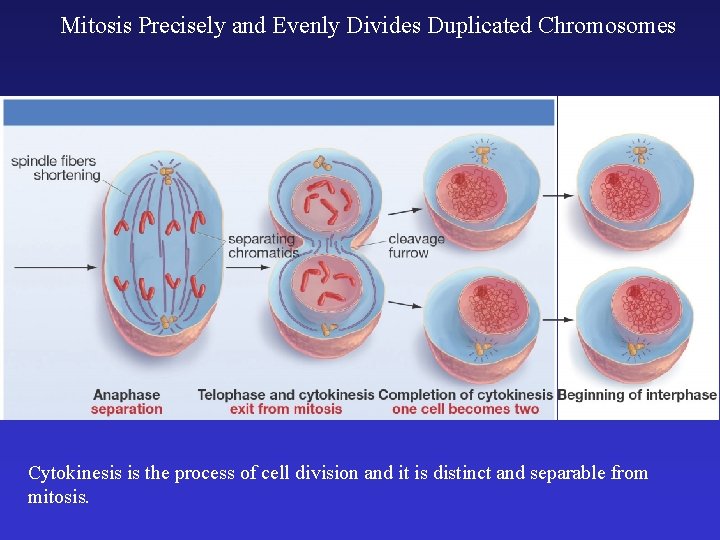
Anaphase • Centromeres divide • The spindle fibers contract and the chromosomes are pulled to opposite poles.
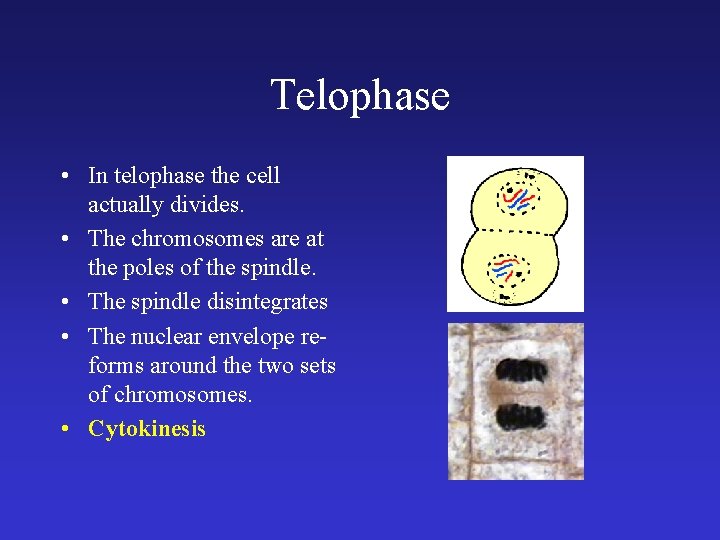
Telophase • In telophase the cell actually divides. • The chromosomes are at the poles of the spindle. • The spindle disintegrates • The nuclear envelope reforms around the two sets of chromosomes. • Cytokinesis
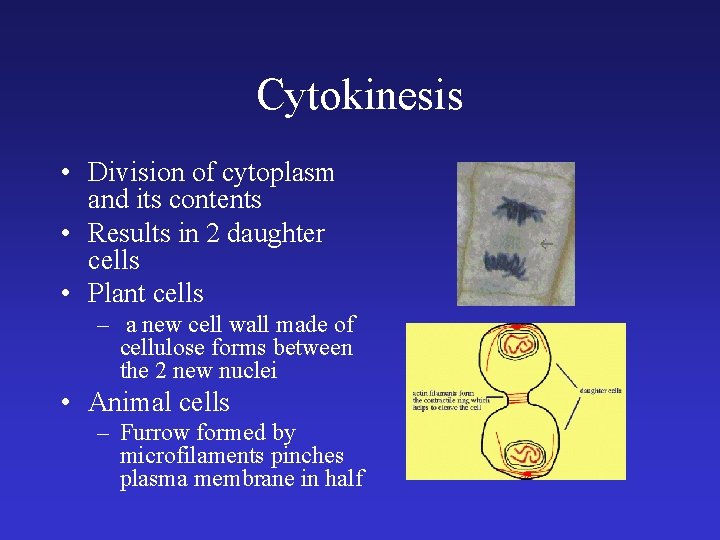
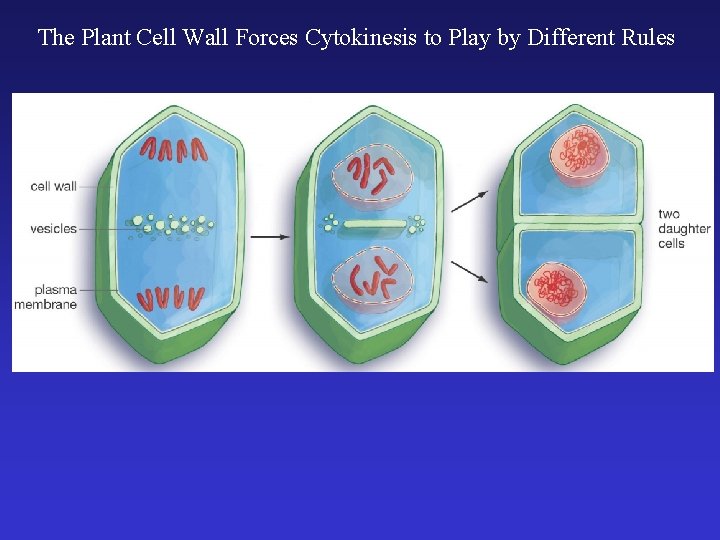
Cytokinesis • Division of cytoplasm and its contents • Results in 2 daughter cells • Plant cells – a new cell wall made of cellulose forms between the 2 new nuclei • Animal cells – Furrow formed by microfilaments pinches plasma membrane in half
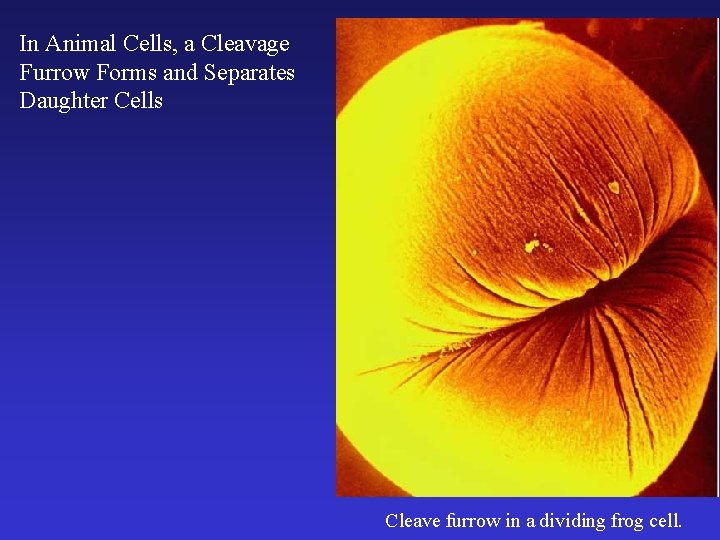
In Animal Cells, a Cleavage Furrow Forms and Separates Daughter Cells Cleave furrow in a dividing frog cell.
The Plant Cell Wall Forces Cytokinesis to Play by Different Rules
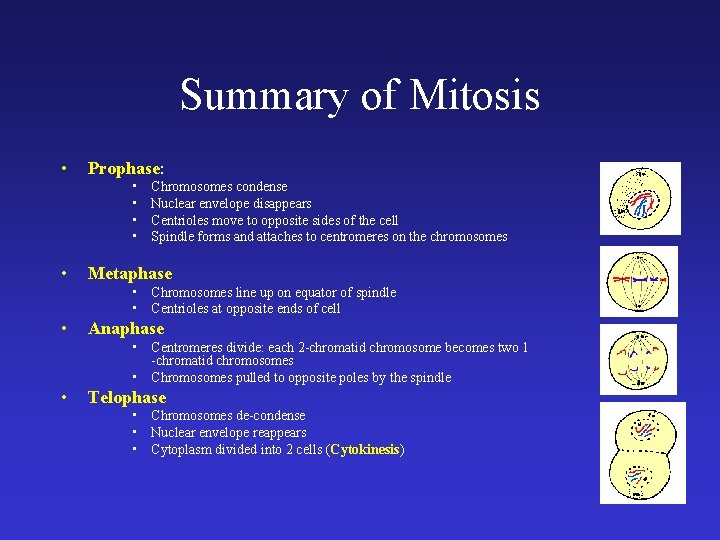
Summary of Mitosis • Prophase: • • • Chromosomes condense Nuclear envelope disappears Centrioles move to opposite sides of the cell Spindle forms and attaches to centromeres on the chromosomes Metaphase • Chromosomes line up on equator of spindle • Centrioles at opposite ends of cell • Anaphase • Centromeres divide: each 2 -chromatid chromosome becomes two 1 -chromatid chromosomes • Chromosomes pulled to opposite poles by the spindle • Telophase • Chromosomes de-condense • Nuclear envelope reappears • Cytoplasm divided into 2 cells (Cytokinesis)
Mitosis Precisely and Evenly Divides Duplicated Chromosomes interphase prophase metaphase Precisely dividing the duplicated chromosomes has the consequence of providing each new cell with an identical and complete set of genetic instructions.
Mitosis Precisely and Evenly Divides Duplicated Chromosomes Cytokinesis is the process of cell division and it is distinct and separable from mitosis.
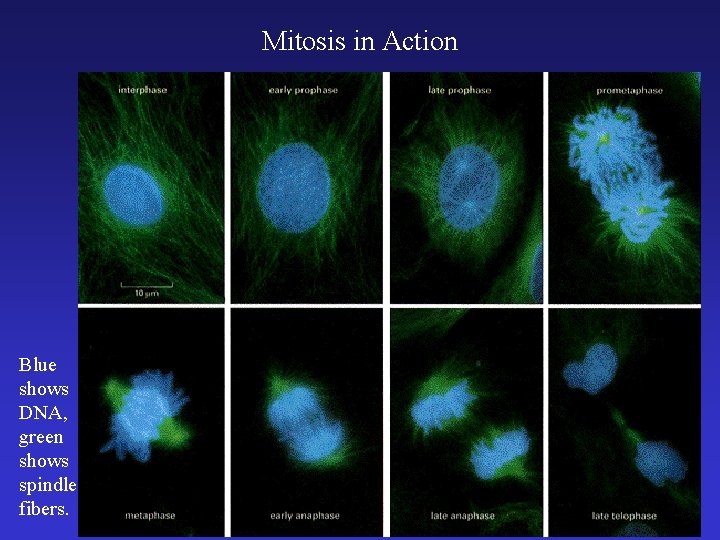
Mitosis in Action Blue shows DNA, green shows spindle fibers.
Mitosis In Action • http: //rds. yahoo. com/l=VDP/SIG=12 msfvf 2 f/EXP=1134166084/*http%3 A//cropandsoil. oregonstate. edu/class es/css 430/Pics/mitosis. swf
What could go wrong? • Mitosis occurs but cytokinesis does not – One cell with extra DNA • Cell cycle regulation fails – Cell division occurs unchecked
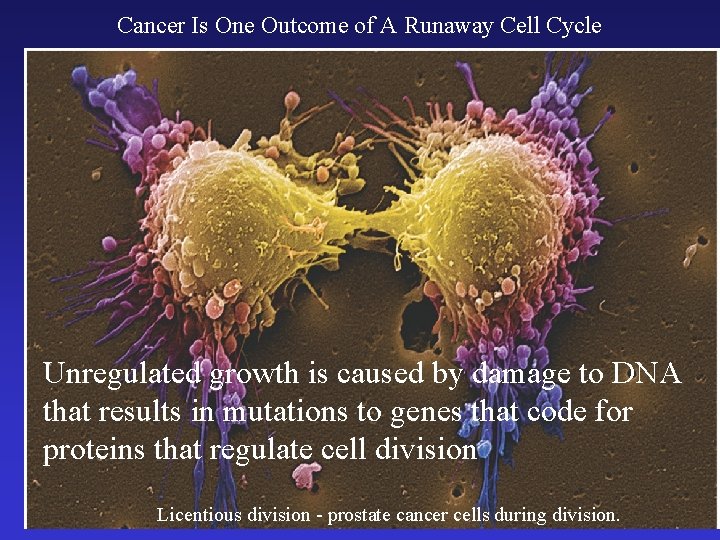
Cancer Is One Outcome of A Runaway Cell Cycle Unregulated growth is caused by damage to DNA that results in mutations to genes that code for proteins that regulate cell division Licentious division - prostate cancer cells during division.
What Can Damage DNA? • Radiation – X-rays, UV • Carcinogens – Metals, chemicals • Diet – Alcohol • Viruses – Hepatitis B, Herpes • Hormonal imbalances • Genetic factors – Breast, colon, prostate • Environmental factors
Cancer Treatment • Surgery to remove the tumor • Radiation or chemicals to kill actively dividing cells • Hyperthermia – Heat – Allows cell membranes to more readily take up anti-cancer drug • Cryotherapy – Freezing – Used along with surgery • Photodynamic Therapy – Laser light – Used after or with otherapies