
CHAPTER 8 CANADA SHIFTS FOCUS 1980 AND BEYOND
CHAPTER 8: CANADA SHIFTS FOCUS: 1980 AND BEYOND
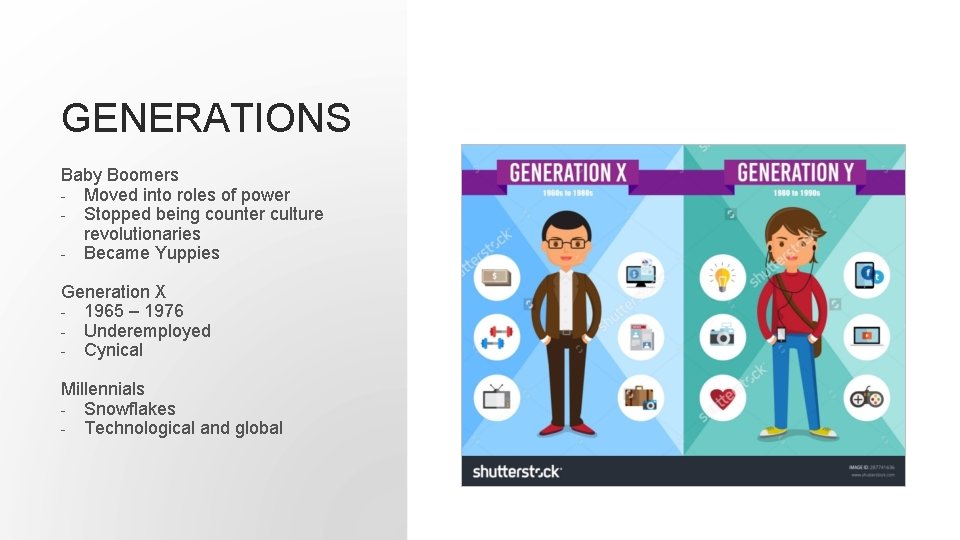
GENERATIONS Baby Boomers - Moved into roles of power - Stopped being counter culture revolutionaries - Became Yuppies Generation X - 1965 – 1976 - Underemployed - Cynical Millennials - Snowflakes - Technological and global
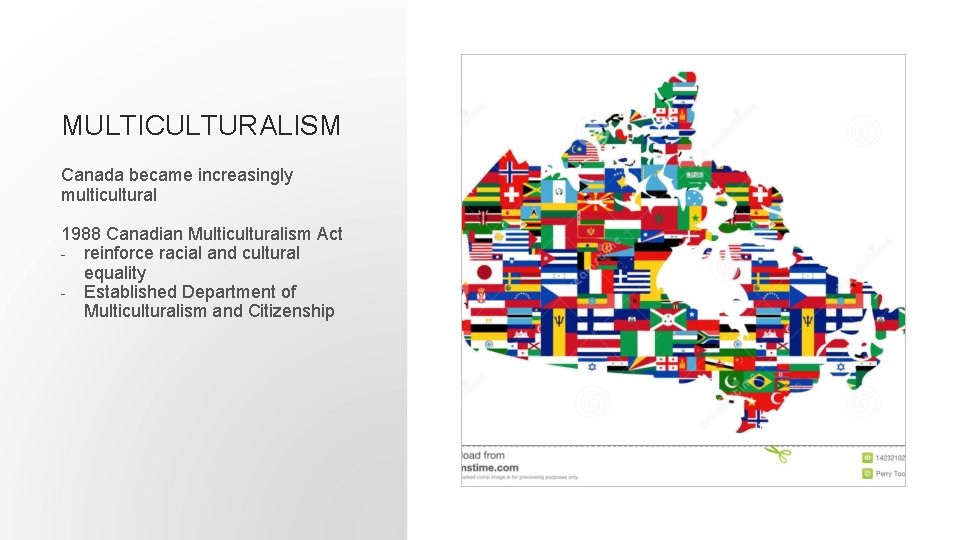
MULTICULTURALISM Canada became increasingly multicultural 1988 Canadian Multiculturalism Act - reinforce racial and cultural equality - Established Department of Multiculturalism and Citizenship
DEBATE: SHOULD CANADA PURSUE MULTICULTURALISM?
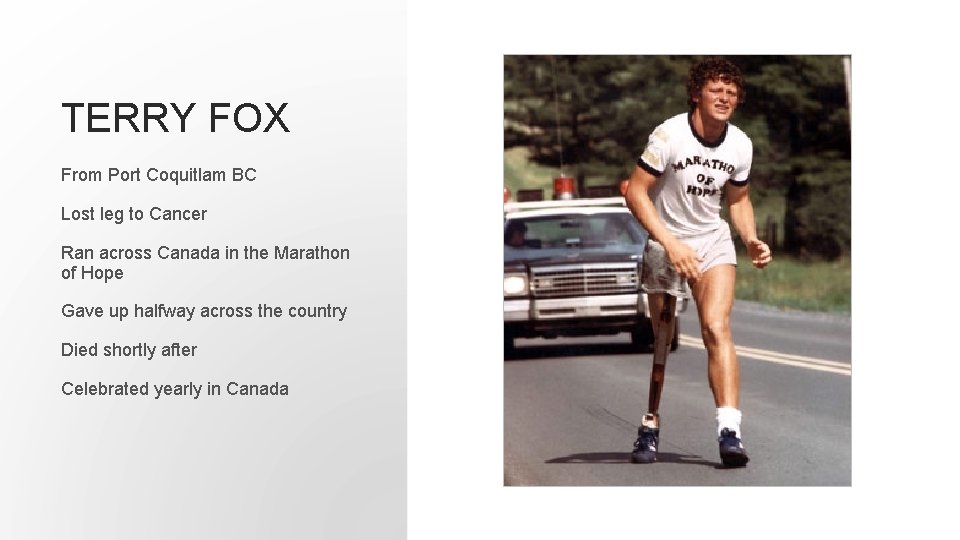
TERRY FOX From Port Coquitlam BC Lost leg to Cancer Ran across Canada in the Marathon of Hope Gave up halfway across the country Died shortly after Celebrated yearly in Canada
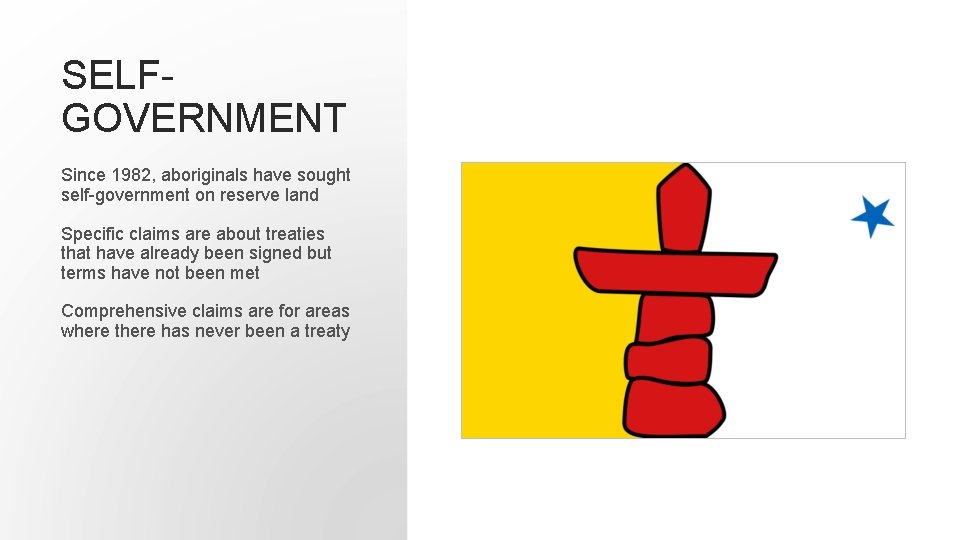
SELFGOVERNMENT Since 1982, aboriginals have sought self-government on reserve land Specific claims are about treaties that have already been signed but terms have not been met Comprehensive claims are for areas where there has never been a treaty
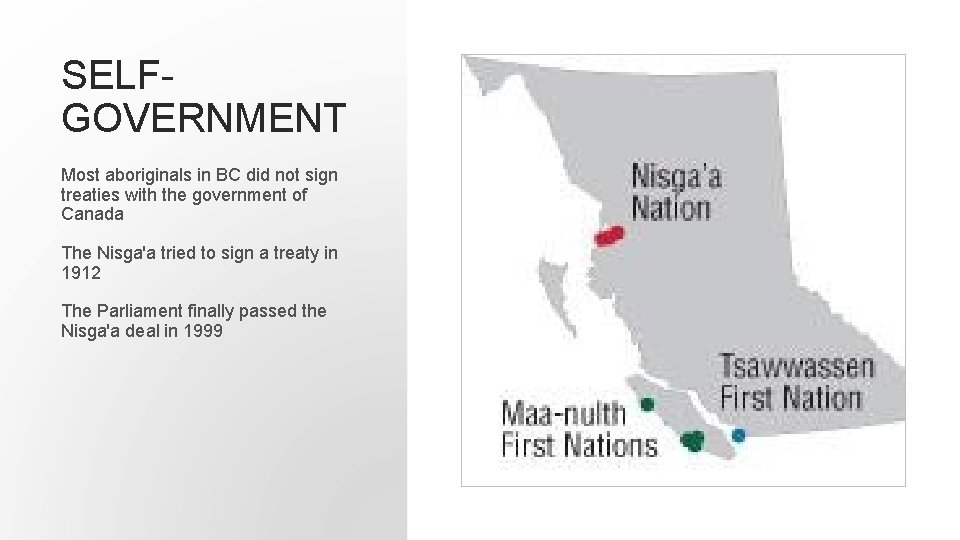
SELFGOVERNMENT Most aboriginals in BC did not sign treaties with the government of Canada The Nisga'a tried to sign a treaty in 1912 The Parliament finally passed the Nisga'a deal in 1999
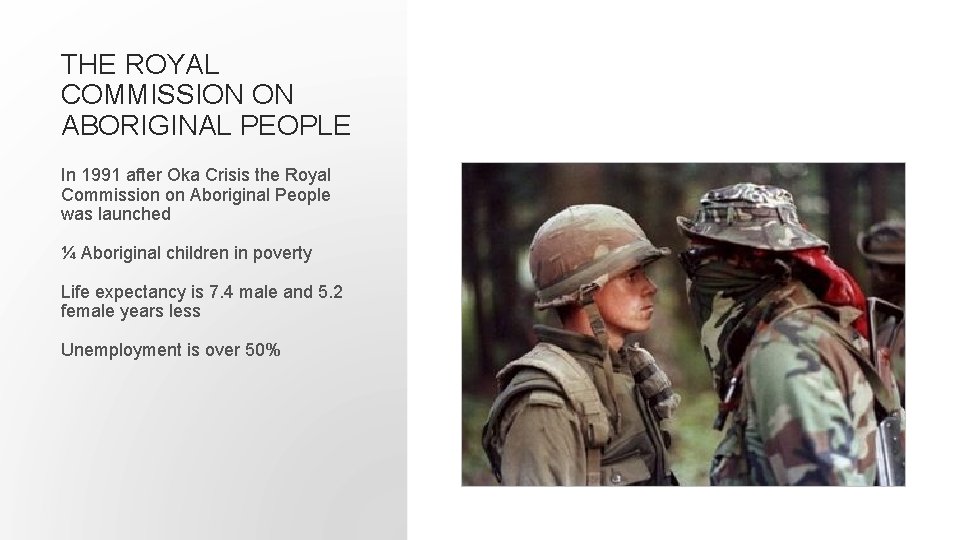
THE ROYAL COMMISSION ON ABORIGINAL PEOPLE In 1991 after Oka Crisis the Royal Commission on Aboriginal People was launched ¼ Aboriginal children in poverty Life expectancy is 7. 4 male and 5. 2 female years less Unemployment is over 50%
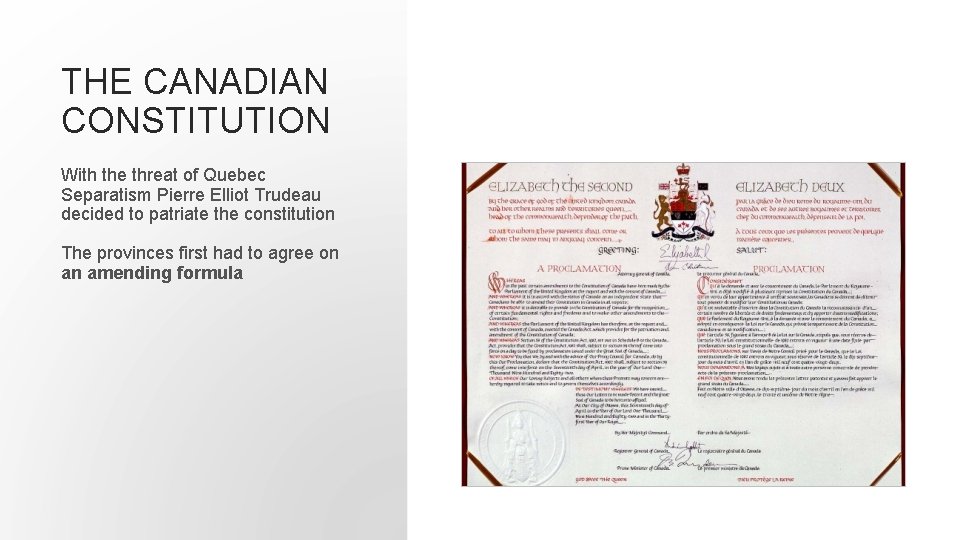
THE CANADIAN CONSTITUTION With the threat of Quebec Separatism Pierre Elliot Trudeau decided to patriate the constitution The provinces first had to agree on an amending formula
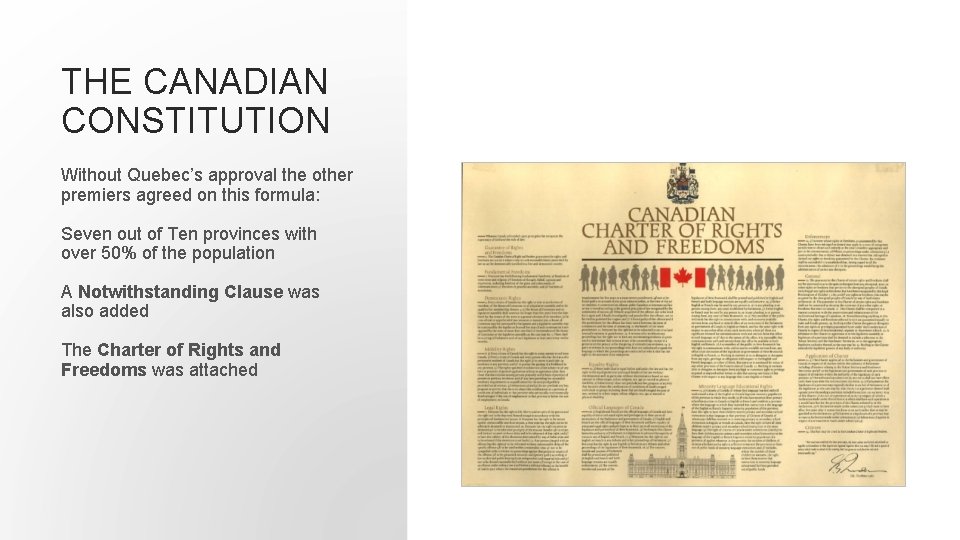
THE CANADIAN CONSTITUTION Without Quebec’s approval the other premiers agreed on this formula: Seven out of Ten provinces with over 50% of the population A Notwithstanding Clause was also added The Charter of Rights and Freedoms was attached
THE MEECH LAKE ACCORD New Conservative Prime Minister Brian Mulroney wanted Quebec to sign the constitution He promised to make Quebec a distinct society and give other provinces more power

THE MEECH LAKE ACCORD Aboriginal groups and others thought that they were also distinct societies In 1987 Manitoba and Newfoundland did not approve and the accord failed Upset, Conservative Lucien Bouchard left the Conservative Party and founded the Bloc Quebecois

THE SENATE The Senate is the Upper House of Parliament Because Senators are appointed by the Governor General on advise from the Prime Minister they do not exercise their power Senate appointments are until the age of 75 with no elections The east is much more represented
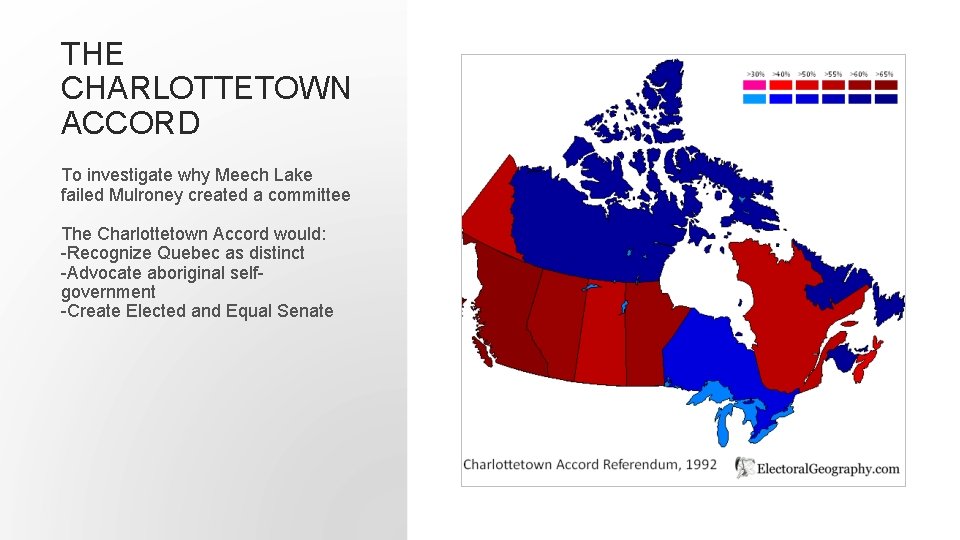
THE CHARLOTTETOWN ACCORD To investigate why Meech Lake failed Mulroney created a committee The Charlottetown Accord would: -Recognize Quebec as distinct -Advocate aboriginal selfgovernment -Create Elected and Equal Senate
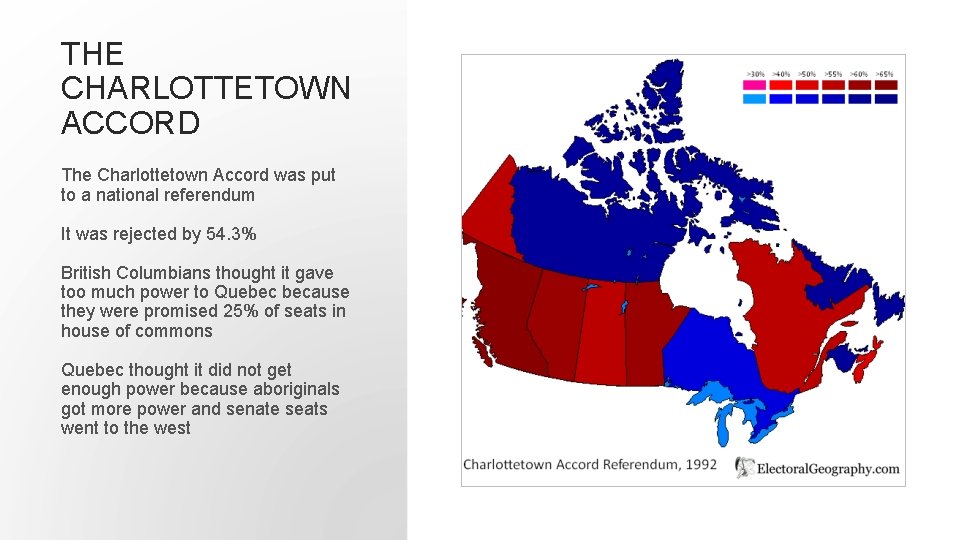
THE CHARLOTTETOWN ACCORD The Charlottetown Accord was put to a national referendum It was rejected by 54. 3% British Columbians thought it gave too much power to Quebec because they were promised 25% of seats in house of commons Quebec thought it did not get enough power because aboriginals got more power and senate seats went to the west
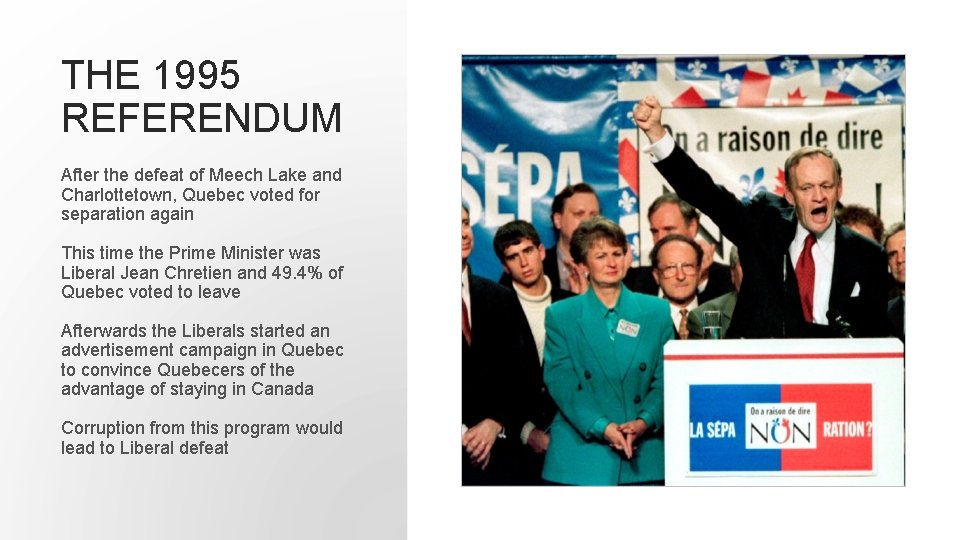
THE 1995 REFERENDUM After the defeat of Meech Lake and Charlottetown, Quebec voted for separation again This time the Prime Minister was Liberal Jean Chretien and 49. 4% of Quebec voted to leave Afterwards the Liberals started an advertisement campaign in Quebec to convince Quebecers of the advantage of staying in Canada Corruption from this program would lead to Liberal defeat
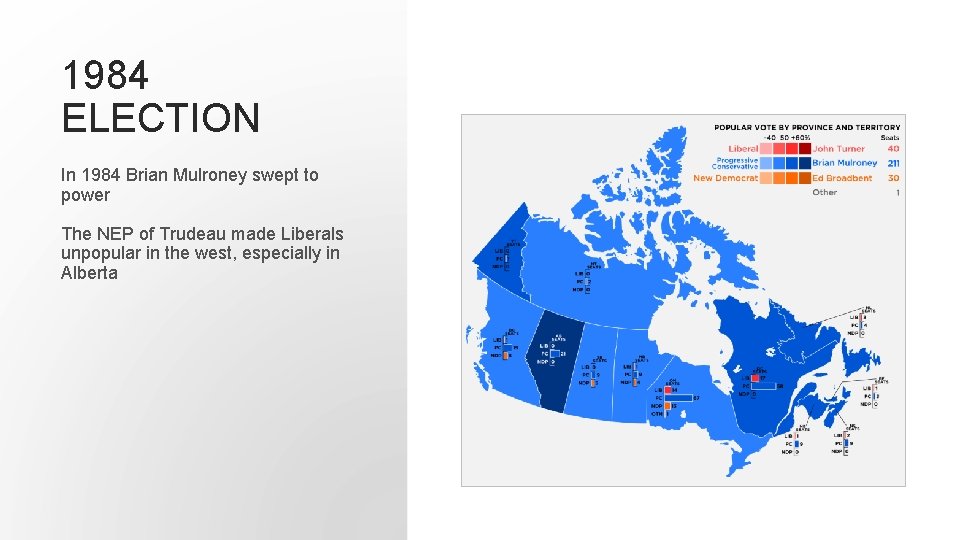
1984 ELECTION In 1984 Brian Mulroney swept to power The NEP of Trudeau made Liberals unpopular in the west, especially in Alberta
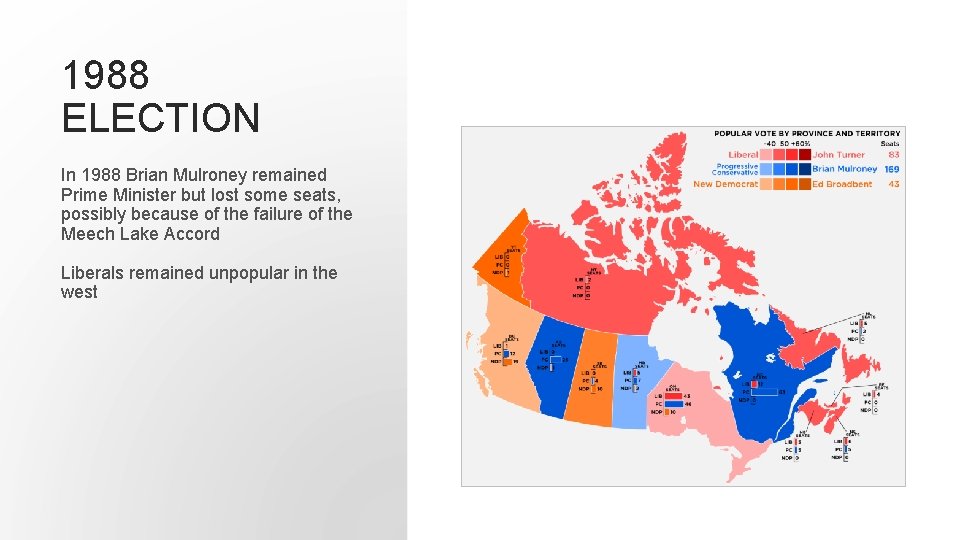
1988 ELECTION In 1988 Brian Mulroney remained Prime Minister but lost some seats, possibly because of the failure of the Meech Lake Accord Liberals remained unpopular in the west

1993 ELECTION The failure of Charlottetown and the introduction of the GST led to a Conservative implosion The Liberals of Jean Chretien were swept into power The opposition became the separatist Bloc Quebecois which led to the 1995 Referndum A new western centered right-wing party name Reform gained roots in Alberta and BC

1997 ELECTION The Liberals of Jean Chretien won easily with a divided right wing The Reform became the opposition

2000 ELECTION Was largely a repeat of the 1997 election The Reform rebranded themselves the Canadian Alliance and tried to be a party for all of Canada instead of just the west
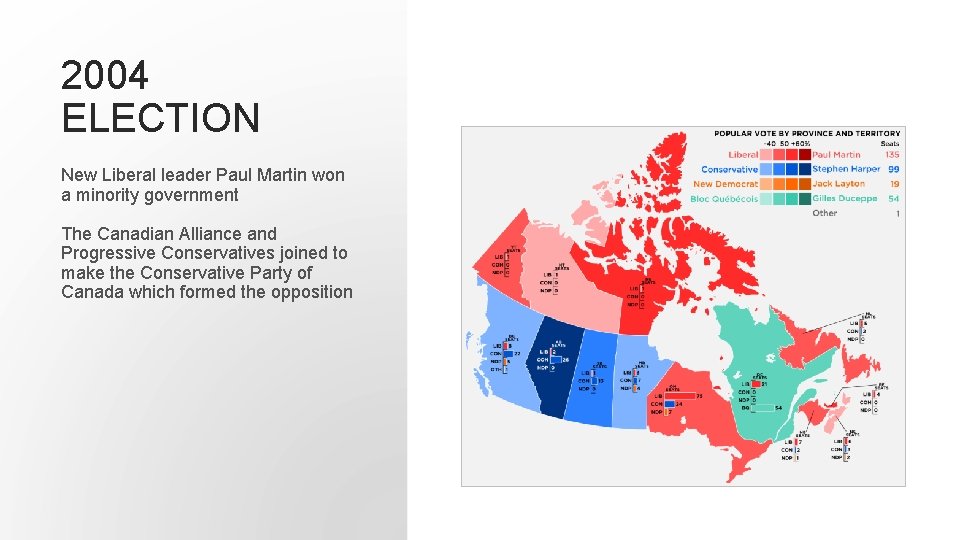
2004 ELECTION New Liberal leader Paul Martin won a minority government The Canadian Alliance and Progressive Conservatives joined to make the Conservative Party of Canada which formed the opposition

2006 ELECTION The Liberal minority government only lasted 2 years This time Stephen Harper’s Conservatives won a minority government
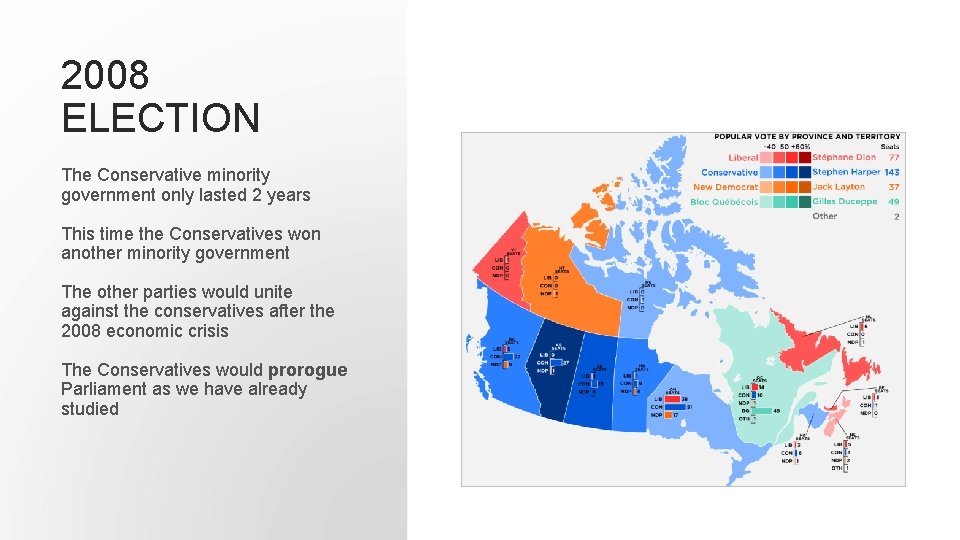
2008 ELECTION The Conservative minority government only lasted 2 years This time the Conservatives won another minority government The other parties would unite against the conservatives after the 2008 economic crisis The Conservatives would prorogue Parliament as we have already studied
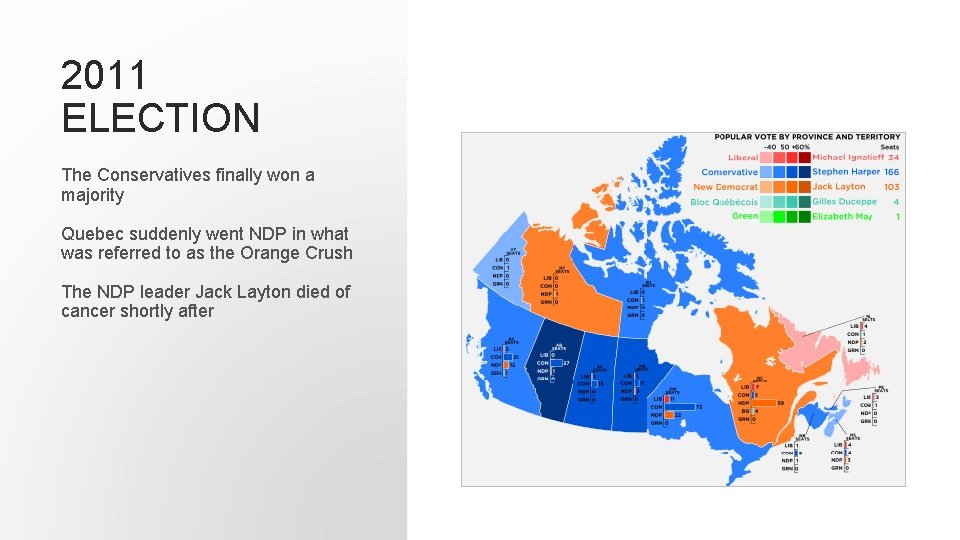
2011 ELECTION The Conservatives finally won a majority Quebec suddenly went NDP in what was referred to as the Orange Crush The NDP leader Jack Layton died of cancer shortly after
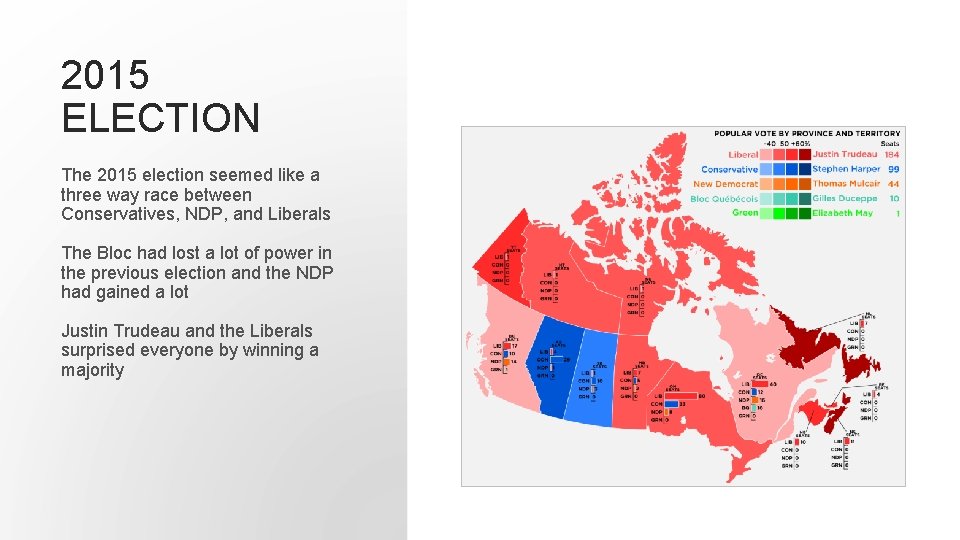
2015 ELECTION The 2015 election seemed like a three way race between Conservatives, NDP, and Liberals The Bloc had lost a lot of power in the previous election and the NDP had gained a lot Justin Trudeau and the Liberals surprised everyone by winning a majority
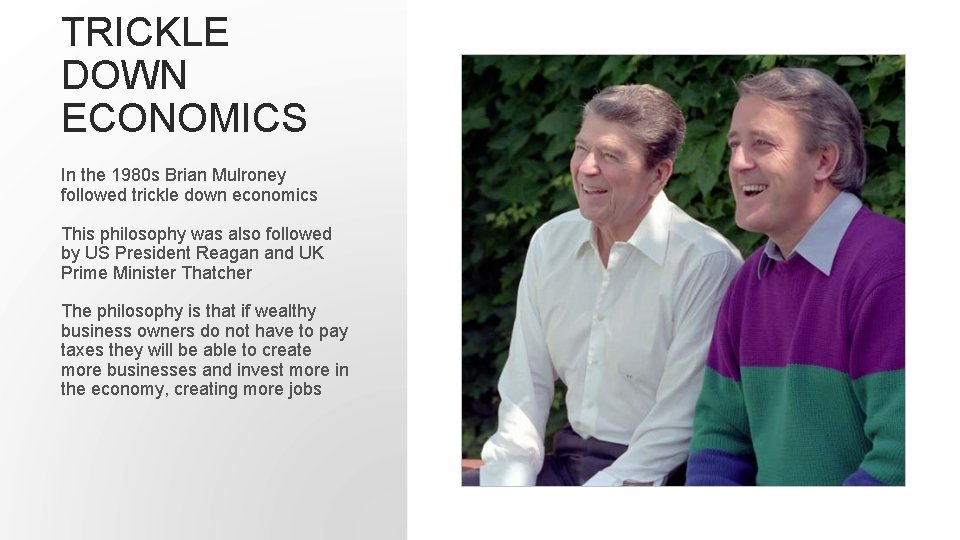
TRICKLE DOWN ECONOMICS In the 1980 s Brian Mulroney followed trickle down economics This philosophy was also followed by US President Reagan and UK Prime Minister Thatcher The philosophy is that if wealthy business owners do not have to pay taxes they will be able to create more businesses and invest more in the economy, creating more jobs

TRICKLE DOWN ECONOMICS Mulroney cut taxes to the wealthiest people hoping that it would stimulate the economy He also reduced spending on social programs This philosophy did not work for many people
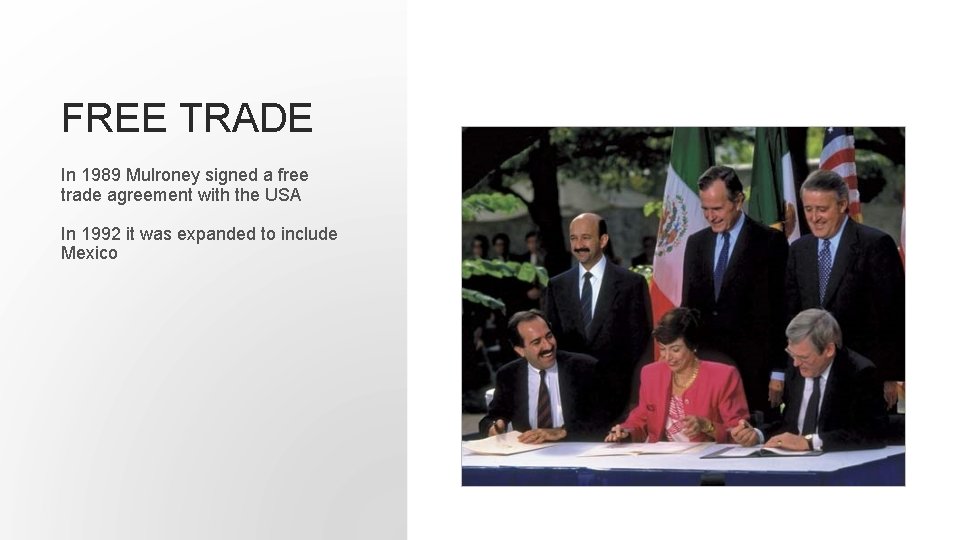
FREE TRADE In 1989 Mulroney signed a free trade agreement with the USA In 1992 it was expanded to include Mexico

FREE TRADE Free trade continues to be a controversial topic Many people support it because: It opens up markets for Canadian products It lowers the cost of consumer goods It attracts investment from foreign countries It creates interdependence and lowers the chance of war and conflict

FREE TRADE Free trade continues to be a controversial topic Many people are against it because: Factories relocate to areas where labor is cheaper Larger economies and corporations dominate It lowers independence It contributes to global warming
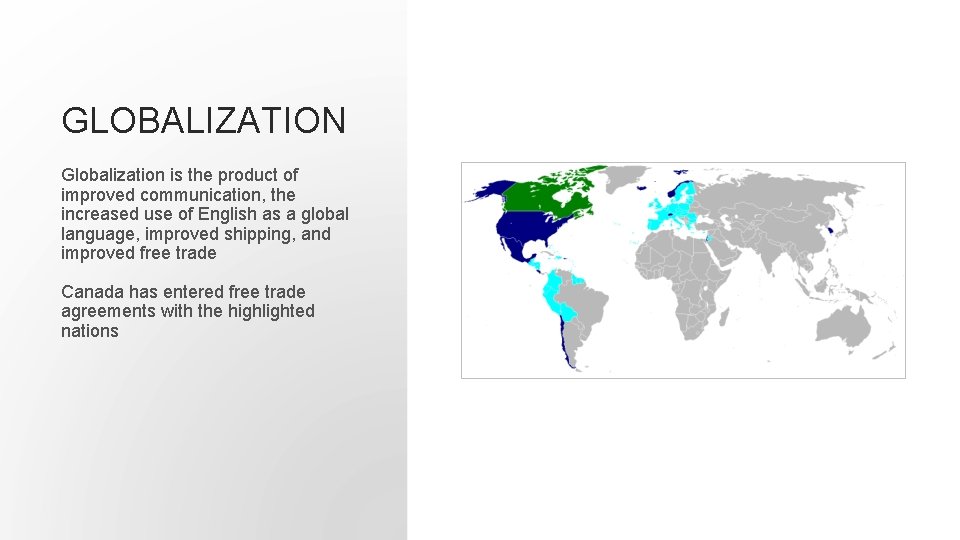
GLOBALIZATION Globalization is the product of improved communication, the increased use of English as a global language, improved shipping, and improved free trade Canada has entered free trade agreements with the highlighted nations
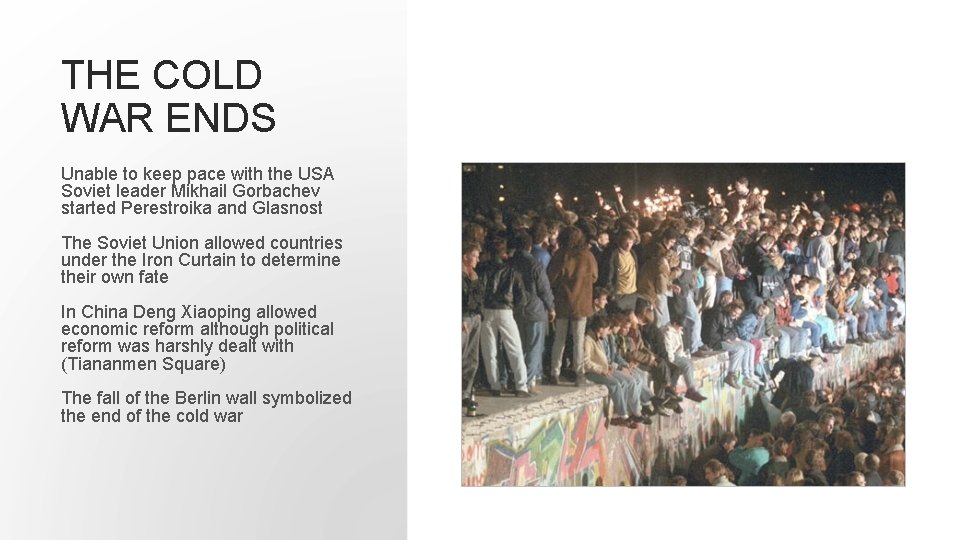
THE COLD WAR ENDS Unable to keep pace with the USA Soviet leader Mikhail Gorbachev started Perestroika and Glasnost The Soviet Union allowed countries under the Iron Curtain to determine their own fate In China Deng Xiaoping allowed economic reform although political reform was harshly dealt with (Tiananmen Square) The fall of the Berlin wall symbolized the end of the cold war
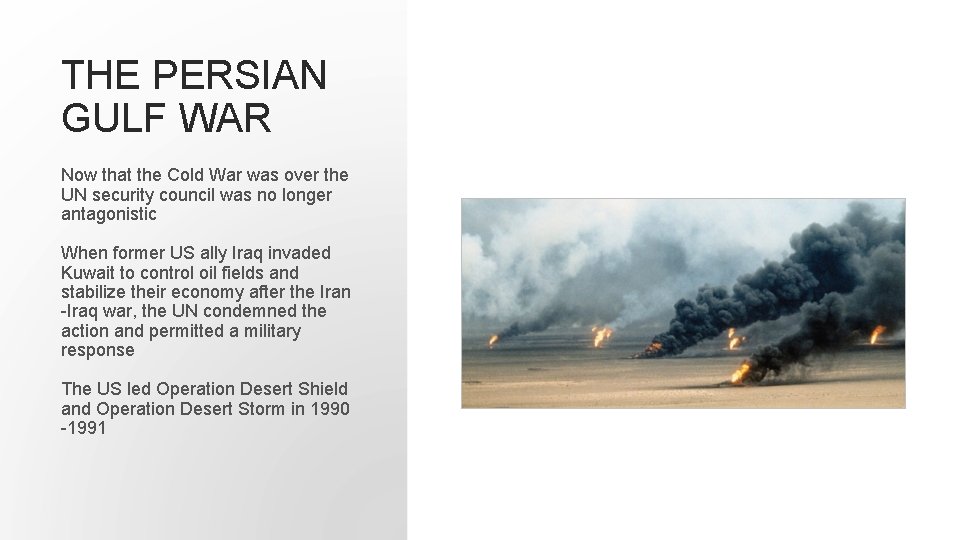
THE PERSIAN GULF WAR Now that the Cold War was over the UN security council was no longer antagonistic When former US ally Iraq invaded Kuwait to control oil fields and stabilize their economy after the Iran -Iraq war, the UN condemned the action and permitted a military response The US led Operation Desert Shield and Operation Desert Storm in 1990 -1991
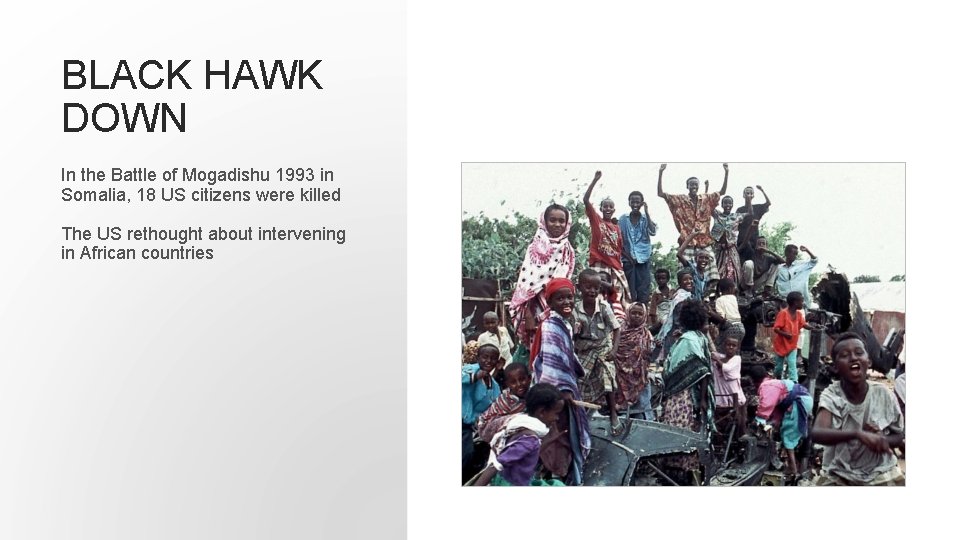
BLACK HAWK DOWN In the Battle of Mogadishu 1993 in Somalia, 18 US citizens were killed The US rethought about intervening in African countries
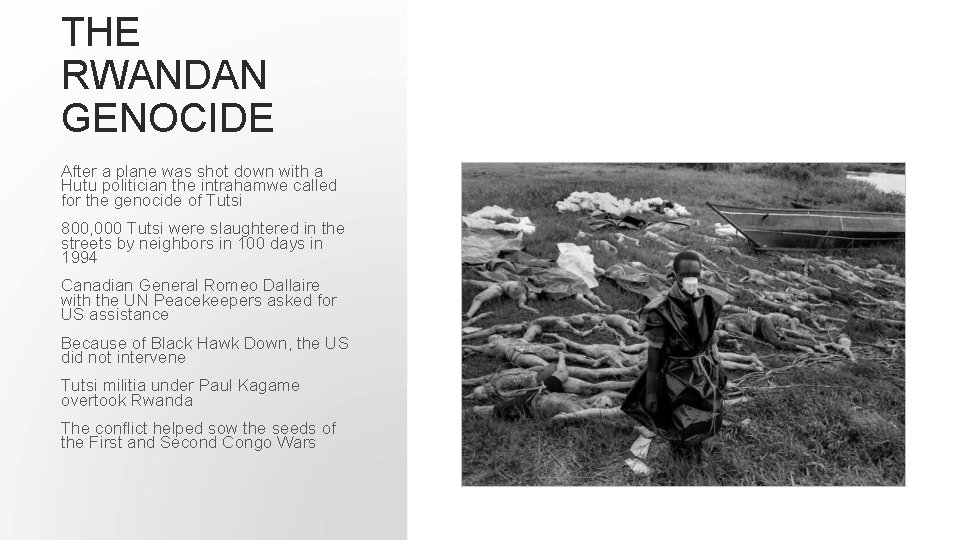
THE RWANDAN GENOCIDE After a plane was shot down with a Hutu politician the intrahamwe called for the genocide of Tutsi 800, 000 Tutsi were slaughtered in the streets by neighbors in 100 days in 1994 Canadian General Romeo Dallaire with the UN Peacekeepers asked for US assistance Because of Black Hawk Down, the US did not intervene Tutsi militia under Paul Kagame overtook Rwanda The conflict helped sow the seeds of the First and Second Congo Wars
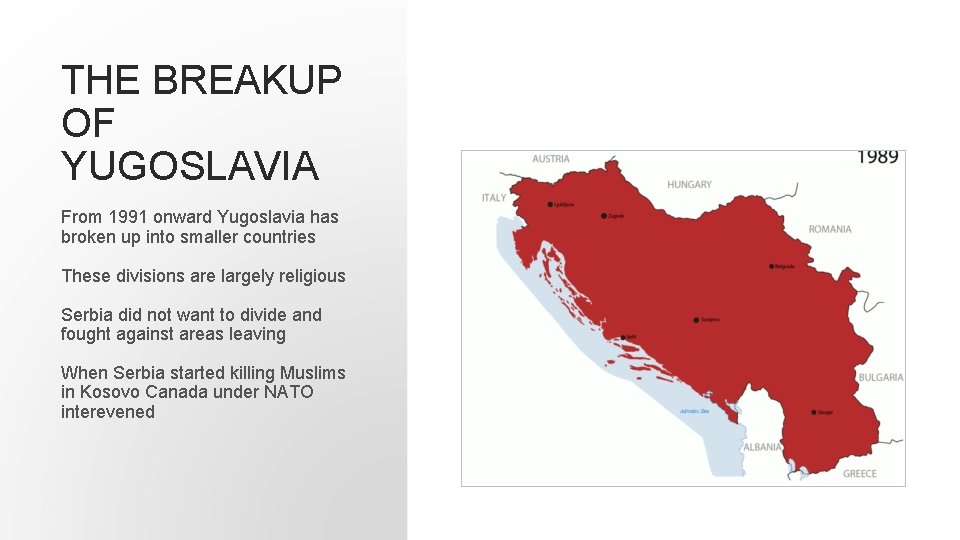
THE BREAKUP OF YUGOSLAVIA From 1991 onward Yugoslavia has broken up into smaller countries These divisions are largely religious Serbia did not want to divide and fought against areas leaving When Serbia started killing Muslims in Kosovo Canada under NATO interevened
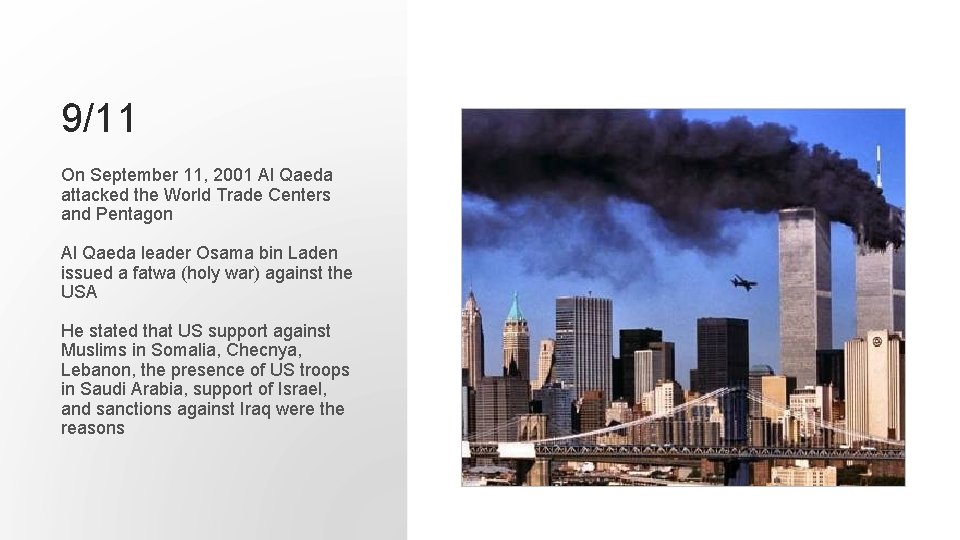
9/11 On September 11, 2001 Al Qaeda attacked the World Trade Centers and Pentagon Al Qaeda leader Osama bin Laden issued a fatwa (holy war) against the USA He stated that US support against Muslims in Somalia, Checnya, Lebanon, the presence of US troops in Saudi Arabia, support of Israel, and sanctions against Iraq were the reasons
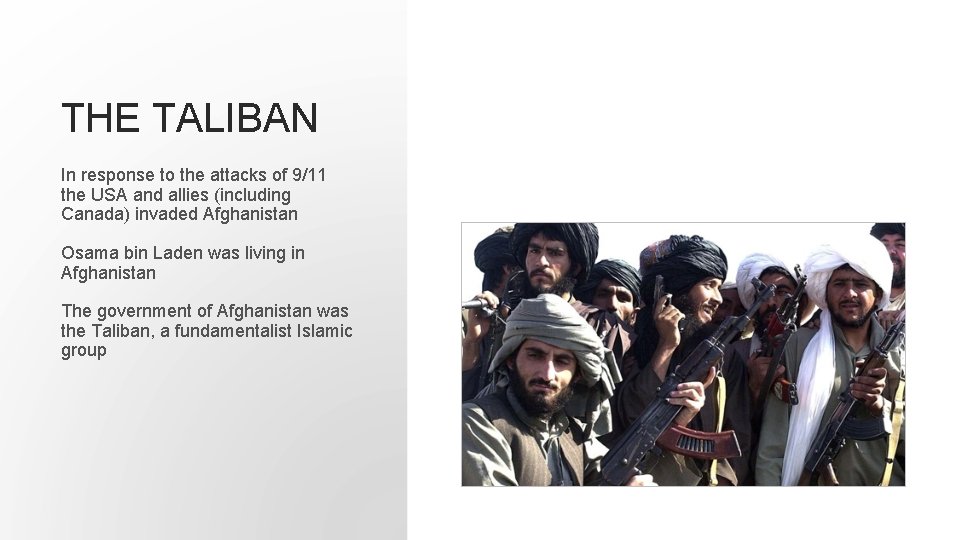
THE TALIBAN In response to the attacks of 9/11 the USA and allies (including Canada) invaded Afghanistan Osama bin Laden was living in Afghanistan The government of Afghanistan was the Taliban, a fundamentalist Islamic group
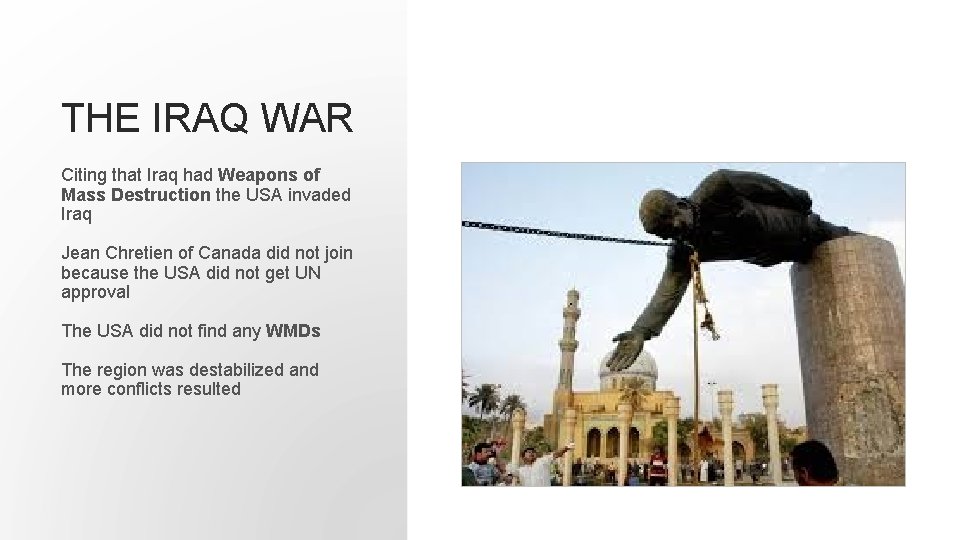
THE IRAQ WAR Citing that Iraq had Weapons of Mass Destruction the USA invaded Iraq Jean Chretien of Canada did not join because the USA did not get UN approval The USA did not find any WMDs The region was destabilized and more conflicts resulted
THE SYRIAN CIVIL WAR
- Slides: 41