
Chapter 8 Business Organizations SECTION 2 PARTNERSHIPS AND
Chapter 8: Business Organizations SECTION 2: PARTNERSHIPS AND FRANCHISES
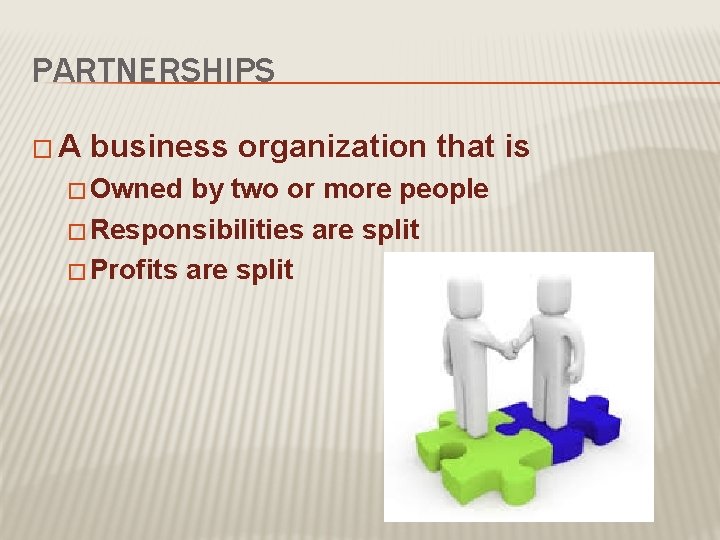
PARTNERSHIPS �A business organization that is � Owned by two or more people � Responsibilities are split � Profits are split
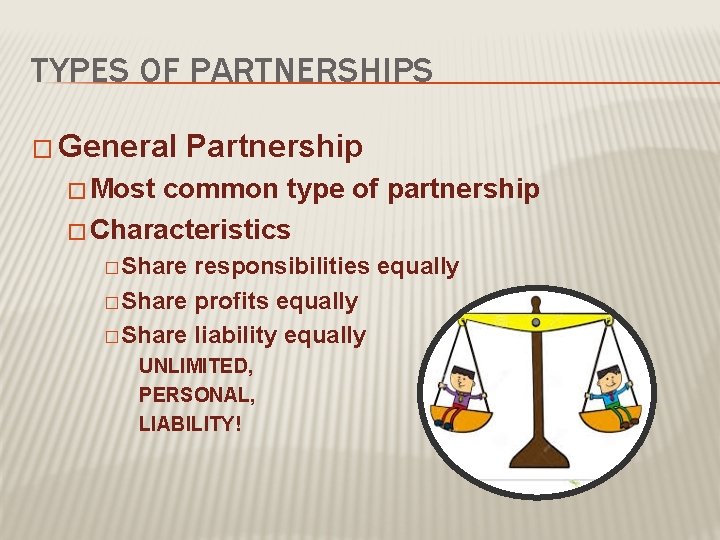
TYPES OF PARTNERSHIPS � General Partnership � Most common type of partnership � Characteristics � Share responsibilities equally � Share profits equally � Share liability equally UNLIMITED, PERSONAL, LIABILITY!
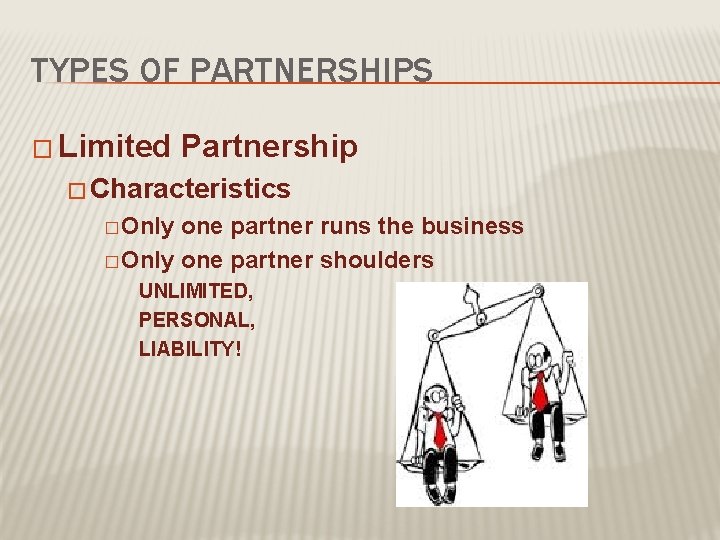
TYPES OF PARTNERSHIPS � Limited Partnership � Characteristics � Only one partner runs the business � Only one partner shoulders UNLIMITED, PERSONAL, LIABILITY!
TYPES OF PARTNERSHIPS � Limited partnerships � Characteristics � Second* partner’s role � Contribute money � LIMITED liability – can only lose investment � Collect share of profits � Second � No partner’s limitations say in how to run business � “Silent Partner”
TYPES OF PARTNERSHIPS � Limited Partnership � Partners are not equal � One must be the “general” partner � Controls the company � UNLIMITED PERSONAL LIABILITY � Splits the profits � Other � Put partner(s) up money � Shares profits � Has NO SAY / NO CONTROL
TYPES OF PARTNERSHIPS � Limited Liability Partnerships � Similar to General Partnership � Partners are pretty much equal � There is LIMITED liability � Only company assets are at risk � Only partner’s assets are at risk if he or she makes the mistake � Only certain types of companies can be “LLPs”
PARTNERSHIPS � Advantages � Easy and inexpensive to establish � Little government regulation � More than one person contributes money and skills � Can offer more fringe benefits � Shared decision making
PARTNERSHIPS � Disadvantages � Potential conflict with partner(s) � Unlimited liability (except LLPs) � If your partner messes up and the company suffers, you suffer too! � Lack of permanence
PARTNERSHIPS YOUR TURN: 1. Which one of the three forms of partnerships do you think is best? 2. Why is it better than the other two forms? (Give at least TWO good reasons. )
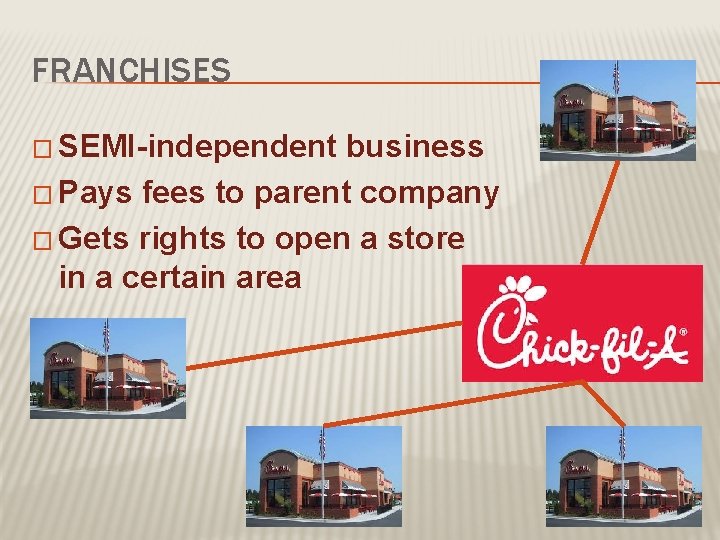
FRANCHISES � SEMI-independent business � Pays fees to parent company � Gets rights to open a store in a certain area
FRANCHISES � Advantages 1. 2. 3. 4. 5. Training and support from the parent company Standardized quality requirements attract customers Advertising benefits Financial aid from parent company Bulk buying benefits
FRANCHISES � Disadvantages 1. Payments to mother company a. b. 2. 3. 4. Fees to start the business A portion of the profits (royalties) Mother company sets strict standards You MUST purchase from mother company or from approved markets Limited to selling only their products
FRANCHISES YOUR TURN: You investigate the idea of opening your own franchise. (Sears Hardware Store? ) 1. Which advantage(s) is/are most important to consider? Why? 2. Which disadvantage(s) is/are most important to consider? Why? 3. Do you do it?
- Slides: 14