
Chapter 8 Blood and Body Defenses Spelling Words
Chapter 8 Blood and Body Defenses
Spelling Words for this Unit n n n n n Adaptive defenses Antibodies B cells Bacterium/bacteria Cilia Cytokine Cytotoxic T cells Erythrocytes Inflammation Innate defenses n n n n n Leukocytes Lymph nodes Lymphatic system Lysozyme Microorganism Pathogens Phagocytes Plasma Platelets Viruses
What is the function of blood?
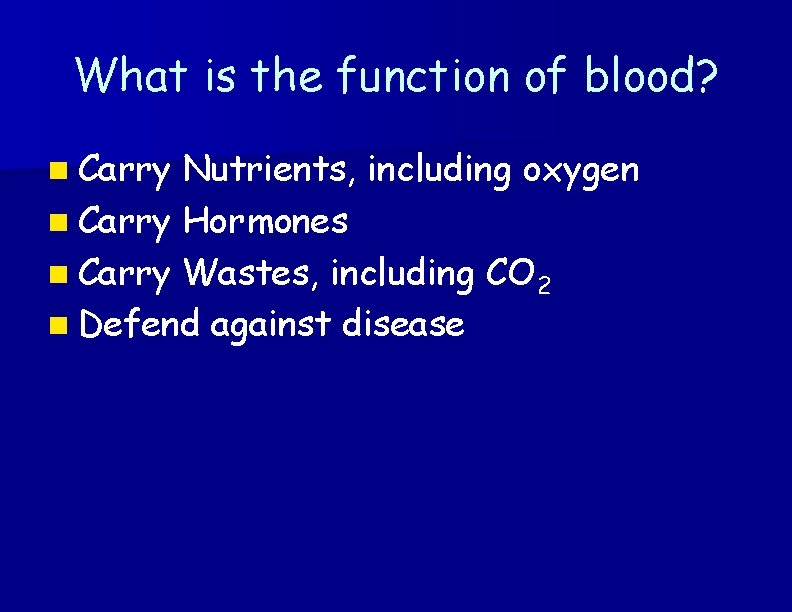
What is the function of blood? n Carry Nutrients, including oxygen n Carry Hormones n Carry Wastes, including CO 2 n Defend against disease
What does blood contain?

What does blood contain?
Is blood a tissue?
Is blood a tissue? n Tissue = group of cells organized to do a particular function. n Blood IS a tissue!

Verbs n When called upon, read the sentence and include the correct verb. n Read loudly enough for the entire class to hear. n Pronounce clearly.
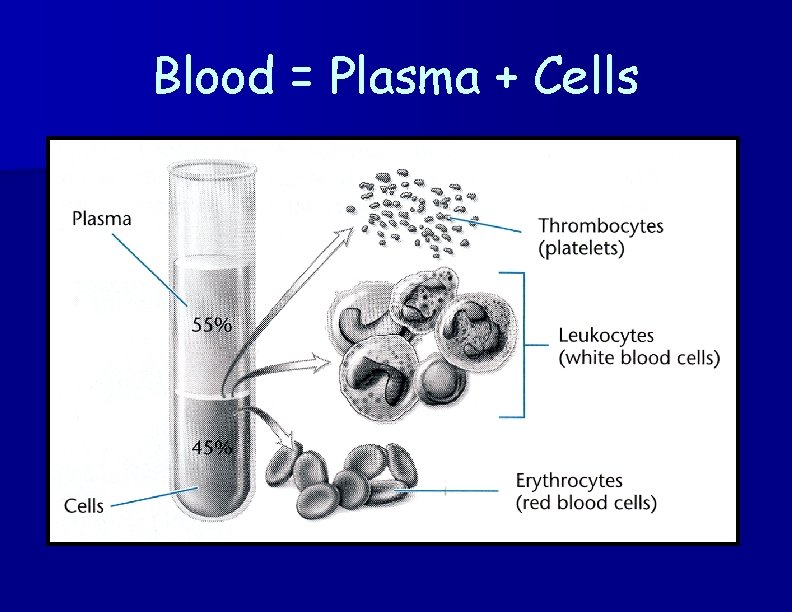
Blood = Plasma + Cells
Plasma n Liquid portion of blood n Contains: – – – Water Sugar Hormones Proteins Salts (sodium, potassium, calcium, …)
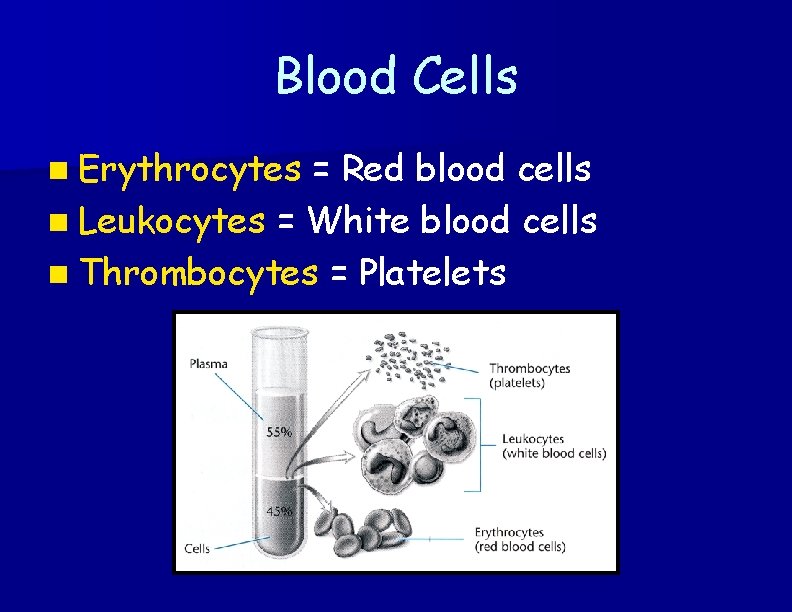
Blood Cells n Erythrocytes = Red blood cells n Leukocytes = White blood cells n Thrombocytes = Platelets
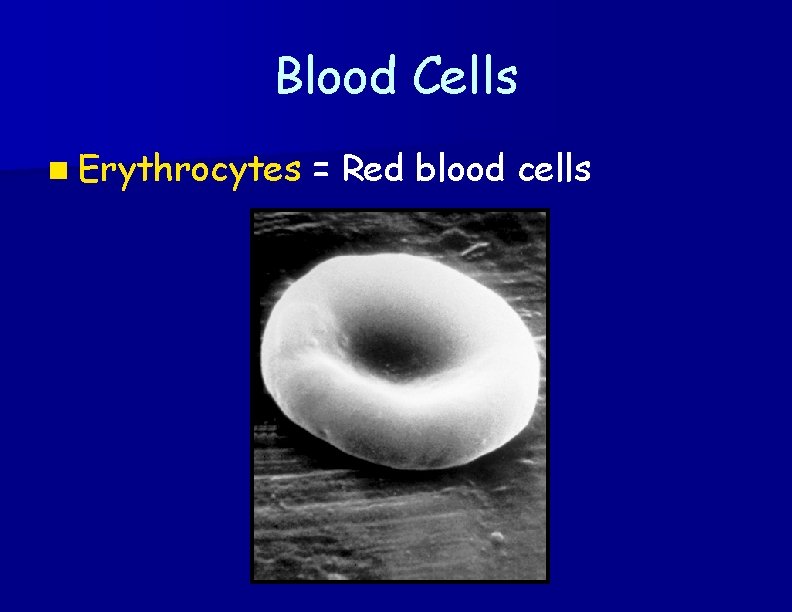
Blood Cells n Erythrocytes = Red blood cells

Blood Cells n Erythrocytes = Red blood cells – Function: Carry Oxygen § Hemoglobin = protein that carries 4 oxygen molecules at a time. § Oxygen + Hemoglobin red color
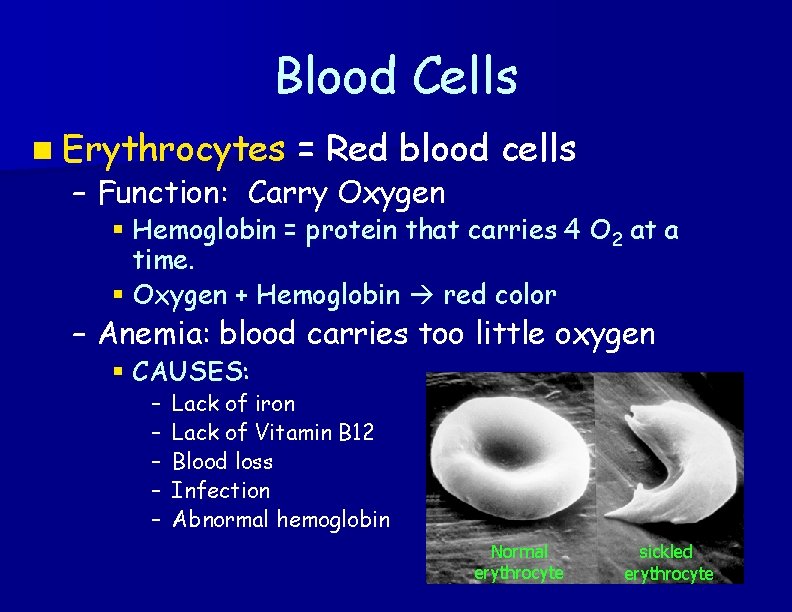
Blood Cells n Erythrocytes = Red blood cells – Function: Carry Oxygen § Hemoglobin = protein that carries 4 O 2 at a time. § Oxygen + Hemoglobin red color – Anemia: blood carries too little oxygen § CAUSES: – – – Lack of iron Lack of Vitamin B 12 Blood loss Infection Abnormal hemoglobin Normal erythrocyte sickled erythrocyte
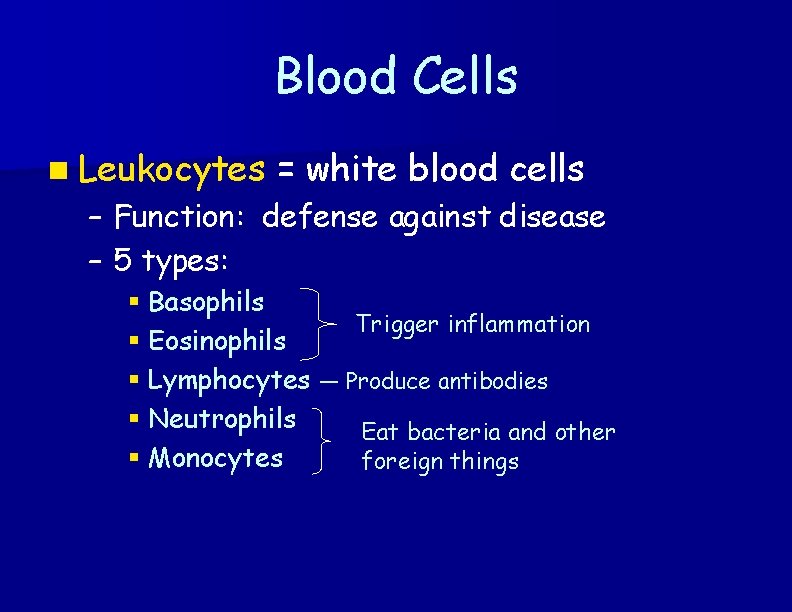
Blood Cells n Leukocytes – – = white blood cells Function: defense against disease 5 types: § Basophils Trigger inflammation § Eosinophils § Lymphocytes — Produce antibodies § Neutrophils Eat bacteria and other § Monocytes foreign things
Blood Cells n Leukocytes – – = white blood cells Function: defense against disease Leukemia: Cancer of WBCs § Multiply uncontrollably § Do not mature § Prevent normal blood cell production § Bone Marrow Transplant can cure some types.

Blood Cells n Thrombocytes = platelets – Function: Stop bleeding (coagulate blood)
Blood Cells n Thrombocytes – – = platelets Function: Stop bleeding (coagulate blood) Hemophilia: blood fails to coagulate § Cause: lack of certain “coagulation factors” § Inherited disorder § Treat by giving person the missing coagulation factors
Practice! n Name one type of molecule found in plasma. n Which blood cell type helps defend against disease? n Which blood cell type carries oxygen? n Which blood cell type is involved in blood clotting?
Practice! n Name one type of molecule found in plasma. Water, sugar, protein, salts, hormones, n Which blood cell type helps defend against disease? Leukocyte n Which blood cell type carries oxygen? Erythrocyte n Which blood cell type is involved in blood clotting? Platelet
Infectious Disease What is it? What causes it?
Infectious Disease n Change in a person’s health caused by a microorganism.
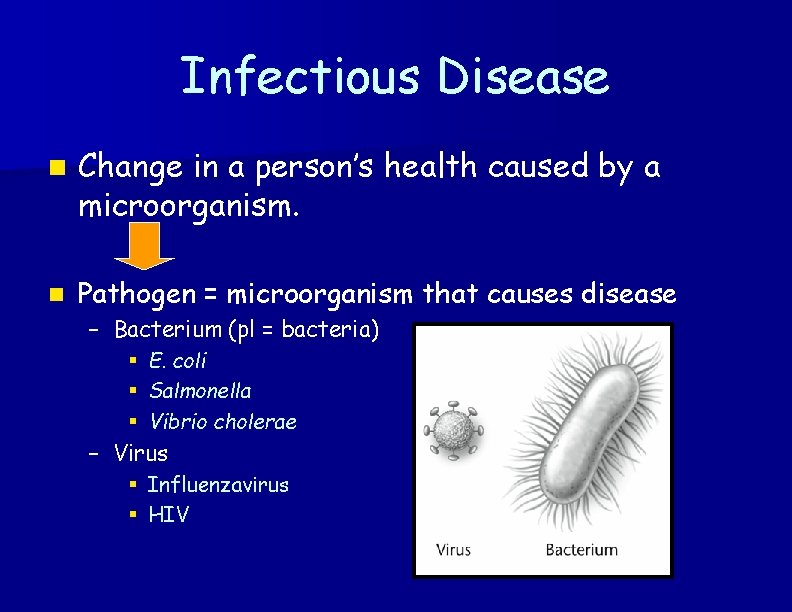
Infectious Disease n n Change in a person’s health caused by a microorganism. Pathogen = microorganism that causes disease – Bacterium (pl = bacteria) § E. coli § Salmonella § Vibrio cholerae – Virus § Influenzavirus § HIV
Body Defenses How do we defend against infectious diseases?
Types of Defense n Innate – – Work on nearly all invaders (not specific) Present all of the time and able to act when they encounter the invader n Adaptive

Types of Defense n Innate – – Work on nearly all invaders (not specific) Present all of the time and able to act when they encounter the invader n Adaptive – Very specific to a single type of microorganism – Must be activated before they can act
Innate Defenses n First – – Line of Defense Barriers first encountered by pathogen. Examples: § Integument § Mucous membranes § Wax § Blood-Brain Barrier § Nose hairs, cilia in trachea
Innate Defenses n First Line of Defense – Barriers first encountered by pathogen. n Second – – Line of Defense Molecules Processes
Innate Defenses n First Line of Defense – Barriers first encountered by pathogen. n Second Line of Defense – Molecules § Lysozyme § Acids § Proteases § Interferon § Complement

Innate Defenses n First Line of Defense – Barriers first encountered by pathogen. n Second – – Line of Defense Molecules Processes § Phagocytosis
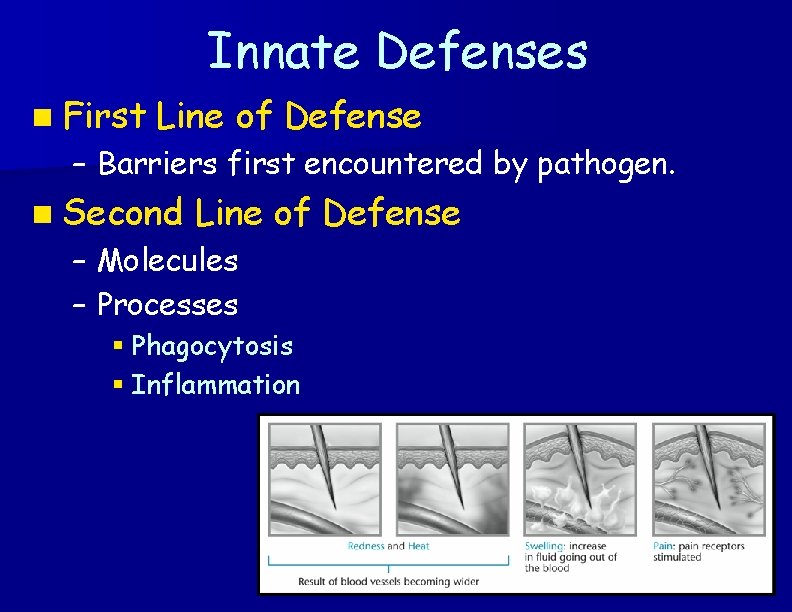
Innate Defenses n First Line of Defense – Barriers first encountered by pathogen. n Second – – Line of Defense Molecules Processes § Phagocytosis § Inflammation
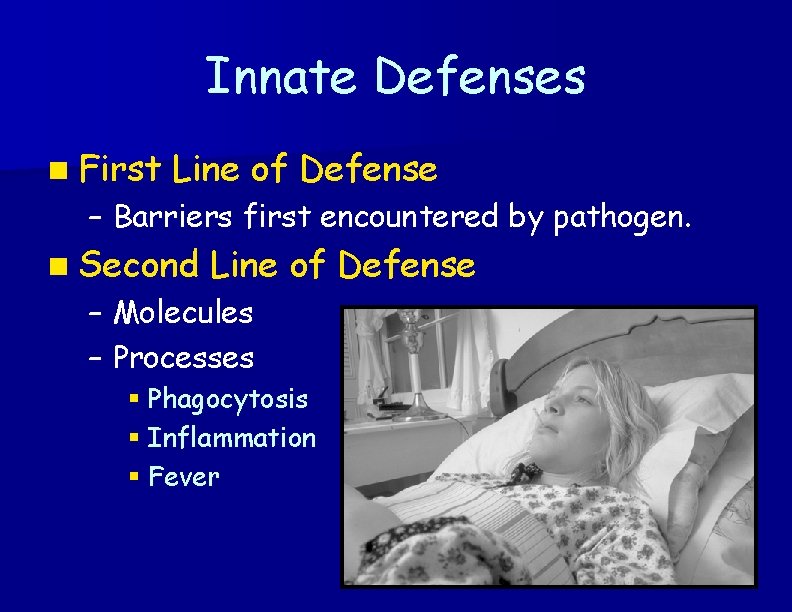
Innate Defenses n First Line of Defense – Barriers first encountered by pathogen. n Second – – Line of Defense Molecules Processes § Phagocytosis § Inflammation § Fever
Innate Defenses…what do they do? n Lysozyme? n Inflammation? n Acids? n Fever? n Skin? n Phagocyte?
Innate Defenses…what do they do? n Lysozyme? Breaks bacterial wall, killing it n Inflammation? Brings blood w/phagocytes; speeds repair n Acids? Kills many bacteria and viruses n Fever? Speeds up defenses, keeps bacteria from reproducing n Skin? Barrier to entry of pathogen n Phagocyte? Eats bacteria and viruses

Adaptive Defenses n Third Line of Defense n Very specific n Produce Memory of Pathogen (“immune”) n Cell types: – B cells: cause antibody production

Adaptive Defenses n Third Line of Defense n Very specific n Produce Memory of Pathogen (“immune”) n Cell types: – – – B cells: cause antibody production Helper T cells: “second opinion” to B cells Cytotoxic T cells: Kill virus-infected cells
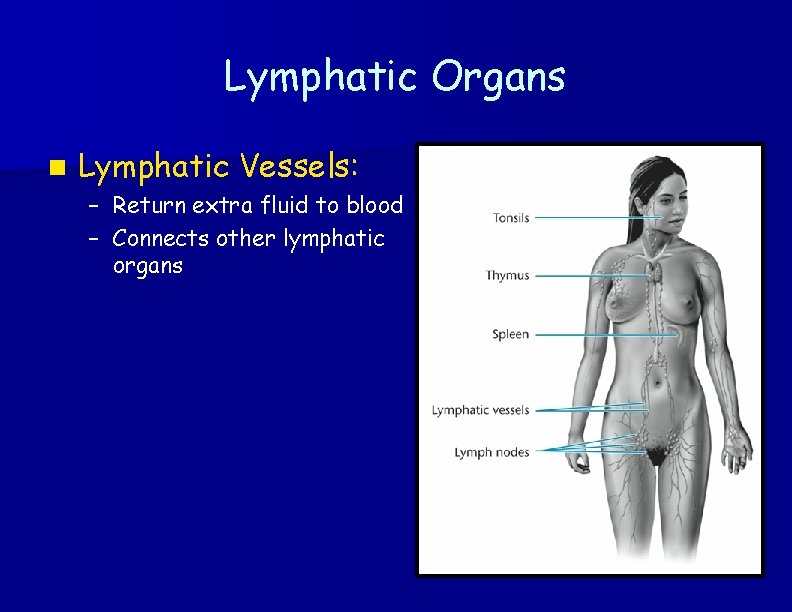
Lymphatic Organs n Lymphatic Vessels: – Return extra fluid to blood – Connects other lymphatic organs
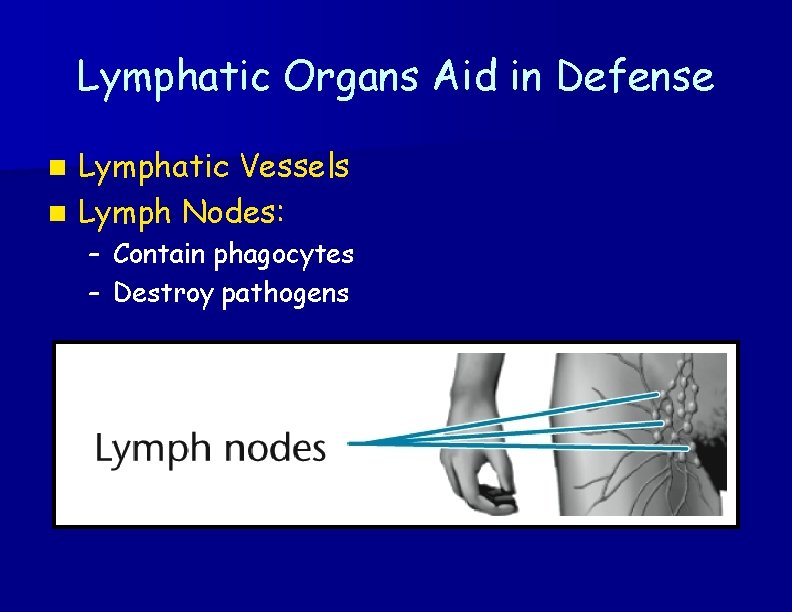
Lymphatic Organs Aid in Defense Lymphatic Vessels n Lymph Nodes: n – Contain phagocytes – Destroy pathogens
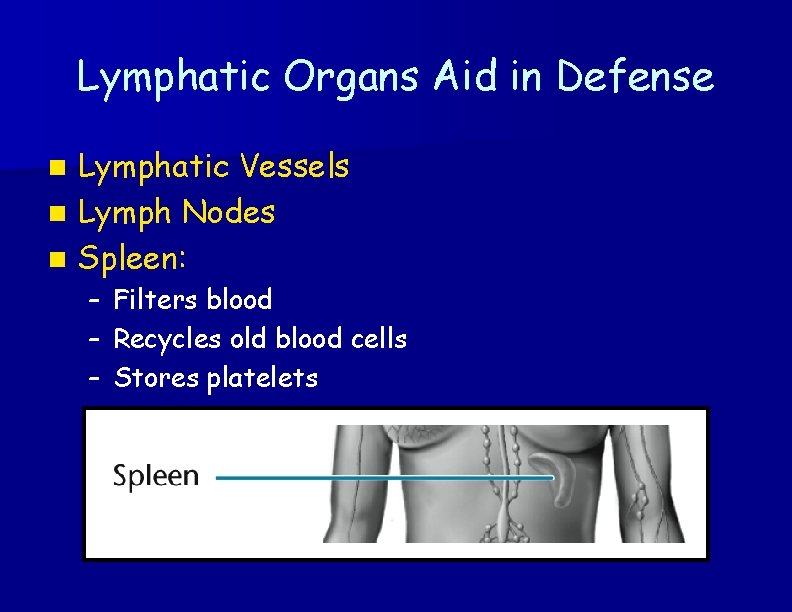
Lymphatic Organs Aid in Defense Lymphatic Vessels n Lymph Nodes n Spleen: n – – – Filters blood Recycles old blood cells Stores platelets
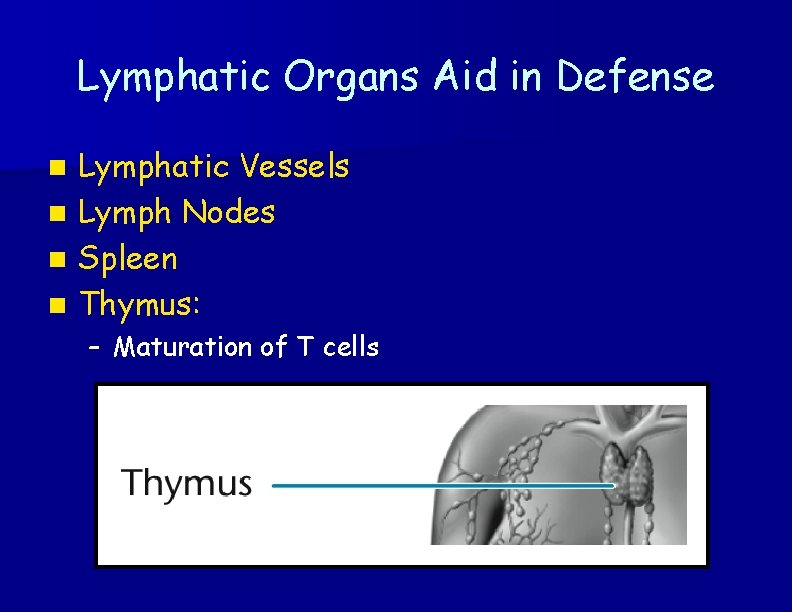
Lymphatic Organs Aid in Defense n n Lymphatic Vessels Lymph Nodes Spleen Thymus: – Maturation of T cells

Lymphatic Organs Aid in Defense n n n Lymphatic Vessels Lymph Nodes Spleen Thymus Tonsils: – Collect & destroy microbes – Aid in immunity (memory)
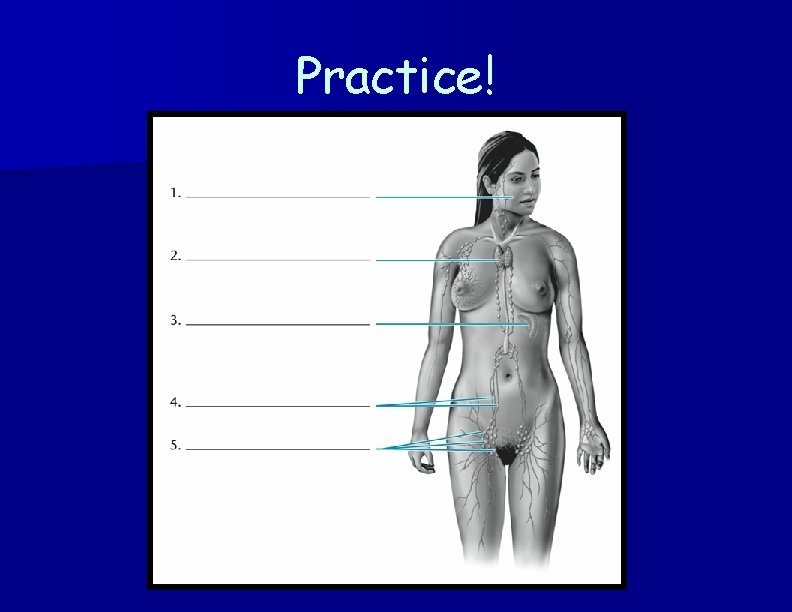
Practice!
Focus on Culture n Why do you think Gitta doesn’t want Michelle to touch the stone? n Do you carry anything with you which you feel helps you to maintain your health and luck? n If you had to go to the hospital for surgery, would you want to pray or be careful about the date of the operation?
- Slides: 44