
CHAPTER 8 B Data Transport Networks Based on
CHAPTER 8 -B Data Transport Networks Based on: Companion to Data Communications: From Basics to Broadband, Third Edition by William J. Beyda © 2000 Prentice Hall, Inc. All Rights Reserved 1
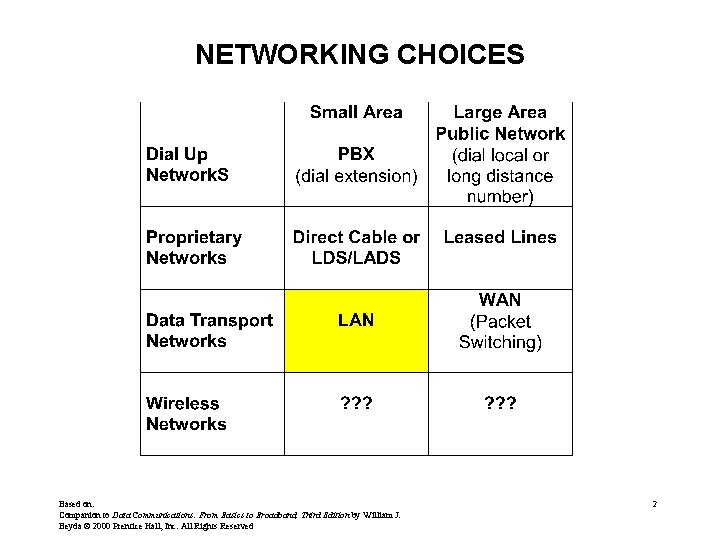
NETWORKING CHOICES Based on: Companion to Data Communications: From Basics to Broadband, Third Edition by William J. Beyda © 2000 Prentice Hall, Inc. All Rights Reserved 2
LOCAL AREA NETWORKS • A LAN is a privately owned data communications system typically providing high speed switched connections between processors, terminals, peripherals, servers, and telecom products within a single campus. – Privately owned and operated – Local, usually in a single building • Can take advantage of short distances between attached devices – Supports • Terminal-to-Host • Client / Server • Peer-to-Peer Based on: Companion to Data Communications: From Basics to Broadband, Third Edition by William J. Beyda © 2000 Prentice Hall, Inc. All Rights Reserved 3
FEATURES OF AN IDEAL LAN • High bandwidth • Multi-media interfacing • Total connectivity between users of a service • Expandable incrementally in cost • Distributed control • High availability and ease of use • No higher than OSI layer 2 – Requires own Data Link Layer addressing scheme – Can carry packets from higher level protocols • e. g. , TCP/IP, SPX/IPX, Net. BEUI • Address Resolution Protocol (ARP) required Based on: Companion to Data Communications: From Basics to Broadband, Third Edition by William J. Beyda © 2000 Prentice Hall, Inc. All Rights Reserved 4
POTENTIAL BENEFITS OF A LAN • Terminals can access multiple computers • Expensive devices can be shared • Data can be communicated from one host to another electronically • Messages can be stored in network on server for later delivery (e. g. , email) • Back-ups can be provided centrally for all users • Wiring costs can be reduced Based on: Companion to Data Communications: From Basics to Broadband, Third Edition by William J. Beyda © 2000 Prentice Hall, Inc. All Rights Reserved 5
MODULATION TECHNIQUES • BASEBAND – The cable medium is directly modulated with 1's and 0's by changing voltage levels • a digital square wave • BROADBAND – Information is modulated on to a carrier frequency • an analog sine wave – Multiple channels supported through frequency division multiplexing (FDM) Based on: Companion to Data Communications: From Basics to Broadband, Third Edition by William J. Beyda © 2000 Prentice Hall, Inc. All Rights Reserved 6
BASEBAND VS BROADBAND • One data conversation at a time • Multiple simultaneous connections • Less expensive • Higher bandwidth • Multiple access methods • Multiple channel types • Twisted pair or coaxial cable • Coaxial cable • Limited capacity • Difficult to design & maintain • Limited growth • Longer runs • Limited Length Based on: Companion to Data Communications: From Basics to Broadband, Third Edition by William J. Beyda © 2000 Prentice Hall, Inc. All Rights Reserved 7
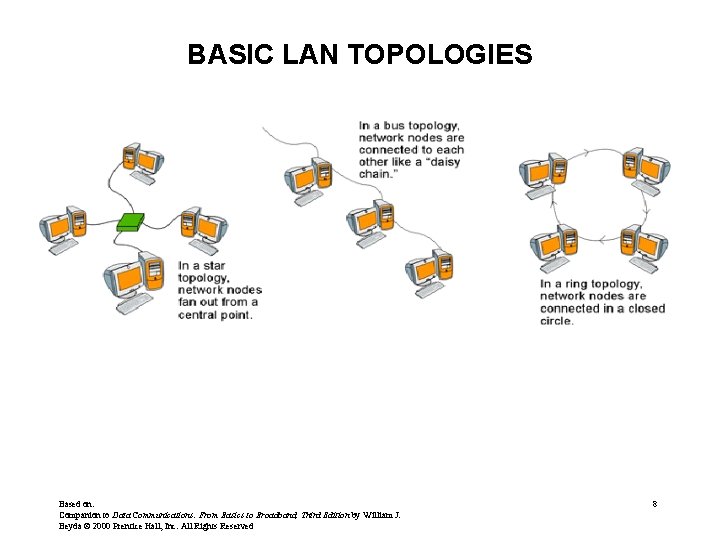
BASIC LAN TOPOLOGIES Based on: Companion to Data Communications: From Basics to Broadband, Third Edition by William J. Beyda © 2000 Prentice Hall, Inc. All Rights Reserved 8
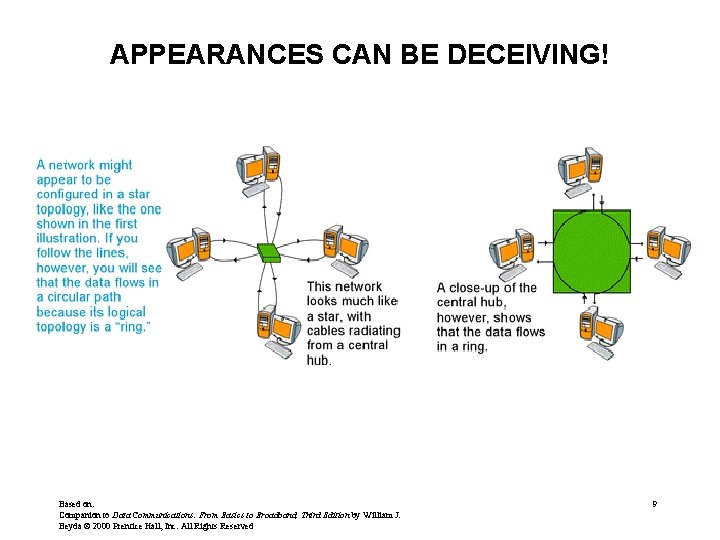
APPEARANCES CAN BE DECEIVING! Based on: Companion to Data Communications: From Basics to Broadband, Third Edition by William J. Beyda © 2000 Prentice Hall, Inc. All Rights Reserved 9
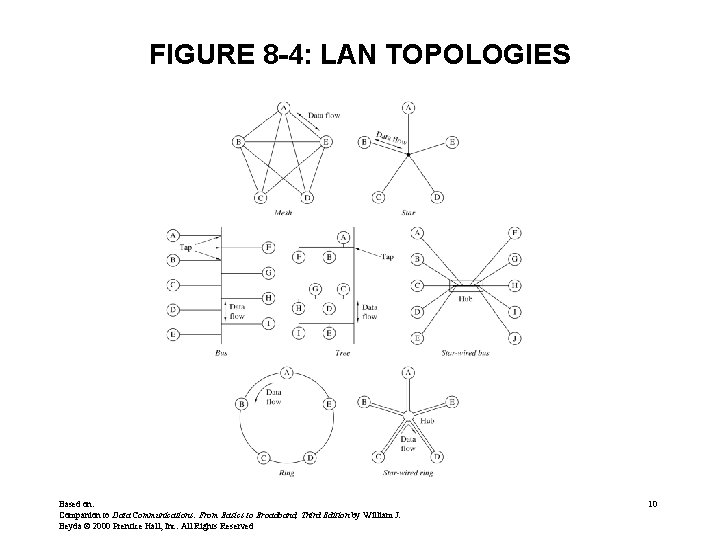
FIGURE 8 -4: LAN TOPOLOGIES Based on: Companion to Data Communications: From Basics to Broadband, Third Edition by William J. Beyda © 2000 Prentice Hall, Inc. All Rights Reserved 10
HUB vs. SWITCH • Earliest LANs used long coaxial cables (Bus, Ring) • Hub – Implements a logical bus or ring topology within a single device. • Switch – Device that creates a true star network. – Data is delivered to the appropriate user based on the destination address. – No other devices on the network hear or interfere with the data transmission. • Connections to hubs/switches usually over twisted pair in a physical star configuration. Based on: Companion to Data Communications: From Basics to Broadband, Third Edition by William J. Beyda © 2000 Prentice Hall, Inc. All Rights Reserved 11
LAN ACCESS METHODS • Access Method - allows LAN users to transmit data and controls access the physical media. Different types of access methods exist including: – Switching (becoming cheaper & more popular) • Creates full duplex path between sender and receiver – Central Control (not used often) • type of polling & selecting – Multiplexing (Broadband) • Frequency Division • Time Division Based on: Companion to Data Communications: From Basics to Broadband, Third Edition by William J. Beyda © 2000 Prentice Hall, Inc. All Rights Reserved 12
LAN ACCESS METHODS (cont. ) • Access Method Types (cont. ) – Token Passing (Token Ring) – Contention (Baseband) • Random Access (not used often) *** • CSMA - Carrier Sense Multiple Access *** – Collision Avoidance • CSMA/CD (Ethernet) – Collision Avoidance & Detection *** Requires acknowledgement from receiver Based on: Companion to Data Communications: From Basics to Broadband, Third Edition by William J. Beyda © 2000 Prentice Hall, Inc. All Rights Reserved 13
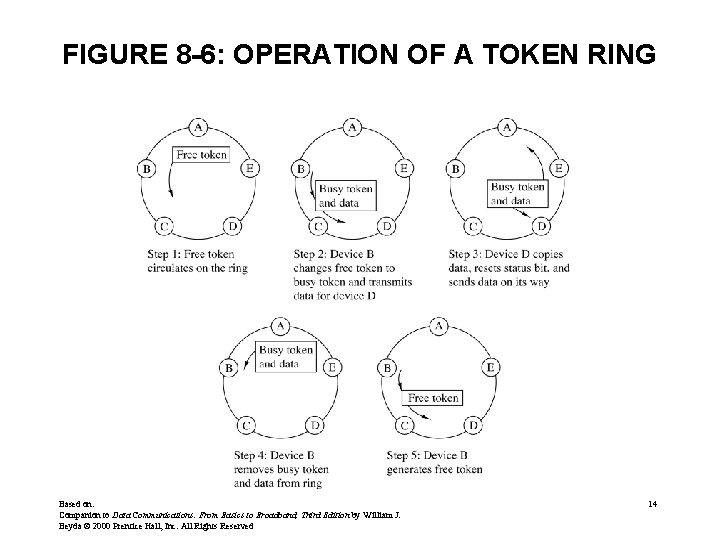
FIGURE 8 -6: OPERATION OF A TOKEN RING Based on: Companion to Data Communications: From Basics to Broadband, Third Edition by William J. Beyda © 2000 Prentice Hall, Inc. All Rights Reserved 14
CARRIER SENSE MULTIPLE ACCESS • Monitor the media for activity • Defer if media is being used • Transmit if media idle • CSMA/CD provides some means for resolving collisions – Random backoff (Ethernet) – Priority structure Based on: Companion to Data Communications: From Basics to Broadband, Third Edition by William J. Beyda © 2000 Prentice Hall, Inc. All Rights Reserved 15
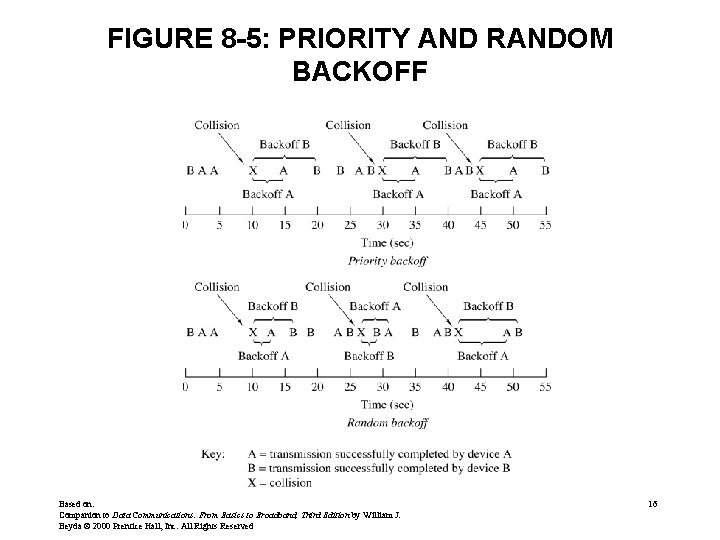
FIGURE 8 -5: PRIORITY AND RANDOM BACKOFF Based on: Companion to Data Communications: From Basics to Broadband, Third Edition by William J. Beyda © 2000 Prentice Hall, Inc. All Rights Reserved 16
ETHERNET • Device must conform to the Ethernet protocols – No network control concept • Baseband – Half duplex with CSMA/CD hub – Full duplex with LAN switch • Up to 100 Mb/sec using coax, twisted pair or fiber – 10 Base-T or 10 Base-F – 100 Base-T (Fast Ethernet) • Up to 10 km length • Broadcast capacity • Low cost Based on: Companion to Data Communications: From Basics to Broadband, Third Edition by William J. Beyda © 2000 Prentice Hall, Inc. All Rights Reserved 17
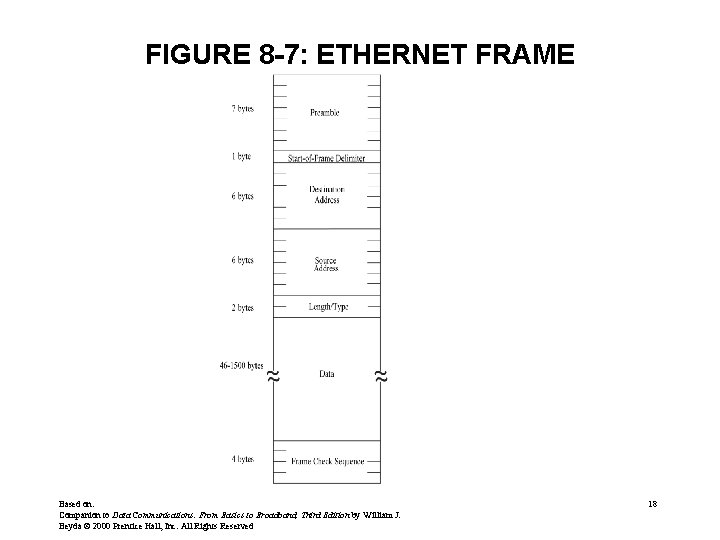
FIGURE 8 -7: ETHERNET FRAME Based on: Companion to Data Communications: From Basics to Broadband, Third Edition by William J. Beyda © 2000 Prentice Hall, Inc. All Rights Reserved 18
THE ETHERNET FRAME • Preamble and Start-of-frame Delimiter – 62 alternating ones and zeroes followed by two ones • Destination and Source Addresses – 48 -bit address for receiver and sender • Length/type – Usually identifies the protocol type (e. g. IP), it can also contain the length of the frame when used with IEEE 802. 2 • Data – Contains 46 -1500 bytes of data • Frame Check Sequence (FCS) – Contains the 4 -byte Cyclical Redundancy Check result Based on: Companion to Data Communications: From Basics to Broadband, Third Edition by William J. Beyda © 2000 Prentice Hall, Inc. All Rights Reserved 19
HIGHER SPEED LANs • Gigabit Ethernet • 100 VG-Anylan (IEEE 802. 12)-demand priority • FDDI-Fiber Distributed Data Interface – Redundant rings, IEEE 802. 5 • CDDI-Copper Distributed Data Interface • HSTR-High Speed Token Ring Based on: Companion to Data Communications: From Basics to Broadband, Third Edition by William J. Beyda © 2000 Prentice Hall, Inc. All Rights Reserved 20
IEEE PROJECT 802 STANDARDS • 802. 1 - Overview, internetworking & management • 802. 2 - Logical link control • 802. 3 - CSMA/CD access method & physical layer – Ethernet • 802. 4 - Token-passing bus access method and physical layer • 802. 5 - Token passing ring access method and physical layer – Token ring • 802. 6 - Metropolitan network access method • Technical advisory groups: – 802. 7 Broadband & 802. 8 Fiber optics Based on: Companion to Data Communications: From Basics to Broadband, Third Edition by William J. Beyda © 2000 Prentice Hall, Inc. All Rights Reserved 21
LAN SUMMARY • Transmission Type & Speed – Baseband vs. Broadband – 10 Mbps, 1000 Mbps, etc. • Logical Topology (determines layer 2 protocol) – Bus, Ring or Star (true star uses data switch) • Physical Layout – Topology: Bus, Ring, Star-Wired Bus (w/ Hub) or Star-Wired Ring (w/ Hub) – Media: Twisted Pair, Coaxial Cable, Fiber Optics • Access Method – Data Switching – FDM/TDM (Broadband LANs) – Contention with Backoff (Logical Bus Topologies) • Random, CSMA & CSMA/CD – Token Ring (Logical Ring Topologies Based on: Companion to Data Communications: From Basics to Broadband, Third Edition by William J. Beyda © 2000 Prentice Hall, Inc. All Rights Reserved 22
INTERNETWORKING • Internetworking - Connecting two or more separate networks – Physically connecting the networks • Transmission alternatives • Equipment requirements – Transporting data • Protocol Conversion, if necessary • Protocol Stacks • IP networks and the Internet are networks of networks – Internetworking in Chapter 8 goes beyond this Based on: Companion to Data Communications: From Basics to Broadband, Third Edition by William J. Beyda © 2000 Prentice Hall, Inc. All Rights Reserved 23
INTERNETWORKING HARDWARE • Repeater (layer 1) – Regenerates all messages, does not access data • Bridge (layer 2) – Can repeat selected messages based on layer 2 address (e. g. , physical/MAC address). Usually used to connect two similar networks • Router (layer 3) – Can repeat and direct messages based on layer 3 network addressing - e. g. , used to connect LANs to IP networks • Gateway (up to layer 7) – Used to connect networks above layer 3. – Some gateways handle protocol conversion Based on: Companion to Data Communications: From Basics to Broadband, Third Edition by William J. Beyda © 2000 Prentice Hall, Inc. All Rights Reserved Note: Some manufacturers add features that go beyond these definitions 24
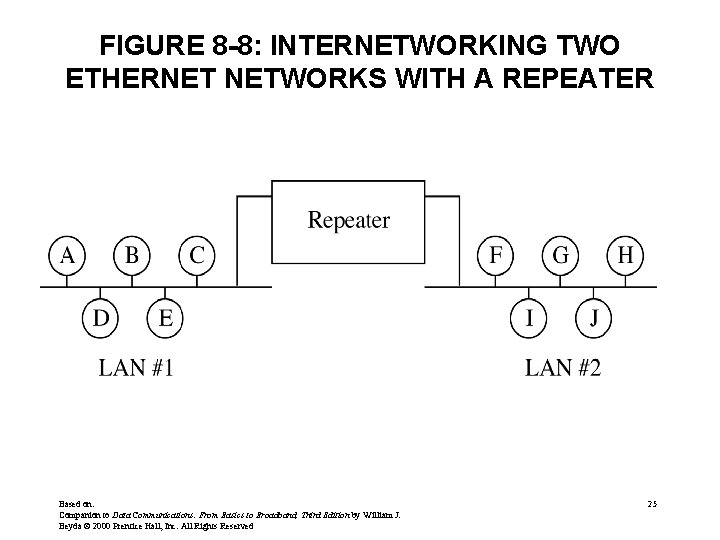
FIGURE 8 -8: INTERNETWORKING TWO ETHERNET NETWORKS WITH A REPEATER Based on: Companion to Data Communications: From Basics to Broadband, Third Edition by William J. Beyda © 2000 Prentice Hall, Inc. All Rights Reserved 25
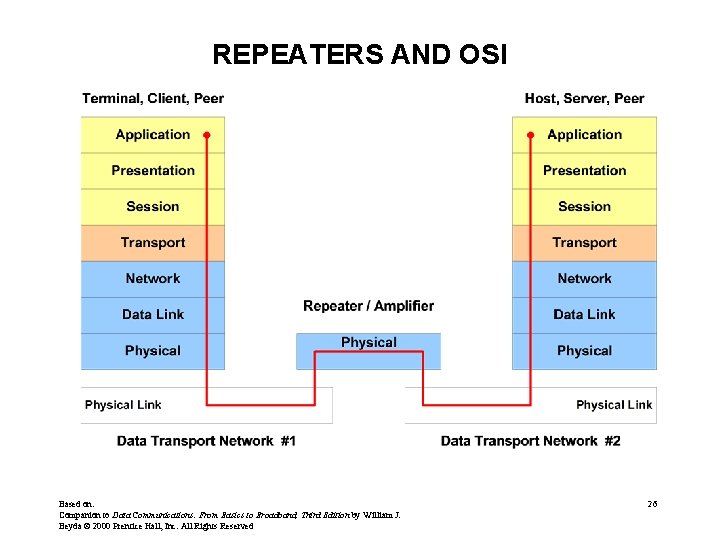
REPEATERS AND OSI Based on: Companion to Data Communications: From Basics to Broadband, Third Edition by William J. Beyda © 2000 Prentice Hall, Inc. All Rights Reserved 26
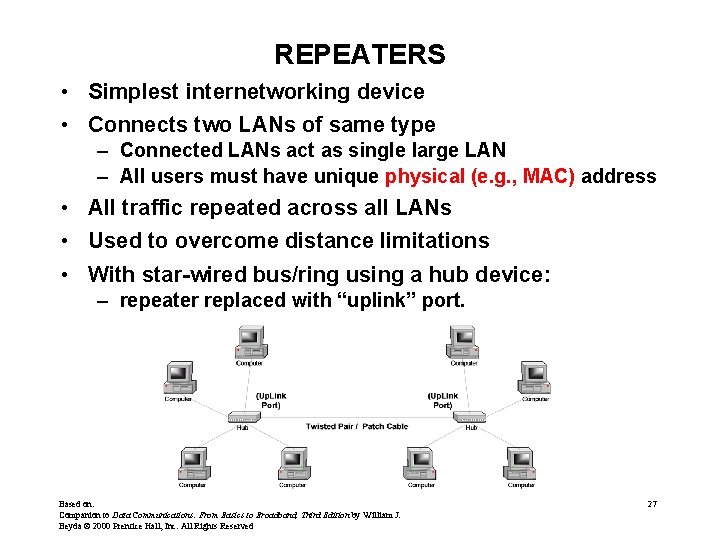
REPEATERS • Simplest internetworking device • Connects two LANs of same type – Connected LANs act as single large LAN – All users must have unique physical (e. g. , MAC) address • All traffic repeated across all LANs • Used to overcome distance limitations • With star-wired bus/ring using a hub device: – repeater replaced with “uplink” port. Based on: Companion to Data Communications: From Basics to Broadband, Third Edition by William J. Beyda © 2000 Prentice Hall, Inc. All Rights Reserved 27
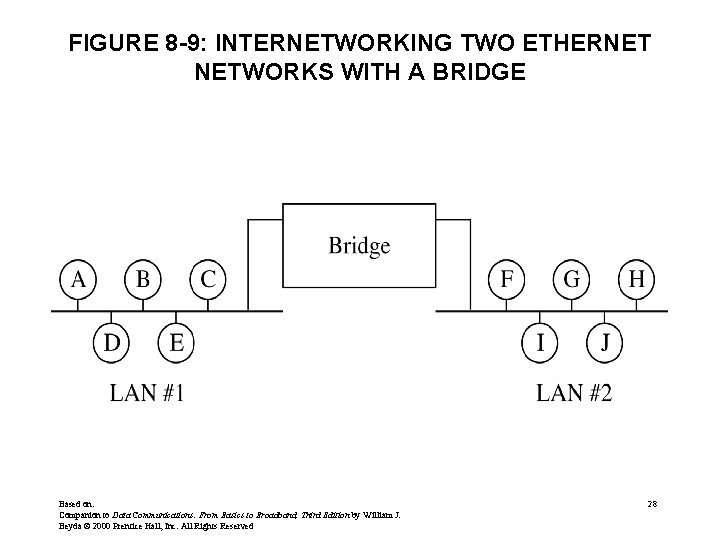
FIGURE 8 -9: INTERNETWORKING TWO ETHERNET NETWORKS WITH A BRIDGE Based on: Companion to Data Communications: From Basics to Broadband, Third Edition by William J. Beyda © 2000 Prentice Hall, Inc. All Rights Reserved 28
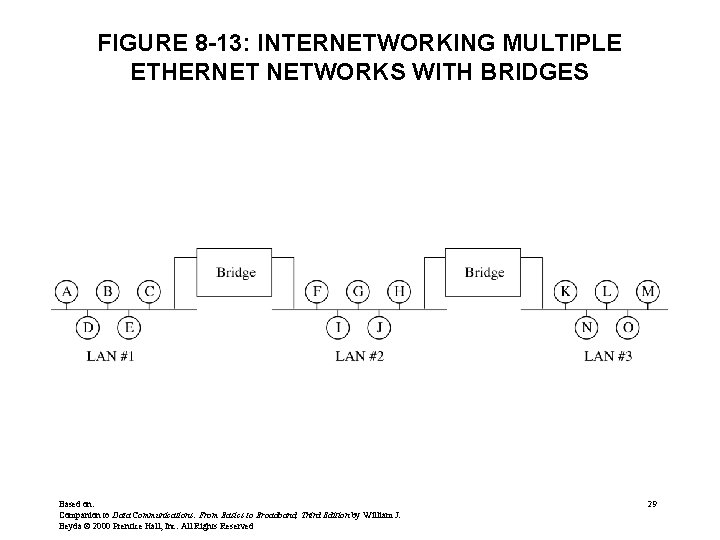
FIGURE 8 -13: INTERNETWORKING MULTIPLE ETHERNET NETWORKS WITH BRIDGES Based on: Companion to Data Communications: From Basics to Broadband, Third Edition by William J. Beyda © 2000 Prentice Hall, Inc. All Rights Reserved 29
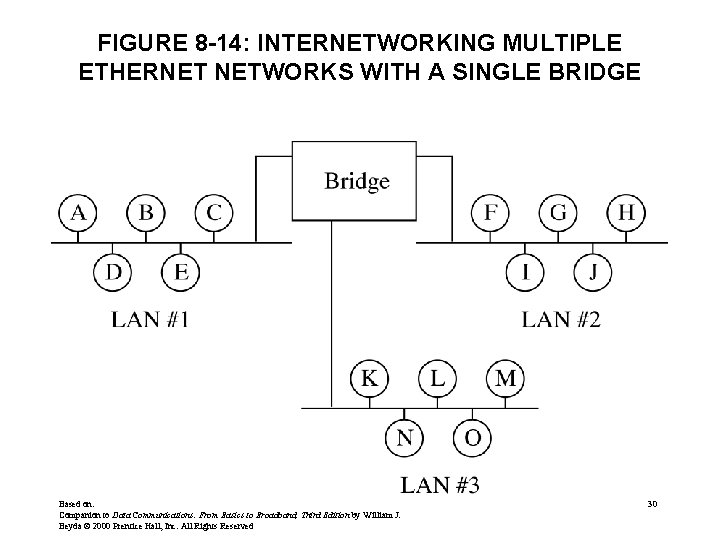
FIGURE 8 -14: INTERNETWORKING MULTIPLE ETHERNET NETWORKS WITH A SINGLE BRIDGE Based on: Companion to Data Communications: From Basics to Broadband, Third Edition by William J. Beyda © 2000 Prentice Hall, Inc. All Rights Reserved 30
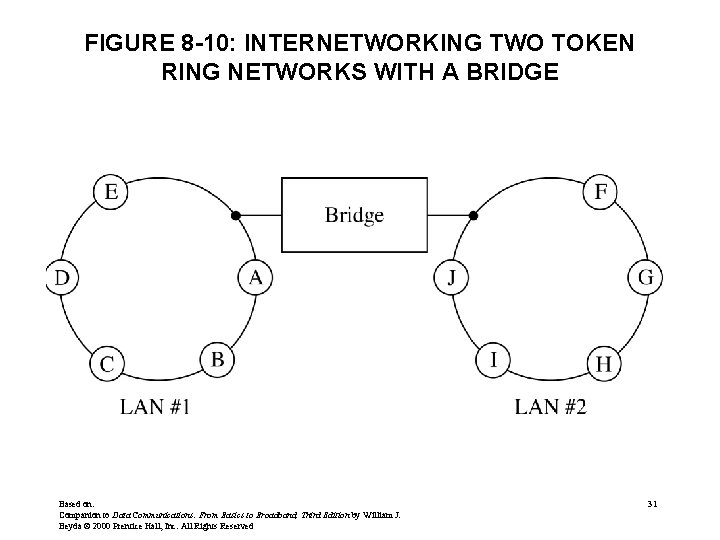
FIGURE 8 -10: INTERNETWORKING TWO TOKEN RING NETWORKS WITH A BRIDGE Based on: Companion to Data Communications: From Basics to Broadband, Third Edition by William J. Beyda © 2000 Prentice Hall, Inc. All Rights Reserved 31
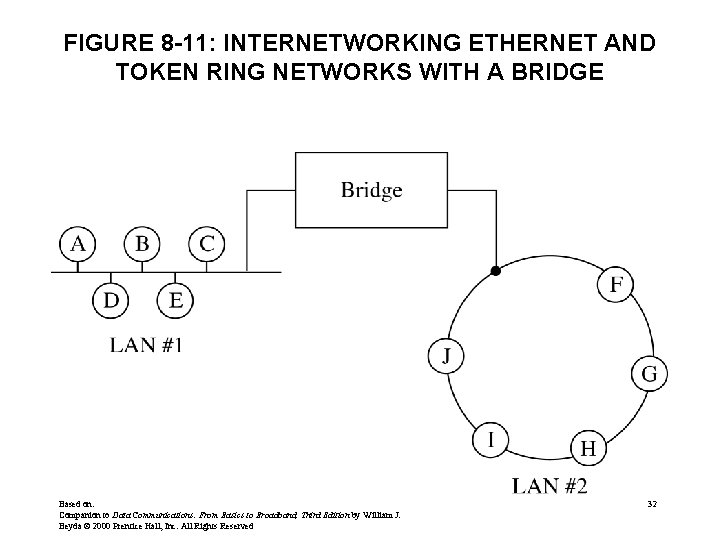
FIGURE 8 -11: INTERNETWORKING ETHERNET AND TOKEN RING NETWORKS WITH A BRIDGE Based on: Companion to Data Communications: From Basics to Broadband, Third Edition by William J. Beyda © 2000 Prentice Hall, Inc. All Rights Reserved 32
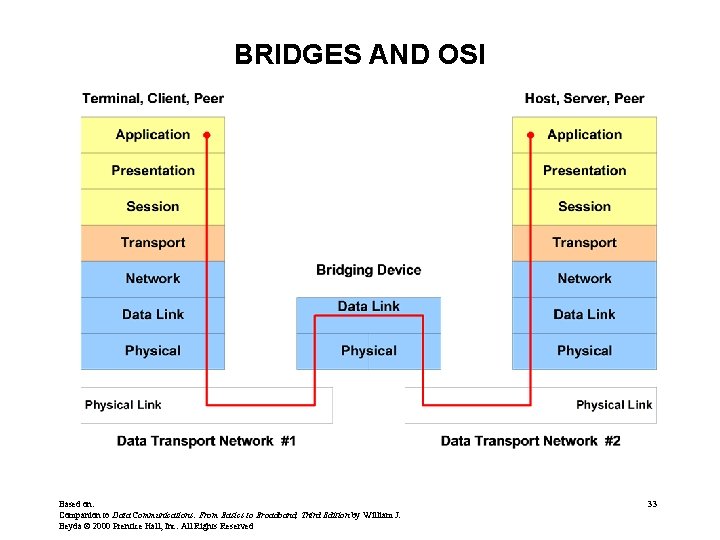
BRIDGES AND OSI Based on: Companion to Data Communications: From Basics to Broadband, Third Edition by William J. Beyda © 2000 Prentice Hall, Inc. All Rights Reserved 33
BRIDGES • Connect two or more networks that use similar layer 2 protocols – All users must have unique physical (e. g. , MAC) addresses • Filters traffic between networks – Only transmits frames that must cross bridge – Different methods for telling bridge who is where • Manual configuration • Adaptive bridges (learn location of users) • Used when LANs reach transmission capacity – Allows big LAN to be divided into “collision domains” • Remote Bridges connect distant LANs – Digital or Analog leased lines – Usually high speed (e. g. , T 1), bandwidth an issue Based on: Companion to Data Communications: From Basics to Broadband, Third Edition by William J. Beyda © 2000 Prentice Hall, Inc. All Rights Reserved 34
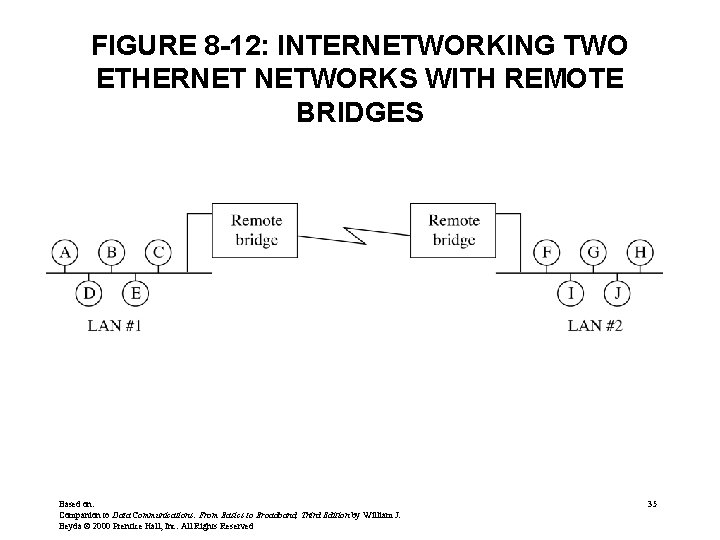
FIGURE 8 -12: INTERNETWORKING TWO ETHERNET NETWORKS WITH REMOTE BRIDGES Based on: Companion to Data Communications: From Basics to Broadband, Third Edition by William J. Beyda © 2000 Prentice Hall, Inc. All Rights Reserved 35
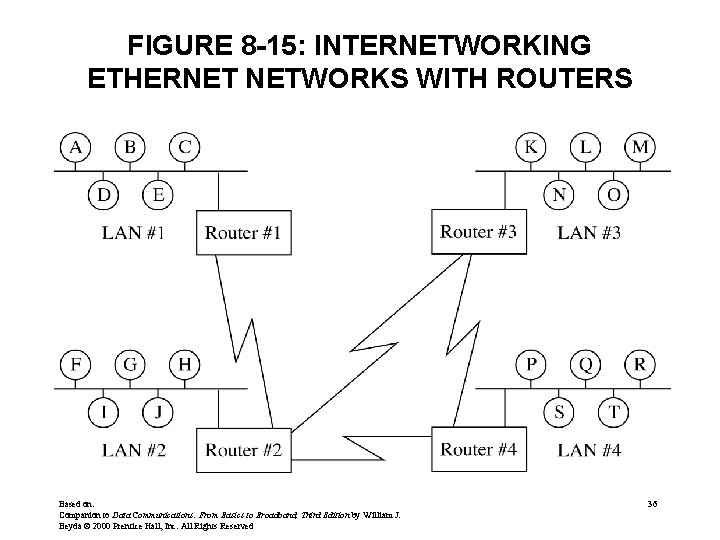
FIGURE 8 -15: INTERNETWORKING ETHERNET NETWORKS WITH ROUTERS Based on: Companion to Data Communications: From Basics to Broadband, Third Edition by William J. Beyda © 2000 Prentice Hall, Inc. All Rights Reserved 36
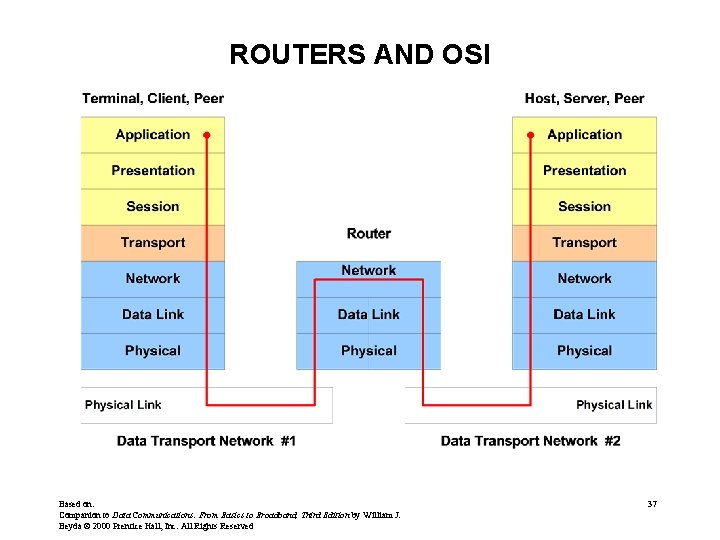
ROUTERS AND OSI Based on: Companion to Data Communications: From Basics to Broadband, Third Edition by William J. Beyda © 2000 Prentice Hall, Inc. All Rights Reserved 37
ROUTERS • Connects two or more networks that use similar layer 3 protocols (e. g. , IP) – Does not require unique Layer 2 addresses (e. g. , physical, MAC addresses) for each device – Only Layer 3 addresses (logical/network addresses) need be different – For IP, router directs traffic based on NETID to the proper LAN • Routers know location of networks, not individual stations on other LANs • Allows messages of different sizes between networks – Maximum Transmission Unit for network #1 (MTU 1) can be different than MTU 2 • Higher end routers able to provide firewall services or network address translation Based on: Companion to Data Communications: From Basics to Broadband, Third Edition by William J. Beyda © 2000 Prentice Hall, Inc. All Rights Reserved 38
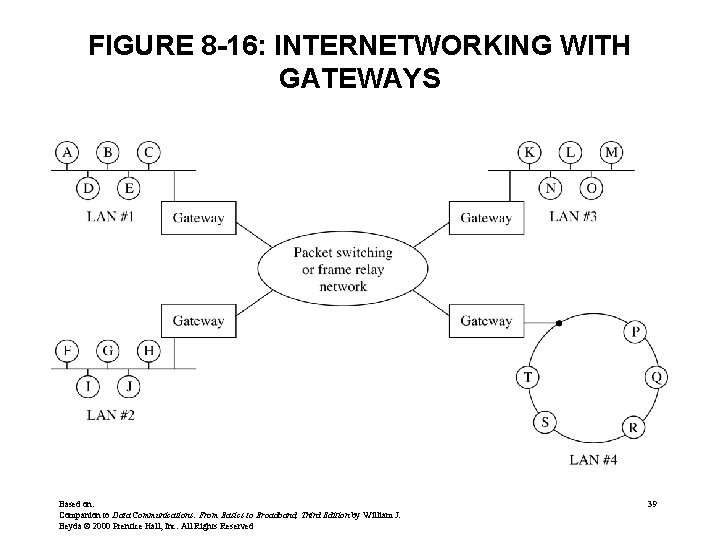
FIGURE 8 -16: INTERNETWORKING WITH GATEWAYS Based on: Companion to Data Communications: From Basics to Broadband, Third Edition by William J. Beyda © 2000 Prentice Hall, Inc. All Rights Reserved 39
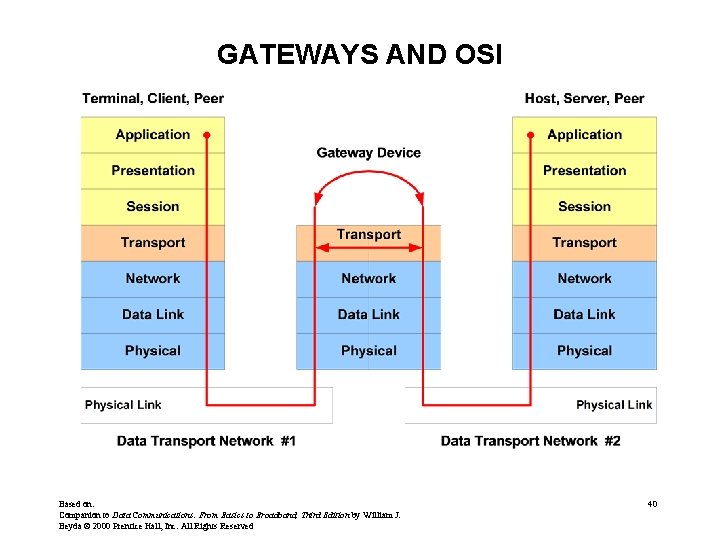
GATEWAYS AND OSI Based on: Companion to Data Communications: From Basics to Broadband, Third Edition by William J. Beyda © 2000 Prentice Hall, Inc. All Rights Reserved 40
GATEWAYS • Same functions as a router but operates above layer 3 – Can operate up to layer 7 • May add protocol and address conversion • Whatever it takes to make two applications work across networks • Sometimes the term is wrongly used instead of the word "router” Based on: Companion to Data Communications: From Basics to Broadband, Third Edition by William J. Beyda © 2000 Prentice Hall, Inc. All Rights Reserved 41
INTERNETWORKING TRANSMISSION OPTIONS • Direct Cabling (same building / campus) • Leased-Lines between internetworking hardware – Analog with modems – Digital with CSU/DSUs – High Speed Digital (e. g. , T-1) • Tunneling - connecting internetworking hardware with packet switching service and a private virtual circuit – – X. 25 The Internet or other IP network Frame Relay or ATM SMDS - Switched Multimegabit Data Service Based on: Companion to Data Communications: From Basics to Broadband, Third Edition by William J. Beyda © 2000 Prentice Hall, Inc. All Rights Reserved 42
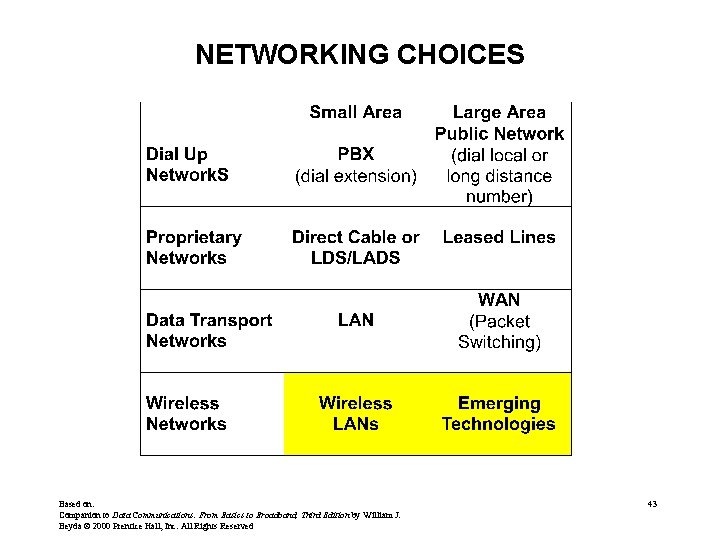
NETWORKING CHOICES Based on: Companion to Data Communications: From Basics to Broadband, Third Edition by William J. Beyda © 2000 Prentice Hall, Inc. All Rights Reserved 43
WIRELESS LANs • Wireless LANs – Cable extension • Combines wired and wireless users on same LAN • Uses wireless hub to connect to stations but wired topology and access methods – Access point (IEEE 802. 11) • Combines wired and wireless users on same LAN • Connects wired users with standard topology and access methods. Special access method for wireless users – Ad hoc • Only wireless users Based on: Companion to Data Communications: From Basics to Broadband, Third Edition by William J. Beyda © 2000 Prentice Hall, Inc. All Rights Reserved 44
WIRELESS WANs • Wide area – Broadcast - pagers, stock quotes, etc. – Cellular Telephone Service with Modem • Not really a data transport network – Cellular Digital Packet Network - CDPD • Goal of Personal Communications Service - PCS – Combines voice and data – One number service – Universal handset that does it all • In early stages of development and deployment – No wide scale, high speed data transport network yet Based on: Companion to Data Communications: From Basics to Broadband, Third Edition by William J. Beyda © 2000 Prentice Hall, Inc. All Rights Reserved 45
- Slides: 45