
Chapter 8 Appendicular Skeleton 1 Fig 8 1
- Slides: 49
Chapter 8 Appendicular Skeleton 1
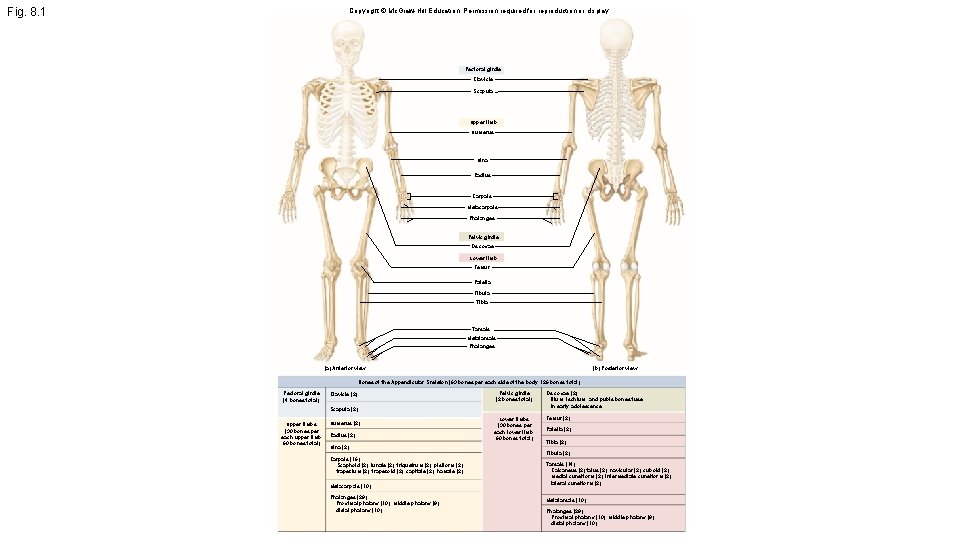
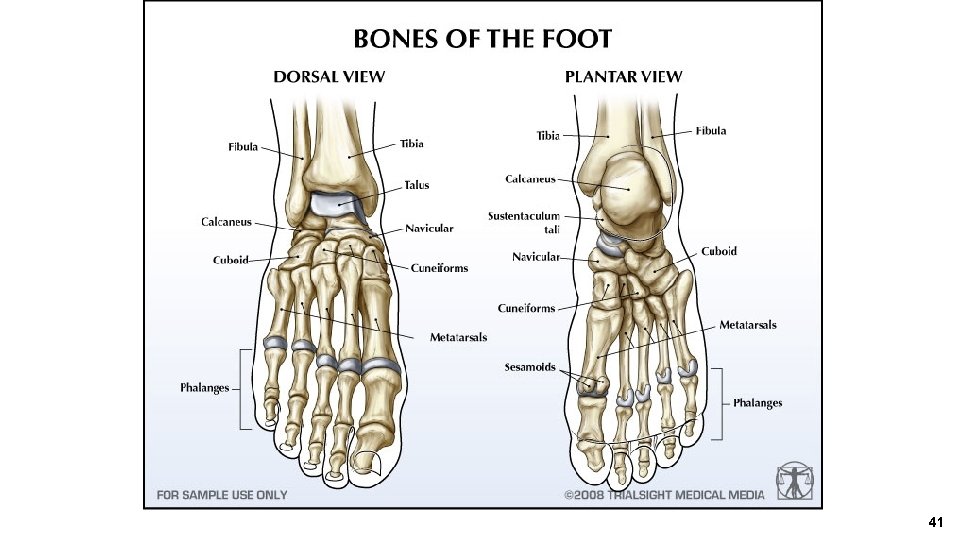
Fig. 8. 1 Copyright © Mc. Graw-Hill Education. Permission required for reproduction or display. Pectoral girdle Clavicle Scapula Upper limb Humerus Ulna Radius Carpals Metacarpals Phalanges Pelvic girdle Os coxae Lower limb Femur Patella Fibula Tibia Tarsals Metatarsals Phalanges (a) Anterior view (b) Posterior view Bones of the Appendicular Skeleton (63 bones per each side of the body, 126 bones total) Pectoral girdle (4 bones total) Clavicle (2) Pelvic girdle (2 bones total) Scapula (2) Upper limbs (30 bones per each upper limb 60 bones total) Humerus (2) Radius (2) Ulna (2) Carpals (16) Scaphoid (2), lunate (2), triquetrum (2), pisiform (2), trapezium (2), trapezoid (2), capitate (2), hamate (2) Metacarpals (10) Phalanges (28) Proximal phalanx (10), middle phalanx (8), distal phalanx (10) Lower limbs (30 bones per each lower limb, 60 bones total) Os coxae (2) llium, ischium, and pubis bones fuse in early adolescence Femur (2) Patella (2) Tibia (2) Fibula (2) Tarsals (14) Calcaneus (2), talus (2), navicular (2), cuboid (2), medial cuneiform (2), intermediate cuneiform (2), lateral cuneiform (2) Metatarsals (10) Phalanges (28) Proximal phalanx (10), middle phalanx (8), distal phalanx (10)
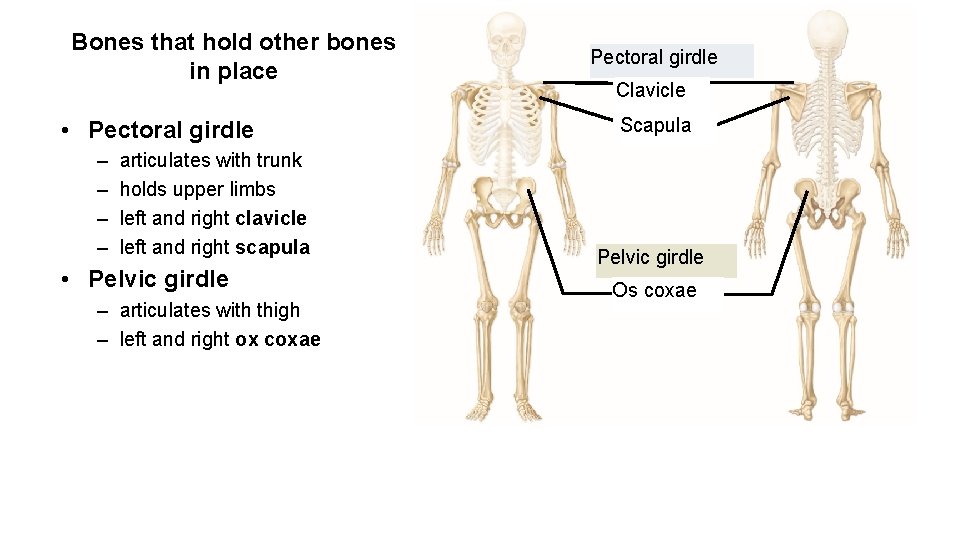
Bones that hold other bones in place • Pectoral girdle – – articulates with trunk holds upper limbs left and right clavicle left and right scapula • Pelvic girdle – articulates with thigh – left and right ox coxae Pectoral girdle Clavicle Scapula Pelvic girdle Os coxae
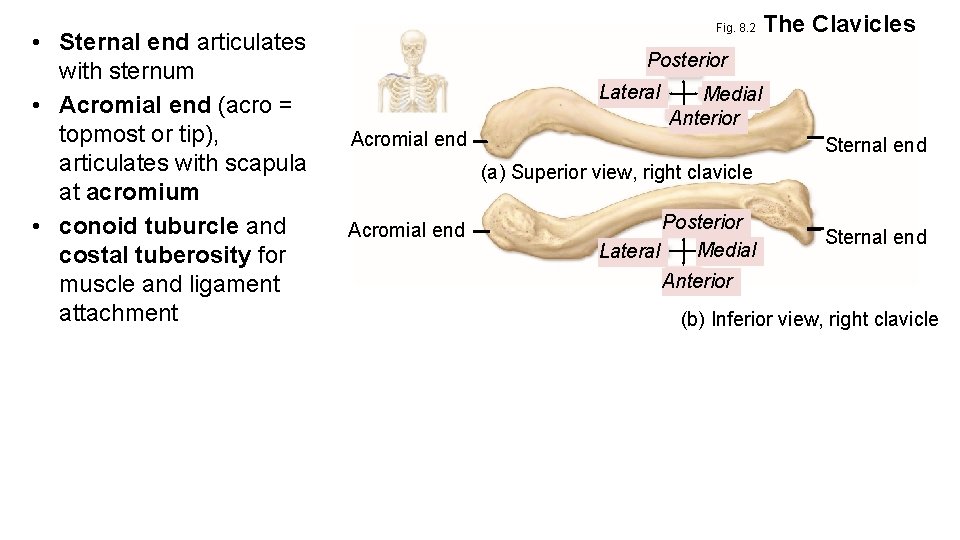
• Sternal end articulates with sternum • Acromial end (acro = topmost or tip), articulates with scapula at acromium • conoid tuburcle and costal tuberosity for muscle and ligament attachment Fig. 8. 2 The Clavicles Posterior Lateral Acromial end Medial Anterior Sternal end (a) Superior view, right clavicle Acromial end Posterior Medial Lateral Sternal end Anterior (b) Inferior view, right clavicle
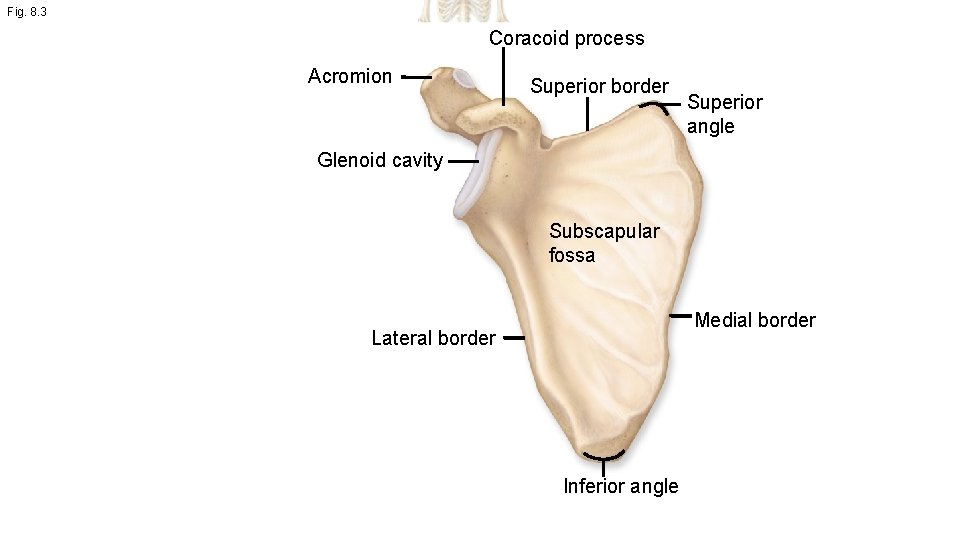
Fig. 8. 3 Coracoid process Acromion Superior border Superior angle Glenoid cavity Subscapular fossa Medial border Lateral border Inferior angle
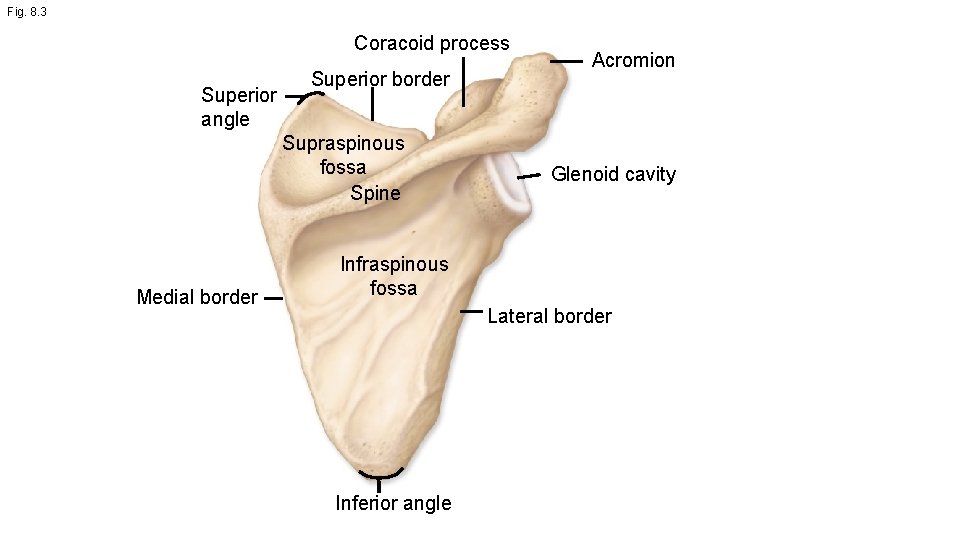
Fig. 8. 3 Coracoid process Superior angle Superior border Supraspinous fossa Spine Medial border Acromion Glenoid cavity Infraspinous fossa Lateral border Inferior angle
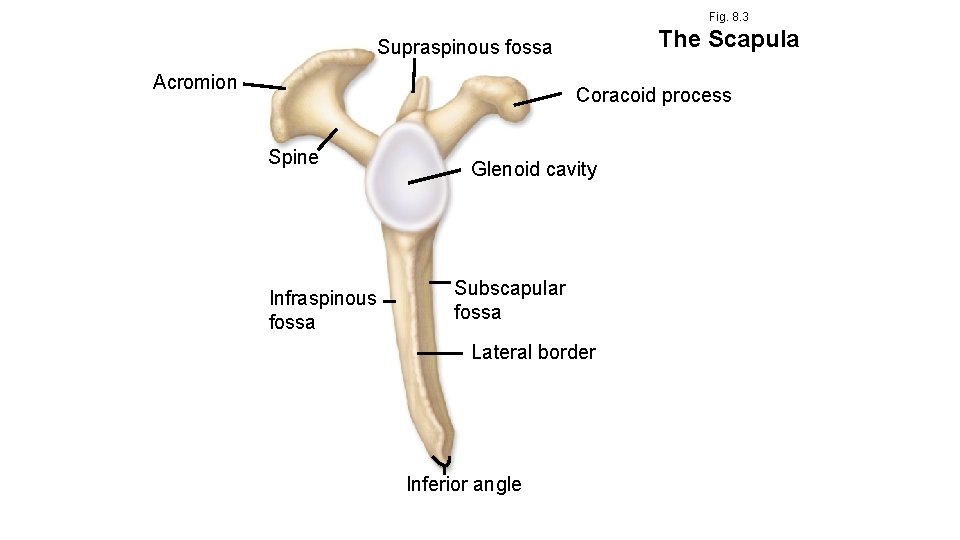
Fig. 8. 3 The Scapula Supraspinous fossa Acromion Coracoid process Spine Infraspinous fossa Glenoid cavity Subscapular fossa Lateral border Inferior angle Acromion
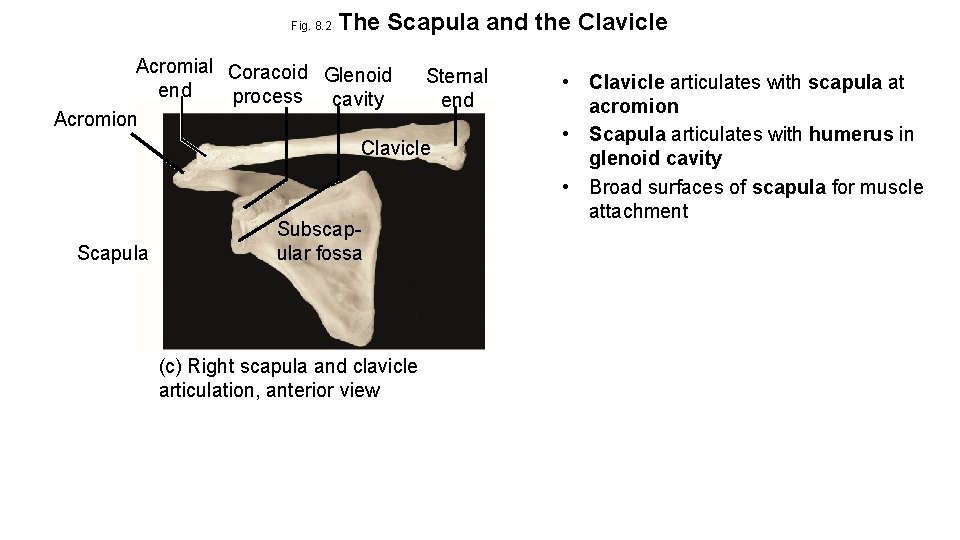
Fig. 8. 2 The Scapula and the Clavicle Acromial Coracoid Glenoid Sternal end process cavity end Acromion Clavicle Scapula Subscapular fossa (c) Right scapula and clavicle articulation, anterior view • Clavicle articulates with scapula at acromion • Scapula articulates with humerus in glenoid cavity • Broad surfaces of scapula for muscle attachment
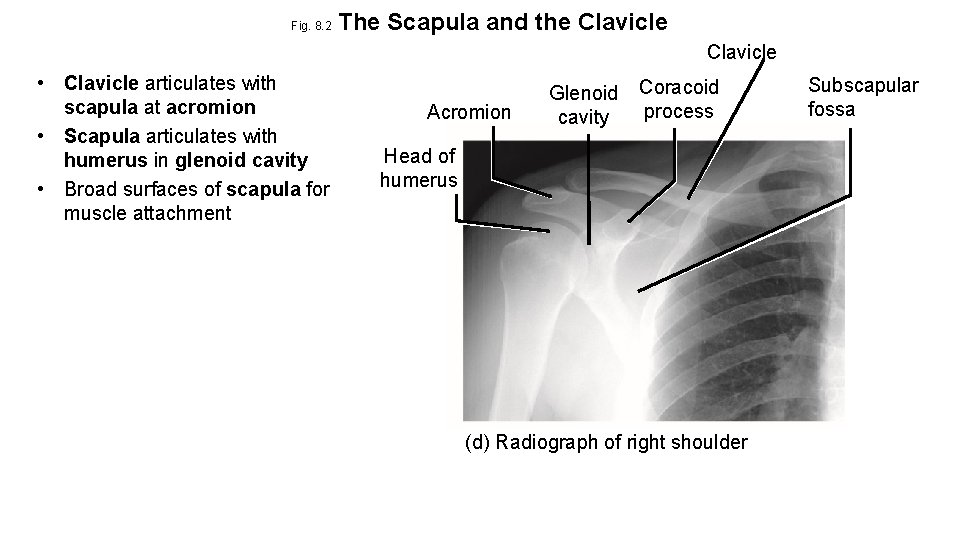
Fig. 8. 2 The Scapula and the Clavicle • Clavicle articulates with scapula at acromion • Scapula articulates with humerus in glenoid cavity • Broad surfaces of scapula for muscle attachment Acromion Glenoid cavity Coracoid process Head of humerus (d) Radiograph of right shoulder Subscapular fossa
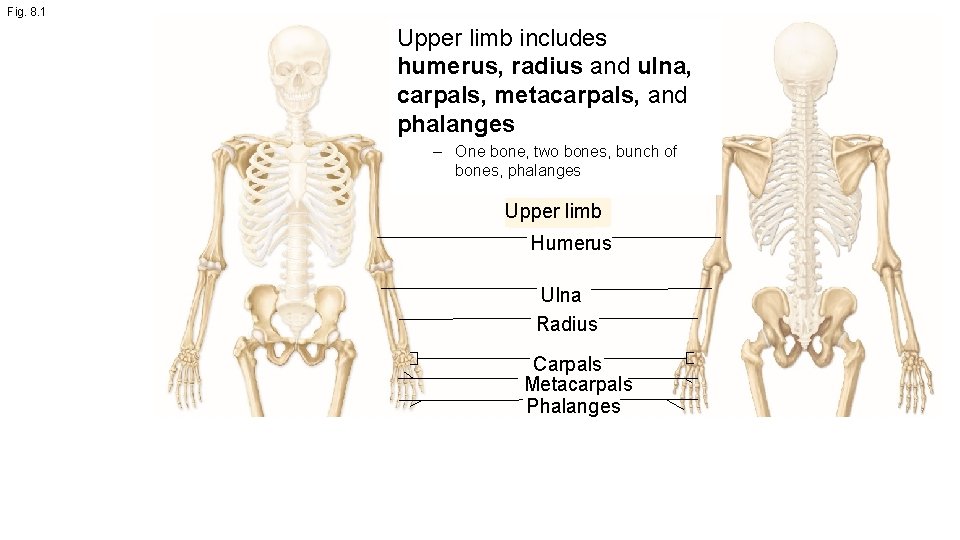
Fig. 8. 1 Upper limb includes humerus, radius and ulna, carpals, metacarpals, and phalanges – One bone, two bones, bunch of bones, phalanges Upper limb Humerus Ulna Radius Carpals Metacarpals Phalanges
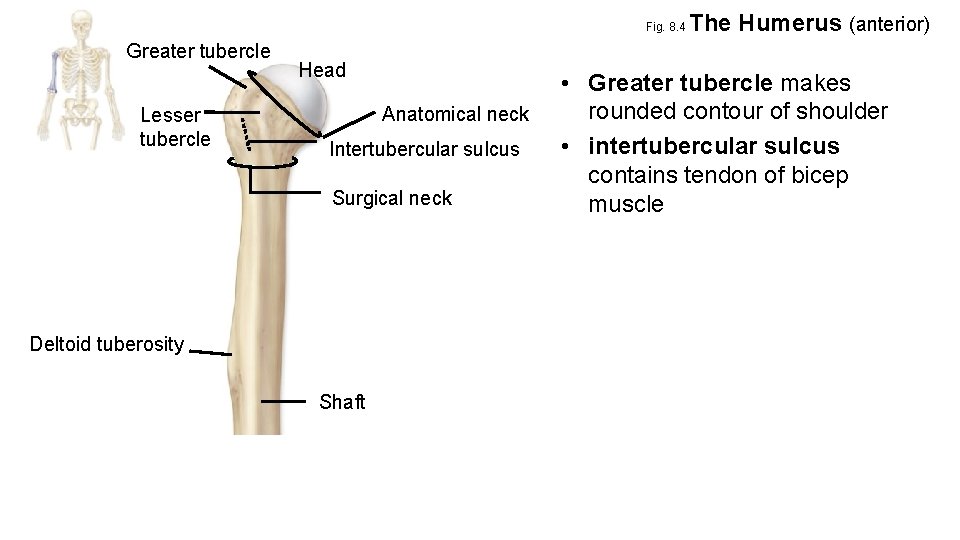
Fig. 8. 4 Greater tubercle Lesser tubercle Head Anatomical neck Intertubercular sulcus Surgical neck Deltoid tuberosity Shaft The Humerus (anterior) • Greater tubercle makes rounded contour of shoulder • intertubercular sulcus contains tendon of bicep muscle
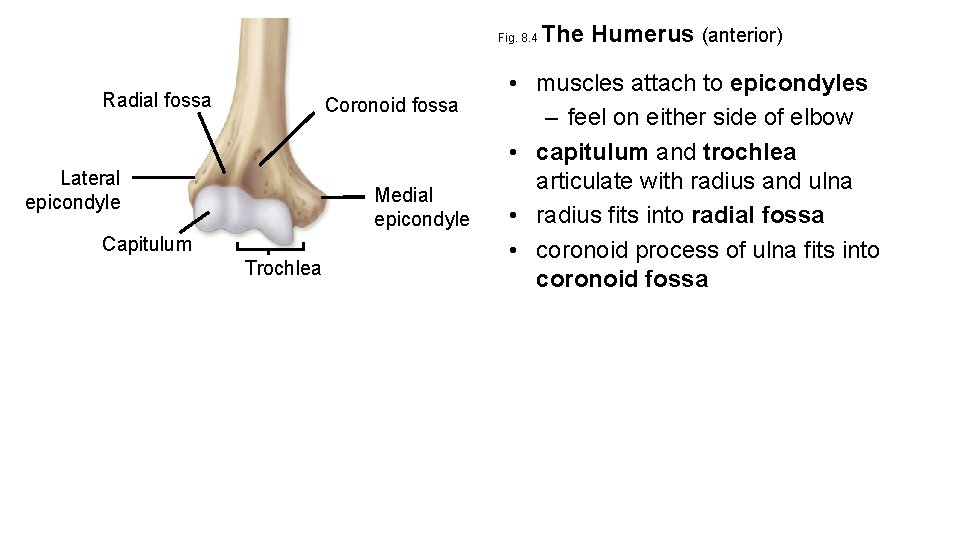
Fig. 8. 4 Radial fossa Coronoid fossa Lateral epicondyle Medial epicondyle Capitulum Trochlea The Humerus (anterior) • muscles attach to epicondyles – feel on either side of elbow • capitulum and trochlea articulate with radius and ulna • radius fits into radial fossa • coronoid process of ulna fits into coronoid fossa
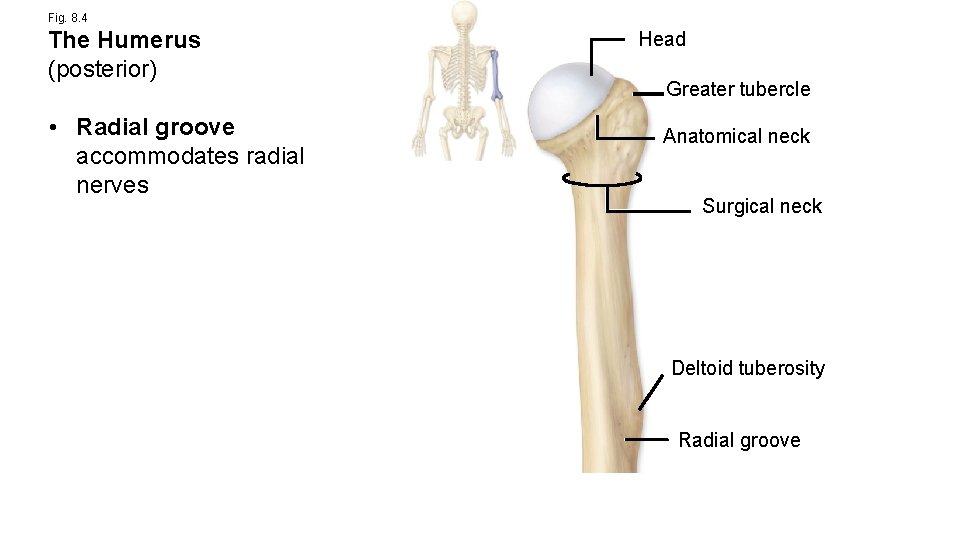
Fig. 8. 4 The Humerus (posterior) • Radial groove accommodates radial nerves Head Greater tubercle Anatomical neck Surgical neck Deltoid tuberosity Radial groove
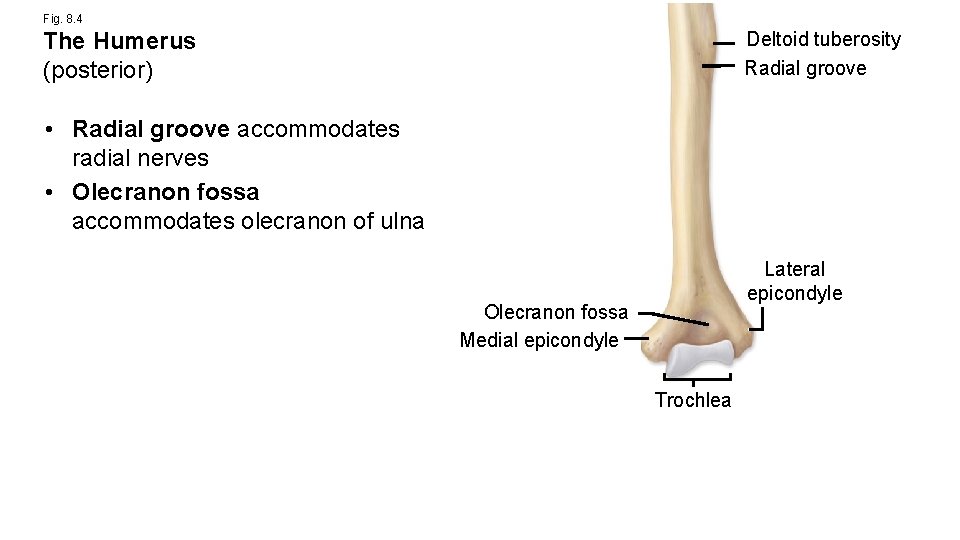
Fig. 8. 4 Deltoid tuberosity Radial groove The Humerus (posterior) • Radial groove accommodates radial nerves • Olecranon fossa accommodates olecranon of ulna Lateral epicondyle Olecranon fossa Medial epicondyle Trochlea
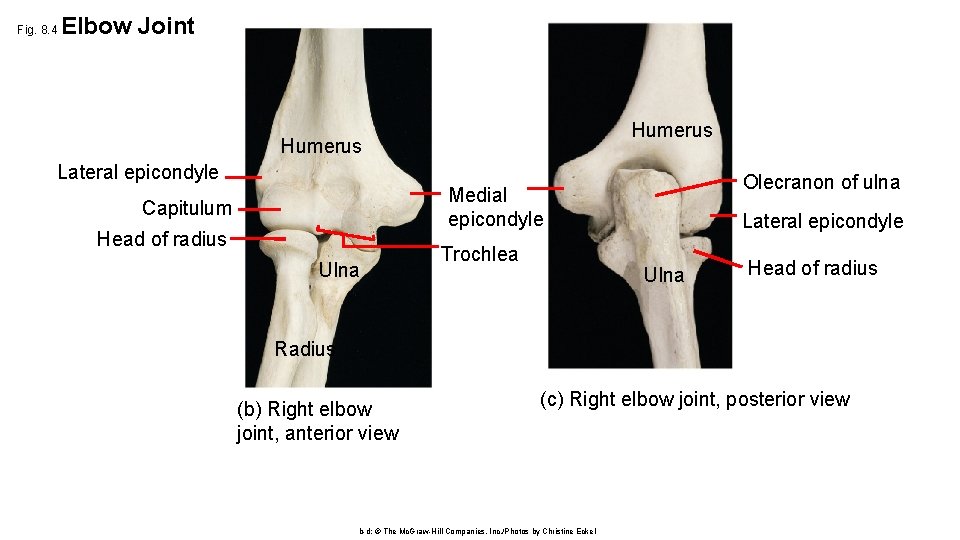
Fig. 8. 4 Elbow Joint Humerus Lateral epicondyle Olecranon of ulna Medial epicondyle Capitulum Head of radius Ulna Trochlea Lateral epicondyle Ulna Head of radius Radius (b) Right elbow joint, anterior view (c) Right elbow joint, posterior view b-d: © The Mc. Graw-Hill Companies, Inc. /Photos by Christine Eckel
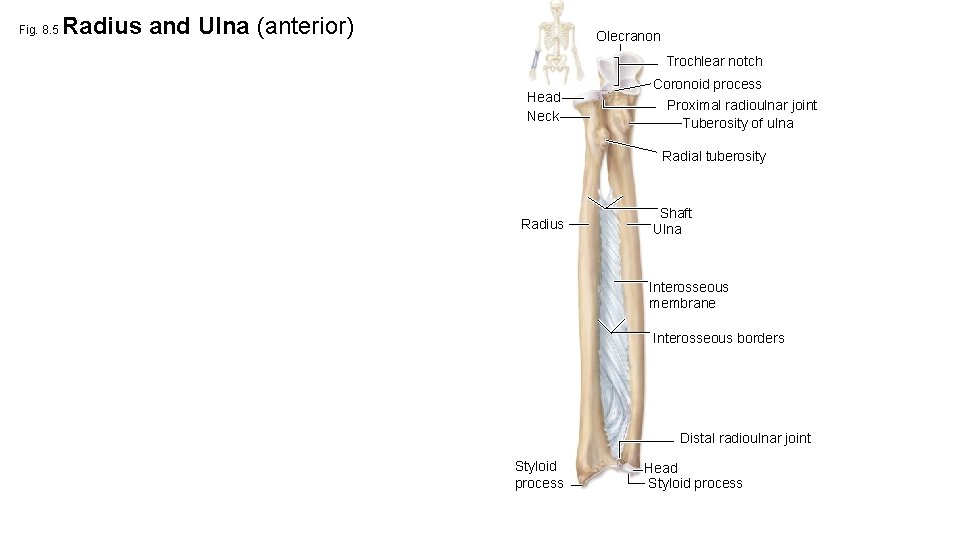
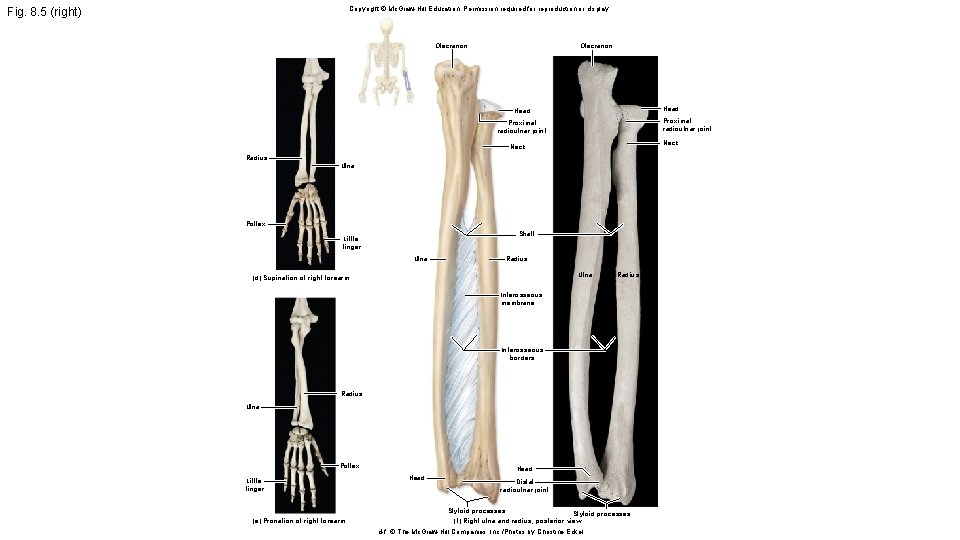
Fig. 8. 5 Radius and Ulna (anterior) Olecranon Trochlear notch Head Neck Coronoid process Proximal radioulnar joint Tuberosity of ulna Radial tuberosity Radius Shaft Ulna Interosseous membrane Interosseous borders Distal radioulnar joint Styloid process Head Styloid process
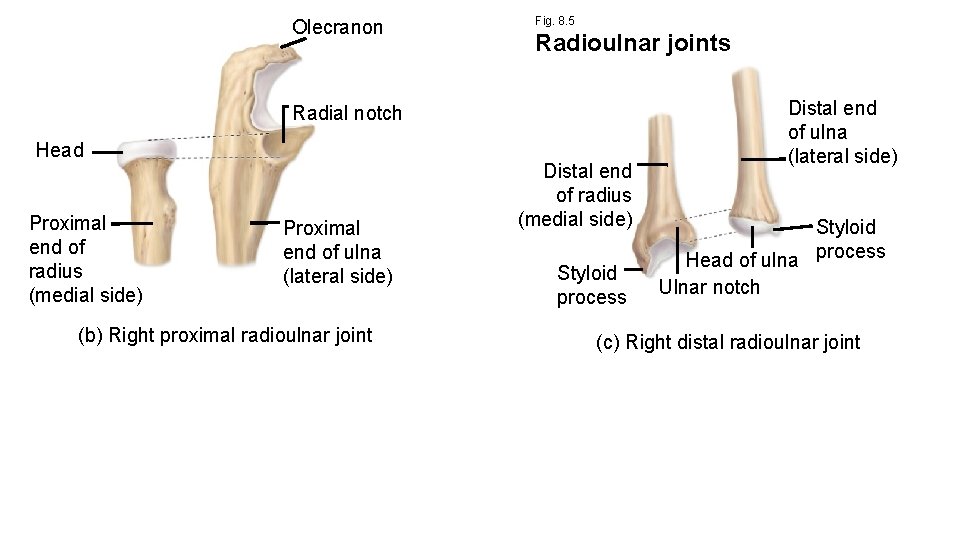
Olecranon Fig. 8. 5 Radioulnar joints Radial notch Head Proximal end of radius (medial side) Proximal end of ulna (lateral side) (b) Right proximal radioulnar joint Distal end of radius (medial side) Styloid process Distal end of ulna (lateral side) Styloid Head of ulna process Ulnar notch (c) Right distal radioulnar joint
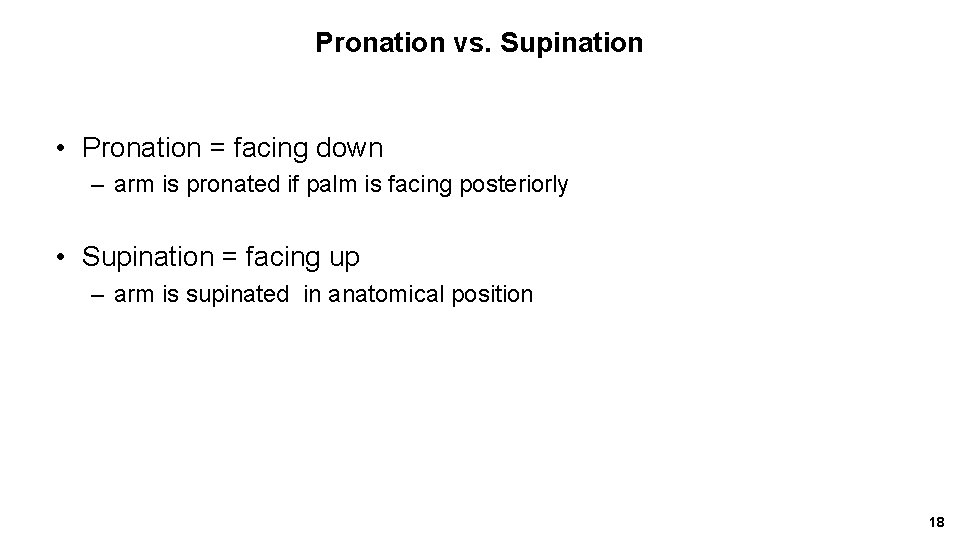
Pronation vs. Supination • Pronation = facing down – arm is pronated if palm is facing posteriorly • Supination = facing up – arm is supinated in anatomical position 18
Copyright © Mc. Graw-Hill Education. Permission required for reproduction or display. Fig. 8. 5 (right) Olecranon Head Proximal radioulnar joint Neck Radius Ulna Pollex Shaft Little finger Ulna Radius Ulna (d) Supination of right forearm Radius Interosseous membrane Interosseous borders Radius Ulna Pollex Little finger (e) Pronation of right forearm Head Distal radioulnar joint Styloid processes (f) Right ulna and radius, posterior view d-f: © The Mc. Graw-Hill Companies, Inc. /Photos by Christine Eckel
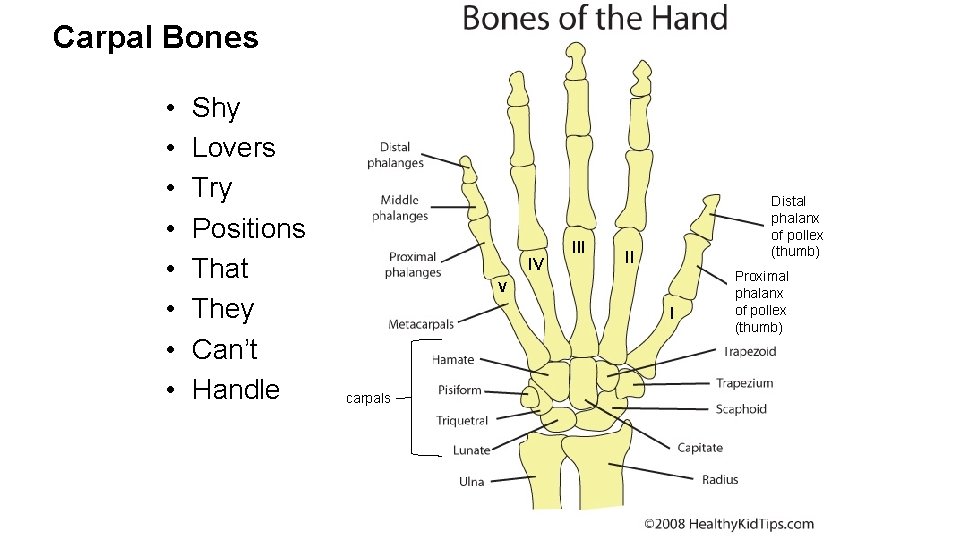
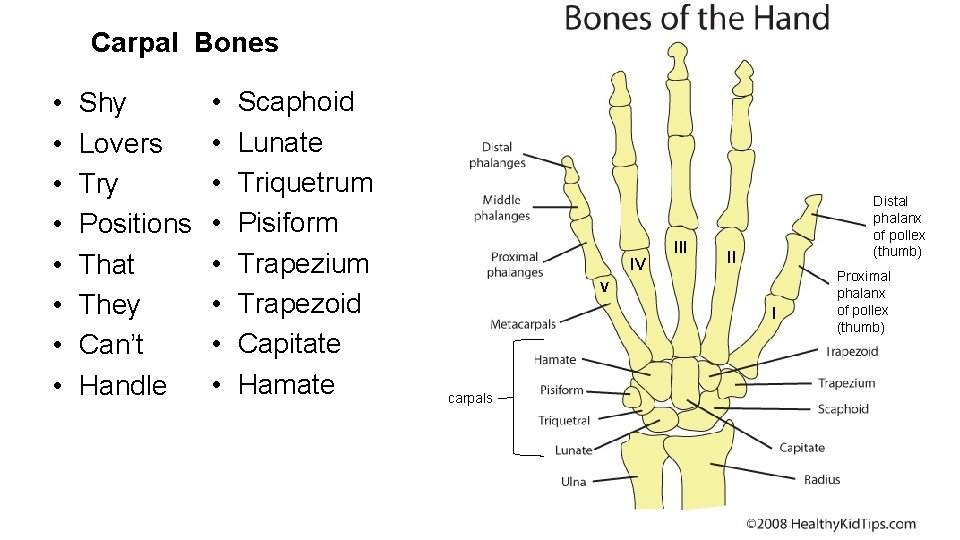
Carpal Bones • • Shy Lovers Try Positions That They Can’t Handle IV III Distal phalanx of pollex (thumb) II V I carpals Proximal phalanx of pollex (thumb)
Carpal Bones • • Shy Lovers Try Positions That They Can’t Handle • • Scaphoid Lunate Triquetrum Pisiform Trapezium Trapezoid Capitate Hamate IV III Distal phalanx of pollex (thumb) II V I carpals Proximal phalanx of pollex (thumb)
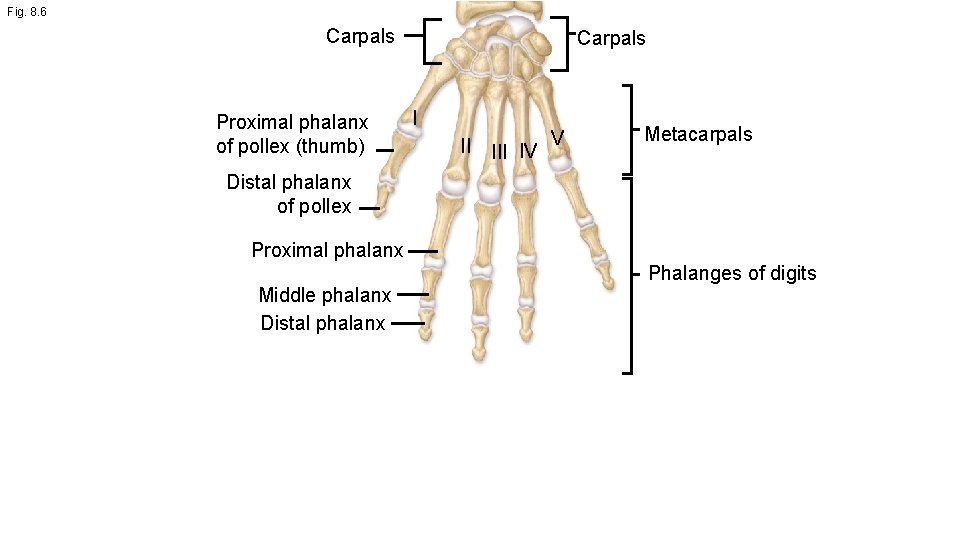
Fig. 8. 6 Carpals Proximal phalanx of pollex (thumb) Carpals I II IV V Metacarpals Distal phalanx of pollex Proximal phalanx Middle phalanx Distal phalanx Phalanges of digits
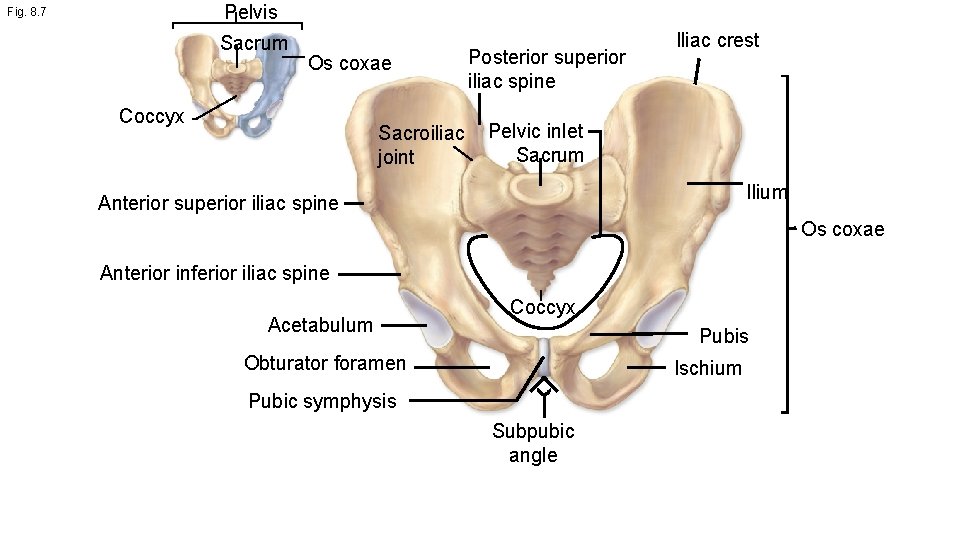
Pelvis Fig. 8. 7 Sacrum Os coxae Coccyx Sacroiliac joint Posterior superior iliac spine Iliac crest Pelvic inlet Sacrum Ilium Anterior superior iliac spine Os coxae Anterior inferior iliac spine Acetabulum Coccyx Pubis Obturator foramen Ischium Pubic symphysis Subpubic angle
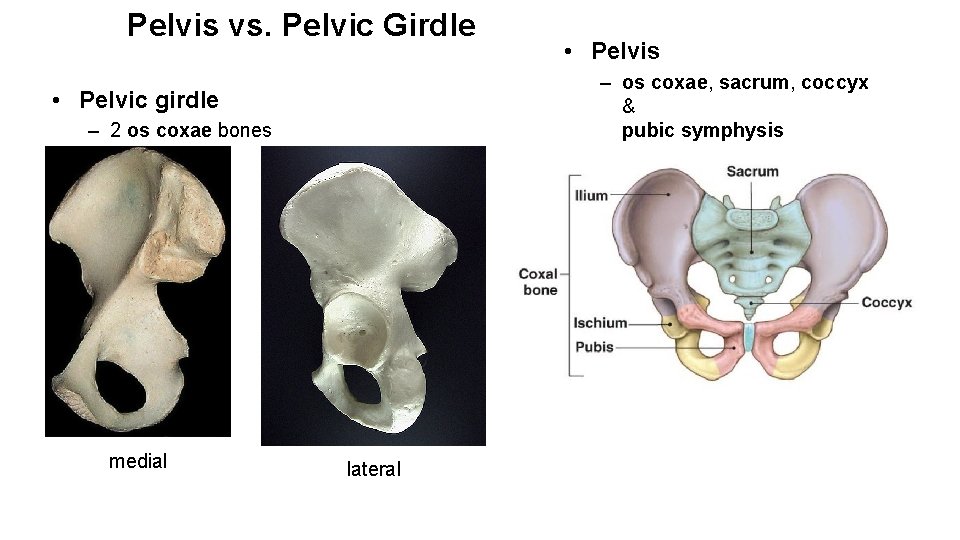
Pelvis vs. Pelvic Girdle – os coxae, sacrum, coccyx & pubic symphysis • Pelvic girdle – 2 os coxae bones medial • Pelvis lateral
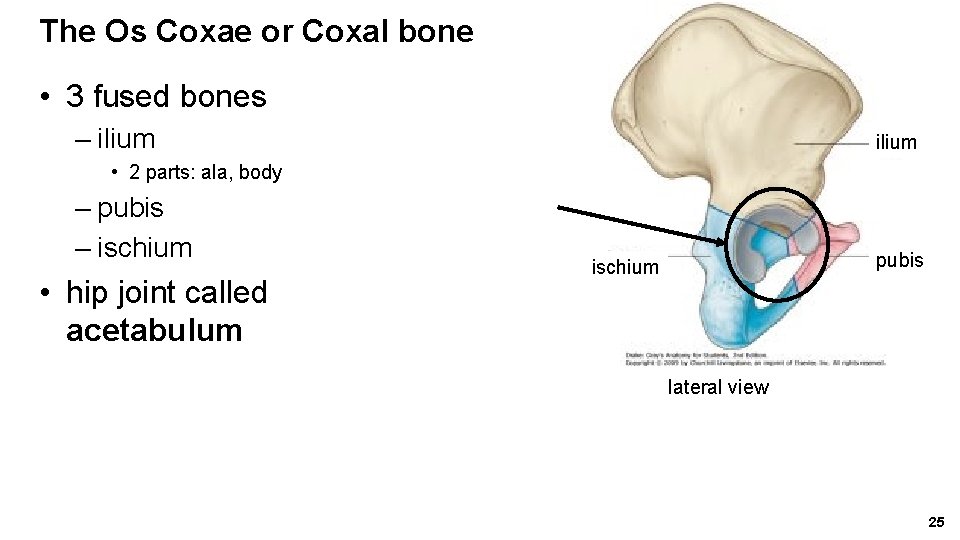
The Os Coxae or Coxal bone • 3 fused bones – ilium • 2 parts: ala, body – pubis – ischium • hip joint called acetabulum pubis ischium lateral view 25
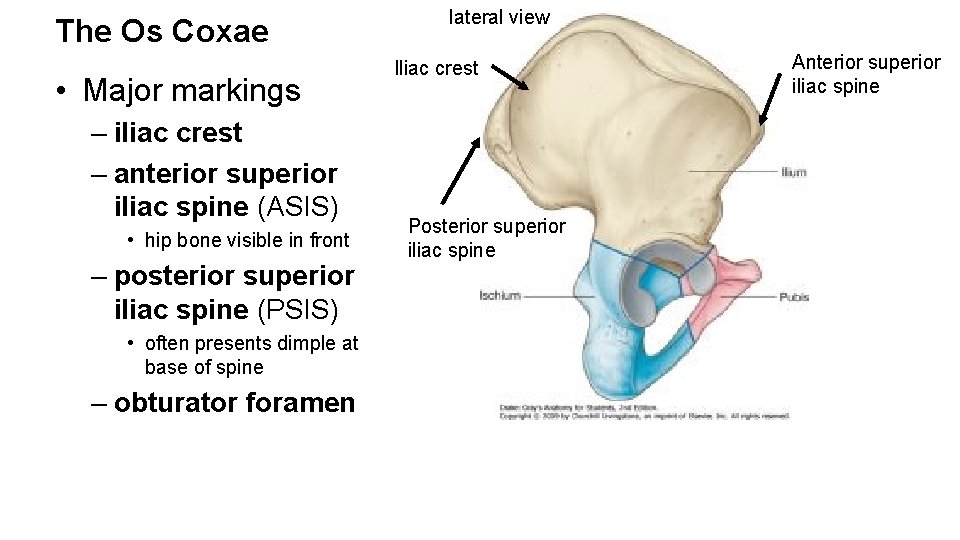
The Os Coxae • Major markings – iliac crest – anterior superior iliac spine (ASIS) • hip bone visible in front – posterior superior iliac spine (PSIS) • often presents dimple at base of spine – obturator foramen lateral view Iliac crest Posterior superior iliac spine Anterior superior iliac spine
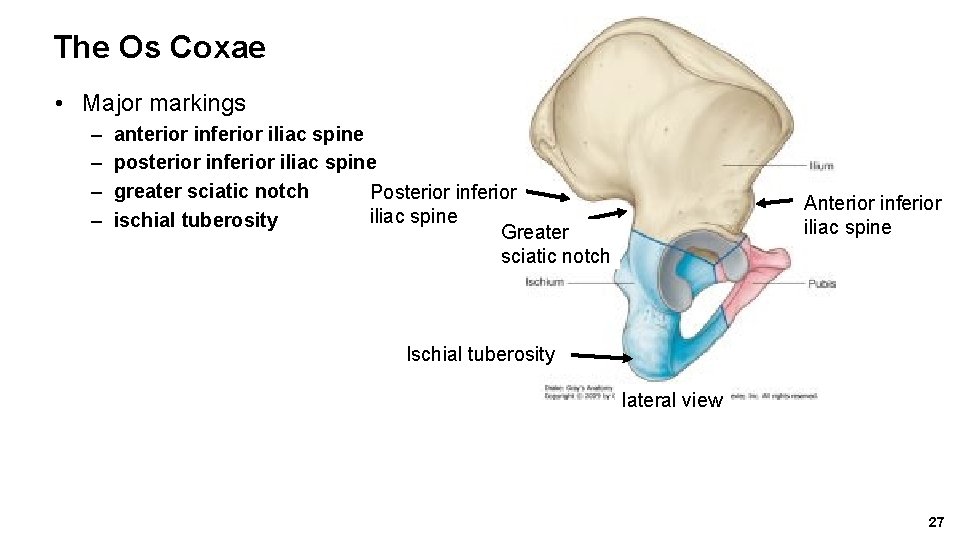
The Os Coxae • Major markings – – anterior inferior iliac spine posterior inferior iliac spine greater sciatic notch Posterior inferior iliac spine ischial tuberosity Greater sciatic notch Anterior inferior iliac spine Ischial tuberosity lateral view 27
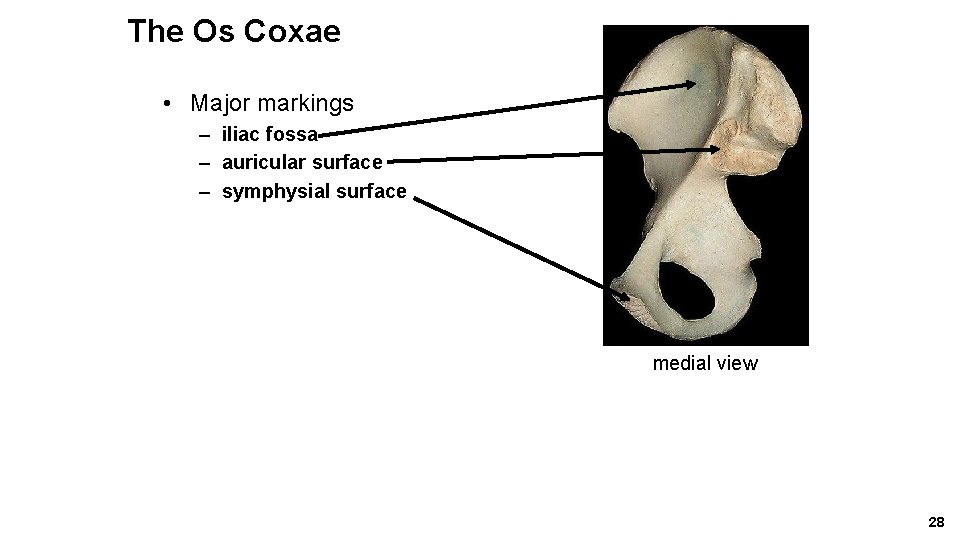
The Os Coxae • Major markings – iliac fossa – auricular surface – symphysial surface medial view 28
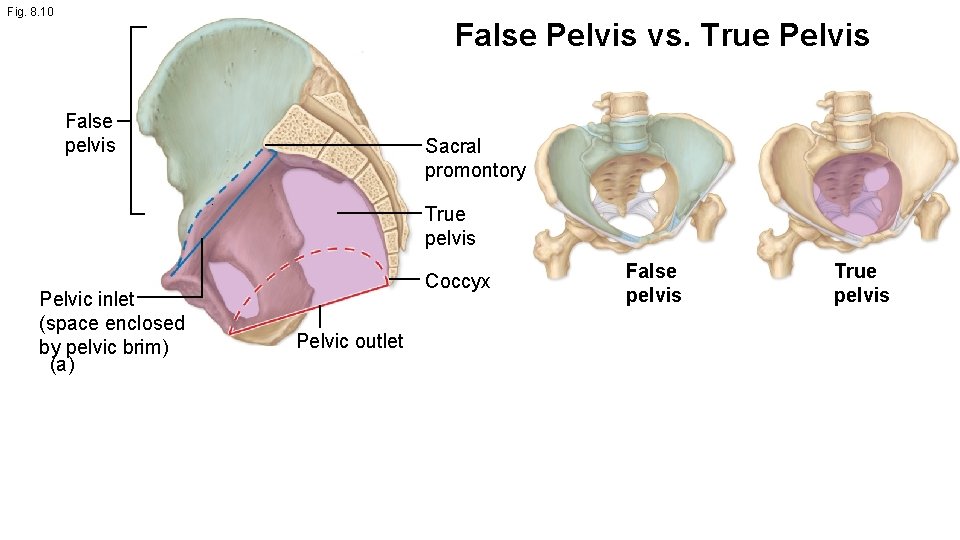
Fig. 8. 10 False Pelvis vs. True Pelvis False pelvis Sacral promontory True pelvis Pelvic inlet (space enclosed by pelvic brim) (a) Coccyx Pelvic outlet False pelvis True pelvis
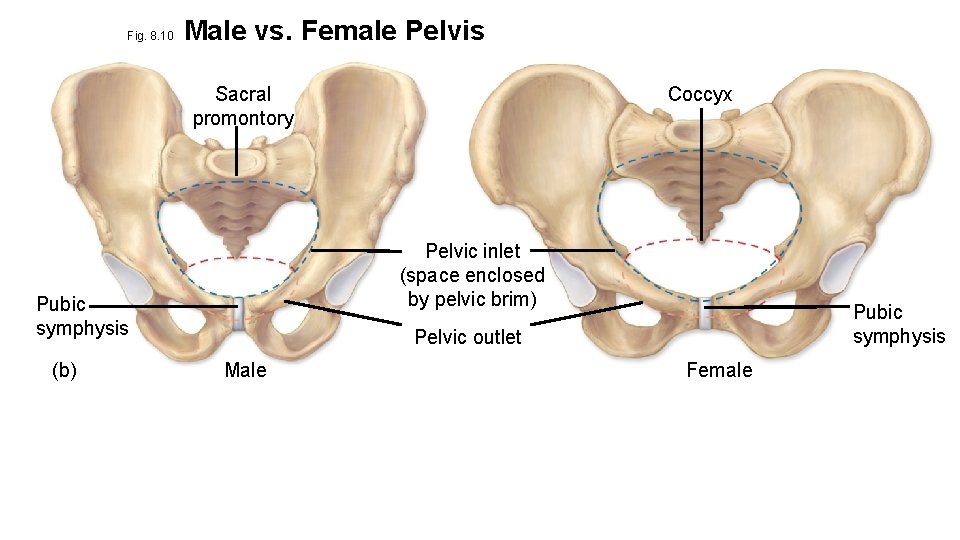
Fig. 8. 10 Male vs. Female Pelvis Sacral promontory Pelvic inlet (space enclosed by pelvic brim) Pubic symphysis (b) Coccyx Pubic symphysis Pelvic outlet Male Female
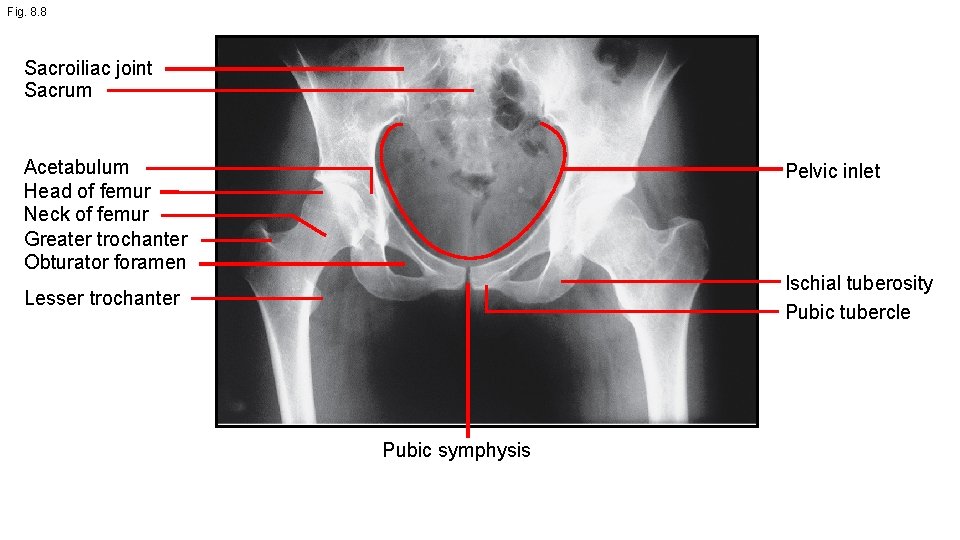
Fig. 8. 8 Sacroiliac joint Sacrum Acetabulum Head of femur Neck of femur Greater trochanter Obturator foramen Pelvic inlet Ischial tuberosity Pubic tubercle Lesser trochanter Pubic symphysis
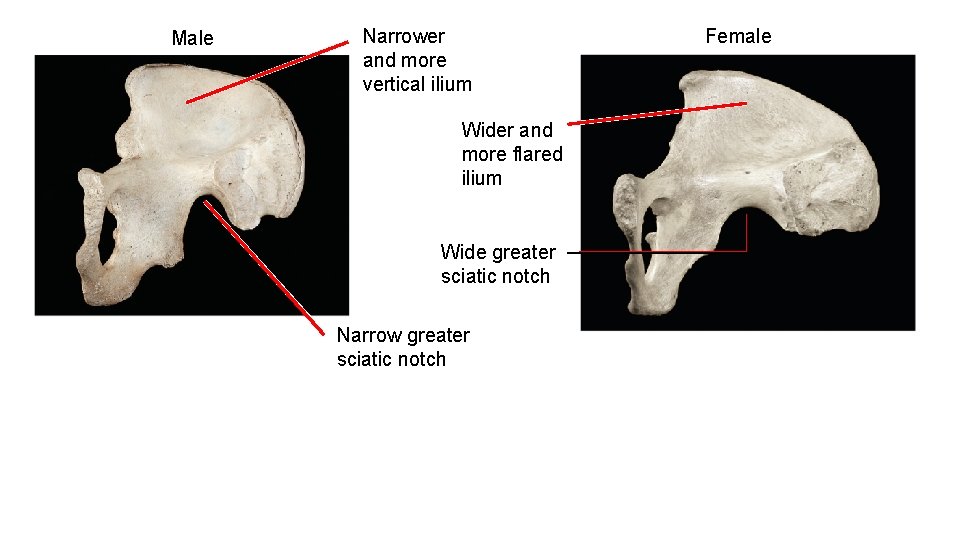
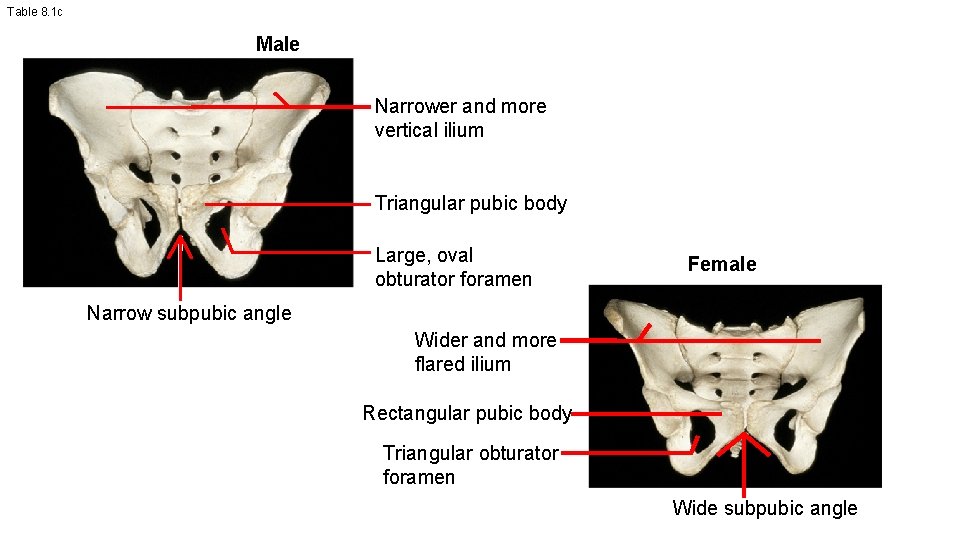
Male Narrower and more vertical ilium Wider and more flared ilium Wide greater sciatic notch Narrow greater sciatic notch Female
Table 8. 1 c Male Narrower and more vertical ilium Triangular pubic body Large, oval obturator foramen Female Narrow subpubic angle Wider and more flared ilium Rectangular pubic body Triangular obturator foramen Wide subpubic angle
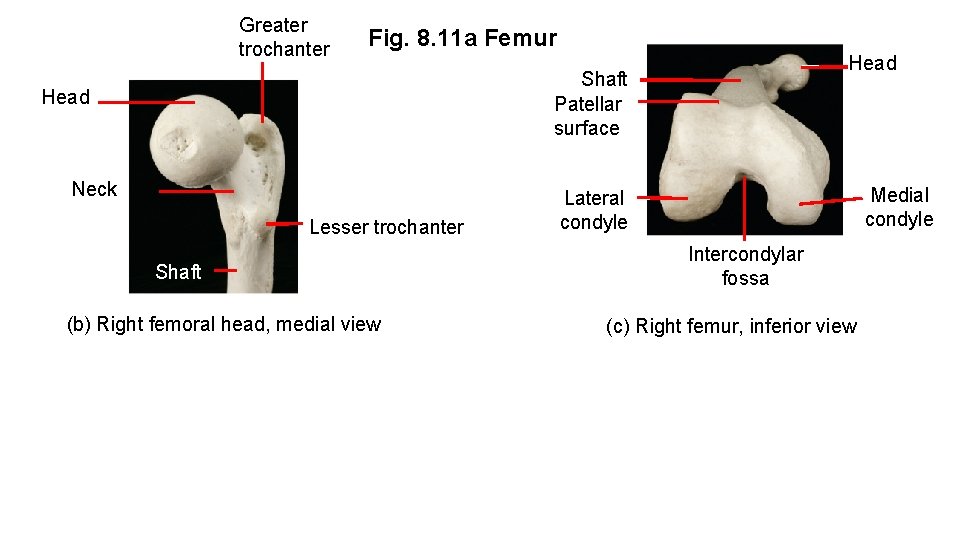
Greater trochanter Fig. 8. 11 a Femur Head Shaft Patellar surface Head Neck Lesser trochanter Shaft (b) Right femoral head, medial view Medial condyle Lateral condyle Intercondylar fossa (c) Right femur, inferior view
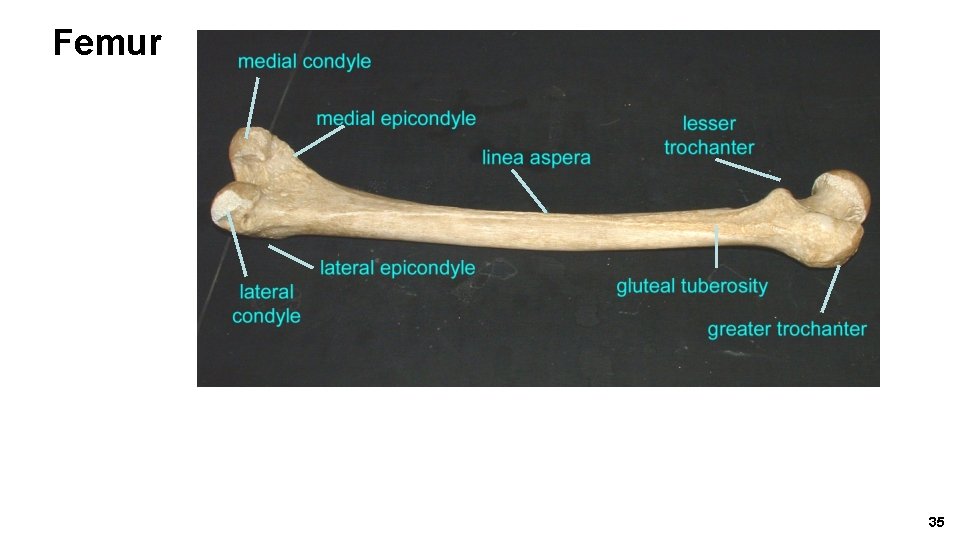
Femur Greater trochanter 35
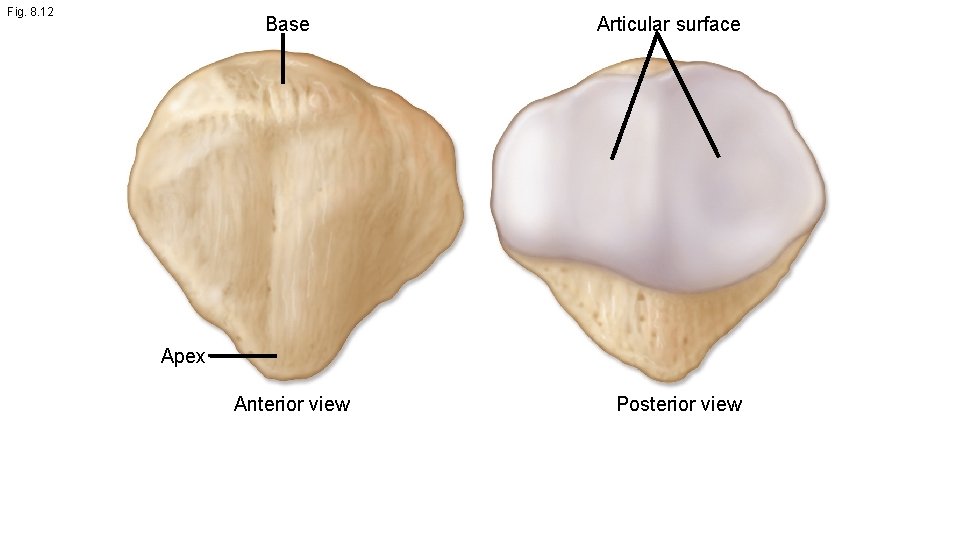
Fig. 8. 12 Base Articular surface Apex Anterior view Posterior view
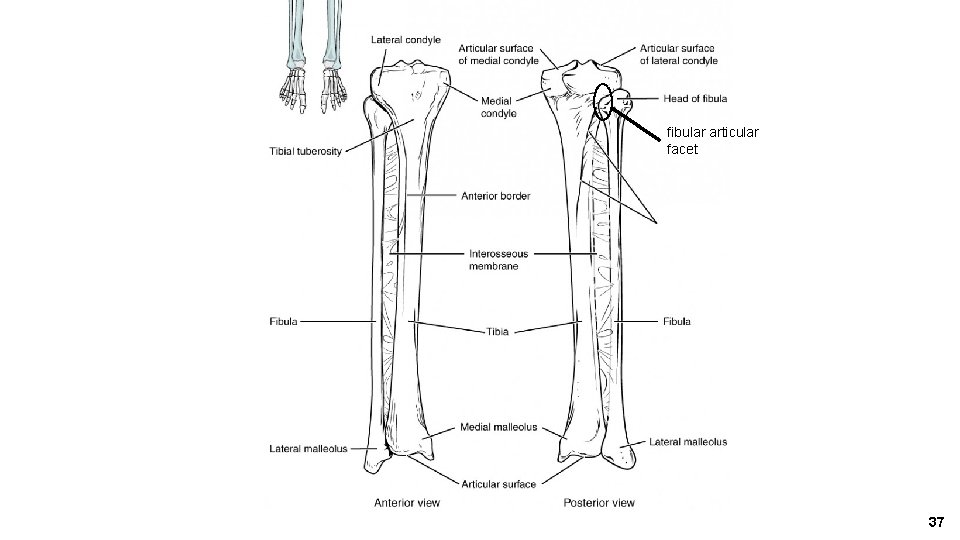
fibular articular facet 37
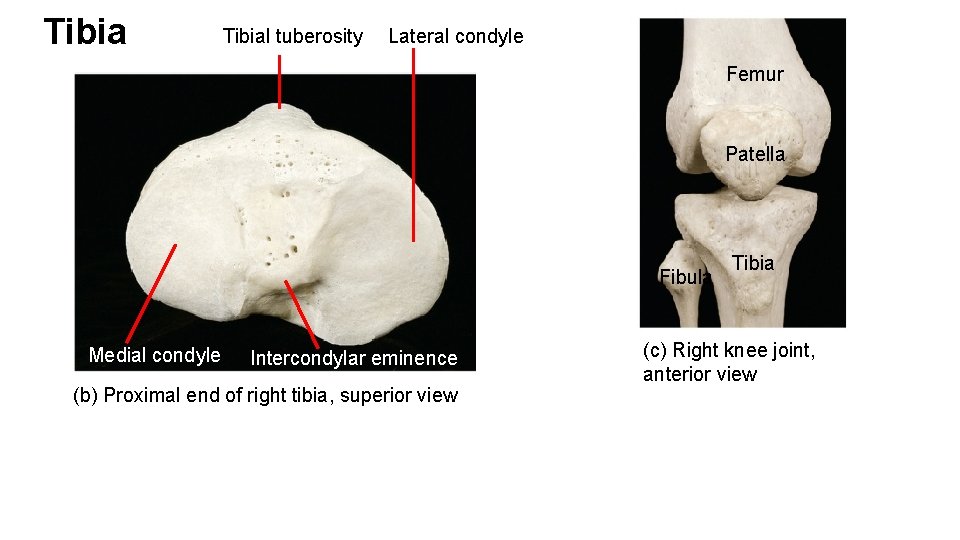
Tibial tuberosity Lateral condyle Femur Patella Fibula Medial condyle Intercondylar eminence (b) Proximal end of right tibia, superior view Tibia (c) Right knee joint, anterior view
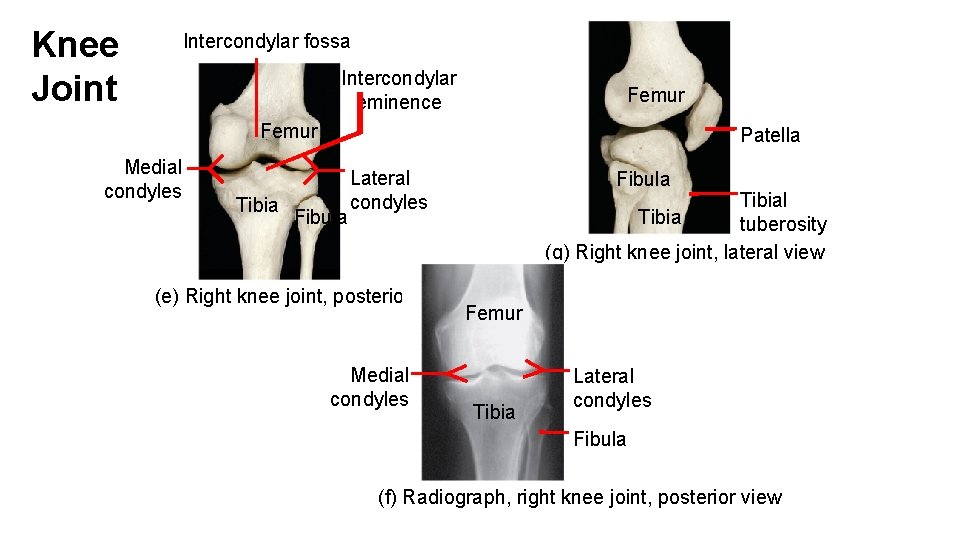
Knee Joint Intercondylar fossa Intercondylar eminence Femur Medial condyles Tibia Patella Fibula Lateral condyles (e) Right knee joint, posterior view Medial condyles Fibula Tibial Tibia tuberosity (g) Right knee joint, lateral view Femur Tibia Lateral condyles Fibula (f) Radiograph, right knee joint, posterior view
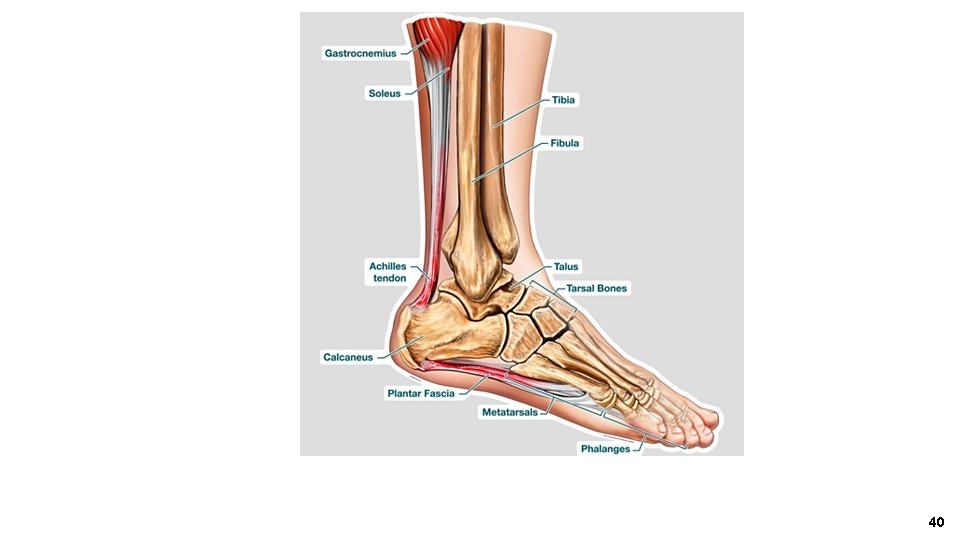
40
41
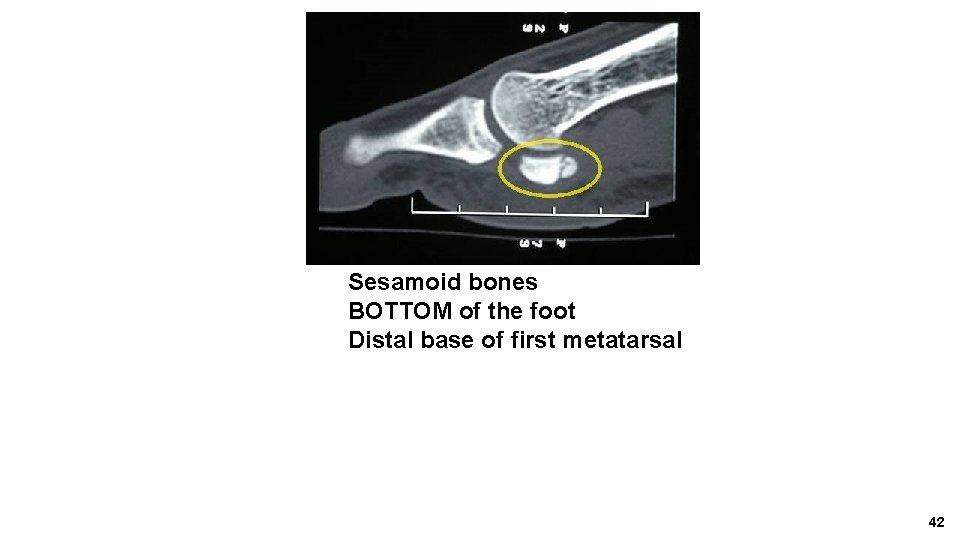
Sesamoid bones BOTTOM of the foot Distal base of first metatarsal 42
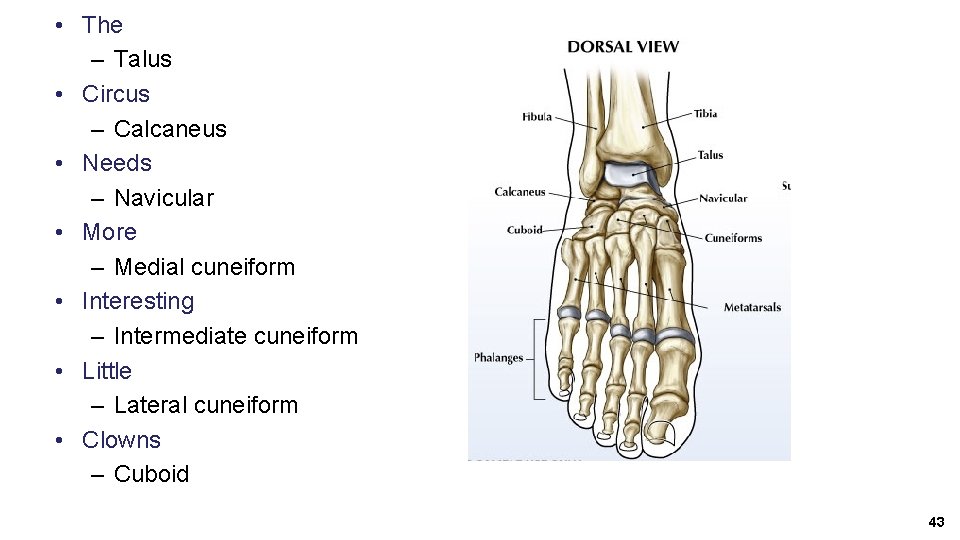
• The – Talus • Circus – Calcaneus • Needs – Navicular • More – Medial cuneiform • Interesting – Intermediate cuneiform • Little – Lateral cuneiform • Clowns – Cuboid 43
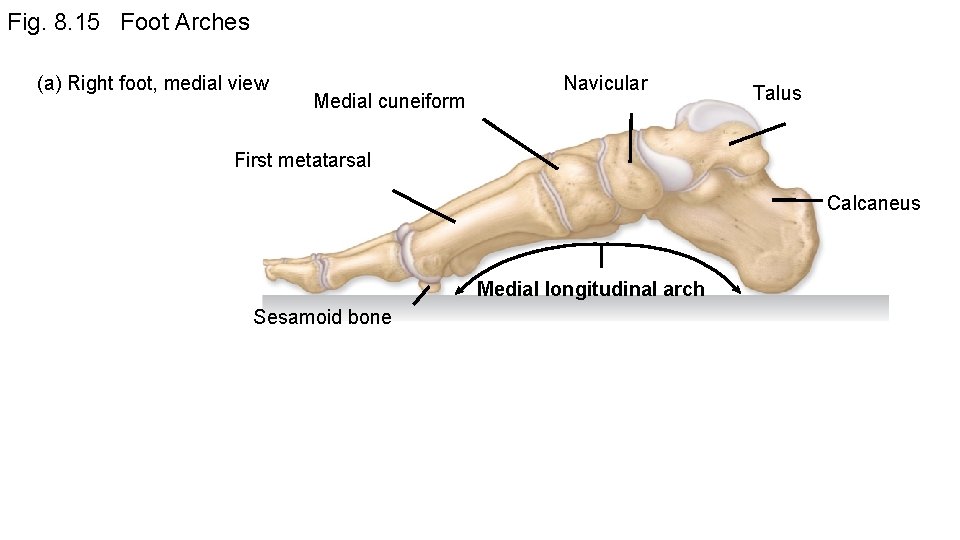
Fig. 8. 15 Foot Arches (a) Right foot, medial view Medial cuneiform Navicular Talus First metatarsal Calcaneus Medial longitudinal arch Sesamoid bone
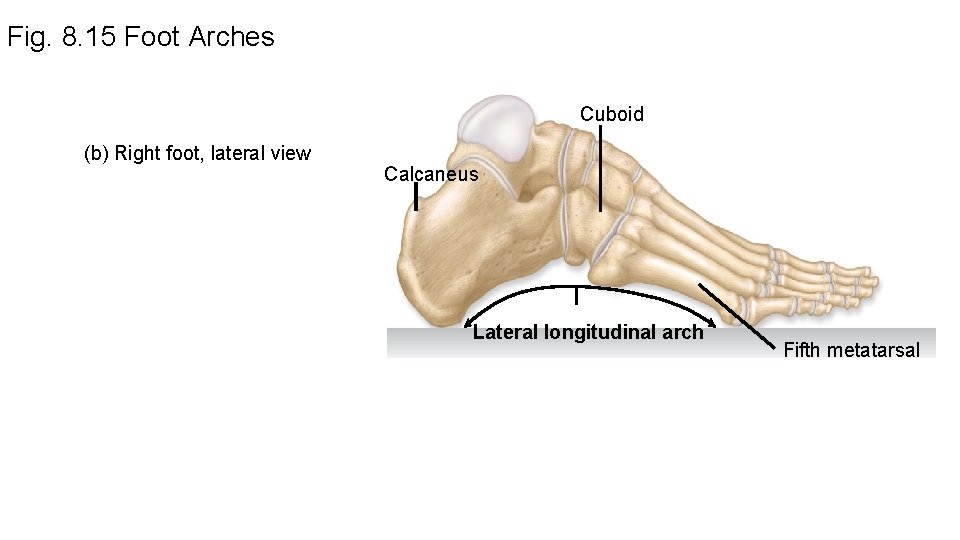
Fig. 8. 15 Foot Arches Cuboid (b) Right foot, lateral view Calcaneus Lateral longitudinal arch Fifth metatarsal
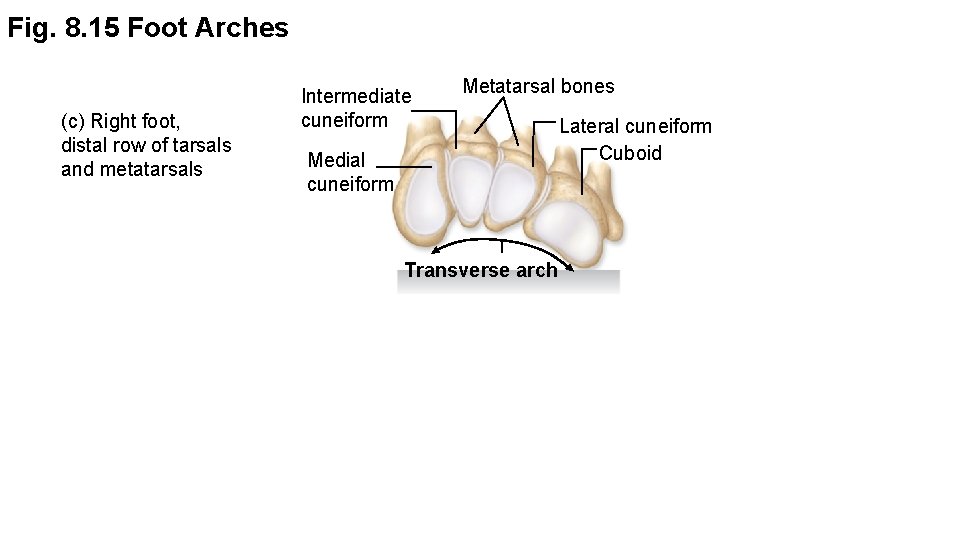
Fig. 8. 15 Foot Arches (c) Right foot, distal row of tarsals and metatarsals Intermediate cuneiform Metatarsal bones Medial cuneiform Transverse arch Lateral cuneiform Cuboid
47
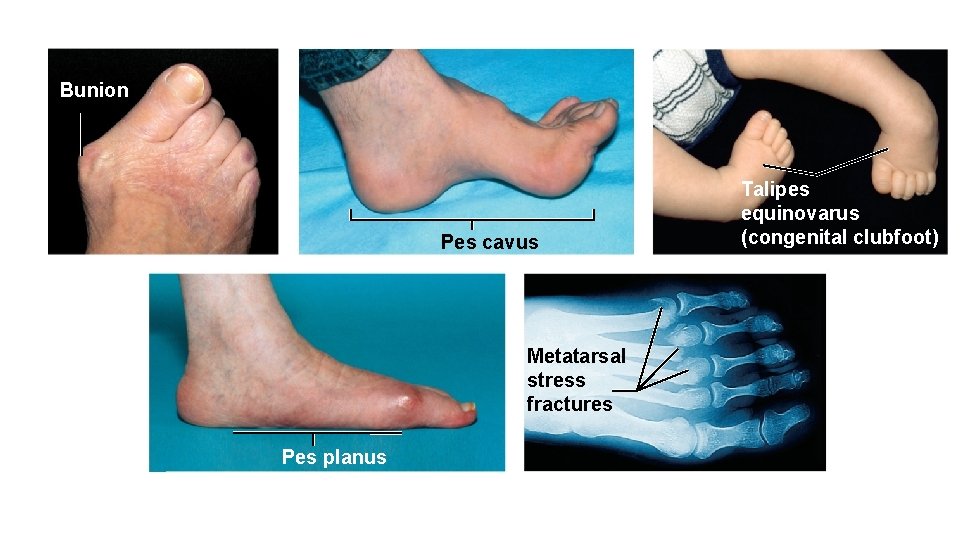
Bunion Pes cavus Metatarsal stress fractures Pes planus Talipes equinovarus (congenital clubfoot)
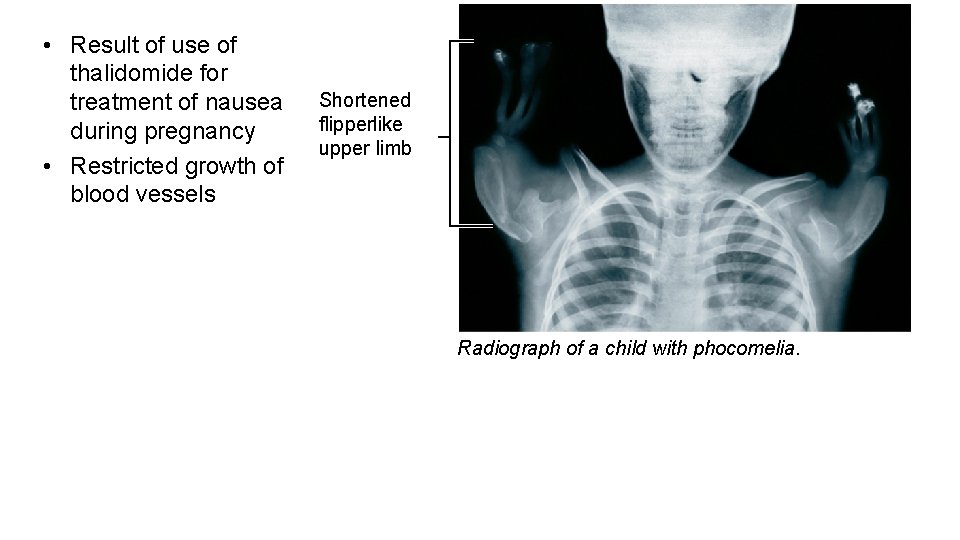
• Result of use of thalidomide for treatment of nausea during pregnancy • Restricted growth of blood vessels Shortened flipperlike upper limb Radiograph of a child with phocomelia.