
Chapter 8 An Introduction To Metabolism Metabolism All
Chapter 8 An Introduction To Metabolism
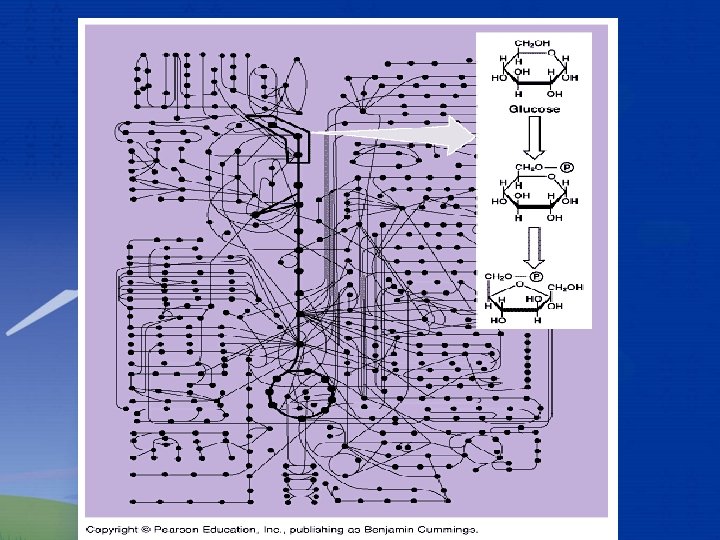
Metabolism • All the chemical reactions in an organism • Concerned with managing the matter and energy resources of the organism.
Catabolic Pathways • Pathways that break down complex molecules into smaller ones, releasing energy. • Example: Cellular Respiration
Anabolic Pathways • Pathways that consume energy, building complex molecules from smaller ones. • Example: Photosynthesis
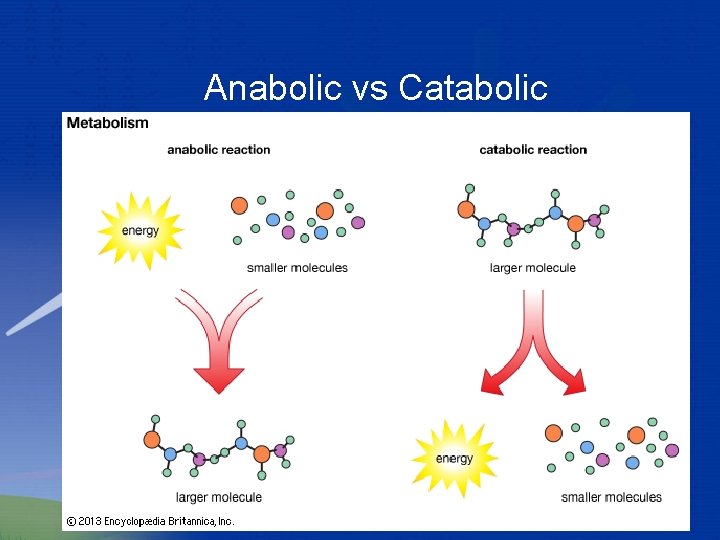
Anabolic vs Catabolic
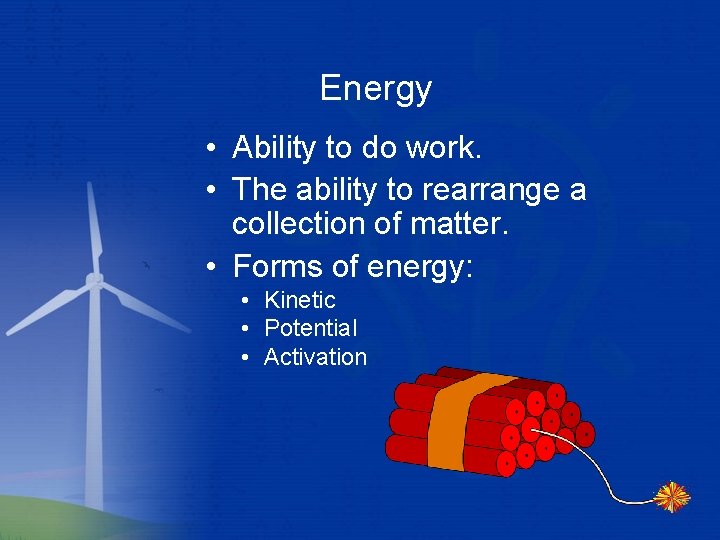
Energy • Ability to do work. • The ability to rearrange a collection of matter. • Forms of energy: • Kinetic • Potential • Activation
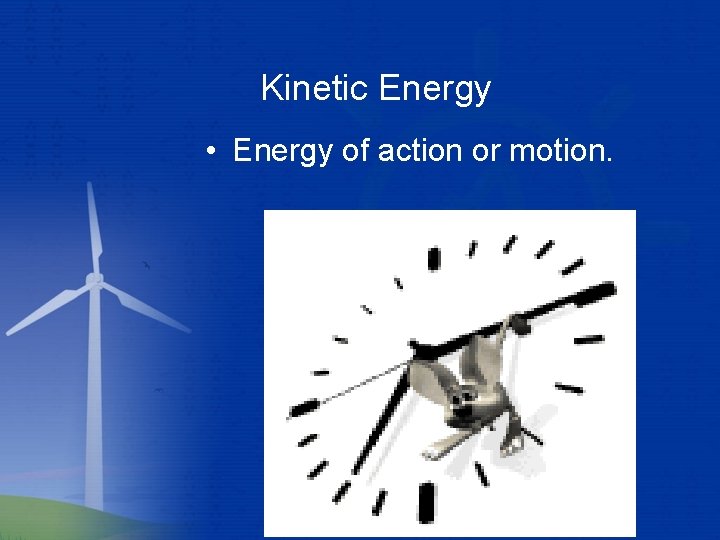
Kinetic Energy • Energy of action or motion.
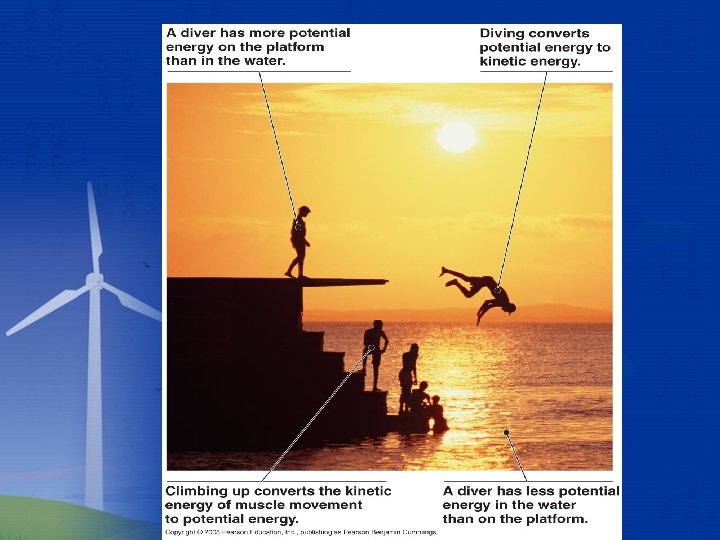
Potential Energy • Stored energy • Can be in chemical bonds!
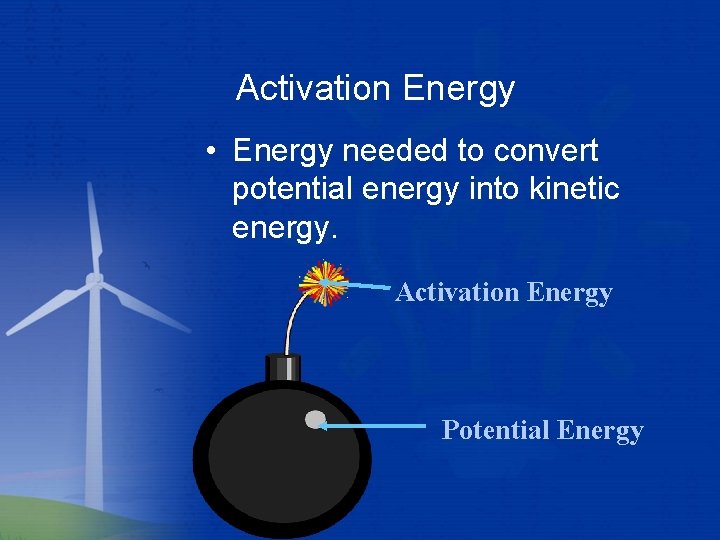
Activation Energy • Energy needed to convert potential energy into kinetic energy. Activation Energy Potential Energy
Energy Transformation • Governed by the Laws of Thermodynamics.
1 st Law of Thermodynamics • Energy can be transferred and transformed, but it CANNOT be created or destroyed. • Also known as the law of “Conservation of Energy”
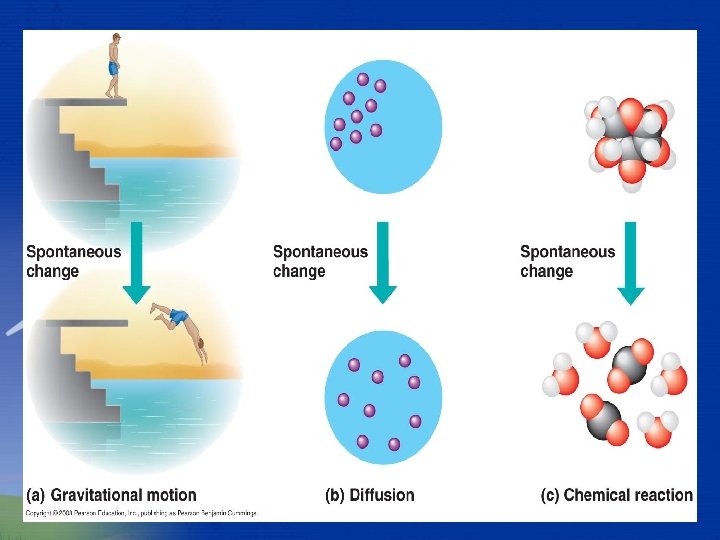
2 nd Law of Thermodynamics • Each energy transfer or transformation increases the entropy of the universe.
Entropy • Measure of disorder. • High entropy = high disorder
Free Energy Changes
Question? • How does Life go against Entropy? • By using energy from the environment or external sources (e. g. food, light).
Summary • The quantity of energy in the universe is constant, but its quality is not.
Gibbs Free Energy • Free energy = The portion of a system's energy that can perform work. • “usable energy”
Free Energy of a reaction ΔG = ΔH – TΔS Δ = Change (final – initial) G = free energy of a system H = enthalpy = total energy of a system T = temperature in o. K S = entropy of a system
• Reactions will move from unstable states to stable states
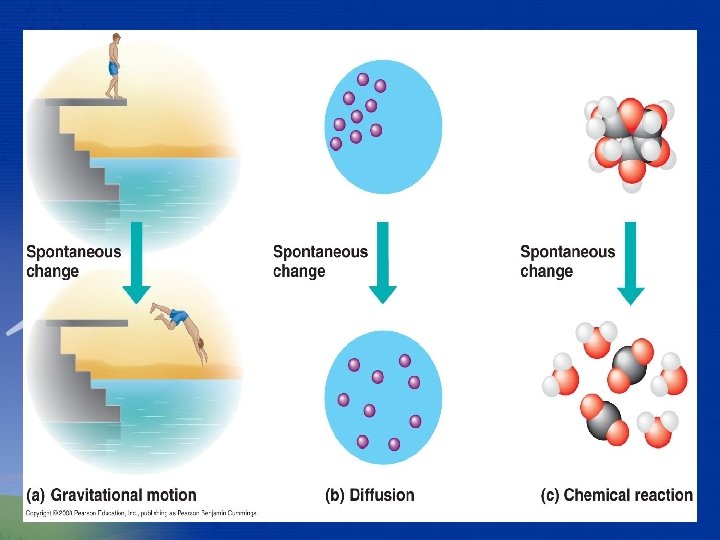
Free Energy Changes
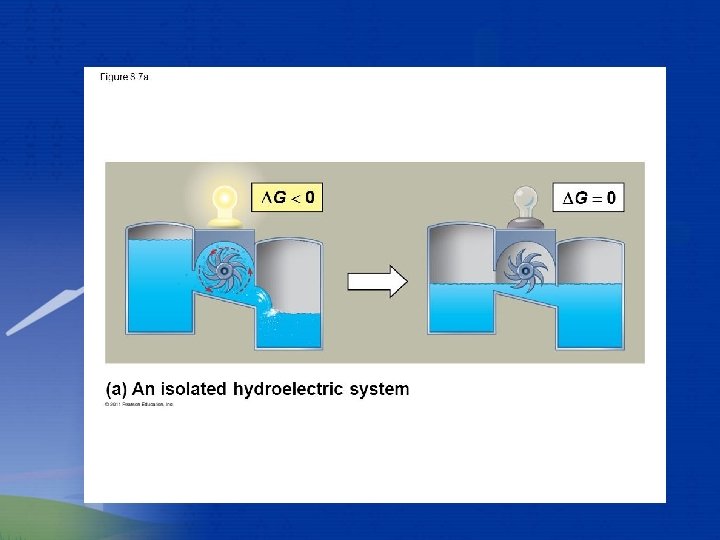
Reaction Types • Exergonic: chemical reactions with a net release of free energy. • ΔG = NEGATIVE VALUE • Spontaneous • catabolic • Endergonic: chemical reactions that require free energy from the surroundings. • ΔG = POSITIVE VALUE • Spontaneous • Anabolic
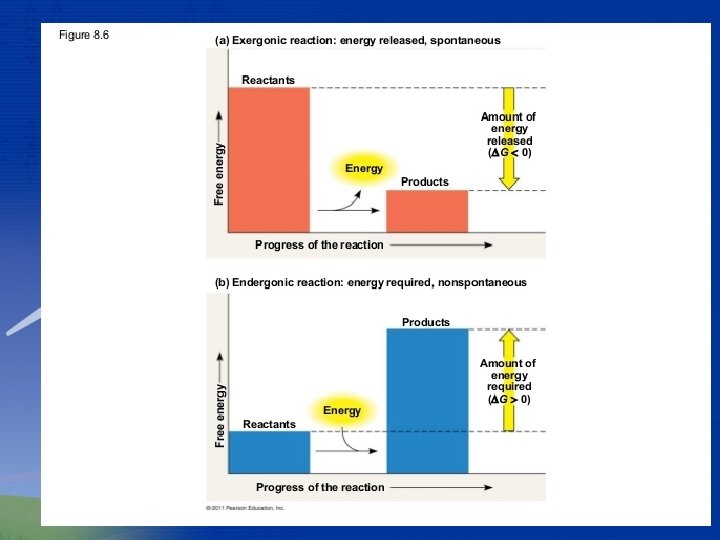
Biological Examples • Exergonic - respiration • Endergonic - photosynthesis
How does the cell perform endergonic reactions? • Couples an exergonic process to drive an endergonic one. • ATP is used to couple the reactions together.
ATP • Adenosine Triphosphate • Made of: - Adenine (nitrogenous base) - Ribose (pentose sugar) - 3 phosphate groups
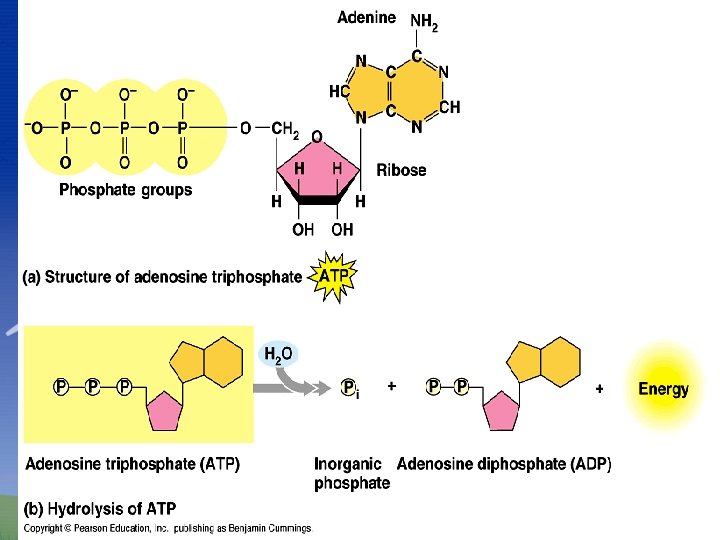
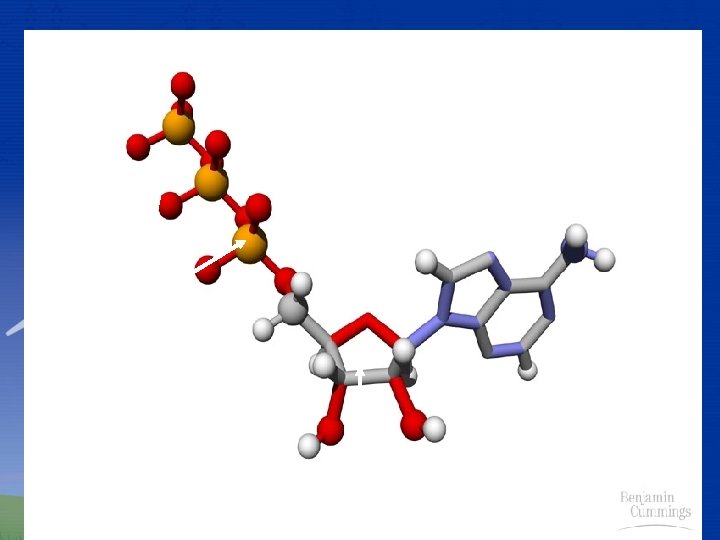
Adenine Phosphates Ribose
Key to ATP • Is in the three phosphate groups. • Negative charges repel each other and makes the phosphates unstable.
ATP • Works by energizing other molecules by transferring phosphate groups.
ATP vs Food • ATP: • Renewable energy resource. • Unstable bonds • Food: • Long term energy storage • Stable bonds
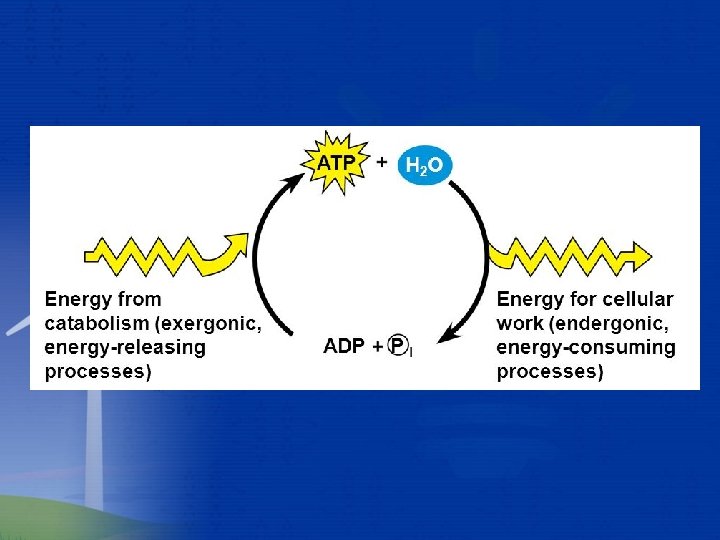
ATP Cycles • Energy released from ATP drives endergonic reactions. • Energy from exergonic reactions “recharges” ATP.
ATP in Cells • A cell's ATP content is recycled every minute. • Humans use close to their body weight in ATP daily. • No ATP production equals quick death.
Enzymes • Biological catalysts made of protein. • Cause the rate of a chemical reaction to increase.
Enzymes • Lower the activation energy for a chemical reaction to take place.
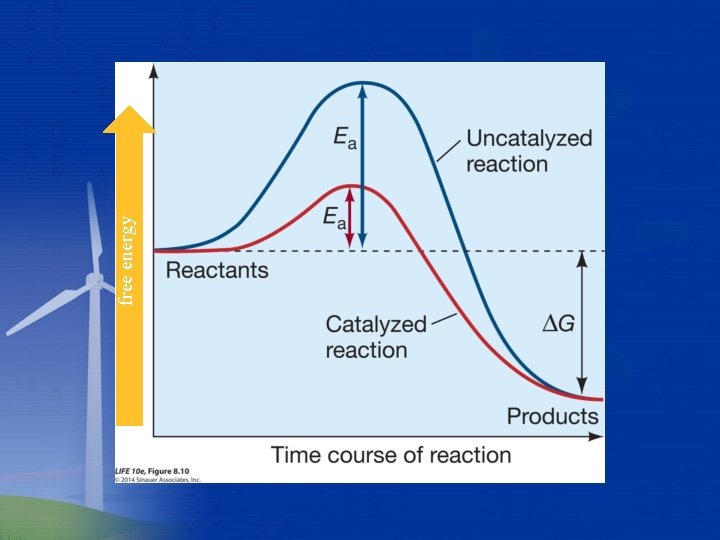
free energy
Enzyme Terms • Substrate - the material and enzyme works on. • Enzyme names: Ex. Sucrase - ase name of an enzyme 1 st part tells what the substrate is. (Sucrose)
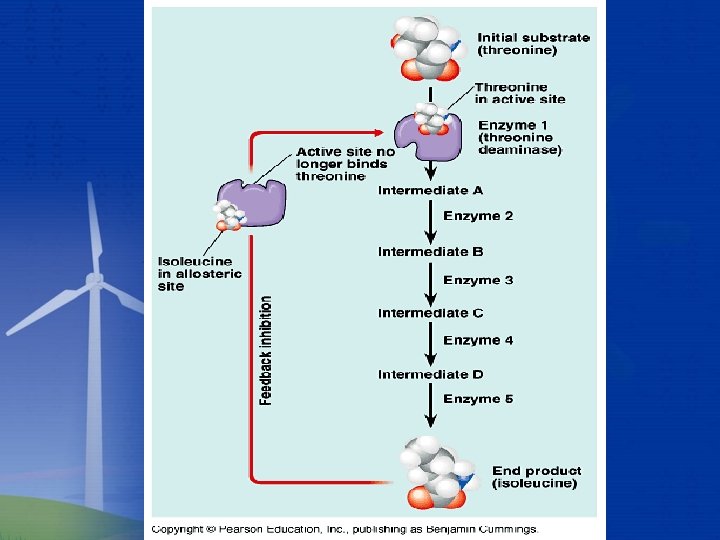
Control of Metabolism • Is necessary if life is to function. • Controlled by switching enzyme activity "off" or "on” or separating the enzymes in time or space.
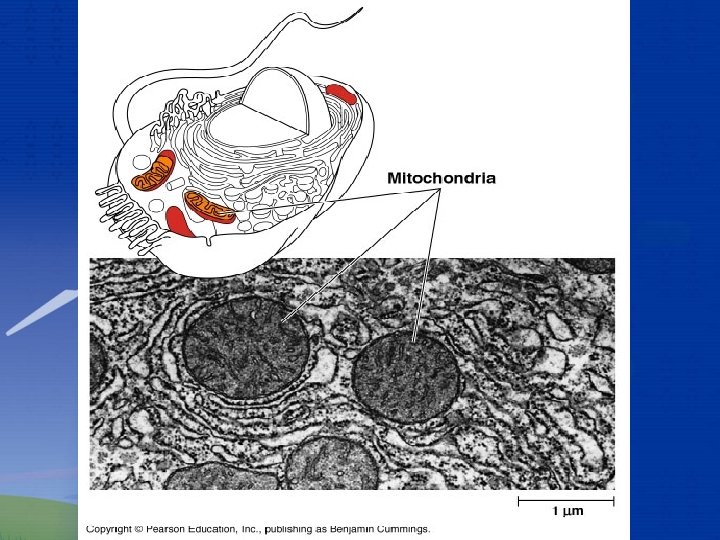
Structural Order • Separation of enzymes and metabolic pathways in time or space by the cell's organization. • Example: enzymes of respiration
Summary • Recognize that Life must follow the Laws of Thermodynamics. • The role of ATP in cell energy. • How enzymes work.
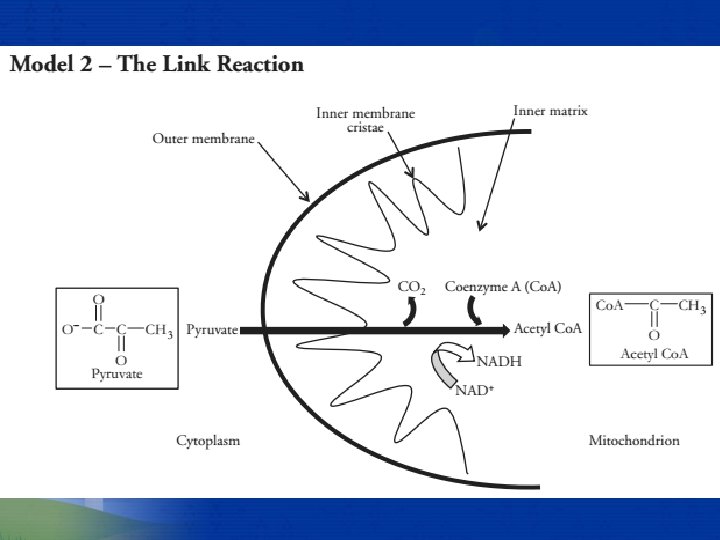
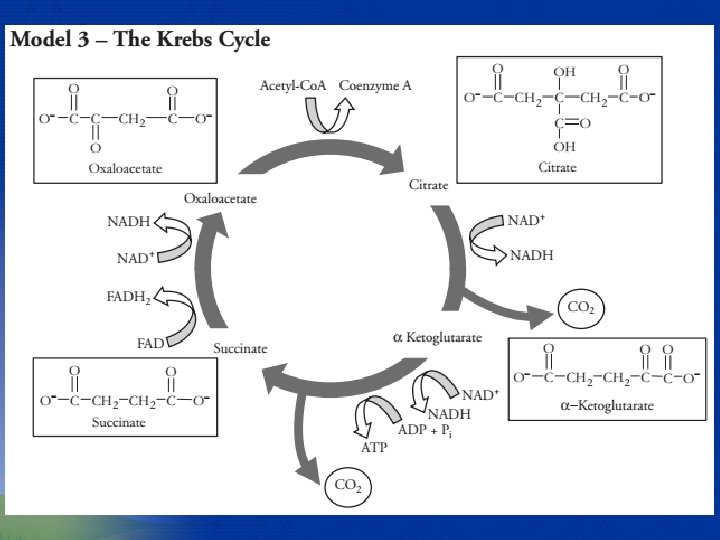
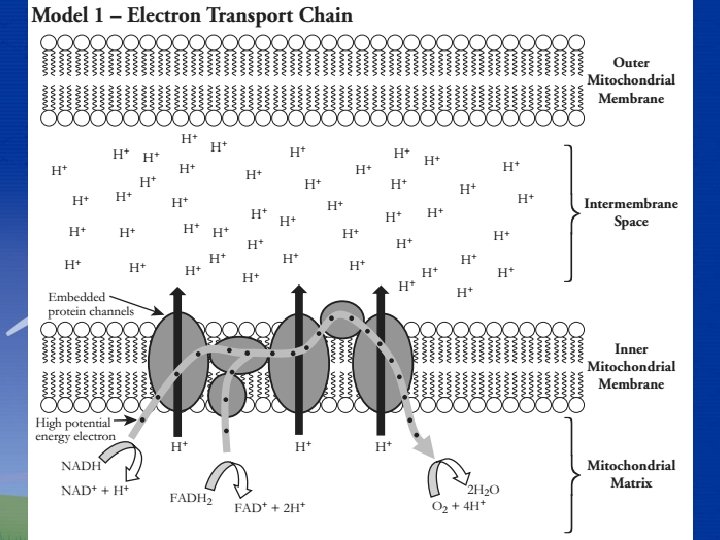
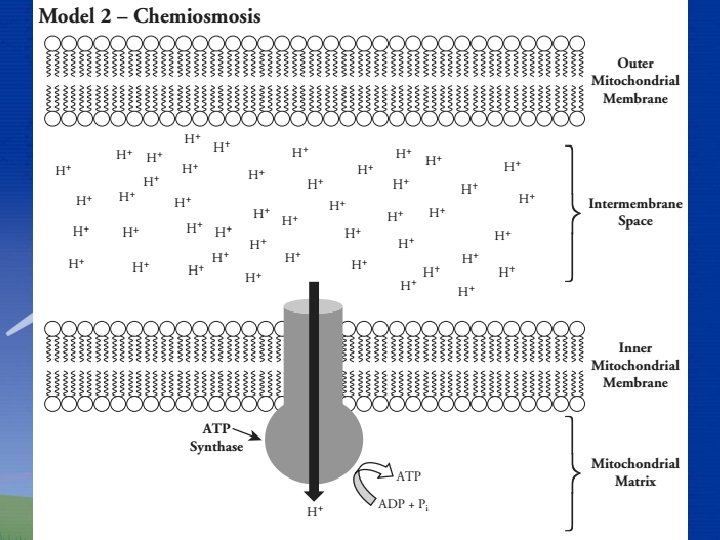
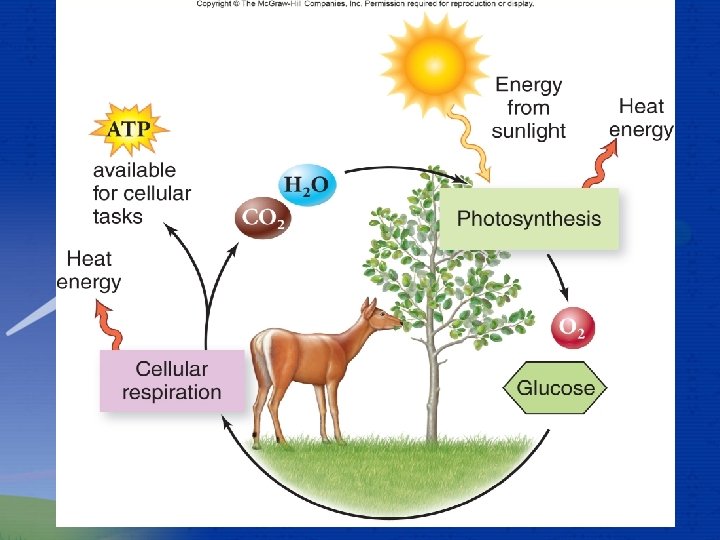
Cellular Respiration and Photosynthesis • You will need to know the inputs and outputs of each reaction • Where is each reaction taking place • Understand what the “goal” of each reaction is • What is the role of the major molecules • Connect back to previous material (facilitated diffusion, active transport, exergonic, endergonic)
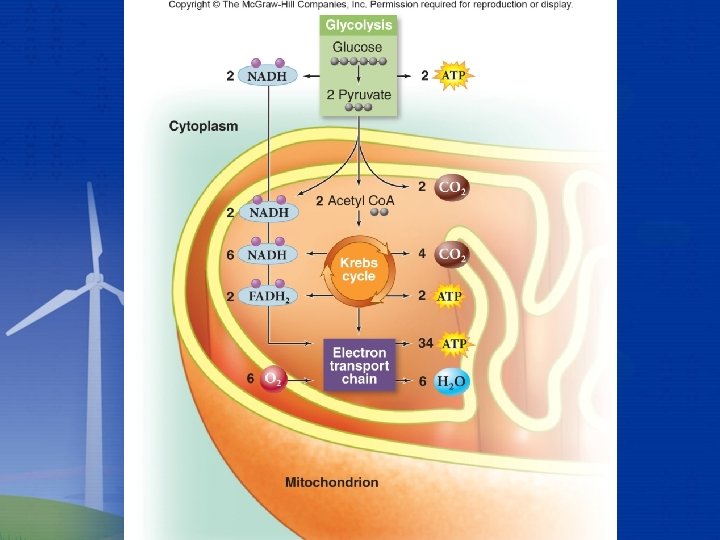
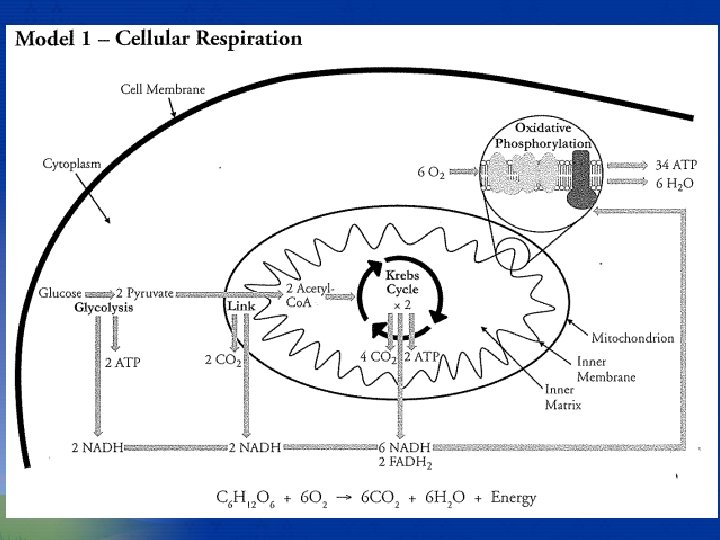
Rs - Equation C 6 H 12 O 6 + 6 O 2 6 CO 2 + 6 H 2 O + ATP The energy is released from the chemical bonds in the complex organic molecules.
Oxidation - definitions • Loss of electrons. • Loss of energy.
Reduction - definitions • Gain of electrons. • Gain of energy.
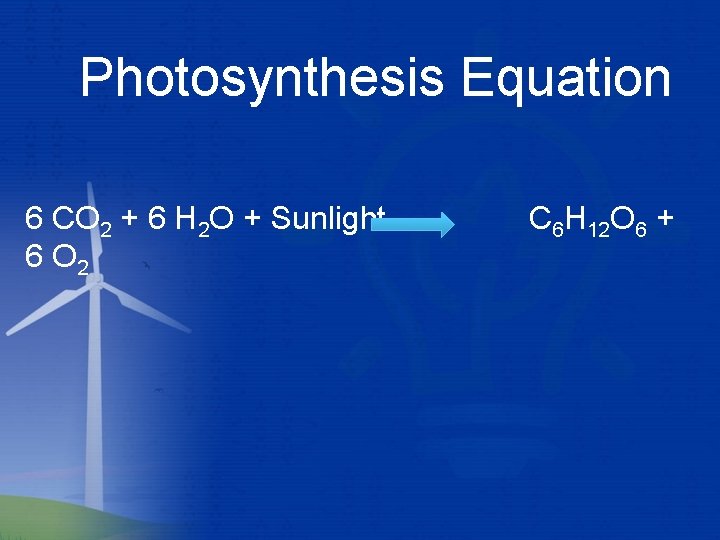
Photosynthesis Equation 6 CO 2 + 6 H 2 O + Sunlight 6 O 2 C 6 H 12 O 6 +
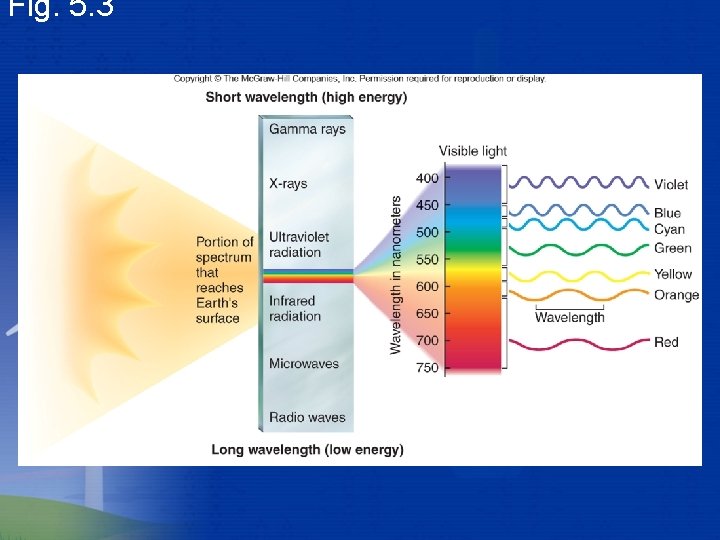
Fig. 5. 3
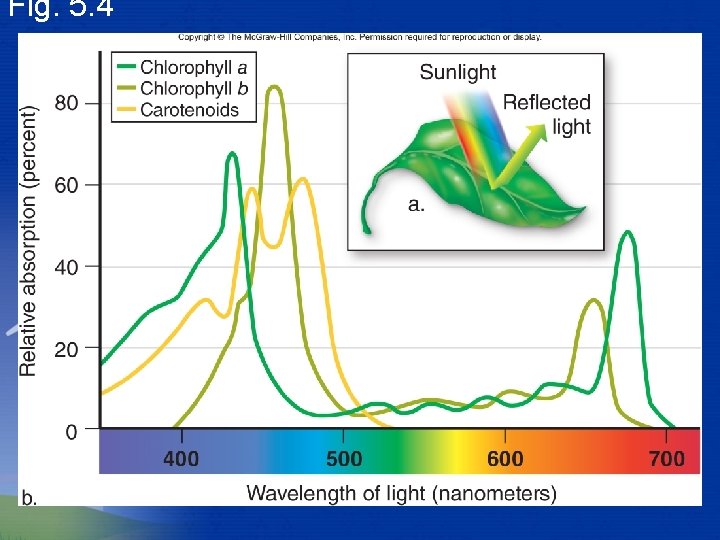
Fig. 5. 4
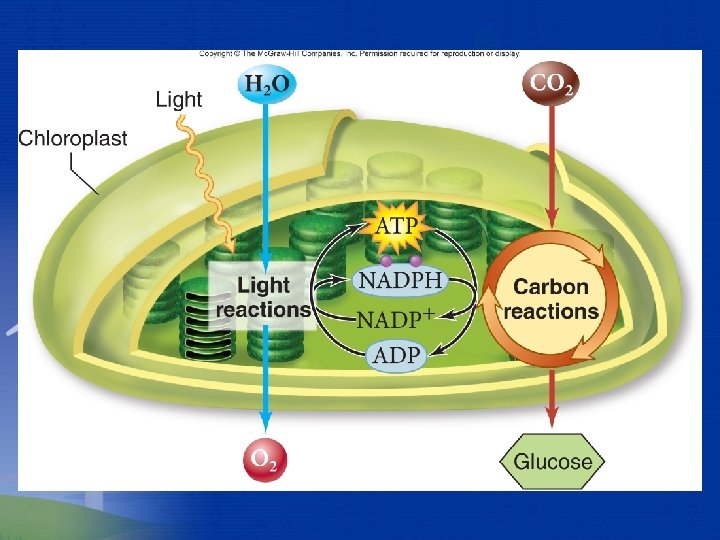
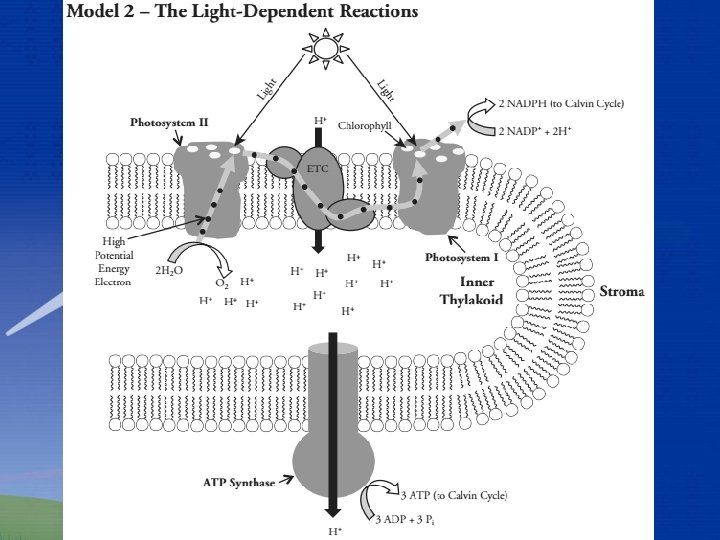
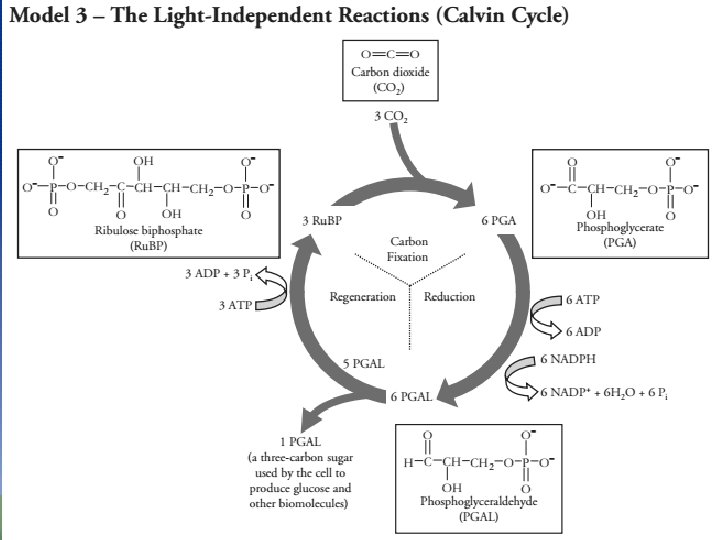
Cellular Respiration Animations Glycolysis http: //www. science. smith. edu/departments/Biology/Bio 231/glycolysis. html Krebs Cycle http: //www. science. smith. edu/departments/Biology/Bio 231/krebs. html Electron Transport Chain http: //www. science. smith. edu/departments/Biology/Bio 231/etc. html
Photosynthesis Animations Light Dependent Reactions http: //www. science. smith. edu/departments/Biology/Bio 231/ltrxn. html Calvin Cycle http: //www. science. smith. edu/departments/Biology/Bio 231/calvin. html
- Slides: 66