
Chapter 8 Adenosine Triphosphate ATP Energy Powers chemical

- Slides: 14
Chapter 8
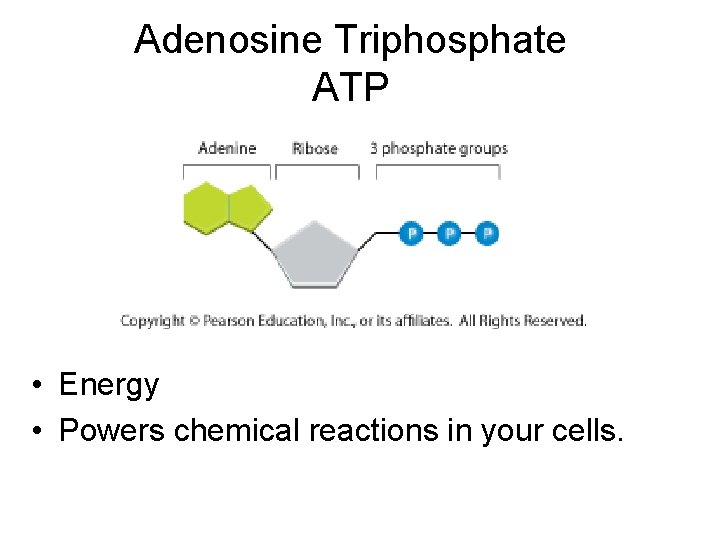
Adenosine Triphosphate ATP • Energy • Powers chemical reactions in your cells.
ATP => ADP • ATP releases energy when the bond between one of the 3 phosphates breaks, forming ADP • Sunlight or food (chemical energy) is used to reform the bond.
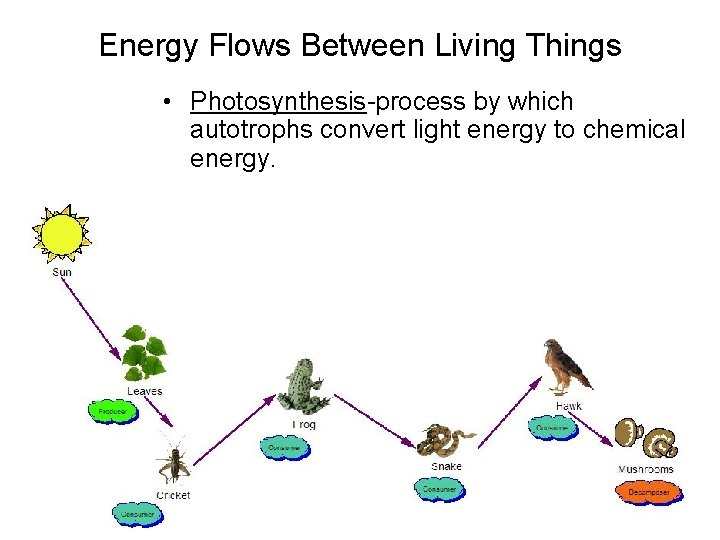
Energy Flows Between Living Things • Photosynthesis-process by which autotrophs convert light energy to chemical energy.
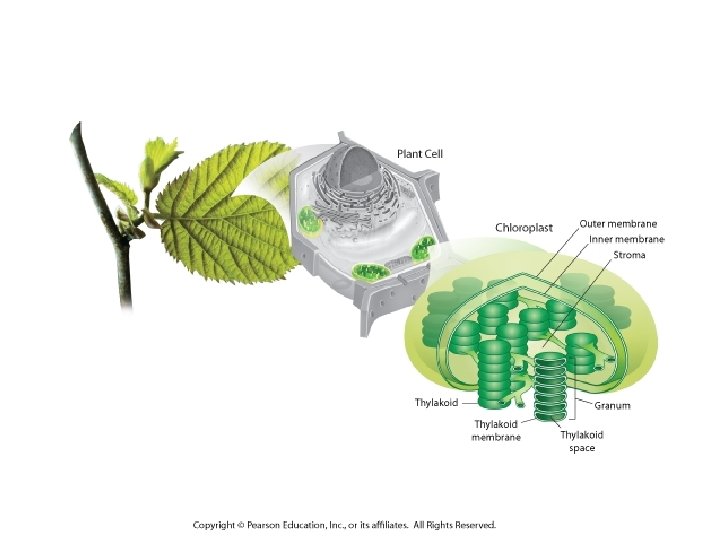
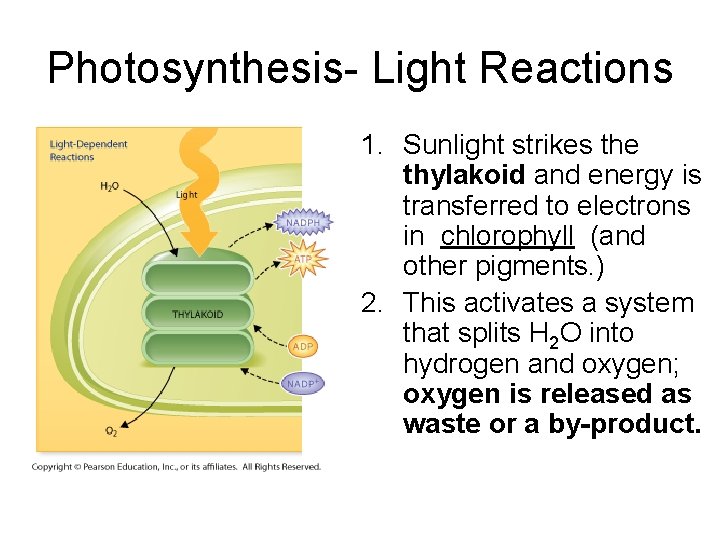
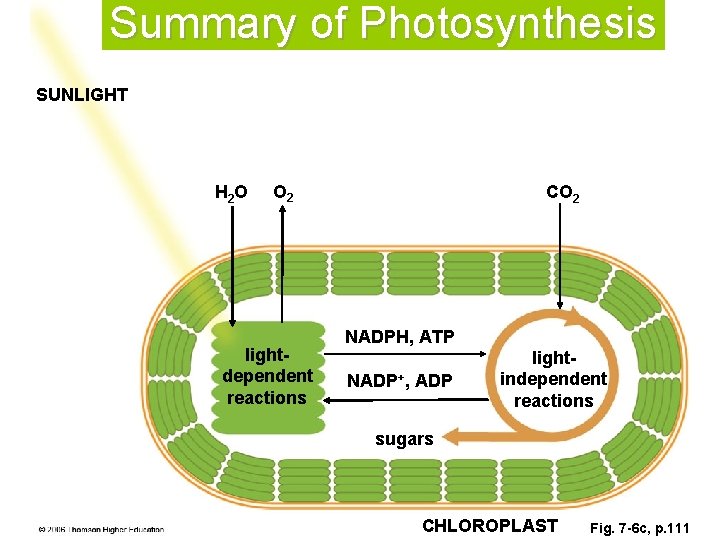
Photosynthesis- Light Reactions 1. Sunlight strikes the thylakoid and energy is transferred to electrons in chlorophyll (and other pigments. ) 2. This activates a system that splits H 2 O into hydrogen and oxygen; oxygen is released as waste or a by-product.
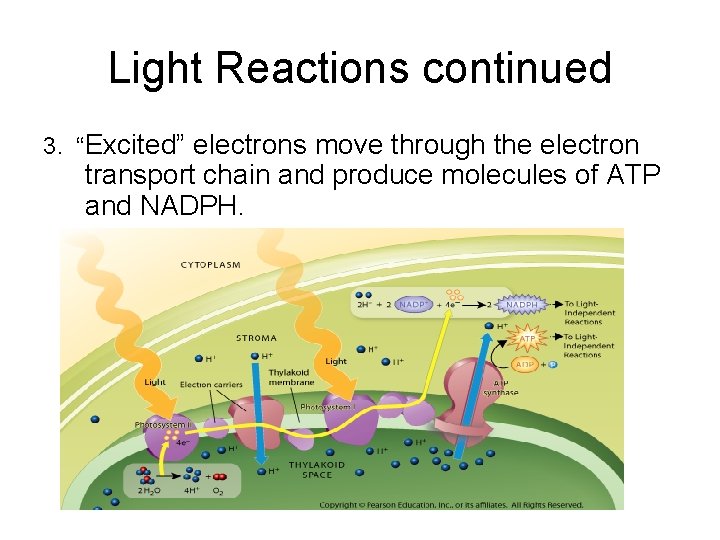
Light Reactions continued 3. “Excited” electrons move through the electron transport chain and produce molecules of ATP and NADPH.
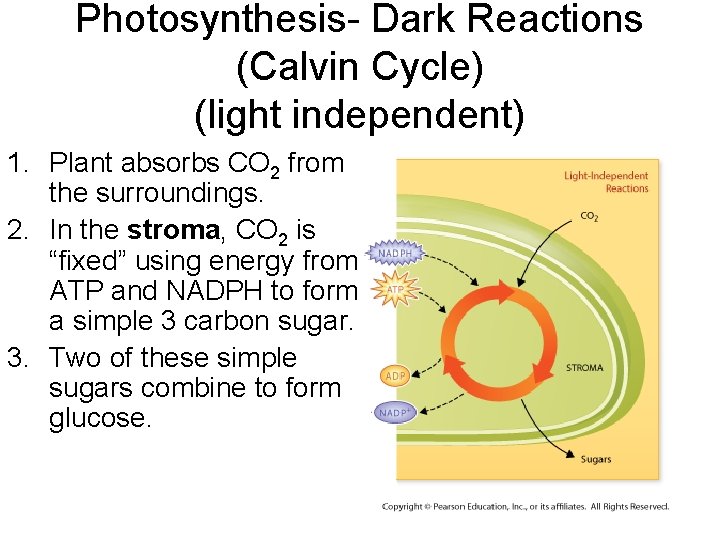
Photosynthesis- Dark Reactions (Calvin Cycle) (light independent) 1. Plant absorbs CO 2 from the surroundings. 2. In the stroma, CO 2 is “fixed” using energy from ATP and NADPH to form a simple 3 carbon sugar. 3. Two of these simple sugars combine to form glucose.
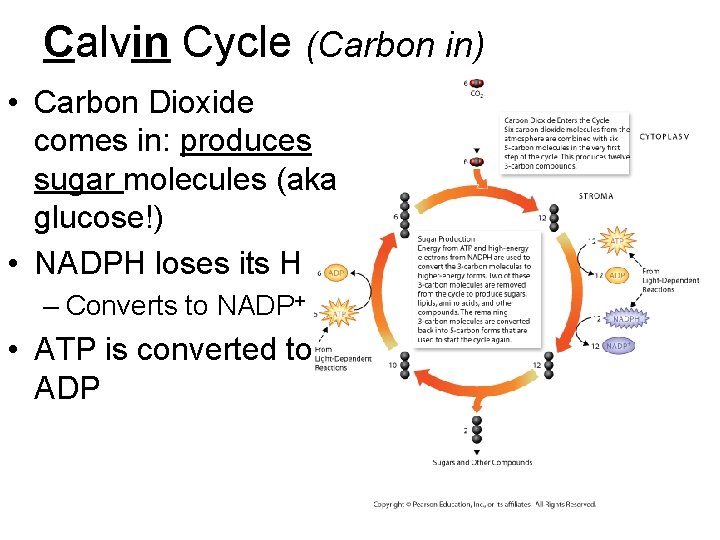
Calvin Cycle (Carbon in) • Carbon Dioxide comes in: produces sugar molecules (aka glucose!) • NADPH loses its H – Converts to NADP+ • ATP is converted to ADP
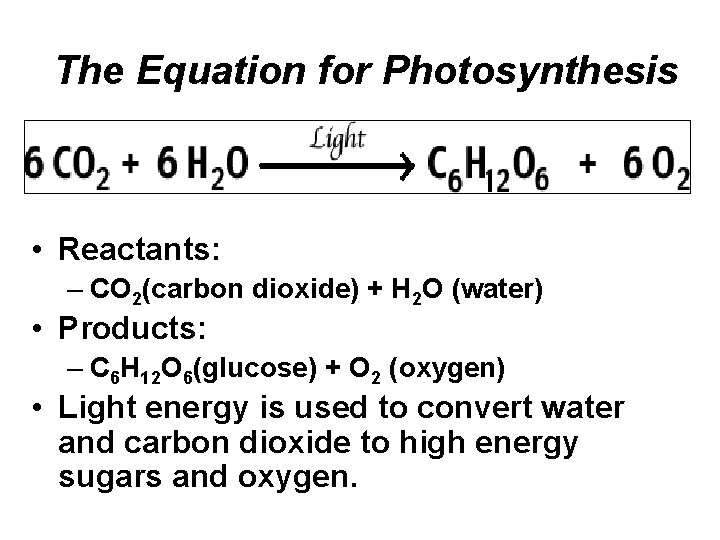
The Equation for Photosynthesis • Reactants: – CO 2(carbon dioxide) + H 2 O (water) • Products: – C 6 H 12 O 6(glucose) + O 2 (oxygen) • Light energy is used to convert water and carbon dioxide to high energy sugars and oxygen.
Summary of Photosynthesis SUNLIGHT H 2 O O 2 lightdependent reactions CO 2 NADPH, ATP NADP+, ADP lightindependent reactions sugars CHLOROPLAST Fig. 7 -6 c, p. 111
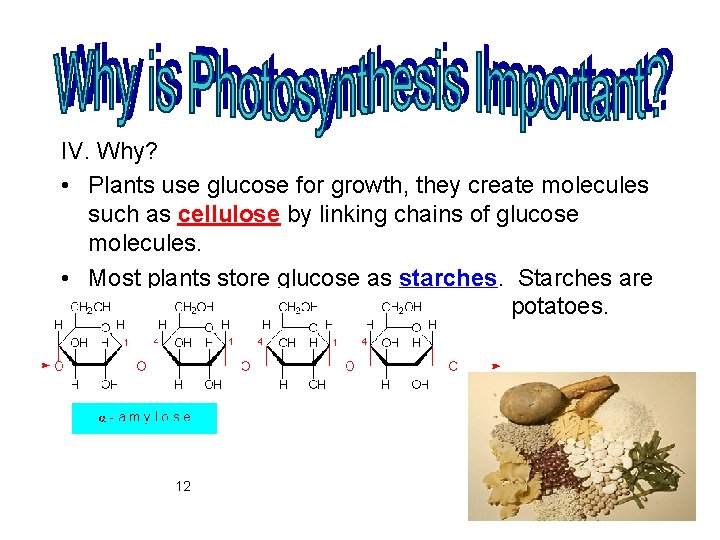
IV. Why? • Plants use glucose for growth, they create molecules such as cellulose by linking chains of glucose molecules. • Most plants store glucose as starches. Starches are found in plant foods such as wheat and potatoes. 12
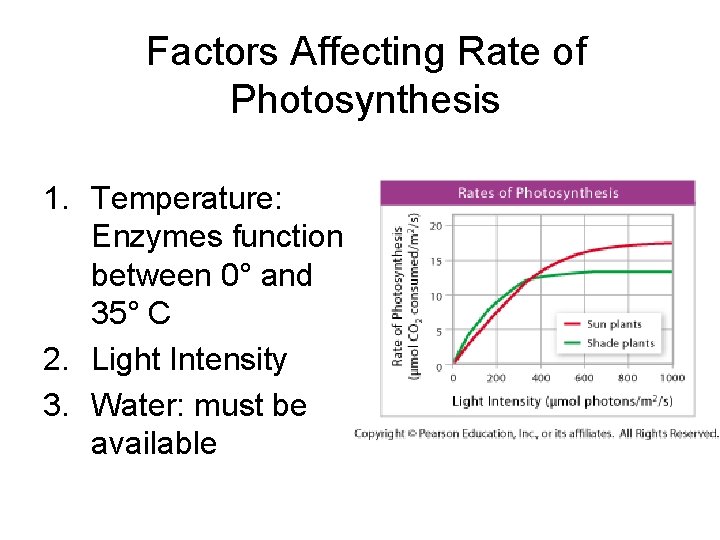
Factors Affecting Rate of Photosynthesis 1. Temperature: Enzymes function between 0° and 35° C 2. Light Intensity 3. Water: must be available
• 1. Why is ATP important for cells? • 2. What is photosynthesis? Does it store or release energy? • 3. What are autotrophs and why are they important? • 4. What is the formula for photosynthesis? Is it balanced? • 5. Describe the 2 cycles that make up photosynthesis. 14