
Chapter 8 A New Nation Chapter 8 1
- Slides: 60
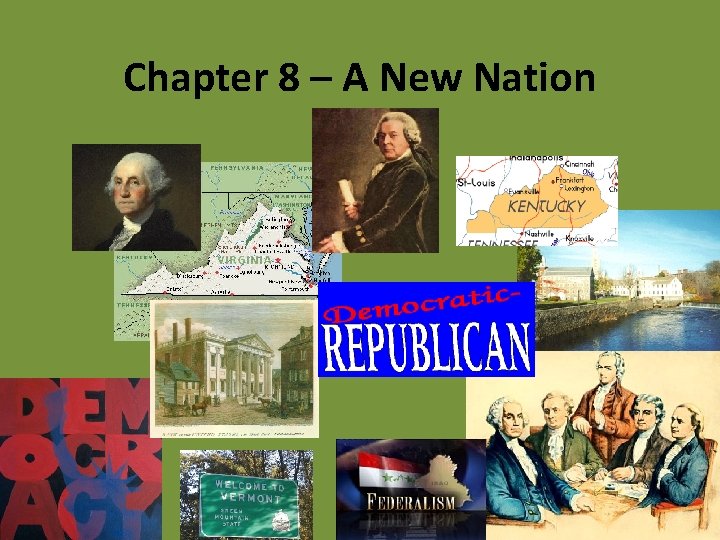
Chapter 8 – A New Nation
Chapter 8 -1 Washington Takes Office • Essential Question – How did President Washington set the course for the new nation?
TEKS 8 C: Calculate percent composition and empirical and molecular formulas. Terms and People • inauguration – a ceremony in which the President takes the oath of office • precedent – an example to be followed by others in the future • bond – a certificate issued by a government for an amount of money that the government promises to pay back with interest • speculator – a person who invests in a risky venture in the hope of making a large profit
TEKS 8 C: Calculate percent composition and empirical and molecular formulas. Terms and People (continued) • unconstitutional – contrary to what is permitted by the Constitution • tariff – a tax on imported goods
TEKS 8 C: Calculate percent composition and empirical and molecular formulas. How did President Washington set the course for the new nation? President Washington set precedents for the nation by choosing top advisors to form his Cabinet and by establishing the court system.
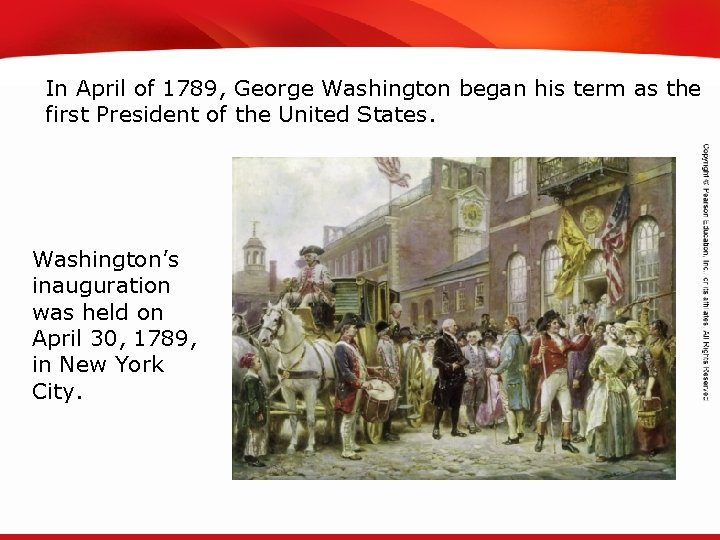
TEKS 8 C: Calculate percent composition and empirical and molecular formulas. In April of 1789, George Washington began his term as the first President of the United States. Washington’s inauguration was held on April 30, 1789, in New York City.
TEKS 8 C: Calculate percent composition and empirical and molecular formulas. Washington had several reasons to feel anxious as he started his term as President. The country was divided on many issues. His actions would set a precedent. The new nation depended on him.
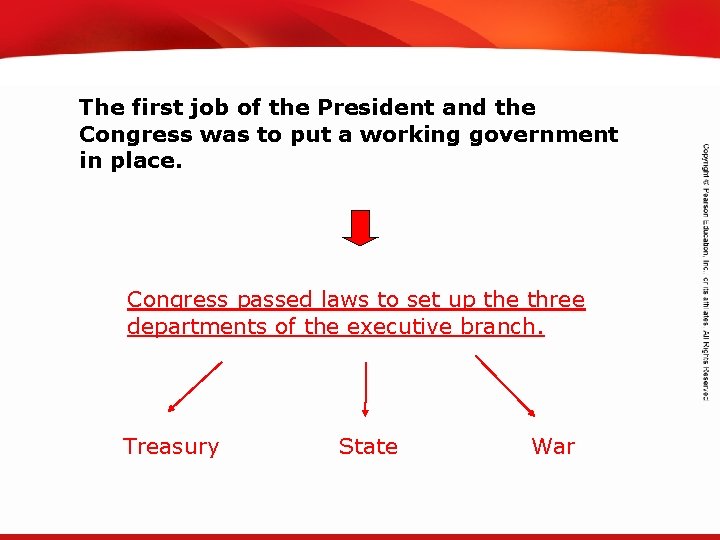
TEKS 8 C: Calculate percent composition and empirical and molecular formulas. The first job of the President and the Congress was to put a working government in place. Congress passed laws to set up the three departments of the executive branch. Treasury State War
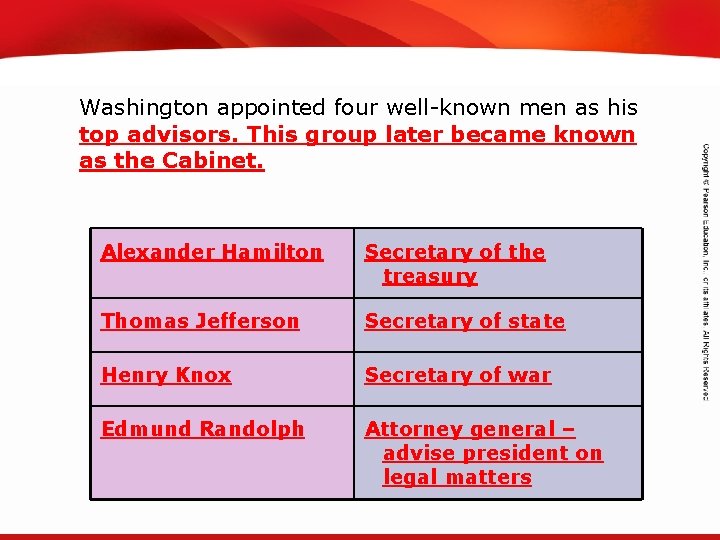
TEKS 8 C: Calculate percent composition and empirical and molecular formulas. Washington appointed four well-known men as his top advisors. This group later became known as the Cabinet. Alexander Hamilton Secretary of the treasury Thomas Jefferson Secretary of state Henry Knox Secretary of war Edmund Randolph Attorney general – advise president on legal matters
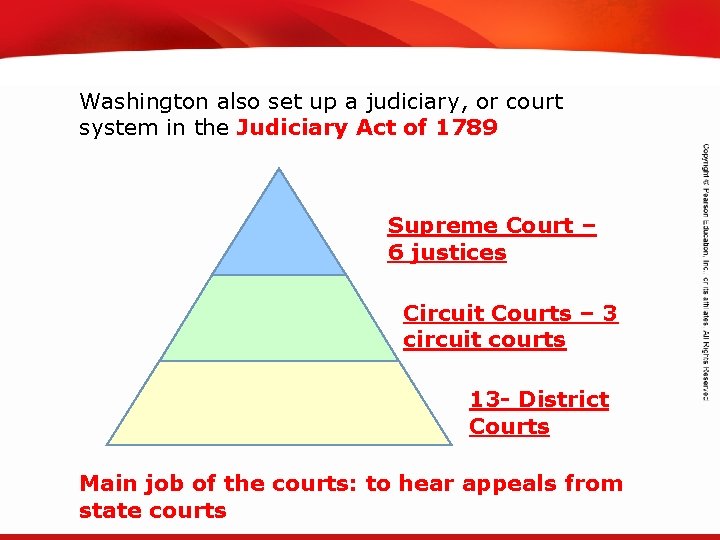
TEKS 8 C: Calculate percent composition and empirical and molecular formulas. Washington also set up a judiciary, or court system in the Judiciary Act of 1789 Supreme Court – 6 justices Circuit Courts – 3 circuit courts 13 - District Courts Main job of the courts: to hear appeals from state courts
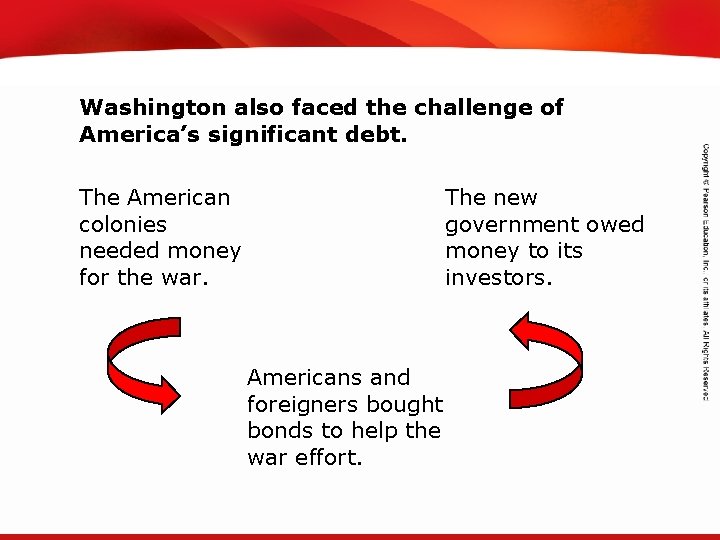
TEKS 8 C: Calculate percent composition and empirical and molecular formulas. Washington also faced the challenge of America’s significant debt. The American colonies needed money for the war. The new government owed money to its investors. Americans and foreigners bought bonds to help the war effort.
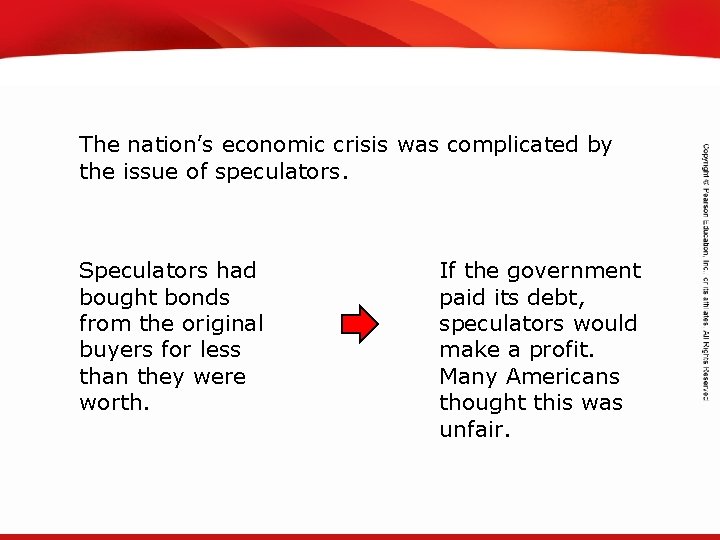
TEKS 8 C: Calculate percent composition and empirical and molecular formulas. The nation’s economic crisis was complicated by the issue of speculators. Speculators had bought bonds from the original buyers for less than they were worth. If the government paid its debt, speculators would make a profit. Many Americans thought this was unfair.
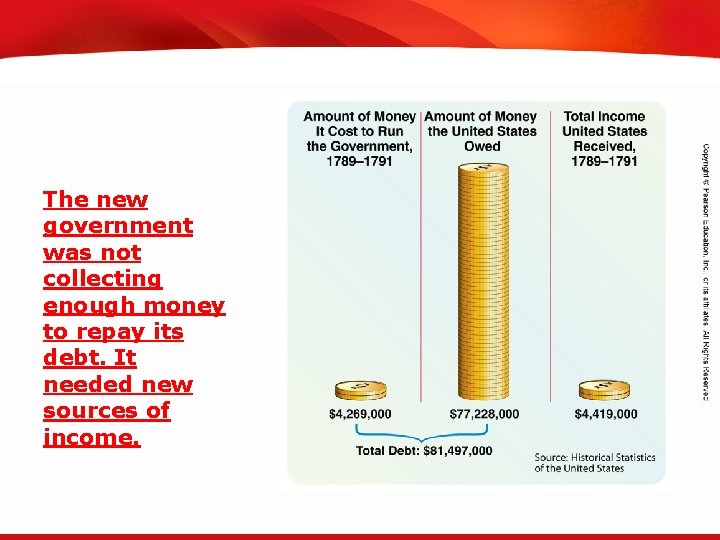
TEKS 8 C: Calculate percent composition and empirical and molecular formulas. The new government was not collecting enough money to repay its debt. It needed new sources of income.
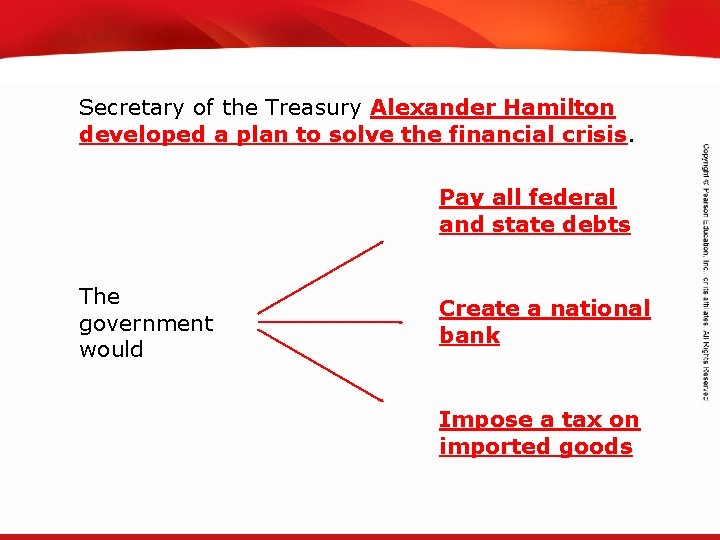
TEKS 8 C: Calculate percent composition and empirical and molecular formulas. Secretary of the Treasury Alexander Hamilton developed a plan to solve the financial crisis. Pay all federal and state debts The government would Create a national bank Impose a tax on imported goods
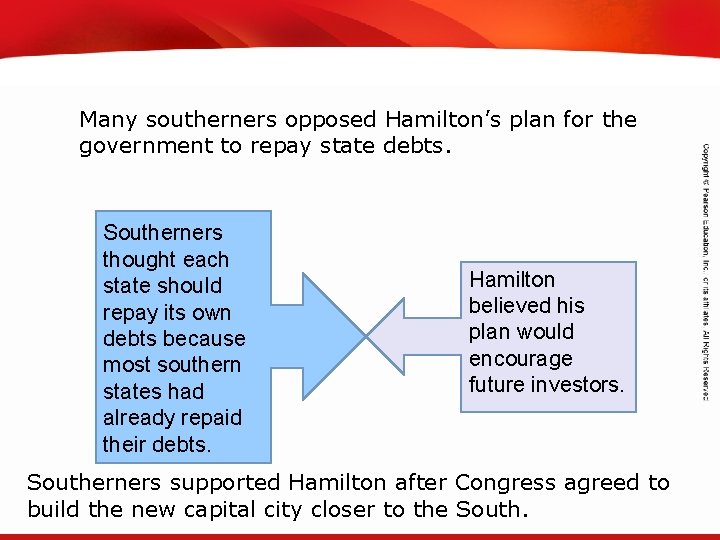
TEKS 8 C: Calculate percent composition and empirical and molecular formulas. Many southerners opposed Hamilton’s plan for the government to repay state debts. Southerners thought each state should repay its own debts because most southern states had already repaid their debts. Hamilton believed his plan would encourage future investors. Southerners supported Hamilton after Congress agreed to build the new capital city closer to the South.
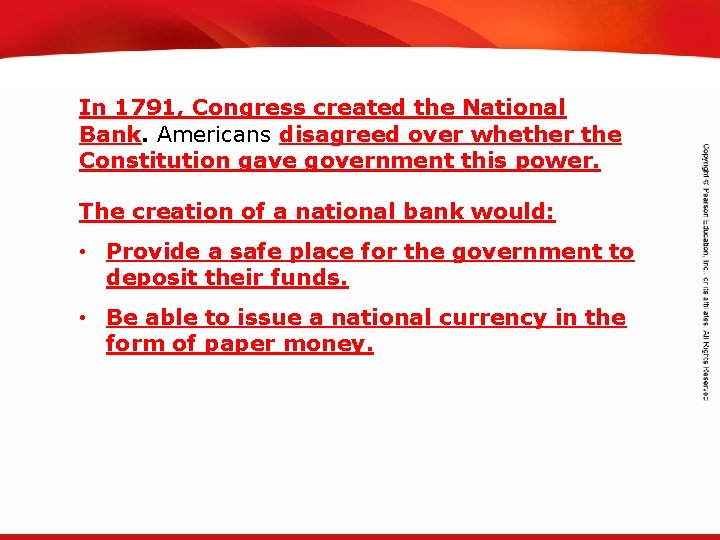
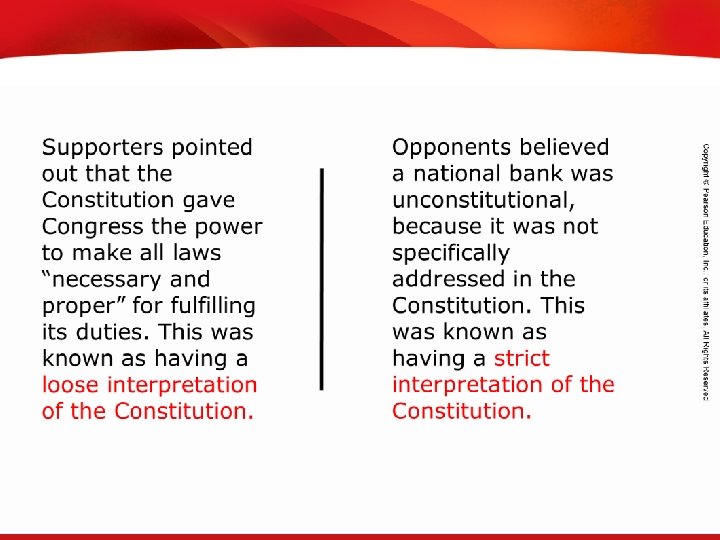
TEKS 8 C: Calculate percent composition and empirical and molecular formulas. In 1791, Congress created the National Bank. Americans disagreed over whether the Constitution gave government this power. The creation of a national bank would: • Provide a safe place for the government to deposit their funds. • Be able to issue a national currency in the form of paper money.
TEKS 8 C: Calculate percent composition and empirical and molecular formulas.
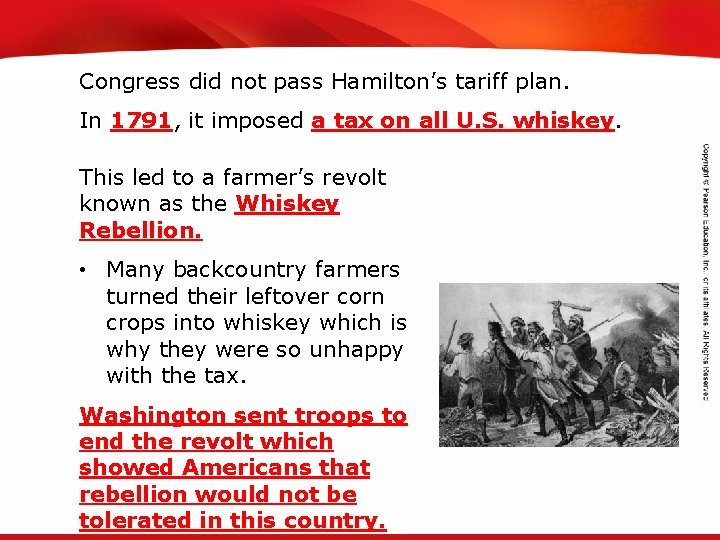
TEKS 8 C: Calculate percent composition and empirical and molecular formulas. Congress did not pass Hamilton’s tariff plan. In 1791, it imposed a tax on all U. S. whiskey. This led to a farmer’s revolt known as the Whiskey Rebellion. • Many backcountry farmers turned their leftover corn crops into whiskey which is why they were so unhappy with the tax. Washington sent troops to end the revolt which showed Americans that rebellion would not be tolerated in this country.
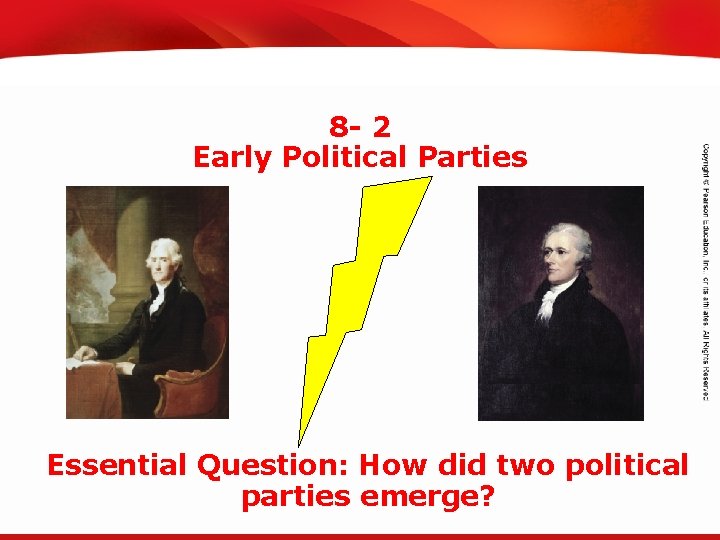
TEKS 8 C: Calculate percent composition and empirical and molecular formulas. 8 - 2 Early Political Parties Essential Question: How did two political parties emerge?
TEKS 8 C: Calculate percent composition and empirical and molecular formulas. Terms and People • faction – an organized political group • James Madison – supported Thomas Jefferson’s Republican views • Thomas Jefferson – Republican candidate for President in 1796 and the nation’s second Vice President • Alexander Hamilton – Washington’s Secretary of the Treasury; supported Federalist ideas
TEKS 8 C: Calculate percent composition and empirical and molecular formulas. Terms and People (continued) • Alexander Hamilton – Washington’s Secretary of the Treasury; supported Federalist ideas • John Adams – Federalist candidate for President in 1796 and the nation’s second President
TEKS 8 C: Calculate percent composition and empirical and molecular formulas. How did two political parties emerge? Early political groups were called factions. They were widely thought to be selfish groups. James Madison, Alexander Hamilton, and Thomas Jefferson were against factions. Washington and others feared that factions would be destructive to the new government.
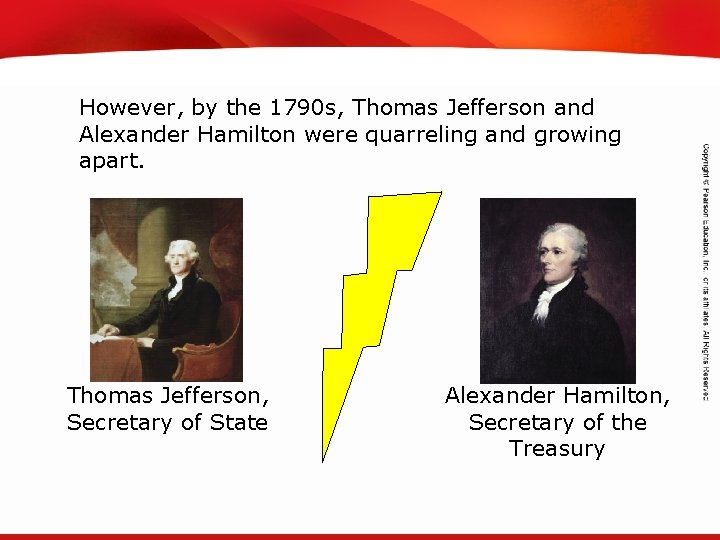
TEKS 8 C: Calculate percent composition and empirical and molecular formulas. However, by the 1790 s, Thomas Jefferson and Alexander Hamilton were quarreling and growing apart. Thomas Jefferson, Secretary of State Alexander Hamilton, Secretary of the Treasury
TEKS 8 C: Calculate percent composition and empirical and molecular formulas. Jefferson’s and Hamilton’s differences led to the development of the first political parties. Republicans supported Thomas Jefferson and his ally, James Madison. Federalists supported Alexander Hamilton and his ideas.
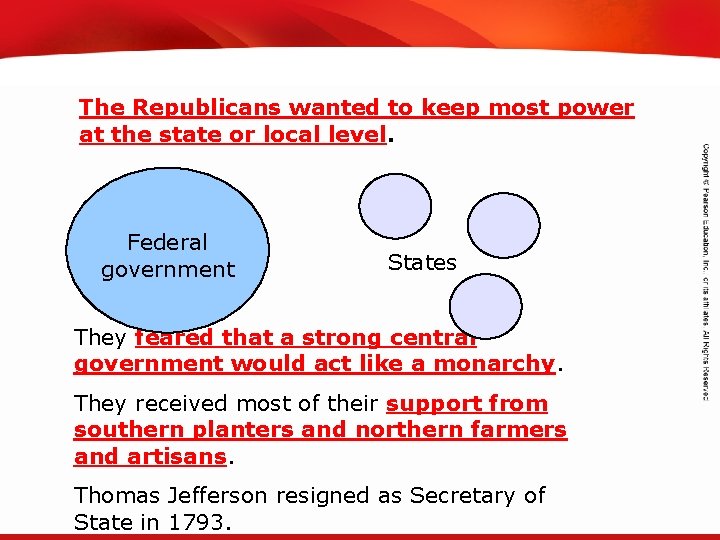
TEKS 8 C: Calculate percent composition and empirical and molecular formulas. The Republicans wanted to keep most power at the state or local level. Federal government States They feared that a strong central government would act like a monarchy. They received most of their support from southern planters and northern farmers and artisans. Thomas Jefferson resigned as Secretary of State in 1793.
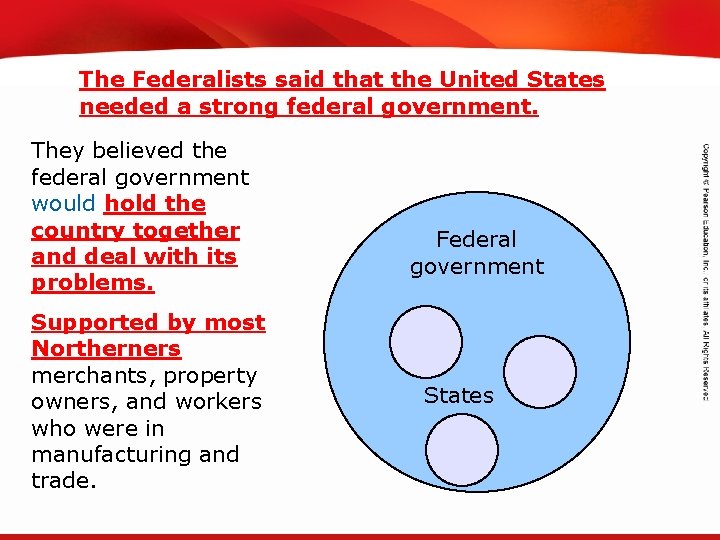
TEKS 8 C: Calculate percent composition and empirical and molecular formulas. The Federalists said that the United States needed a strong federal government. They believed the federal government would hold the country together and deal with its problems. Supported by most Northerners merchants, property owners, and workers who were in manufacturing and trade. Federal government States
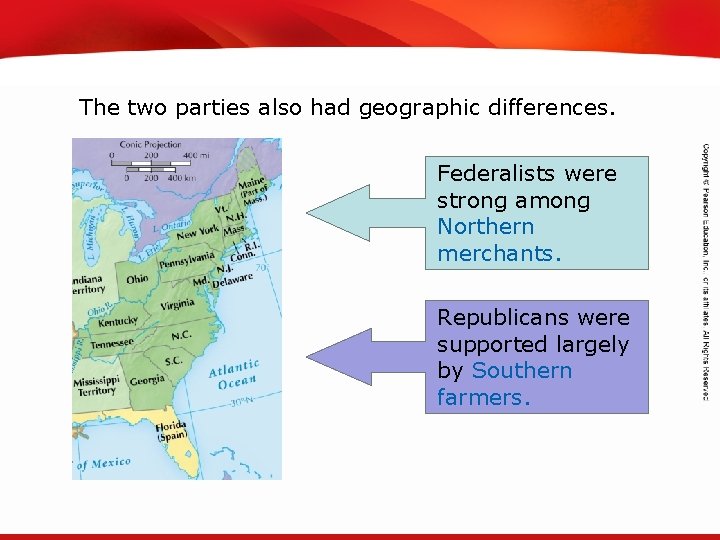
TEKS 8 C: Calculate percent composition and empirical and molecular formulas. The two parties also had geographic differences. Federalists were strong among Northern merchants. Republicans were supported largely by Southern farmers.
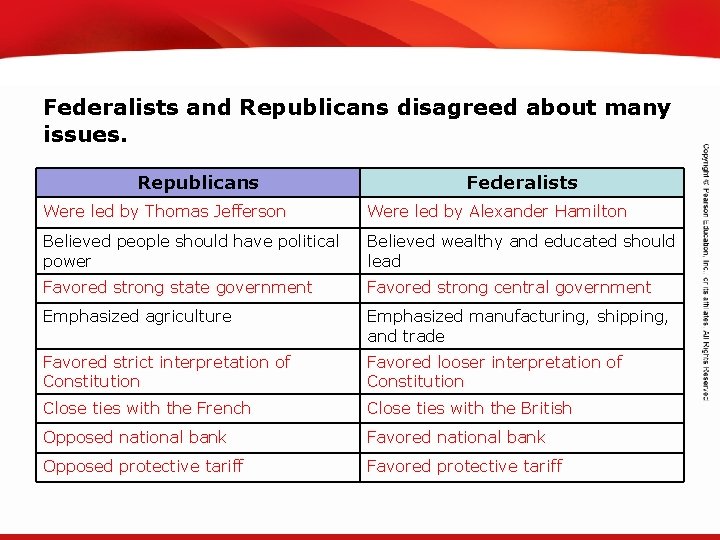
TEKS 8 C: Calculate percent composition and empirical and molecular formulas. Federalists and Republicans disagreed about many issues. Republicans Federalists Were led by Thomas Jefferson Were led by Alexander Hamilton Believed people should have political power Believed wealthy and educated should lead Favored strong state government Favored strong central government Emphasized agriculture Emphasized manufacturing, shipping, and trade Favored strict interpretation of Constitution Favored looser interpretation of Constitution Close ties with the French Close ties with the British Opposed national bank Favored national bank Opposed protective tariff Favored protective tariff
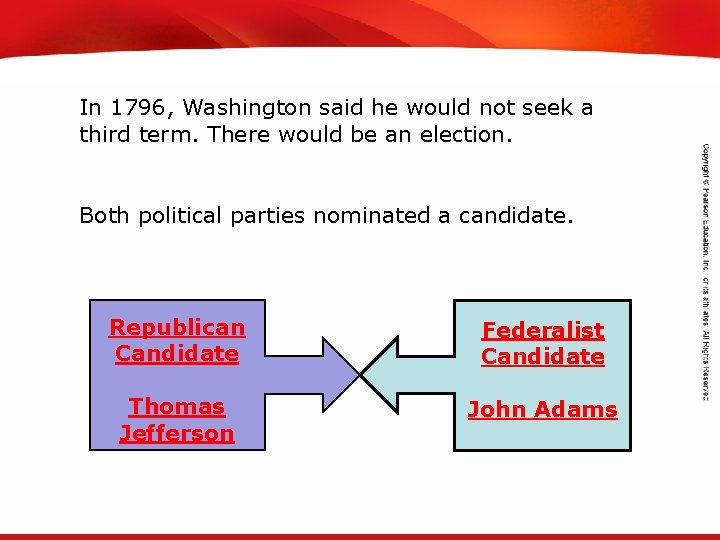
TEKS 8 C: Calculate percent composition and empirical and molecular formulas. In 1796, Washington said he would not seek a third term. There would be an election. Both political parties nominated a candidate. Republican Candidate Federalist Candidate Thomas Jefferson John Adams
TEKS 8 C: Calculate percent composition and empirical and molecular formulas. In 1796, the President and Vice President were not elected together, as they are today. The candidate with the most votes became President. The second-place candidate became Vice President.
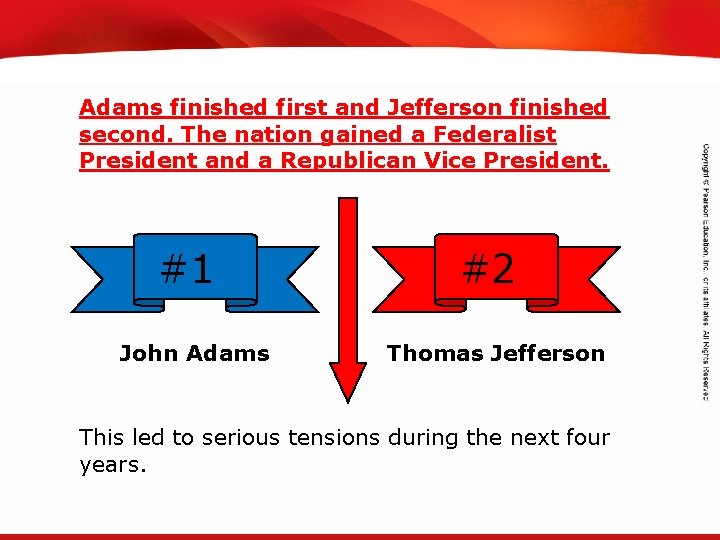
TEKS 8 C: Calculate percent composition and empirical and molecular formulas. Adams finished first and Jefferson finished second. The nation gained a Federalist President and a Republican Vice President. #1 John Adams #2 Thomas Jefferson This led to serious tensions during the next four years.
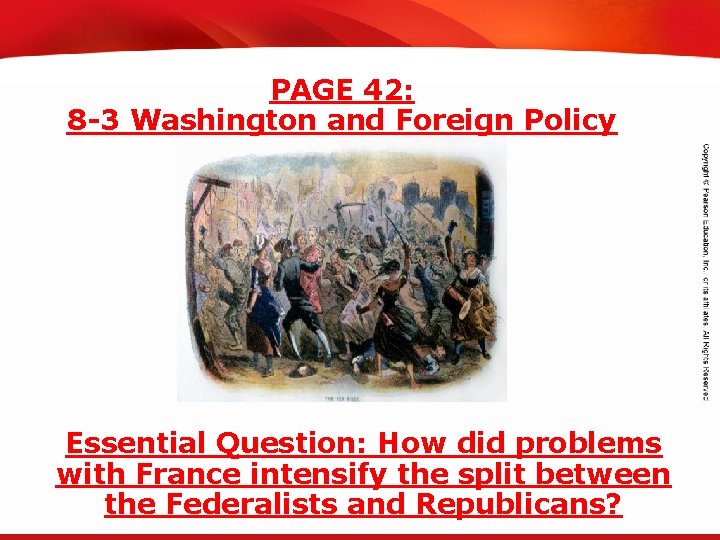
TEKS 8 C: Calculate percent composition and empirical and molecular formulas. PAGE 42: 8 -3 Washington and Foreign Policy Essential Question: How did problems with France intensify the split between the Federalists and Republicans?
TEKS 8 C: Calculate percent composition and empirical and molecular formulas. Terms and People • neutral – not favoring either side in a dispute • impressment – forcing people into public service or use • John Jay – government representative who negotiated the Jay Treaty with Britain in 1795.
TEKS 8 C: Calculate percent composition and empirical and molecular formulas. • After the American Revolution, Great Britain still had forts set up west of the Appalachian Mountains. • They promised to remove this within a reasonable time. • However, 10 years after the Revolution, the forts were still intact.
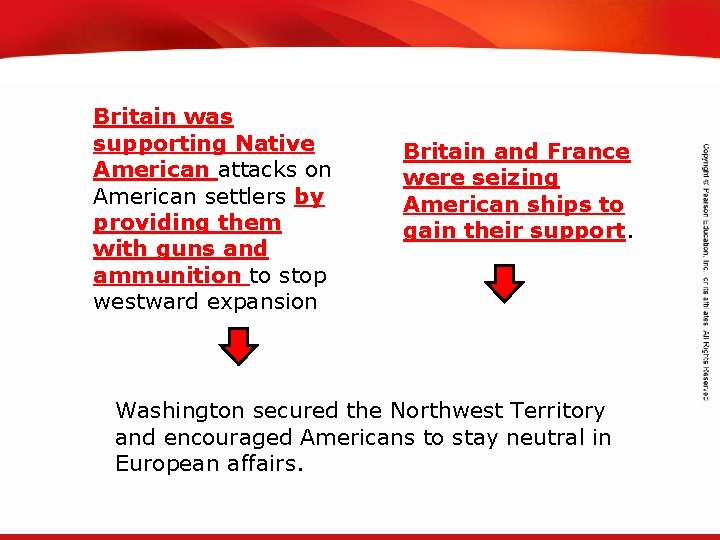
TEKS 8 C: Calculate percent composition and empirical and molecular formulas. Britain was supporting Native American attacks on American settlers by providing them with guns and ammunition to stop westward expansion Britain and France were seizing American ships to gain their support. Washington secured the Northwest Territory and encouraged Americans to stay neutral in European affairs.
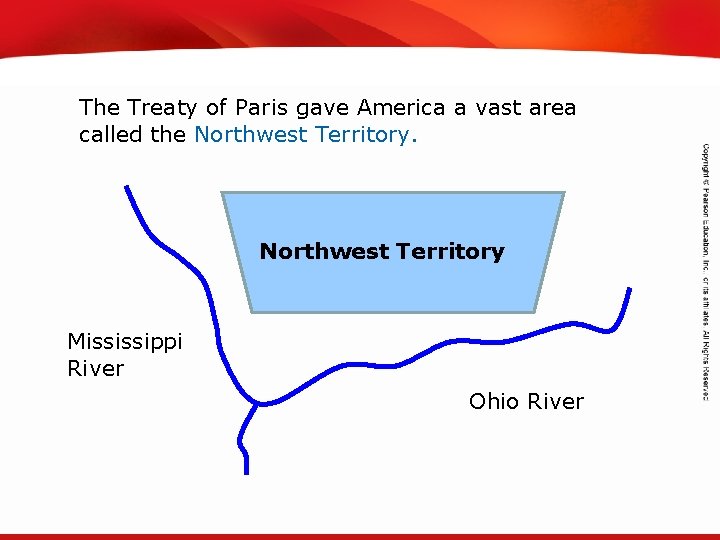
TEKS 8 C: Calculate percent composition and empirical and molecular formulas. The Treaty of Paris gave America a vast area called the Northwest Territory Mississippi River Ohio River
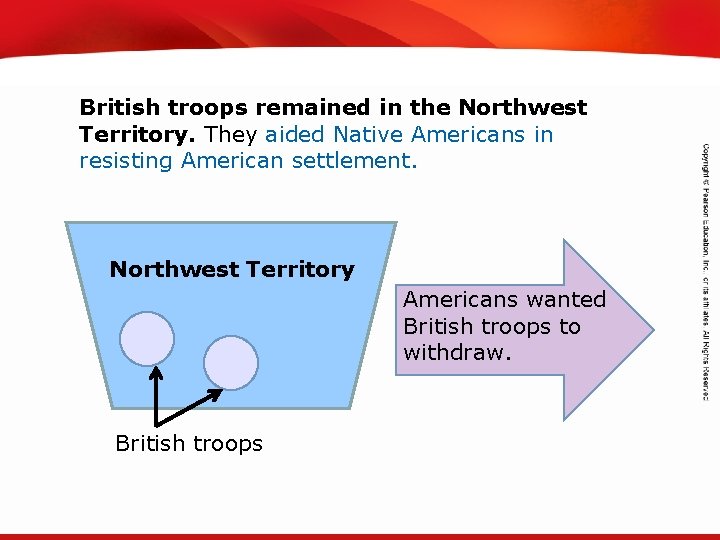
TEKS 8 C: Calculate percent composition and empirical and molecular formulas. British troops remained in the Northwest Territory. They aided Native Americans in resisting American settlement. Northwest Territory Americans wanted British troops to withdraw. British troops
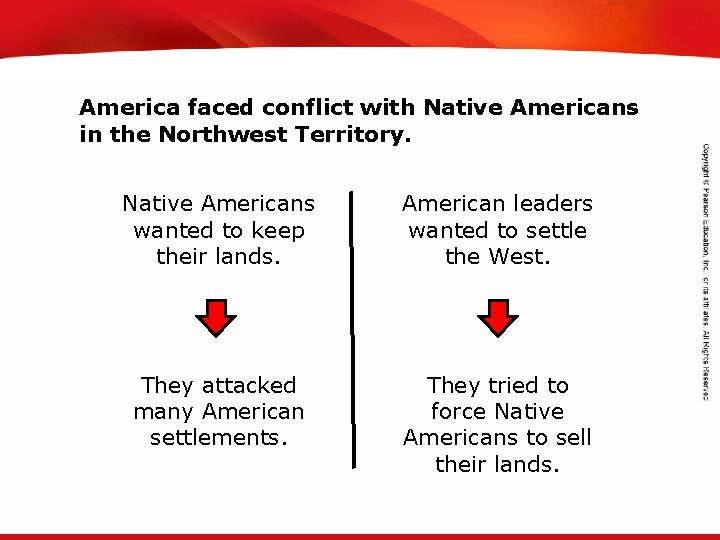
TEKS 8 C: Calculate percent composition and empirical and molecular formulas. America faced conflict with Native Americans in the Northwest Territory. Native Americans wanted to keep their lands. American leaders wanted to settle the West. They attacked many American settlements. They tried to force Native Americans to sell their lands.
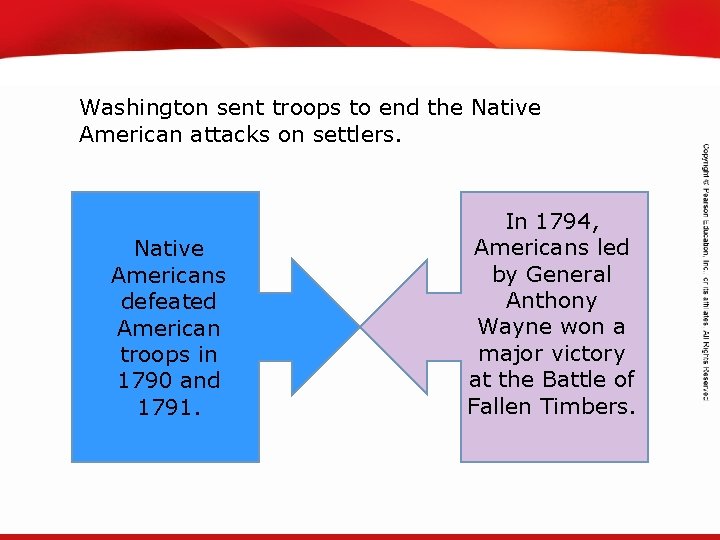
TEKS 8 C: Calculate percent composition and empirical and molecular formulas. Washington sent troops to end the Native American attacks on settlers. Native Americans defeated American troops in 1790 and 1791. In 1794, Americans led by General Anthony Wayne won a major victory at the Battle of Fallen Timbers.
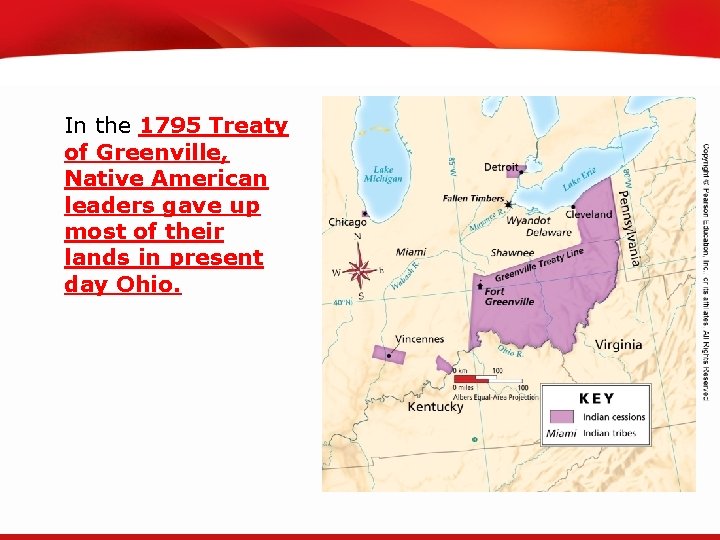
TEKS 8 C: Calculate percent composition and empirical and molecular formulas. In the 1795 Treaty of Greenville, Native American leaders gave up most of their lands in present day Ohio.
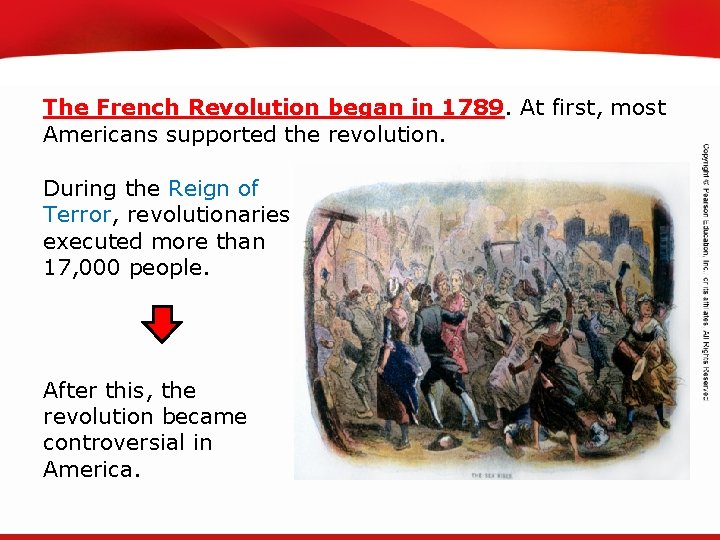
TEKS 8 C: Calculate percent composition and empirical and molecular formulas. The French Revolution began in 1789. At first, most Americans supported the revolution. During the Reign of Terror, revolutionaries executed more than 17, 000 people. After this, the revolution became controversial in America.
TEKS 8 C: Calculate percent composition and empirical and molecular formulas. Federalists, led by Hamilton, felt that the Revolutionaries were too violent and called the revolution a “bloodthirsty monster. ” Republicans, led by Jefferson, believed that some injustices were to be expected in a fight for freedom.
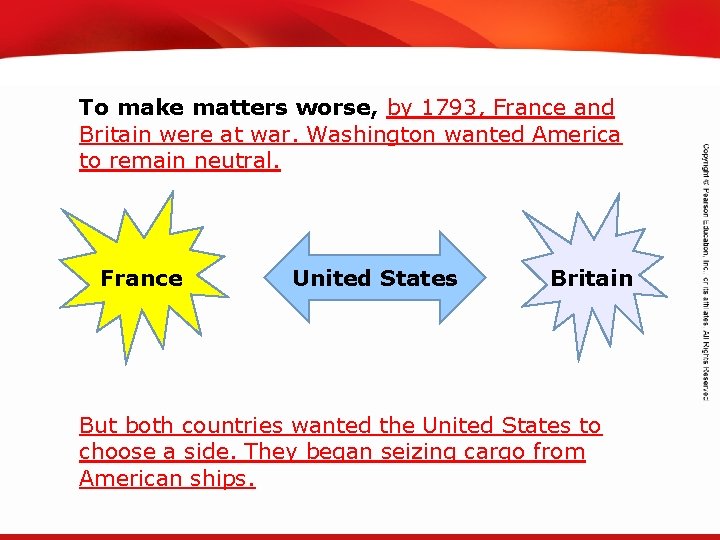
TEKS 8 C: Calculate percent composition and empirical and molecular formulas. To make matters worse, by 1793, France and Britain were at war. Washington wanted America to remain neutral. France United States Britain But both countries wanted the United States to choose a side. They began seizing cargo from American ships.
TEKS 8 C: Calculate percent composition and empirical and molecular formulas. The British further complicated the situation by the impressment of sailors on American ships. They captured American sailors and forced them to serve in the British navy.
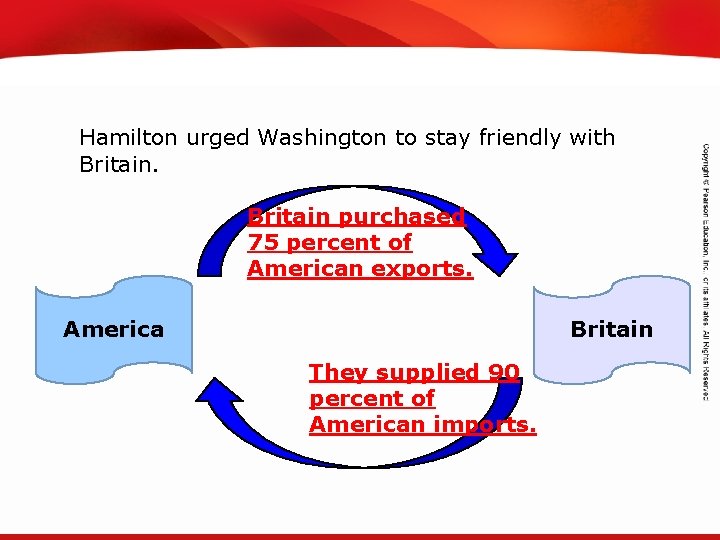
TEKS 8 C: Calculate percent composition and empirical and molecular formulas. Hamilton urged Washington to stay friendly with Britain purchased 75 percent of American exports. America Britain They supplied 90 percent of American imports.
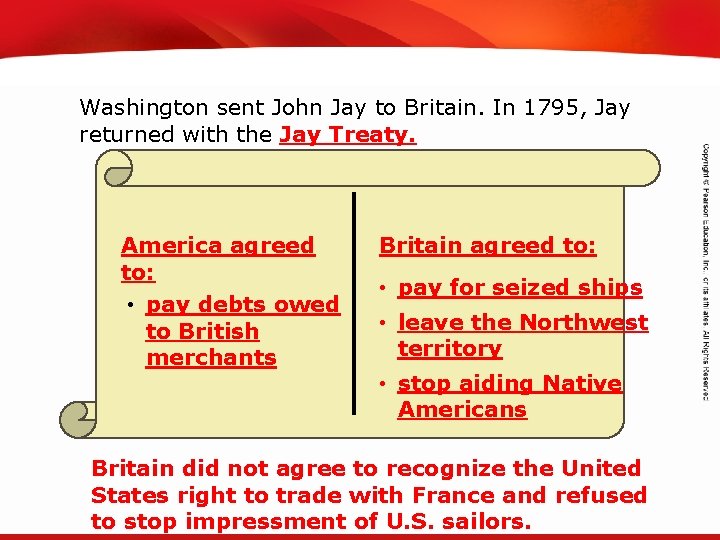
TEKS 8 C: Calculate percent composition and empirical and molecular formulas. Washington sent John Jay to Britain. In 1795, Jay returned with the Jay Treaty. America agreed to: • pay debts owed to British merchants Britain agreed to: • pay for seized ships • leave the Northwest territory • stop aiding Native Americans Britain did not agree to recognize the United States right to trade with France and refused to stop impressment of U. S. sailors.
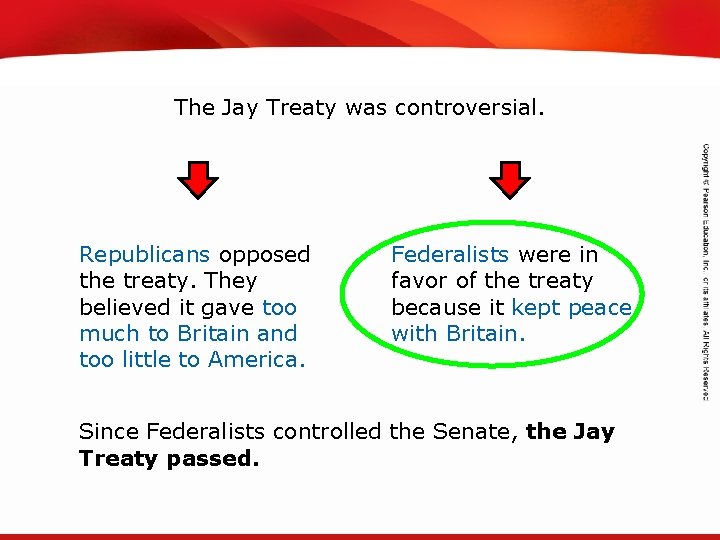
TEKS 8 C: Calculate percent composition and empirical and molecular formulas. The Jay Treaty was controversial. Republicans opposed the treaty. They believed it gave too much to Britain and too little to America. Federalists were in favor of the treaty because it kept peace with Britain. Since Federalists controlled the Senate, the Jay Treaty passed.
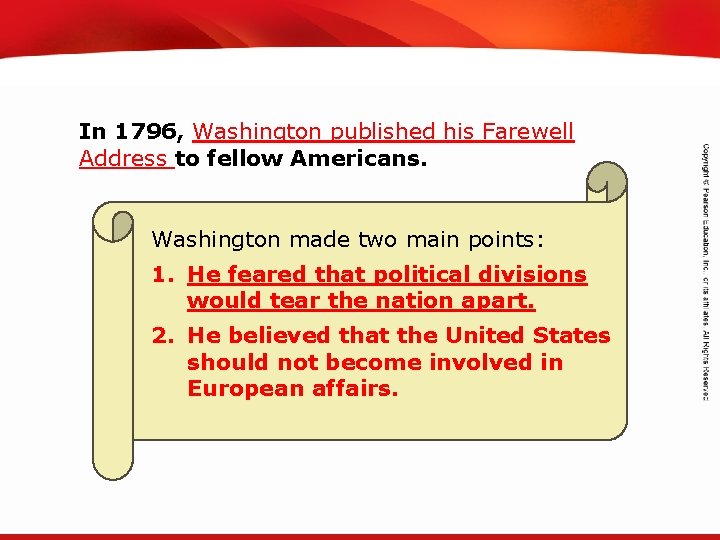
TEKS 8 C: Calculate percent composition and empirical and molecular formulas. In 1796, Washington published his Farewell Address to fellow Americans. Washington made two main points: 1. He feared that political divisions would tear the nation apart. 2. He believed that the United States should not become involved in European affairs.
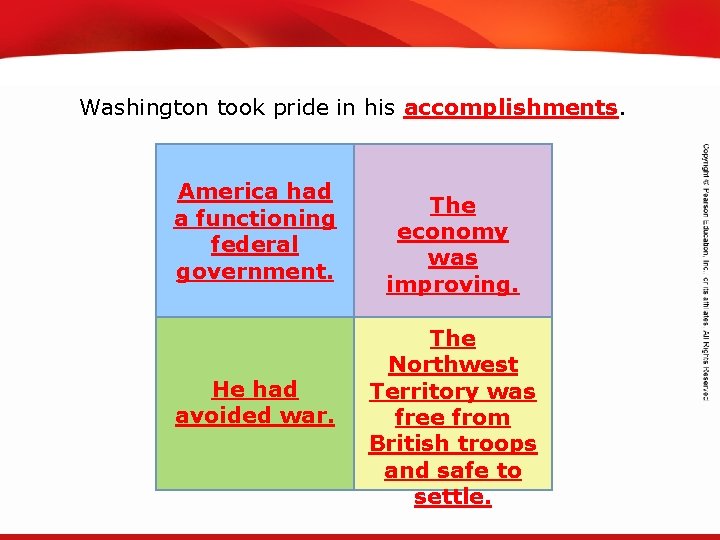
TEKS 8 C: Calculate percent composition and empirical and molecular formulas. Washington took pride in his accomplishments. America had a functioning federal government. He had avoided war. The economy was improving. The Northwest Territory was free from British troops and safe to settle.
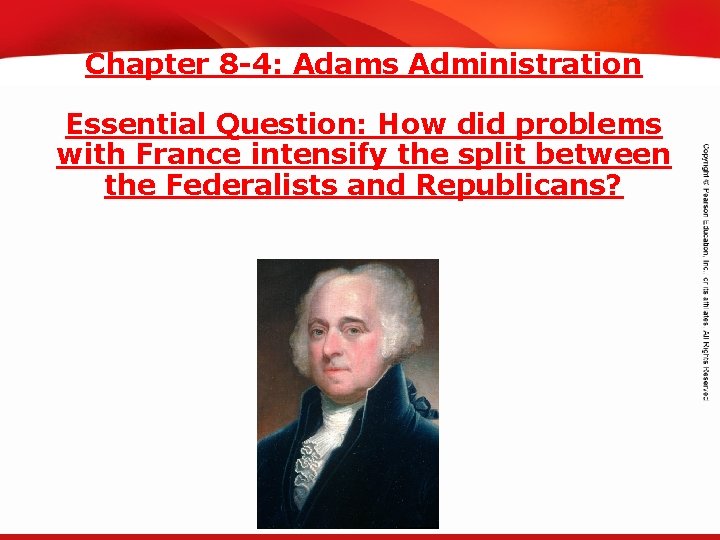
TEKS 8 C: Calculate percent composition and empirical and molecular formulas. Chapter 8 -4: Adams Administration Essential Question: How did problems with France intensify the split between the Federalists and Republicans?
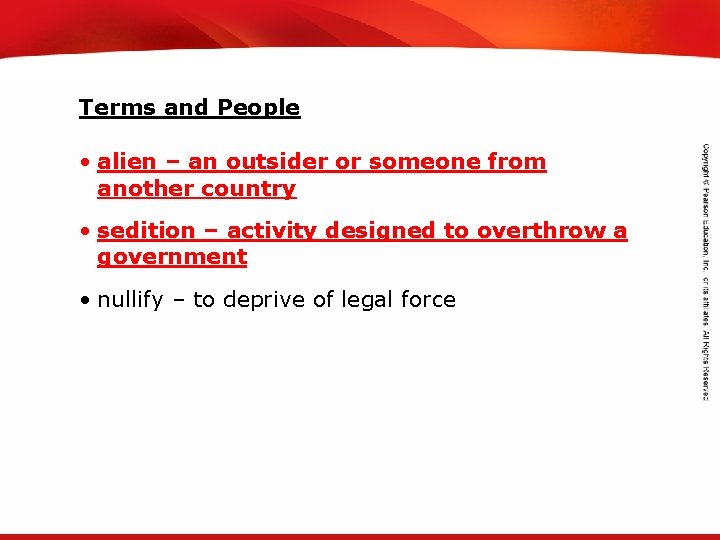
TEKS 8 C: Calculate percent composition and empirical and molecular formulas. Terms and People • alien – an outsider or someone from another country • sedition – activity designed to overthrow a government • nullify – to deprive of legal force
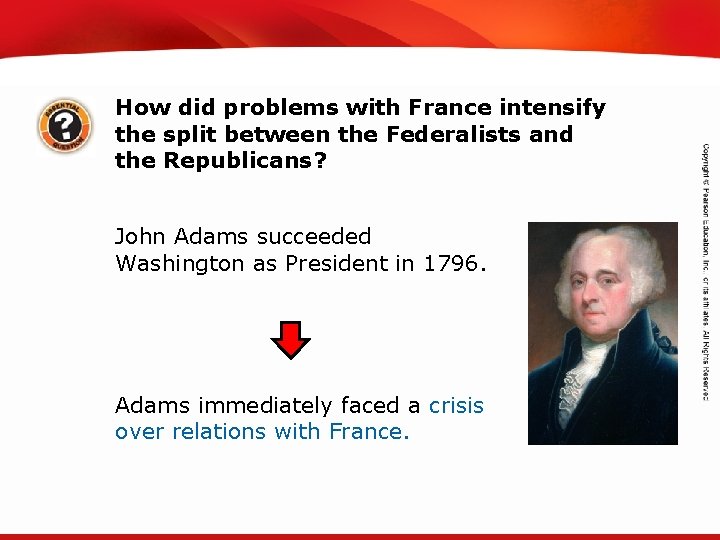
TEKS 8 C: Calculate percent composition and empirical and molecular formulas. How did problems with France intensify the split between the Federalists and the Republicans? John Adams succeeded Washington as President in 1796. Adams immediately faced a crisis over relations with France.
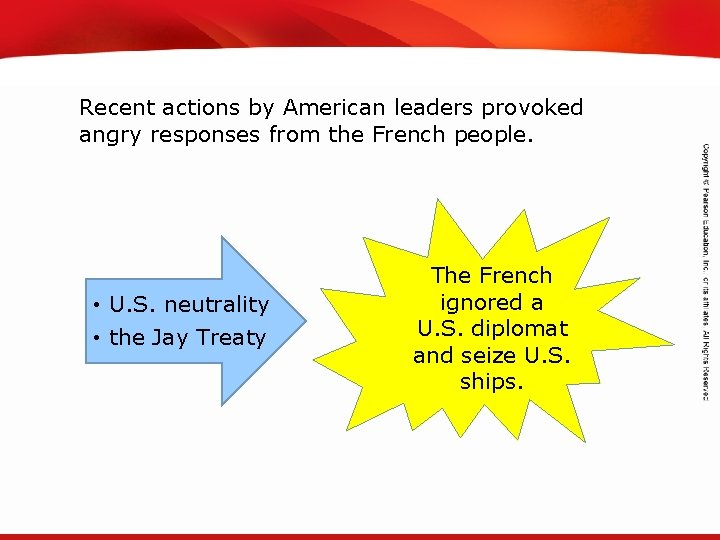
TEKS 8 C: Calculate percent composition and empirical and molecular formulas. Recent actions by American leaders provoked angry responses from the French people. • U. S. neutrality • the Jay Treaty The French ignored a U. S. diplomat and seize U. S. ships.
TEKS 8 C: Calculate percent composition and empirical and molecular formulas. In 1797, Adams sent a mission to France. This led to a scandal known as the XYZ Affair. French agents demanded that the United States pay them a large bribe $$ The Americans refused. The French agents were anonymously known as X, Y, and Z.
TEKS 8 C: Calculate percent composition and empirical and molecular formulas. The XYZ Affair caused war fever in America. Adams asked Congress to increase the size of the army and rebuild the navy. From 1798– 1800, the United States fought an undeclared naval war with France.
TEKS 8 C: Calculate percent composition and empirical and molecular formulas. Adams opposed a full-scale war with France. He sent a new mission to France to meet with dictator Napoleon Bonaparte. In 1800, Napoleon agreed to stop seizing American ships. Adams had avoided war.
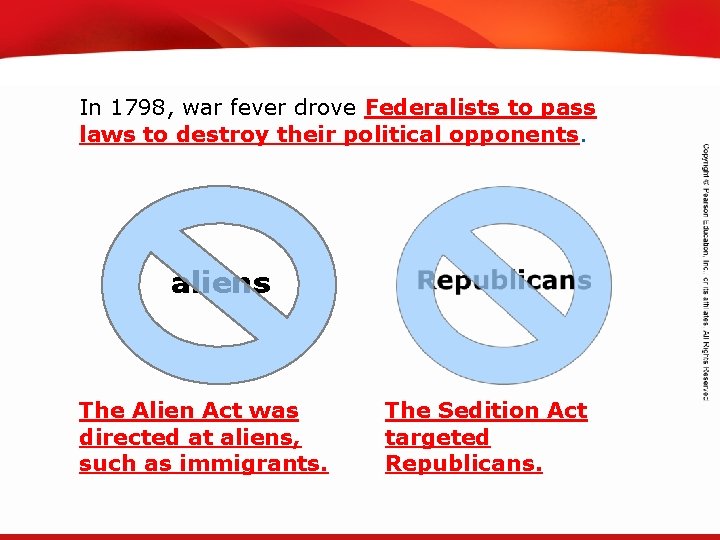
TEKS 8 C: Calculate percent composition and empirical and molecular formulas. In 1798, war fever drove Federalists to pass laws to destroy their political opponents. aliens The Alien Act was directed at aliens, such as immigrants. The Sedition Act targeted Republicans.
TEKS 8 C: Calculate percent composition and empirical and molecular formulas. Alien Act • Increased the duration, from 5 to 14 years, that a person had to live in the United States to become a citizen. • Gave the President power to deport or imprison any alien considered dangerous.
TEKS 8 C: Calculate percent composition and empirical and molecular formulas. Sedition Act • The harshest law limiting free speech ever passed in the United States • Made it a crime for anyone to write or say anything insulting or false about the President, Congress, or the government.
TEKS 8 C: Calculate percent composition and empirical and molecular formulas. Republicans fought the Alien and Sedition acts. Kentucky and Virginia passed resolutions that declared the acts unconstitutional. These state resolutions had little immediate impact, but the Alien and Sedition acts did not last long. The Sedition Act expired in 1801. The waiting period to become a citizen was restored to 5 years in 1802.