
Chapter 8 3 Light Dependent and Light Independent



- Slides: 13
Chapter 8 -3 Light Dependent and Light Independent Reactions
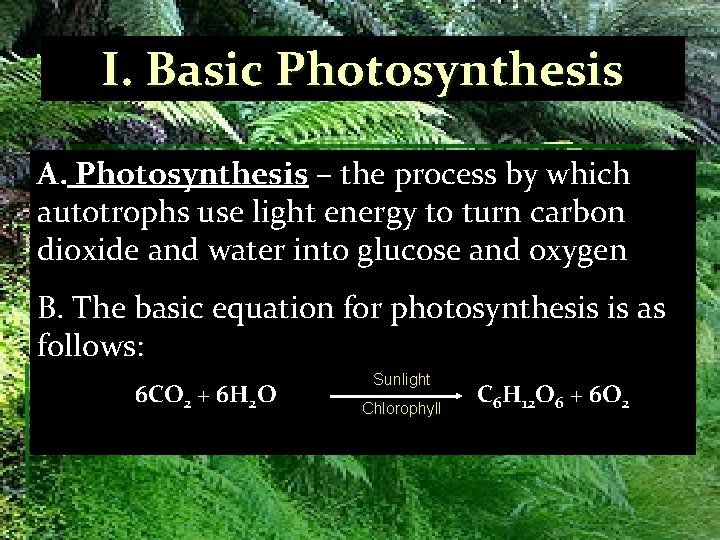
I. Basic Photosynthesis A. Photosynthesis – the process by which autotrophs use light energy to turn carbon dioxide and water into glucose and oxygen B. The basic equation for photosynthesis is as follows: 6 CO 2 + 6 H 2 O Sunlight Chlorophyll C 6 H 12 O 6 + 6 O 2
II. Chloroplasts A. Organelle where PS takes place in autotrophs B. Contains chlorophyll 1. Traps the E from sunlight. 2. Transfers the E to the electrons (e-) in chlorophyll. 3. They are then called “high energy” electrons
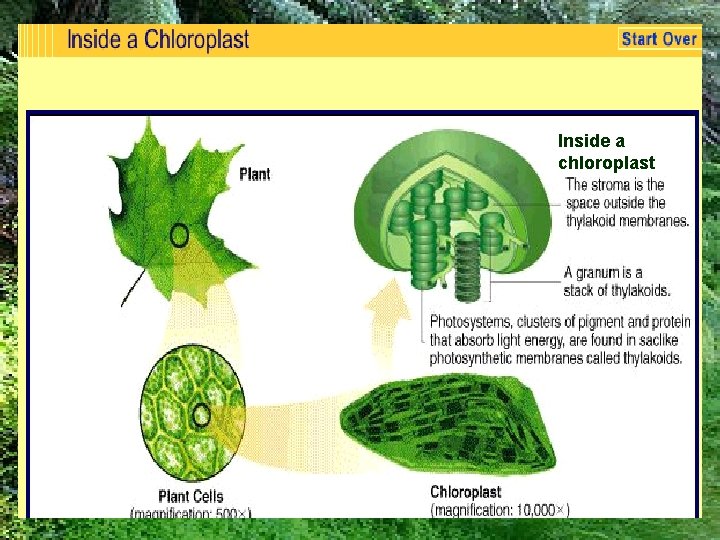
Inside a chloroplast
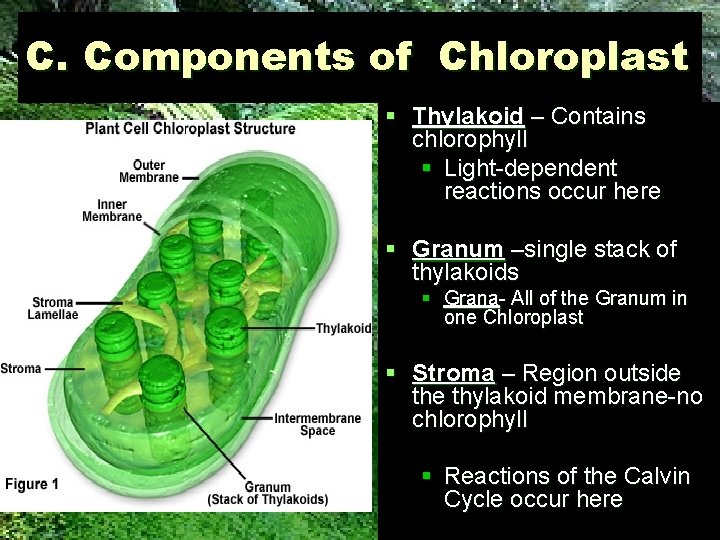
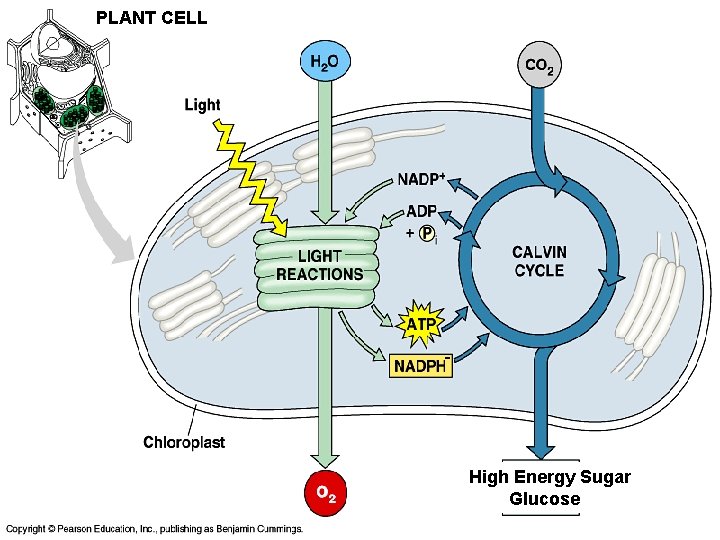
C. Components of Chloroplast § Thylakoid – Contains chlorophyll § Light-dependent reactions occur here § Granum –single stack of thylakoids § Grana- All of the Granum in one Chloroplast § Stroma – Region outside thylakoid membrane-no chlorophyll § Reactions of the Calvin Cycle occur here
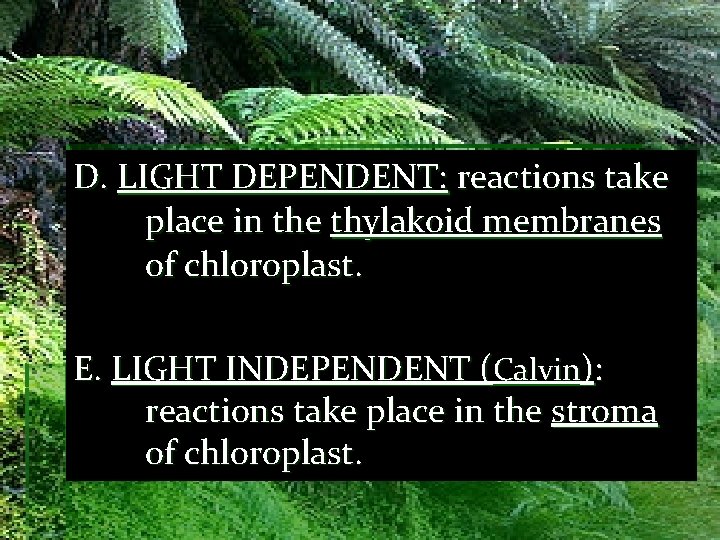
D. LIGHT DEPENDENT: reactions take place in the thylakoid membranes of chloroplast. E. LIGHT INDEPENDENT (Calvin): reactions take place in the stroma of chloroplast.
PLANT CELL - High Energy Sugar Glucose
III. Light Dependent Reactions
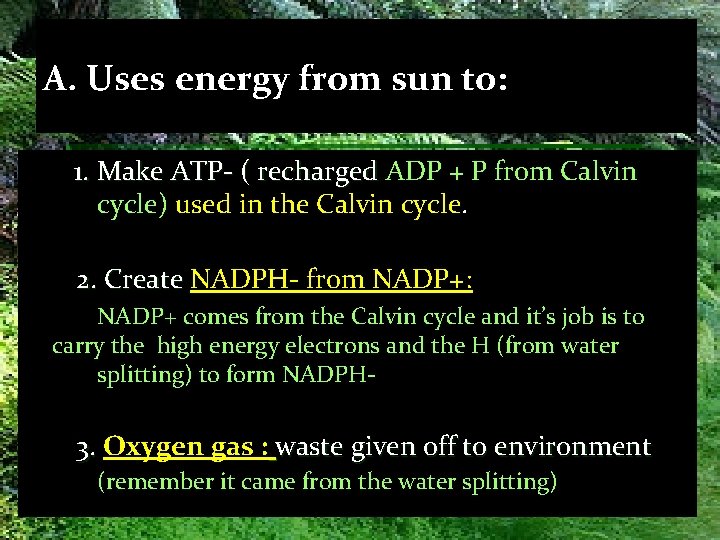
A. Uses energy from sun to: 1. Make ATP- ( recharged ADP + P from Calvin cycle) used in the Calvin cycle. 2. Create NADPH- from NADP+: NADP+ comes from the Calvin cycle and it’s job is to carry the high energy electrons and the H (from water splitting) to form NADPH- 3. Oxygen gas : waste given off to environment (remember it came from the water splitting)
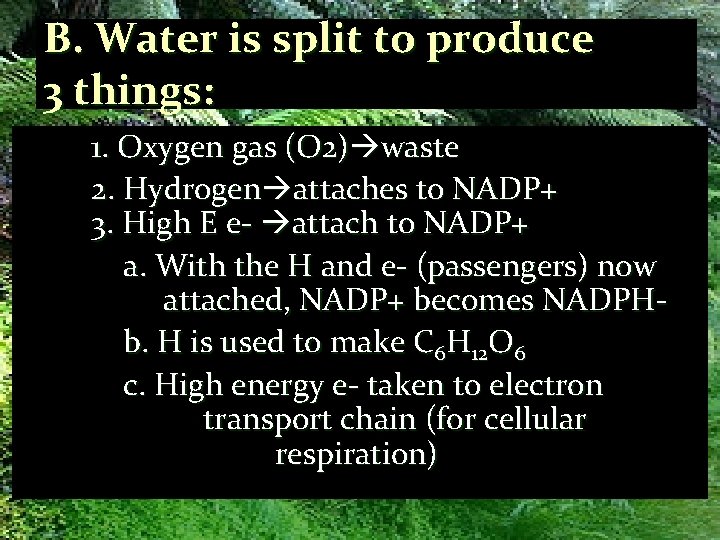
B. Water is split to produce 3 things: 1. Oxygen gas (O 2) waste 2. Hydrogen attaches to NADP+ 3. High E e- attach to NADP+ a. With the H and e- (passengers) now attached, NADP+ becomes NADPHb. H is used to make C 6 H 12 O 6 c. High energy e- taken to electron transport chain (for cellular respiration)
IV. Light Independent Reactions A. also called Calvin Cycle B. Produces high the energy sugar (glucose) C. Uses ATP energy to take H atoms(carried on NADPH- and C and O atoms from CO 2 (from air) and turn it into glucose. D. Does NOT use light energy-uses E from ATP
IV. Factors that Affect rate of PS A. Water. No water = No NADPH If no NADPH = No Glucose B. Temperature- enzymes sensitive to extreme temperatures C. Light Intensity: in light = in PS (to a certain point) D. CO 2 - Carbon and oxygen atoms needed to make glucose.
Summary § Light Dependent Reaction Uses : Water + Light (ADP + P) and NADP+ To Make : ATP + NADPH- + (O 2 as waste) § Light Independent Reaction (Calvin Cycle) Uses: CO 2 + ATP + NADPHTo Make: glucose (ADP + P and NADP+) ***GLUCOSE IS MADE DURING Calvin Cycle REACTIONS NOT LIGHT!!!!