
Chapter 8 3 Light Dependent and Light Independent
- Slides: 16
Chapter 8 -3 Light Dependent and Light Independent Reactions
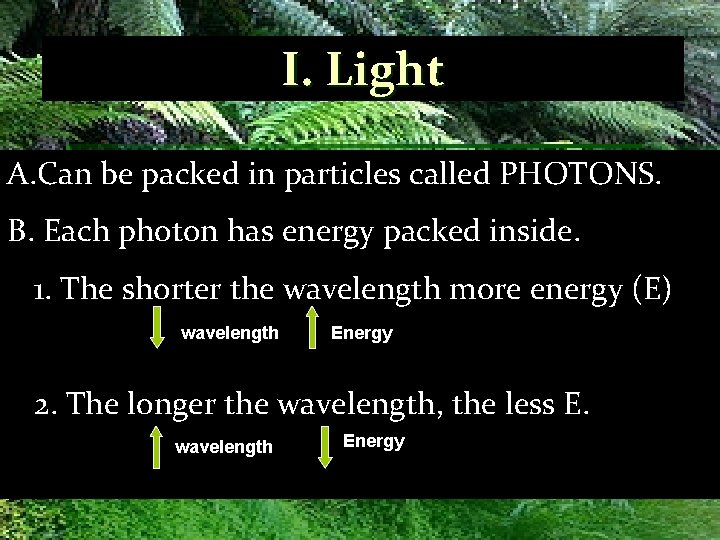
I. Light A. Can be packed in particles called PHOTONS. B. Each photon has energy packed inside. 1. The shorter the wavelength more energy (E) wavelength Energy 2. The longer the wavelength, the less E. wavelength Energy
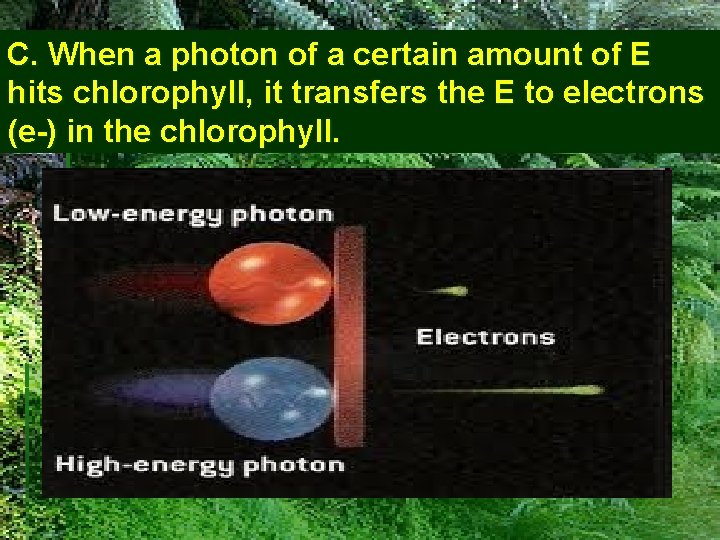
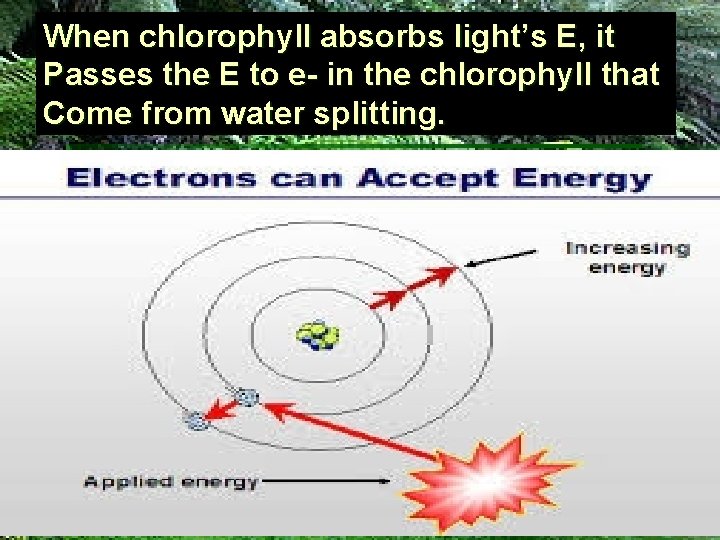
C. When a photon of a certain amount of E hits chlorophyll, it transfers the E to electrons (e-) in the chlorophyll.
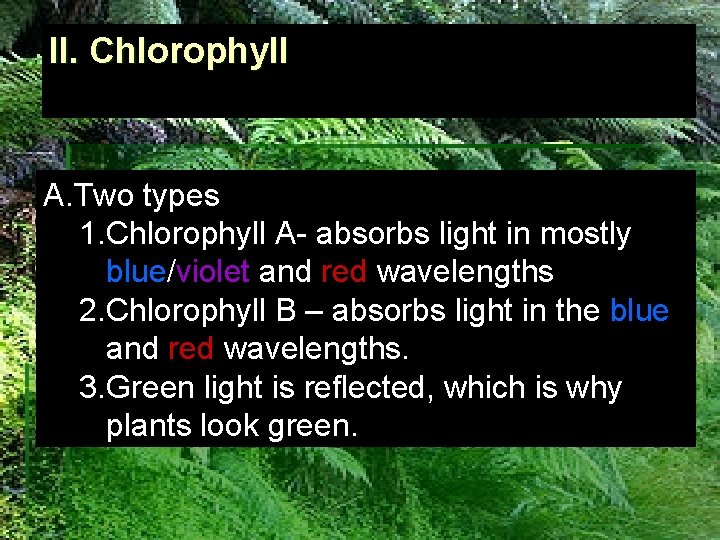
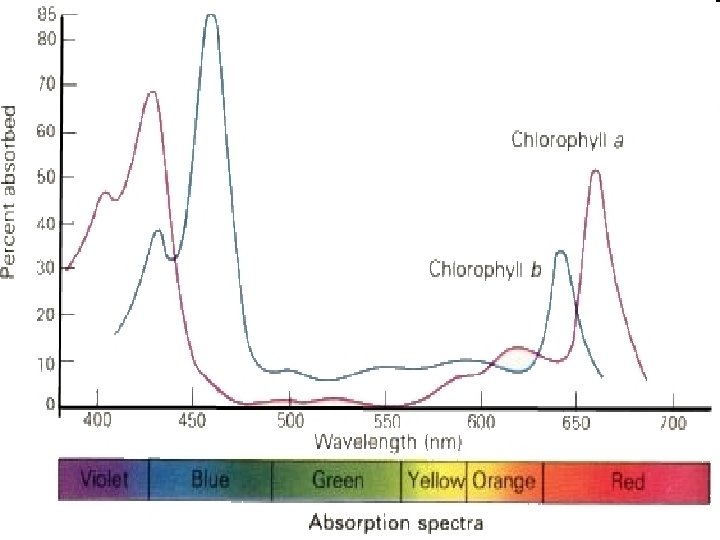
II. Chlorophyll A. Two types 1. Chlorophyll A- absorbs light in mostly blue/violet and red wavelengths 2. Chlorophyll B – absorbs light in the blue and red wavelengths. 3. Green light is reflected, which is why plants look green.
When chlorophyll absorbs light’s E, it Passes the E to e- in the chlorophyll that Come from water splitting.
III. Chloroplasts A. Organelle where PS takes place in autotrophs B. Contains chlorophyll 1. Captures the E from sunlight. 2. Transfers the E to the electrons (e-) in chlorophyll. 3. They are then called “high energy” electrons
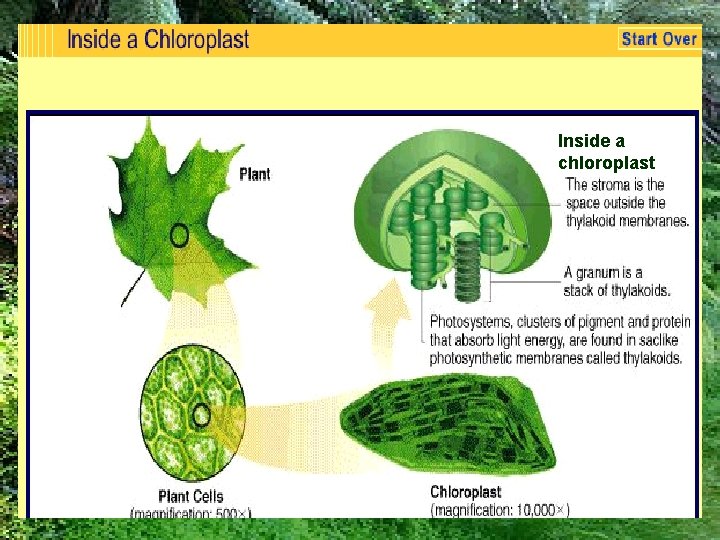
Inside a chloroplast
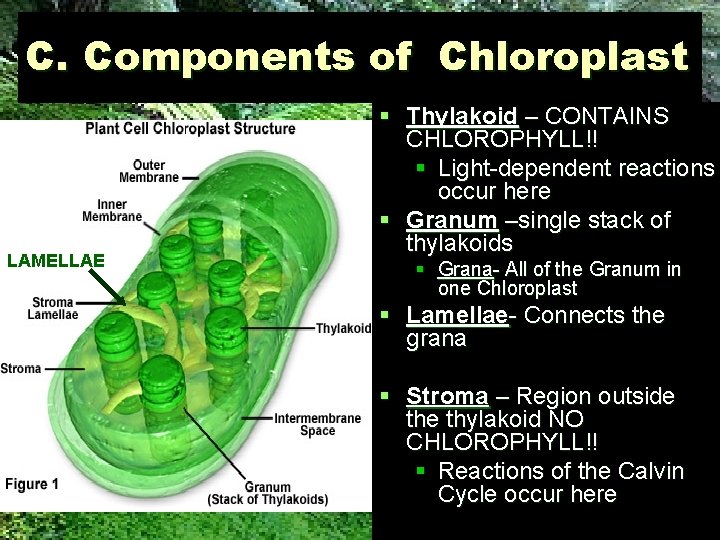
C. Components of Chloroplast LAMELLAE § Thylakoid – CONTAINS CHLOROPHYLL!! § Light-dependent reactions occur here § Granum –single stack of thylakoids § Grana- All of the Granum in one Chloroplast § Lamellae- Connects the grana § Stroma – Region outside thylakoid NO CHLOROPHYLL!! § Reactions of the Calvin Cycle occur here
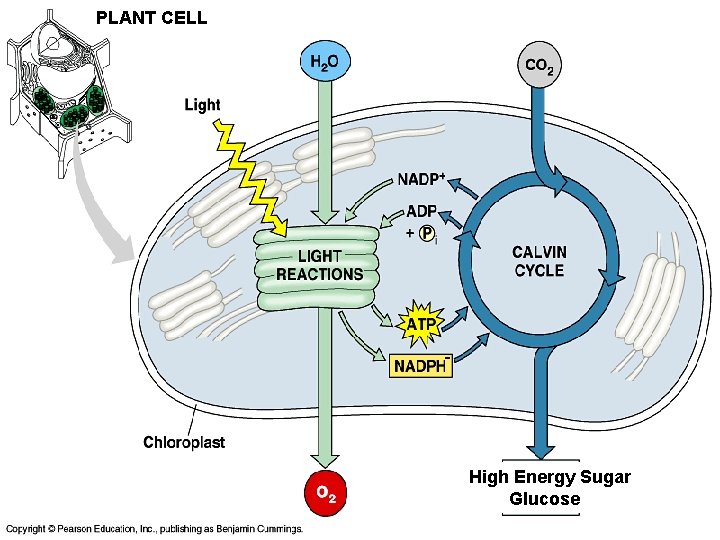
PLANT CELL - High Energy Sugar Glucose
IV. Light Dependent Reactions
A. Uses energy from sun to: 1. Make ATP- ( recharged ADP + P from Calvin cycle) used in the Calvin cycle. 2. Create NADPH- from NADP+: NADP+ comes from the Calvin cycle and it’s job is to carry the high energy electrons and the H (from water splitting) to form NADPH- 3. Oxygen gas : waste given off to environment (remember it came from the water splitting)
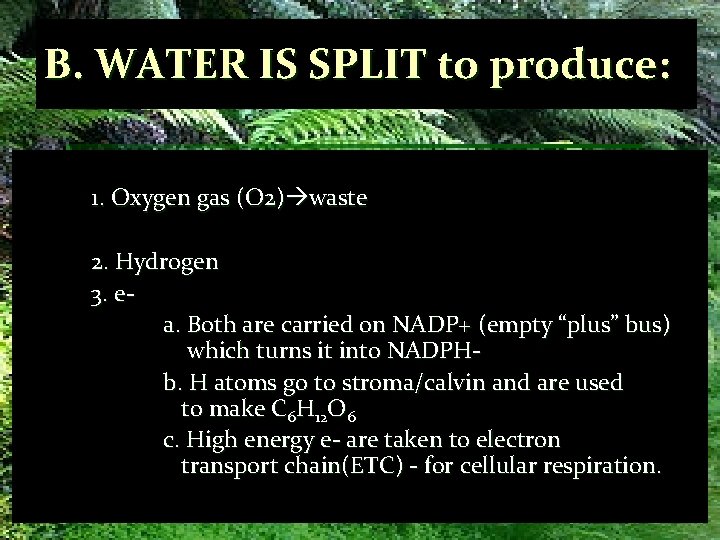
B. WATER IS SPLIT to produce: 1. Oxygen gas (O 2) waste 2. Hydrogen 3. ea. Both are carried on NADP+ (empty “plus” bus) which turns it into NADPHb. H atoms go to stroma/calvin and are used to make C 6 H 12 O 6 c. High energy e- are taken to electron transport chain(ETC) - for cellular respiration.
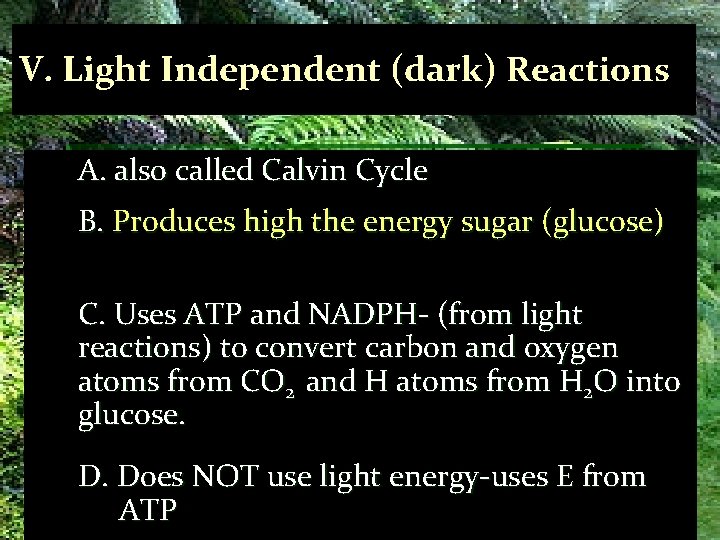
V. Light Independent (dark) Reactions A. also called Calvin Cycle B. Produces high the energy sugar (glucose) C. Uses ATP and NADPH- (from light reactions) to convert carbon and oxygen atoms from CO 2 and H atoms from H 2 O into glucose. D. Does NOT use light energy-uses E from ATP
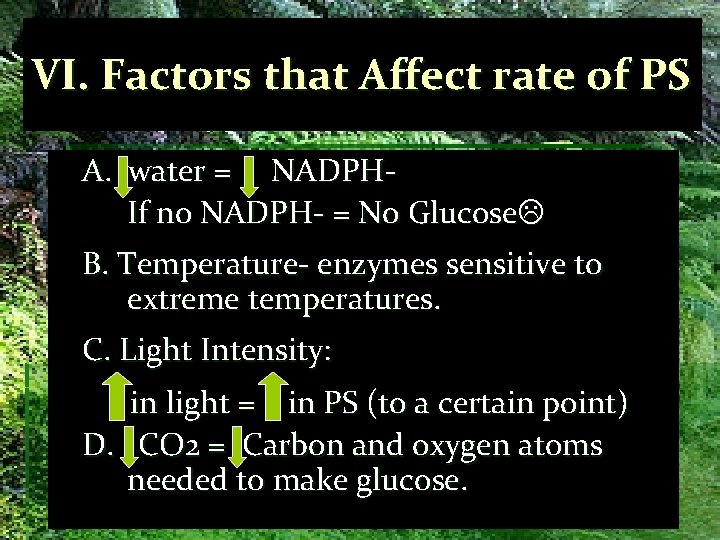
VI. Factors that Affect rate of PS A. water = NADPHIf no NADPH- = No Glucose B. Temperature- enzymes sensitive to extreme temperatures. C. Light Intensity: in light = in PS (to a certain point) D. CO 2 = Carbon and oxygen atoms needed to make glucose.
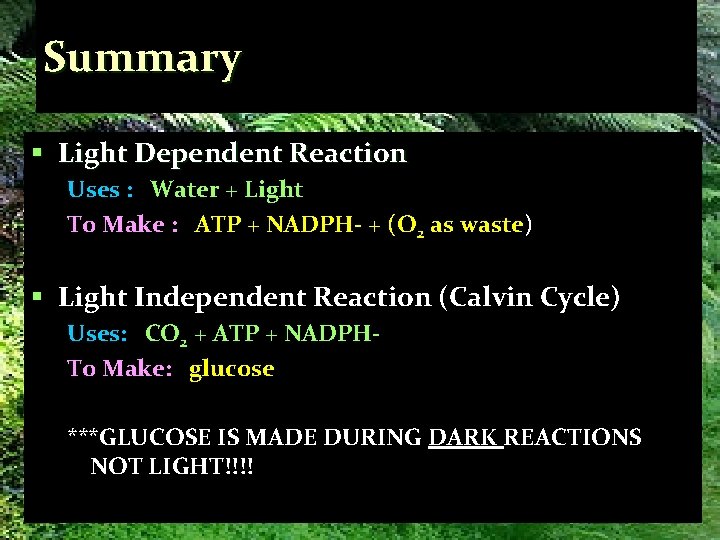
Summary § Light Dependent Reaction Uses : Water + Light To Make : ATP + NADPH- + (O 2 as waste) § Light Independent Reaction (Calvin Cycle) Uses: CO 2 + ATP + NADPHTo Make: glucose ***GLUCOSE IS MADE DURING DARK REACTIONS NOT LIGHT!!!!