
Chapter 7 The Nervous System Neurons and Synapses
- Slides: 26
Chapter 7 The Nervous System: Neurons and Synapses
Outline 1. Neuron and Glial cells (7. 1) 2. Electroactivity (7. 2) 3. The synapse (7. 3) 4. Neurotransmitter (7. 4 -7. 6) 5. Synaptic integration (7. 7)
II. Electrical Activity in Axons
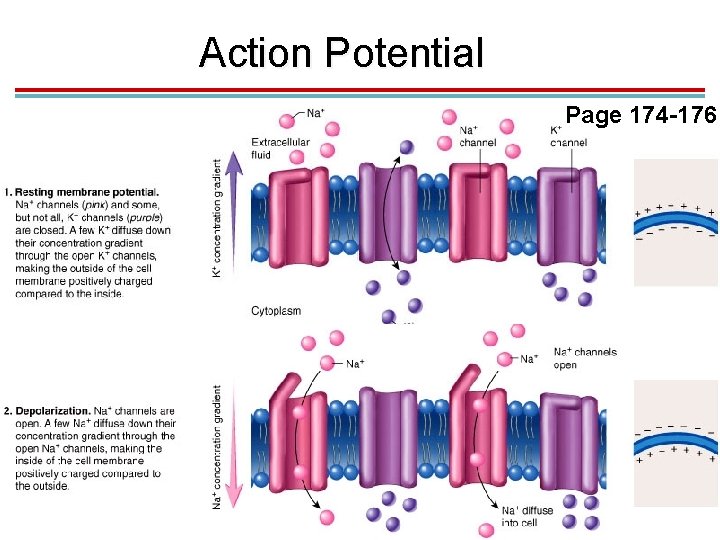
Resting Membrane Potential • Neurons have a resting potential of −-70 m. V. Page 172 – Established by large negative molecules inside the cell – Na+/K+ pumps – Permeability of the membrane to ions • At rest, there is a high concentration of K+ inside the cell and Na+ outside the cell.
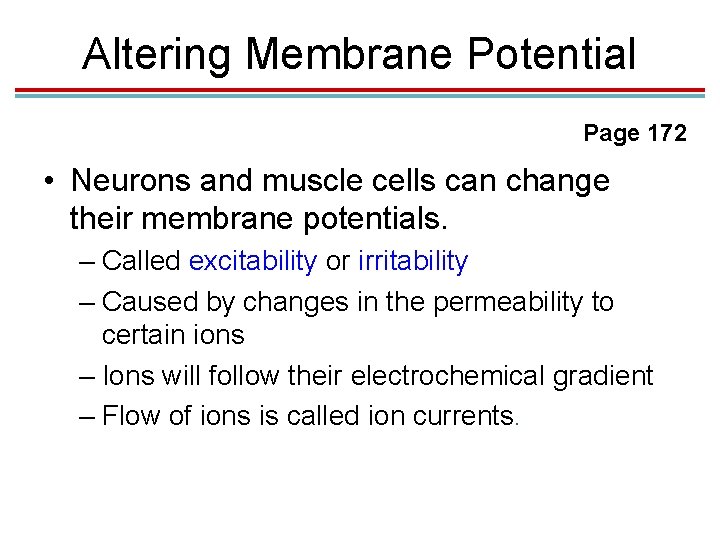
Altering Membrane Potential Page 172 • Neurons and muscle cells can change their membrane potentials. – Called excitability or irritability – Caused by changes in the permeability to certain ions – Ions will follow their electrochemical gradient – Flow of ions is called ion currents.
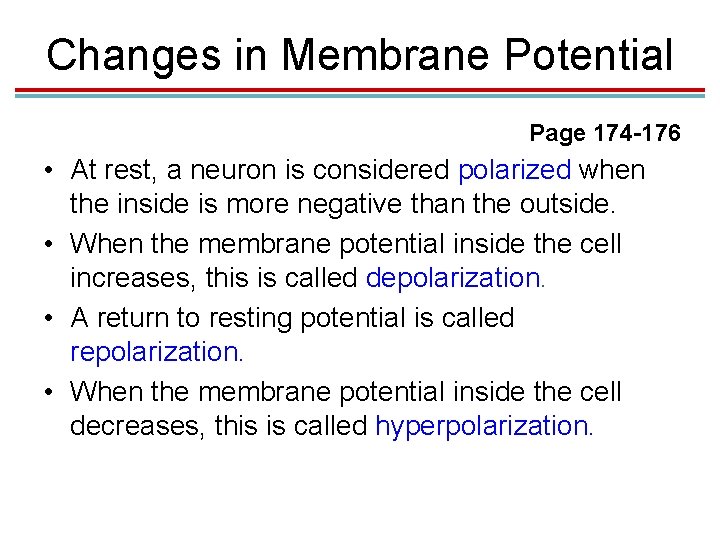
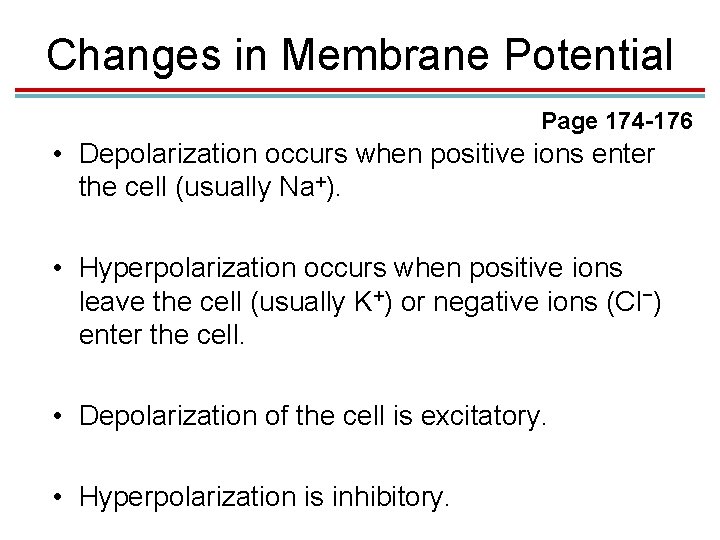
Changes in Membrane Potential Page 174 -176 • At rest, a neuron is considered polarized when the inside is more negative than the outside. • When the membrane potential inside the cell increases, this is called depolarization. • A return to resting potential is called repolarization. • When the membrane potential inside the cell decreases, this is called hyperpolarization.
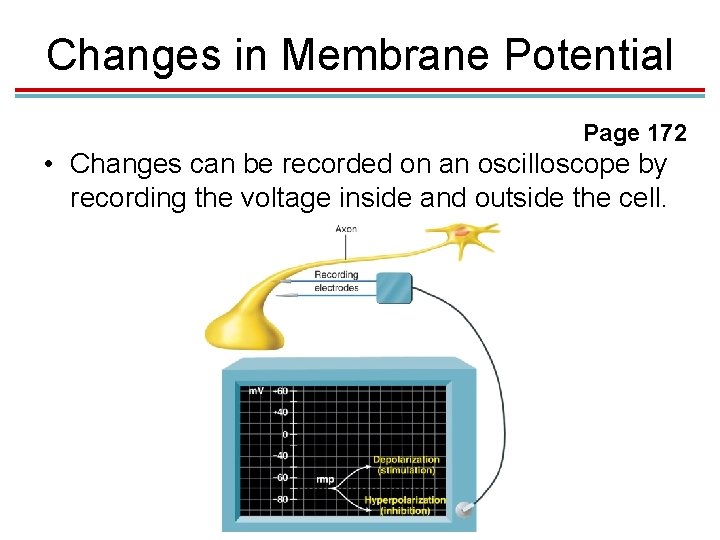
Changes in Membrane Potential Page 172 • Changes can be recorded on an oscilloscope by recording the voltage inside and outside the cell.
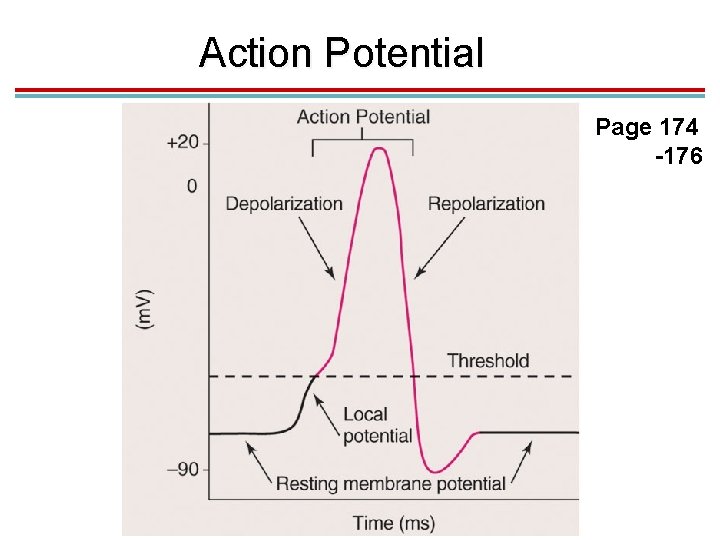
Action Potential Page 174 -176
Changes in Membrane Potential Page 174 -176 • Depolarization occurs when positive ions enter the cell (usually Na+). • Hyperpolarization occurs when positive ions leave the cell (usually K+) or negative ions (Cl−) enter the cell. • Depolarization of the cell is excitatory. • Hyperpolarization is inhibitory.
Action Potential Page 174 -176
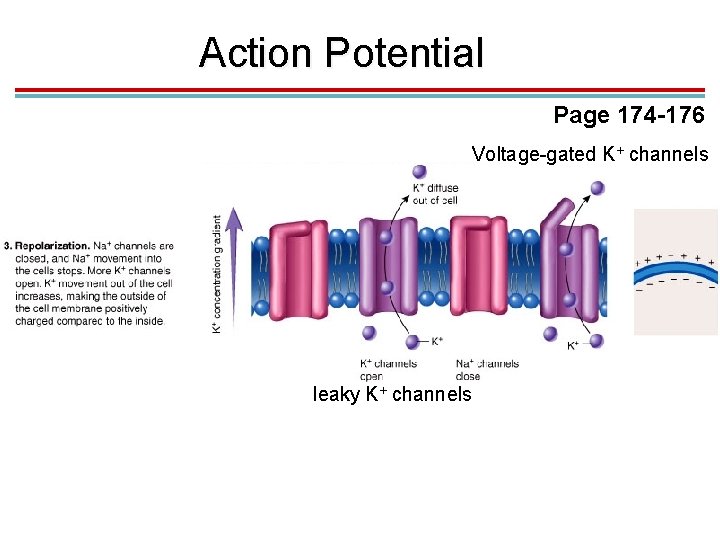
Action Potential Page 174 -176 Voltage-gated K+ channels leaky K+ channels
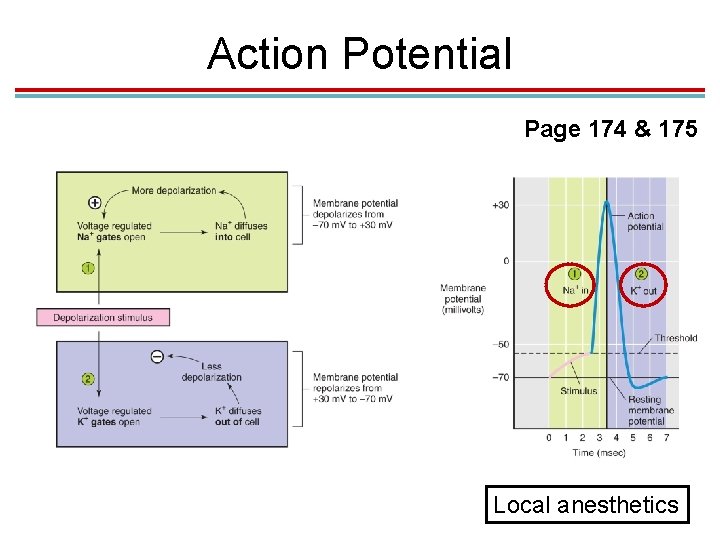
Action Potential Page 174 & 175 Local anesthetics
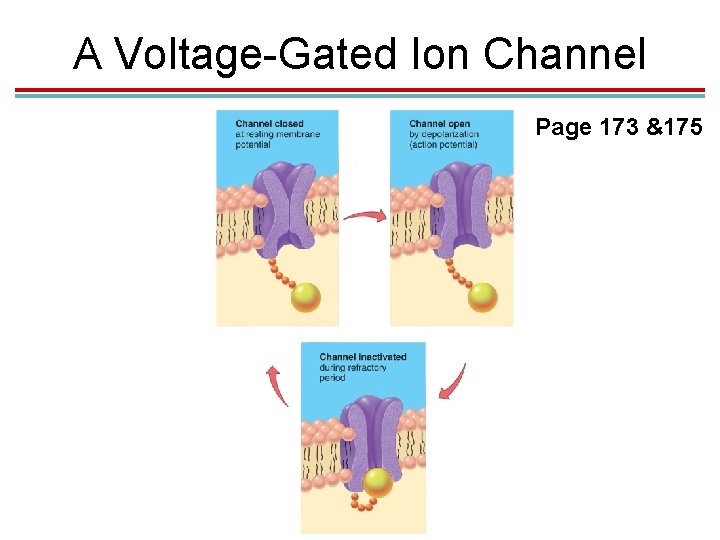
Ion Gating in Axons Page 174 -176 • Changes in membrane potential are controlled by changes in the flow of ions through channels. – K+ has two types of channels: • Not gated (always open); sometimes called K+ leakage channels • Voltage-gated K+ channels; open when a particular membrane potential is reached; closed at resting potential – Na+ has only voltage-gated channels that are closed at rest; the membrane is less permeable to Na+ at rest.
Voltage-Gated + Na Channels Page 174 -176 -These channels open if the membrane potential depolarizes to − 55 m. V. -This is called the threshold. -Sodium rushes in due to the electrochemical gradient. -Membrane potential climbs toward sodium equilibrium potential. -These channels are deactivated at +30 m. V.
Voltage-Gated + K Channels -At around +30 m. V, voltage-gated K+ channels open, and K+ rushes out of the cell following the electrochemical gradient. -This makes the cell repolarize back toward the potassium equilibrium potential.
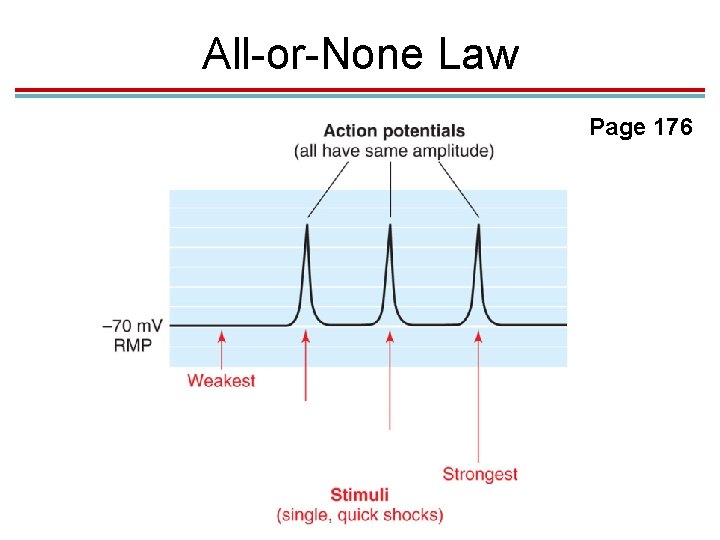
All-or-None Law Page 176
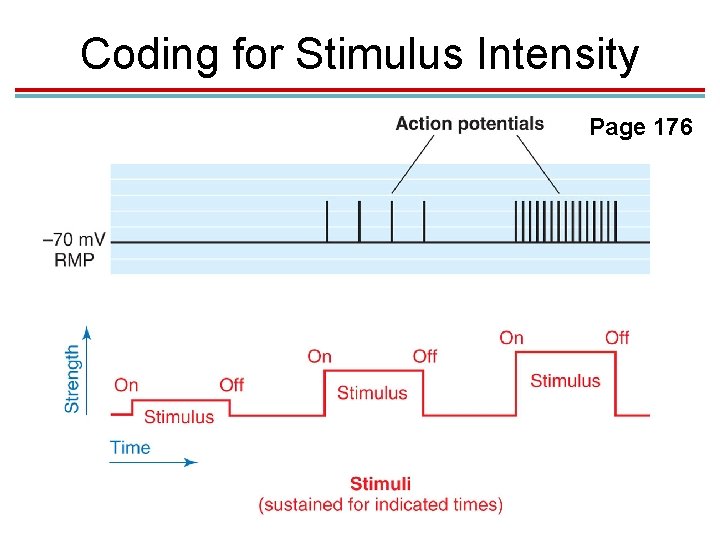
Coding for Stimulus Intensity Page 176
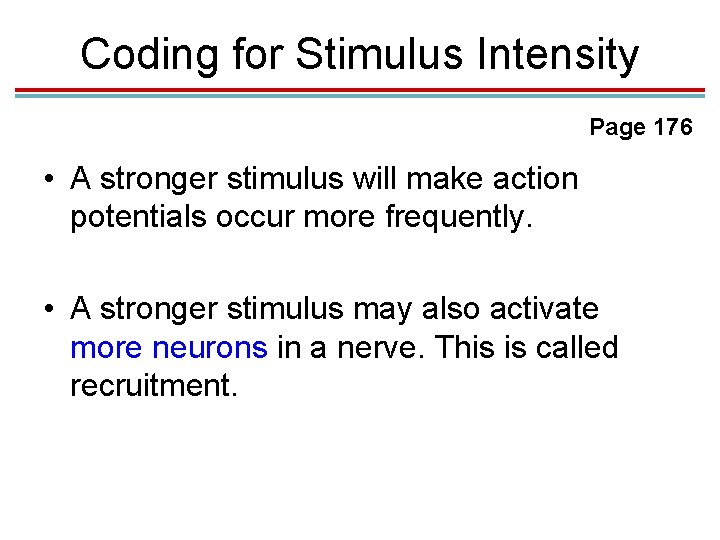
Coding for Stimulus Intensity Page 176 • A stronger stimulus will make action potentials occur more frequently. • A stronger stimulus may also activate more neurons in a nerve. This is called recruitment.
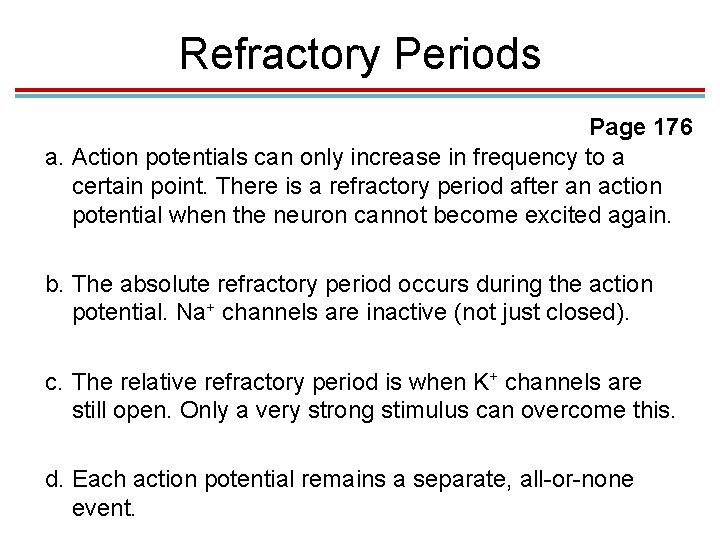
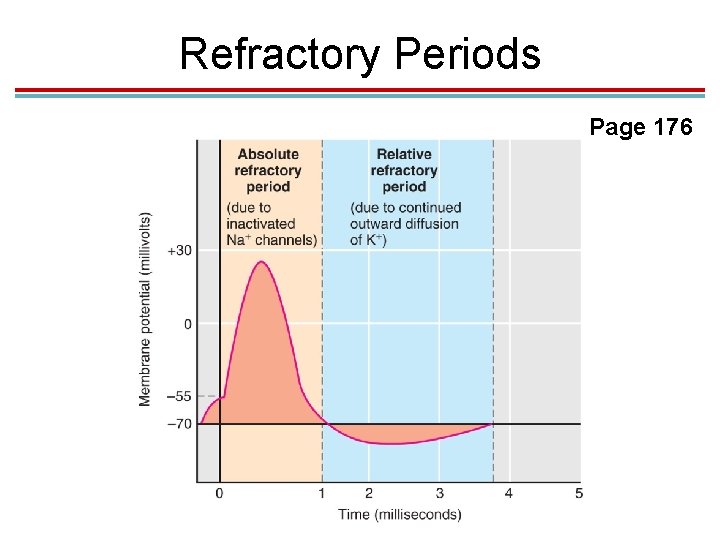
Refractory Periods Page 176 a. Action potentials can only increase in frequency to a certain point. There is a refractory period after an action potential when the neuron cannot become excited again. b. The absolute refractory period occurs during the action potential. Na+ channels are inactive (not just closed). c. The relative refractory period is when K+ channels are still open. Only a very strong stimulus can overcome this. d. Each action potential remains a separate, all-or-none event.
Refractory Periods Page 176
A Voltage-Gated Ion Channel Page 173 &175
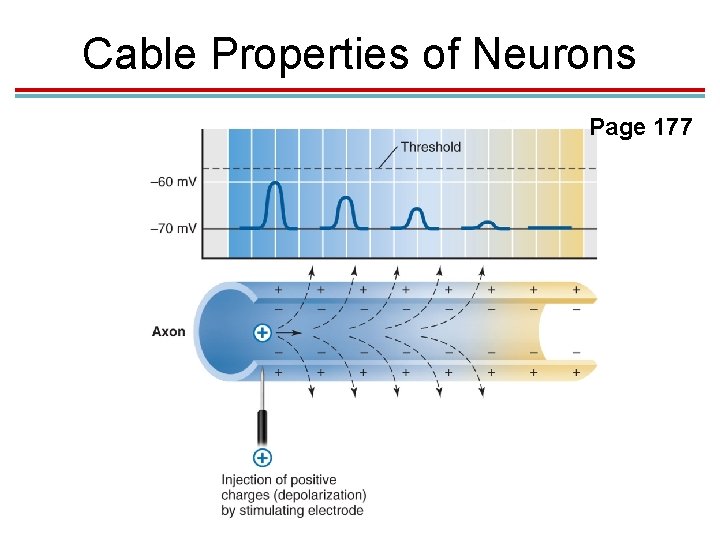
Cable Properties of Neurons Page 177
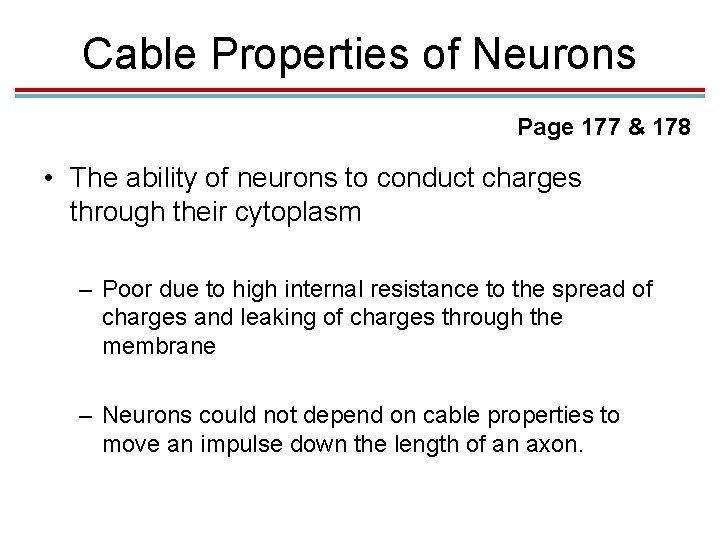
Cable Properties of Neurons Page 177 & 178 • The ability of neurons to conduct charges through their cytoplasm – Poor due to high internal resistance to the spread of charges and leaking of charges through the membrane – Neurons could not depend on cable properties to move an impulse down the length of an axon.
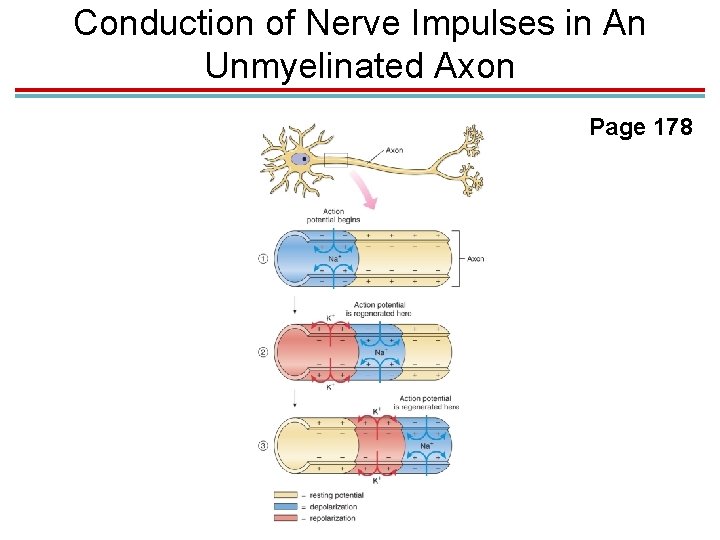
Conduction of Nerve Impulses in An Unmyelinated Axon Page 178
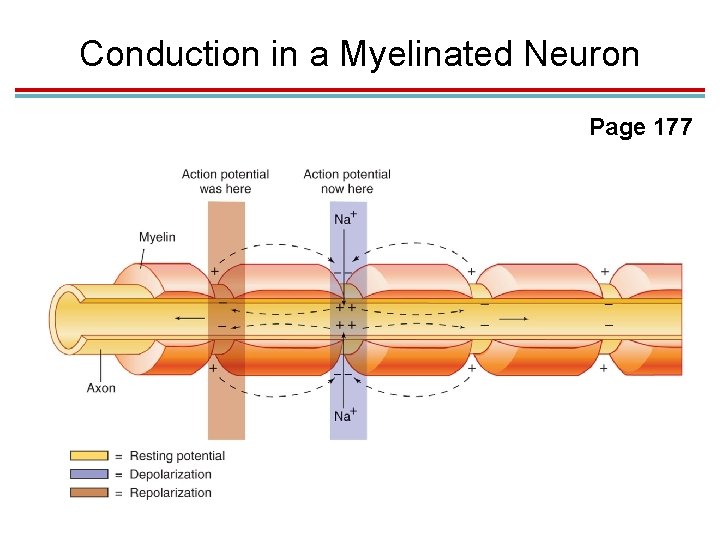
Conduction in a Myelinated Neuron Page 177
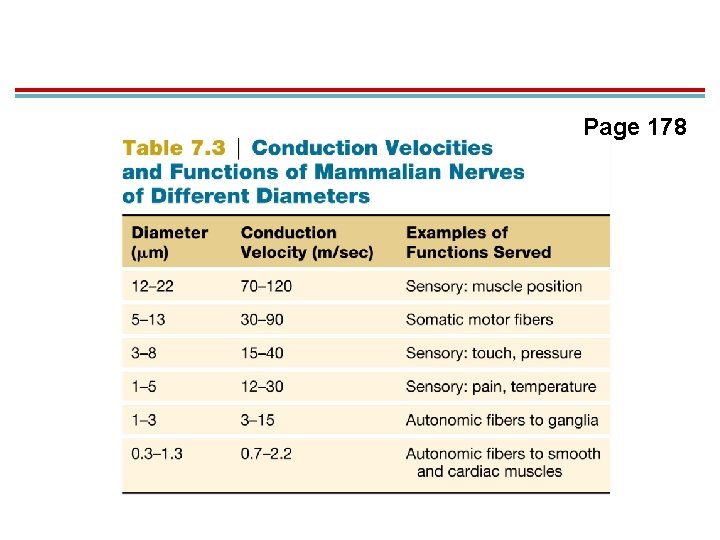
Page 178