
Chapter 7 The Nervous System Copyright 2006 Pearson
- Slides: 22
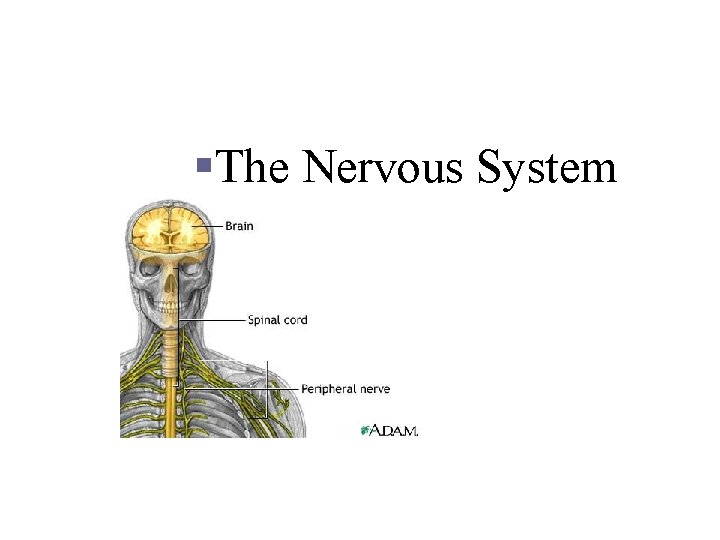
Chapter 7 §The Nervous System Copyright © 2006 Pearson Education, Inc. , publishing as Benjamin Cummings
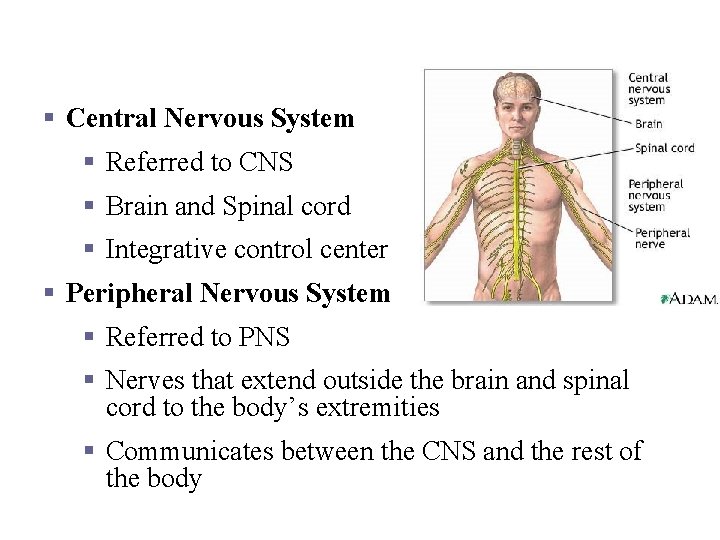
Organization of the Nervous System § Central Nervous System § Referred to CNS § Brain and Spinal cord § Integrative control center § Peripheral Nervous System § Referred to PNS § Nerves that extend outside the brain and spinal cord to the body’s extremities § Communicates between the CNS and the rest of the body Copyright © 2006 Pearson Education, Inc. , publishing as Benjamin Cummings
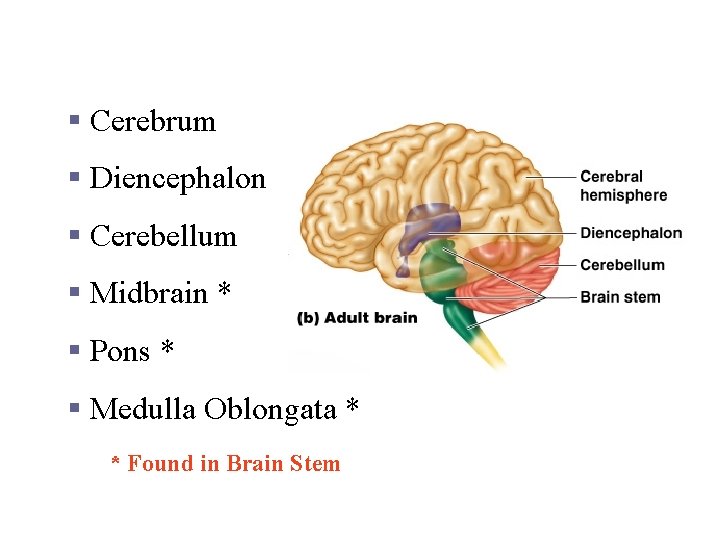
Regions of the Brain § Cerebrum § Diencephalon § Cerebellum § Midbrain * § Pons * § Medulla Oblongata * * Found in Brain Stem Copyright © 2006 Pearson Education, Inc. , publishing as Benjamin Cummings
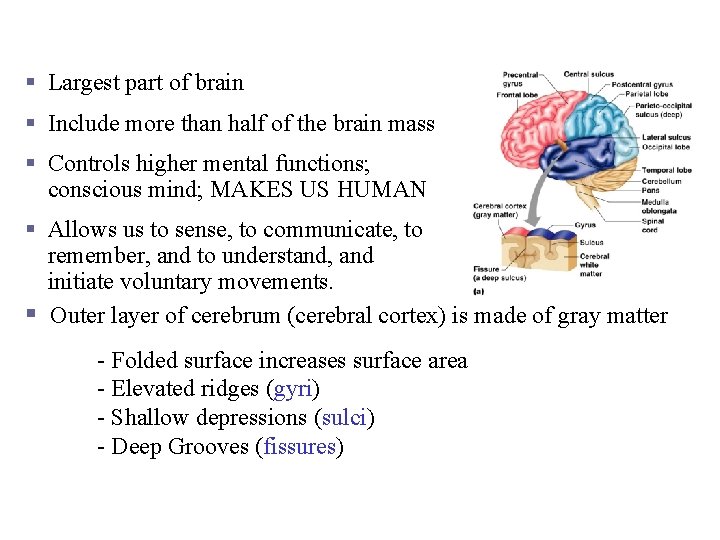
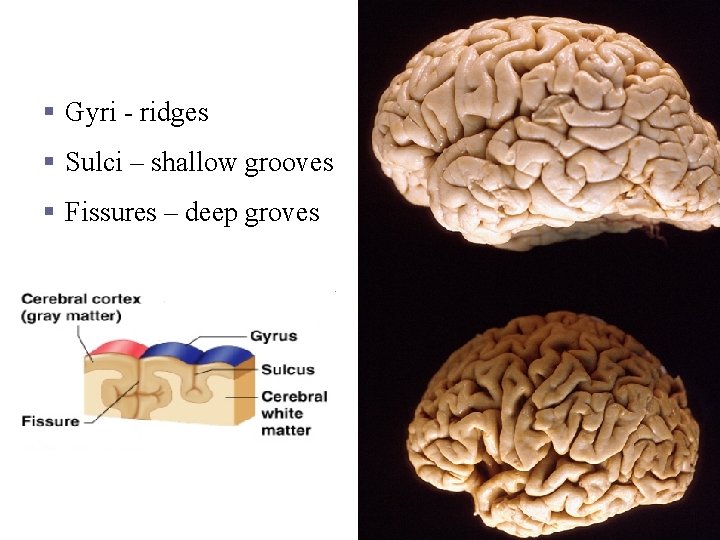
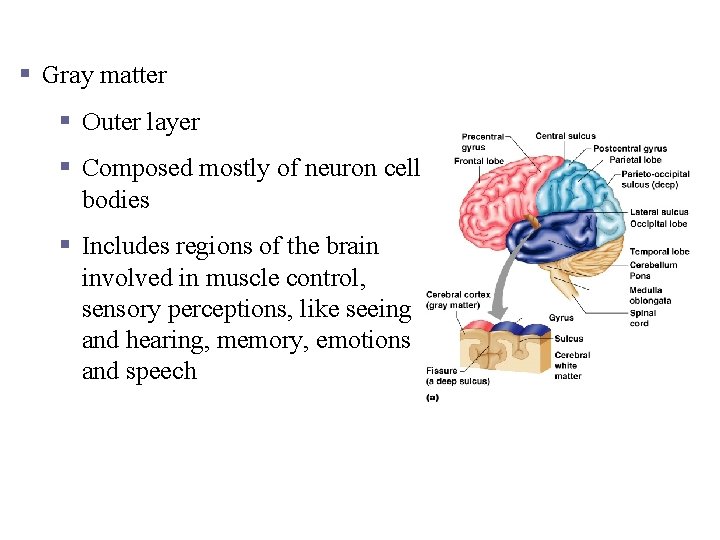
Cerebral Hemispheres (Cerebrum) § Largest part of brain § Include more than half of the brain mass § Controls higher mental functions; conscious mind; MAKES US HUMAN § Allows us to sense, to communicate, to remember, and to understand, and initiate voluntary movements. § Outer layer of cerebrum (cerebral cortex) is made of gray matter - Folded surface increases surface area - Elevated ridges (gyri) - Shallow depressions (sulci) - Deep Grooves (fissures) Copyright © 2006 Pearson Education, Inc. , publishing as Benjamin Cummings
Cortex Roadmap § Gyri - ridges § Sulci – shallow grooves § Fissures – deep groves Copyright © 2006 Pearson Education, Inc. , publishing as Benjamin Cummings
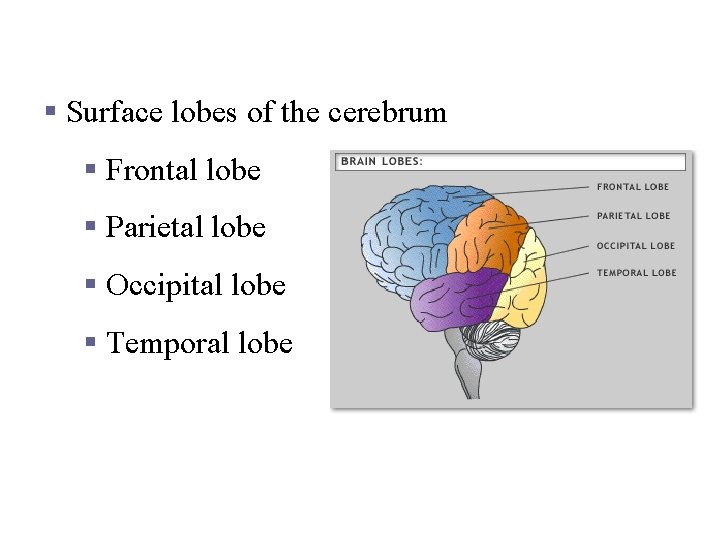
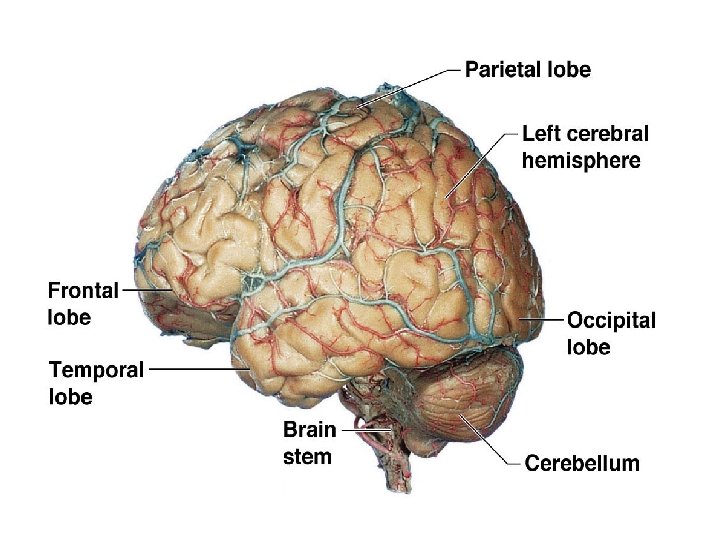
Lobes of the Cerebrum § Surface lobes of the cerebrum § Frontal lobe § Parietal lobe § Occipital lobe § Temporal lobe Copyright © 2006 Pearson Education, Inc. , publishing as Benjamin Cummings
Copyright © 2006 Pearson Education, Inc. , publishing as Benjamin Cummings
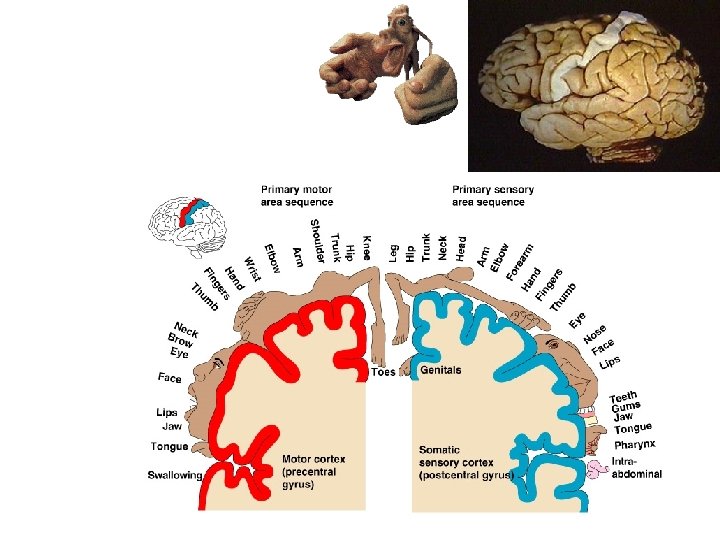
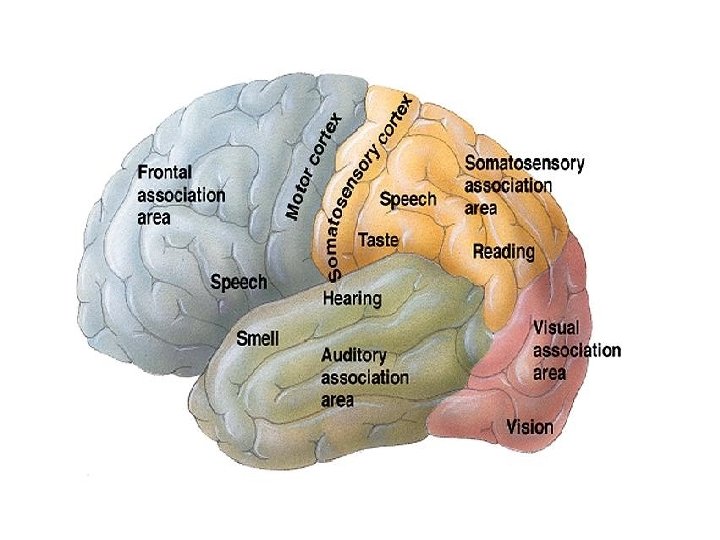
Sensory and Motor Areas of the Cerebral Cortex Copyright © 2006 Pearson Education, Inc. , publishing as Benjamin Cummings
Specialized Areas of the Cerebrum Copyright © 2006 Pearson Education, Inc. , publishing as Benjamin Cummings
Layers of the Cerebrum § Gray matter § Outer layer § Composed mostly of neuron cell bodies § Includes regions of the brain involved in muscle control, sensory perceptions, like seeing and hearing, memory, emotions and speech Copyright © 2006 Pearson Education, Inc. , publishing as Benjamin Cummings
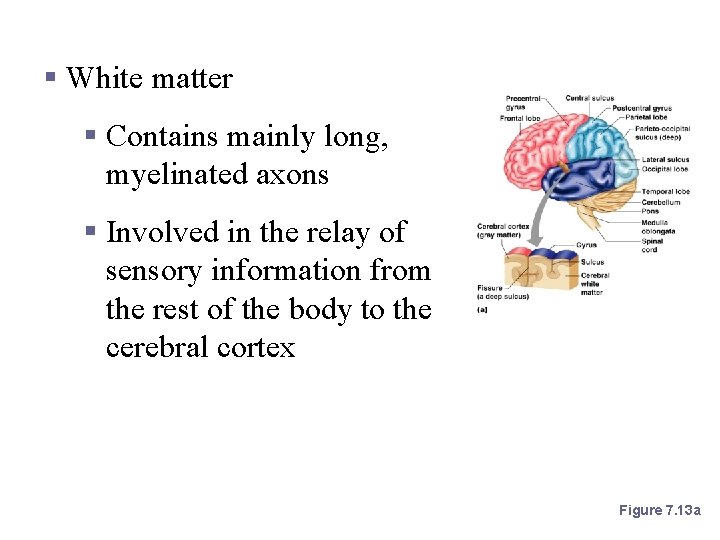
Layers of the Cerebrum § White matter § Contains mainly long, myelinated axons § Involved in the relay of sensory information from the rest of the body to the cerebral cortex Figure 7. 13 a Copyright © 2006 Pearson Education, Inc. , publishing as Benjamin Cummings
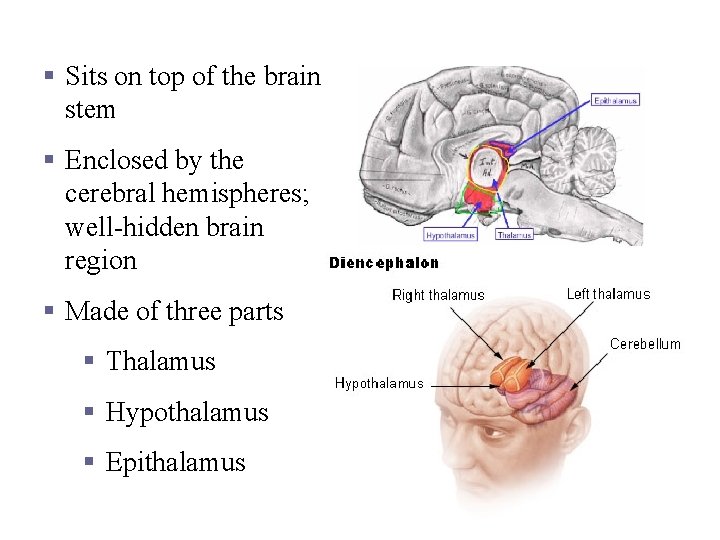
Diencephalon § Sits on top of the brain stem § Enclosed by the cerebral hemispheres; well-hidden brain region § Made of three parts § Thalamus § Hypothalamus § Epithalamus Copyright © 2006 Pearson Education, Inc. , publishing as Benjamin Cummings
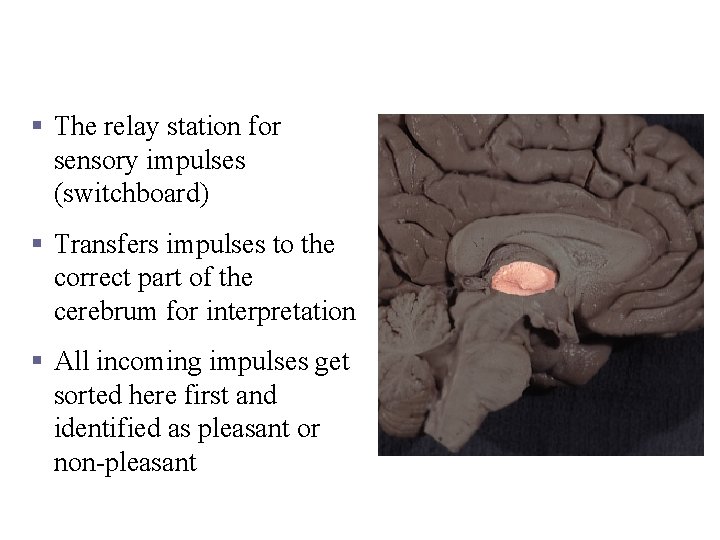
Thalamus § The relay station for sensory impulses (switchboard) § Transfers impulses to the correct part of the cerebrum for interpretation § All incoming impulses get sorted here first and identified as pleasant or non-pleasant Copyright © 2006 Pearson Education, Inc. , publishing as Benjamin Cummings
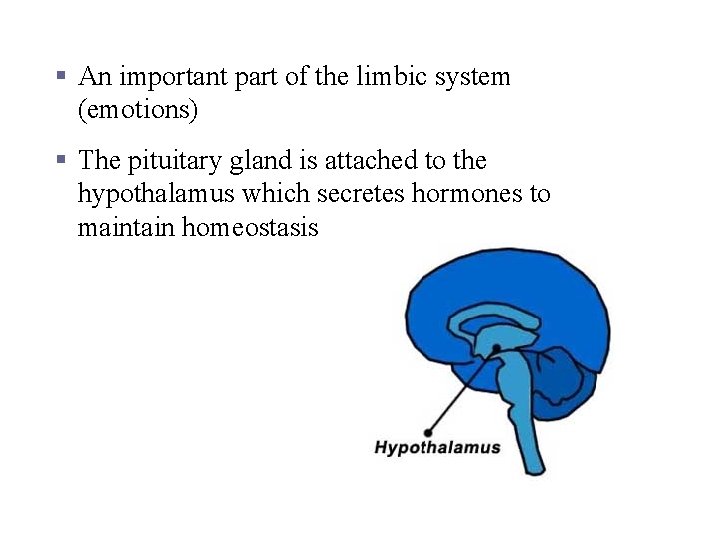
Hypothalamus § Under the thalamus § Contains brain stem and controls organs by maintaining homeostasis § Important autonomic nervous system center § Helps regulate body temperature § Controls water balance § Regulates metabolism § An important part of the limbic system (emotions) § The pituitary gland is attached to the hypothalamus Copyright © 2006 Pearson Education, Inc. , publishing as Benjamin Cummings
Hypothalamus § An important part of the limbic system (emotions) § The pituitary gland is attached to the hypothalamus which secretes hormones to maintain homeostasis Copyright © 2006 Pearson Education, Inc. , publishing as Benjamin Cummings
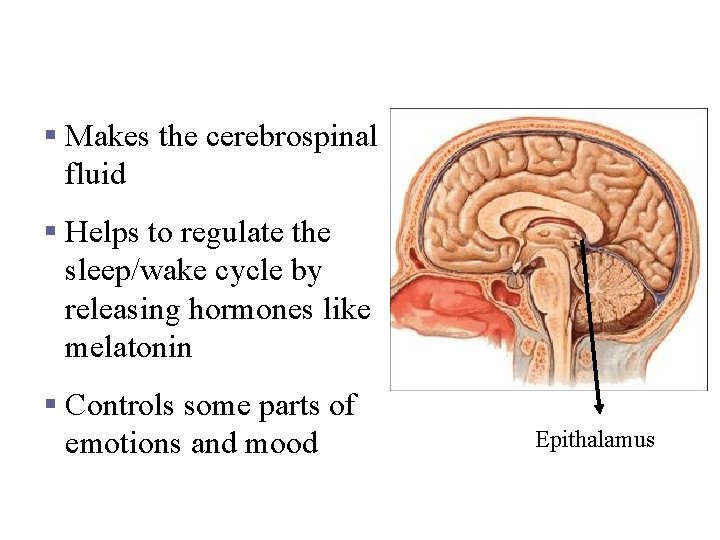
Epithalamus § Makes the cerebrospinal fluid § Helps to regulate the sleep/wake cycle by releasing hormones like melatonin § Controls some parts of emotions and mood Copyright © 2006 Pearson Education, Inc. , publishing as Benjamin Cummings Epithalamus
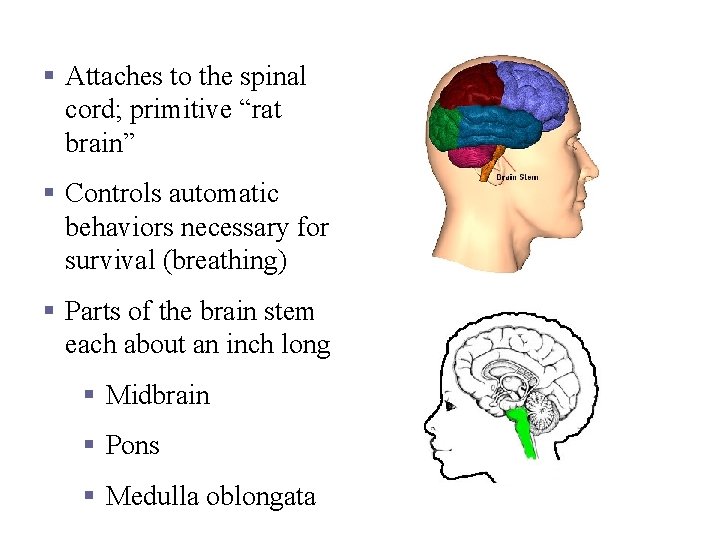
Brain Stem § Attaches to the spinal cord; primitive “rat brain” § Controls automatic behaviors necessary for survival (breathing) § Parts of the brain stem each about an inch long § Midbrain § Pons § Medulla oblongata Copyright © 2006 Pearson Education, Inc. , publishing as Benjamin Cummings
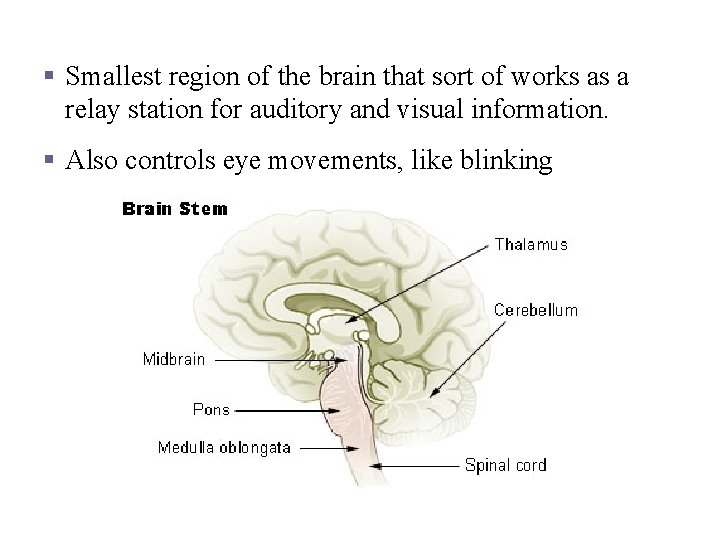
Midbrain § Smallest region of the brain that sort of works as a relay station for auditory and visual information. § Also controls eye movements, like blinking Copyright © 2006 Pearson Education, Inc. , publishing as Benjamin Cummings
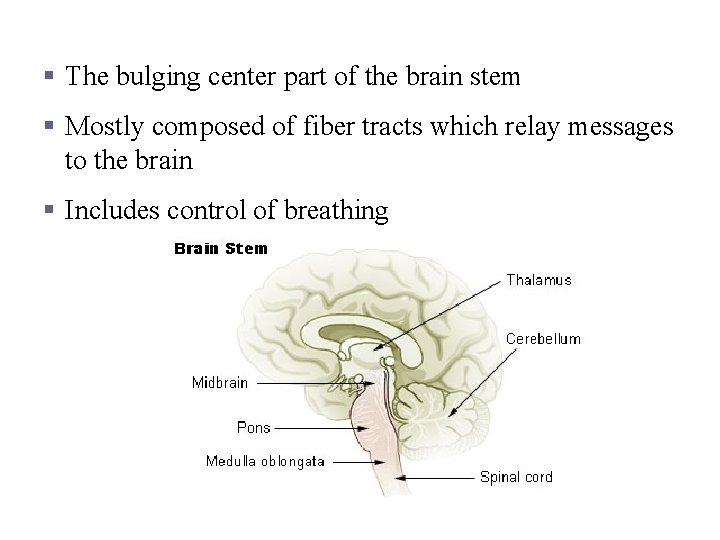
Pons § The bulging center part of the brain stem § Mostly composed of fiber tracts which relay messages to the brain § Includes control of breathing Copyright © 2006 Pearson Education, Inc. , publishing as Benjamin Cummings
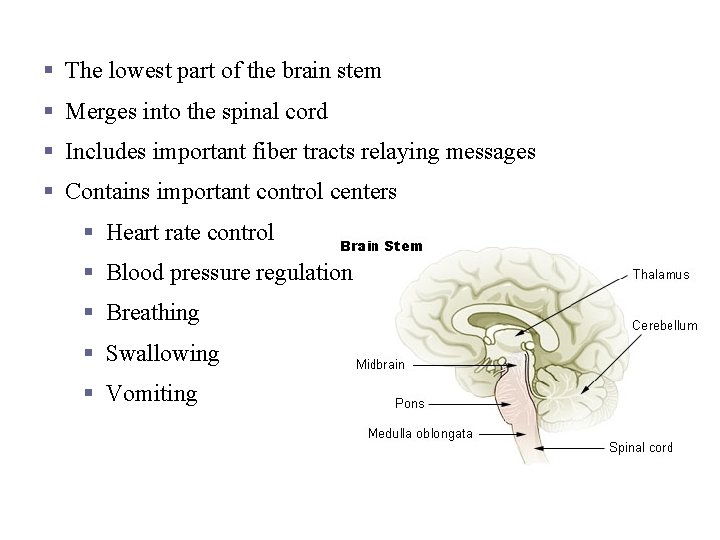
Medulla Oblongata § The lowest part of the brain stem § Merges into the spinal cord § Includes important fiber tracts relaying messages § Contains important control centers § Heart rate control § Blood pressure regulation § Breathing § Swallowing § Vomiting Copyright © 2006 Pearson Education, Inc. , publishing as Benjamin Cummings
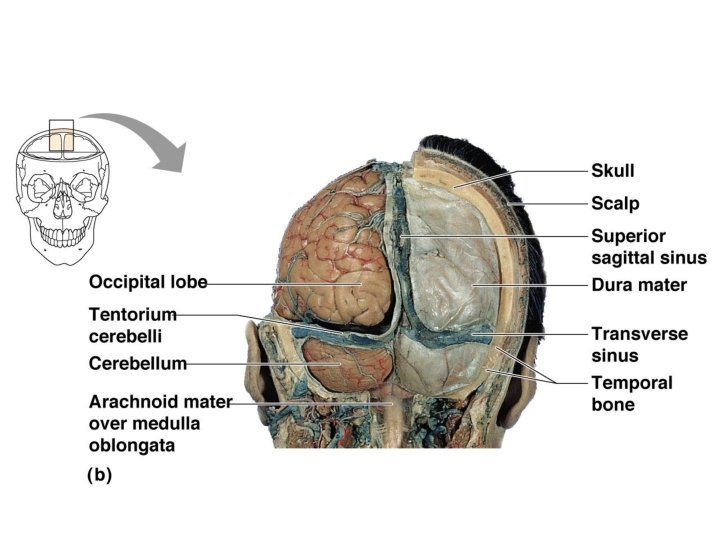
Cerebellum § contains ~70% of all the brain's neurons; yet is only 10% of the volume of the brain! § contributes to precise timing of skeletal muscle activity (i. e. walking, running or standing on your hands) § controls our balance and equilibrium § Doesn’t function well under influence of alcohol § Works like ‘auto pilot’ – monitors body position and amount of tension in body parts Copyright © 2006 Pearson Education, Inc. , publishing as Benjamin Cummings
Cerebellum and other brain parts Copyright © 2006 Pearson Education, Inc. , publishing as Benjamin Cummings