
Chapter 7 The Digestive System Spelling Words n
- Slides: 59
Chapter 7 The Digestive System
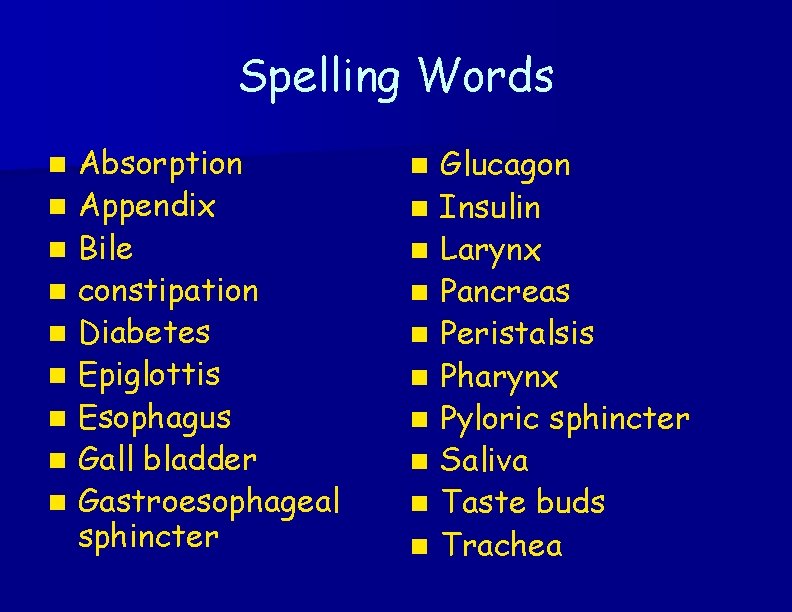
Spelling Words n n n n n Absorption Appendix Bile constipation Diabetes Epiglottis Esophagus Gall bladder Gastroesophageal sphincter n n n n n Glucagon Insulin Larynx Pancreas Peristalsis Pharynx Pyloric sphincter Saliva Taste buds Trachea
Why do we need energy?
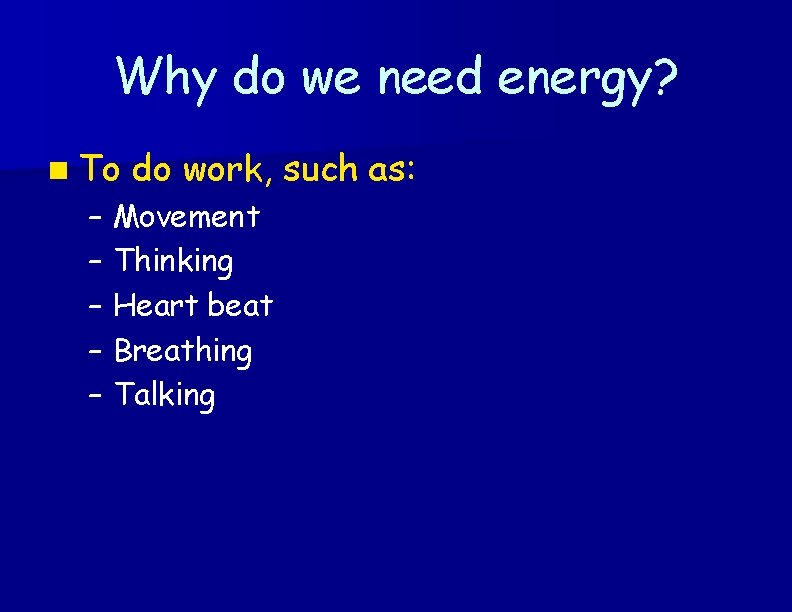
Why do we need energy? n To – – – do work, such as: Movement Thinking Heart beat Breathing Talking
What gives us energy?
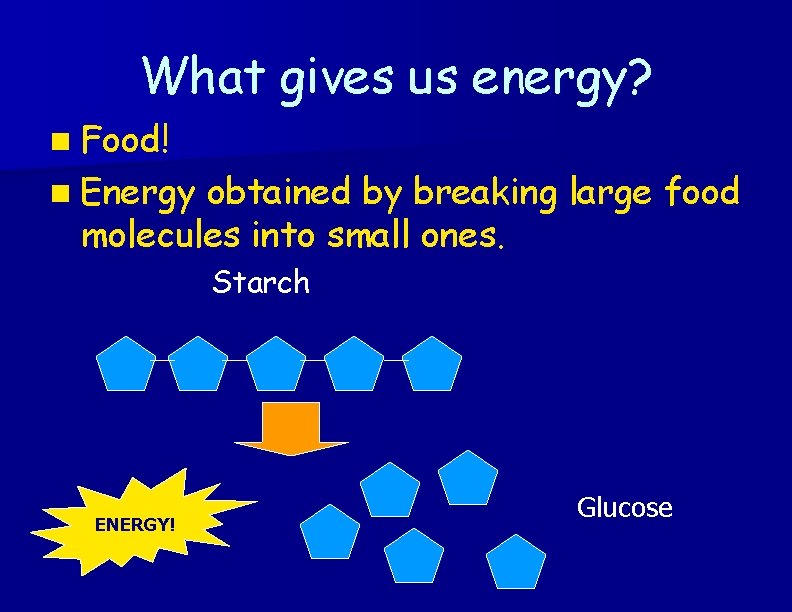
What gives us energy? n Food! n Energy obtained by breaking large food molecules into small ones. Starch ENERGY! Glucose
Where do we store energy?
Where do we store energy? n Fat (what tissue is this? ? ? ) n Glycogen (a carbohydrate)
What are the functions of the Digestive System?
What are the functions of the Digestive System? n Take in food n Break food molecules into smaller ones n Move molecules into bloodstream n Convert molecules into fat or glycogen n Detoxify food n Eliminate undigested food
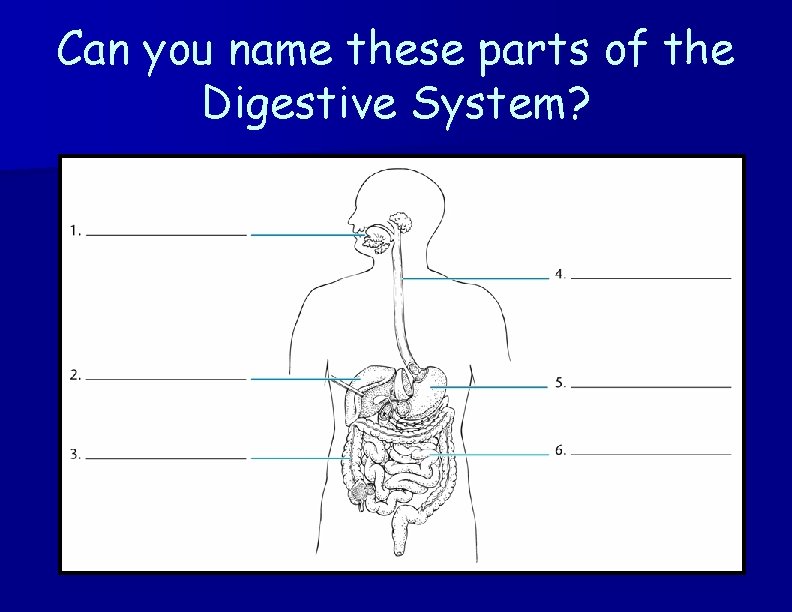
Can you name these parts of the Digestive System?
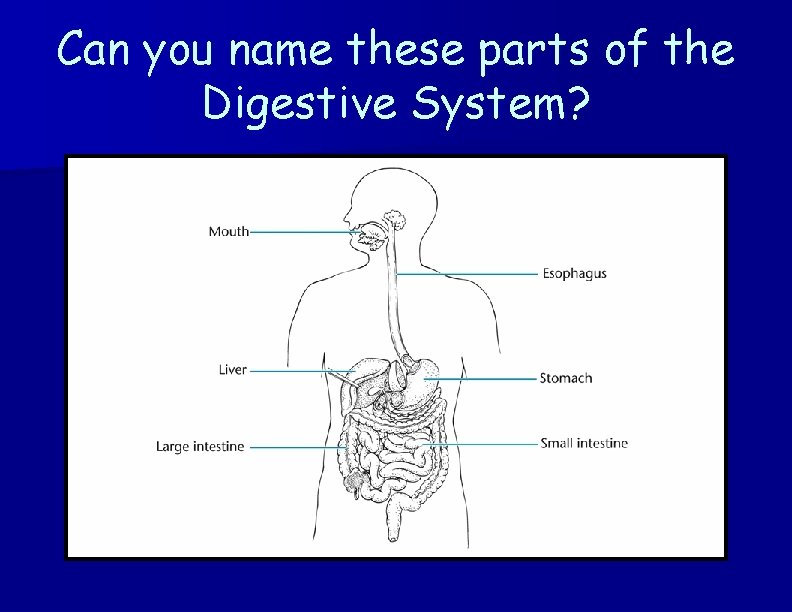
Can you name these parts of the Digestive System? Oral cavity (mouth) Esophagus Liver Large Intestine Stomach Small Intestine
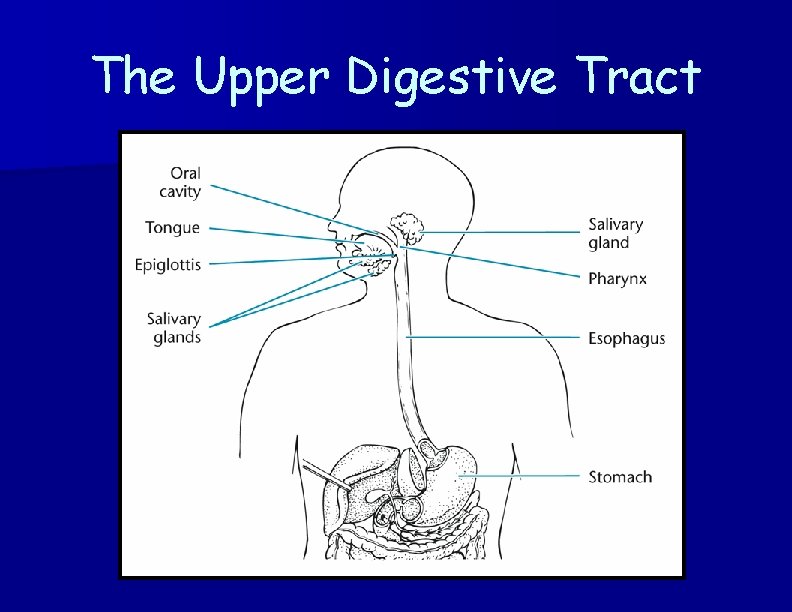
Path of Food…Upper Tract n Oral Cavity n Pharynx n Esophagus n Stomach
The Upper Digestive Tract
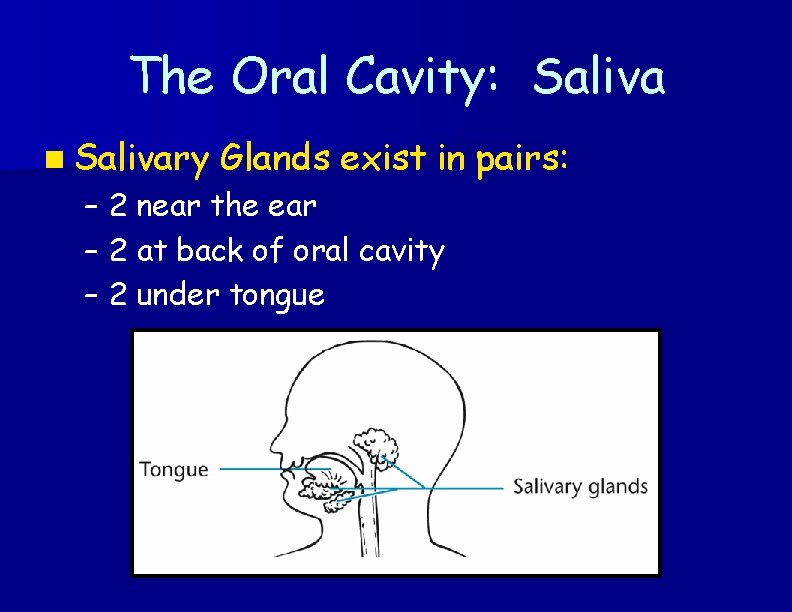
The Oral Cavity n Saliva & Salivary Glands n Tongue & Taste Buds n Teeth
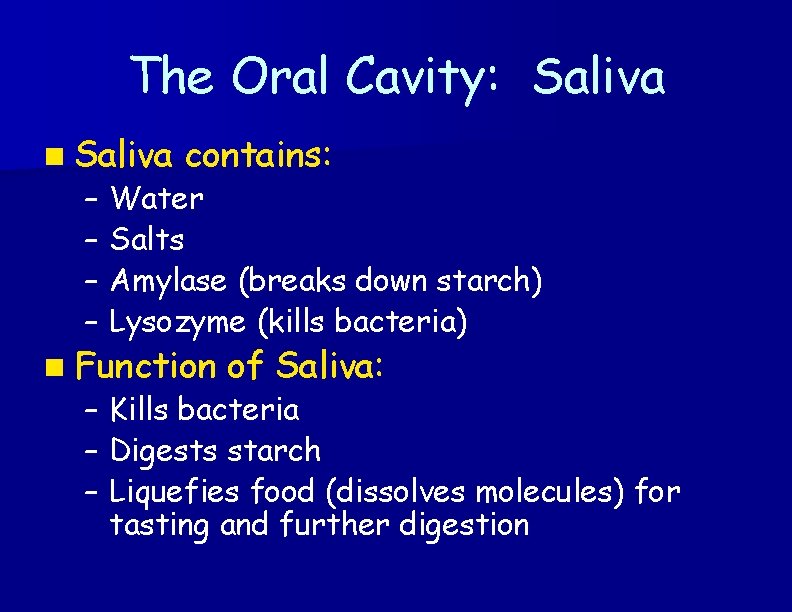
The Oral Cavity: Saliva n Saliva – – contains: Water Salts Amylase (breaks down starch) Lysozyme (kills bacteria) n Function of Saliva: – Kills bacteria – Digests starch – Liquefies food (dissolves molecules) for tasting and further digestion
The Oral Cavity: Saliva n Salivary Glands exist in pairs: – 2 near the ear – 2 at back of oral cavity – 2 under tongue
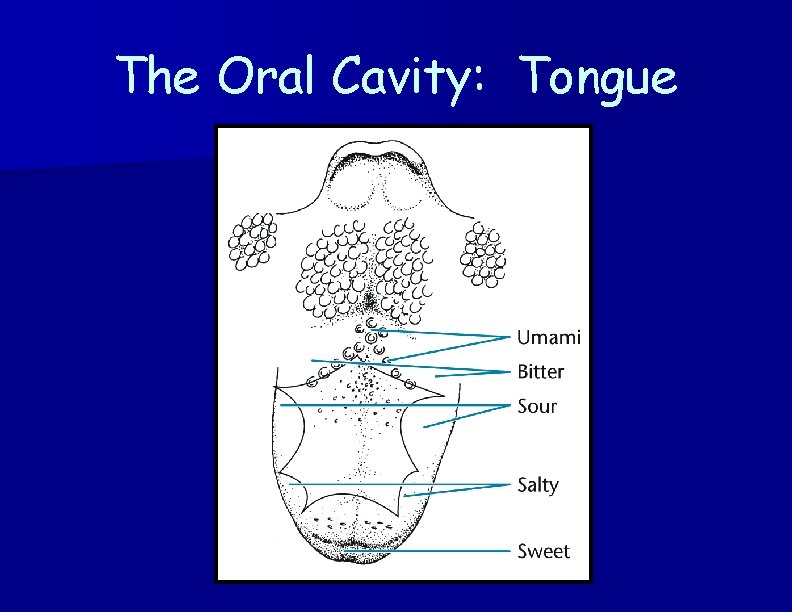
The Oral Cavity: Tongue
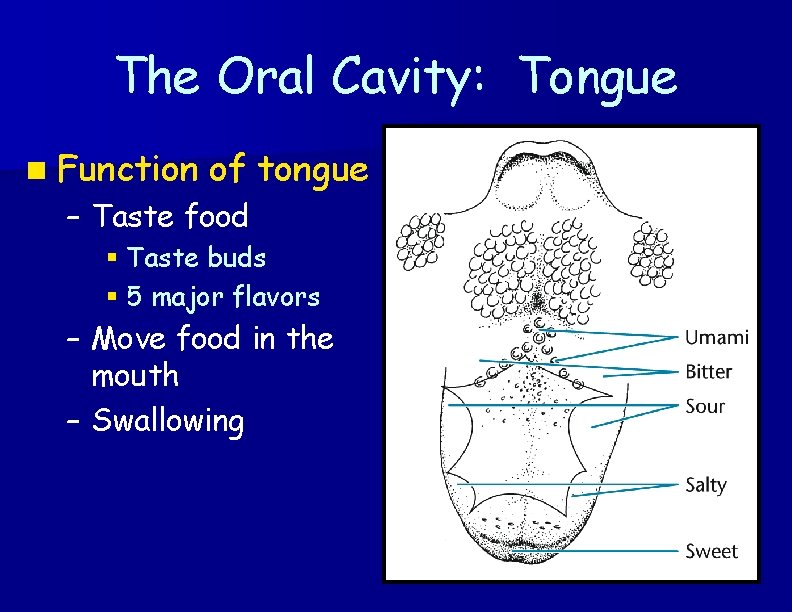
The Oral Cavity: Tongue n Function of tongue – Taste food § Taste buds § 5 major flavors – Move food in the mouth – Swallowing
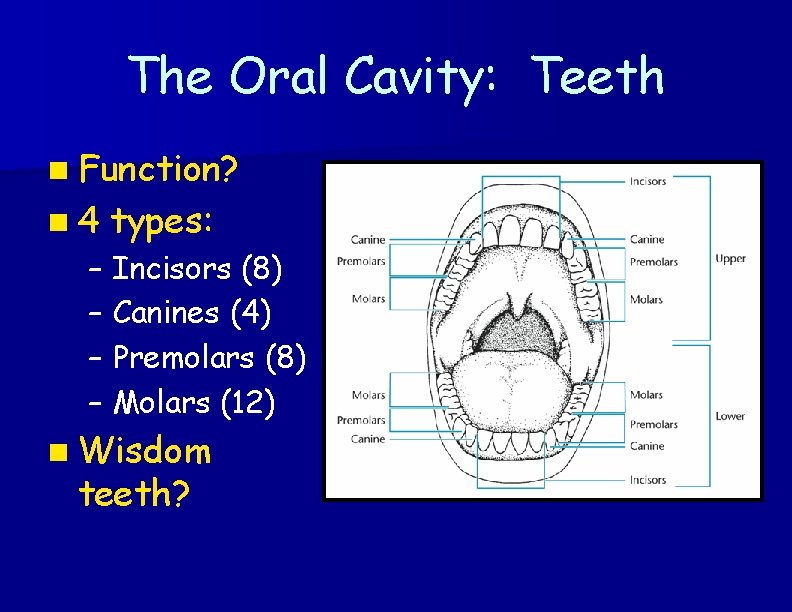
The Oral Cavity: Teeth n Function? n 4 – – types: Incisors (8) Canines (4) Premolars (8) Molars (12) n Wisdom teeth?
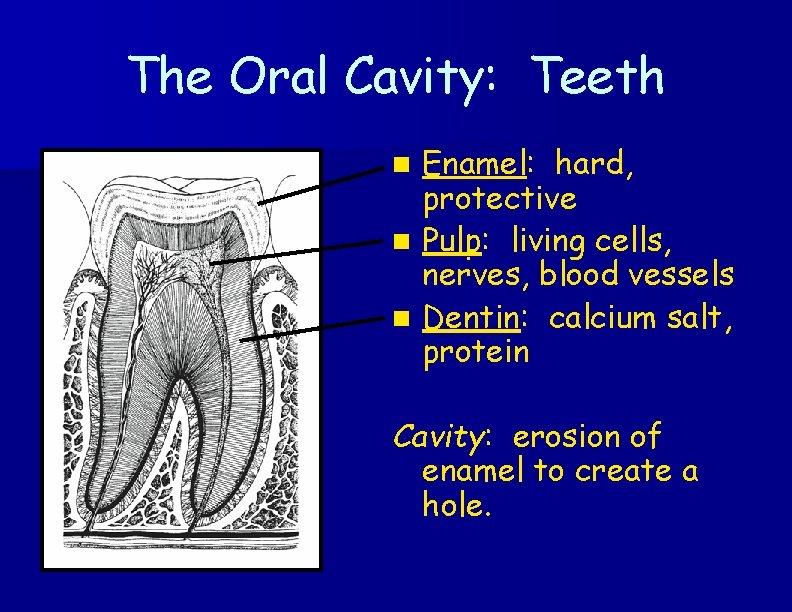
The Oral Cavity: Teeth Enamel: hard, protective n Pulp: living cells, nerves, blood vessels n Dentin: calcium salt, protein n Cavity: erosion of enamel to create a hole.
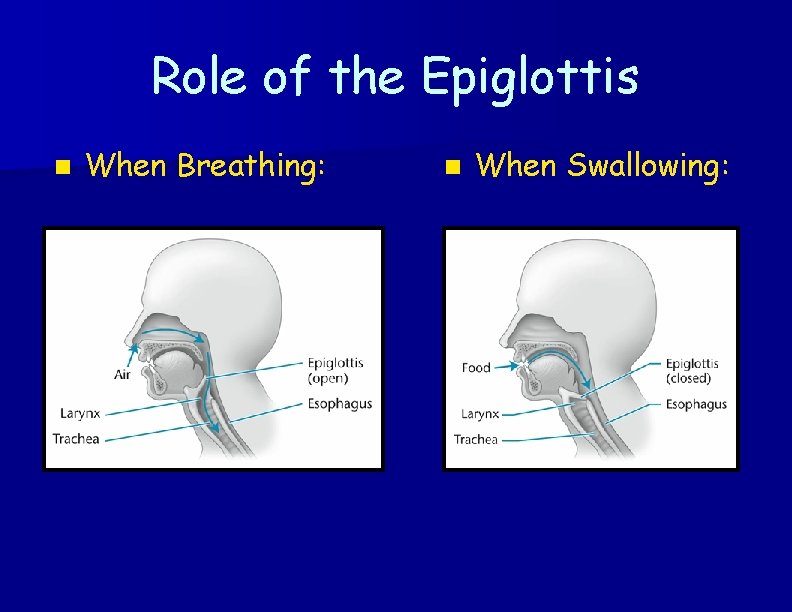
Path to the Stomach: Swallowing n Tongue pushes food to back of mouth. n Muscles in wall of pharynx contract to move food toward esophagus. n Epiglottis must close!
Role of the Epiglottis n When Breathing: n When Swallowing:
What happens when someone is choking?
What happens when someone is choking? n Esophagus has not closed properly. n Food enters the trachea (wind pipe) n Cough reflex occurs
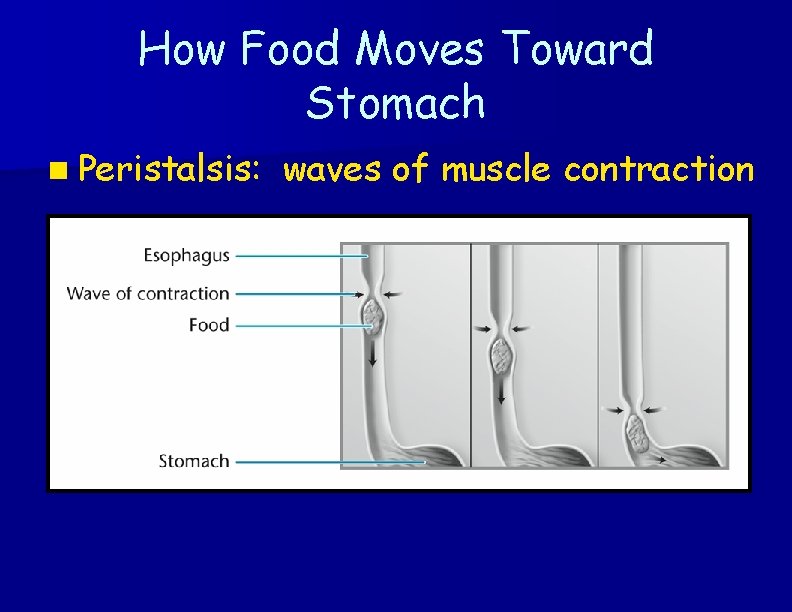
How Food Moves Toward Stomach n Peristalsis: waves of muscle contraction
How Food Moves Toward Stomach n Peristalsis: – – waves of muscle contraction Is this smooth or skeletal muscle? Why doesn’t all muscle in esophagus contract at one time?
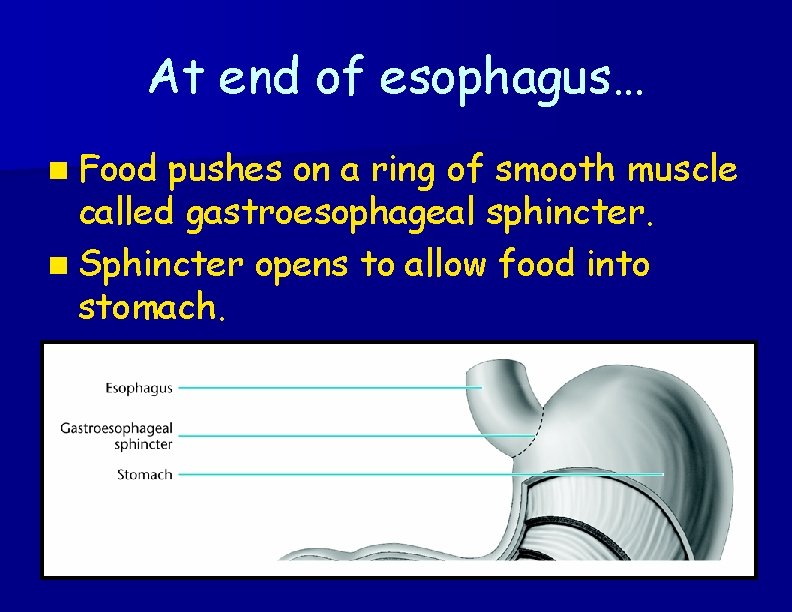
At end of esophagus… n Food pushes on a ring of smooth muscle called gastroesophageal sphincter. n Sphincter opens to allow food into stomach.
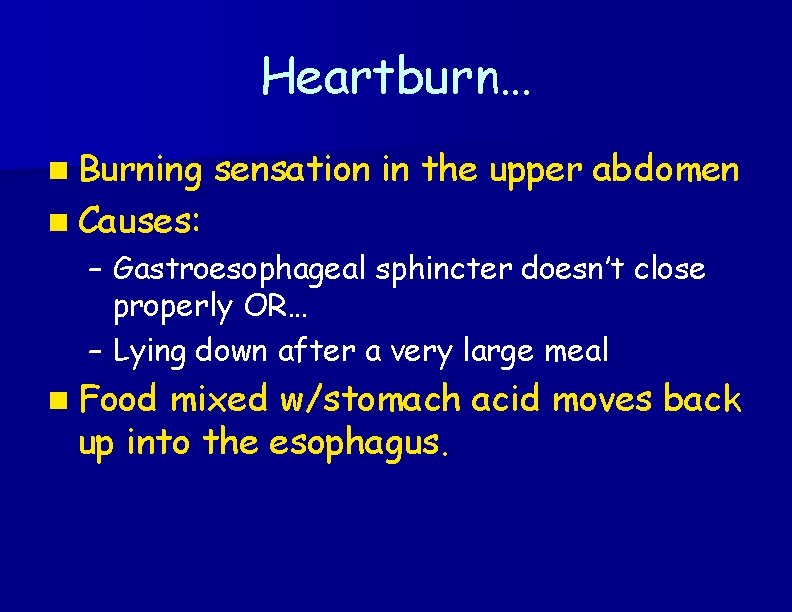
Heartburn… n Burning n Causes: sensation in the upper abdomen – Gastroesophageal sphincter doesn’t close properly OR… – Lying down after a very large meal n Food mixed w/stomach acid moves back up into the esophagus.
The Stomach n Function: – – – Mix food with acidic juices Digest some proteins Store food until it can be processed by small intestine
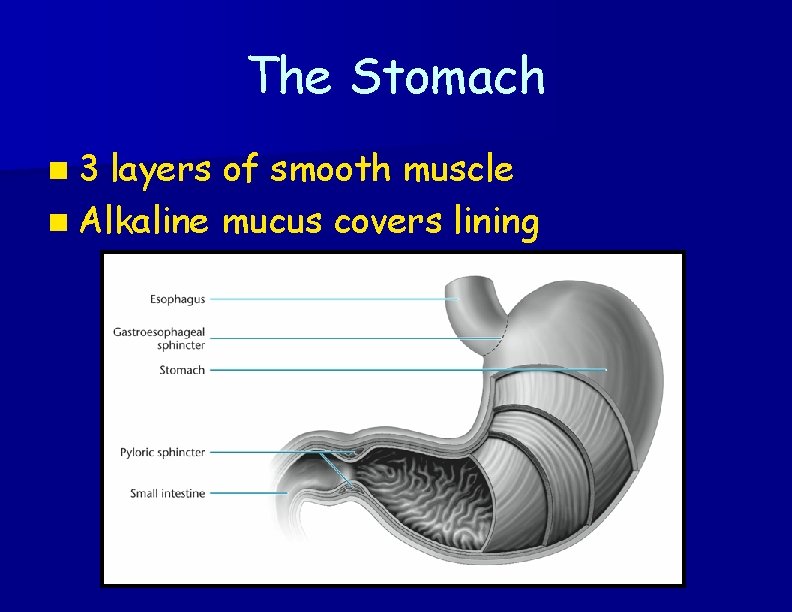
The Stomach n 3 layers of smooth muscle n Alkaline mucus covers lining
Peptic Ulcers n Stomach lining has lesions (sores) caused by bacteria n Irritation causes: – More acid secretion – More damage n Treat with antibiotics
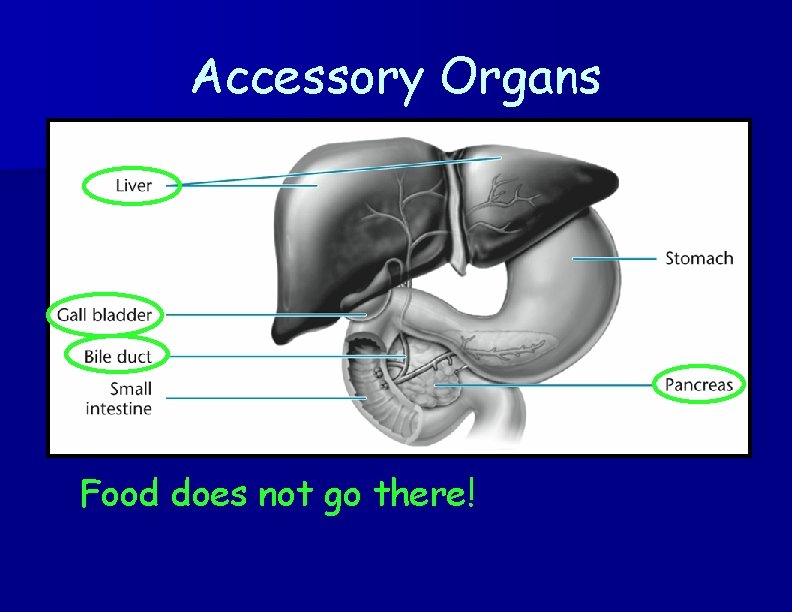
Accessory Organs Food does not go there!
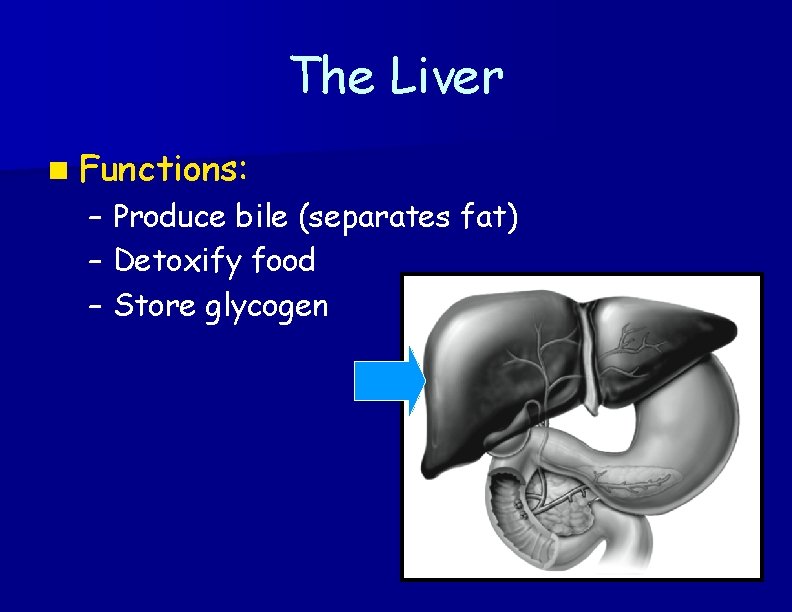
The Liver n Functions: – – – Produce bile (separates fat) Detoxify food Store glycogen
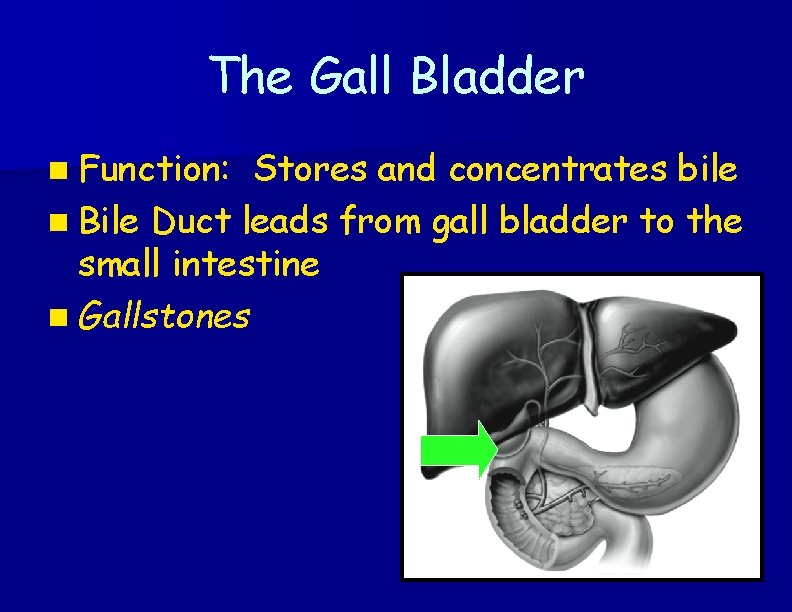
The Gall Bladder n Function: Stores and concentrates bile n Bile Duct leads from gall bladder to the small intestine n Gallstones
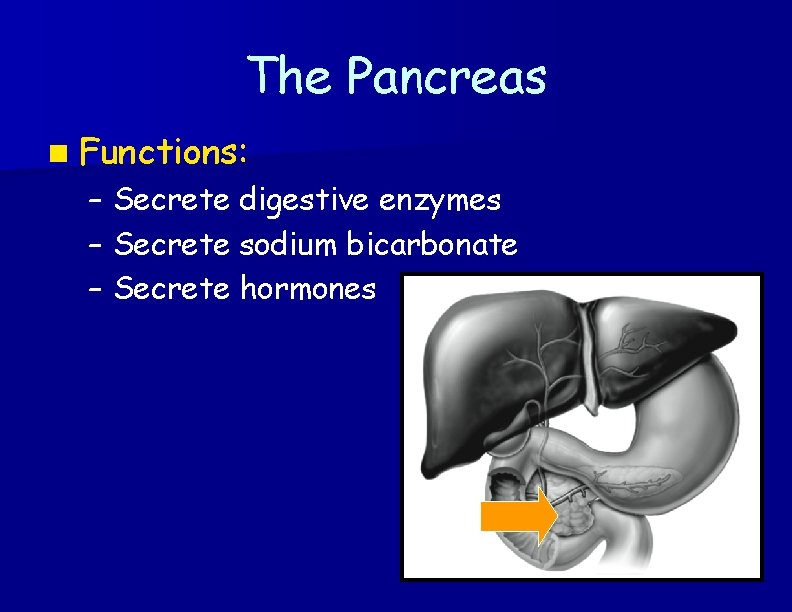
The Pancreas n Functions: – – – Secrete digestive enzymes Secrete sodium bicarbonate Secrete hormones
Regulation of Blood Sugar n The pancreas is an endocrine gland. n It secretes: – – Insulin Glucagon
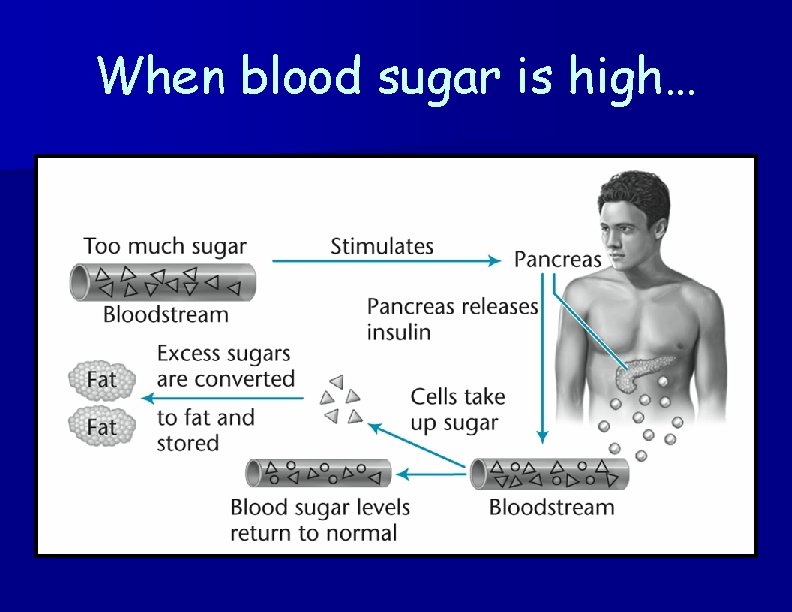
When blood sugar is high…
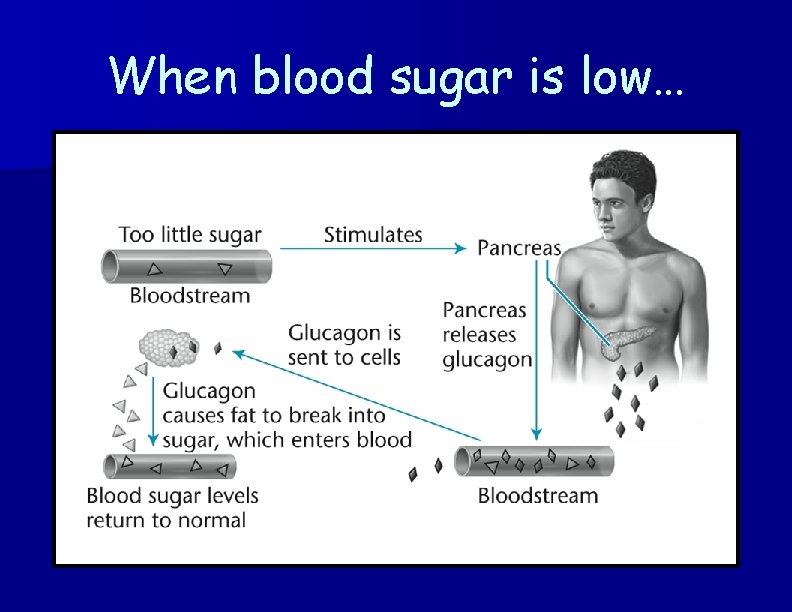
When blood sugar is low…
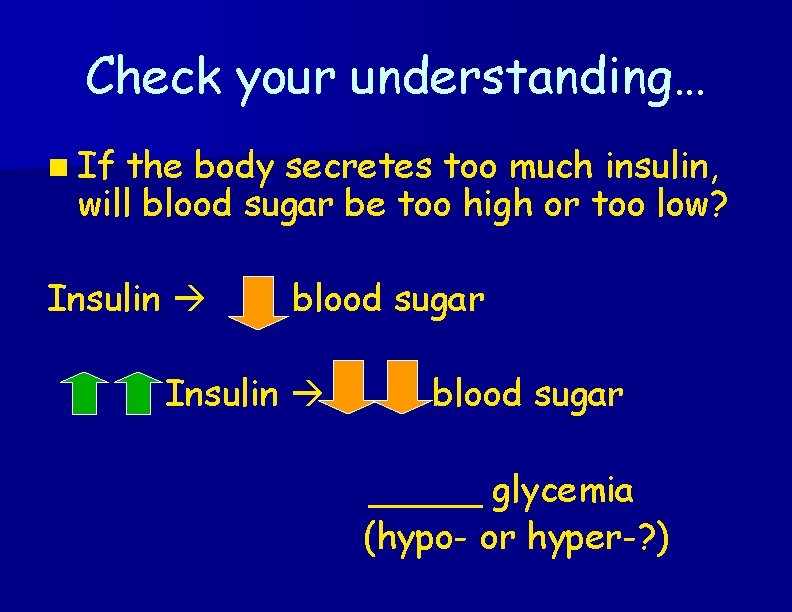
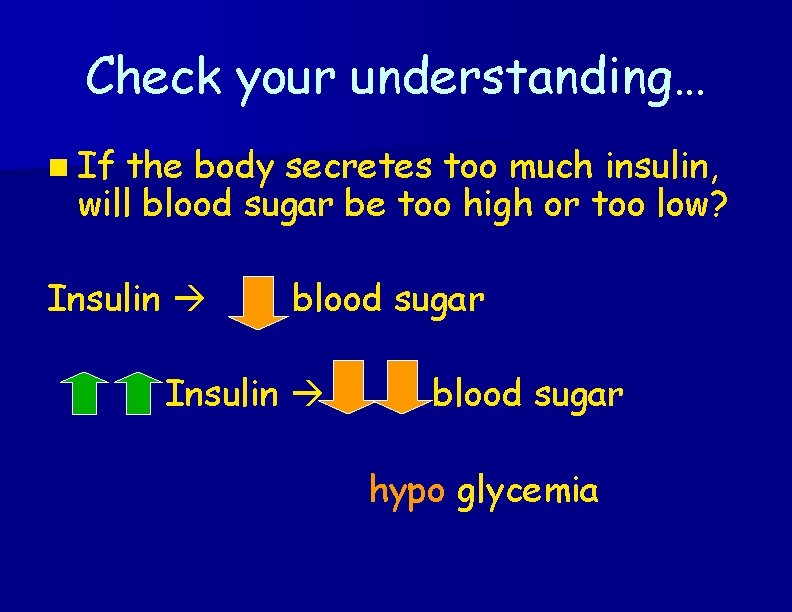
Check your understanding… n If the body secretes too much insulin, will blood sugar be too high or too low?
Check your understanding… n If the body secretes too much insulin, will blood sugar be too high or too low? Insulin blood sugar _____ glycemia (hypo- or hyper-? )
Check your understanding… n If the body secretes too much insulin, will blood sugar be too high or too low? Insulin blood sugar hypo glycemia
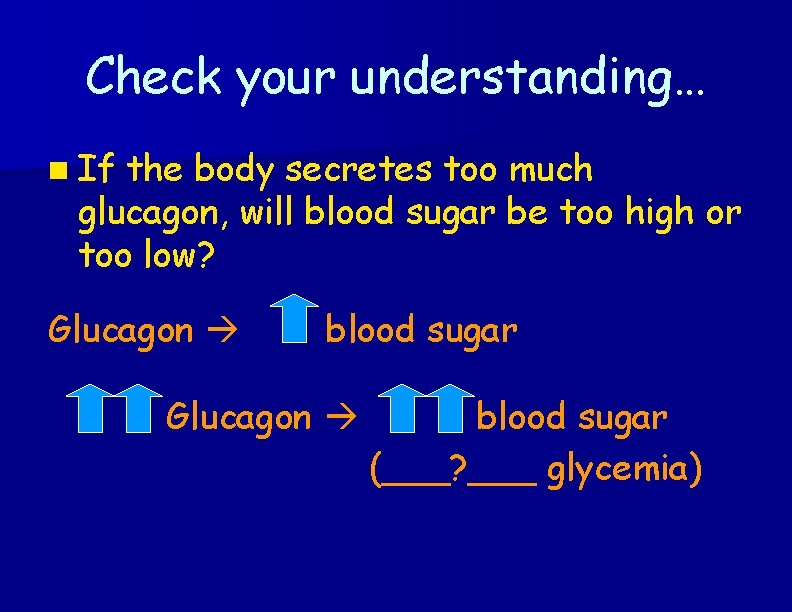
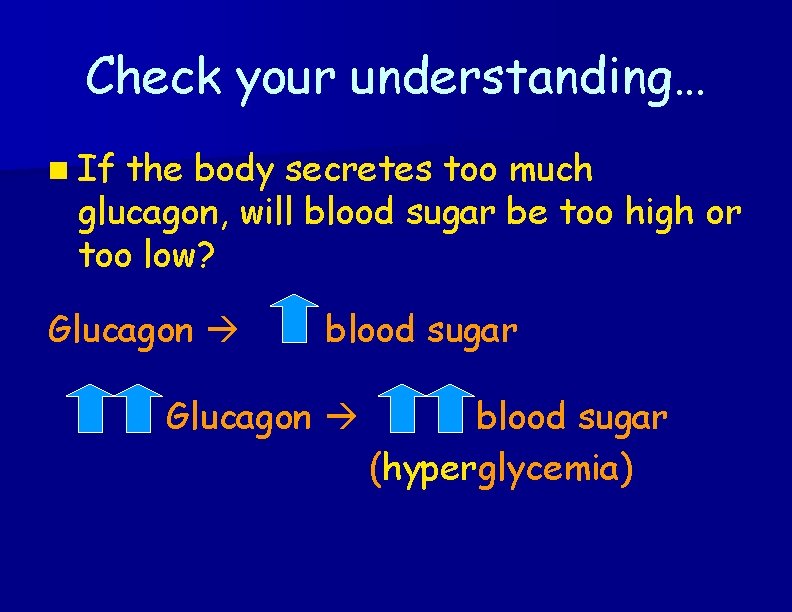
Check your understanding… n If the body secretes too much glucagon, will blood sugar be too high or too low?
Check your understanding… n If the body secretes too much glucagon, will blood sugar be too high or too low? Glucagon blood sugar (___? ___ glycemia)
Check your understanding… n If the body secretes too much glucagon, will blood sugar be too high or too low? Glucagon blood sugar (hyperglycemia)
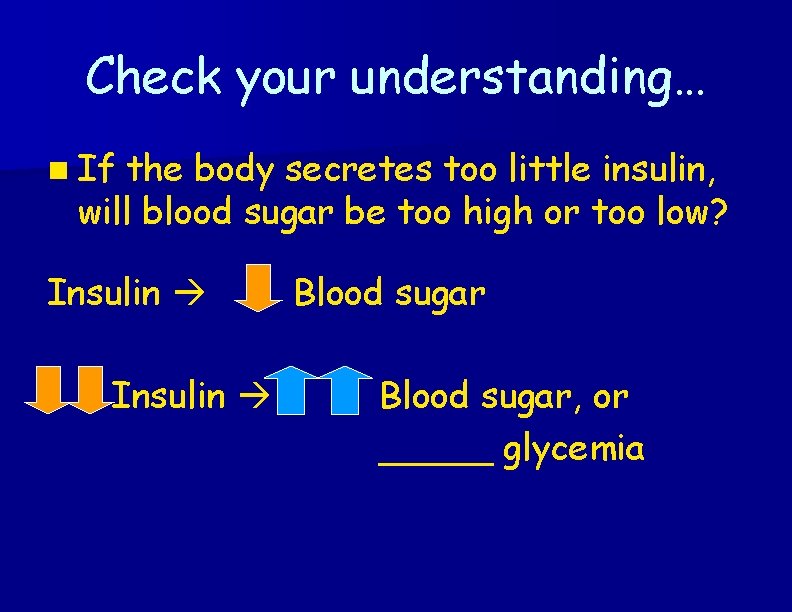
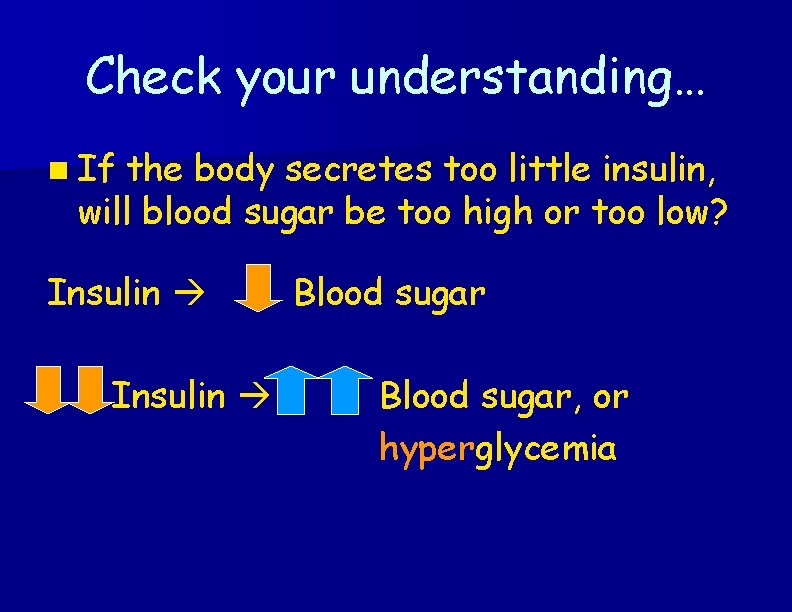
Check your understanding… n If the body secretes too little insulin, will blood sugar be too high or too low?
Check your understanding… n If the body secretes too little insulin, will blood sugar be too high or too low? Insulin Blood sugar, or _____ glycemia
Check your understanding… n If the body secretes too little insulin, will blood sugar be too high or too low? Insulin Blood sugar, or hyperglycemia
Diabetes mellitus n Type – – I (Insulin Dependent) Usually begins in adolescence Pancreas unable to make insulin Person needs to take insulin Cause: Autoimmune
Diabetes mellitus n Type I (Insulin Dependent) n Type II (Non-Insulin Dependent) – – Usually begins in adolescence Pancreas unable to make insulin Person needs to take insulin Cause: Autoimmune – – Usually begins in late adulthood Risk factors: overweight, genetics Body cells do not respond to insulin Can be controlled with diet, medication
Small Intestine n 6 meters in length! n Functions: – – Digest foods Absorb food molecules into blood stream
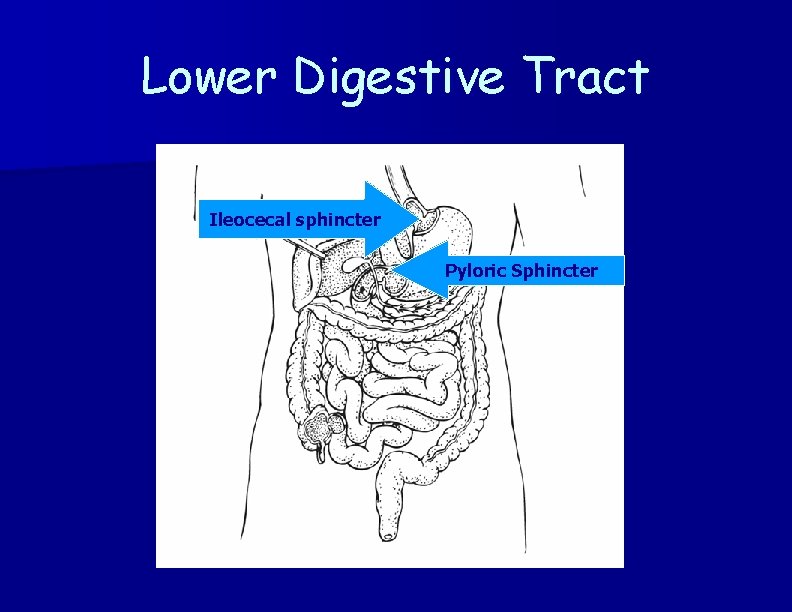
Lower Digestive Tract Ileocecal sphincter Pyloric Sphincter
Diarrhea n Food moves too quickly through the small & large intestines. n Too little water is absorbed. n Feces are more liquid. n Can lead to dehydration and loss of valuable electrolytes (sodium & potassium).
Regulation of Cellular Metabolism n Metabolism = conversion of energy into different forms – – – Starch sugars Sugars fat ATP move muscles n Thyroid hormone helps to regulate metabolism.
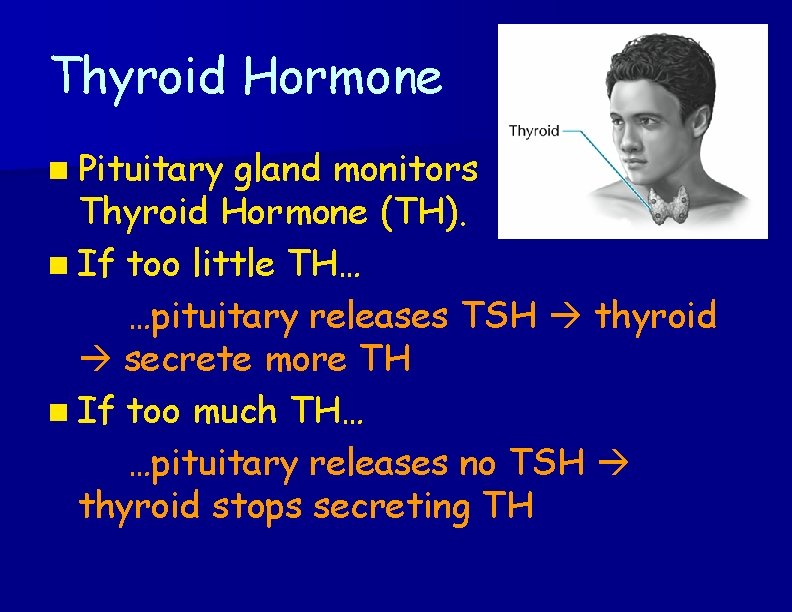
Thyroid Hormone n Pituitary gland monitors Thyroid Hormone (TH). n If too little TH… …pituitary releases TSH thyroid secrete more TH n If too much TH… …pituitary releases no TSH thyroid stops secreting TH
Check your knowledge… n Hypothyroidism means the person has [too much / too little ] Thyroid Hormone. n Hypothyroidism causes one to: – Feel tired, cold, weak, & gain weight, OR… – Restless, lose weight, sweating
Check your knowledge… n Hyperthyroidism means the person has [too much / too little ] Thyroid Hormone. n You might treat hyperthyroidism by: – Giving the person TSH, or… – Removing the thyroid gland. n How would you recognize a goiter in a patient?
The Large Intestine n 1. 5 meters long n Function: – – – Absorb water Absorb sodium, potassium Move feces toward anus n Anus: – Internal anal sphincter (involuntary) – External anal sphincter (voluntary) Defecation
Constipation n Feces move too slowly through large intestine. – Too much water absorbed dry, hard feces – Could lead to appendicitis peritonitis