
Chapter 7 The Control of Microbial Growth TERMINOLOGY
Chapter 7 The Control of Microbial Growth TERMINOLOGY • Sepsis refers to microbial contamination. • Asepsis is the absence of significant contamination. • Sterilization: Removal of all microbial life • Commercial Sterilization:
• Disinfection: Killing of vegetative microbes on nonliving objects • Antisepsis: Killing of vegetative microbes in/on living tissue • Degerming: Removal of microbes from a limited area • Biocide/Germicide: Kills microbes • Bacteriostasis: Inhibits, does not kill microbes
Microbe Death by Antimicrobial Agents • Factors influencing death rate are: • Number of microbes • Environmental influences (ie. Organic substances, biofilms, temperature, p. H) • Biofilms: • Time of exposure • Microbial characteristics • [antimicrobial agent]
Actions of Microbial Control Agents • Alteration of membrane permeability • Lipids and proteins are altered • Intracellular substances leak out of cell • Damage to proteins • Denaturation of enzymes, etc. • Loose their structure and function • Damage to nucleic acids • Damaged DNA and RNA prevents production of vital proteins
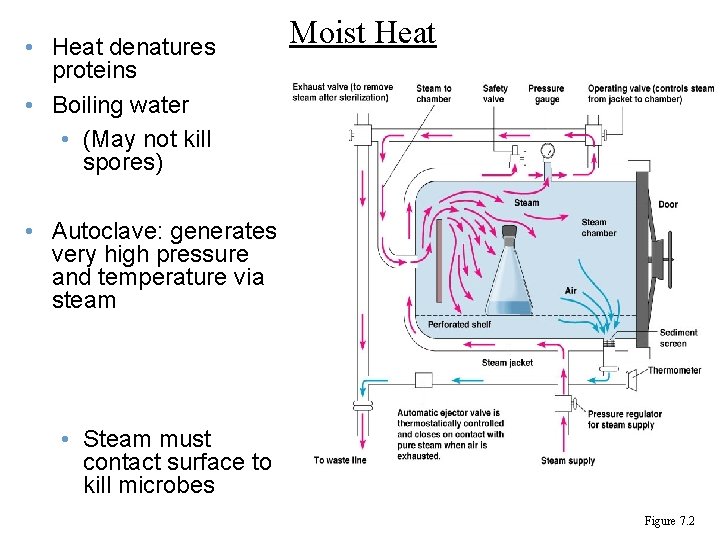
• Heat denatures proteins • Boiling water • (May not kill spores) Moist Heat • Autoclave: generates very high pressure and temperature via steam • Steam must contact surface to kill microbes Figure 7. 2
Pasteurization • Pasteurization reduces spoilage organisms and pathogens via heating • Thermoduric (i. e. thermophiles) organisms survive • Pasteurization treatments • High-temperature short-time (HTST): 72°C for 15 s • Ultra-high-temperature (UHT): 140°C for 3 s
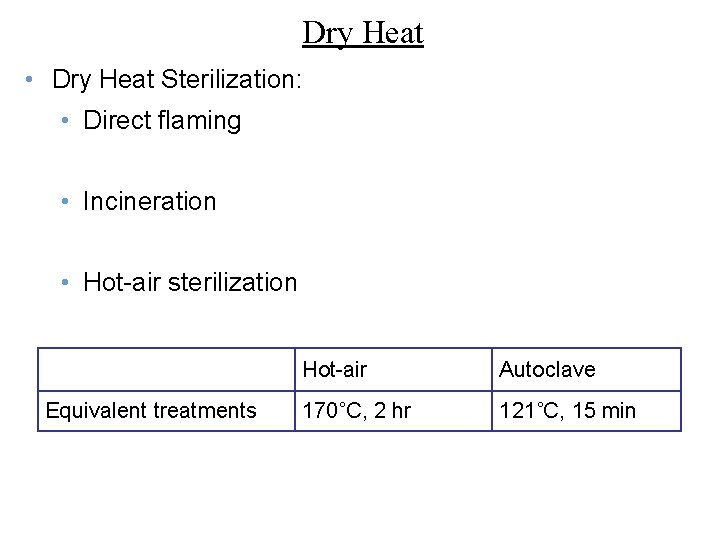
Dry Heat • Dry Heat Sterilization: • Direct flaming • Incineration • Hot-air sterilization Equivalent treatments Hot-air Autoclave 170˚C, 2 hr 121˚C, 15 min
Other Physical Methods of Microbial Control • Filtration removes microbes • Low temperature inhibits microbial growth: • Refrigeration • Deep freezing • Desiccation prevents metabolism • Hypertonicity causes plasmolysis
Other Physical Methods of Microbial Control • Radiation damages DNA and other organic molecules • Ionizing radiation (X rays, gamma rays, electron beams) • Nonionizing radiation (UV) • Microwaves kill by heat; not especially antimicrobial
Chemical Methods of Microbial Control • Evaluating a disinfectant • Use-dilution test • 1. Stainless steel cylinders are inoculated with Staphylococcus aureus, Salmonella choleraesuis, Pseudomonas aeruginosa • 2. Cylinders are dried in an incubator • 3. Cylinders are placed in test disinfectant • 4. Cylinders are incubated in broth media

• Disk-diffusion method
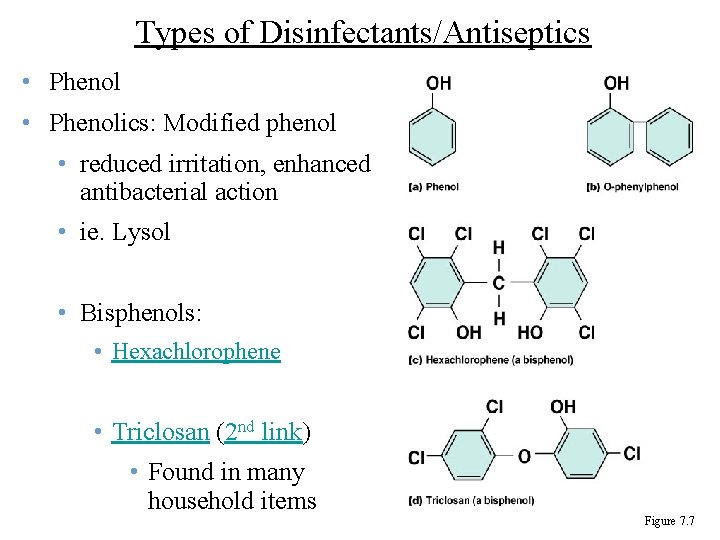
Types of Disinfectants/Antiseptics • Phenolics: Modified phenol • reduced irritation, enhanced antibacterial action • ie. Lysol • Bisphenols: • Hexachlorophene • Triclosan (2 nd link) • Found in many household items Figure 7. 7
Types of Disinfectants/Antiseptics • Chlorhexidine • surgical hand scrub • preoperative patient scrub • Halogens: • Iodine: skin disinfectant; water treatment • Chlorine (ie. Bleach): water, sewage treatment; swimming pools; restaurants, etc.
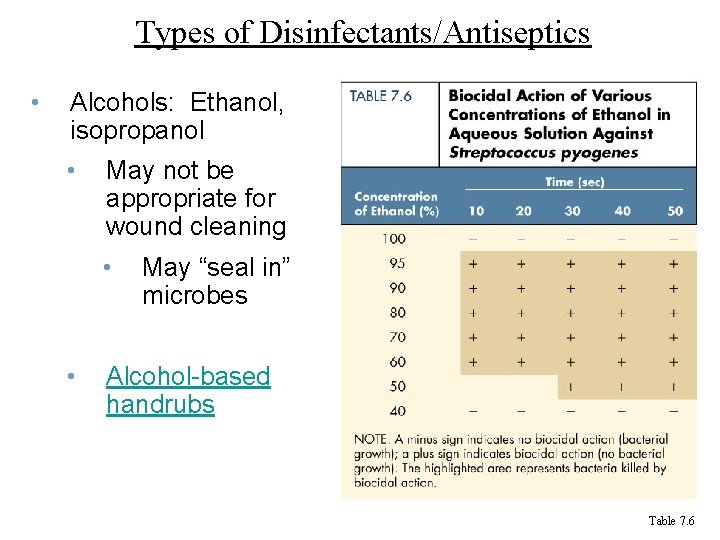
Types of Disinfectants/Antiseptics • Alcohols: Ethanol, isopropanol • May not be appropriate for wound cleaning • • May “seal in” microbes Alcohol-based handrubs Table 7. 6
Types of Disinfectants/Antiseptics • Heavy Metals: ie. Ag, Cu • Silver compounds: impregnated dressings; burn creams; catheters • Copper sulfate: kills green algae in reservoirs, pools, ponds
Types of Disinfectants • Chemical Food Preservatives • Organic Acids - Inhibit metabolism • Sorbic acid, benzoic acid, calcium propionate • Control molds and bacteria in foods and cosmetics • Nitrite prevents endospore germination in meats • Antibiotics. Nisin and natamycin prevent spoilage of cheese
Types of Disinfectants • Aldehydes: • Glutaraldehyde: • sterilizes* • hospital instrument disinfection • used for embalming
Types of Disinfectants • Gaseous Sterilants • Ethylene oxide: • Peroxygens • Ozone = O 3: ie. water treament • Hydrogen peroxide = H 2 O 2: ie. Food packaging; NOT good for open wounds
Types of Disinfectants/Antiseptics • Surface-Active Agents or Surfactants Soap Degerming Cationic detergents: Quaternary ammonium compounds = “Quats” ie. Pseudomonads can grow in Quat solutions; can Norovirus?
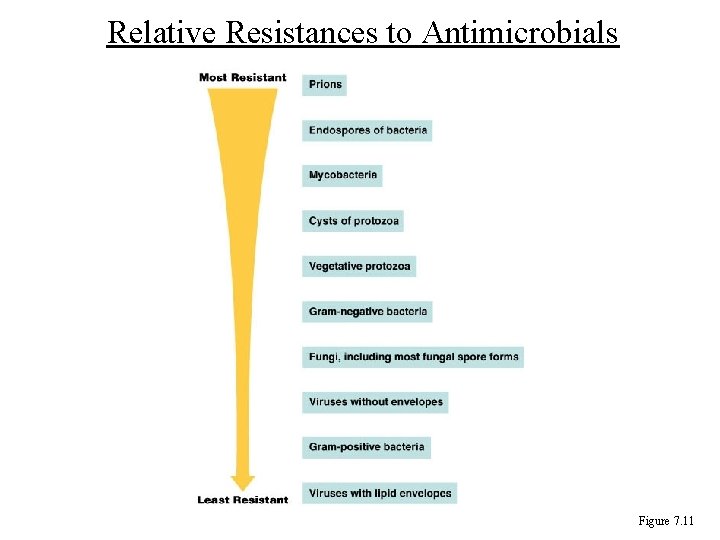
Relative Resistances to Antimicrobials Figure 7. 11
- Slides: 20