
Chapter 7 Structural Modeling Slide 1 Key Ideas
- Slides: 29
Chapter 7 Structural Modeling Slide 1
Key Ideas A structural or conceptual model describes the structure of the data that supports the business processes in an organization. . The structure of data used in the system is represented through CRC cards, class diagrams, and object diagrams. 2
STRUCTURAL MODELS Slide 3
Purpose of Structural Models Reduce the “semantic gap” between the real world and the world of software Create a vocabulary for analysts and users Represent things, ideas, and concepts of importance in the application domain 4
Classes Templates for creating instances or objects Concrete Abstract Typical examples: Application domain, user interface, data structure, file structure, operating environment, document, and multimedia classes 5
Attributes Units of information relevant to the description of the class Only attributes important to the task should be included 6
Operations Action that instances/objects can take Focus on relevant problemspecific operations (at this point) 7
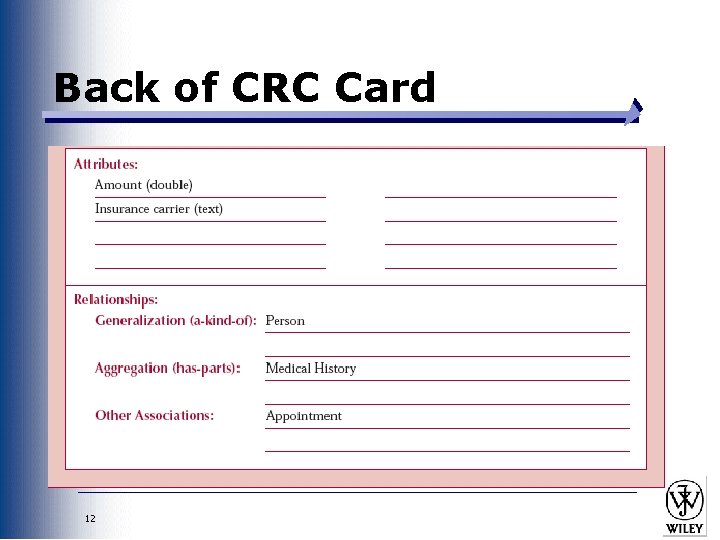
Relationships Generalization Enables inheritance of attributes and operations Aggregation Relates parts to wholes Association Miscellaneous relationships between classes 8
CLASS-RESPONSIBILITYCOLLABORATION CARDS Slide 9
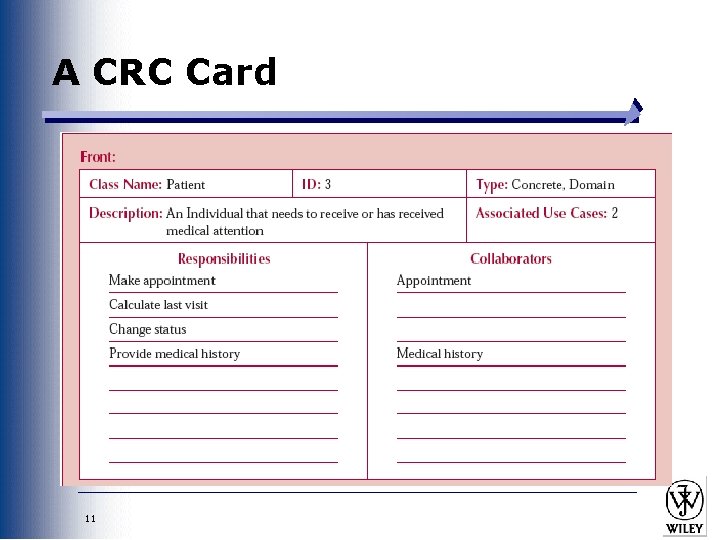
Responsibilities and Collaborations Responsibilities Knowing Doing Collaboration Objects working together to service a request 10
A CRC Card 11
Back of CRC Card 12
CLASS DIAGRAMS Slide 13
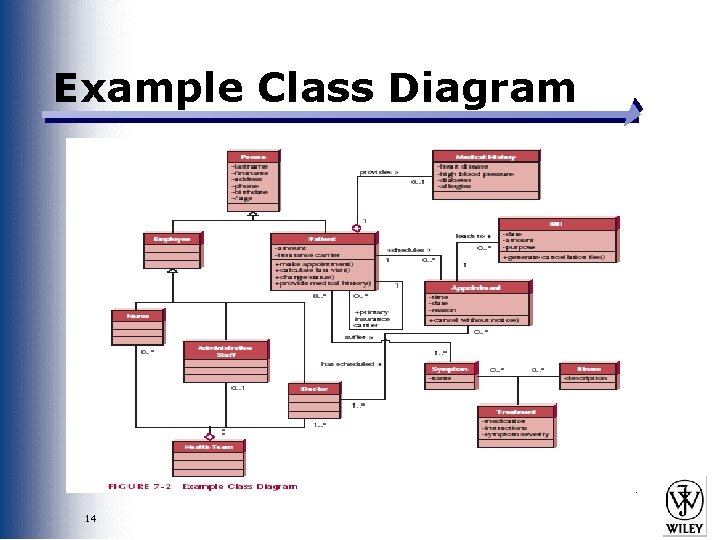
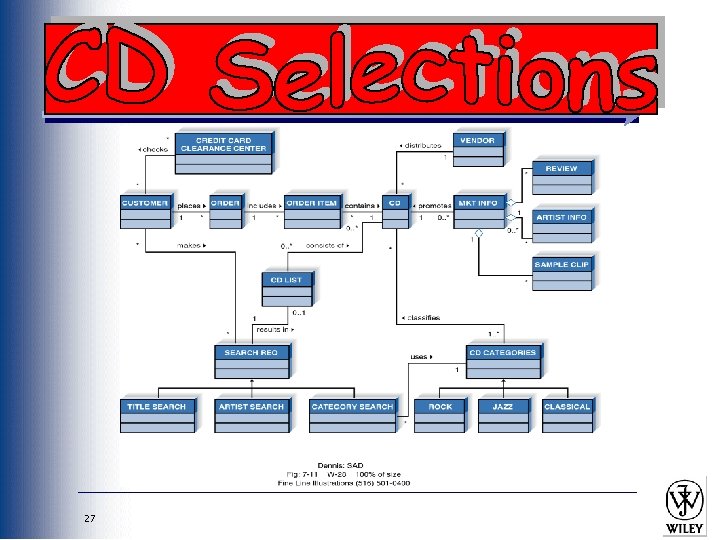
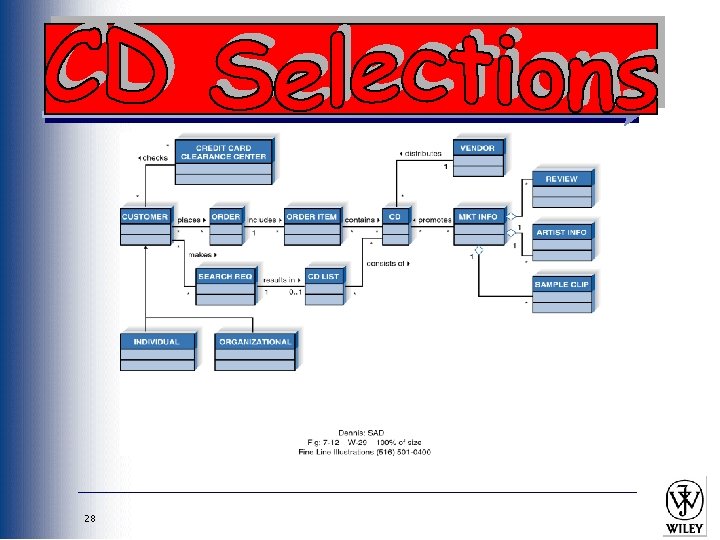
Example Class Diagram 14
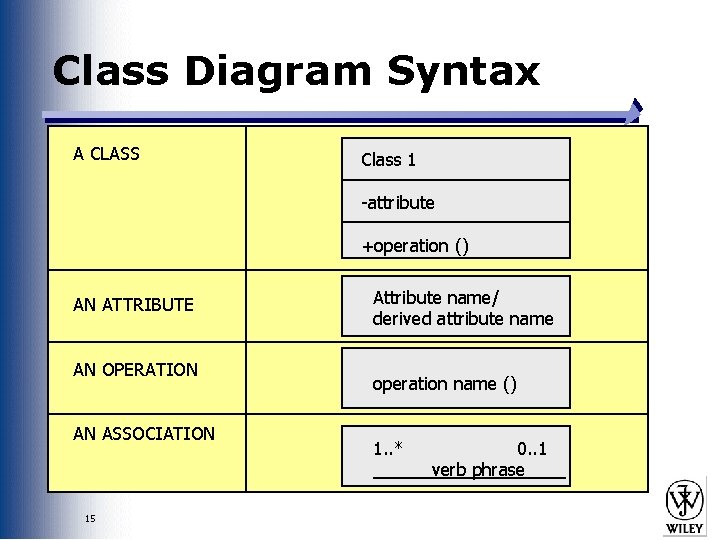
Class Diagram Syntax A CLASS Class 1 -attribute +operation () AN ATTRIBUTE AN OPERATION AN ASSOCIATION 15 Attribute name/ derived attribute name operation name () 1. . * 0. . 1 ______verb phrase____
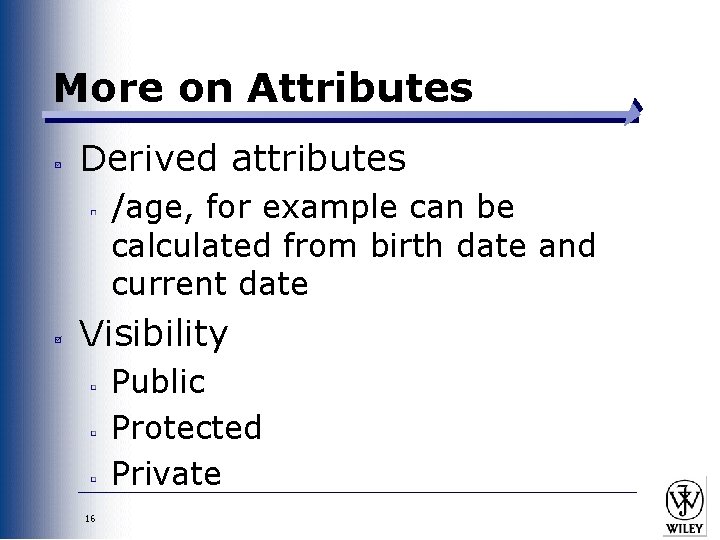
More on Attributes Derived attributes /age, for example can be calculated from birth date and current date Visibility Public Protected Private 16
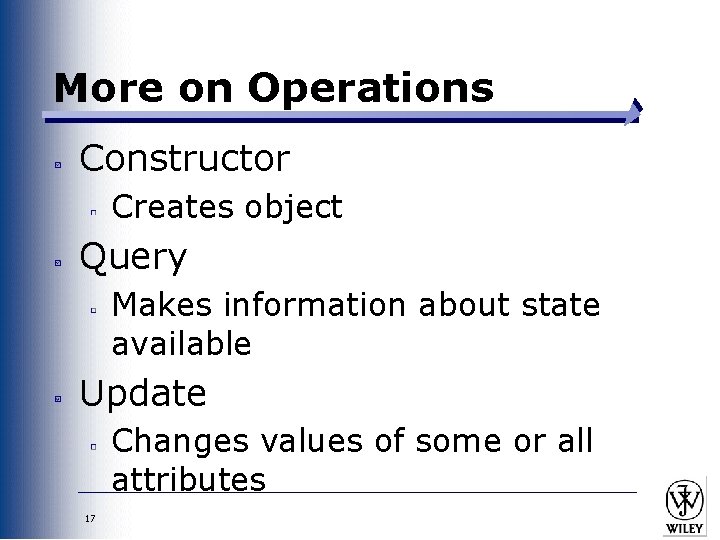
More on Operations Constructor Creates object Query Makes information about state available Update Changes values of some or all attributes 17
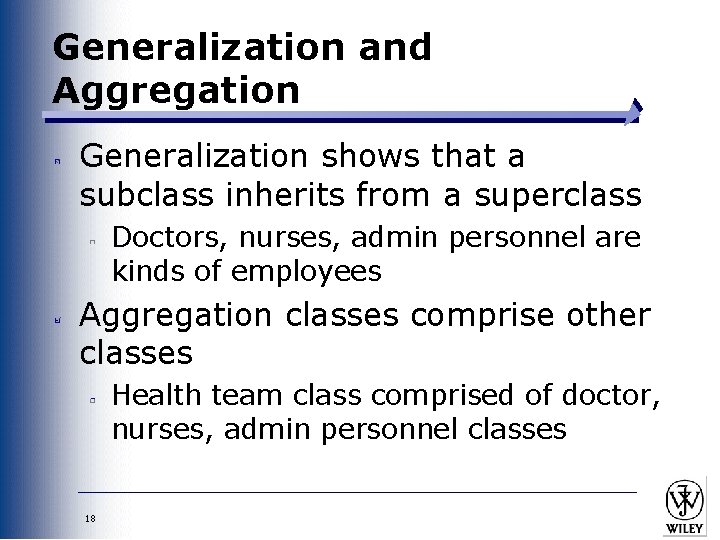
Generalization and Aggregation Generalization shows that a subclass inherits from a superclass Doctors, nurses, admin personnel are kinds of employees Aggregation classes comprise other classes Health team class comprised of doctor, nurses, admin personnel classes 18
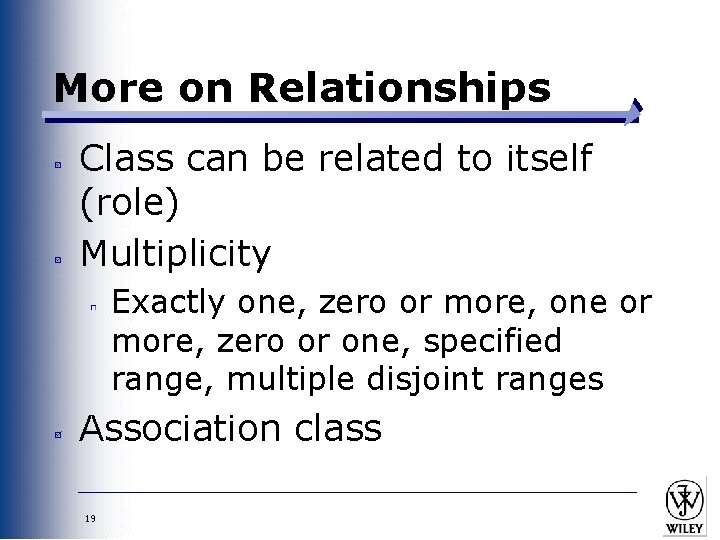
More on Relationships Class can be related to itself (role) Multiplicity Exactly one, zero or more, one or more, zero or one, specified range, multiple disjoint ranges Association class 19
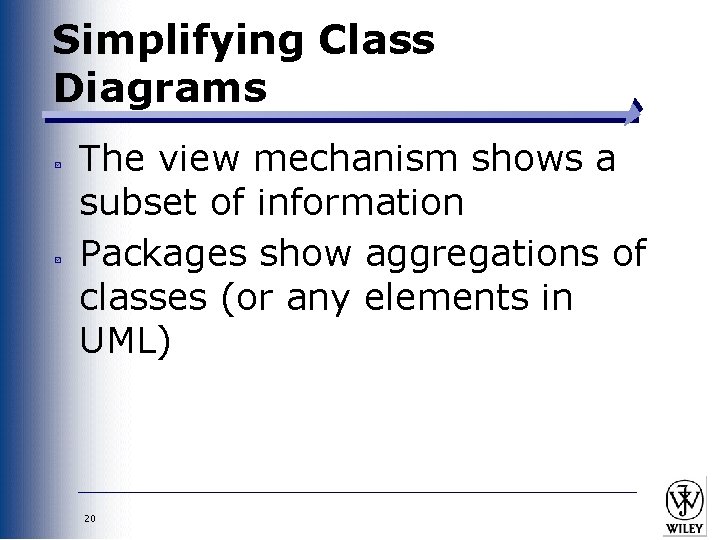
Simplifying Class Diagrams The view mechanism shows a subset of information Packages show aggregations of classes (or any elements in UML) 20
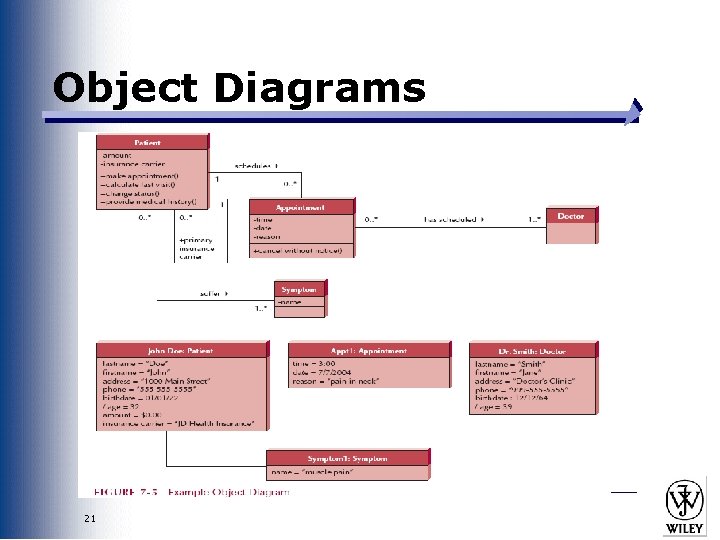
Object Diagrams 21
CREATING CRC CARDS AND CLASS DIAGRAMS Slide 22
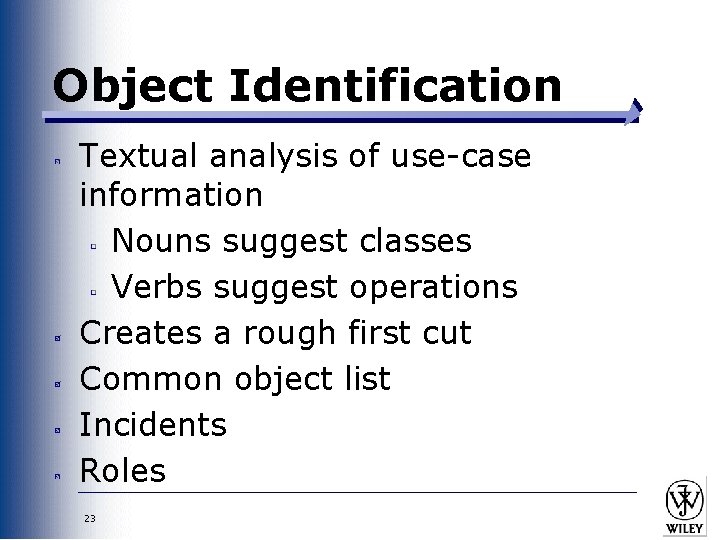
Object Identification Textual analysis of use-case information Nouns suggest classes Verbs suggest operations Creates a rough first cut Common object list Incidents Roles 23
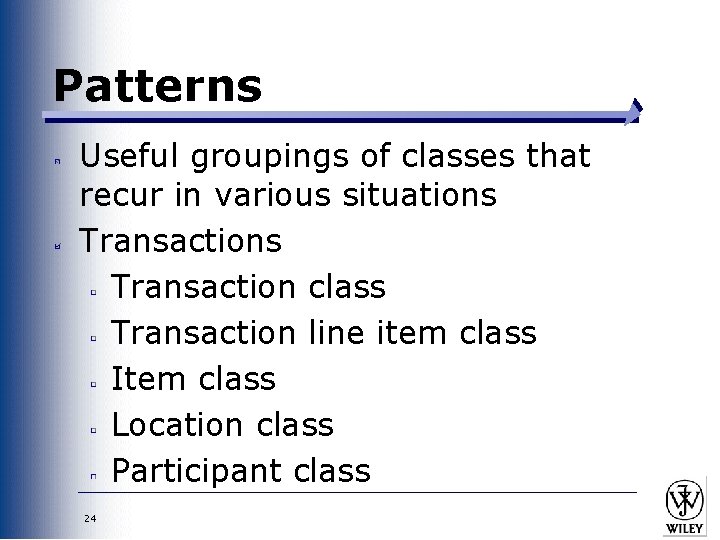
Patterns Useful groupings of classes that recur in various situations Transaction class Transaction line item class Item class Location class Participant class 24
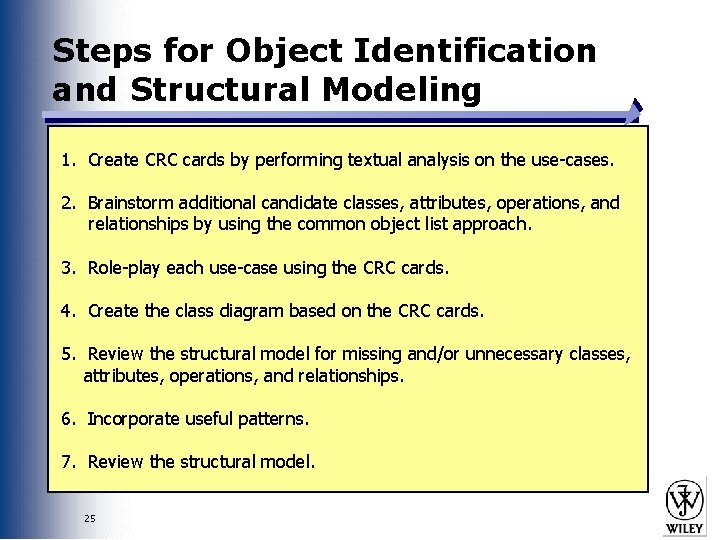
Steps for Object Identification and Structural Modeling 1. Create CRC cards by performing textual analysis on the use-cases. 2. Brainstorm additional candidate classes, attributes, operations, and relationships by using the common object list approach. 3. Role-play each use-case using the CRC cards. 4. Create the class diagram based on the CRC cards. 5. Review the structural model for missing and/or unnecessary classes, attributes, operations, and relationships. 6. Incorporate useful patterns. 7. Review the structural model. 25
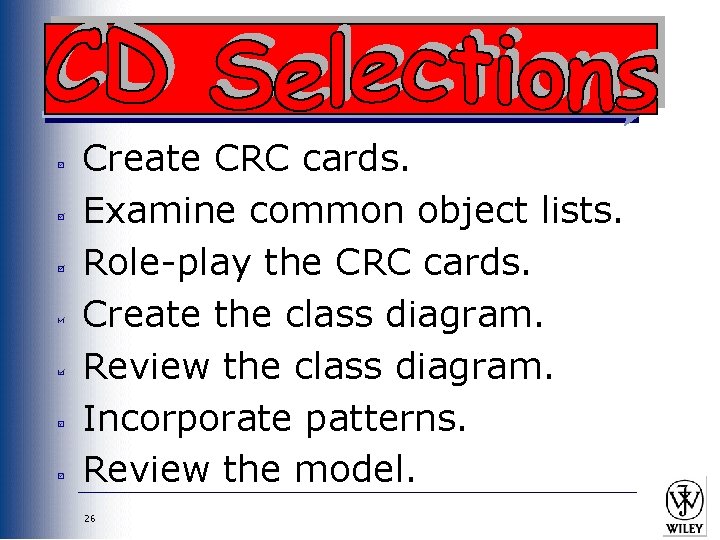
Create CRC cards. Examine common object lists. Role-play the CRC cards. Create the class diagram. Review the class diagram. Incorporate patterns. Review the model. 26
27
28
Summary CRC cards capture the essential elements of a class. Class and object diagrams show the underlying structure of an objectoriented system. Constructing the structural model is an iterative process involving: textual analysis, brainstorming objects, role playing, creating the diagrams, and incorporating useful patterns. 29