
Chapter 7 Speech Language Speech Comprehension Language Its

- Slides: 20
Chapter 7: Speech & Language
Speech & Comprehension Language: Its Basic Nature ® The Development of Language ® Language in Other Species ® Evolution, Language and Thought ®
Speech and Comprehension P Comprehension: Temporal lobe - Wernick=s Area P Production of Speech: Frontal lobe - Broca=s Area P Phonemes: Smallest unit of sound in a particular language. Example: pit bit , pit pat P Morphemes: The smallest unit of sound that conveys meaning.
Defining Language ®A language is a set of symbols, usually words, that convey meaning ® Language is often expressed with gestures ® Language takes place in a social context ® Language and culture are intertwined
Linguistics ® Linguistics is the study of language, including speech, sounds, meaning, and grammar ® Psycholinguistics is the study of how language is acquired, perceived, understood, and produced
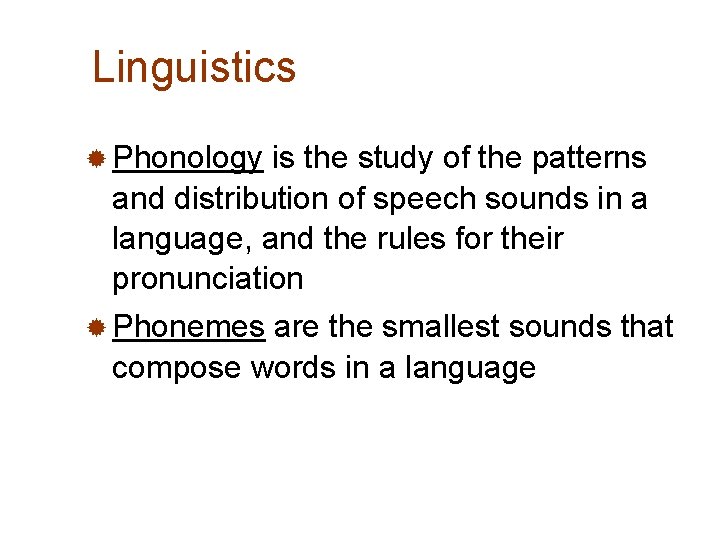
Linguistics ® Phonology is the study of the patterns and distribution of speech sounds in a language, and the rules for their pronunciation ® Phonemes are the smallest sounds that compose words in a language
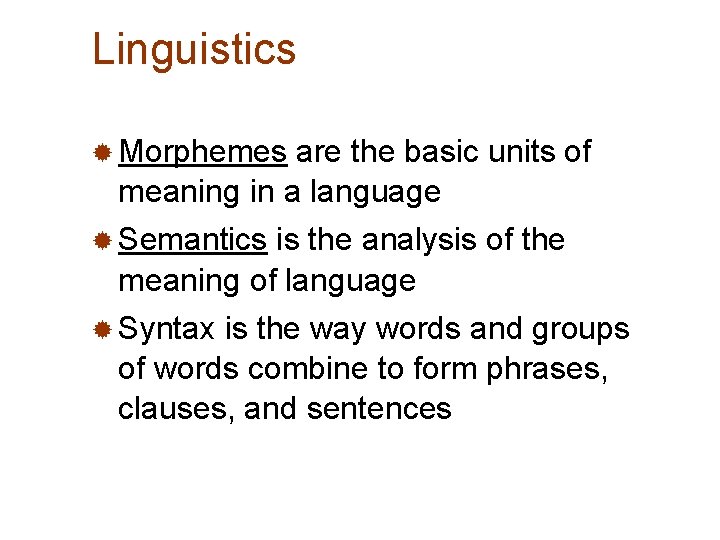
Linguistics ® Morphemes are the basic units of meaning in a language ® Semantics is the analysis of the meaning of language ® Syntax is the way words and groups of words combine to form phrases, clauses, and sentences
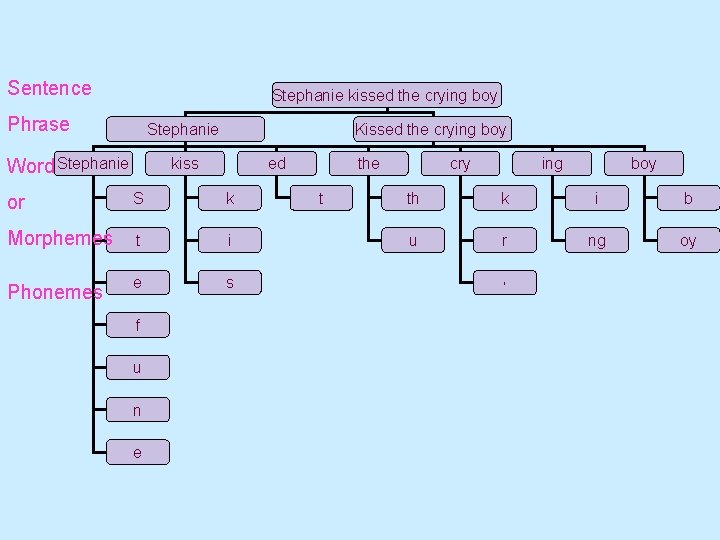
Sentence Stephanie kissed the crying boy Phrase Stephanie Word Stephanie Kissed the crying boy kiss ed or S k Morphemes t i Phonemes e s f u n e t ing cry the boy th k i b u r ng oy i
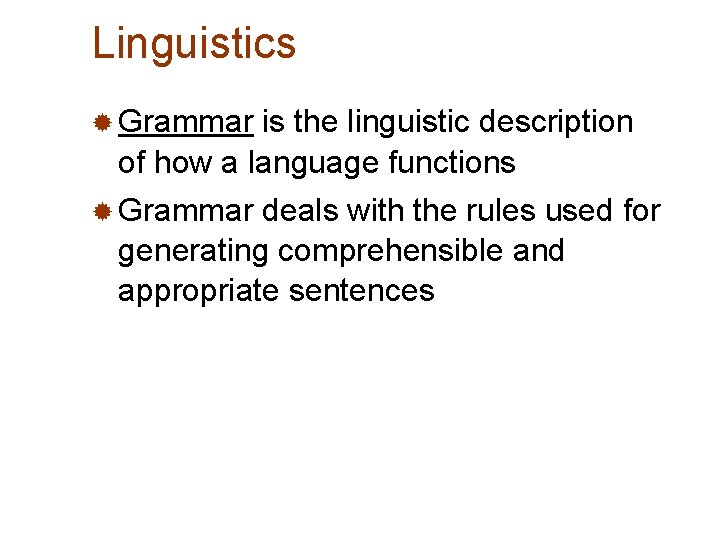
Linguistics ® Grammar is the linguistic description of how a language functions ® Grammar deals with the rules used for generating comprehensible and appropriate sentences
Thought, Culture, and Language ® Culture has a great influence on language and thought ® People who believe in role and genderspecific abilities are likely to apply those beliefs to their language and decision making ® Bilingualism promotes cognitive flexibility
The Biological and Evolutionary Basis of Language ® Chomsky suggested that language is innate ® He proposed humans have an inborn “universal grammar” ® Universal grammar is an innate mechanism that produces meaningful sentences
Biological Theories ® Chomsky and Miller assert that humans have an innate capacity to develop language ® This view states that humans are born with a mental language acquisition device (LAD) ® The LAD allows children to pay attention to language and ultimately use it
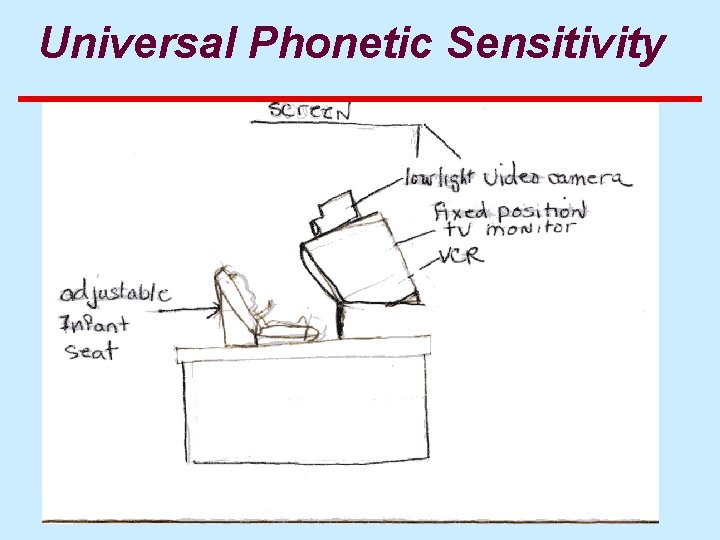
Evidence for Innate Structure of Language P Universal rules of development and errors P Language acquisition devise! Prepared: to attend, to differentiate, to converse, to hear. P Critical period for language development P Attention to language (mimics) P Universal Phonetic sensitivity
Universal Phonetic Sensitivity
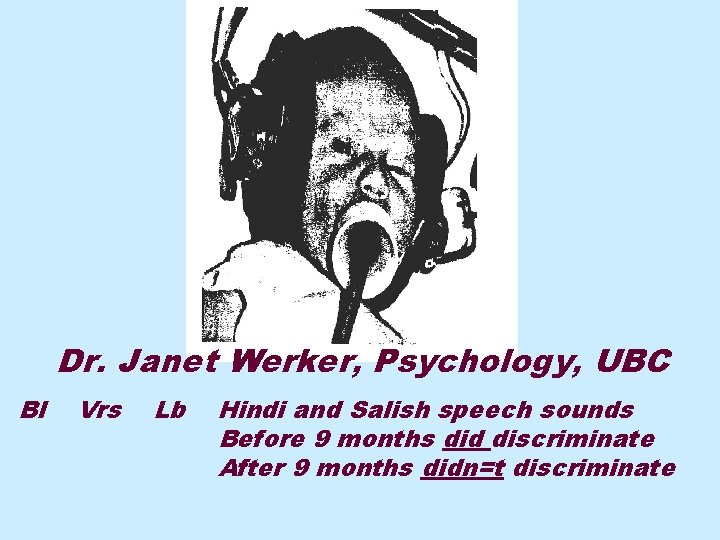
Dr. Janet Werker, Psychology, UBC Bl Vrs Lb Hindi and Salish speech sounds Before 9 months did discriminate After 9 months didn=t discriminate
Evidence from Development ® Prepared ® Have be in a speech environment ® Overextension is universal and there is no model ® Grammar or Rules within a given language (indicating how words can be combined into meaningful sentences) is acquired in a universal sequence and at the same stage of development
Language Studies with Chimpanzees ® Results of studies of chimpanzees can be used to argue both for and against the idea that language develops naturally ® Washoe was taught to make a large number of signs from American sign language ® Sarah was taught words and sentences with magnetized plastic shapes
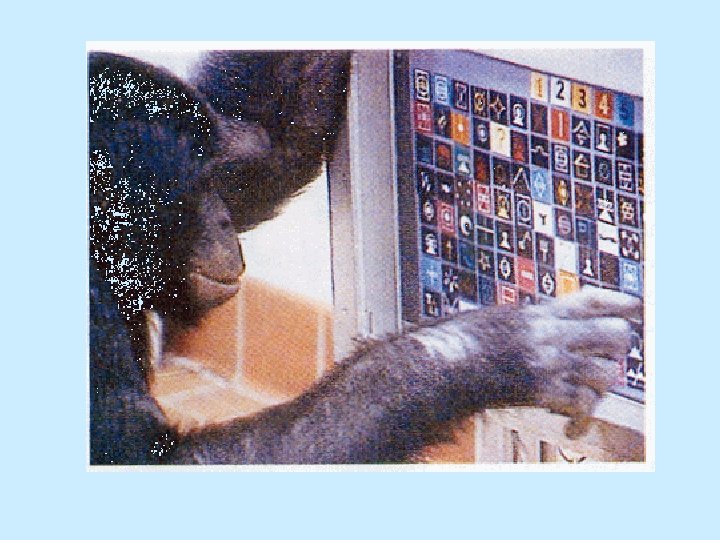
Studies with Chimpanzees ® Lana learned to press computer keys with symbols representing words but was unable to manipulate grammatical relations ® Nim Chimpski was taught manual signing but her signed messages did not increase in length as children’s do