
Chapter 7 Social Process and Crime Introduction Social
- Slides: 24
Chapter 7 Social Process and Crime
Introduction Social process theory traditions ▪ Differential association/social learning ▪ ▪ Adequate socialization toward the incorrect norms and values Informal social control ▪ ▪ Inadequate socialization Labeling theory ▪ Socialized to accept delinquent identity as result of criminal justice system
Introduction (2 of 4) Socialization ▪ How a person learns the “proper” way to live ▪ Includes norms and values that guide human behavior ▪ Primary sources: social institutions ▪ ▪ Education Religion Family Peer group
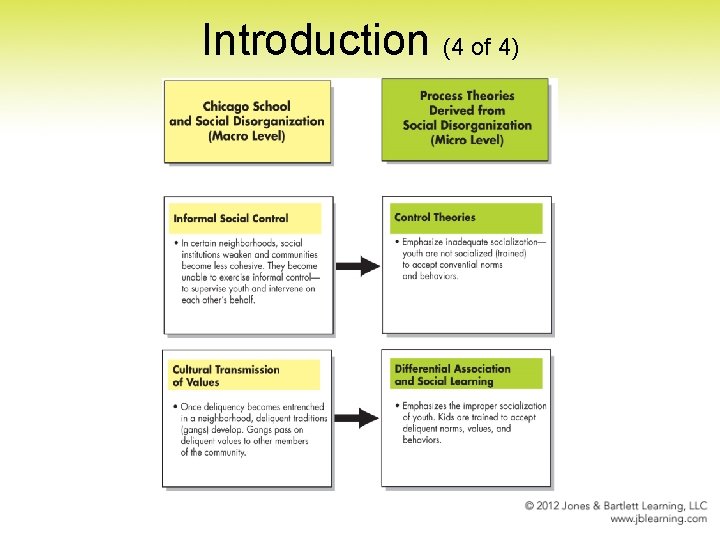
Introduction (3 of 4) Foundations ▪ Chicago School theorists ▪ Social disorganization theory ▪ ▪ ▪ Cultural transmission: differential association and social learning (improper socialization) Informal social control: control theories (inadequate socialization) Behaviorism ▪ ▪ Operant conditioning Role modeling
Introduction (4 of 4)
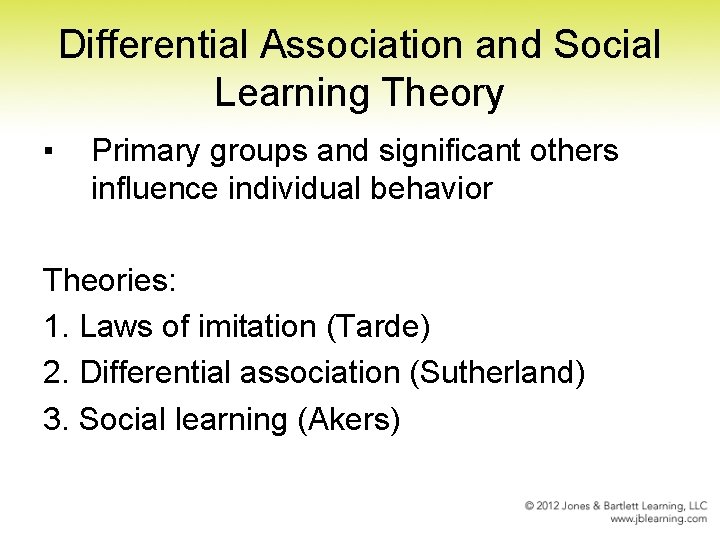
Differential Association and Social Learning Theory ▪ Primary groups and significant others influence individual behavior Theories: 1. Laws of imitation (Tarde) 2. Differential association (Sutherland) 3. Social learning (Akers)
Laws of Imitation (1 of 2) ▪ ▪ ▪ Developed by Gabriel Tarde Rejected the idea of the born criminal Criminality as lifestyle learned through interaction with and imitation of others
Laws of Imitation (2 of 2) ▪ Criminality as a function of association with criminal types ▪ ▪ ▪ People are more likely to imitate one another if they are in close contact. Inferiors imitate superiors. When two fashions come together, one can be substituted for the other.
Differential Association (1 of 3) ▪ ▪ Developed by Edwin Sutherland Focus on cultural transmission of delinquent values ▪ § Akers was student (and later a professor) at the University of Chicago Asks a “Chicago School” question
Differential Association (3 of 3) ▪ Criticism ▪ ▪ Vague concepts and phrasings Difficult to test empirically
Differential Association § Criminal Behavior is learned § Negatively, this means it is not “invented” § Communication within intimate groups § Learning involves techniques and attitudes § Attitudes expresses as “definitions of the situation” § A person becomes delinquent because of an “excess of definitions favorable to law violation” § The process involves the same learning process as all other behavior
Techniques of Neutralization (1 of 3) ▪ ▪ Developed by Sykes and Matza First good attempt to measure Sutherland’s “definitions” § Documented common rationalizations for delinquency among a sample of delinquents
Techniques of Neutralization (2 of 3) ▪ ▪ ▪ Denial of responsibility Denial of injury Denial of victim Condemnation of the condemners Appeal to higher loyalties
Techniques of Neutralization (3 of 3) Definitions or Something Else? ? ▪ Such attitudes do not actually cause criminal behavior. ▪ Rationalization is utilized only after the offense is committed when behavior is called into question. ▪ Behaviorist: To the extent that these rationalizations neutralize guilt, they reinforce behavior (Negative Reinforcement)
Social Learning Theory (1 of 11) ▪ ▪ Developed by Ronald Akers Early version: differential reinforcement ▪ ▪ Revision of differential association theory Added concepts of operant conditioning and imitation (observational learning)
Social Learning Theory (2 of 11) Key concepts ▪ Differential associations ▪ Definitions ▪ Differential reinforcement ▪ Imitation
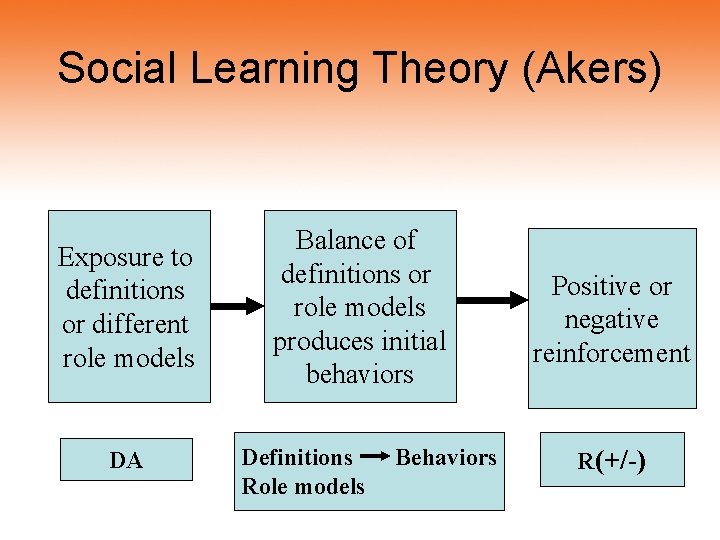
Social Learning Theory (Akers) Exposure to definitions or different role models DA Balance of definitions or role models produces initial behaviors Definitions Role models Behaviors Positive or negative reinforcement R(+/-)
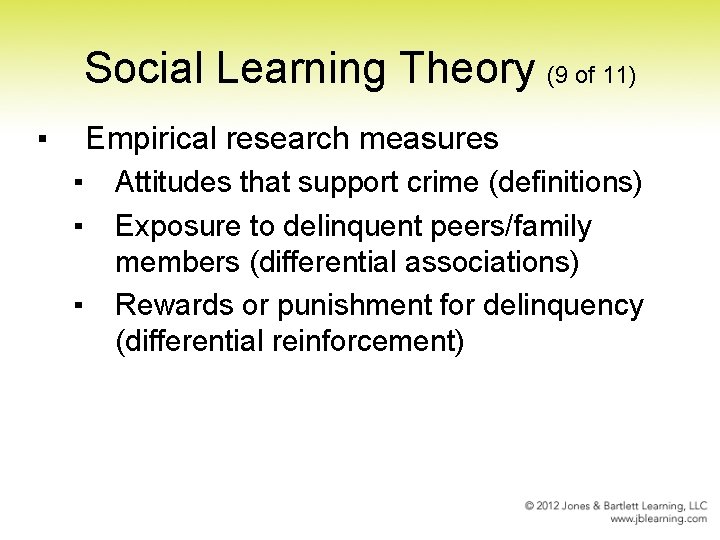
Social Learning Theory (9 of 11) ▪ Empirical research measures ▪ ▪ ▪ Attitudes that support crime (definitions) Exposure to delinquent peers/family members (differential associations) Rewards or punishment for delinquency (differential reinforcement)
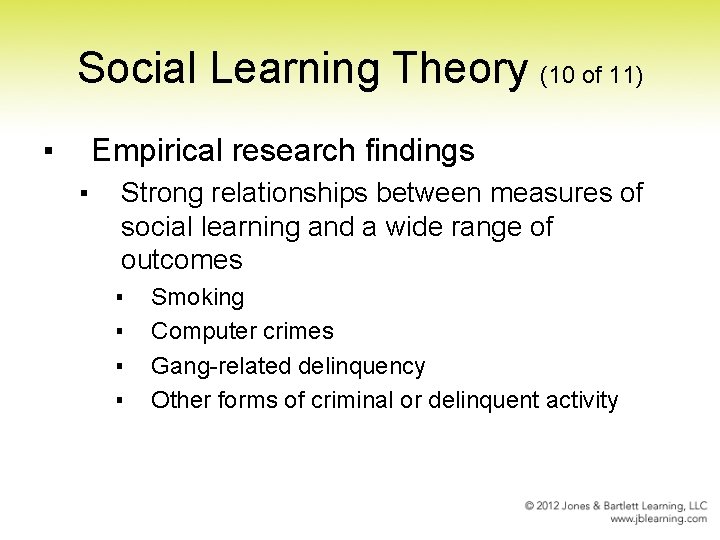
Social Learning Theory (10 of 11) ▪ Empirical research findings ▪ Strong relationships between measures of social learning and a wide range of outcomes ▪ ▪ Smoking Computer crimes Gang-related delinquency Other forms of criminal or delinquent activity
Social Learning Theory (11 of 11) ▪ Studies ▪ ▪ ▪ Techniques of neutralization Delinquent peer association Role of reinforcement
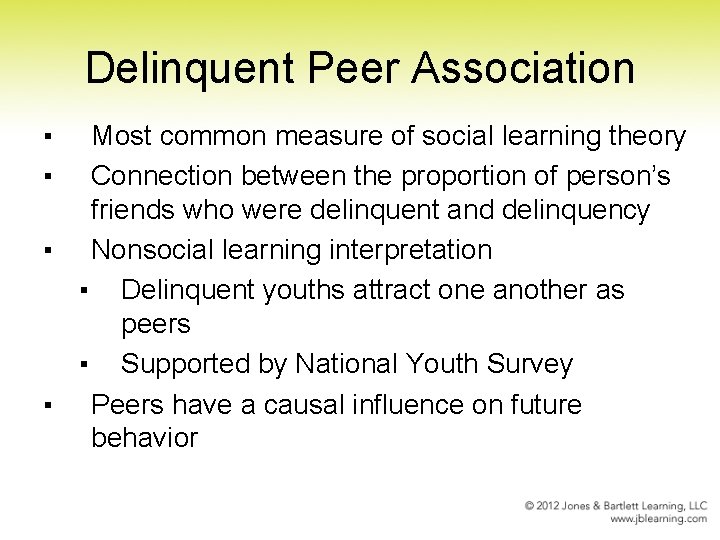
Delinquent Peer Association ▪ ▪ Most common measure of social learning theory Connection between the proportion of person’s friends who were delinquent and delinquency ▪ Nonsocial learning interpretation ▪ Delinquent youths attract one another as peers ▪ Supported by National Youth Survey ▪ Peers have a causal influence on future behavior
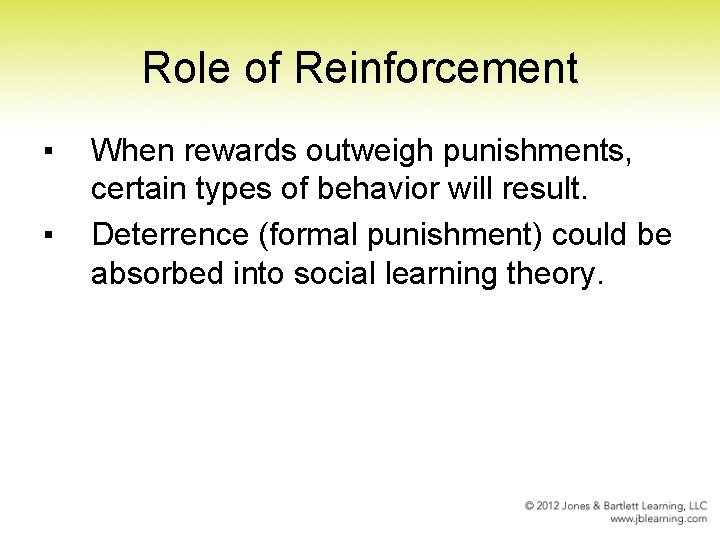
Role of Reinforcement ▪ ▪ When rewards outweigh punishments, certain types of behavior will result. Deterrence (formal punishment) could be absorbed into social learning theory.
Social Learning Theory Criticism ▪ Unclear the exact role that delinquent peers and delinquent attitudes play in generating delinquency and crime
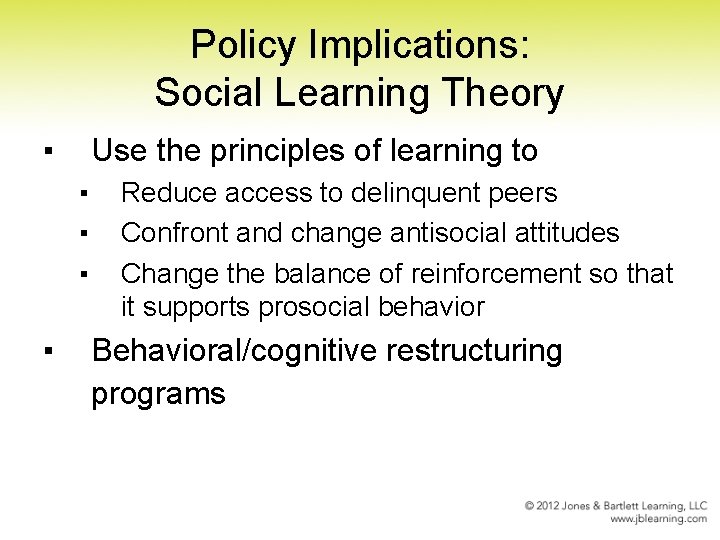
Policy Implications: Social Learning Theory ▪ Use the principles of learning to ▪ ▪ Reduce access to delinquent peers Confront and change antisocial attitudes Change the balance of reinforcement so that it supports prosocial behavior Behavioral/cognitive restructuring programs