
Chapter 7 Skeletal System Bone Classification Long Bones
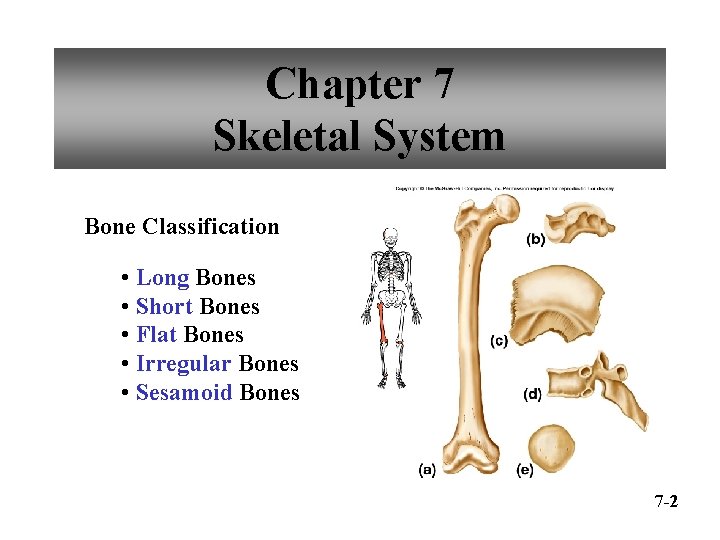
Chapter 7 Skeletal System Bone Classification • Long Bones • Short Bones • Flat Bones • Irregular Bones • Sesamoid Bones 7 -2
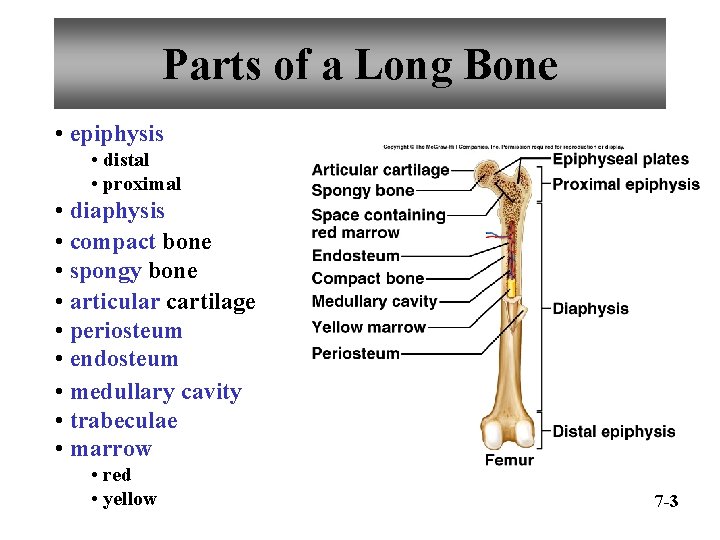
Parts of a Long Bone • epiphysis • distal • proximal • diaphysis • compact bone • spongy bone • articular cartilage • periosteum • endosteum • medullary cavity • trabeculae • marrow • red • yellow 7 -3

Compact and Spongy Bone 7 -4
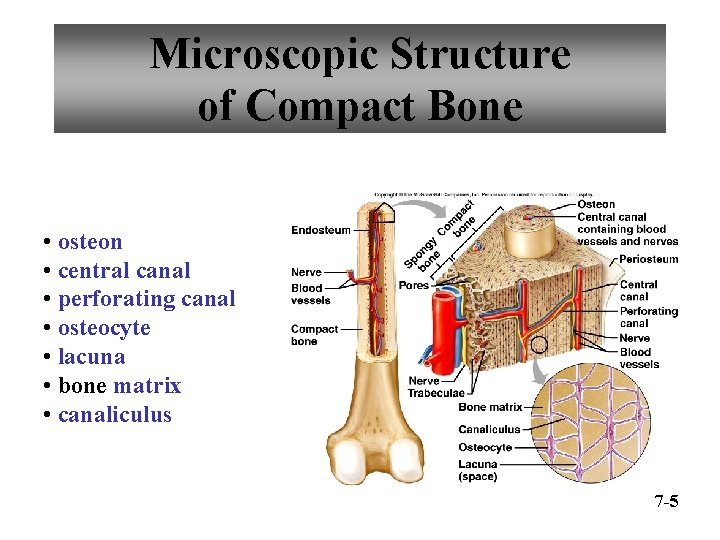
Microscopic Structure of Compact Bone • osteon • central canal • perforating canal • osteocyte • lacuna • bone matrix • canaliculus 7 -5
Bone Development Intramembranous Ossification • bones originate within sheetlike layers of connective tissues • broad, flat bones • skull bones (except mandible) • intramembranous bones Endochondral Ossification • bones begin as hyaline cartilage • most bones of the skeleton • endochondral bones 7 -6
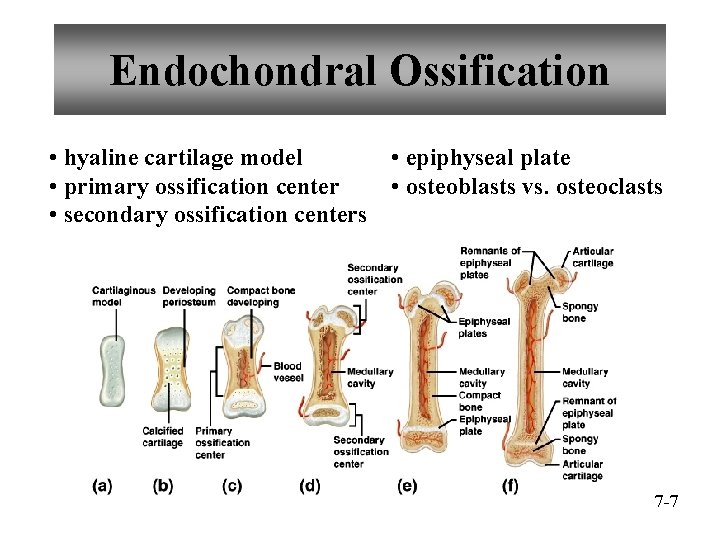
Endochondral Ossification • hyaline cartilage model • epiphyseal plate • primary ossification center • osteoblasts vs. osteoclasts • secondary ossification centers 7 -7
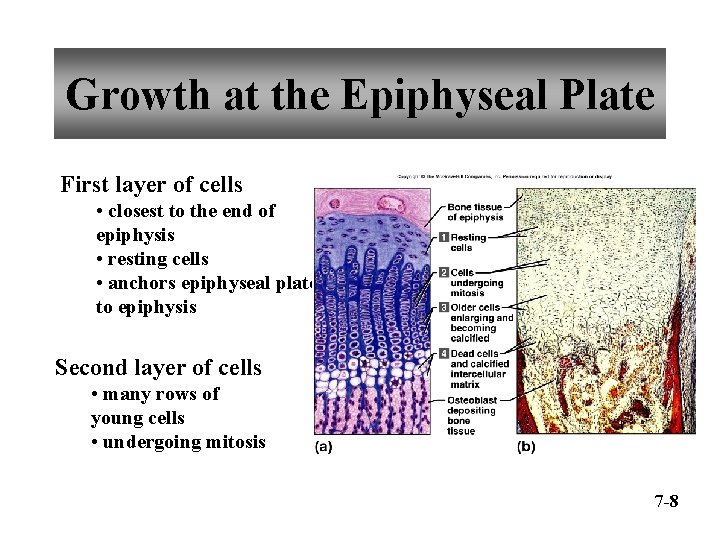
Growth at the Epiphyseal Plate First layer of cells • closest to the end of epiphysis • resting cells • anchors epiphyseal plate to epiphysis Second layer of cells • many rows of young cells • undergoing mitosis 7 -8
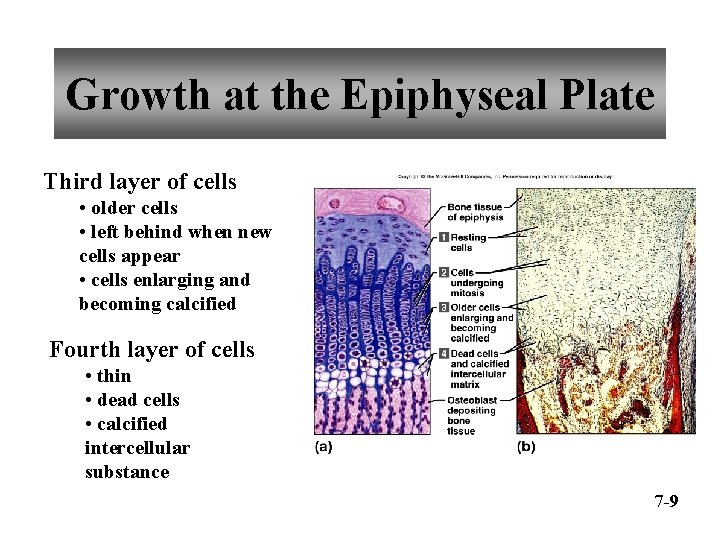
Growth at the Epiphyseal Plate Third layer of cells • older cells • left behind when new cells appear • cells enlarging and becoming calcified Fourth layer of cells • thin • dead cells • calcified intercellular substance 7 -9
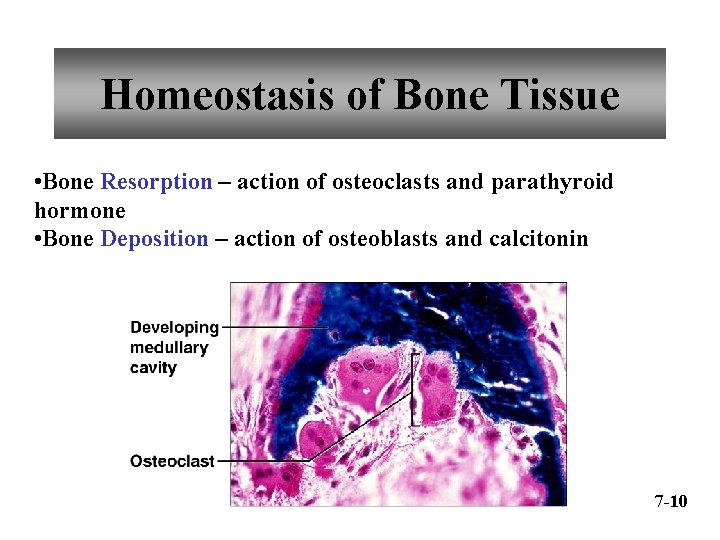
Homeostasis of Bone Tissue • Bone Resorption – action of osteoclasts and parathyroid hormone • Bone Deposition – action of osteoblasts and calcitonin 7 -10
Factors Affecting Bone Development, Growth, and Repair • Deficiency of Vitamin A – retards bone development • Deficiency of Vitamin C – results in fragile bones • Deficiency of Vitamin D – rickets, osteomalacia • Insufficient Growth Hormone – dwarfism • Excessive Growth Hormone – gigantism, acromegaly • Insufficient Thyroid Hormone – delays bone growth • Sex Hormones – promote bone formation; stimulate ossification of epiphyseal plates • Physical Stress – stimulates bone growth 7 -11
Bone Function • Support and Protection • gives shape to head, etc. • supports body’s weight • protects lungs, etc. • Body Movement • interacts with muscles • bones act as rigid bar of a lever • Blood Cell Formation • hematopoiesis • red marrow • Inorganic Salt Storage • calcium • phosphate • magnesium • sodium • potassium 7 -12
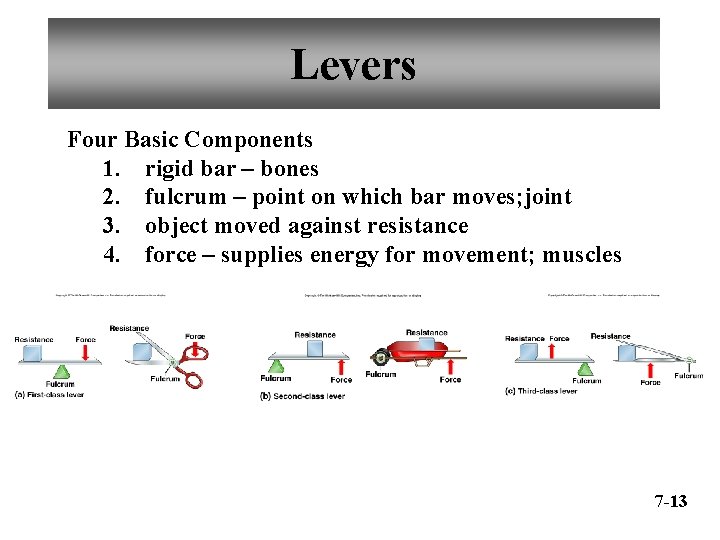
Levers Four Basic Components 1. rigid bar – bones 2. fulcrum – point on which bar moves; joint 3. object moved against resistance 4. force – supplies energy for movement; muscles 7 -13

Levers and Movement 7 -14
- Slides: 13