
Chapter 7 Single Factor Designs SingleFactorTwo Levels Factor
- Slides: 19
Chapter 7: Single Factor Designs
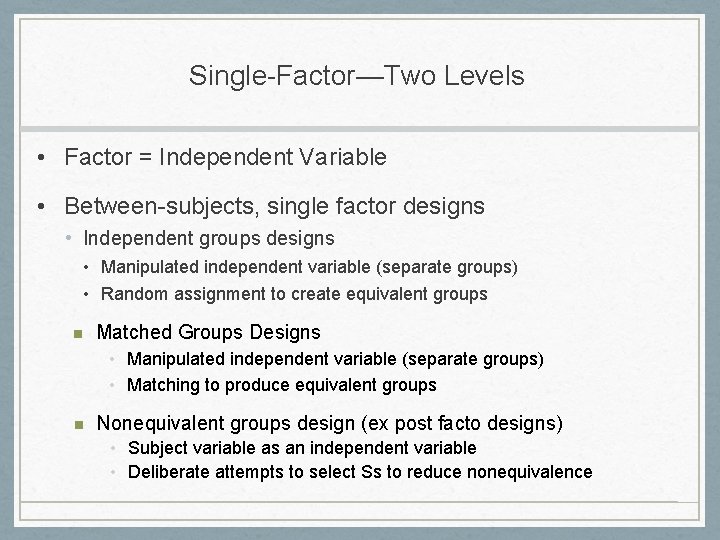
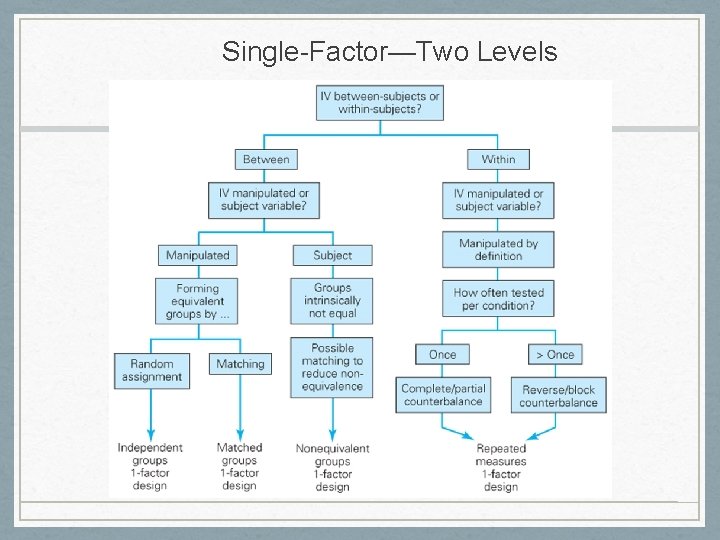
Single-Factor—Two Levels • Factor = Independent Variable • Between-subjects, single factor designs • Independent groups designs • Manipulated independent variable (separate groups) • Random assignment to create equivalent groups n Matched Groups Designs • Manipulated independent variable (separate groups) • Matching to produce equivalent groups n Nonequivalent groups design (ex post facto designs) • Subject variable as an independent variable • Deliberate attempts to select Ss to reduce nonequivalence
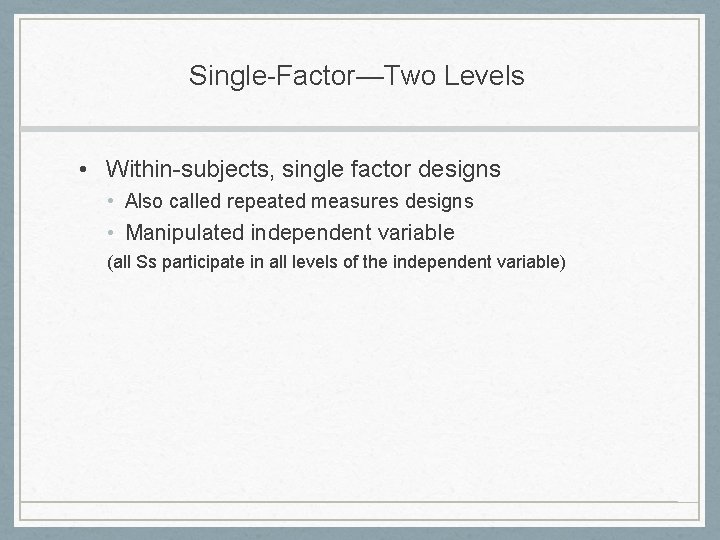
Single-Factor—Two Levels • Within-subjects, single factor designs • Also called repeated measures designs • Manipulated independent variable (all Ss participate in all levels of the independent variable)
Single-Factor—Two Levels
Single-Factor—Two Levels • Analyzing single-factor, two level designs • t test assumptions • Interval or ratio scale data • Data normally distributed • Homogeneity of variance • t test for independent samples, for • Independent groups designs • Nonequivalent groups designs • t test for dependent samples (paired, repeated measures) for • Matched groups designs • Repeated measures designs
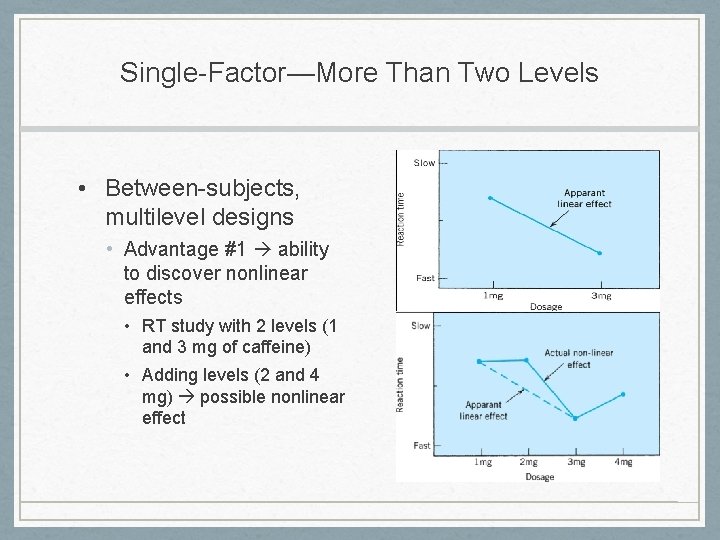
Single-Factor—More Than Two Levels • Between-subjects, multilevel designs • Advantage #1 ability to discover nonlinear effects • RT study with 2 levels (1 and 3 mg of caffeine) • Adding levels (2 and 4 mg) possible nonlinear effect
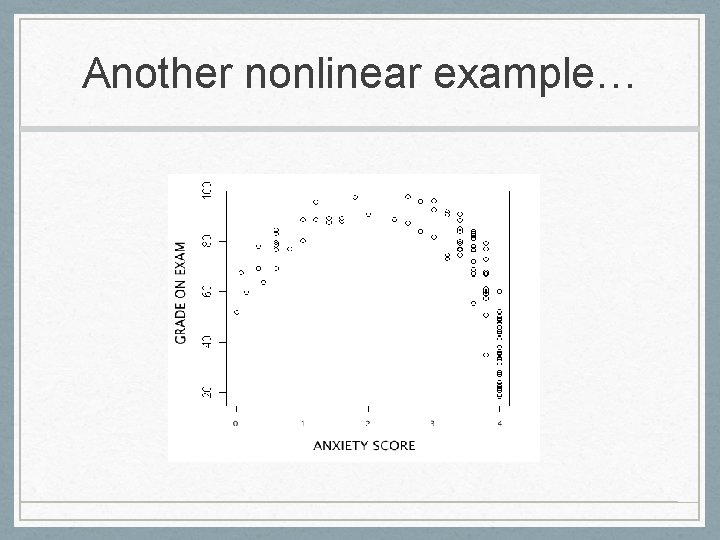
Another nonlinear example…
Single-Factor—More Than Two Levels • Between-subjects, multilevel designs • Advantage #2 ability to rule out alternative explanations
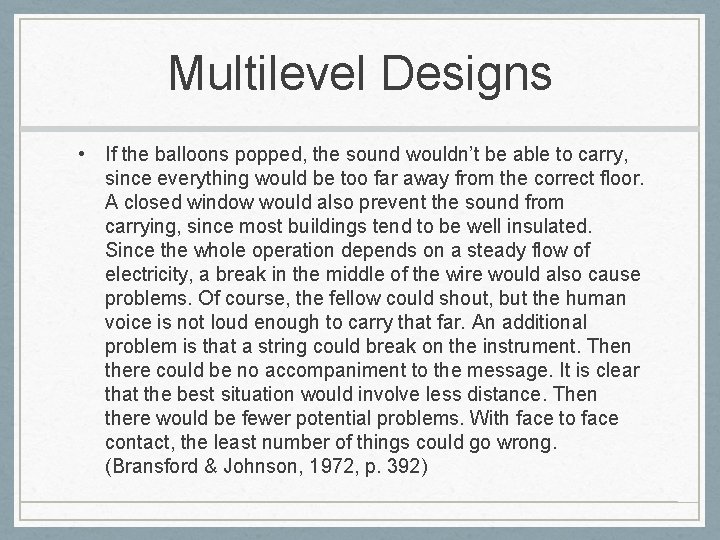
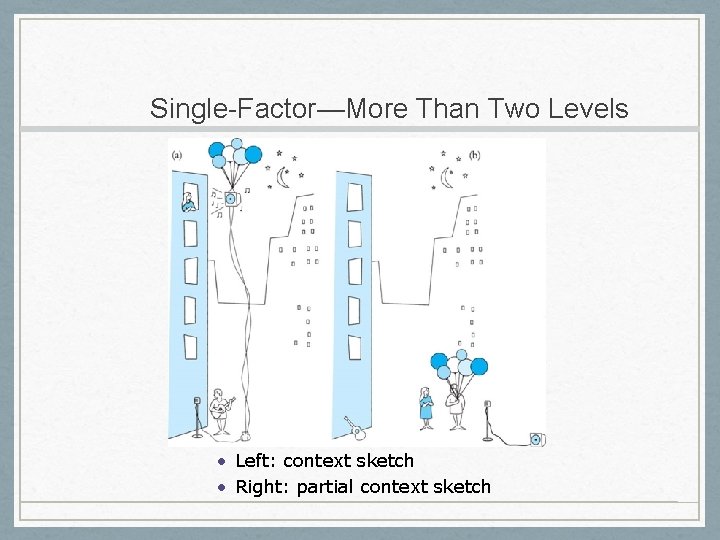
Multilevel Designs • If the balloons popped, the sound wouldn’t be able to carry, since everything would be too far away from the correct floor. A closed window would also prevent the sound from carrying, since most buildings tend to be well insulated. Since the whole operation depends on a steady flow of electricity, a break in the middle of the wire would also cause problems. Of course, the fellow could shout, but the human voice is not loud enough to carry that far. An additional problem is that a string could break on the instrument. Then there could be no accompaniment to the message. It is clear that the best situation would involve less distance. Then there would be fewer potential problems. With face to face contact, the least number of things could go wrong. (Bransford & Johnson, 1972, p. 392)
Single-Factor—More Than Two Levels • Left: context sketch • Right: partial context sketch
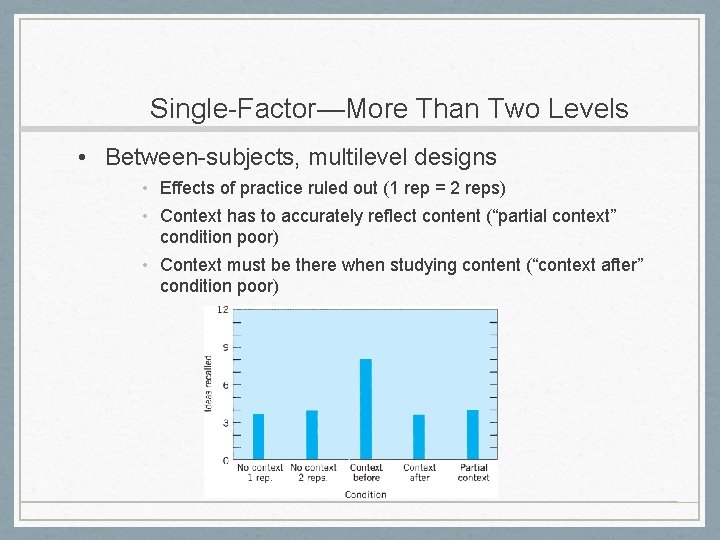
Single-Factor—More Than Two Levels • Between-subjects, multilevel designs • Effects of practice ruled out (1 rep = 2 reps) • Context has to accurately reflect content (“partial context” condition poor) • Context must be there when studying content (“context after” condition poor)
Single-Factor—More Than Two Levels • Within-subjects, multilevel designs • Research Example: Debunking the Mozart effect • Multilevel repeated measures • IV listening experience • Listening to Mozart • Listening to gentle rainstorm • Control – no listening • DV recall of digits • Results • No “Mozart” effect • Significant practice effect instead
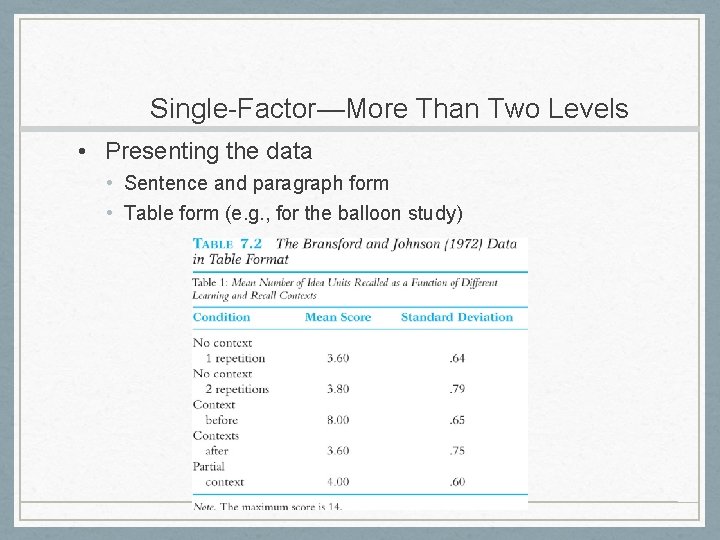
Single-Factor—More Than Two Levels • Presenting the data • Sentence and paragraph form • Table form (e. g. , for the balloon study)
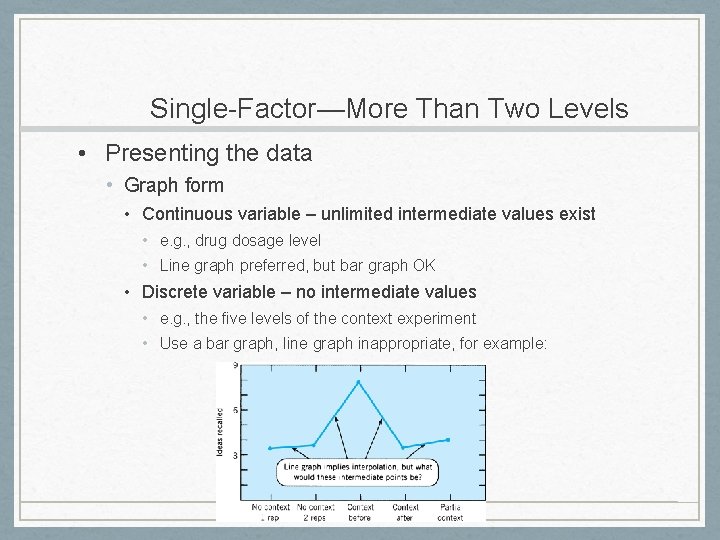
Single-Factor—More Than Two Levels • Presenting the data • Graph form • Continuous variable – unlimited intermediate values exist • e. g. , drug dosage level • Line graph preferred, but bar graph OK • Discrete variable – no intermediate values • e. g. , the five levels of the context experiment • Use a bar graph, line graph inappropriate, for example:
Single-Factor—More Than Two Levels • Analyzing single-factor, multilevel designs • Multiple t tests inappropriate • Increases chances of Type I error • 1 -factor Analysis of Variance (ANOVA) • “ 1 -factor” = 1 IV • “ 2 -factor” = 2 IVs (factorial design – Chapter 8) • Once overall significant effect found, then post hoc testing • Comparing each level of IV against each other level
Special-Purpose Control Group Designs • Placebo control groups • Placebo – inactive substance • Ss think they are being treated but they are not • Placebo effect • When performance of placebo group = experimental group, Ss expectations explain the effect of treatment • Wait list control groups • To insure equivalent groups in a study of program effectiveness • Wait list group later administered treatment only if shown to be effective (unethical to deny treatment)
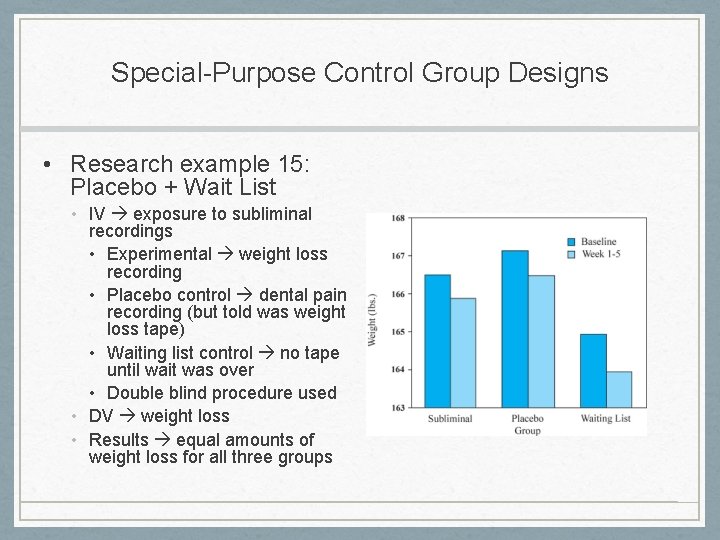
Special-Purpose Control Group Designs • Research example 15: Placebo + Wait List • IV exposure to subliminal recordings • Experimental weight loss recording • Placebo control dental pain recording (but told was weight loss tape) • Waiting list control no tape until wait was over • Double blind procedure used • DV weight loss • Results equal amounts of weight loss for all three groups
Special-Purpose Control Group Designs • Yoked control groups • Each control group subject “yoked” to an experimental group subject. • In experimental designs in which members of an experimental group and a control group are paired, the yoked control group members receive the same stimuli, reinforcements, or punishments as the experimental group members but without the possibility of influencing these effects through their own behavior. Example: Reward and test performance.
Summary • Depending on your empirical question, you may choose which type of design to use: • Between-subjects vs. within-subjects • Single factor, two level vs. Single factor, multi-level • Special-purpose control group designs • Depending on the type of design, you will choose the appropriate statistical test to test your hypothesis • e. g. , independent samples t-test, 1 -way ANOVA + post-hoc tests • Once you have your results, you share them with others both in writing and in visual form (tables, graphs)