
Chapter 7 Sexual Selection Intersexual and Intrasexual Selection
- Slides: 24
Chapter 7: Sexual Selection Intersexual and Intrasexual Selection Evolutionary Models of Mate Choice Learning and Mate Choice Cultural Transmission and Mate Choice Male-Male Competition and Mate Choice
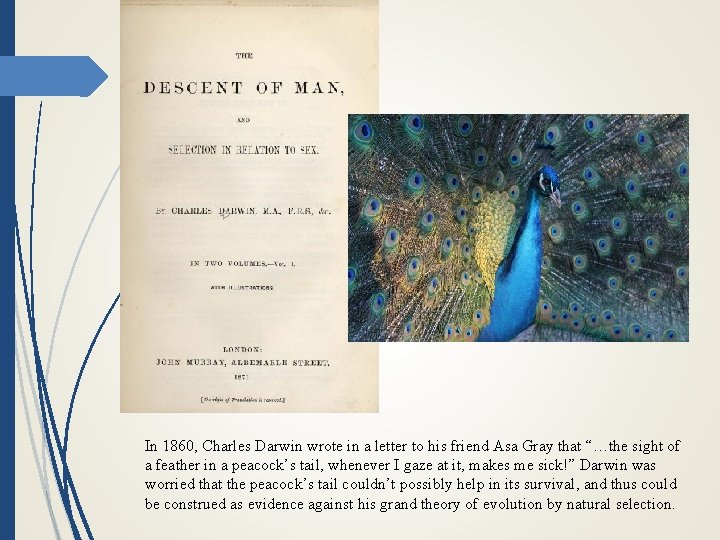
In 1860, Charles Darwin wrote in a letter to his friend Asa Gray that “…the sight of a feather in a peacock’s tail, whenever I gaze at it, makes me sick!” Darwin was worried that the peacock’s tail couldn’t possibly help in its survival, and thus could be construed as evidence against his grand theory of evolution by natural selection.
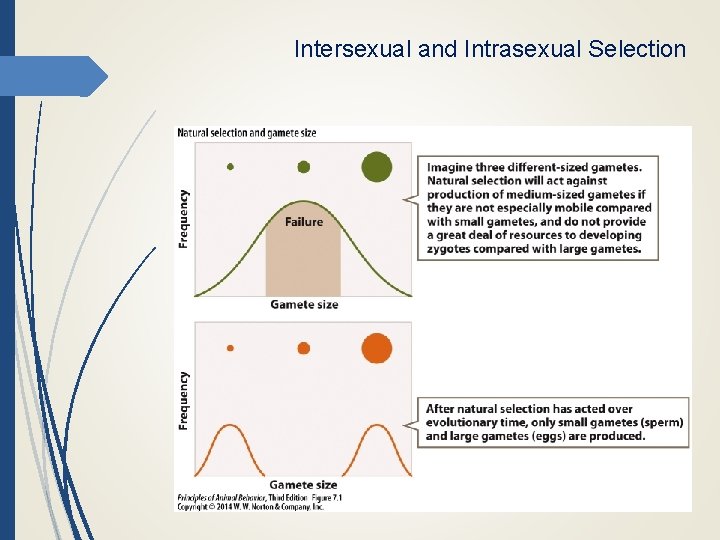
Intersexual and Intrasexual Selection
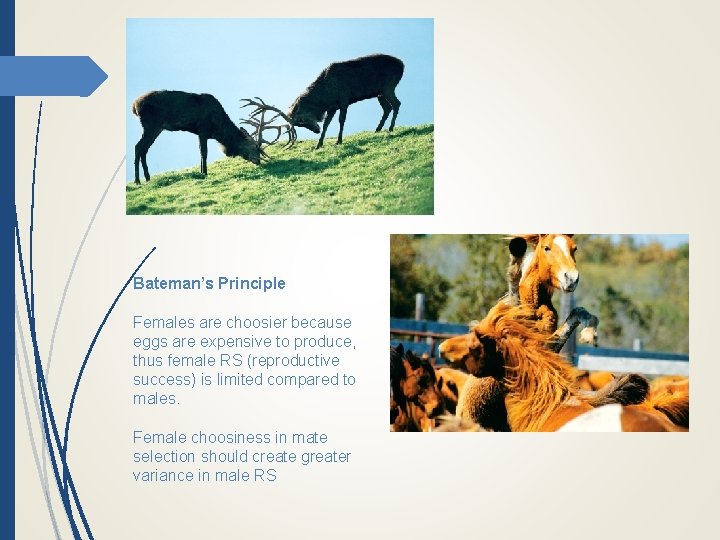
Bateman’s Principle Females are choosier because eggs are expensive to produce, thus female RS (reproductive success) is limited compared to males. Female choosiness in mate selection should create greater variance in male RS
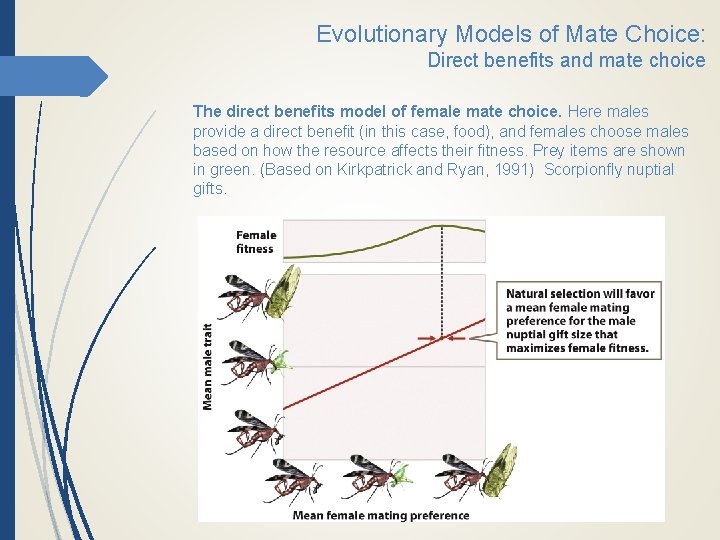
Evolutionary Models of Mate Choice: Direct benefits and mate choice The direct benefits model of female mate choice. Here males provide a direct benefit (in this case, food), and females choose males based on how the resource affects their fitness. Prey items are shown in green. (Based on Kirkpatrick and Ryan, 1991) Scorpionfly nuptial gifts.
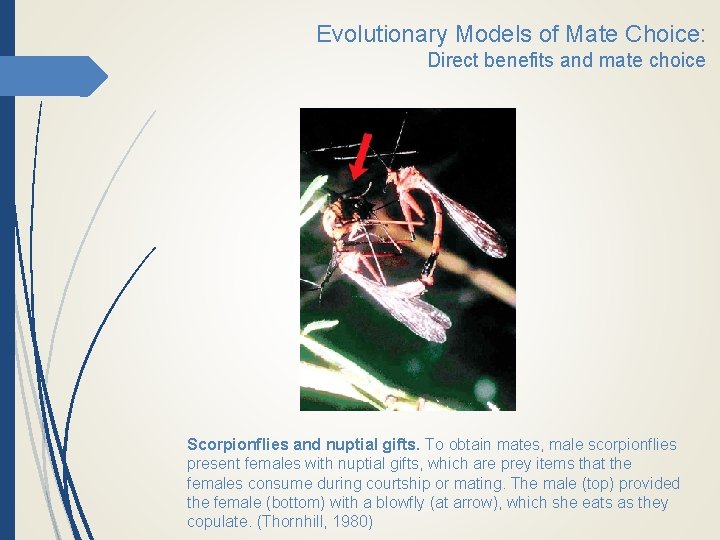
Evolutionary Models of Mate Choice: Direct benefits and mate choice Scorpionflies and nuptial gifts. To obtain mates, male scorpionflies present females with nuptial gifts, which are prey items that the females consume during courtship or mating. The male (top) provided the female (bottom) with a blowfly (at arrow), which she eats as they copulate. (Thornhill, 1980)
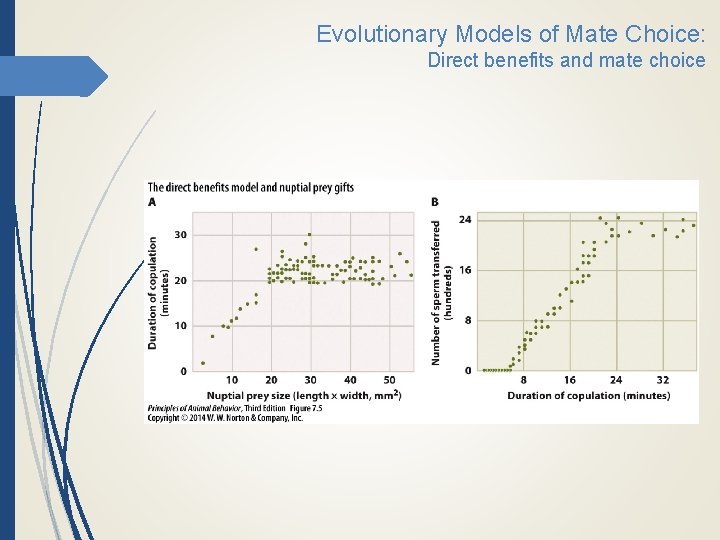
Evolutionary Models of Mate Choice: Direct benefits and mate choice
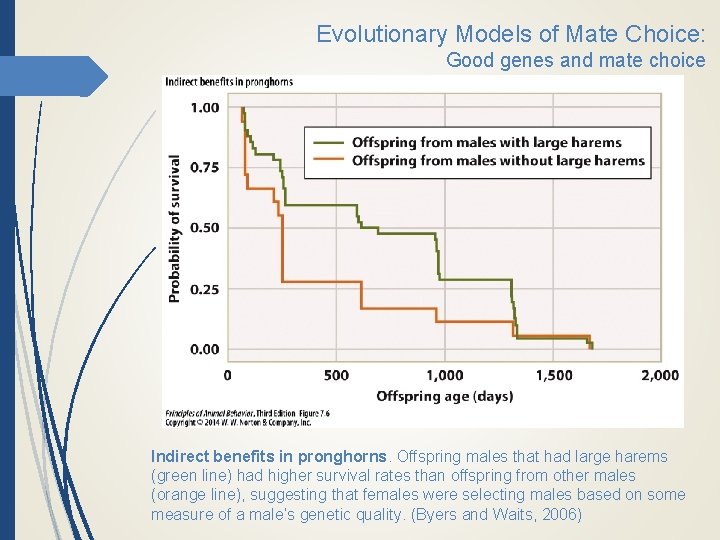
Evolutionary Models of Mate Choice: Good genes and mate choice Indirect benefits in pronghorns. Offspring males that had large harems (green line) had higher survival rates than offspring from other males (orange line), suggesting that females were selecting males based on some measure of a male’s genetic quality. (Byers and Waits, 2006)
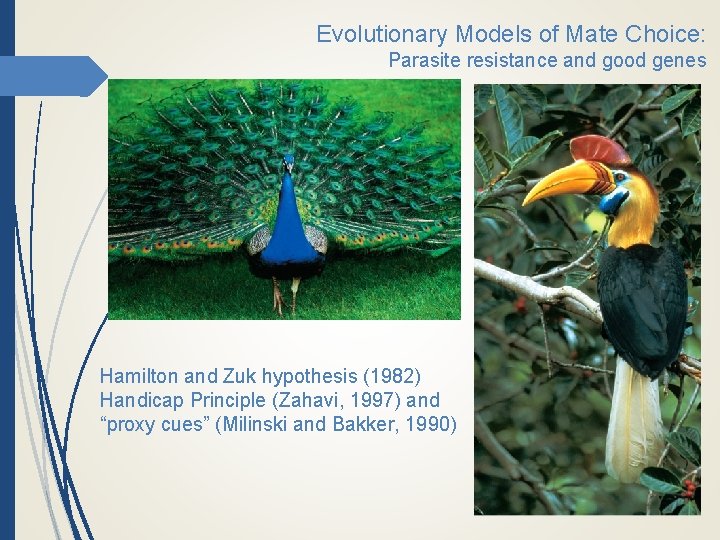
Evolutionary Models of Mate Choice: Parasite resistance and good genes Hamilton and Zuk hypothesis (1982) Handicap Principle (Zahavi, 1997) and “proxy cues” (Milinski and Bakker, 1990)
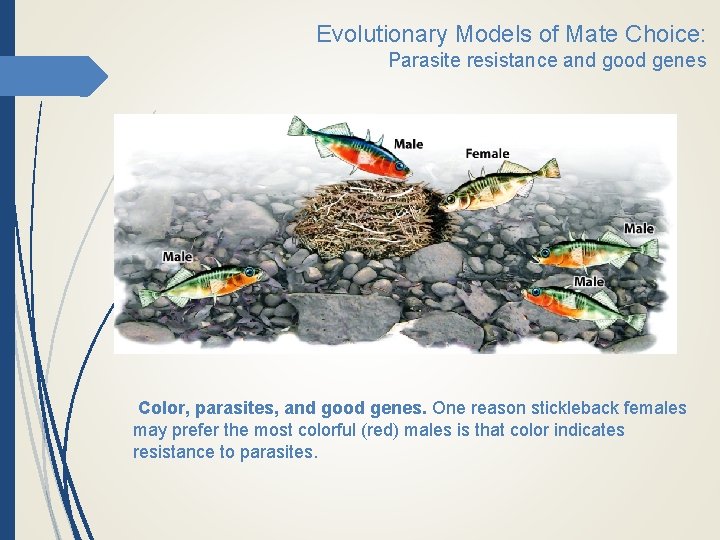
Evolutionary Models of Mate Choice: Parasite resistance and good genes Color, parasites, and good genes. One reason stickleback females may prefer the most colorful (red) males is that color indicates resistance to parasites.
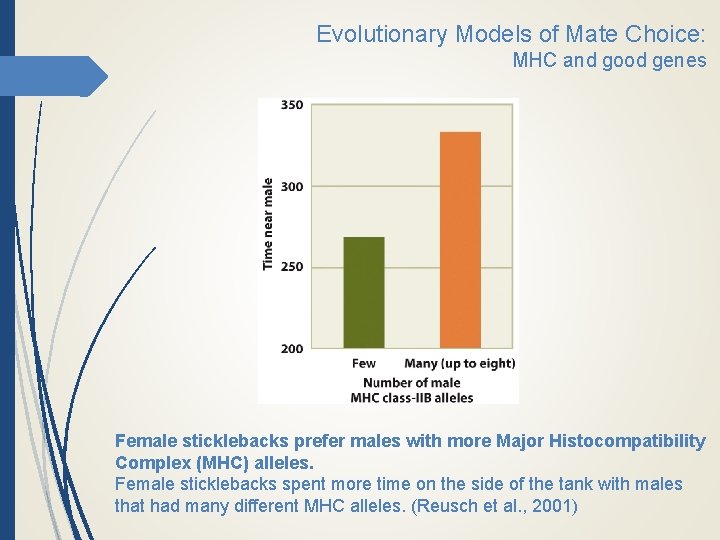
Evolutionary Models of Mate Choice: MHC and good genes Female sticklebacks prefer males with more Major Histocompatibility Complex (MHC) alleles. Female sticklebacks spent more time on the side of the tank with males that had many different MHC alleles. (Reusch et al. , 2001)
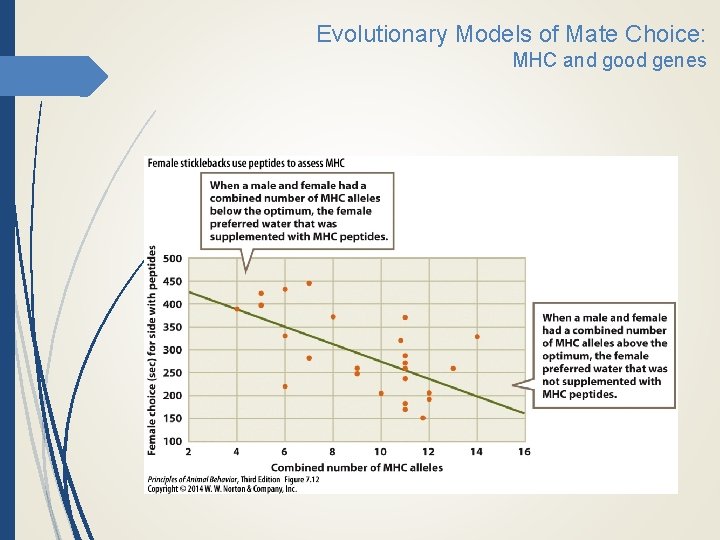
Evolutionary Models of Mate Choice: MHC and good genes
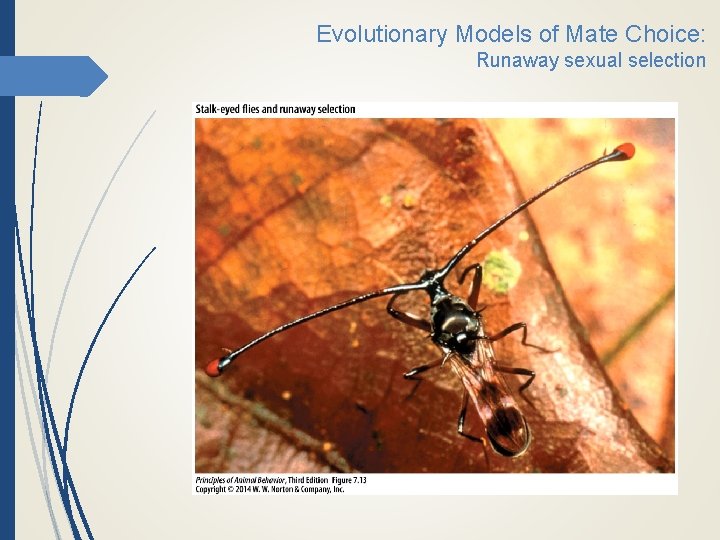
Evolutionary Models of Mate Choice: Runaway sexual selection
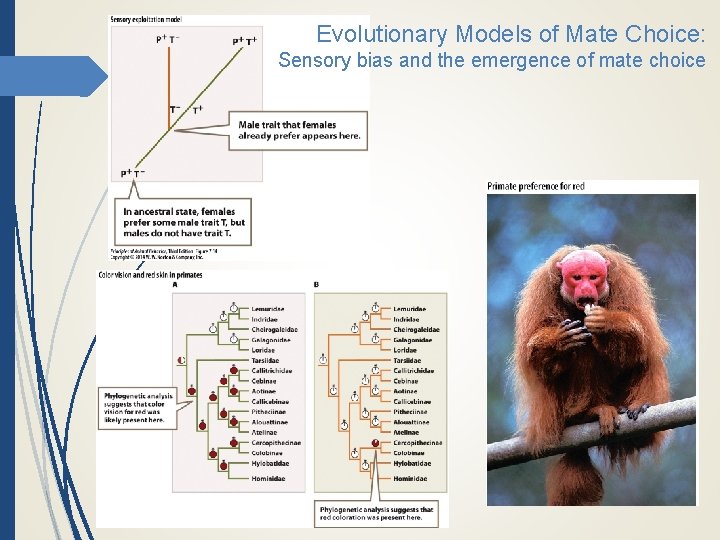
Evolutionary Models of Mate Choice: Sensory bias and the emergence of mate choice
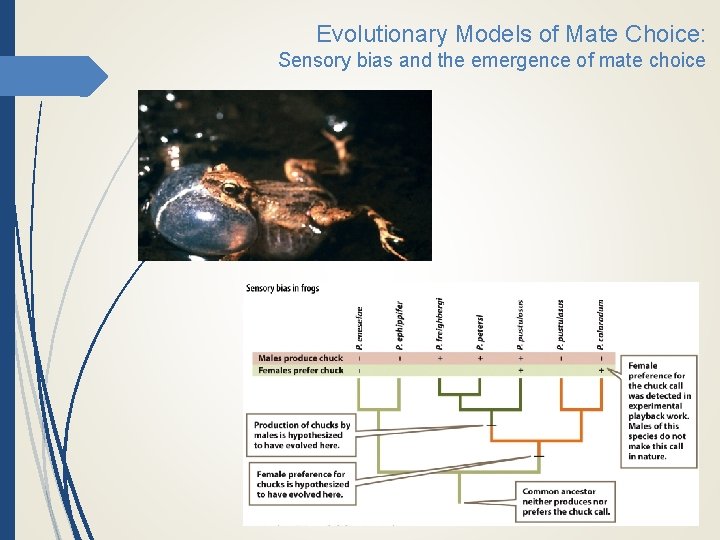
Evolutionary Models of Mate Choice: Sensory bias and the emergence of mate choice
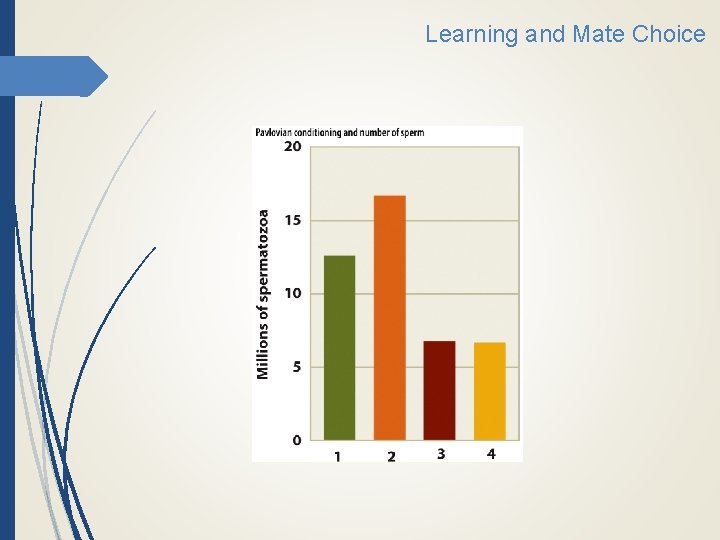
Learning and Mate Choice
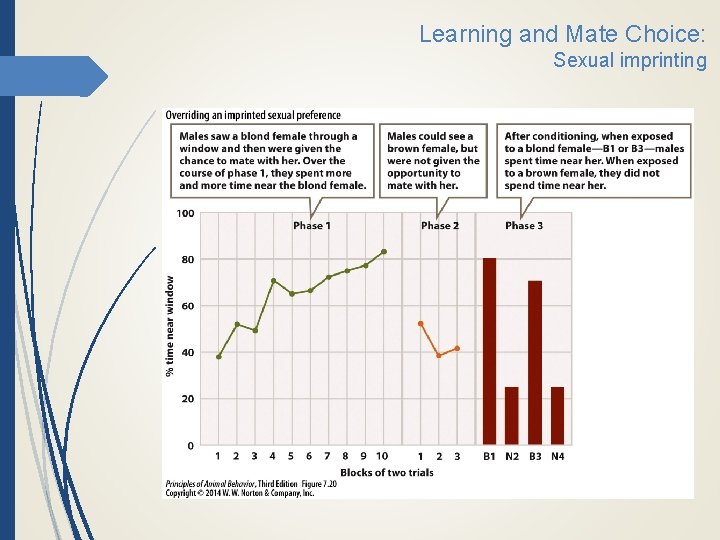
Learning and Mate Choice: Sexual imprinting
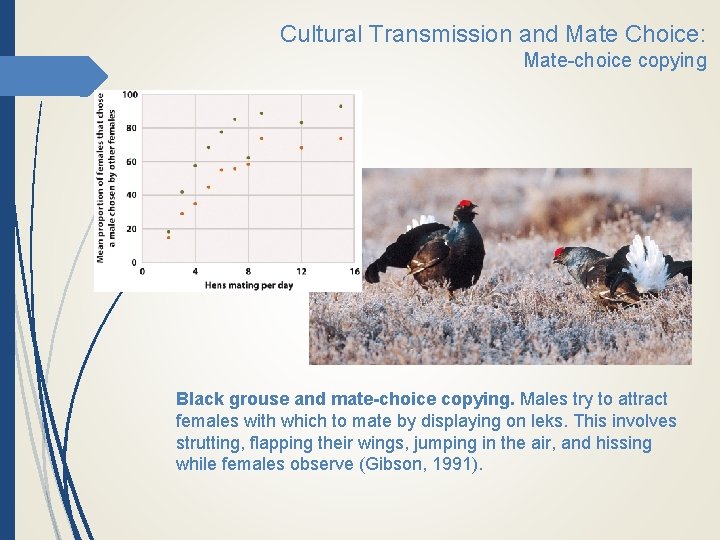
Cultural Transmission and Mate Choice: Mate-choice copying Black grouse and mate-choice copying. Males try to attract females with which to mate by displaying on leks. This involves strutting, flapping their wings, jumping in the air, and hissing while females observe (Gibson, 1991).
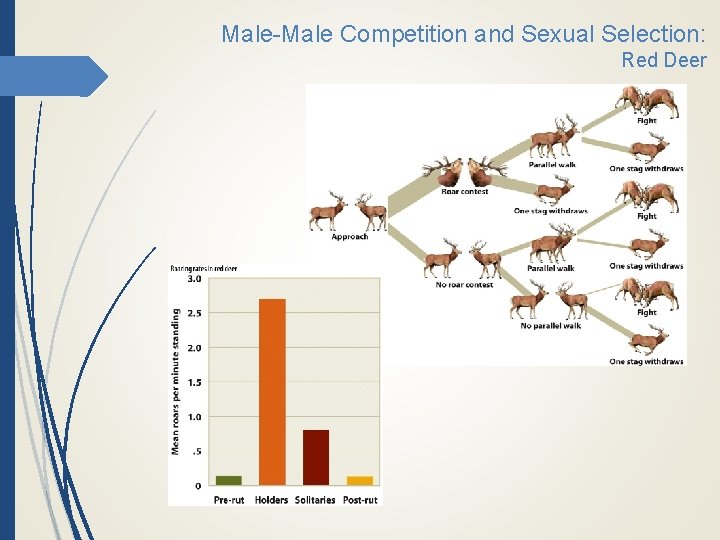
Male-Male Competition and Sexual Selection: Red Deer
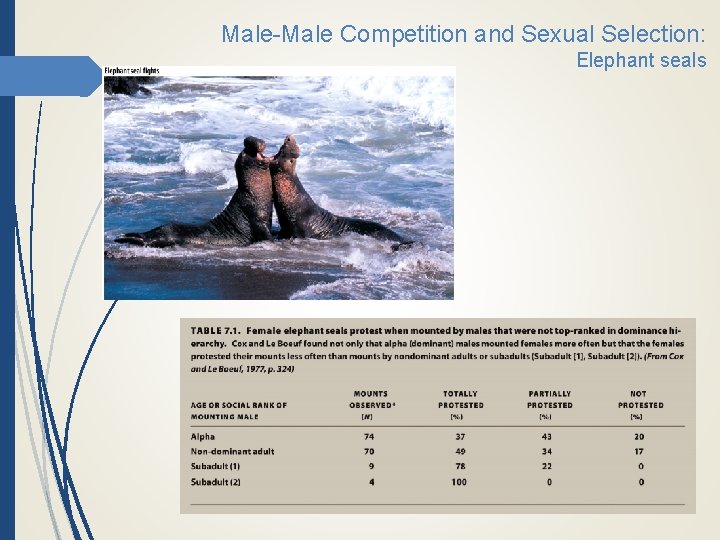
Male-Male Competition and Sexual Selection: Elephant seals
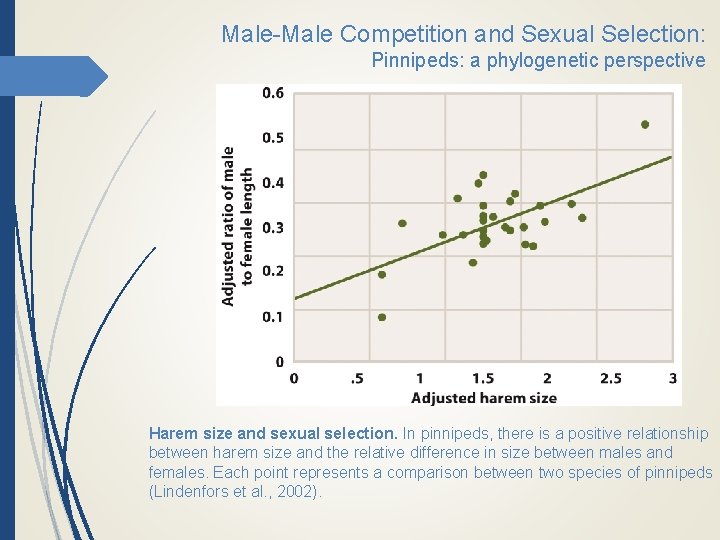
Male-Male Competition and Sexual Selection: Pinnipeds: a phylogenetic perspective Harem size and sexual selection. In pinnipeds, there is a positive relationship between harem size and the relative difference in size between males and females. Each point represents a comparison between two species of pinnipeds (Lindenfors et al. , 2002).
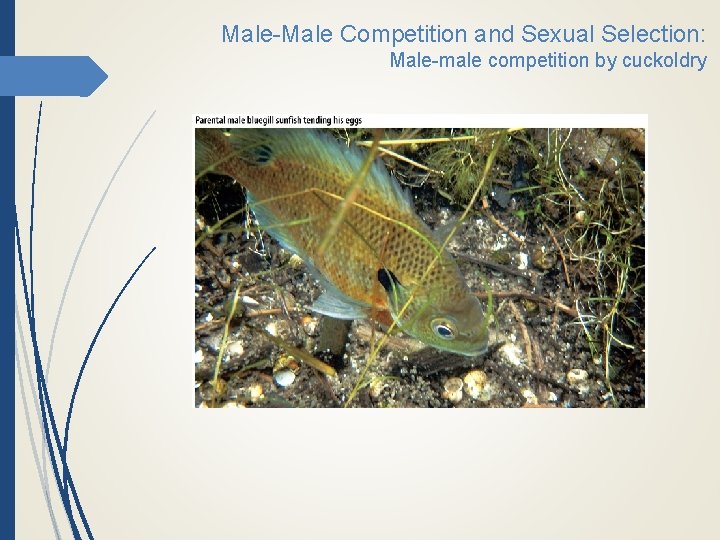
Male-Male Competition and Sexual Selection: Male-male competition by cuckoldry
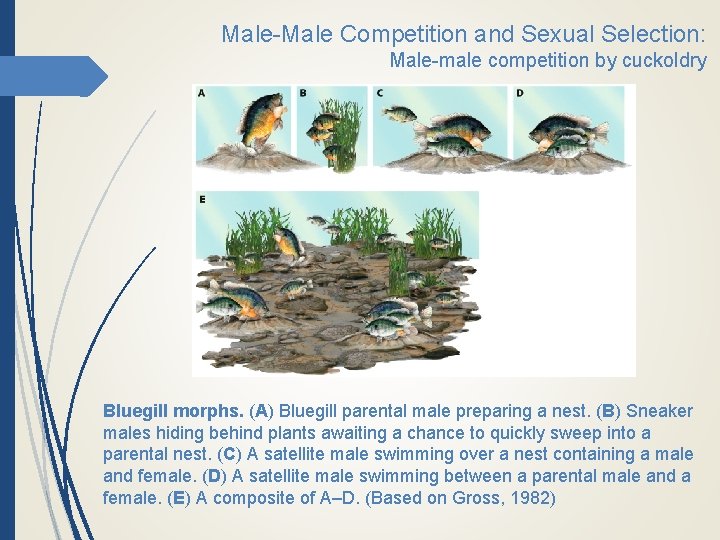
Male-Male Competition and Sexual Selection: Male-male competition by cuckoldry Bluegill morphs. (A) Bluegill parental male preparing a nest. (B) Sneaker males hiding behind plants awaiting a chance to quickly sweep into a parental nest. (C) A satellite male swimming over a nest containing a male and female. (D) A satellite male swimming between a parental male and a female. (E) A composite of A–D. (Based on Gross, 1982)
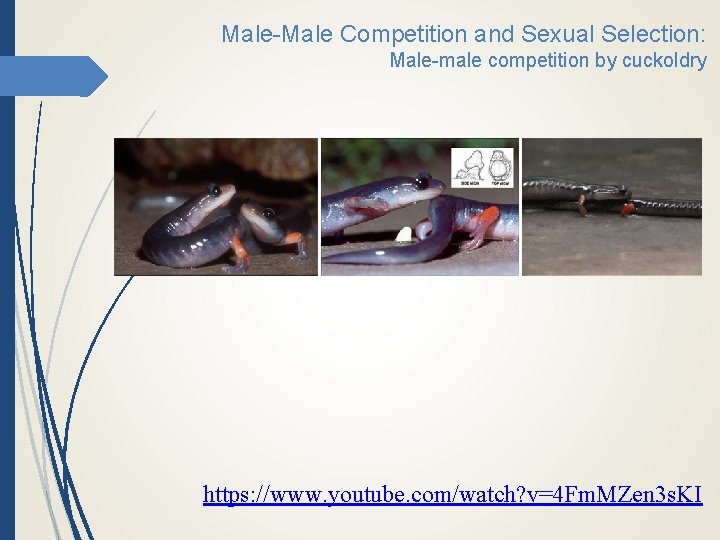
Male-Male Competition and Sexual Selection: Male-male competition by cuckoldry https: //www. youtube. com/watch? v=4 Fm. MZen 3 s. KI