
CHAPTER 7 SEGMENTATION TARGETING AND POSITIONING Segmentation Grouping
- Slides: 98
CHAPTER 7 SEGMENTATION, TARGETING, AND POSITIONING
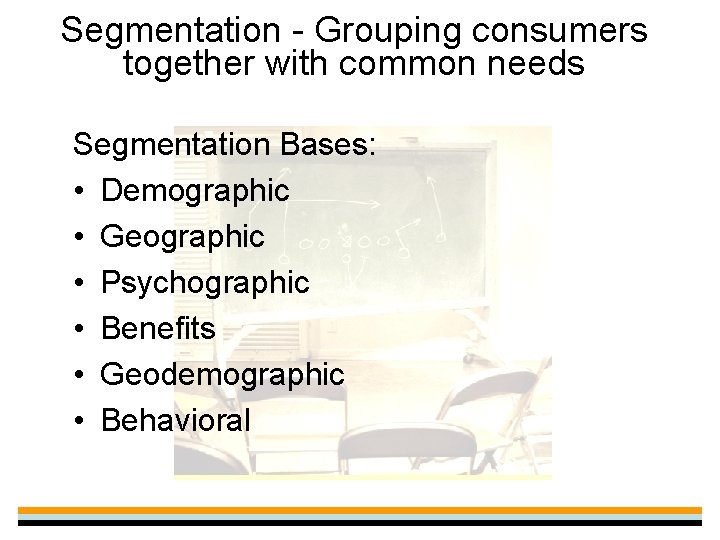
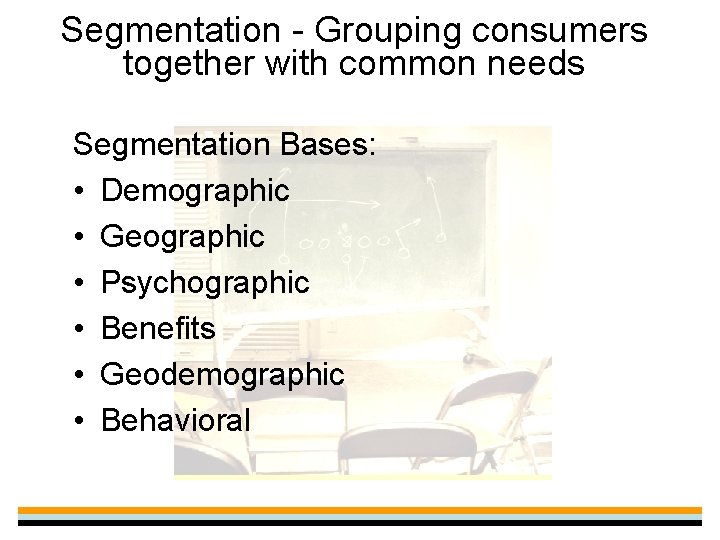
Segmentation - Grouping consumers together with common needs Segmentation Bases: • Demographic • Geographic • Psychographic • Benefits • Geodemographic • Behavioral
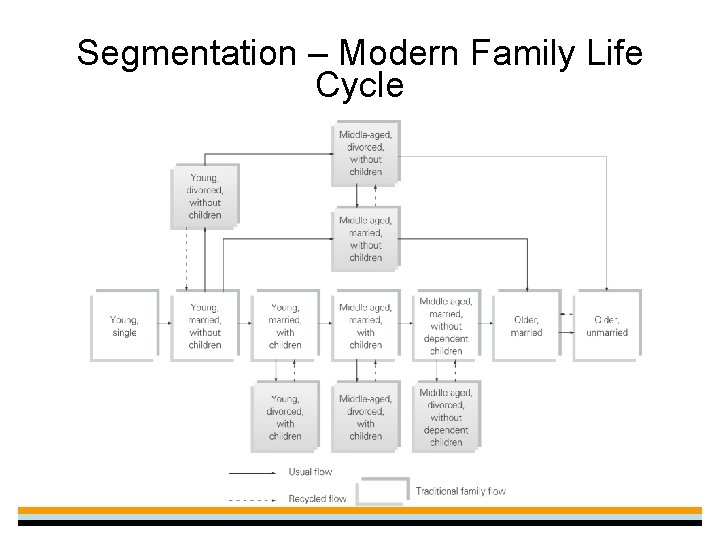
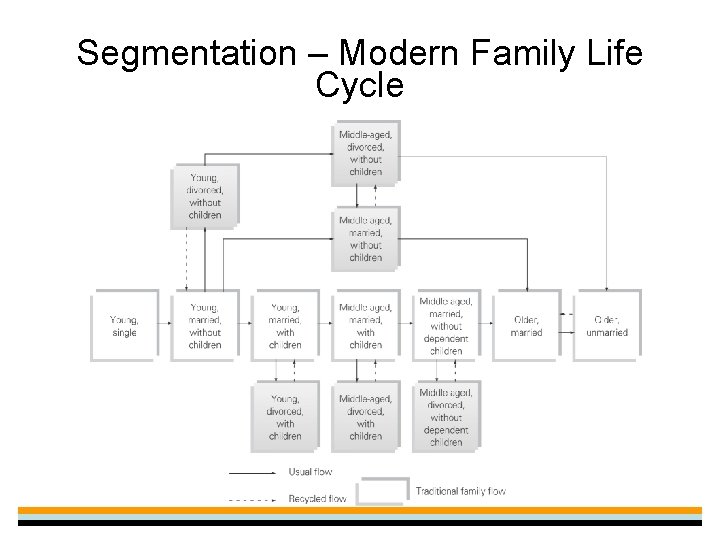
Segmentation – Modern Family Life Cycle
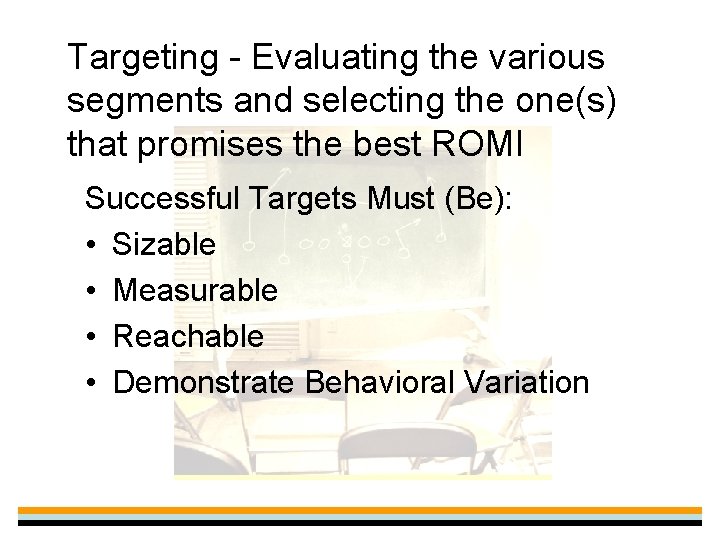
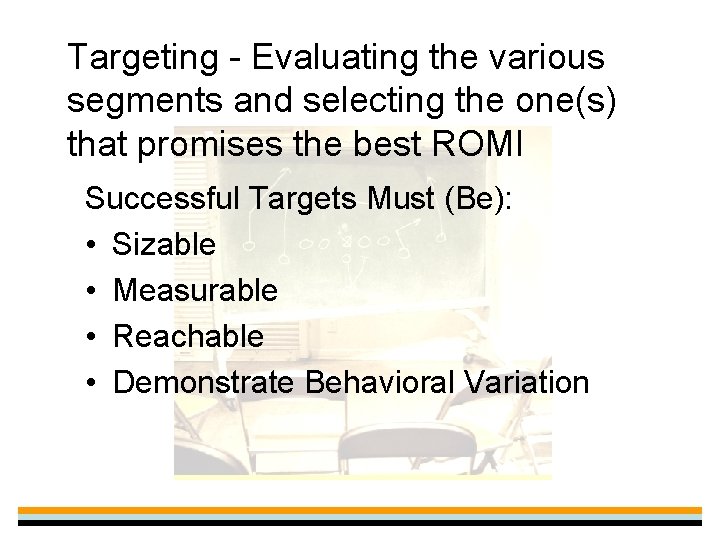
Targeting - Evaluating the various segments and selecting the one(s) that promises the best ROMI Successful Targets Must (Be): • Sizable • Measurable • Reachable • Demonstrate Behavioral Variation
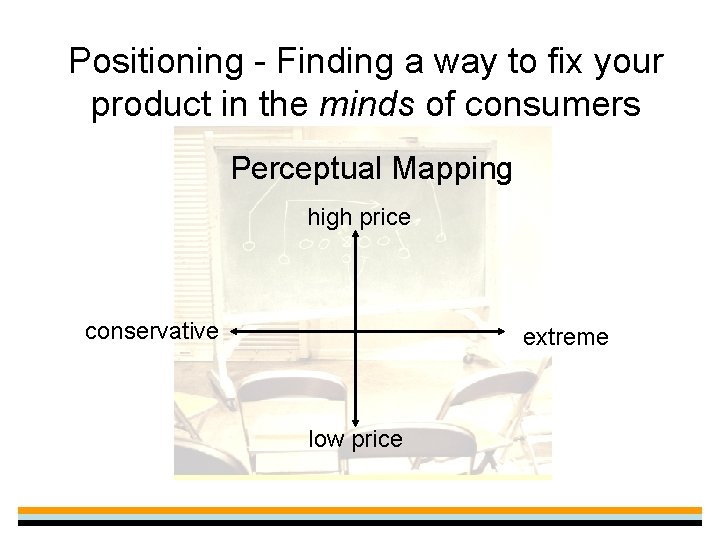
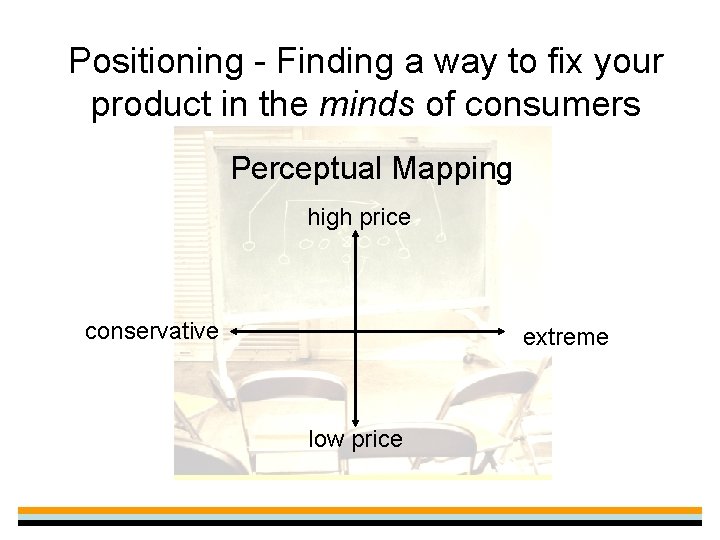
Positioning - Finding a way to fix your product in the minds of consumers Perceptual Mapping high price conservative extreme low price
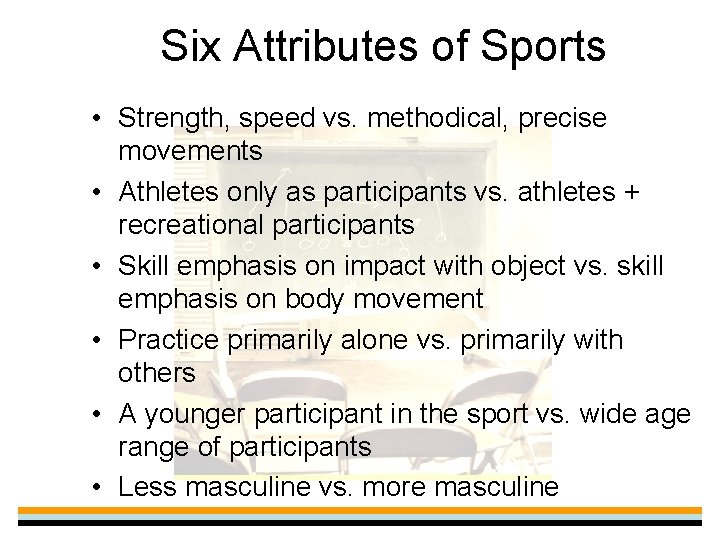
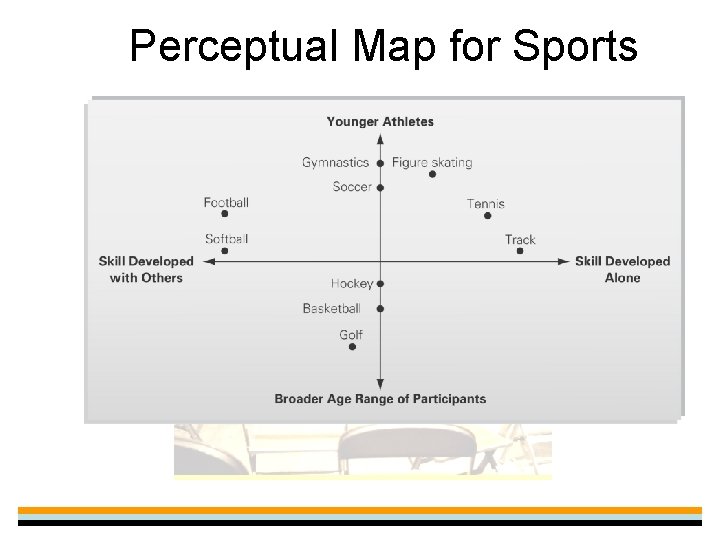
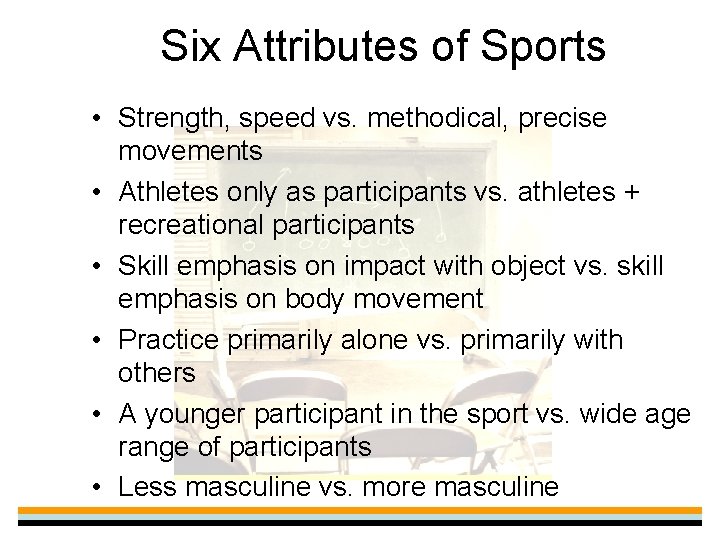
Six Attributes of Sports • Strength, speed vs. methodical, precise movements • Athletes only as participants vs. athletes + recreational participants • Skill emphasis on impact with object vs. skill emphasis on body movement • Practice primarily alone vs. primarily with others • A younger participant in the sport vs. wide age range of participants • Less masculine vs. more masculine
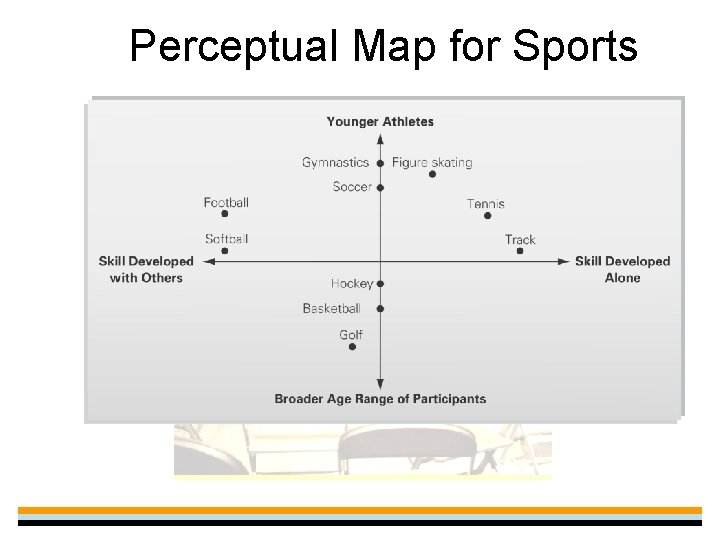
Perceptual Map for Sports
CHAPTER 8 SPORTS PRODUCT CONCEPTS
CHAPTER 7 SEGMENTATION, TARGETING, AND POSITIONING
Segmentation - Grouping consumers together with common needs Segmentation Bases: • Demographic • Geographic • Psychographic • Benefits • Geodemographic • Behavioral
Segmentation – Modern Family Life Cycle
Targeting - Evaluating the various segments and selecting the one(s) that promises the best ROMI Successful Targets Must (Be): • Sizable • Measurable • Reachable • Demonstrate Behavioral Variation
Positioning - Finding a way to fix your product in the minds of consumers Perceptual Mapping high price conservative extreme low price
Six Attributes of Sports • Strength, speed vs. methodical, precise movements • Athletes only as participants vs. athletes + recreational participants • Skill emphasis on impact with object vs. skill emphasis on body movement • Practice primarily alone vs. primarily with others • A younger participant in the sport vs. wide age range of participants • Less masculine vs. more masculine
Perceptual Map for Sports
Sports Product Concepts • Sports Product - Good, Service or Combination of the two that is designed to provide benefits to a sports spectator, participant, or sponsor.
Goods and Services as Sports Products (The Good/Service Continuum) • Intangibility – cannot be seen, felt, tasted • Inseparability – simultaneous production and consumption • Heterogeneity – potential for high variability • Perishability – cannot be inventoried or saved
Classification Of Sports Products • Product Mix - All the different products and services a firm offers • Product Line - Groups of individual products that are closely related in some way • Product Item - Any specific version of a product that can be designated as a distinct offering
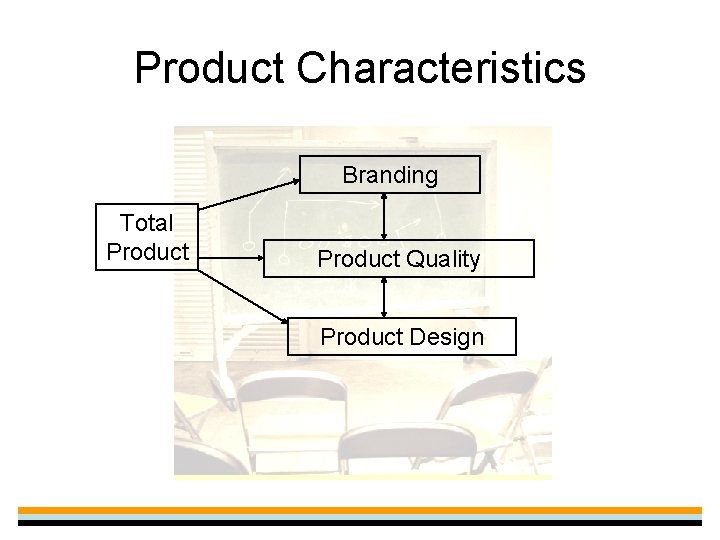
Product Characteristics Branding Total Product Quality Product Design
Branding • Name, design, symbol, or any combination • Broad purpose of branding is for a product to distinguish and differentiate itself from all other products • Some great sports names include the Macon Whoopie, Louisiana Ice Gators
Brand Names • What’s in a name? – Easy to say, generates positive feelings and associations – Translatable into a successful logo – Consistent with rest of product lines, city, or organization – Legally and ethically permissible
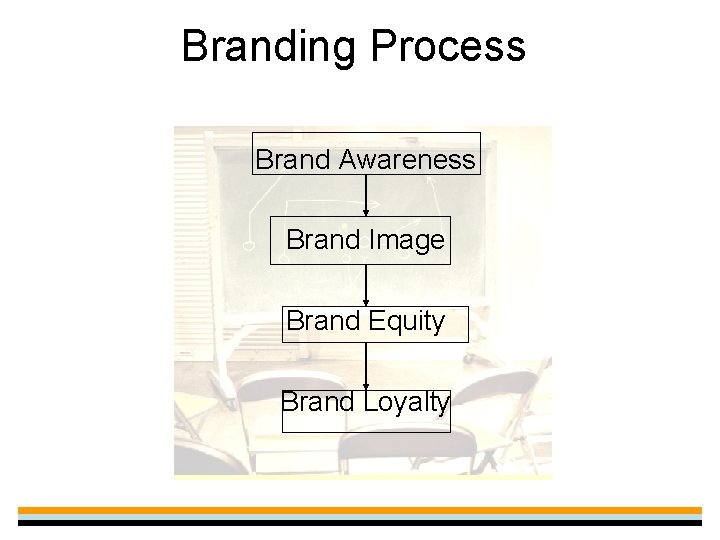
Branding Process Brand Awareness Brand Image Brand Equity Brand Loyalty
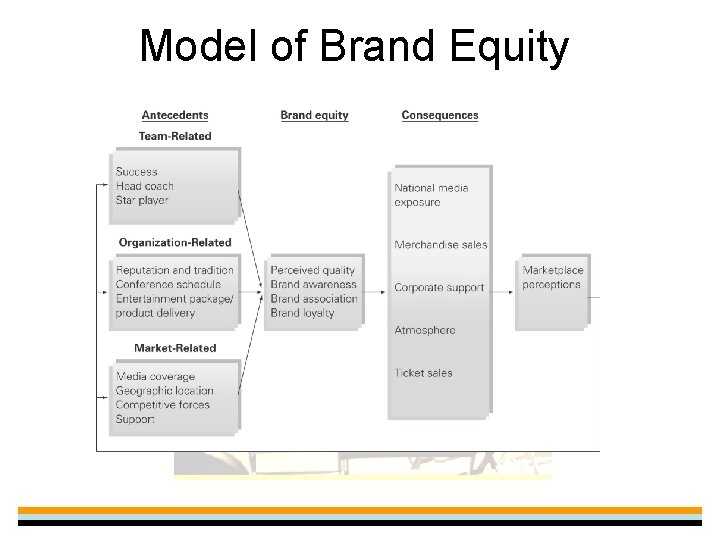
Model of Brand Equity
Licensing • Contractual agreement whereby a company may use another company’s branding in exchange for a royalty or fee • Booming business (e. g. , NBA has 150 licenses) with $13. 65 billion • NFL (3. 6) NBA (2. 6) Colleges (2. 0) MLB (1. 9) NHL (1. 2) • CAPS (Coalition to Advance the Protection of Sports Logos)
Sports Product Quality • Quality of Services • Quality of Goods
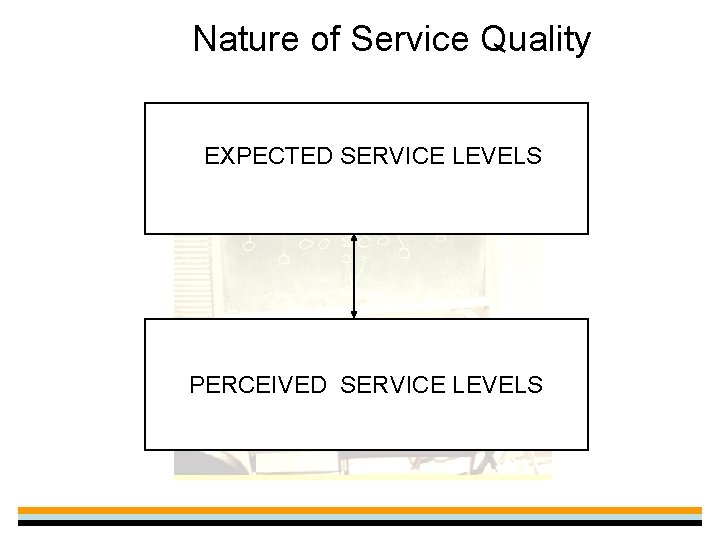
Nature of Service Quality EXPECTED SERVICE LEVELS PERCEIVED SERVICE LEVELS
Expected Service Levels • Service Promises (ads, price) • Word-of-Mouth • Past Experience
Perceived Service Levels Service Quality Dimensions • Tangibles – Physical facilities, appearance of personnel, equipment • Reliability – Ability to perform the service dependably, accurately, consistently • Responsiveness – Willingness to provide prompt service to customers • Assurance – Trust, knowledge, and courtesy of employees • Empathy – Caring, individualized attention to customers
Quality of Goods Dimensions • • Performance Features Conformity to Specifications Reliability Durability Serviceability Aesthetic Design
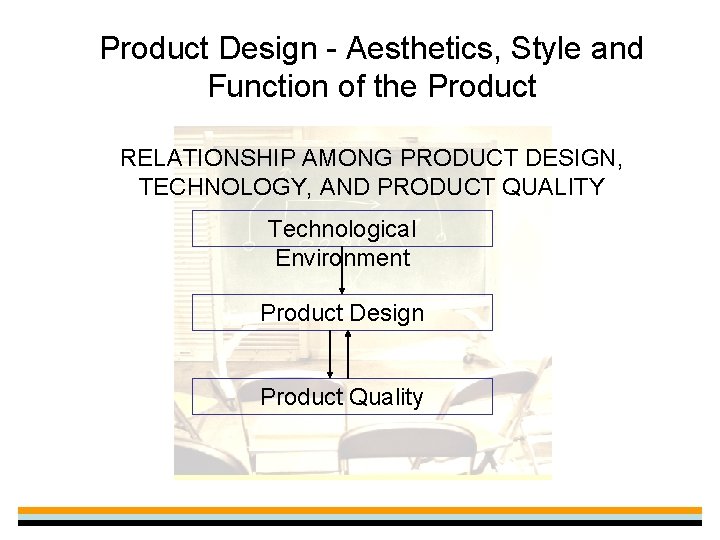
Product Design - Aesthetics, Style and Function of the Product RELATIONSHIP AMONG PRODUCT DESIGN, TECHNOLOGY, AND PRODUCT QUALITY Technological Environment Product Design Product Quality
CHAPTER 9 MANAGING SPORTS PRODUCTS
New Sports Products From the Perspective of the Organization • • • New-to-the-World Products New Product Category Entries Product Line Extensions Product Improvements Repositionings
New Sports Products From the Perspective of the Consumer • Discontinuous Innovations • Dynamically Continuous Innovations • Continuous Innovations
New Product Development Process • • • Idea generation Screening Business analysis/Concept testing Development Test marketing Commercialization
New Product Screening Checklist General Characteristics of New Product/Service • • • Profit potential Existing and potential competition Size of overall market Level of investment Level of risk
New Product Screening Checklist Marketing Characteristics of New Product/Service • • • Fit with marketing capabilities Effect on existing products and services Appeal to current consumer markets Existence of differential advantage Impact on image Production Characteristics of New Product/Service • Fit with production capabilities • Ability to produce at competitive prices • Availability of labor and material resources
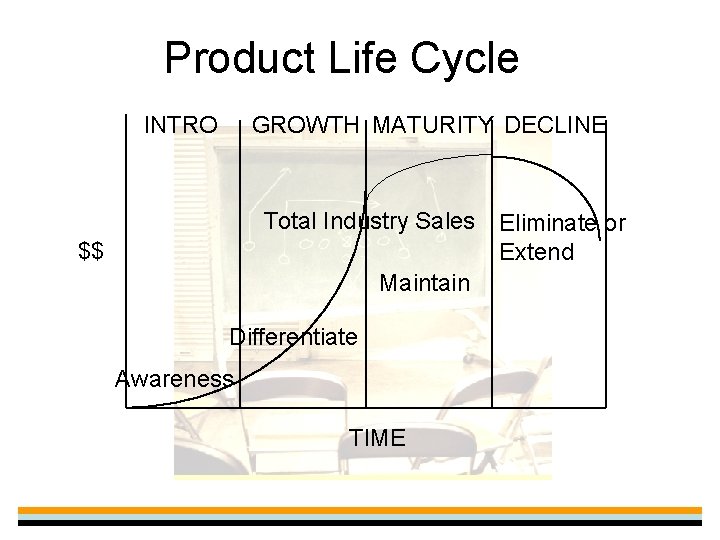
Product Life Cycle INTRO GROWTH MATURITY DECLINE Total Industry Sales Eliminate or Extend Maintain $$ Differentiate Awareness TIME
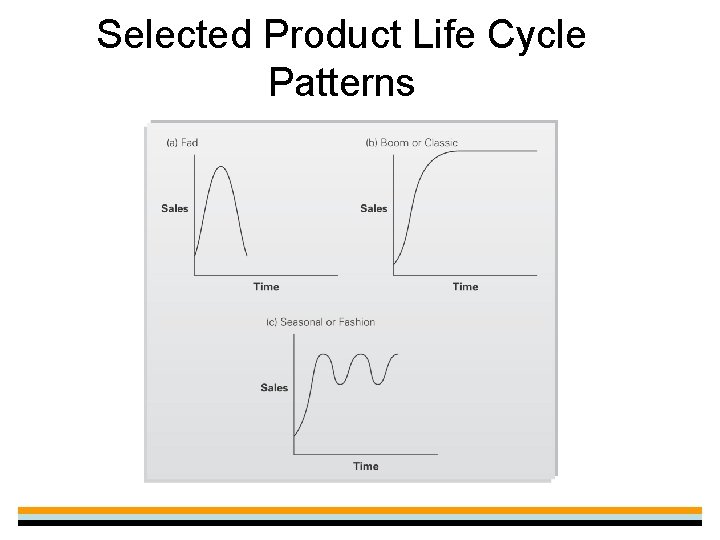
Selected Product Life Cycle Patterns
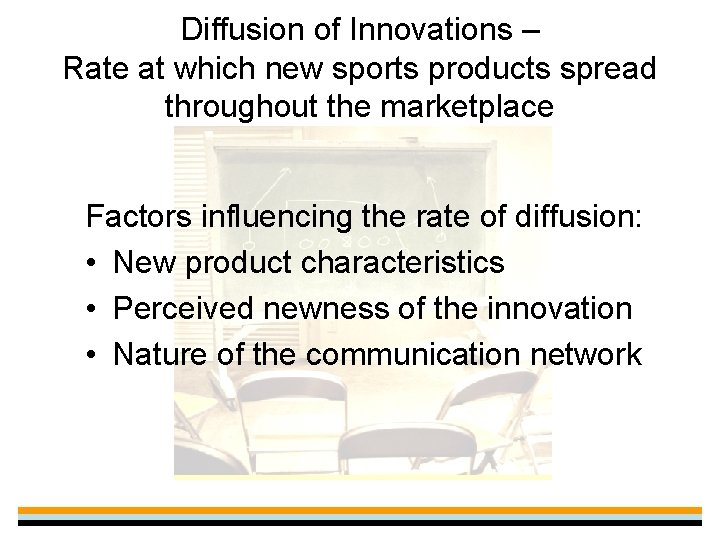
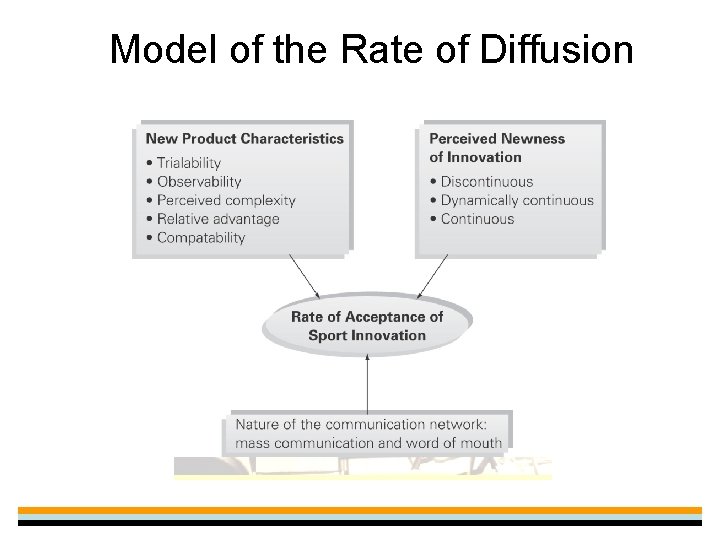
Diffusion of Innovations – Rate at which new sports products spread throughout the marketplace Factors influencing the rate of diffusion: • New product characteristics • Perceived newness of the innovation • Nature of the communication network
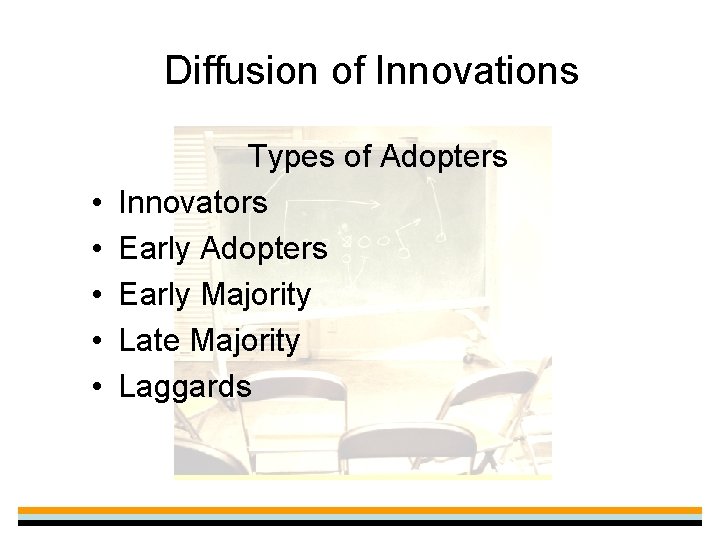
Diffusion of Innovations • • • Types of Adopters Innovators Early Adopters Early Majority Late Majority Laggards
Model of the Rate of Diffusion
CHAPTER 10 PROMOTION CONCEPTS
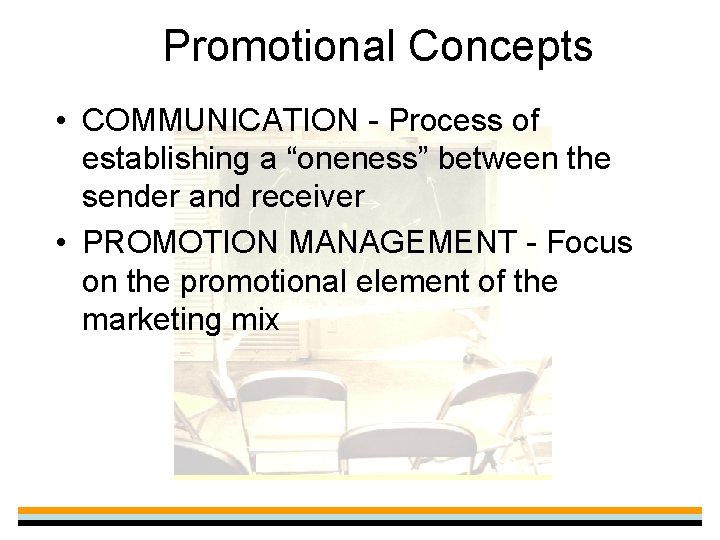
Promotional Concepts • COMMUNICATION - Process of establishing a “oneness” between the sender and receiver • PROMOTION MANAGEMENT - Focus on the promotional element of the marketing mix
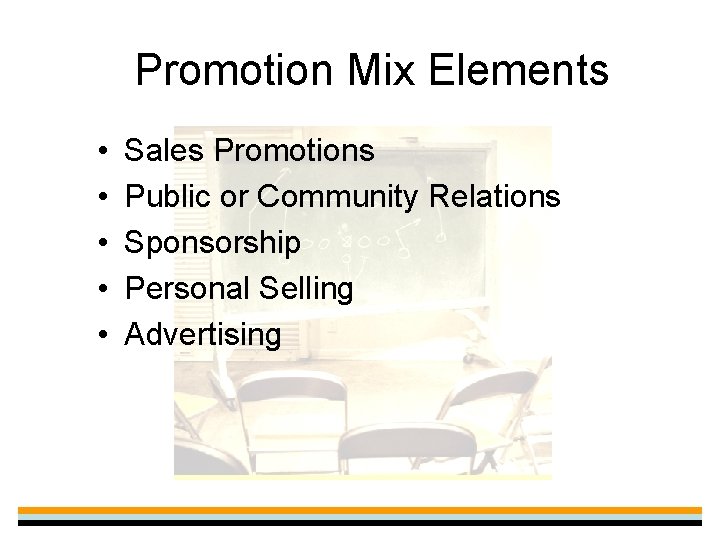
Promotion Mix Elements • • • Sales Promotions Public or Community Relations Sponsorship Personal Selling Advertising
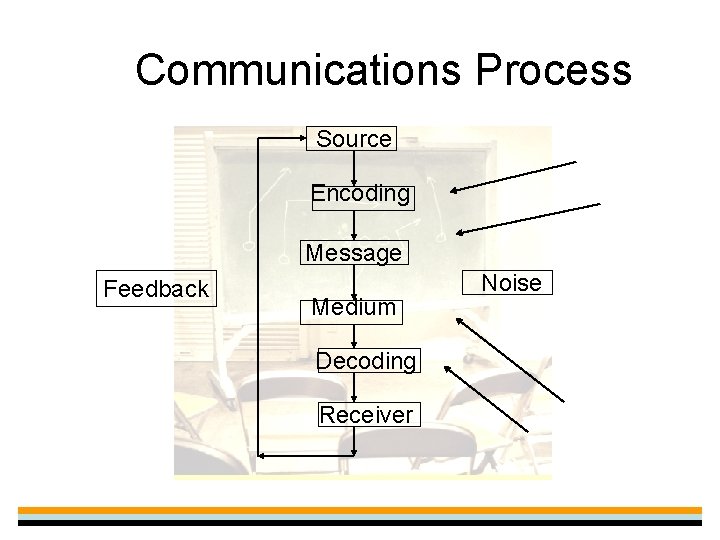
Communications Process Source Encoding Message Feedback Medium Decoding Receiver Noise
Promotion Planning • • Target market considerations Promotional objectives Establishing promotional budgets Choosing an integrated promotional mix
Target Market Considerations • Push strategy • Pull strategy
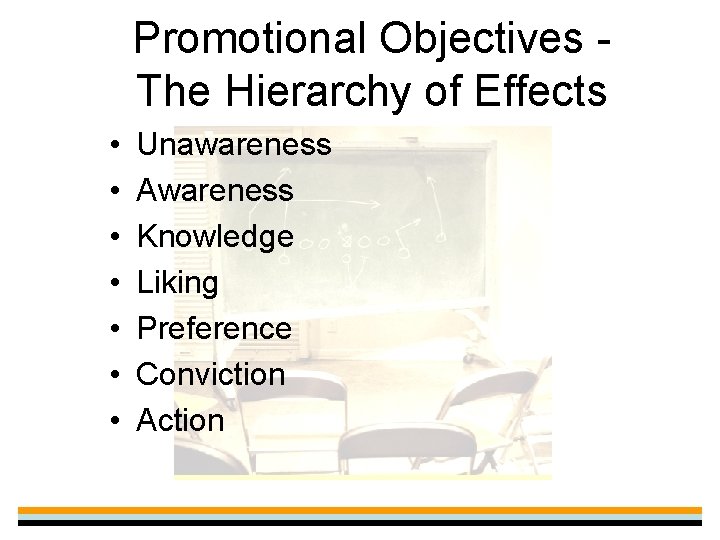
Promotional Objectives The Hierarchy of Effects • • Unawareness Awareness Knowledge Liking Preference Conviction Action
Promotional Budgets • • Arbitrary allocation Competitive parity Percentage of sales Objective and task method
Integrating the Promotional Mix • Integrated Marketing Communications Concept by which a sports organization carefully integrates and coordinates its many promotional mix elements to deliver a unified message about the organization and its products.
CHAPTER 11 PROMOTION MIX ELEMENTS
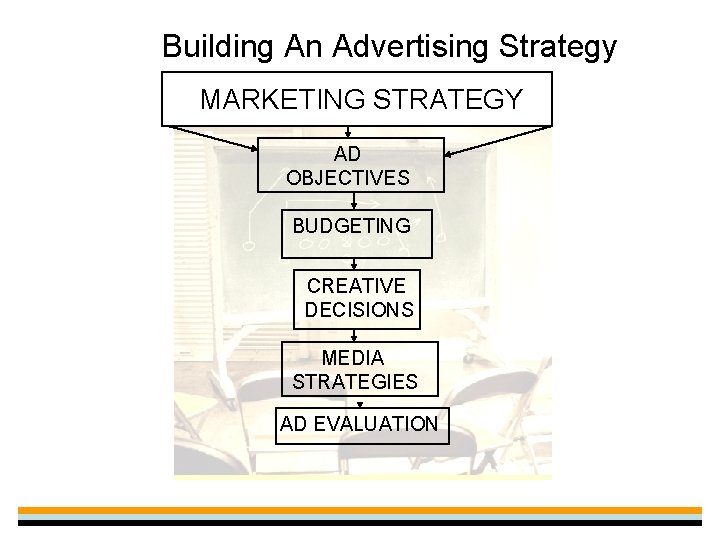
Building An Advertising Strategy MARKETING STRATEGY AD OBJECTIVES BUDGETING CREATIVE DECISIONS MEDIA STRATEGIES AD EVALUATION
Ad Objectives (awareness, inform, change attitudes, purchase) • INDIRECT OBJECTIVES - ENHANCE CORPORATE IMAGE • DIRECT OBJECTIVES - STIMULATE DEMAND FOR THE SPORTS PRODUCT
Ad Budgeting • • ALL YOU CAN AFFORD COMPETITIVE PARITY PERCENTAGE OF SALES OBJECTIVE AND TASK
Creative Strategies • IDENTIFYING THE BENEFITS OF THE SPORTS PRODUCT • DESIGNING THE AD APPEAL • DEVELOPING THE AD EXECUTION
Designing The Ad Appeal • • • Health Appeals Emotional Appeals Fear Appeals Sex Appeals Pleasure or Fun Appeals
Designing The Ad Execution • • • One- or Two-Sided Messages Comparative Message Slice-of-Life or Lifestyle Message Scientific Message Testimonials
Media Strategy • SPECIFY THE MEDIA OBJECTIVES (REACH, FREQUENCY, CONTINUITY) • SELECTING THE MEDIA VEHICLES
Personal Selling: The Strategic Selling Process • • • Buying Influences Red Flags Response Modes Win-Results The Sales Funnel Ideal Customers
Sales Promotions • • • Premiums Contests and Sweepstakes Sampling Point-of-Purchase Displays Coupons
Public Relations • Publicity (news releases, press conferences) • Participation in Community Events • Producing Written Materials (press guides) • Lobbying
CHAPTER 12 SPONSORSHIP PROGRAMS
Sponsorship • Investing in a sports entity to support overall organizational objectives and marketing goals • IEG estimates in North America $11. 19 billion spent on sponsorship and of this $7. 69 billion will be spent on sports • Not unlike other forms of communication, sponsors must fight the clutter and find the perfect match
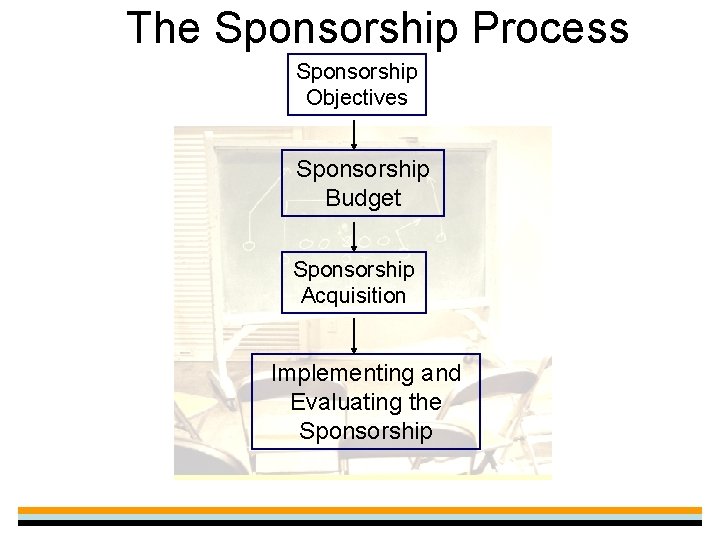
The Sponsorship Process Sponsorship Objectives Sponsorship Budget Sponsorship Acquisition Implementing and Evaluating the Sponsorship
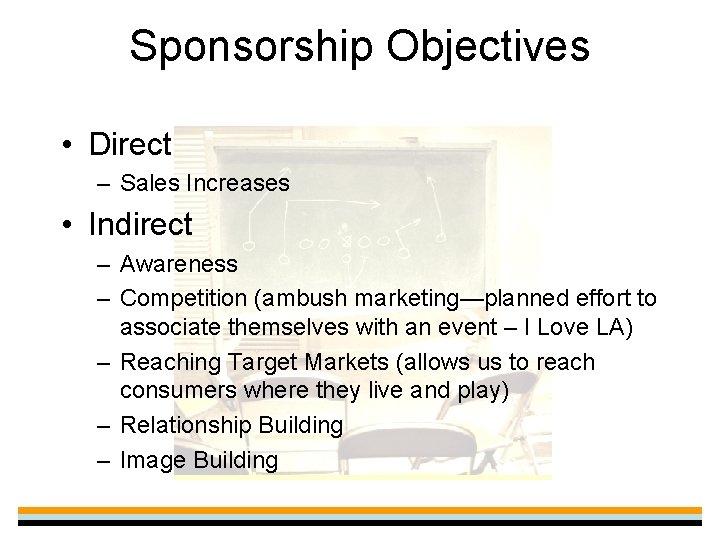
Sponsorship Objectives • Direct – Sales Increases • Indirect – Awareness – Competition (ambush marketing—planned effort to associate themselves with an event – I Love LA) – Reaching Target Markets (allows us to reach consumers where they live and play) – Relationship Building – Image Building
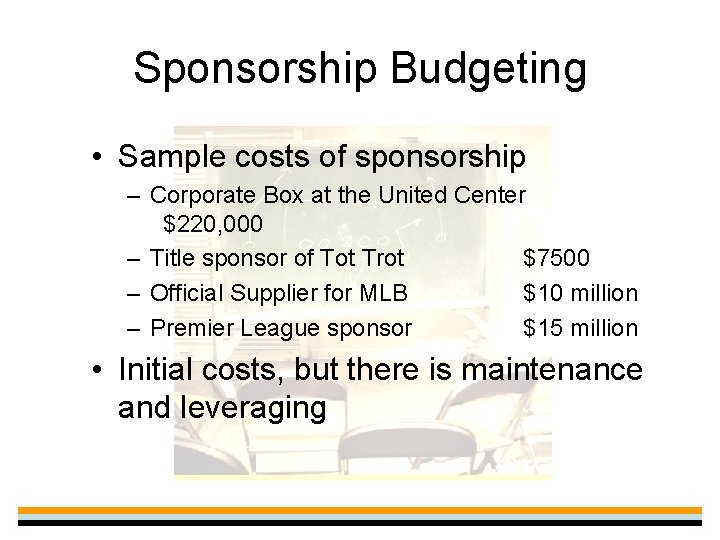
Sponsorship Budgeting • Sample costs of sponsorship – Corporate Box at the United Center $220, 000 – Title sponsor of Tot Trot $7500 – Official Supplier for MLB $10 million – Premier League sponsor $15 million • Initial costs, but there is maintenance and leveraging
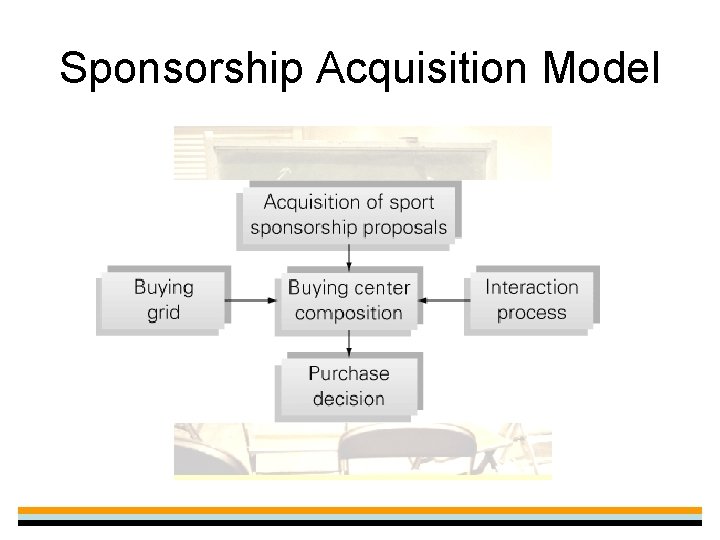
Sponsorship Acquisition Model
Sponsorship Acquisition • 1) Determine Scope of the Sponsorship (sports event pyramid with global, international, regional, and local events) • 2) Determine the athletic platform (entity and level of competition)
Sponsorship Implementation and Evaluation • • • Number of mentions in popular media Media equivalencies Sales figures (pre and post) Attitude change (pre and post) Number of distributors (pre and post)
CHAPTER 13 DISTRIBUTION CONCEPTS
Distribution Concepts • Ability of consumers to gain access to products in a timely and convenient fashion • Moving product from producer to consumer via the various channels of distribution
Sports Distribution Issues • Sports Retailing • Stadium as “Place” • Sports Media
Sports Retailing Mix • • Products Pricing Distribution Promotion
Retail Image/Store Personality • Factors include (in general): – – – atmospherics location employees/sales personnel clientele merchandise assortment promotional activities
Stadium as “Place” • New Sports Venues • Ticket Distribution Issues
Sports Media as Distribution • Delivering the Sports Product to Consumers Via Media • Rising Cost of Media Rights • Media as a Portion of the Revenue Mix • New Trends in Sports Media
CHAPTER 14 PRICING CONCEPTS
Pricing Concepts • Price is a Statement of Value • Value = Perceived Benefits Price of Sports Product • Essence of pricing is the exchange process - An attempt to quantify the value of what is being exchanged
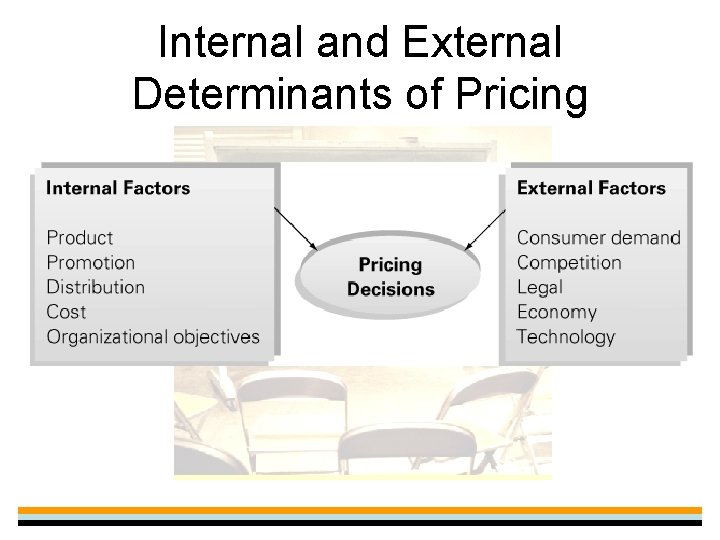
Internal and External Determinants of Pricing
• • RELATIONSHIP OF PRICE TO SOME OTHER MARKETING MIX ELEMENTS Related to product life cycle Communicates something about the product Promotion geared towards information about price Product lines with different prices attract different segments of consumers
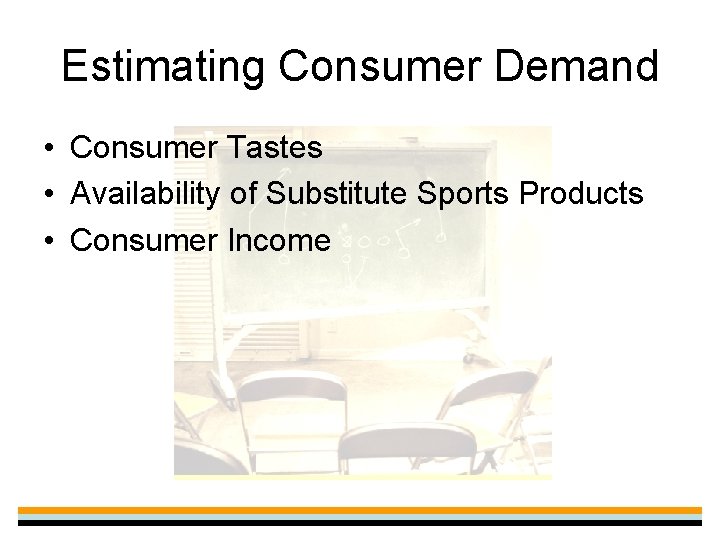
Estimating Consumer Demand • Consumer Tastes • Availability of Substitute Sports Products • Consumer Income
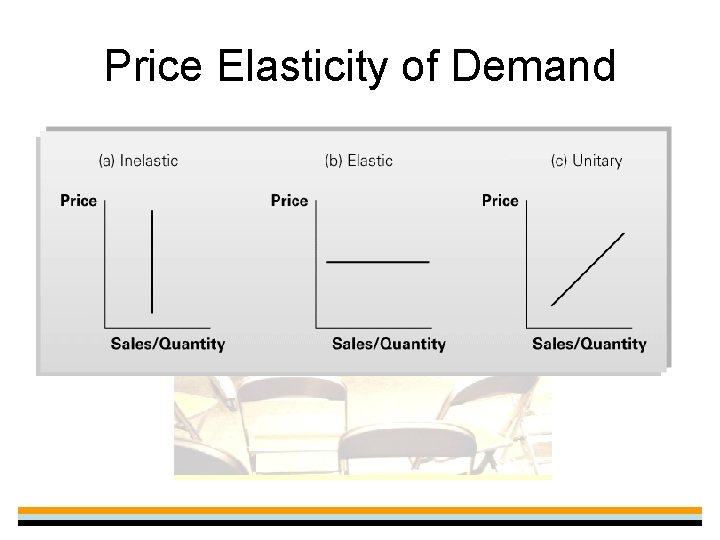
Price Elasticity of Demand
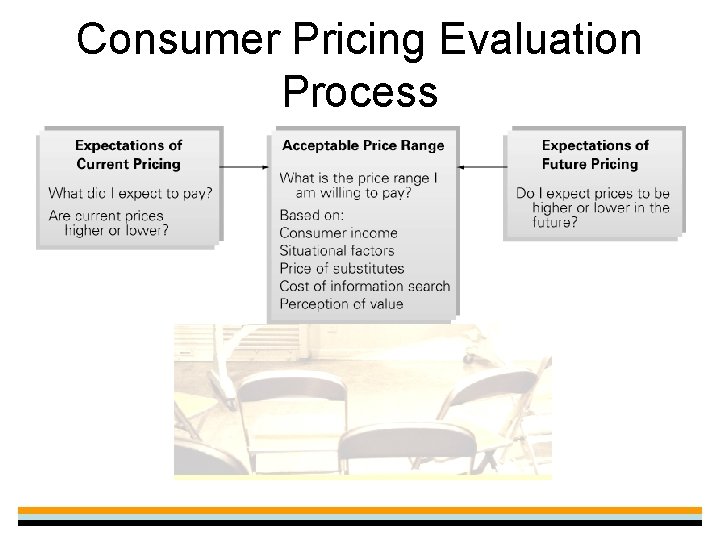
Consumer Pricing Evaluation Process
CHAPTER 15 PRICING STRATEGIES
Pricing Strategies • • • Differential Pricing Strategies New Sports Product Pricing Strategies Psychological Pricing Strategies Product Mix Pricing Strategies Cost-Based Pricing Strategies
Differential Pricing • Second Market Discounting
New Sports Product Pricing • Penetration Pricing • Price Skimming
Psychological Pricing • • Prestige Pricing Referent Pricing Odd-Even Pricing Traditional Pricing
Product-Mix Pricing • Bundle Pricing • Captive Pricing • Two-Part Pricing
Cost-Based Pricing • Cost-Plus Pricing • Target Profit Pricing • Break-Even Pricing
Price Adjustments • Price Reductions and Price Increases • Price Discounts
CHAPTER 16 IMPLEMENTING AND CONTROLLING THE STRATEGIC SPORTS MARKETING PROCESS
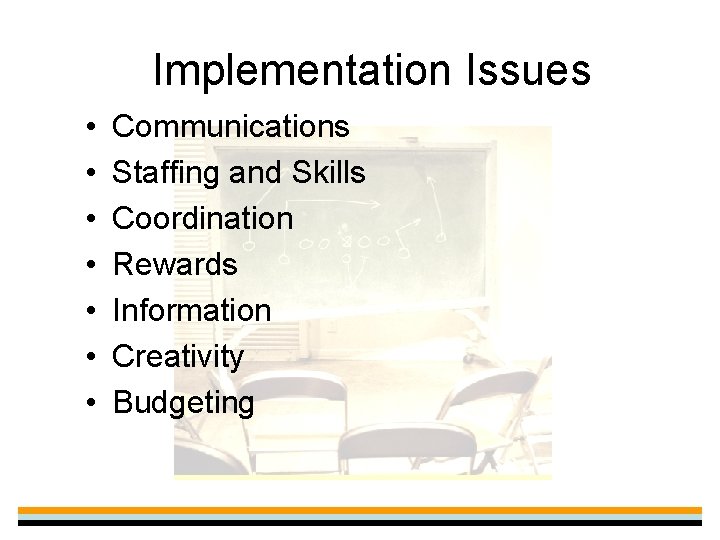
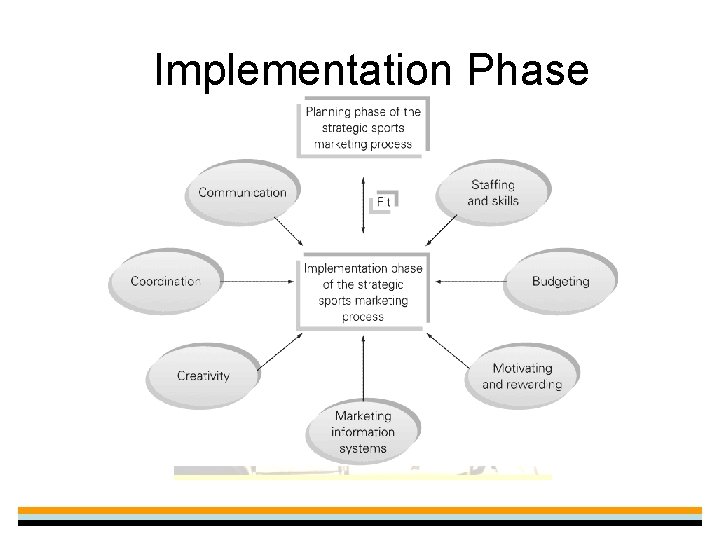
Implementation Issues • • Communications Staffing and Skills Coordination Rewards Information Creativity Budgeting
Implementation Phase
Strategic Control Issues • Planning Assumptions Control • Process Control • Contingency Control
Planning Assumptions Control • “Are the premises or assumptions used to develop this marketing plan still valid? ” • Examine the external environmental factors and the sports industry factors
Process Control • Monitoring Strategic Thrusts • Milestone Review • Financial Analysis
Contingency Control • “How can we protect our marketing strategy from unexpected events or crises that could affect our ability to pursue the chosen strategic direction? ” • Developing a Crisis Plan