
Chapter 7 Section 3 Eukaryotic Cell Structure Plasma
- Slides: 25
Chapter 7 Section 3 Eukaryotic Cell Structure
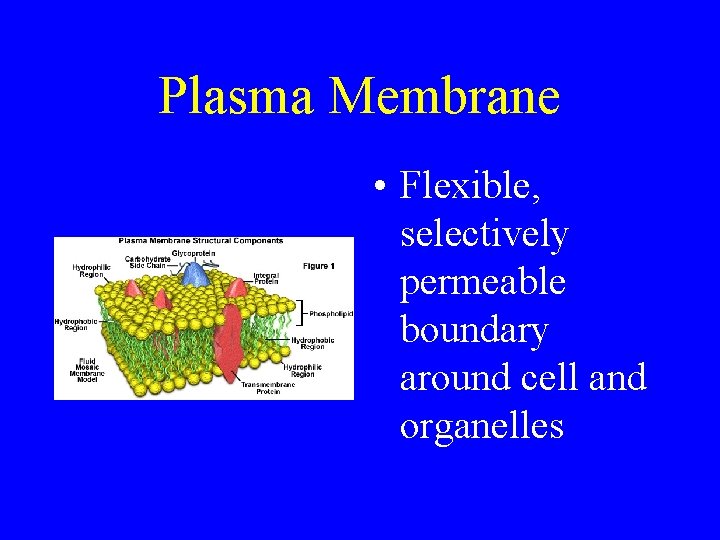
Plasma Membrane • Flexible, selectively permeable boundary around cell and organelles
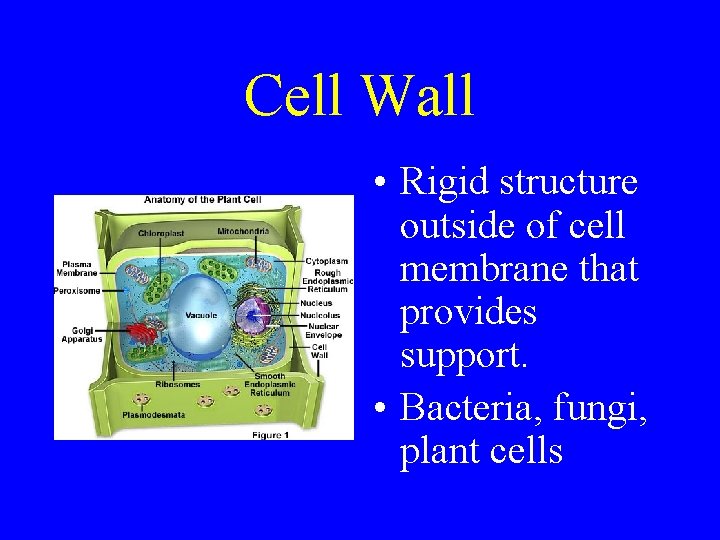
Cell Wall • Rigid structure outside of cell membrane that provides support. • Bacteria, fungi, plant cells
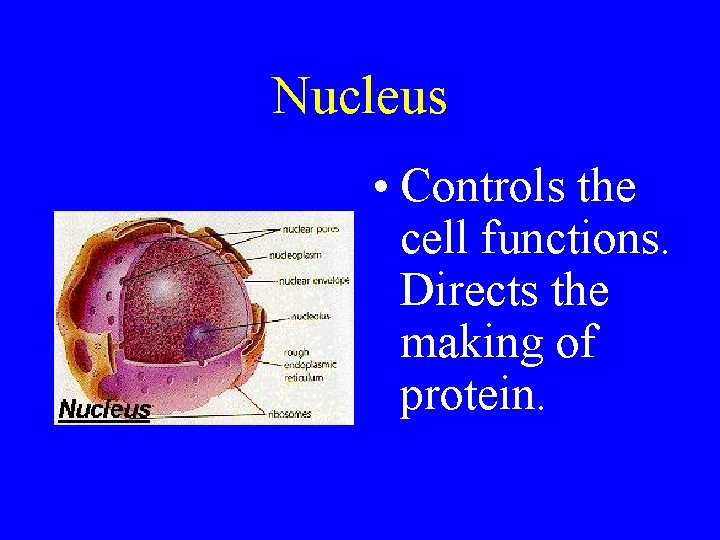
Nucleus • Controls the cell functions. Directs the making of protein.
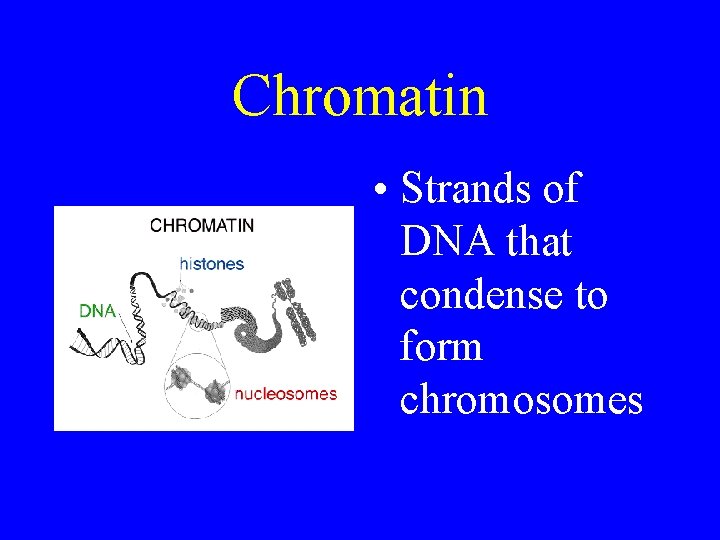
Chromatin • Strands of DNA that condense to form chromosomes
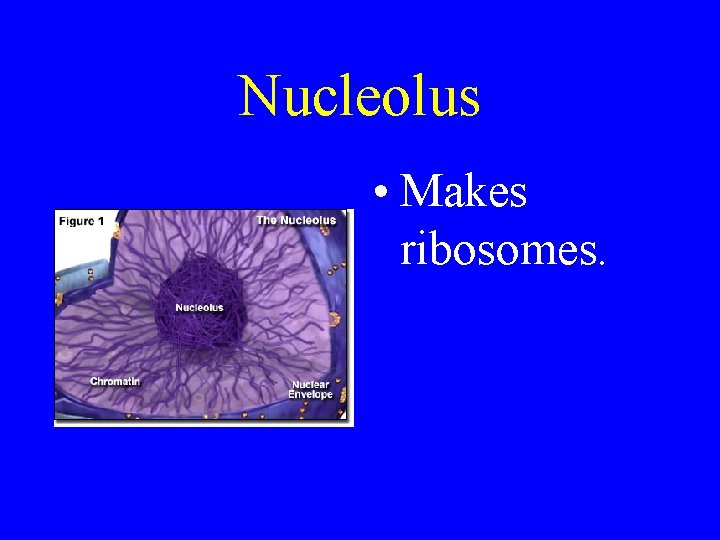
Nucleolus • Makes ribosomes.
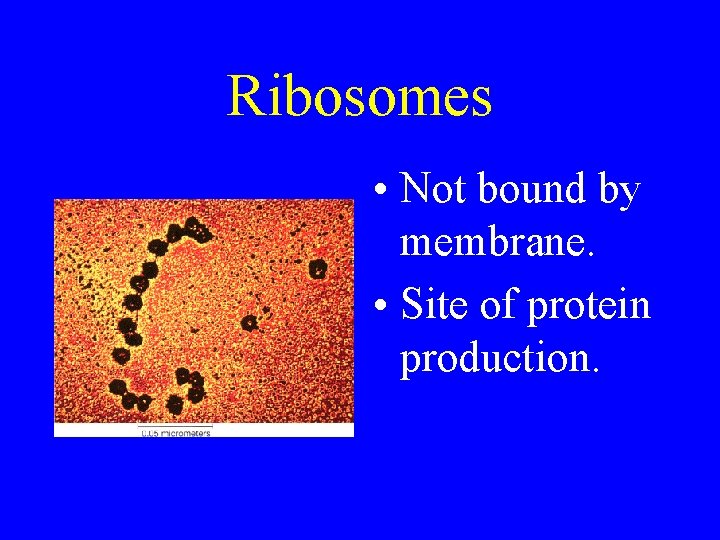
Ribosomes • Not bound by membrane. • Site of protein production.
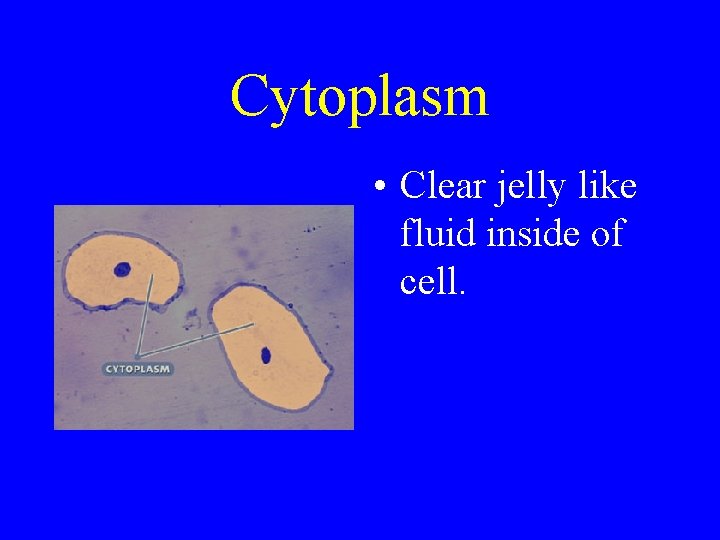
Cytoplasm • Clear jelly like fluid inside of cell.
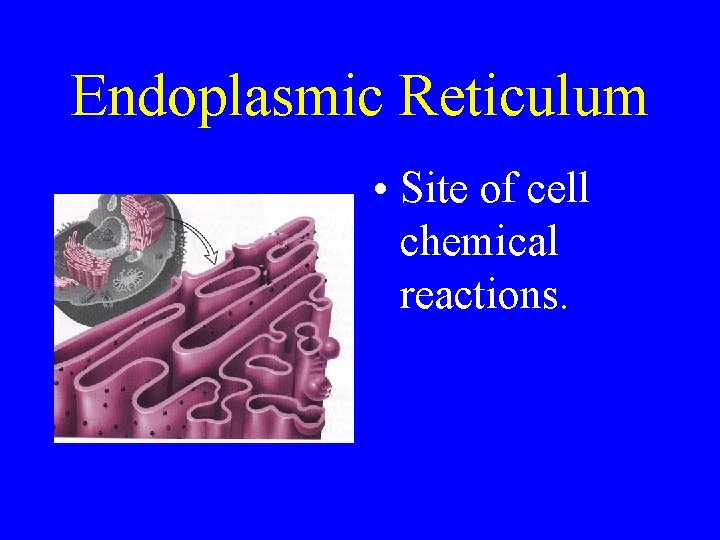
Endoplasmic Reticulum • Site of cell chemical reactions.
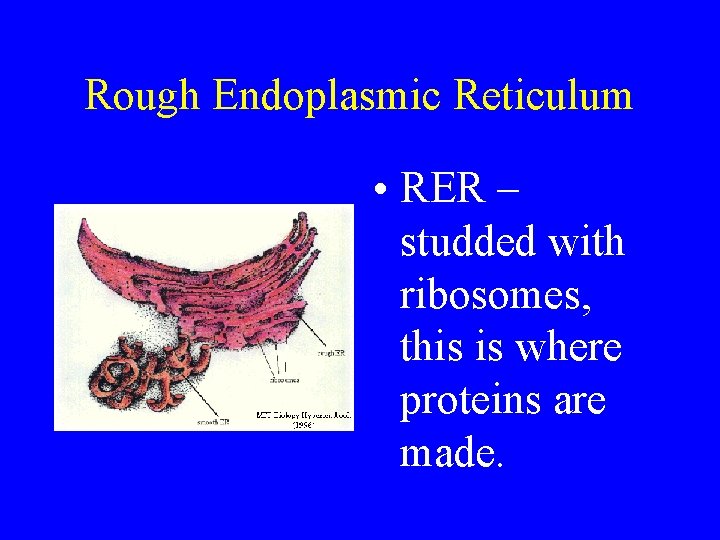
Rough Endoplasmic Reticulum • RER – studded with ribosomes, this is where proteins are made.
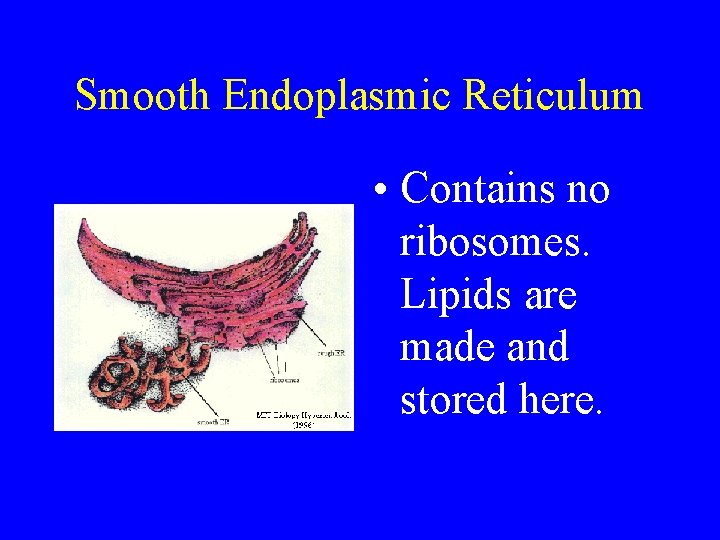
Smooth Endoplasmic Reticulum • Contains no ribosomes. Lipids are made and stored here.
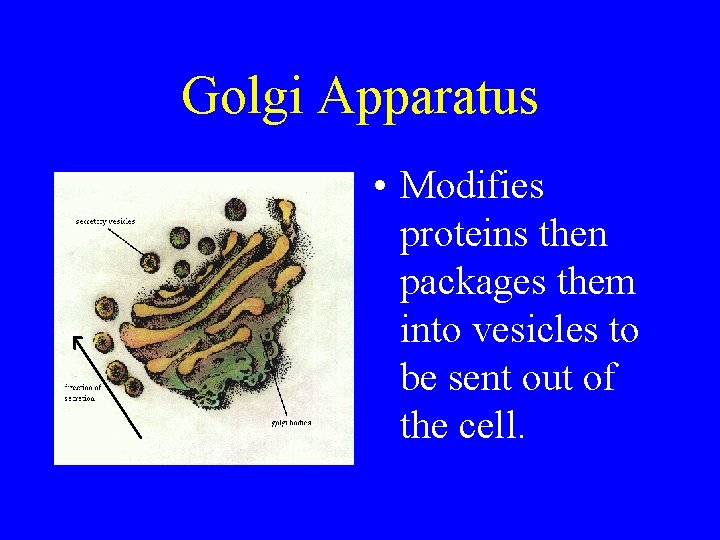
Golgi Apparatus • Modifies proteins then packages them into vesicles to be sent out of the cell.
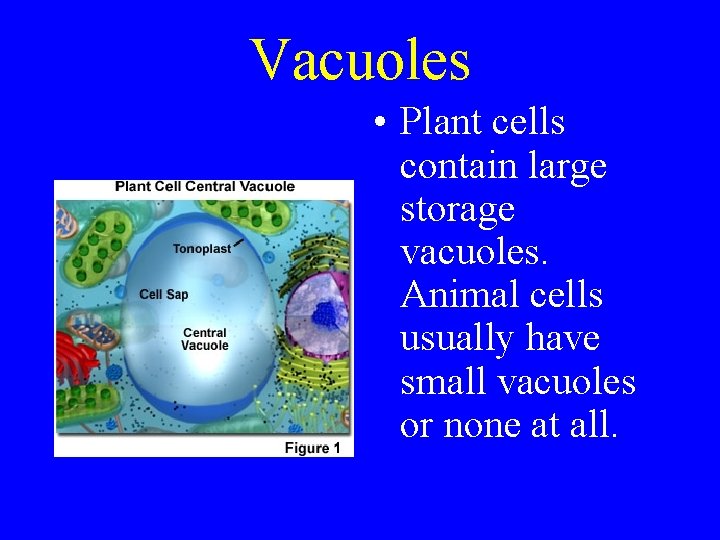
Vacuoles • Plant cells contain large storage vacuoles. Animal cells usually have small vacuoles or none at all.
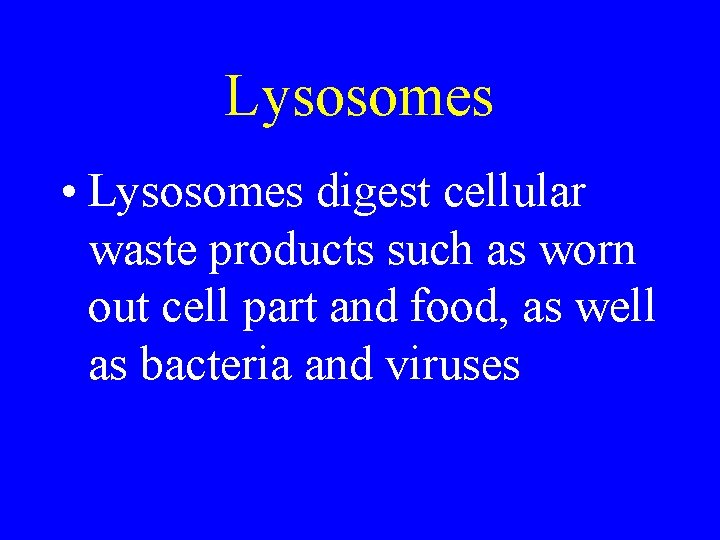
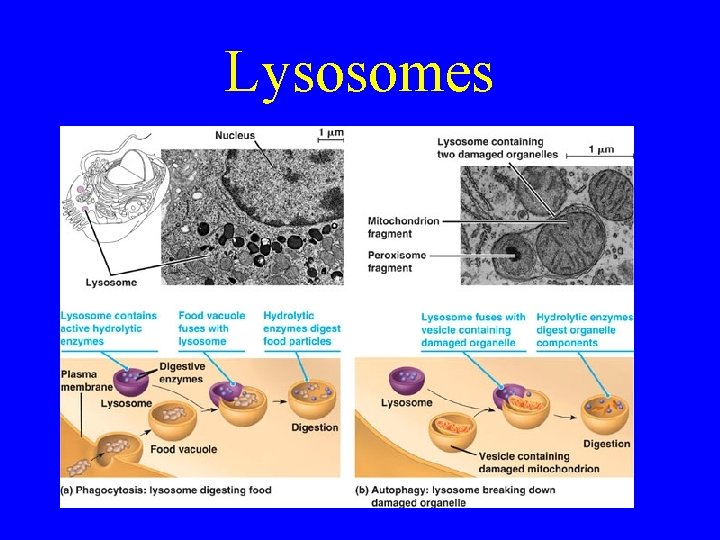
Lysosomes • Lysosomes digest cellular waste products such as worn out cell part and food, as well as bacteria and viruses
Lysosomes
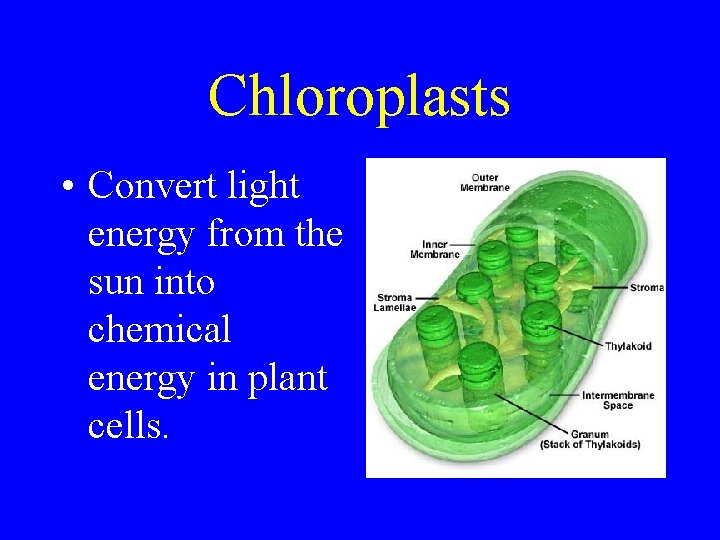
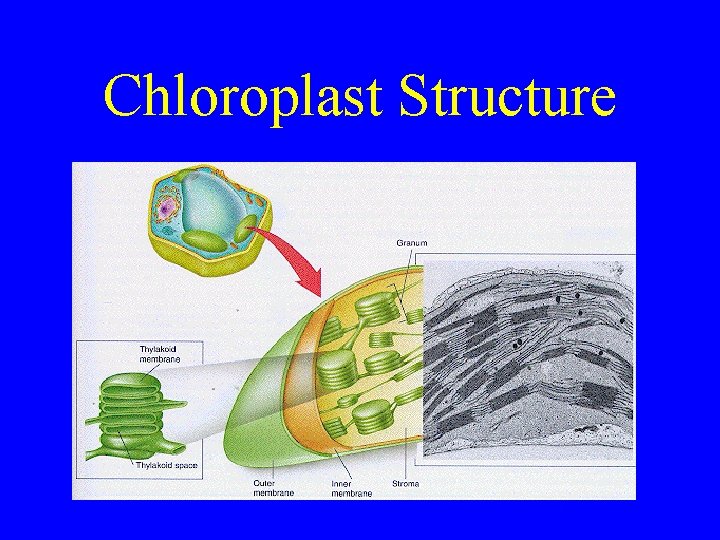
Chloroplasts • Convert light energy from the sun into chemical energy in plant cells.
Plastids are organelles that store starch, lipids or pigments. Chloroplasts are plastids that contain chlorophyll, a green pigment that traps light energy.
Chloroplast Structure
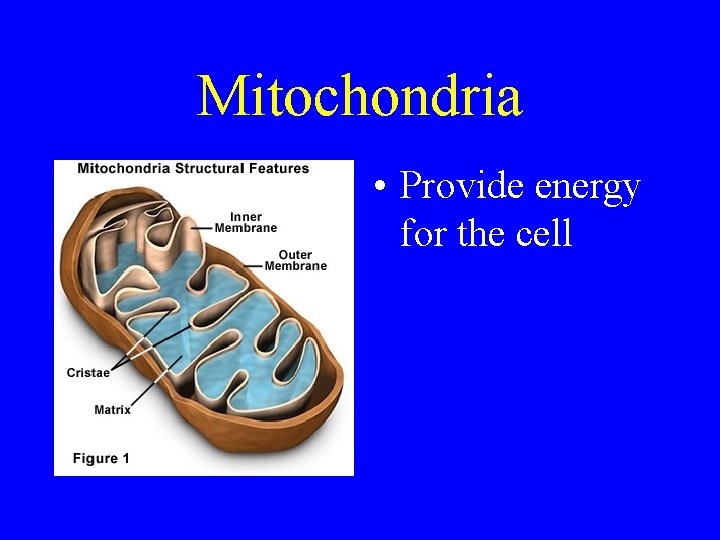
Mitochondria • Provide energy for the cell
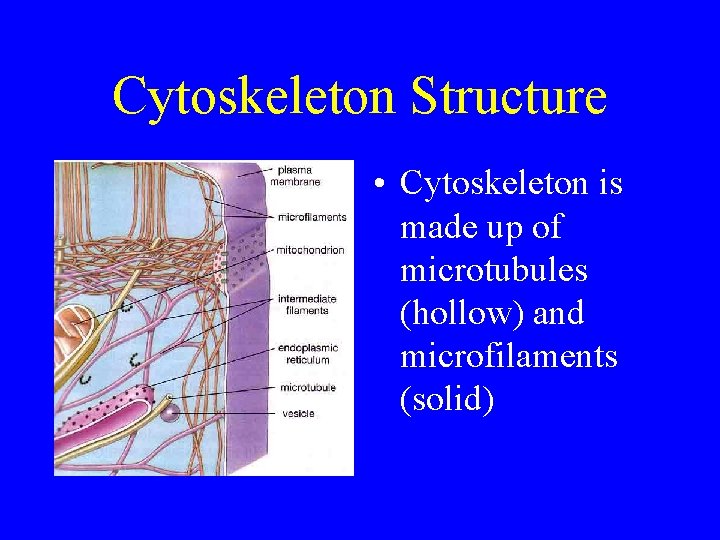
Cytoskeleton • a moving structure • maintains cell shape • helps cell to move (using structures such as flagella and cilia) • helps substances move within the cell • cellular division
Cytoskeleton Structure • Cytoskeleton is made up of microtubules (hollow) and microfilaments (solid)
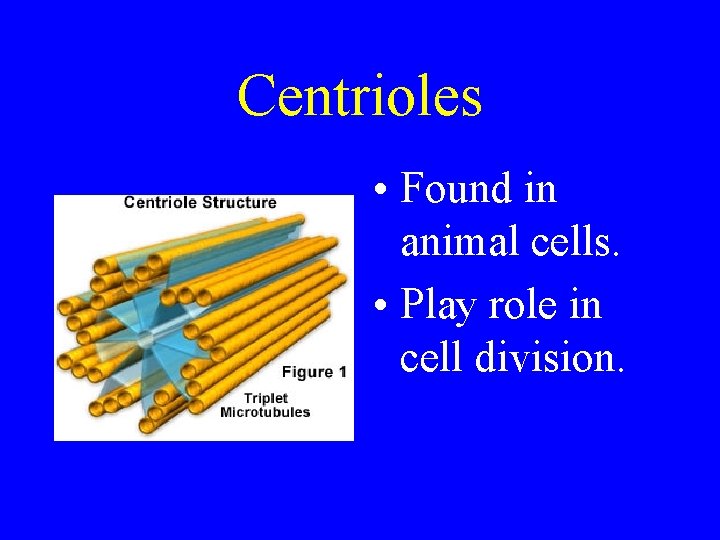
Centrioles • Found in animal cells. • Play role in cell division.
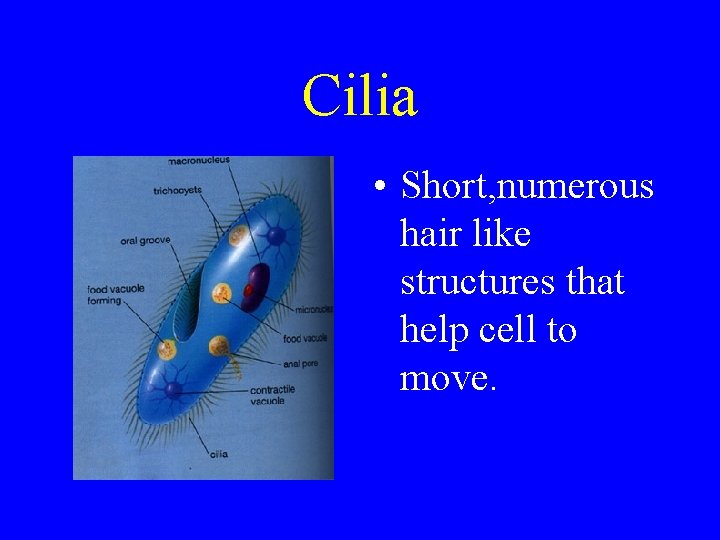
Cilia • Short, numerous hair like structures that help cell to move.
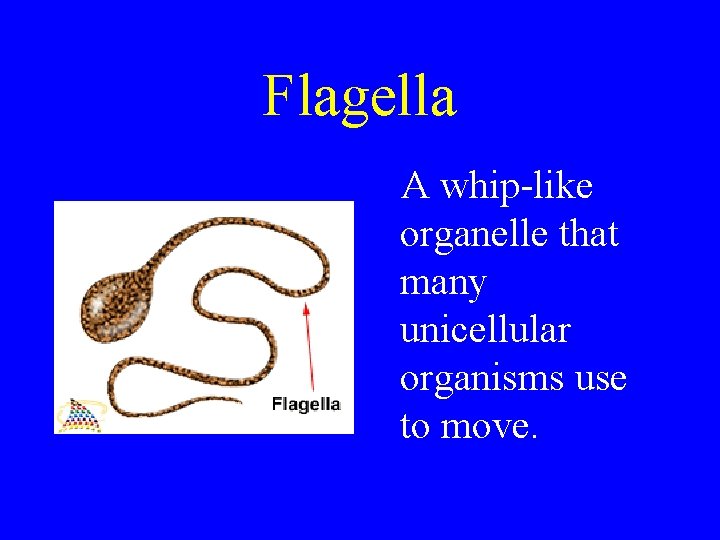
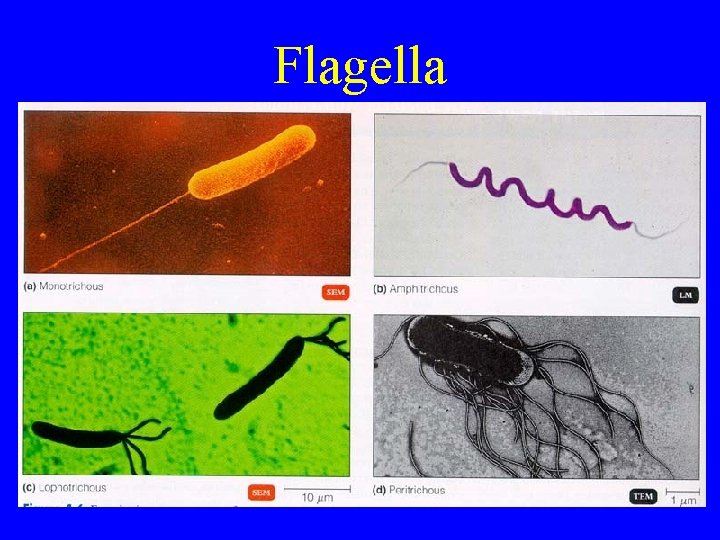
Flagella A whip-like organelle that many unicellular organisms use to move.
Flagella