
Chapter 7 Section 2 The Plasma Membrane Plasma
Chapter 7 Section 2 The Plasma Membrane
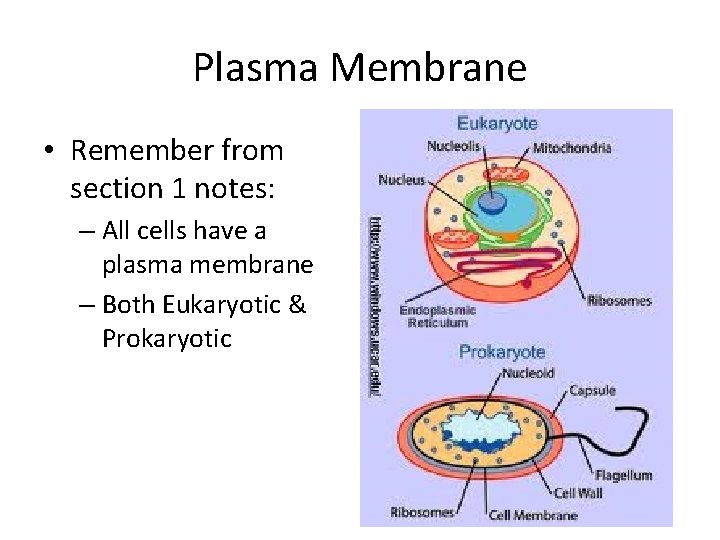
Plasma Membrane • Remember from section 1 notes: – All cells have a plasma membrane – Both Eukaryotic & Prokaryotic
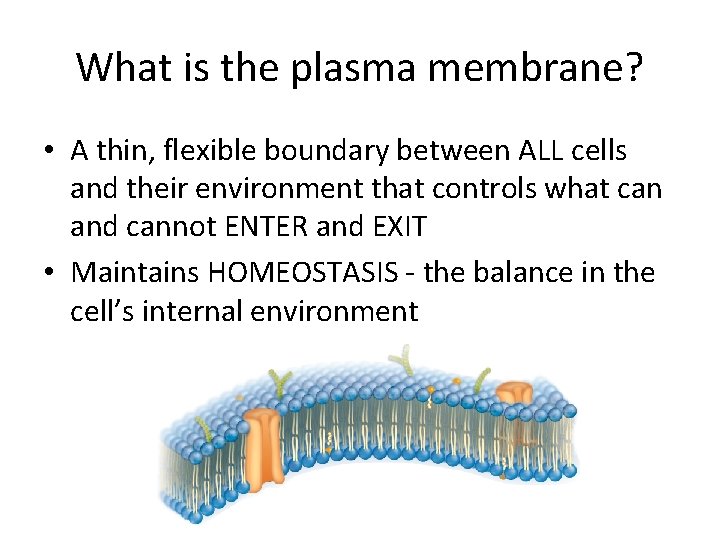
What is the plasma membrane? • A thin, flexible boundary between ALL cells and their environment that controls what can and cannot ENTER and EXIT • Maintains HOMEOSTASIS - the balance in the cell’s internal environment
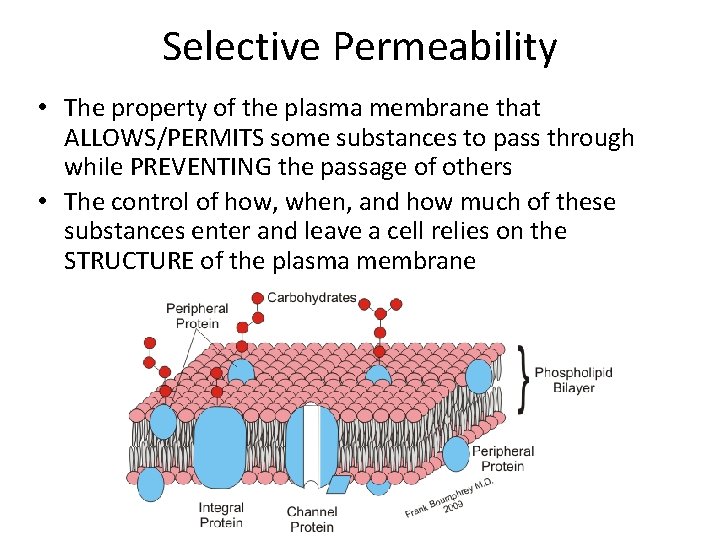
Selective Permeability • The property of the plasma membrane that ALLOWS/PERMITS some substances to pass through while PREVENTING the passage of others • The control of how, when, and how much of these substances enter and leave a cell relies on the STRUCTURE of the plasma membrane
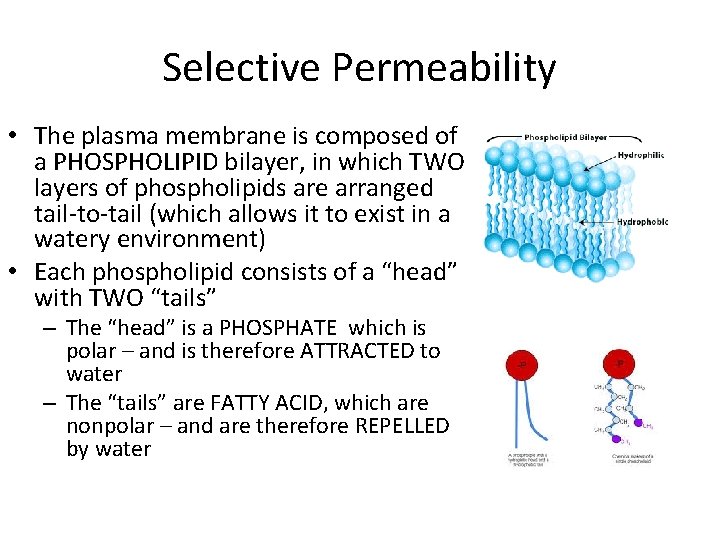
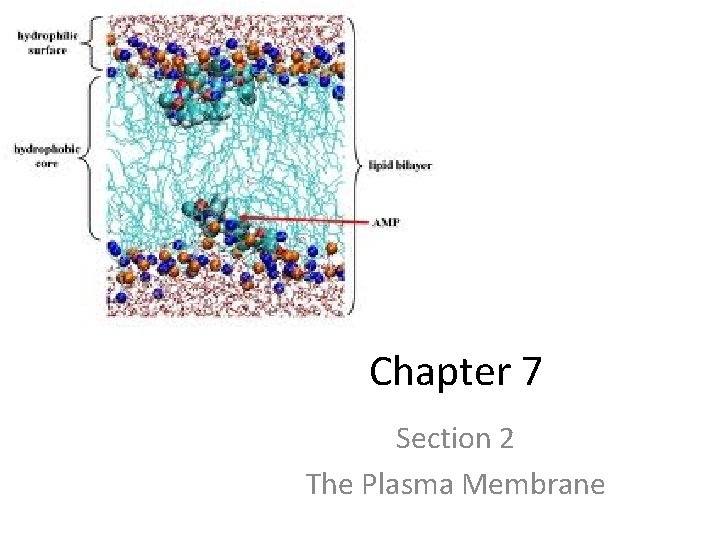
Selective Permeability • The plasma membrane is composed of a PHOSPHOLIPID bilayer, in which TWO layers of phospholipids are arranged tail-to-tail (which allows it to exist in a watery environment) • Each phospholipid consists of a “head” with TWO “tails” – The “head” is a PHOSPHATE which is polar – and is therefore ATTRACTED to water – The “tails” are FATTY ACID, which are nonpolar – and are therefore REPELLED by water
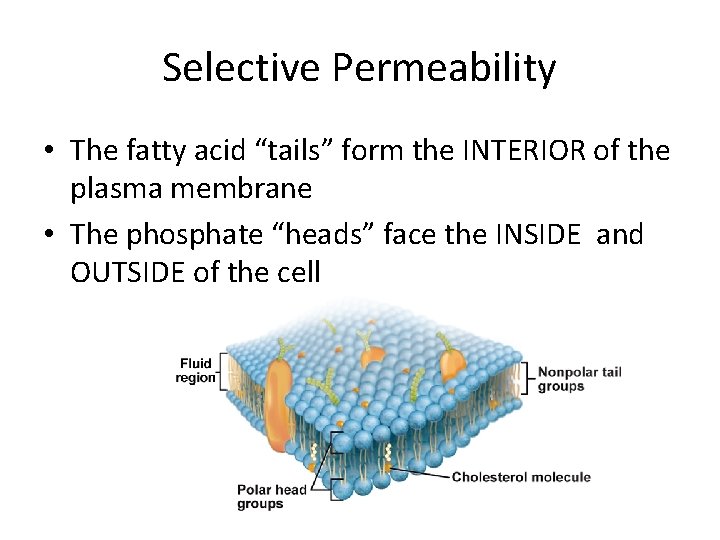
Selective Permeability • The fatty acid “tails” form the INTERIOR of the plasma membrane • The phosphate “heads” face the INSIDE and OUTSIDE of the cell
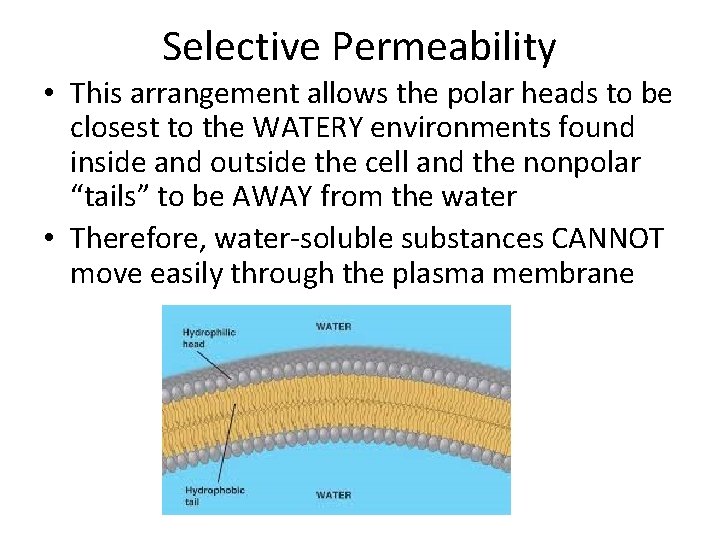
Selective Permeability • This arrangement allows the polar heads to be closest to the WATERY environments found inside and outside the cell and the nonpolar “tails” to be AWAY from the water • Therefore, water-soluble substances CANNOT move easily through the plasma membrane
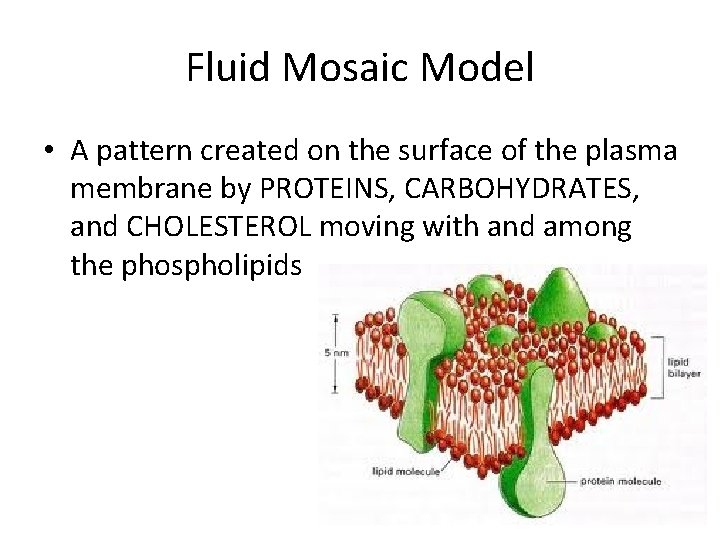
Fluid Mosaic Model • A pattern created on the surface of the plasma membrane by PROTEINS, CARBOHYDRATES, and CHOLESTEROL moving with and among the phospholipids
- Slides: 8