
Chapter 7 Section 1 Introduction to Cells Key


- Slides: 21
Chapter 7; Section 1 Introduction to Cells Key Ideas: n How were cells discovered? n n Why does cell shape vary? What enables eukaryotes to perform more specialized functions than prokaryotes?
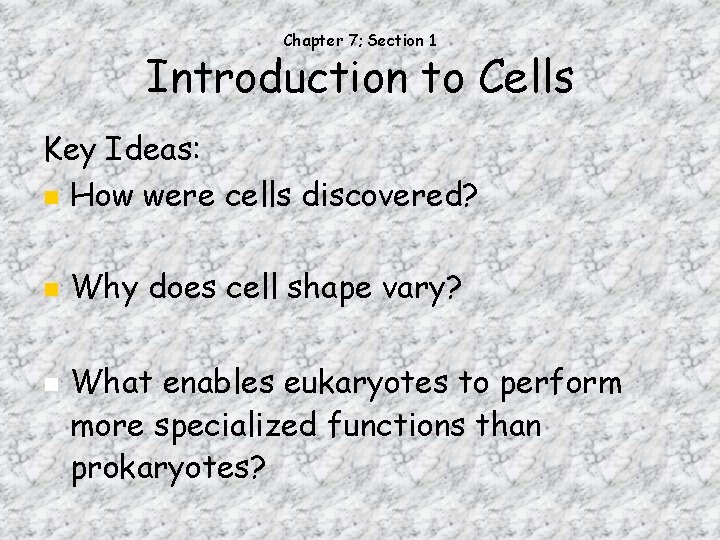
Robert Hooke (1665) Coins term “______” after looking at _____ and seeing the cell walls
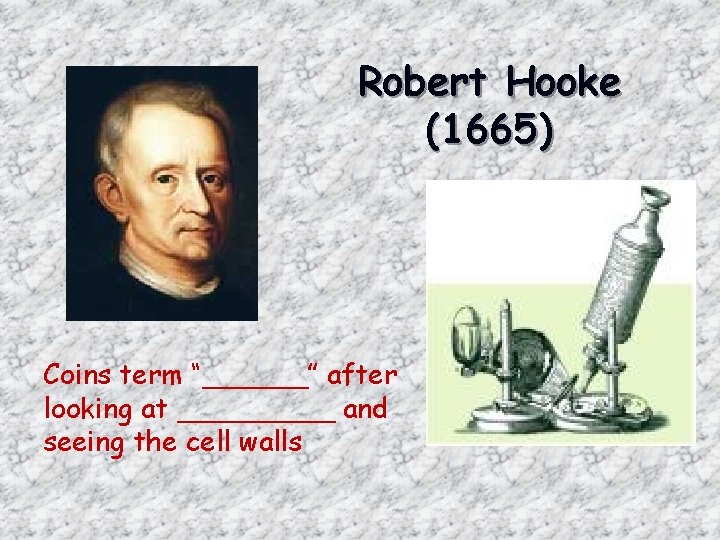
Robert Brown (1831) Pointed out _______
Matthias Schleiden (1838) ____ are made of cells
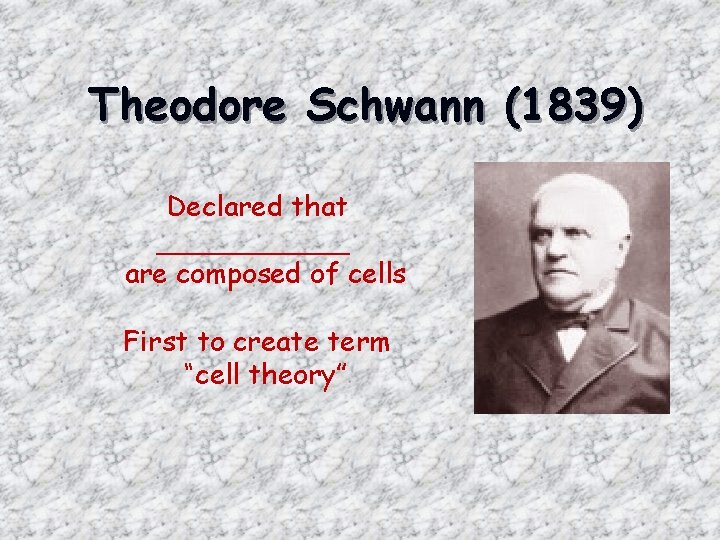
Theodore Schwann (1839) Declared that ______ are composed of cells First to create term “cell theory”
Rudolf Virchow (1858) “every ____ comes from a _______”
Cell Theory n states that: n _____ living things are _______ of _____ n cells are the _____ units of ______ and _______ in living things n _______cells come from ____ cells.
Cell Structure Section 1 Cell Theory
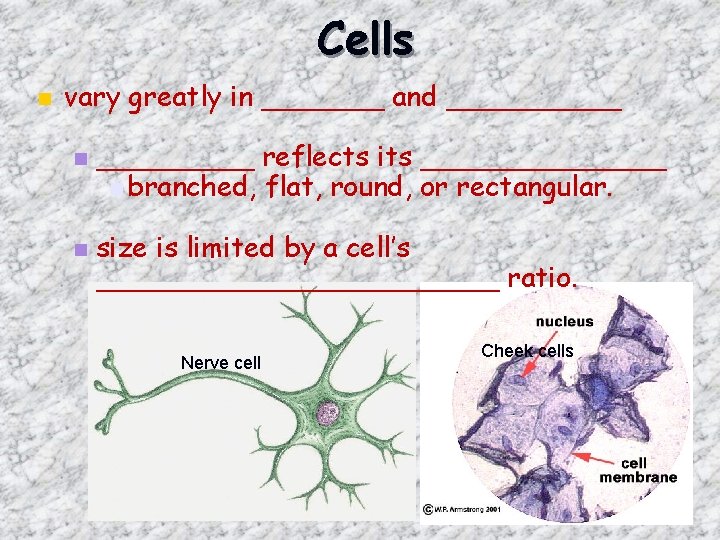
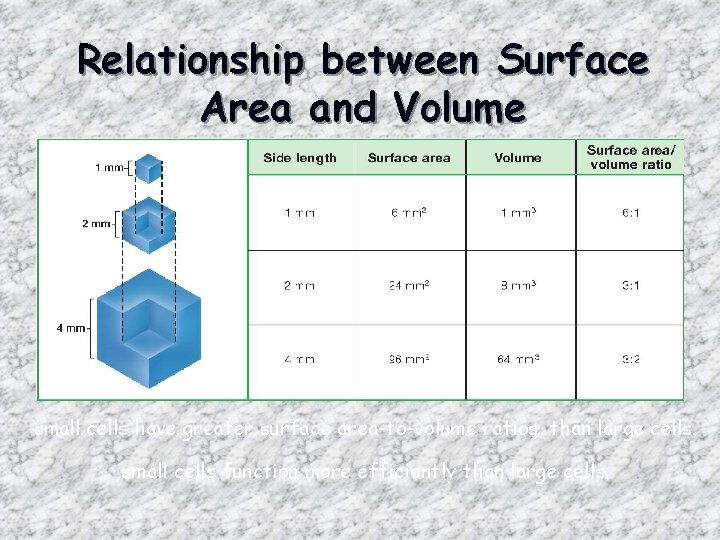
Cells n vary greatly in _______ and _____ n n _____ reflects its _______ n branched, flat, round, or rectangular. size is limited by a cell’s ____________ ratio. Nerve cell Cheek cells
Relationship between Surface Area and Volume small cells have greater surface area-to-volume ratios than large cells. small cells function more efficiently than large cells.
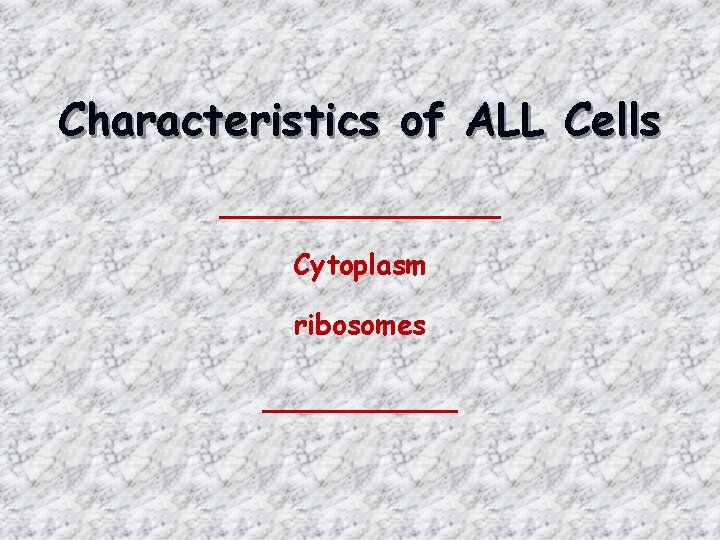
Characteristics of ALL Cells ________ Cytoplasm ribosomes ______
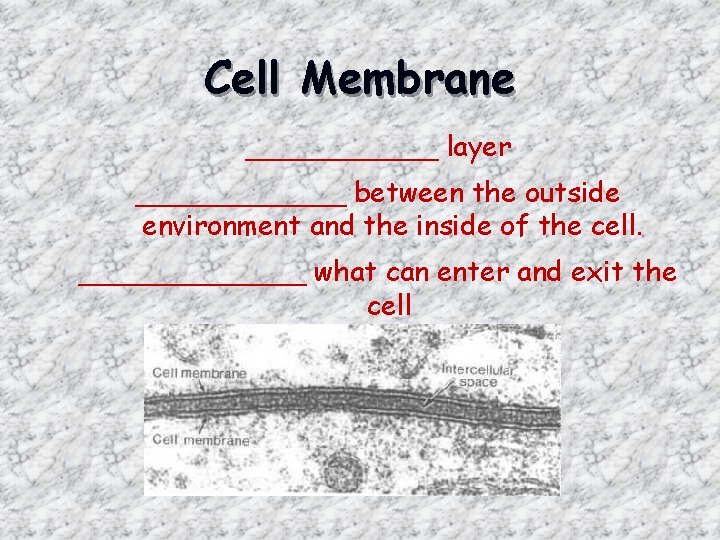
Cell Membrane ______ layer ______ between the outside environment and the inside of the cell. _______ what can enter and exit the cell
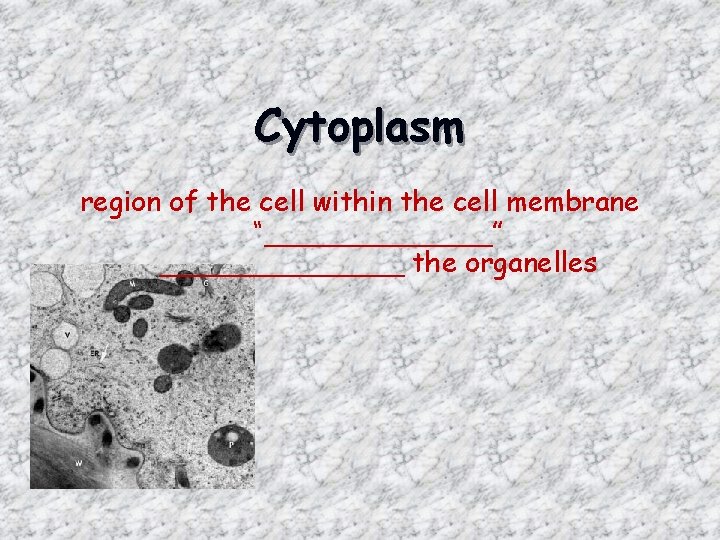
Cytoplasm region of the cell within the cell membrane “_______” _______ the organelles
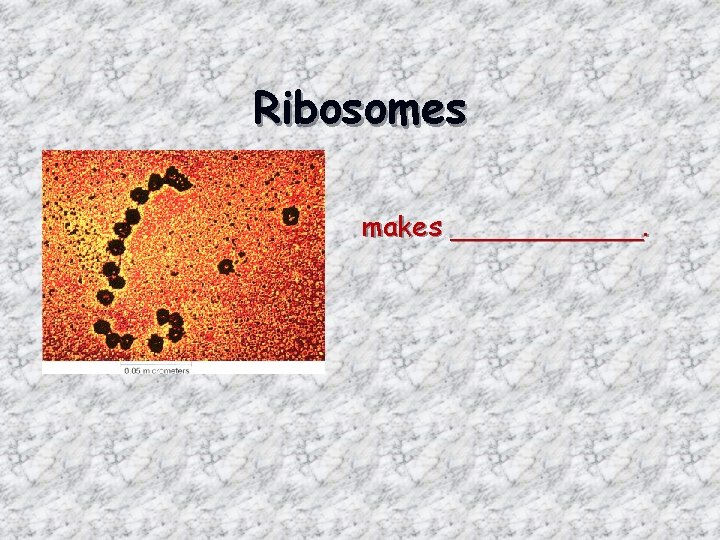
Ribosomes makes ______.
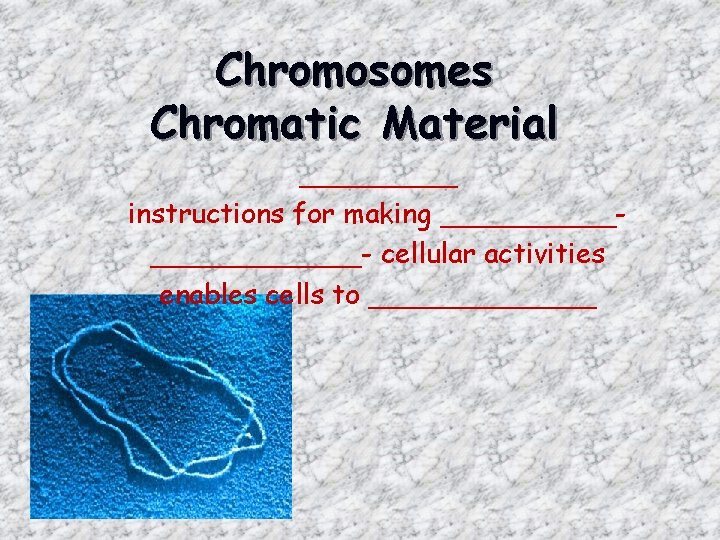
Chromosomes Chromatic Material _____ instructions for making ___________- cellular activities enables cells to _______
Features of Prokaryotic and Eukaryotic Cells
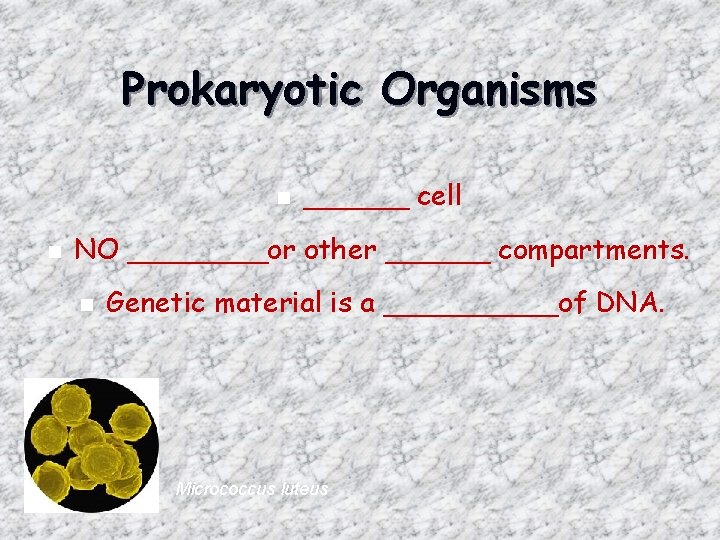
Prokaryotic Organisms n n ______ cell NO ____or other ______ compartments. n Genetic material is a _____of DNA. Micrococcus luteus
Eukaryotic Organisms n n unicellular or multicellular n _____ multicellular organisms are made of _______ cells _____ in _______-bound organelles. n organelle - a small structure found in the cytoplasm that carries out specific activities _____ organization - carry out specialized functions
Cell Structure Section 1 Comparing Prokaryotes and Eukaryotes
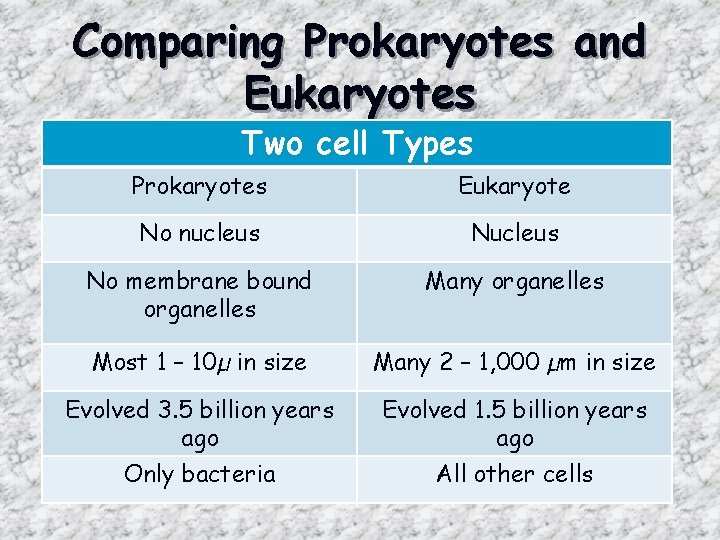
Comparing Prokaryotes and Eukaryotes Two cell Types Prokaryotes Eukaryote No nucleus No membrane bound organelles Many organelles Most 1 – 10µ in size Many 2 – 1, 000 µm in size Evolved 3. 5 billion years ago Only bacteria Evolved 1. 5 billion years ago All other cells
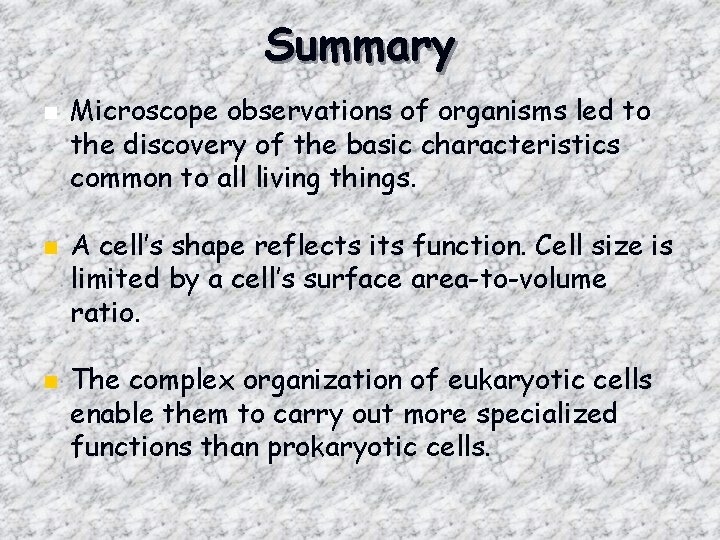
Summary n n n Microscope observations of organisms led to the discovery of the basic characteristics common to all living things. A cell’s shape reflects its function. Cell size is limited by a cell’s surface area-to-volume ratio. The complex organization of eukaryotic cells enable them to carry out more specialized functions than prokaryotic cells.