
Chapter 7 Respiration The release of stored energy
- Slides: 20
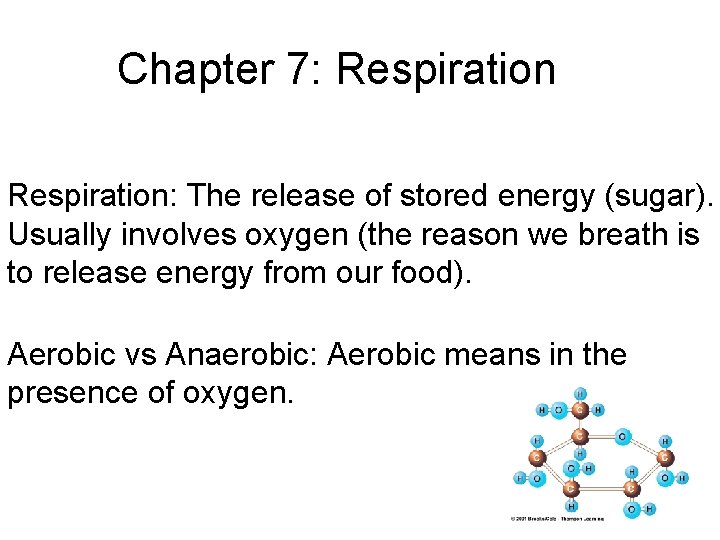
Chapter 7: Respiration: The release of stored energy (sugar). Usually involves oxygen (the reason we breath is to release energy from our food). Aerobic vs Anaerobic: Aerobic means in the presence of oxygen.
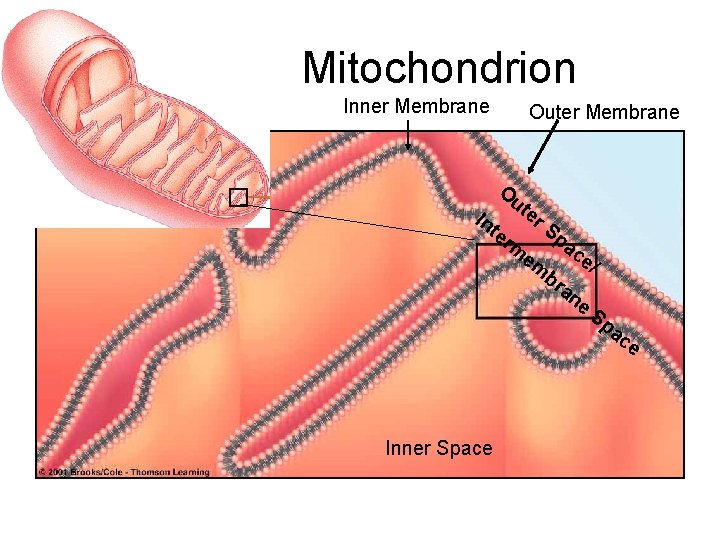
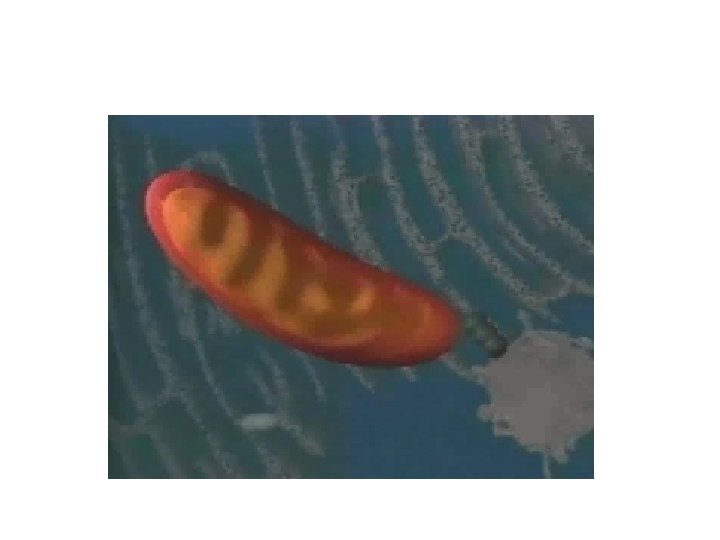
Mitochondrion Inner Membrane Outer Membrane Ou te r. S te pa rm em ce/ br an e Sp ac In e Inner Space
First Stage: Glycolysis BASICS: Glycolysis doesn’t require oxygen (anaerobic)! Glycolysis doesn’t occur in the mitochondria, so it can happen in prokaryotes (lacking organelles). Glycolysis occurs in the cytoplasm. Glycolysis begins with glucose and ends with two pyruvate molecules, yielding minimal energy gain.
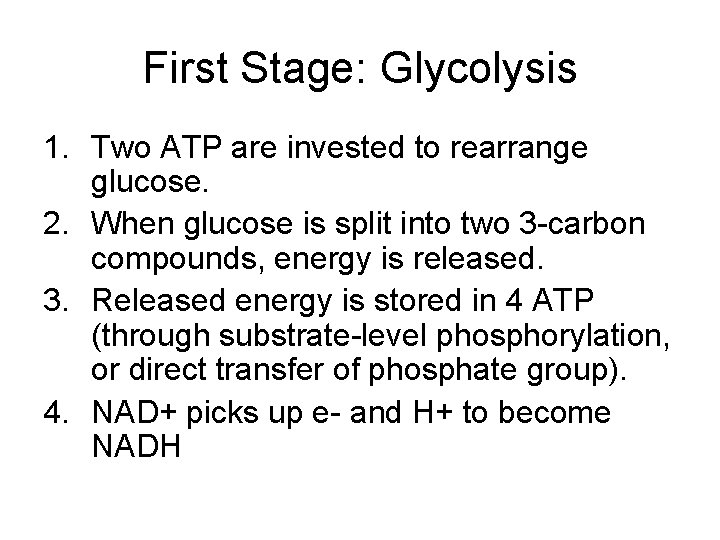
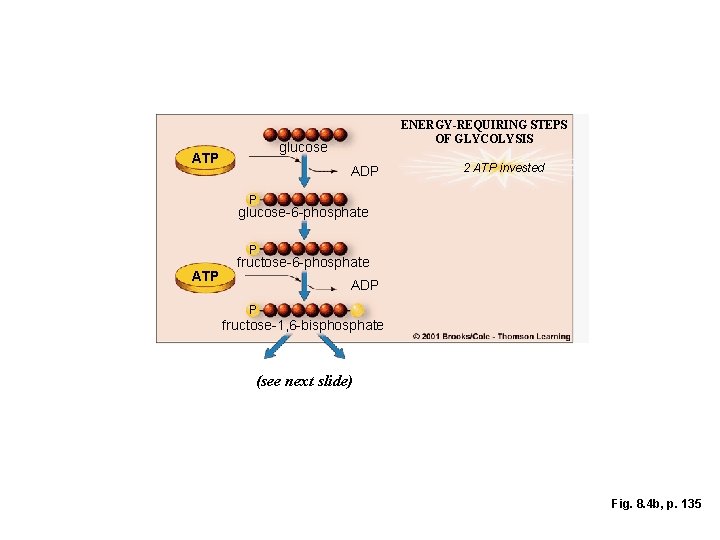
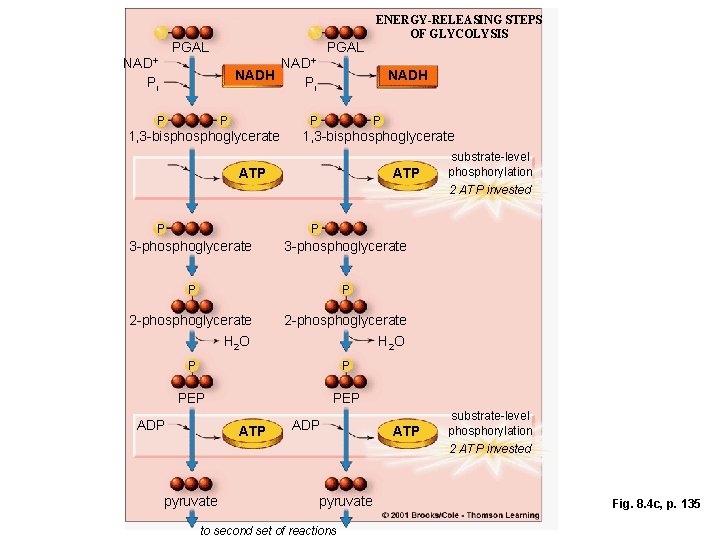
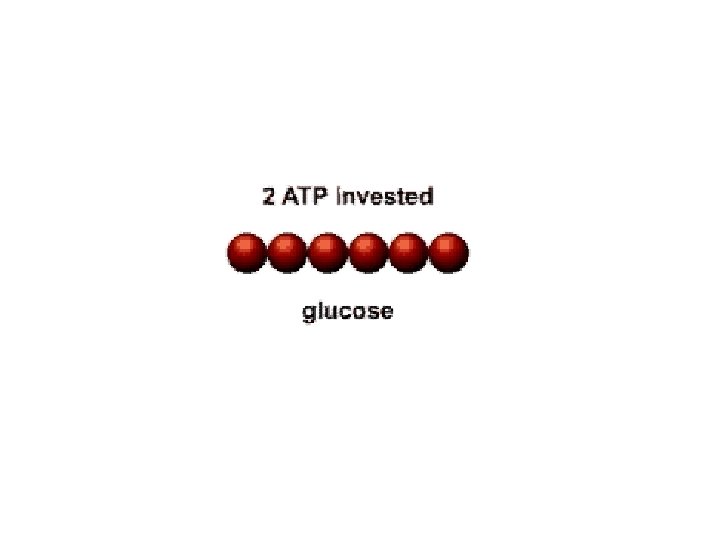
First Stage: Glycolysis 1. Two ATP are invested to rearrange glucose. 2. When glucose is split into two 3 -carbon compounds, energy is released. 3. Released energy is stored in 4 ATP (through substrate-level phosphorylation, or direct transfer of phosphate group). 4. NAD+ picks up e- and H+ to become NADH
ENERGY-REQUIRING STEPS OF GLYCOLYSIS glucose ATP ADP 2 ATP invested P glucose-6 -phosphate P ATP fructose-6 -phosphate ADP P fructose-1, 6 -bisphosphate (see next slide) Fig. 8. 4 b, p. 135
PGAL NAD+ NADH Pi P P NAD+ NADH Pi P 1, 3 -bisphoglycerate ENERGY-RELEASING STEPS OF GLYCOLYSIS P 1, 3 -bisphoglycerate ATP substrate-level phosphorylation 2 ATP invested P P 3 -phosphoglycerate P P 2 -phosphoglycerate H 2 O P P PEP ADP ATP substrate-level phosphorylation 2 ATP invested pyruvate to second set of reactions Fig. 8. 4 c, p. 135
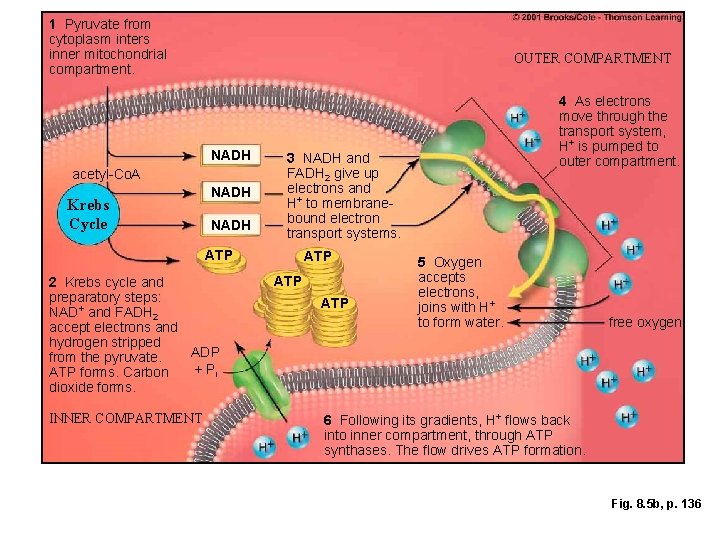
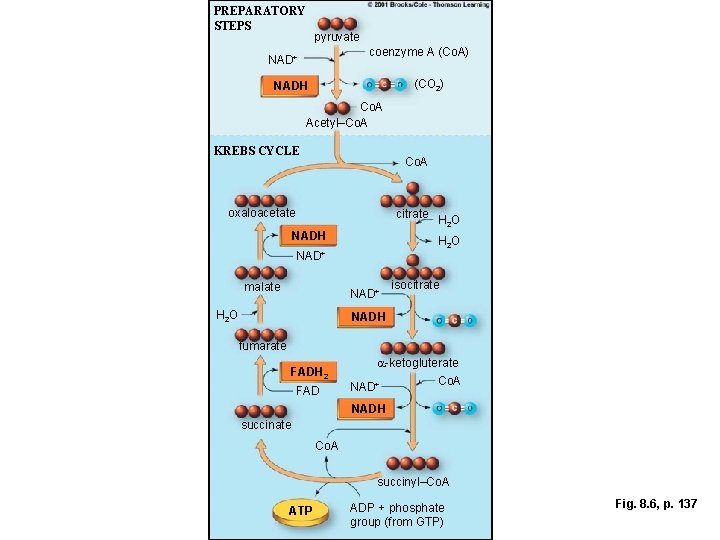
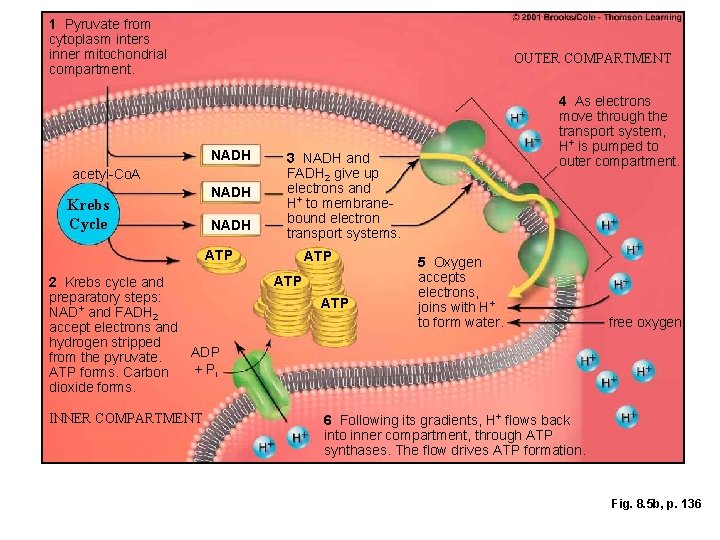
Second Step: Krebs Cycle 1. Two pyruvate molecules enter the mitochondrion (enter into the inner compartment of mito). 2. Coenzyme-A strips a carbon, yielding CO 2. 3. Acetyl-Co. A enters Krebs Cycle/Citric Acid Cycle, yielding more CO 2. 4. Final yield: ATP, NADH, FADH 2.
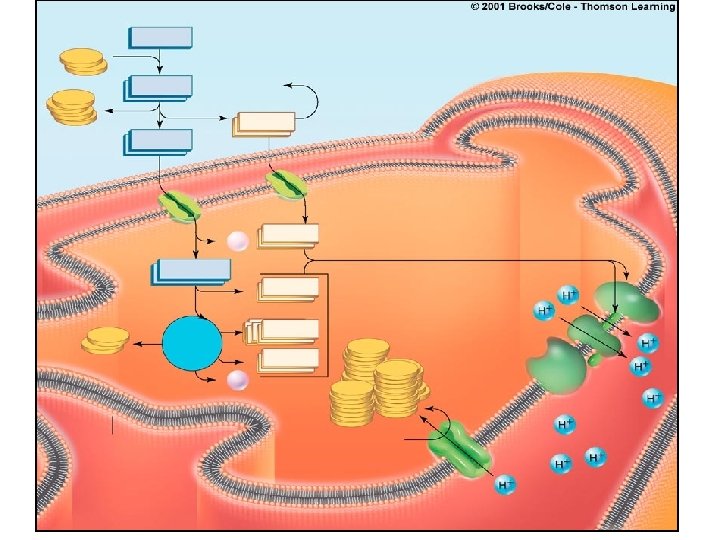
1 Pyruvate from cytoplasm inters inner mitochondrial compartment. OUTER COMPARTMENT NADH acetyl-Co. A Krebs Cycle NADH 3 NADH and FADH 2 give up electrons and H+ to membranebound electron transport systems. ATP 2 Krebs cycle and preparatory steps: NAD+ and FADH 2 accept electrons and hydrogen stripped ADP from the pyruvate. + Pi ATP forms. Carbon dioxide forms. INNER COMPARTMENT 4 As electrons move through the transport system, H+ is pumped to outer compartment. ATP ATP 5 Oxygen accepts electrons, joins with H+ to form water. free oxygen 6 Following its gradients, H+ flows back into inner compartment, through ATP synthases. The flow drives ATP formation. Fig. 8. 5 b, p. 136
PREPARATORY STEPS pyruvate coenzyme A (Co. A) NAD+ (CO 2) NADH Co. A Acetyl–Co. A KREBS CYCLE Co. A oxaloacetate citrate H O 2 NADH H 2 O NAD+ malate NAD+ H 2 O isocitrate NADH fumarate FADH 2 FAD a-ketogluterate Co. A NAD+ NADH succinate Co. A succinyl–Co. A ATP ADP + phosphate group (from GTP) Fig. 8. 6, p. 137
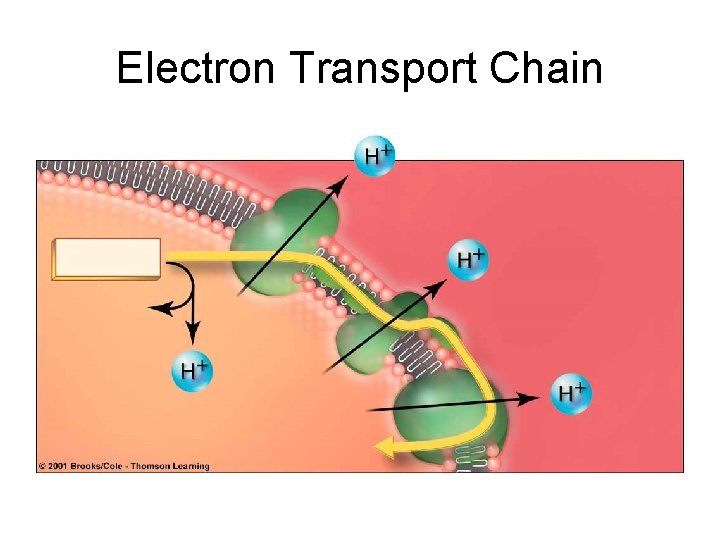
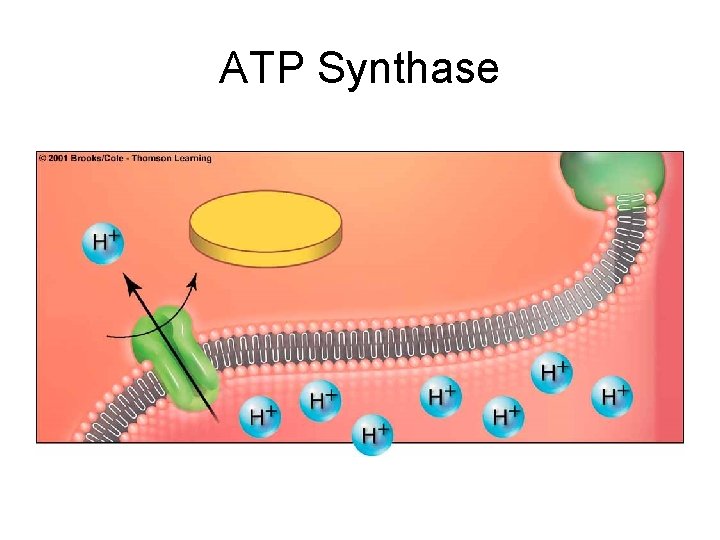
Step 3: Electron Transfer Phosphorylation 1. NADH and FADH 2 transfer e- and H+ to inner membrane of mitochondria, buiding up concentration of protons in intermembrane space. 2. When protons flow through ATP synthases, up to 34 ATP are produced. 3. Oxygen will accept extra hydrogens, resulting in water.
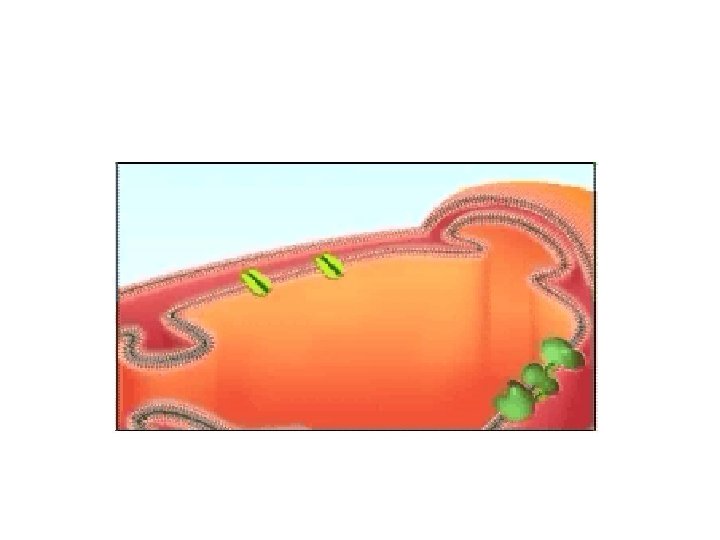
Electron Transport Chain
ATP Synthase
1 Pyruvate from cytoplasm inters inner mitochondrial compartment. OUTER COMPARTMENT NADH acetyl-Co. A Krebs Cycle NADH 3 NADH and FADH 2 give up electrons and H+ to membranebound electron transport systems. ATP 2 Krebs cycle and preparatory steps: NAD+ and FADH 2 accept electrons and hydrogen stripped ADP from the pyruvate. + Pi ATP forms. Carbon dioxide forms. INNER COMPARTMENT 4 As electrons move through the transport system, H+ is pumped to outer compartment. ATP ATP 5 Oxygen accepts electrons, joins with H+ to form water. free oxygen 6 Following its gradients, H+ flows back into inner compartment, through ATP synthases. The flow drives ATP formation. Fig. 8. 5 b, p. 136
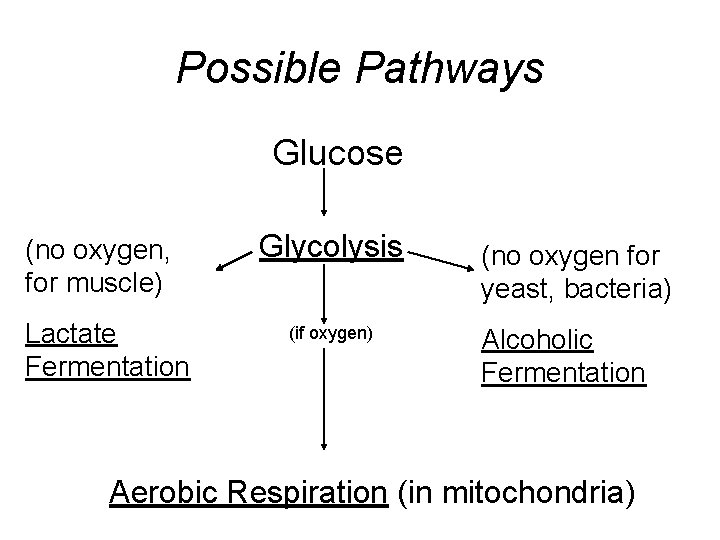
Possible Pathways Glucose (no oxygen, for muscle) Lactate Fermentation Glycolysis (if oxygen) (no oxygen for yeast, bacteria) Alcoholic Fermentation Aerobic Respiration (in mitochondria)
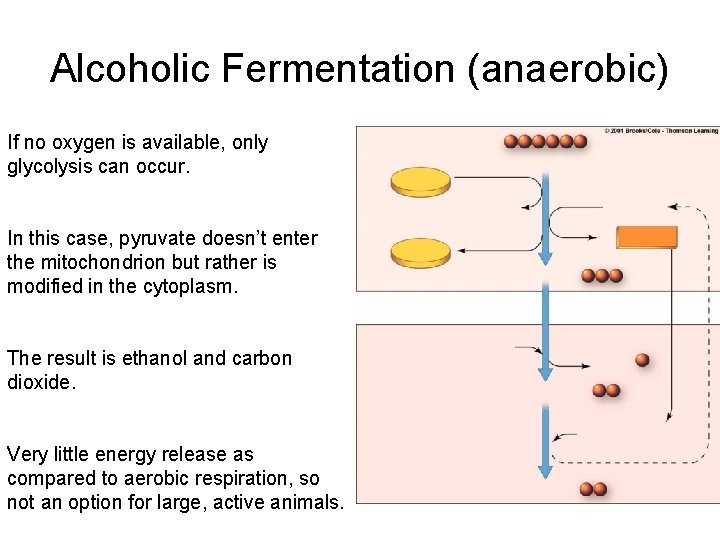
Alcoholic Fermentation (anaerobic) If no oxygen is available, only glycolysis can occur. In this case, pyruvate doesn’t enter the mitochondrion but rather is modified in the cytoplasm. The result is ethanol and carbon dioxide. Very little energy release as compared to aerobic respiration, so not an option for large, active animals.
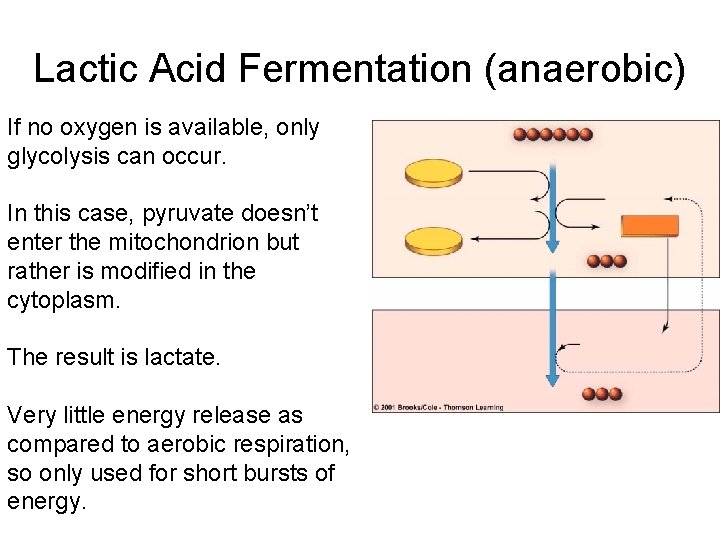
Lactic Acid Fermentation (anaerobic) If no oxygen is available, only glycolysis can occur. In this case, pyruvate doesn’t enter the mitochondrion but rather is modified in the cytoplasm. The result is lactate. Very little energy release as compared to aerobic respiration, so only used for short bursts of energy.