
Chapter 7 Qualitative Research Mc GrawHillIrwin Business Research
Chapter 7 Qualitative Research Mc. Graw-Hill/Irwin Business Research Methods, 10 e Copyright © 2008 by The Mc. Graw-Hill Companies, Inc. All Rights Reserved.
2 Learning Objectives Understand. . . • How qualitative methodologies differ from quantitative methodologies. • The controversy surrounding qualitative research. • The types of decisions that use qualitative methodologies. • The different qualitative research methodologies.
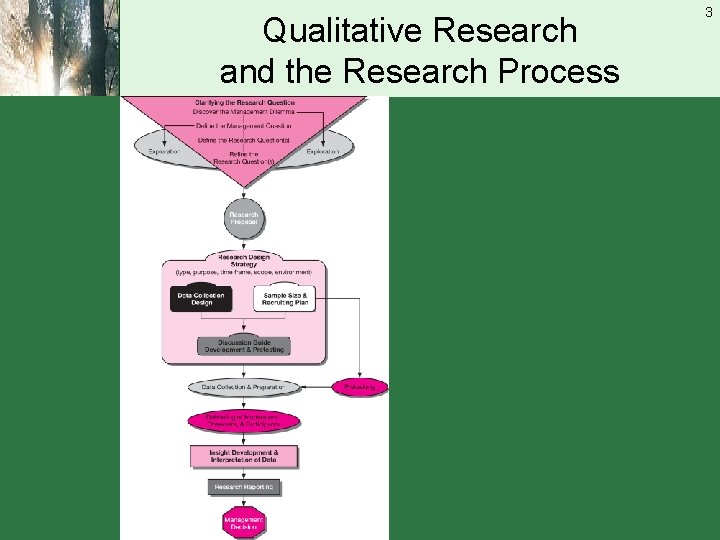
Qualitative Research and the Research Process 3
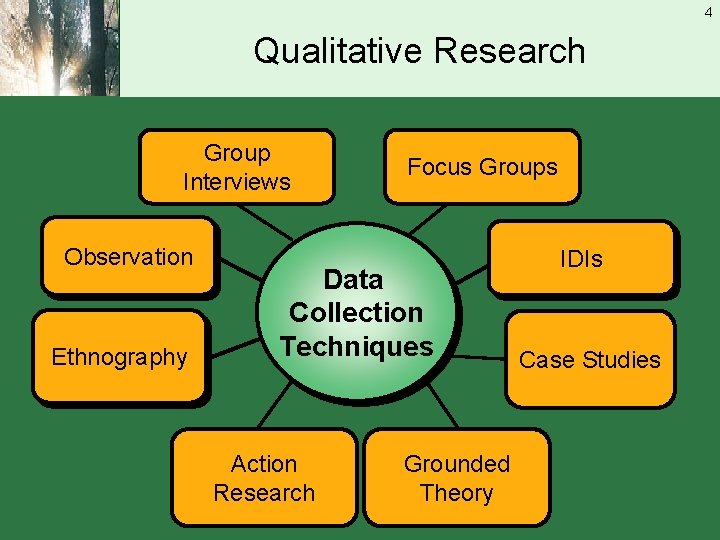
4 Qualitative Research Group Interviews Observation Ethnography Focus Groups Data Collection Techniques Action Research Grounded Theory IDIs Case Studies
5 Why Use Qualitative Research? “Most of what influences what we say and do occurs below the level of awareness. That’s why we need new techniques: to get at hidden knowledge – to get at what people don’t know they know. ” Jerry Zaltman

6 Qualitative Research Textual Analysis Behavioral Observations Artifacts Trace Evidence Other Techniques Debriefings
7 Qualitative Research in Business • Job Analysis • Advertising Concept Development • Productivity Enhancement • New Product Development • Benefits Management • Retail Design • Process Understanding • Union Representation • Market Segmentation • Sales Analysis
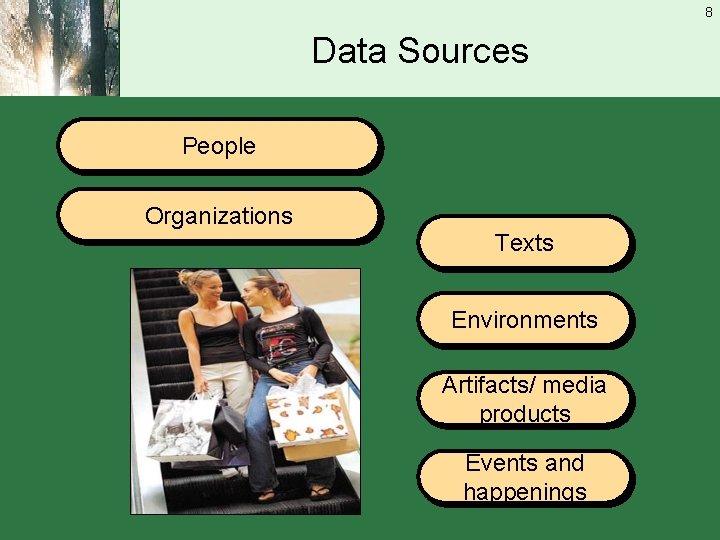
8 Data Sources People Organizations Texts Environments Artifacts/ media products Events and happenings
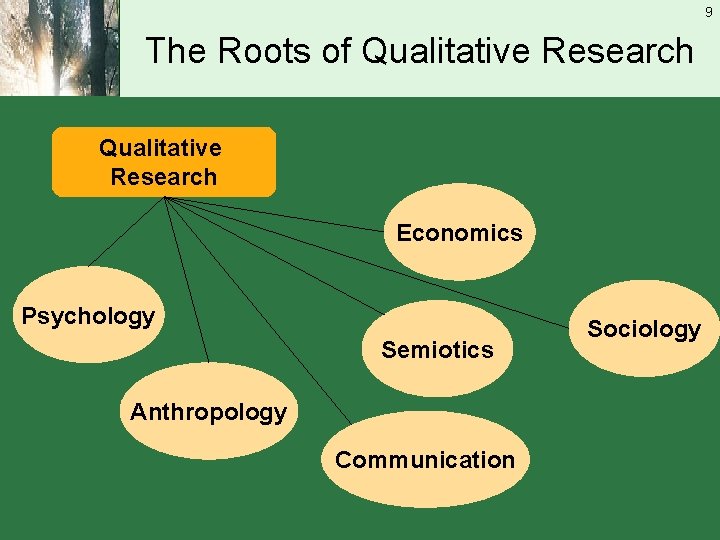
9 The Roots of Qualitative Research Economics Psychology Semiotics Anthropology Communication Sociology

Distinction between Qualitative & Quantitative Theory Building Theory Testing 10
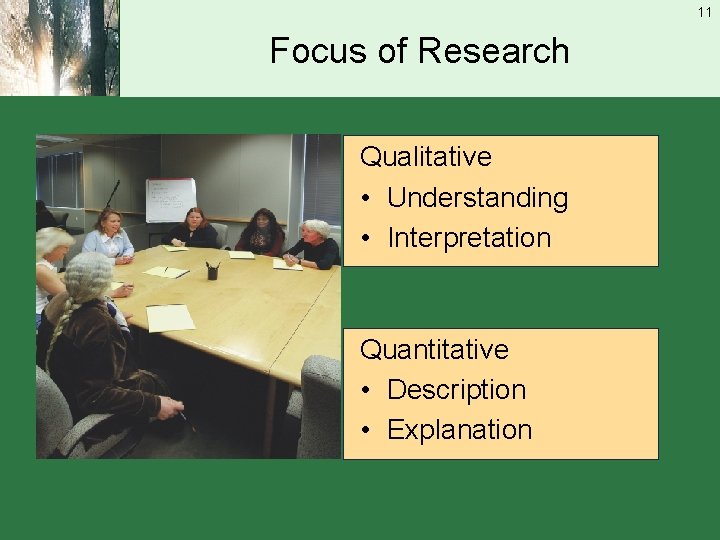
11 Focus of Research Qualitative • Understanding • Interpretation Quantitative • Description • Explanation
12 Researcher Involvement Qualitative • High • Participation-based Quantitative • Limited • Controlled
13 Research Design Qualitative • Longitudinal • Multi-method Quantitative • Cross-sectional or longitudinal • Single method
14 Sample Design and Size Qualitative • Non-probability • Purposive • Small sample Quantitative • Probability • Large sample
15 Data Type and Preparation Qualitative • Verbal or pictorial • Reduced to verbal codes Quantitative • Verbal descriptions • Reduced to numeric codes
16 Turnaround Qualitative • Shorter turnaround possible • Insight development ongoing Quantitative • May be time-consuming • Insight development follows data entry
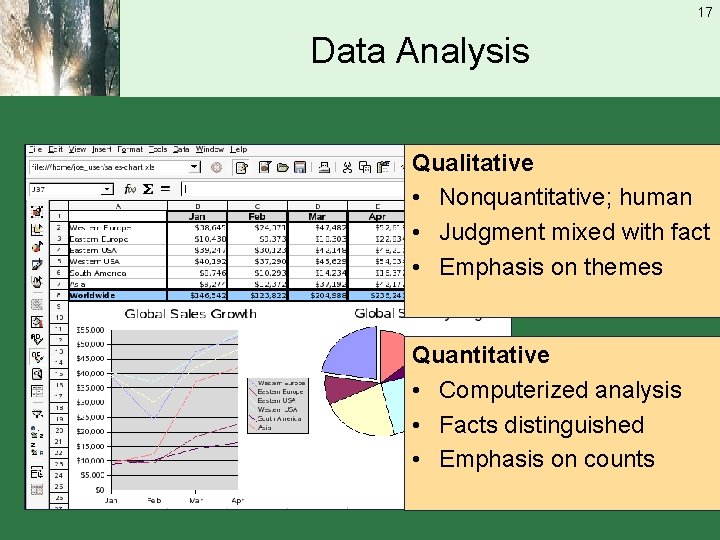
17 Data Analysis Qualitative • Nonquantitative; human • Judgment mixed with fact • Emphasis on themes Quantitative • Computerized analysis • Facts distinguished • Emphasis on counts
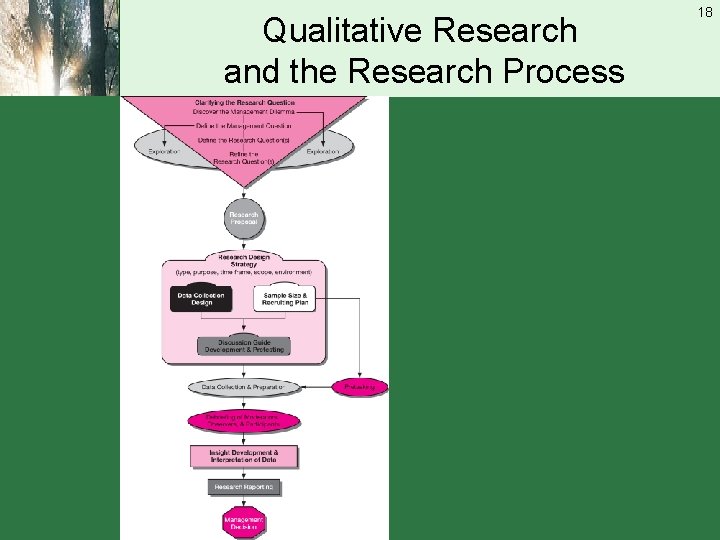
Qualitative Research and the Research Process 18
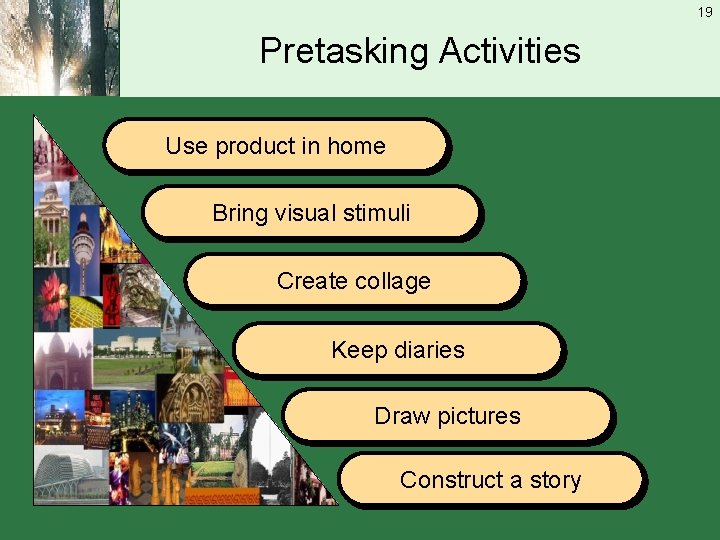
19 Pretasking Activities Use product in home Bring visual stimuli Create collage Keep diaries Draw pictures Construct a story

Formulating the Qualitative Research Question 20
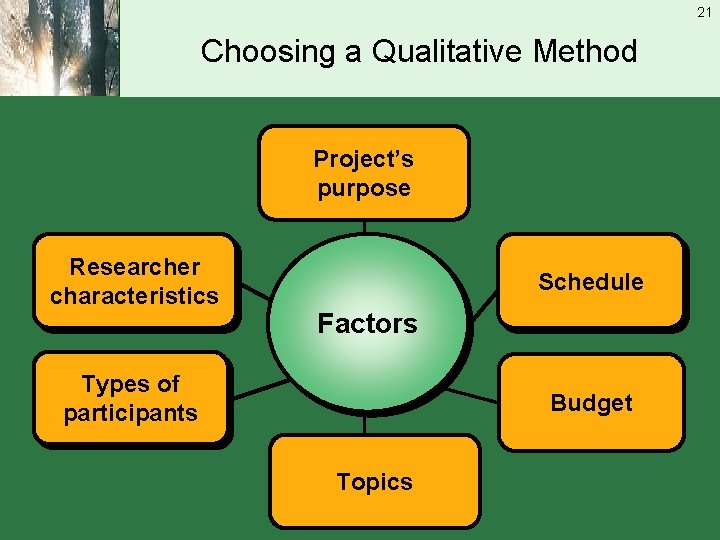
21 Choosing a Qualitative Method Project’s purpose Researcher characteristics Schedule Factors Types of participants Budget Topics
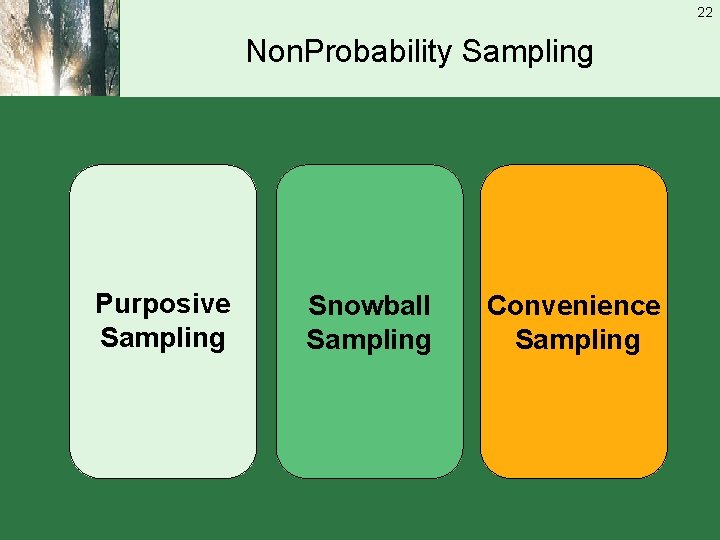
22 Non. Probability Sampling Purposive Sampling Snowball Sampling Convenience Sampling
23 Qualitative Sampling General sampling rule: You should keep conducting interviews until no new insights are gained.
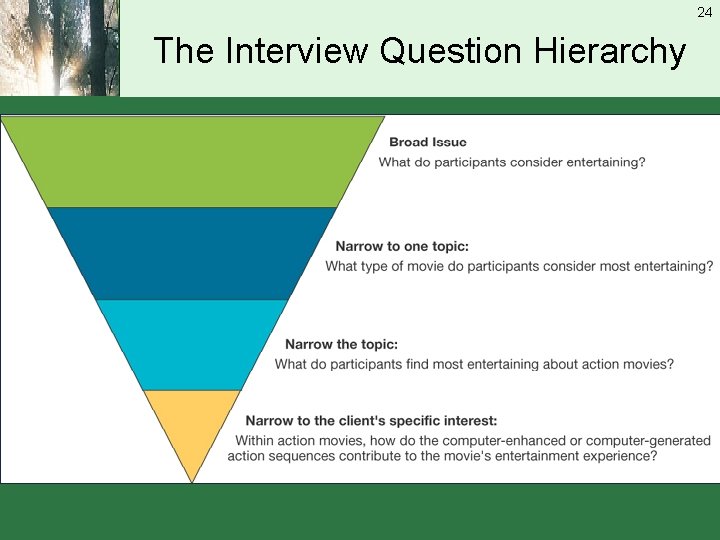
24 The Interview Question Hierarchy
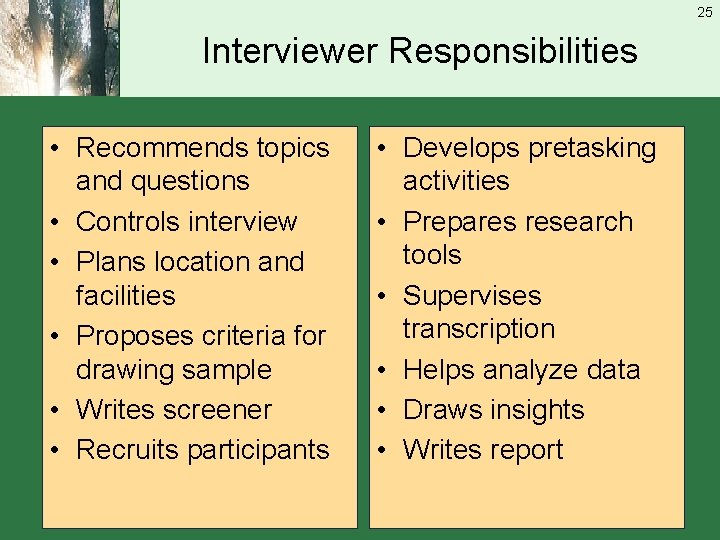
25 Interviewer Responsibilities • Recommends topics and questions • Controls interview • Plans location and facilities • Proposes criteria for drawing sample • Writes screener • Recruits participants • Develops pretasking activities • Prepares research tools • Supervises transcription • Helps analyze data • Draws insights • Writes report
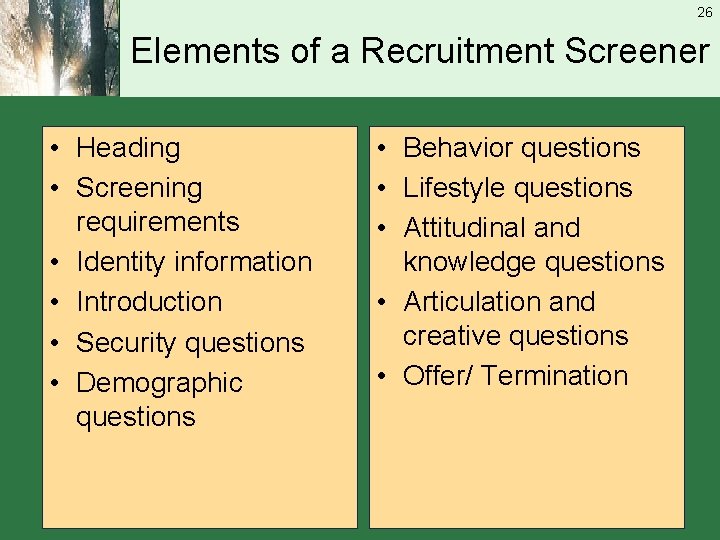
26 Elements of a Recruitment Screener • Heading • Screening requirements • Identity information • Introduction • Security questions • Demographic questions • Behavior questions • Lifestyle questions • Attitudinal and knowledge questions • Articulation and creative questions • Offer/ Termination
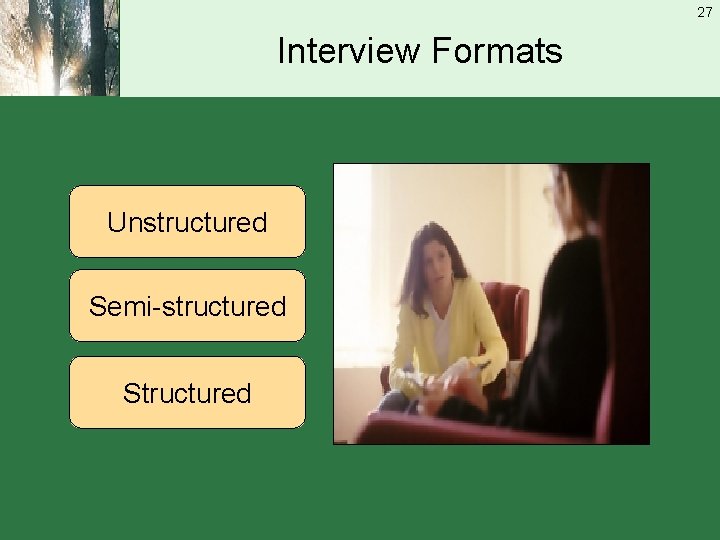
27 Interview Formats Unstructured Semi-structured Structured

Requirements for Unstructured Interviews Developed dialog Probe for answers Distinctions Interviewer skill Interviewer creativity 28
29 The Interview Mode Individual Group
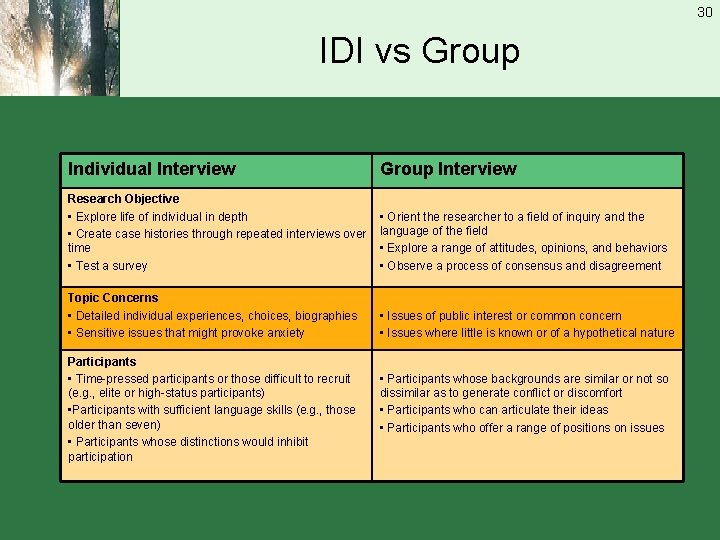
30 IDI vs Group Individual Interview Group Interview Research Objective • Explore life of individual in depth • Create case histories through repeated interviews over time • Test a survey • Orient the researcher to a field of inquiry and the language of the field • Explore a range of attitudes, opinions, and behaviors • Observe a process of consensus and disagreement Topic Concerns • Detailed individual experiences, choices, biographies • Sensitive issues that might provoke anxiety • Issues of public interest or common concern • Issues where little is known or of a hypothetical nature Participants • Time-pressed participants or those difficult to recruit (e. g. , elite or high-status participants) • Participants with sufficient language skills (e. g. , those older than seven) • Participants whose distinctions would inhibit participation • Participants whose backgrounds are similar or not so dissimilar as to generate conflict or discomfort • Participants who can articulate their ideas • Participants who offer a range of positions on issues
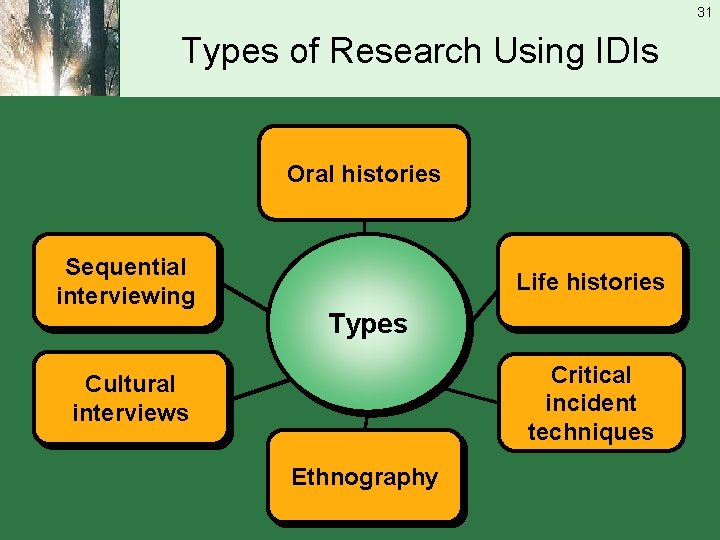
31 Types of Research Using IDIs Oral histories Sequential interviewing Life histories Types Critical incident techniques Cultural interviews Ethnography
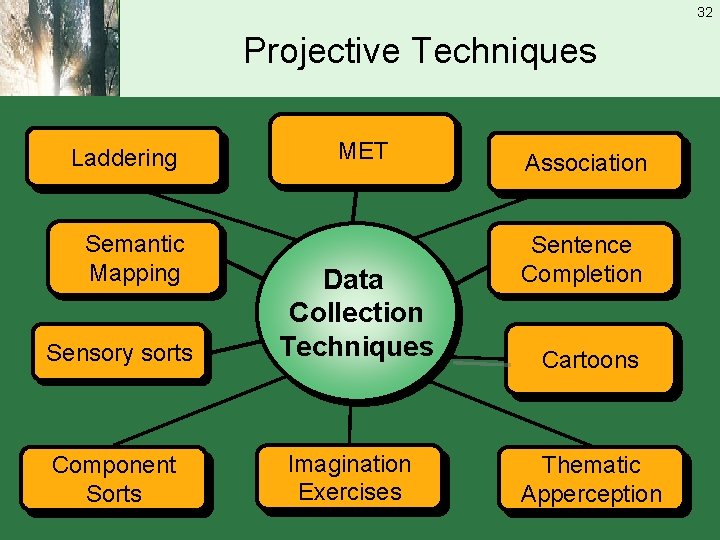
32 Projective Techniques Laddering Semantic Mapping Sensory sorts Component Sorts MET Data Collection Techniques Imagination Exercises Association Sentence Completion Cartoons Thematic Apperception
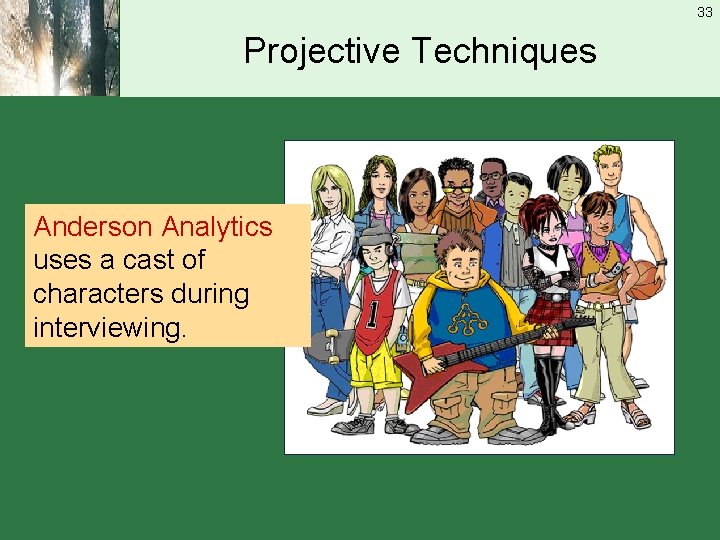
33 Projective Techniques Anderson Analytics uses a cast of characters during interviewing.
34 Group Interviews • Dyads • Triads • Mini-Groups • Small Groups (Focus Group) • Supergroups

35 Determining the Number of Groups Scope Number of distinct segments Desired number of ideas Desired level of detail Level of distinction Homogeneity
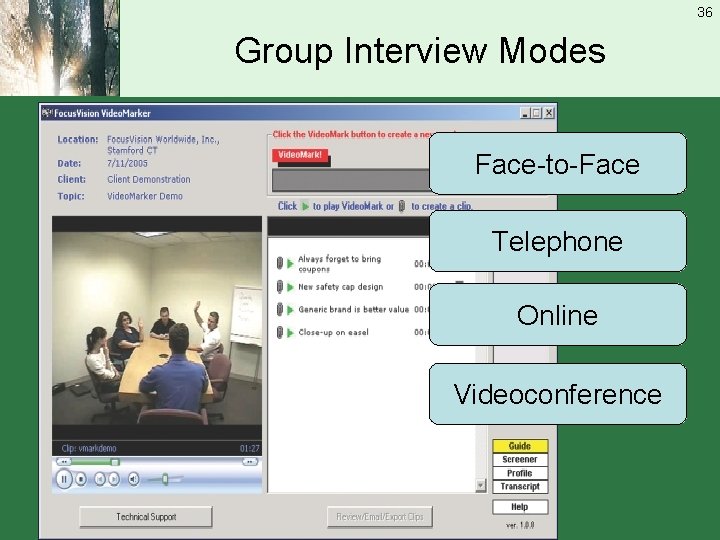
36 Group Interview Modes Face-to-Face Telephone Online Videoconference
37 Combining Qualitative Methodologies Case Study Action Research
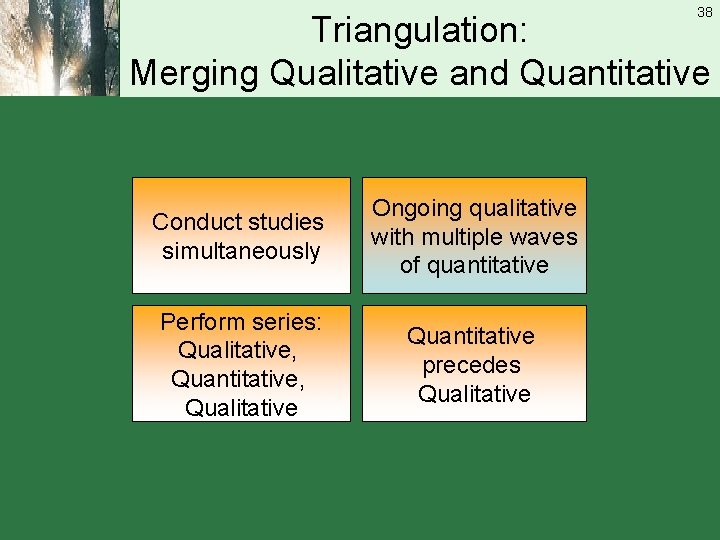
38 Triangulation: Merging Qualitative and Quantitative Conduct studies simultaneously Ongoing qualitative with multiple waves of quantitative Perform series: Qualitative, Quantitative, Qualitative Quantitative precedes Qualitative
39 Key Terms • • Action research Case study CAPI Content analysis Creativity session Ethnography Focus groups Group interview • IDI – – – – Convergent interviewing Critical incident technique Cultural interviews Grounded theory Life histories Oral history Sequential interviewing • Interview
40 Key Terms (cont. ) • Interview guide • Projective techniques – Cartoons • Moderator – Component sorts • Non-probability – Imagination exercises sampling – Laddering • Pretasking – Metaphor Elicitation Technique • Probability sampling – Semantic mapping • Qualitative research • Brand mapping – Sensory sorts • Quantitative research – Sentence completion • Recruitment screener – Thematic Apperception Test • Triangulation – Word or picture association
- Slides: 40