
Chapter 7 Productivity and Quality Improvement 1 Learning

- Slides: 15
Chapter 7 Productivity and Quality Improvement 1
Learning Objectives Describe the current status and future directions of management efforts to improve productivity and quality. n Discuss how total quality management programs are increasing productivity and quality. n Identify the steps in TQM programs and briefly describe each step. n Explain how Pareto chart analysis, cause-and-effect diagrams, customer-value-added programs, and benchmarking reduce errors and increase quality. n 2
Learning Objectives (contd. ) Relate the value of alternative work arrangements and empowerment to increased productivity and quality. n Define the term intrapreneurship and relate its value to improved organizational productivity and quality. n Explain the importance for developing intrapreneurship strategies. n 3
Productivity Typically measured by the equation: output/input 4
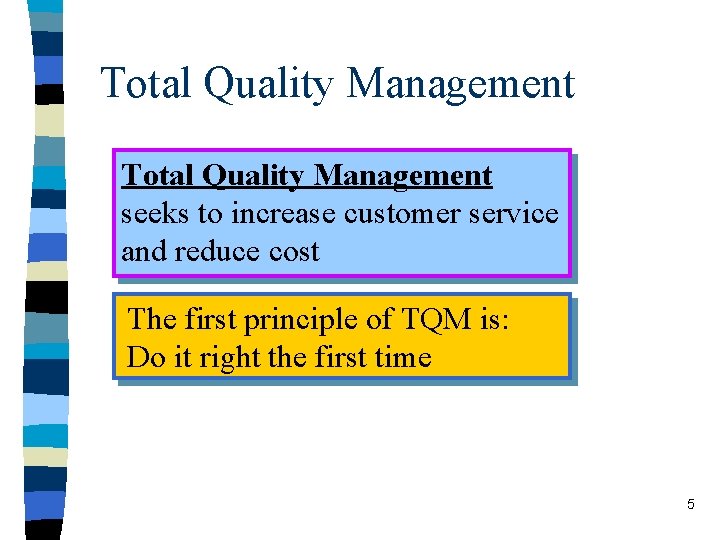
Total Quality Management seeks to increase customer service and reduce cost The first principle of TQM is: Do it right the first time 5
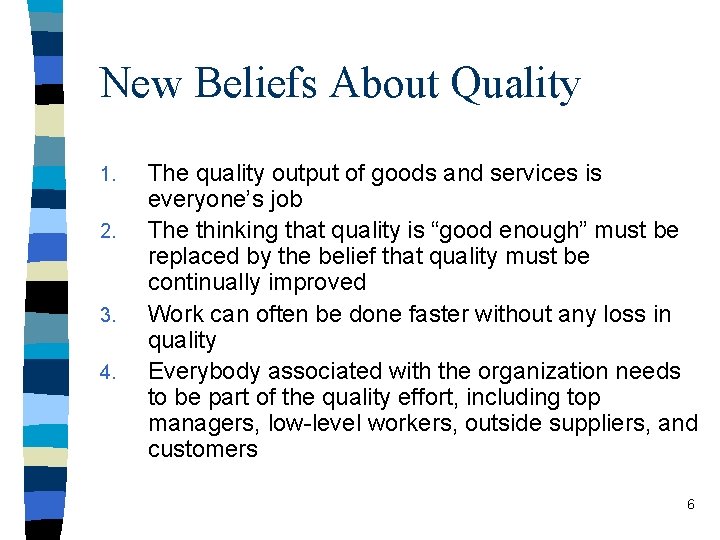
New Beliefs About Quality 1. 2. 3. 4. The quality output of goods and services is everyone’s job The thinking that quality is “good enough” must be replaced by the belief that quality must be continually improved Work can often be done faster without any loss in quality Everybody associated with the organization needs to be part of the quality effort, including top managers, low-level workers, outside suppliers, and customers 6
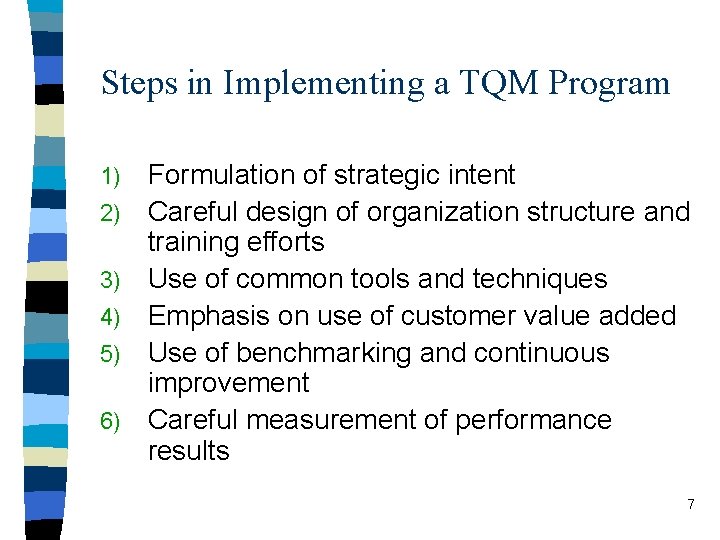
Steps in Implementing a TQM Program 1) 2) 3) 4) 5) 6) Formulation of strategic intent Careful design of organization structure and training efforts Use of common tools and techniques Emphasis on use of customer value added Use of benchmarking and continuous improvement Careful measurement of performance results 7
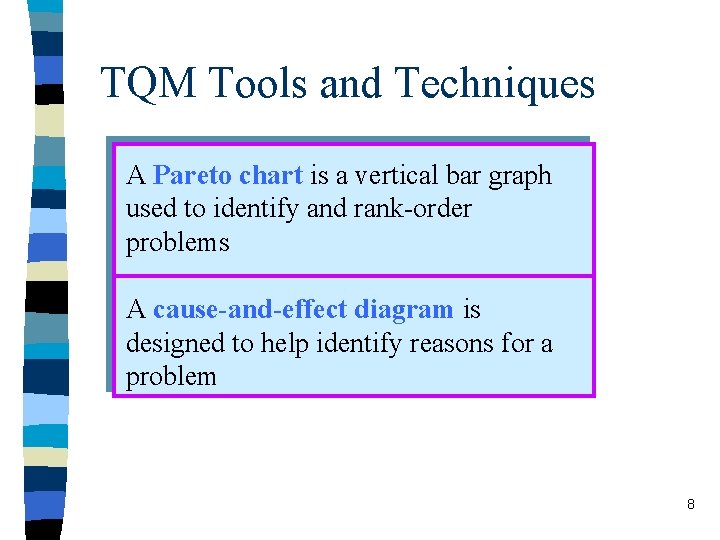
TQM Tools and Techniques A Pareto chart is a vertical bar graph used to identify and rank-order problems A cause-and-effect diagram is designed to help identify reasons for a problem 8
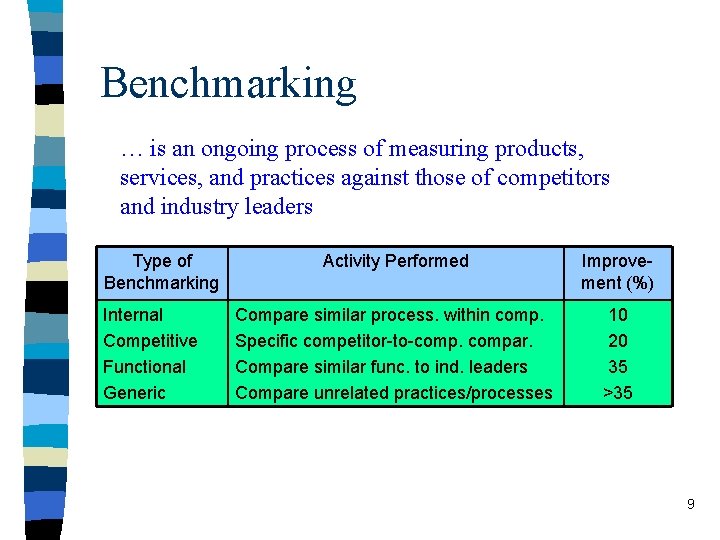
Benchmarking … is an ongoing process of measuring products, services, and practices against those of competitors and industry leaders Type of Benchmarking Internal Competitive Functional Generic Activity Performed Improvement (%) Compare similar process. within comp. Specific competitor-to-compar. Compare similar func. to ind. leaders Compare unrelated practices/processes 10 20 35 >35 9
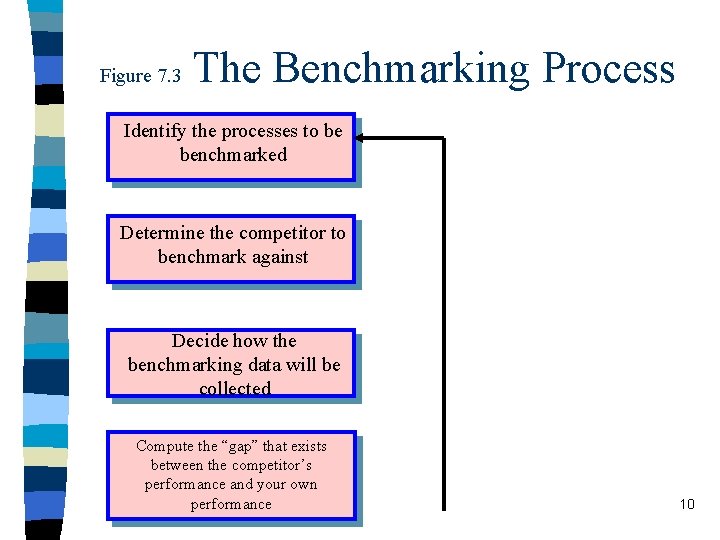
Figure 7. 3 The Benchmarking Process Identify the processes to be benchmarked Determine the competitor to benchmark against Decide how the benchmarking data will be collected Compute the “gap” that exists between the competitor’s performance and your own performance 10
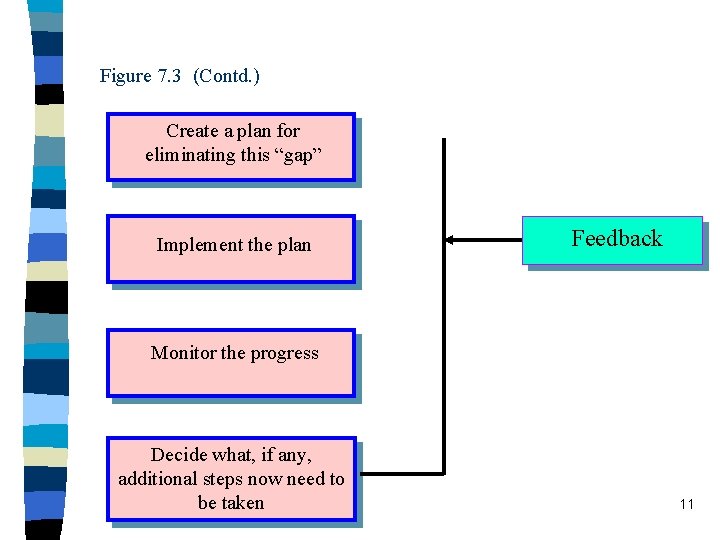
Figure 7. 3 (Contd. ) Create a plan for eliminating this “gap” Implement the plan Feedback Monitor the progress Decide what, if any, additional steps now need to be taken 11
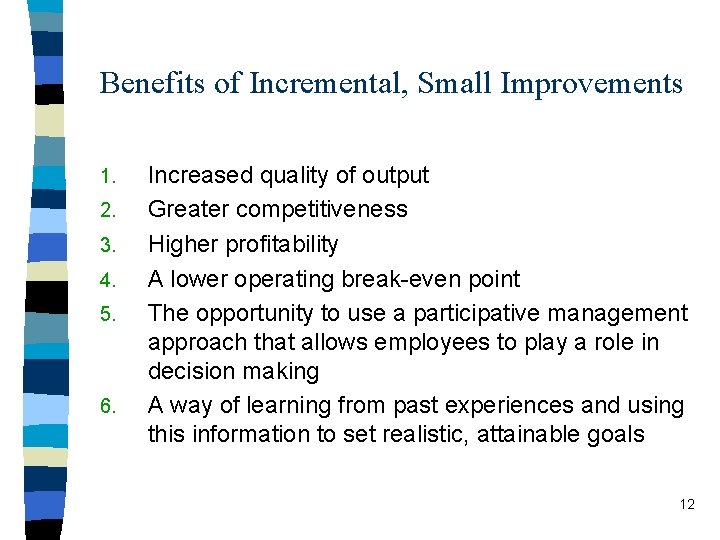
Benefits of Incremental, Small Improvements 1. 2. 3. 4. 5. 6. Increased quality of output Greater competitiveness Higher profitability A lower operating break-even point The opportunity to use a participative management approach that allows employees to play a role in decision making A way of learning from past experiences and using this information to set realistic, attainable goals 12
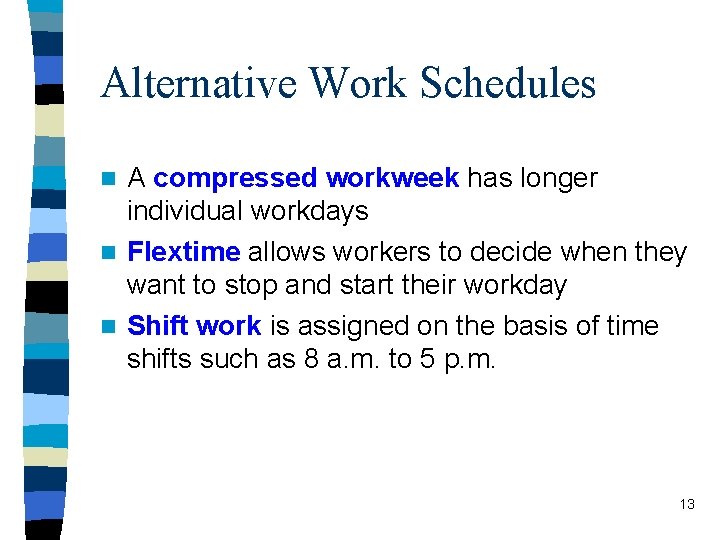
Alternative Work Schedules A compressed workweek has longer individual workdays n Flextime allows workers to decide when they want to stop and start their workday n Shift work is assigned on the basis of time shifts such as 8 a. m. to 5 p. m. n 13
Intrapreneur An intrapreneur is an entrepreneur who works within the confines of an organization 14
Key Terms in the Chapter n n n n Productivity Total quality management (TQM) First principle of TQM Strategic intent Quality council Pareto chart Cause-and-effect diagram n n n n Customer value added Benchmarking Compressed work week Flextime Shift work Empowerment Intrapreneur 15