
CHAPTER 7 Preparing financial statements Contents Constructing financial

- Slides: 16
CHAPTER 7 Preparing financial statements
Contents Constructing financial statements q Accounting adjustments q Uses of financial statements q
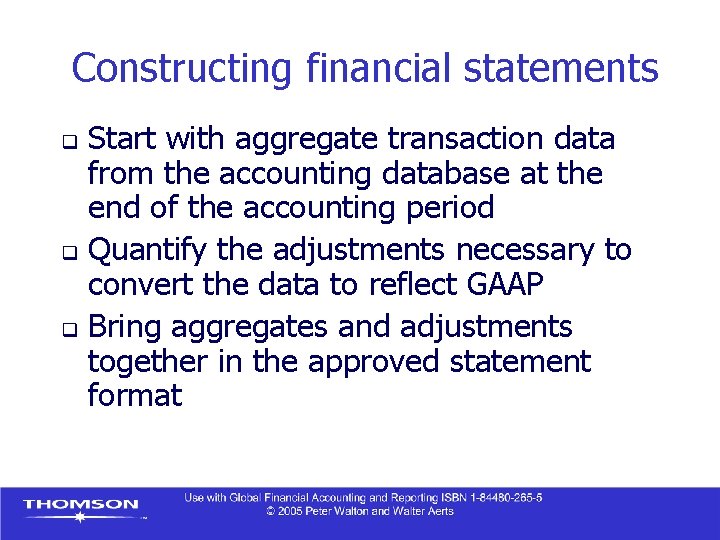
Constructing financial statements Start with aggregate transaction data from the accounting database at the end of the accounting period q Quantify the adjustments necessary to convert the data to reflect GAAP q Bring aggregates and adjustments together in the approved statement format q
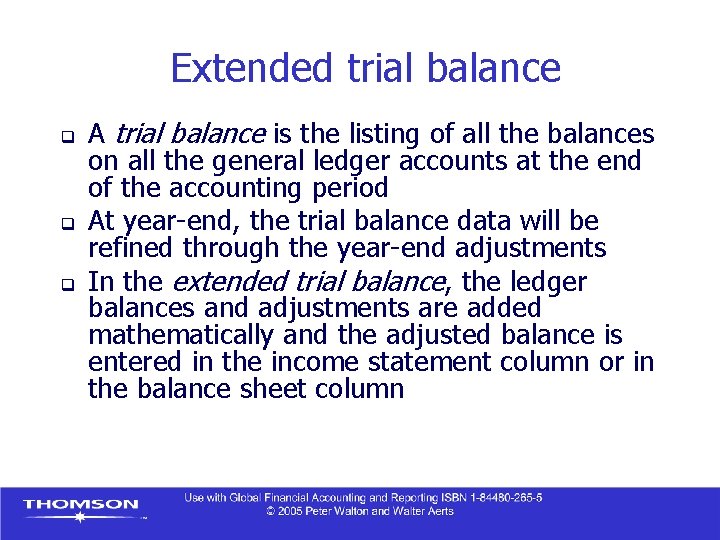
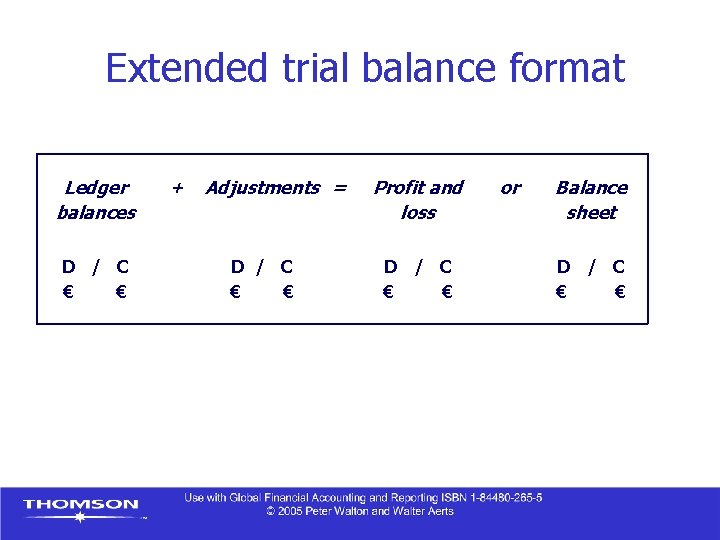
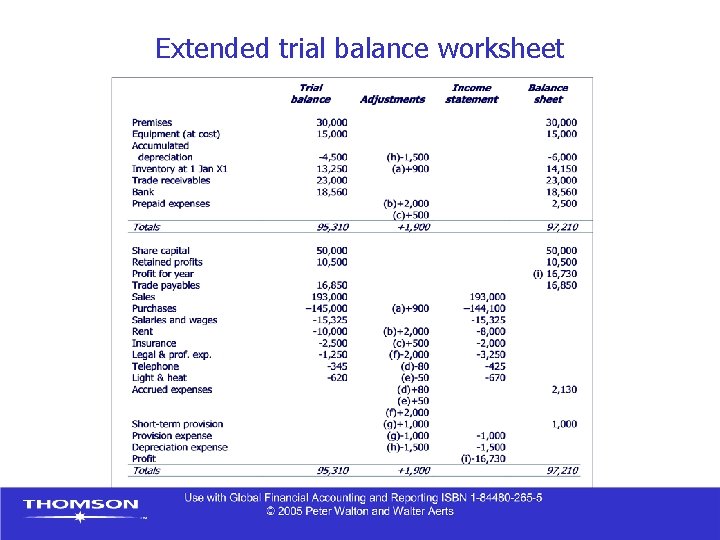
Extended trial balance q q q A trial balance is the listing of all the balances on all the general ledger accounts at the end of the accounting period At year-end, the trial balance data will be refined through the year-end adjustments In the extended trial balance, the ledger balances and adjustments are added mathematically and the adjusted balance is entered in the income statement column or in the balance sheet column
Extended trial balance format Ledger balances D / C € € + Adjustments = D / C € € Profit and loss D / C € € or Balance sheet D / C €
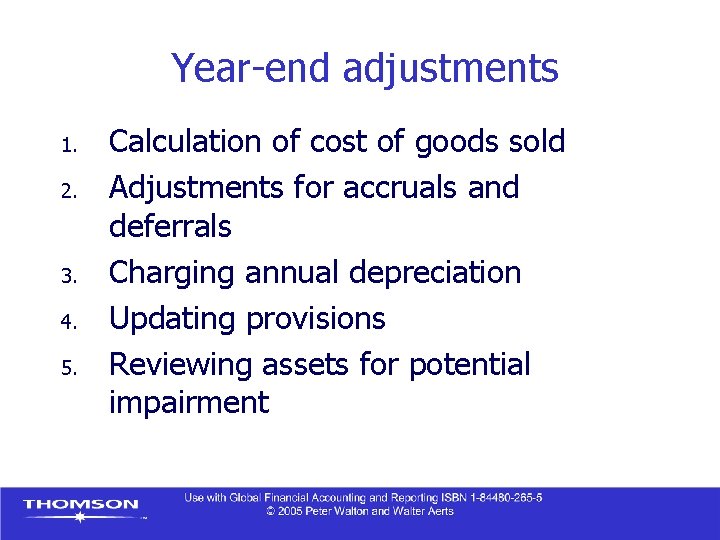
Year-end adjustments 1. 2. 3. 4. 5. Calculation of cost of goods sold Adjustments for accruals and deferrals Charging annual depreciation Updating provisions Reviewing assets for potential impairment
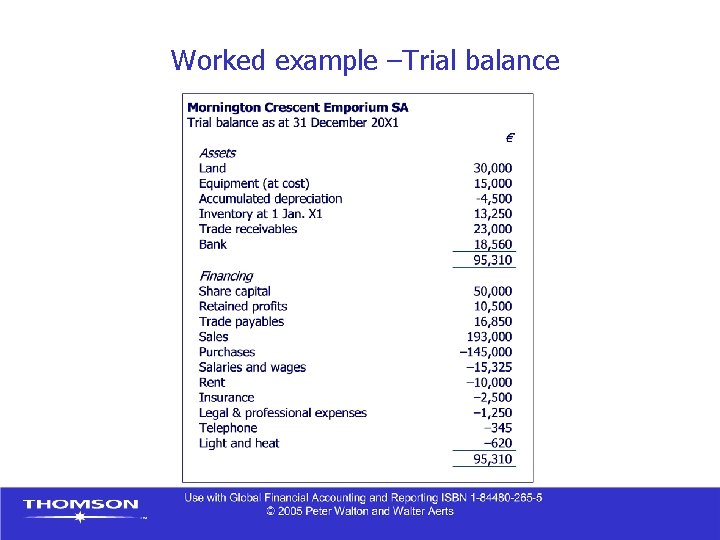
Worked example –Trial balance
Extended trial balance worksheet
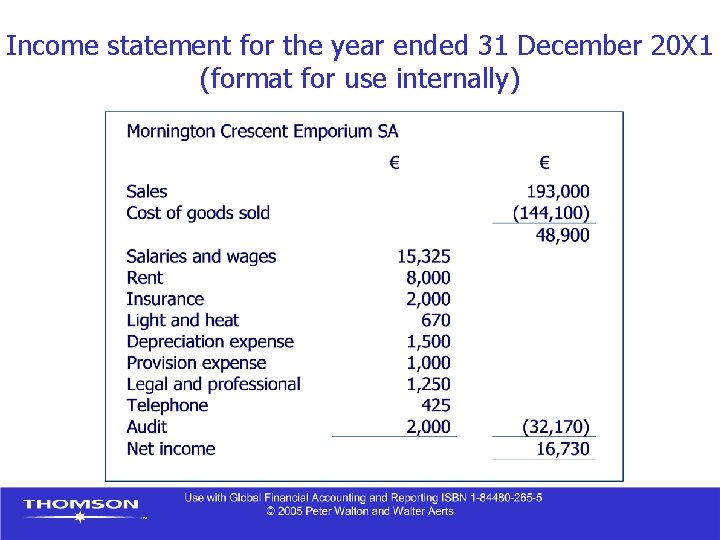
Income statement for the year ended 31 December 20 X 1 (format for use internally)
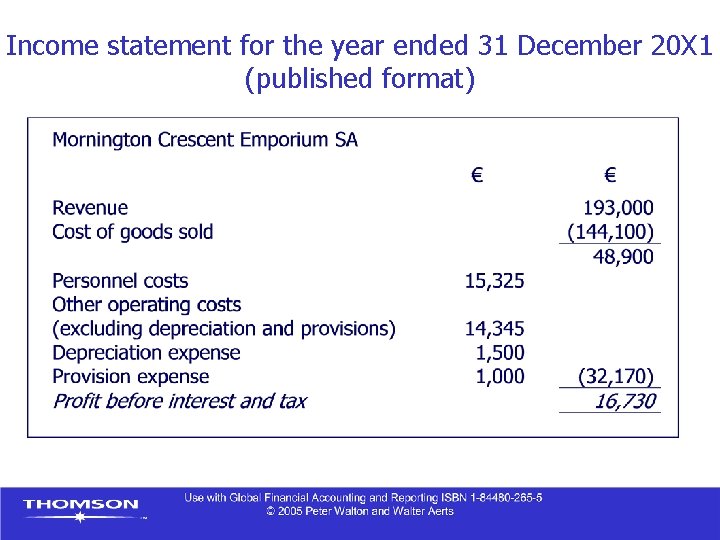
Income statement for the year ended 31 December 20 X 1 (published format)
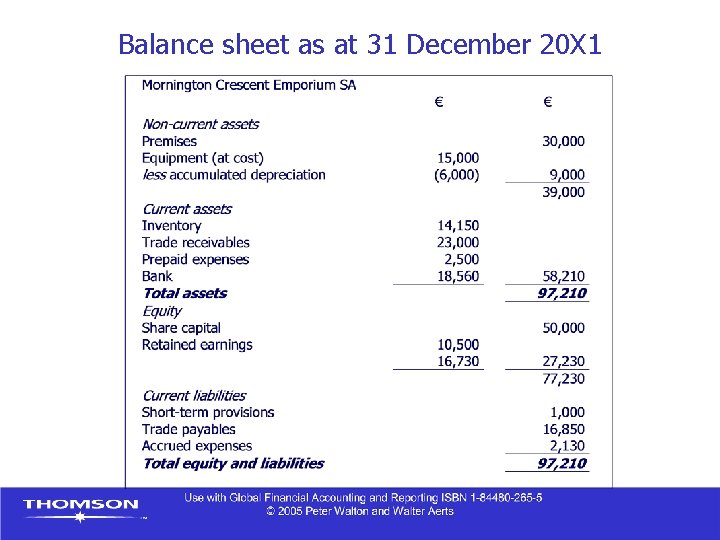
Balance sheet as at 31 December 20 X 1
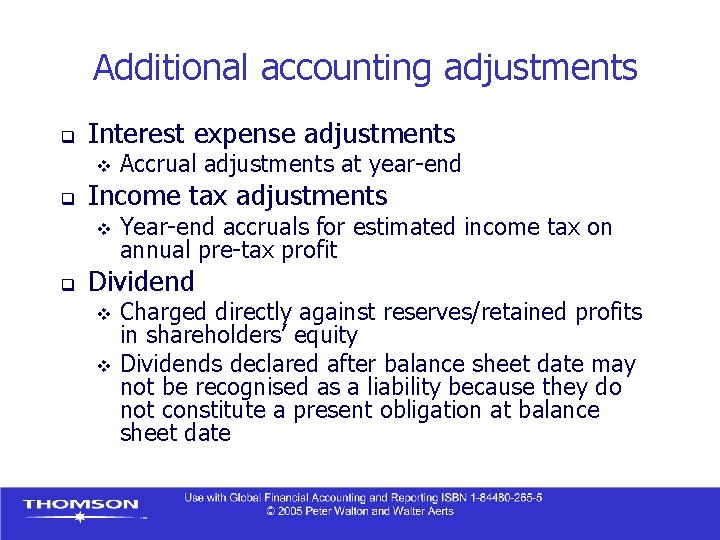
Additional accounting adjustments q Interest expense adjustments v q Income tax adjustments v q Accrual adjustments at year-end Year-end accruals for estimated income tax on annual pre-tax profit Dividend Charged directly against reserves/retained profits in shareholders’ equity v Dividends declared after balance sheet date may not be recognised as a liability because they do not constitute a present obligation at balance sheet date v
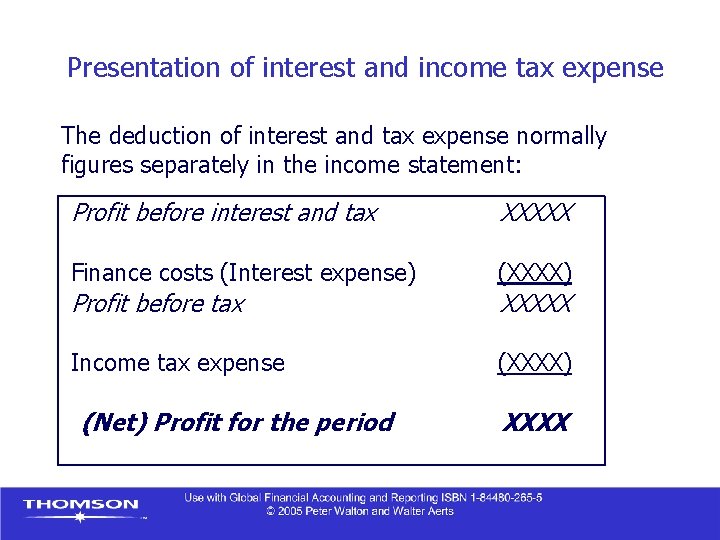
Presentation of interest and income tax expense The deduction of interest and tax expense normally figures separately in the income statement: Profit before interest and tax XXXXX Finance costs (Interest expense) (XXXX) Profit before tax XXXXX Income tax expense (XXXX) (Net) Profit for the period XXXX
Income statement for the year ended 31 December 20 X 1
Balance sheet as at 31 December 20 X 1
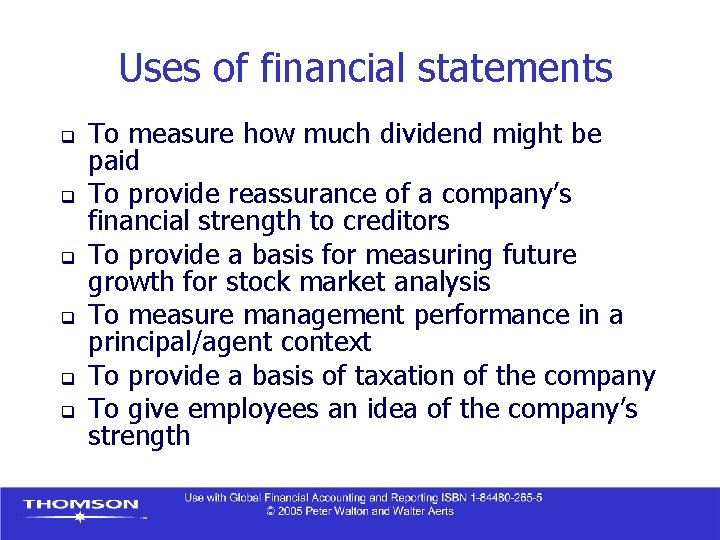
Uses of financial statements q q q To measure how much dividend might be paid To provide reassurance of a company’s financial strength to creditors To provide a basis for measuring future growth for stock market analysis To measure management performance in a principal/agent context To provide a basis of taxation of the company To give employees an idea of the company’s strength