
Chapter 7 Population and Society Theory of Demographic
- Slides: 17
Chapter 7 Population and Society Theory of Demographic Transitions links human population and societal factors. • Woman Empowerment • Population policies and family planning • Poverty and population Growth • Affluent consumption impacts the environment • Wealth gap and population growth contribute to conflict • HIV/AIDS impact on African populations • Severe demographic changes have social, political and economic • repercussions
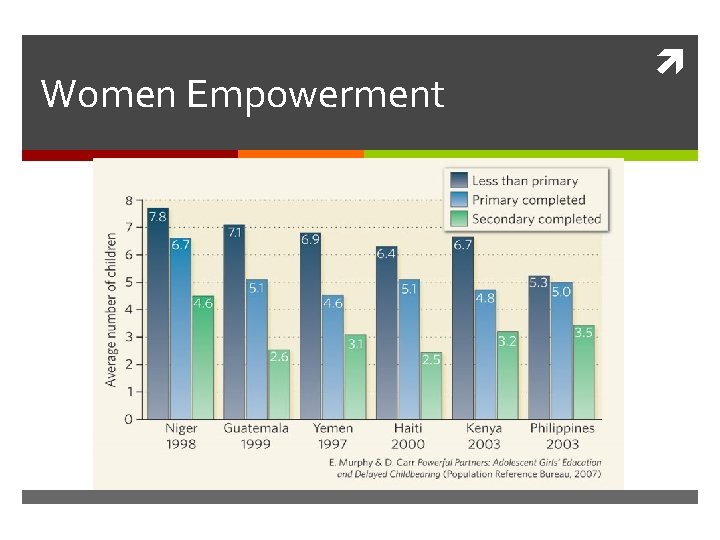
Women Empowerment • Fertility rates have dropped in countries where women have gained improved access to contraceptives and family planning. • Better education opportunities. • When women have little power, more unintended pregnancies occur. • They have a lack of personal freedom and choice and gender equality.
Women Empowerment
Women Empowerment
Population Policies and Family Planning • Data show that funding and policies that encourage family planning can effectively lower population growth rates. • India was the first nation to implement population control policies, but forced sterilization brought down the government • Thailand uses education based approach to family planning that has reduced the birthrate and slowed population since 1960’s.
Population Policies and Family Planning • Government funded family planning education programs have reduced populations in Brazil, Mexico, Iran, Cuba and many other developing nations. • Despite the success of family planning internationally, recent republican administrations in the United States have declined to fund familyplanning efforts by the United Nations.
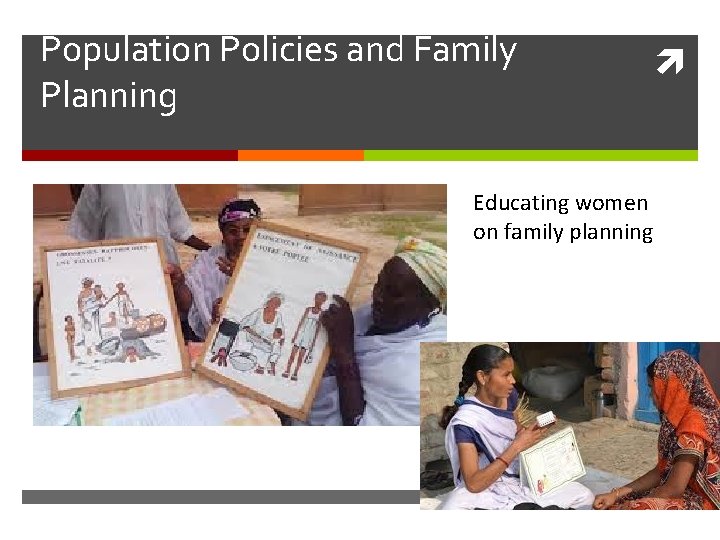
Population Policies and Family Planning Educating women on family planning
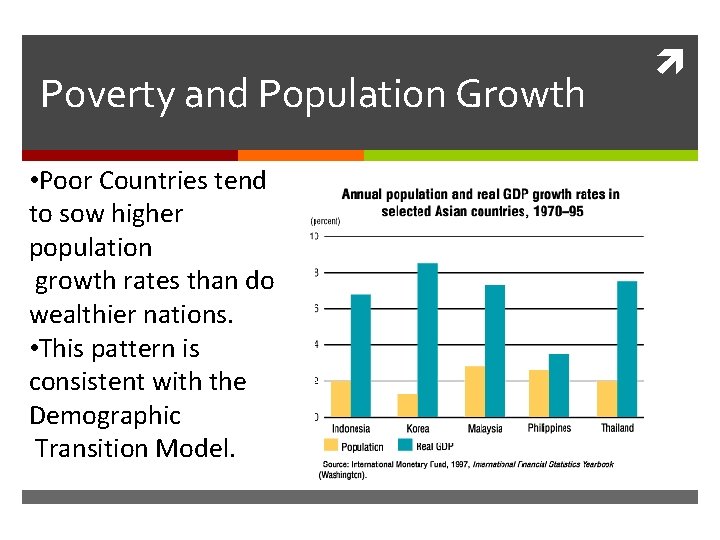
Poverty and Population Growth • Poor Countries tend to sow higher population growth rates than do wealthier nations. • This pattern is consistent with the Demographic Transition Model.
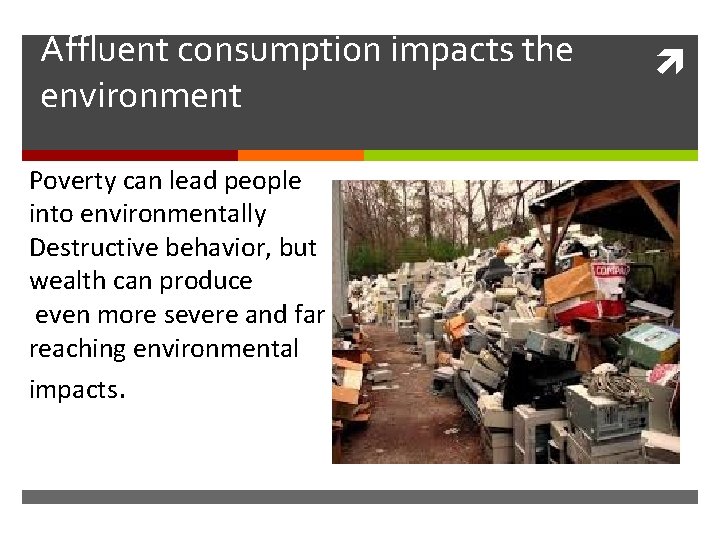
Affluent consumption impacts the environment Poverty can lead people into environmentally Destructive behavior, but wealth can produce even more severe and far reaching environmental impacts.
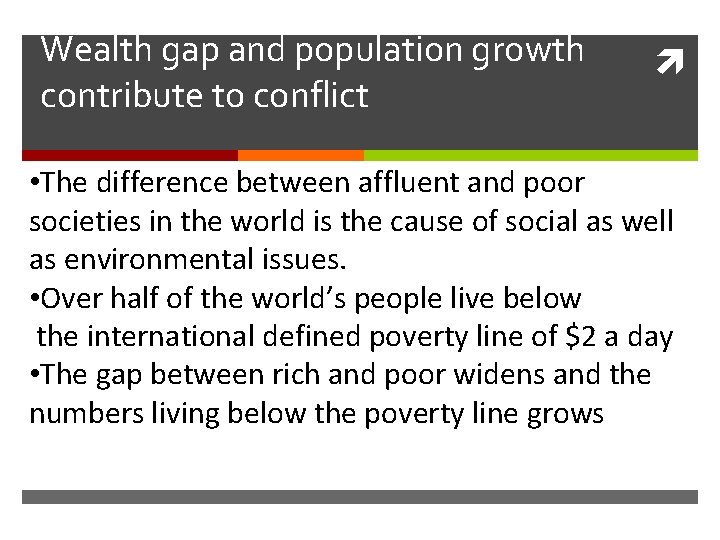
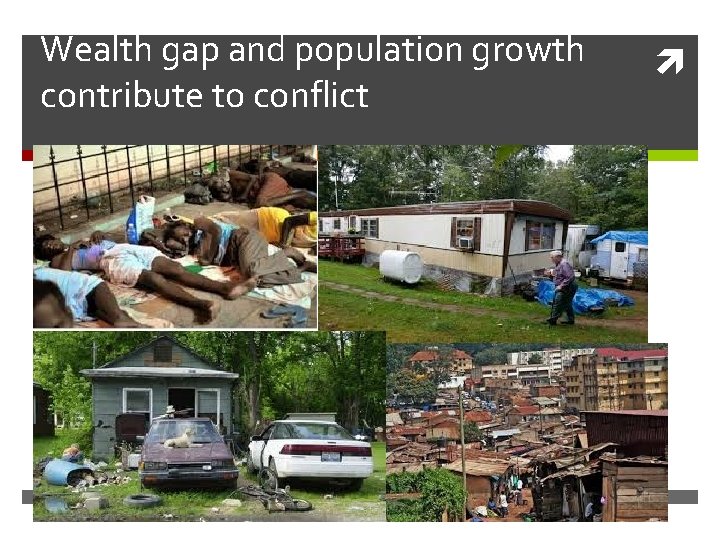
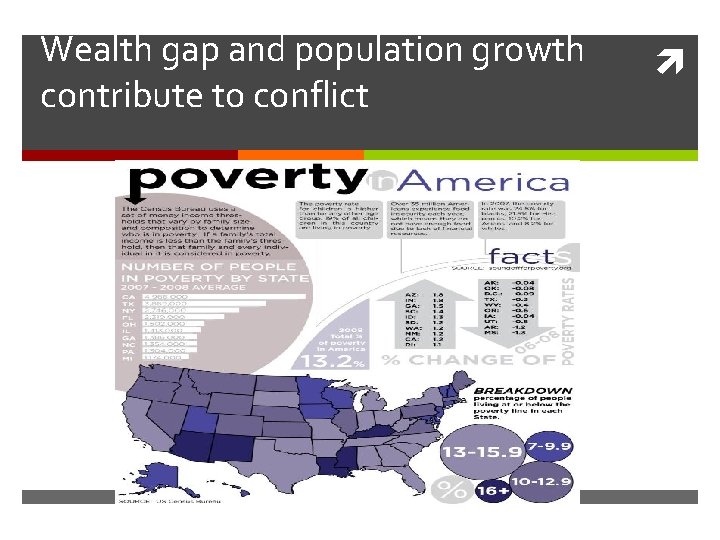
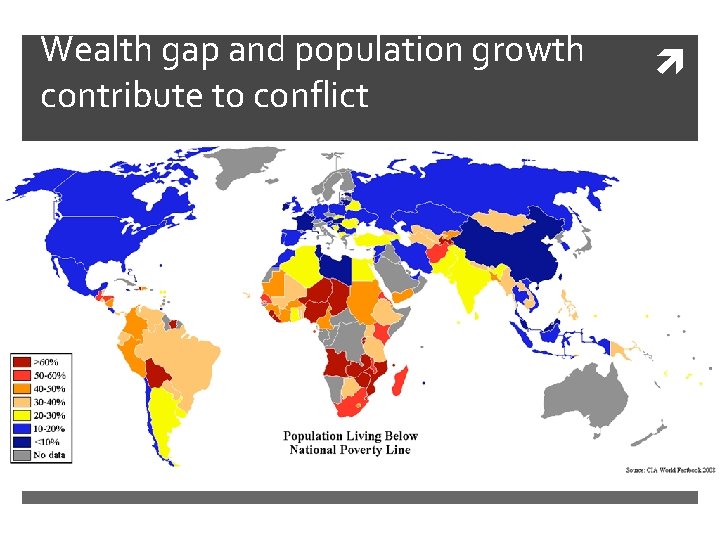
Wealth gap and population growth contribute to conflict • The difference between affluent and poor societies in the world is the cause of social as well as environmental issues. • Over half of the world’s people live below the international defined poverty line of $2 a day • The gap between rich and poor widens and the numbers living below the poverty line grows
Wealth gap and population growth contribute to conflict
Wealth gap and population growth contribute to conflict
Wealth gap and population growth contribute to conflict
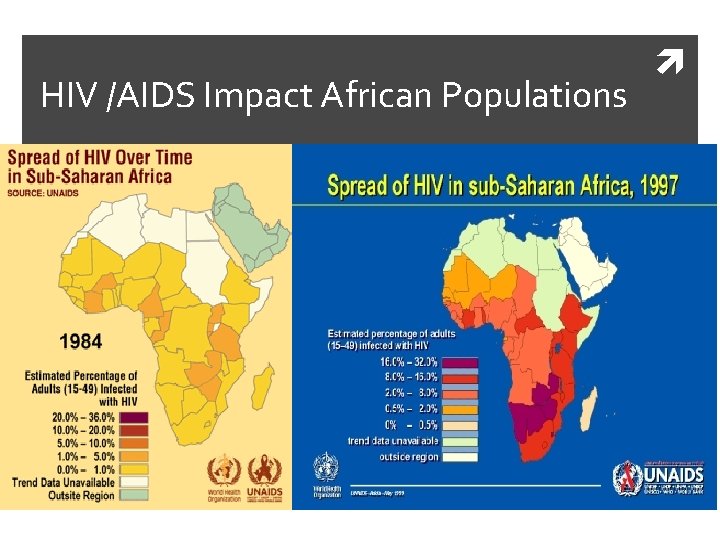
HIV /AIDS Impact African Populations • African nations are being hit the hardest by HIV/AIDS • Aids takes approximately 6000 lives a day in Africa resulting in demographic changes in that region.
HIV /AIDS Impact African Populations
Demographic changes have social, political and economic repercussions • In Africa, AIDS is removing many of the youngest and most productive members of society. • Developing nations with AIDS related deaths are making so these nations can not transition to modern technologies because the removal of many young productive members of society.
Demographic changes have social, political and economic repercussions • If these countries do not do something, the country will fail to advance through demographic transition. • Rising death rates could push births back up, potentially causing these countries to fall back to pre-industrial stage.