
CHAPTER 7 PHYSICAL AND COGNITIVE DEVELOPMENT IN EARLY



- Slides: 45
CHAPTER 7 PHYSICAL AND COGNITIVE DEVELOPMENT IN EARLY CHILDHOOD
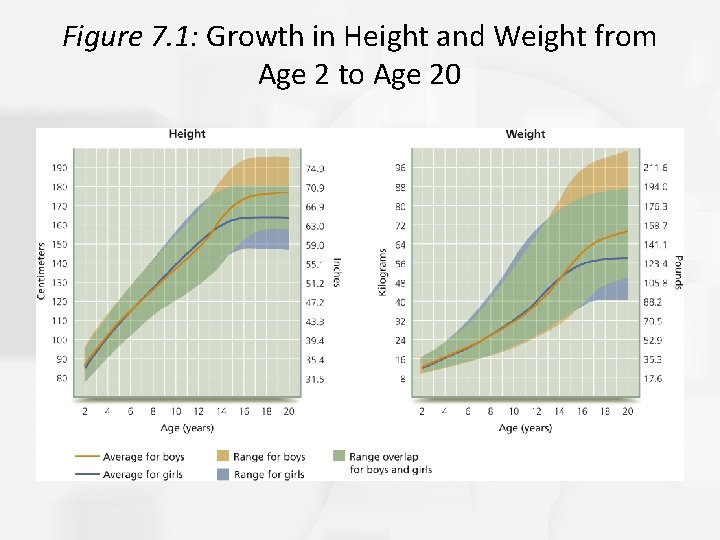
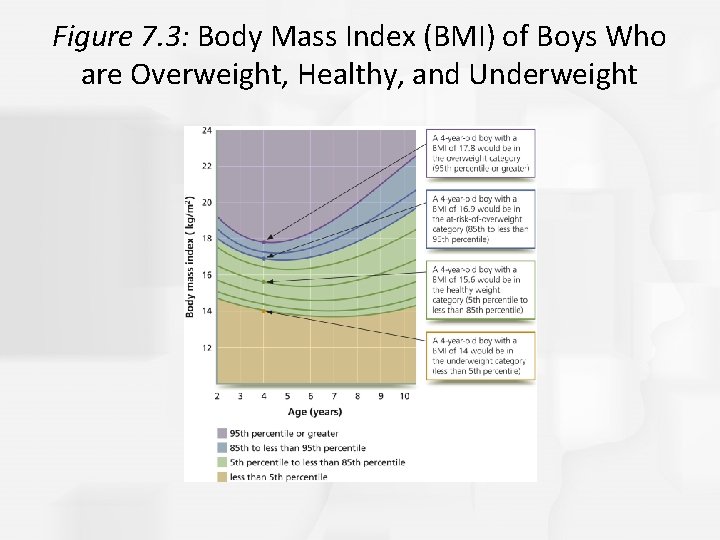
Body Growth • Norms – standards of what is “typical” at different ages – Growth curve tables – WHO research finds similar patterns in diverse parts of the world. • Wider individual differences in early childhood – BMI shows whether child’s weight is appropriate for height. – Obesity in childhood particularly troubling.
Figure 7. 1: Growth in Height and Weight from Age 2 to Age 20
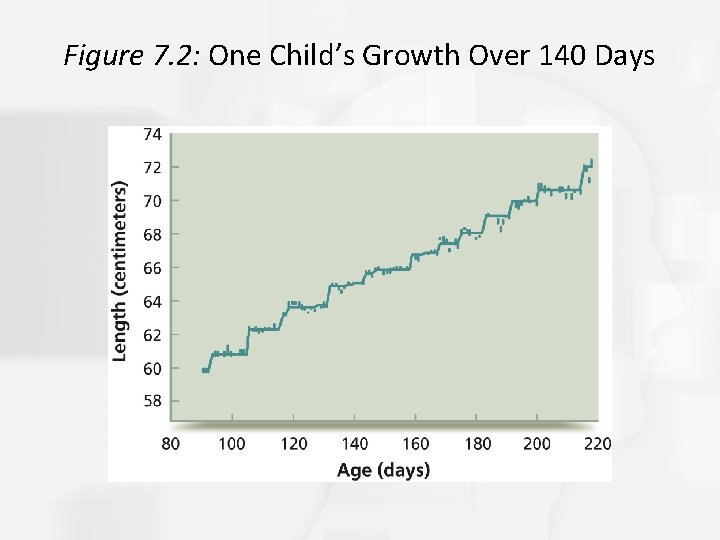
Figure 7. 2: One Child’s Growth Over 140 Days
Figure 7. 3: Body Mass Index (BMI) of Boys Who are Overweight, Healthy, and Underweight
Obesity in Childhood • Lowering risk of obesity – – Variety of healthy food choices Food is not a bribe, punishment, or entertainment Encouraging active play Serving as a good role model
Video: Childhood Eating
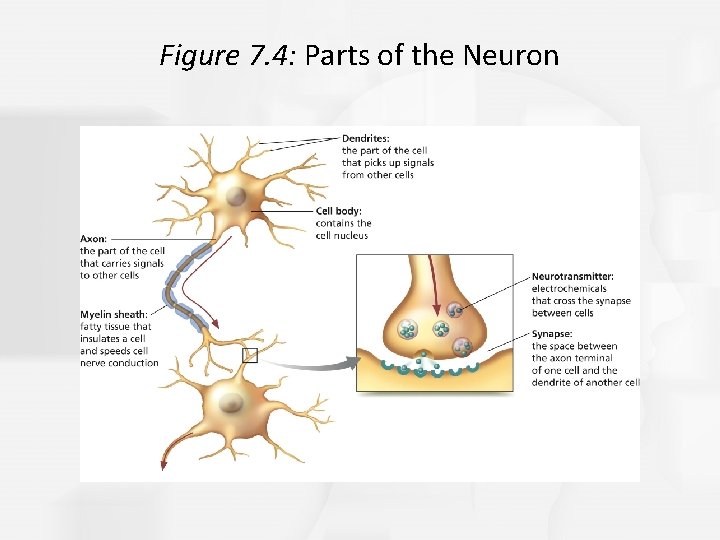
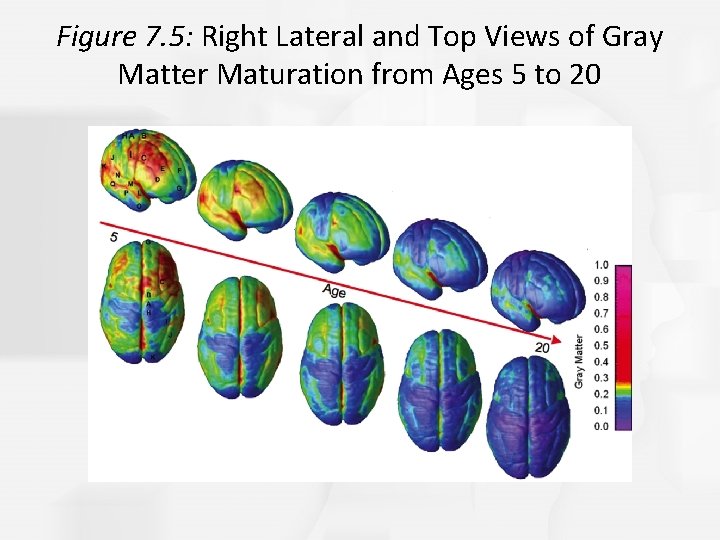
Brain Development • Synaptogenesis peaks at age 1, continues through childhood • Synaptic pruning begins in first years, continues through young adulthood • Myelination occurs sequentially. • Brain anatomy – Lateralization – Corpus callosum
Figure 7. 4: Parts of the Neuron
Figure 7. 5: Right Lateral and Top Views of Gray Matter Maturation from Ages 5 to 20
Brain Plasticity • Degree to which the brain can be altered by experience • Sensitive periods
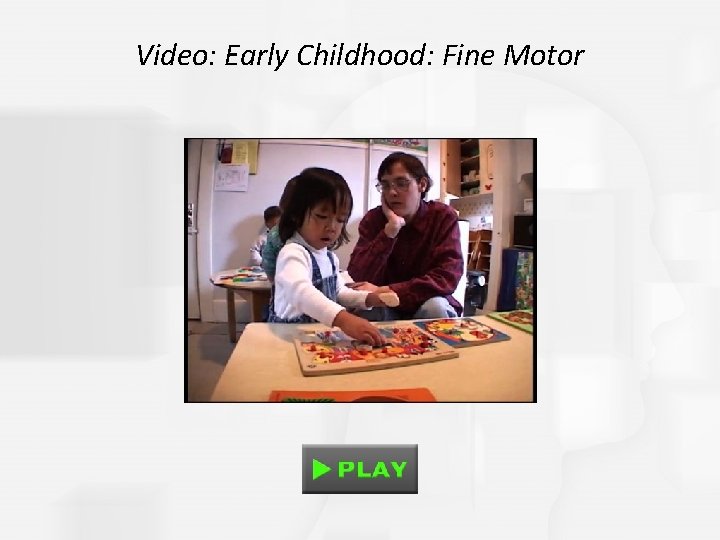
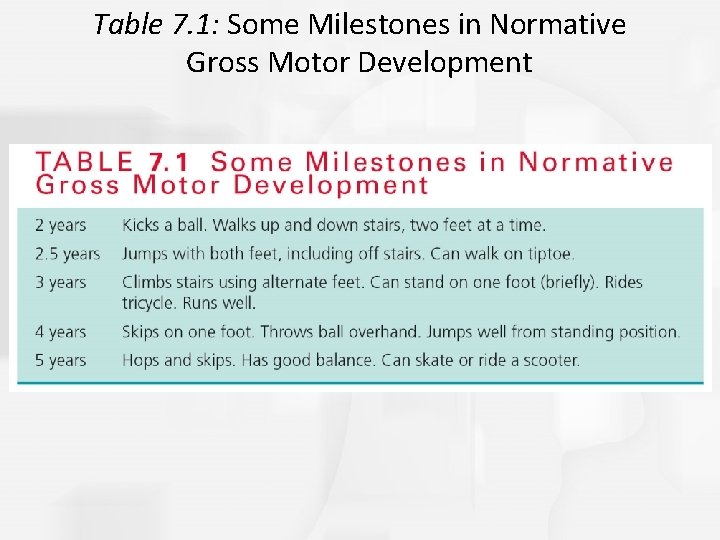
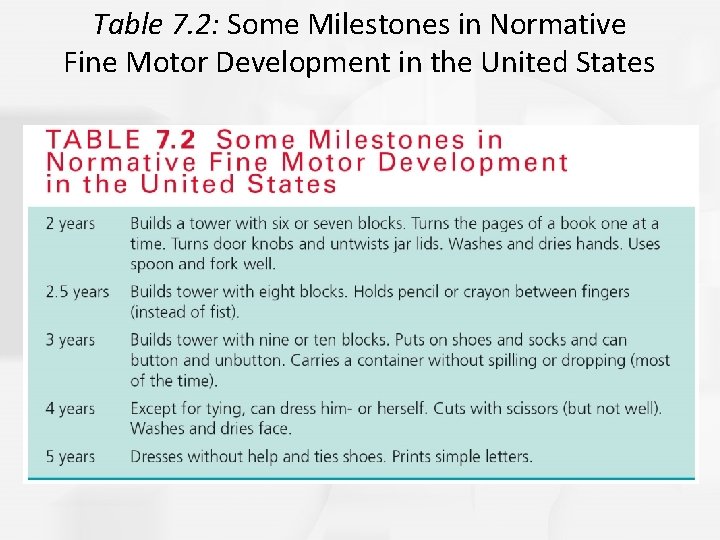
Motor Development • Gross motor skills – Abilities required to control large movements of the arms, legs, and feet, or the whole body – Must be studied in cultural context • Fine motor skills – Involves smaller movements of the hand fingers – Depend on culture and experience
Video: Early Childhood: Gross Motor
Video: Early Childhood: Fine Motor
Table 7. 1: Some Milestones in Normative Gross Motor Development
Table 7. 2: Some Milestones in Normative Fine Motor Development in the United States
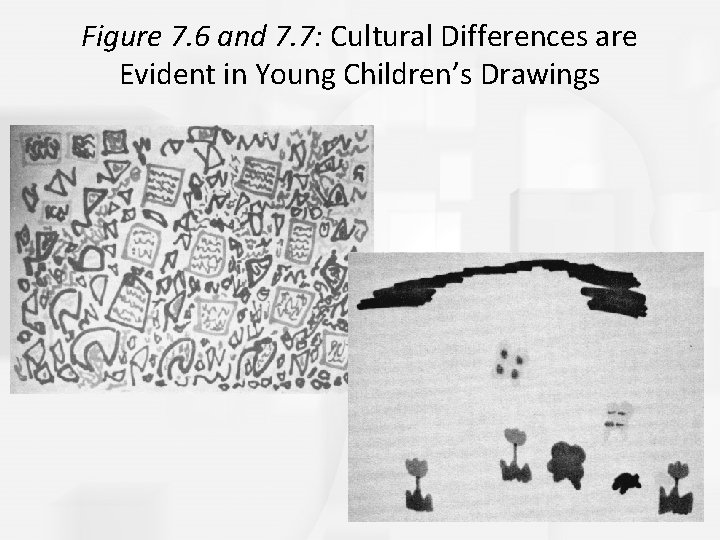
Figure 7. 6 and 7. 7: Cultural Differences are Evident in Young Children’s Drawings
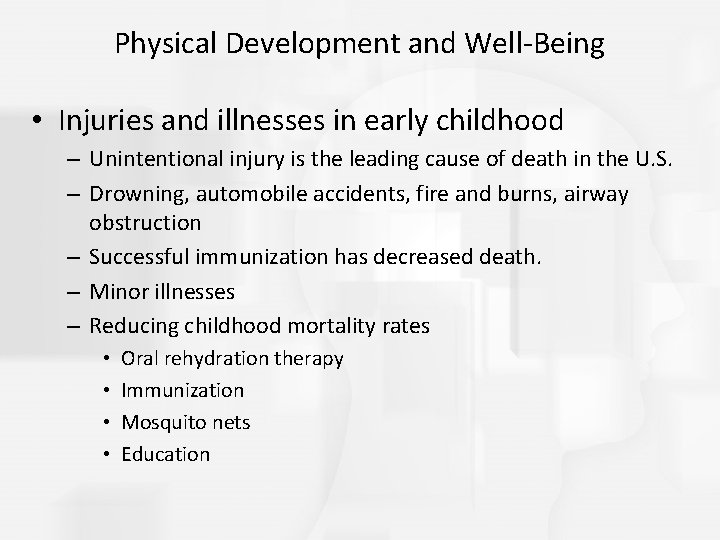
Physical Development and Well-Being • Injuries and illnesses in early childhood – Unintentional injury is the leading cause of death in the U. S. – Drowning, automobile accidents, fire and burns, airway obstruction – Successful immunization has decreased death. – Minor illnesses – Reducing childhood mortality rates • • Oral rehydration therapy Immunization Mosquito nets Education
Physical Development • Sleep and sleep problems – Sleep problems common in young children – Promoting sleep hygiene • Regular bedtime rituals • Consistent sleep schedules • Quiet time before lights out
Physical Development • Physiological indicators of stress – Cortisol • Related to children’s temperament • Related to attachment security • Related to quality of child care setting
Physical Development • Physical abuse and neglect – Research with nonhuman animals indicate stress affects animal’s biological makeup. – Pollack studies of abused children • More sensitive to anger cues • May perceive anger in caring adults when not present • May react intensely to situations perceived as “dangerous” – Neglected children • Emotional impairment • Inability to identify emotions
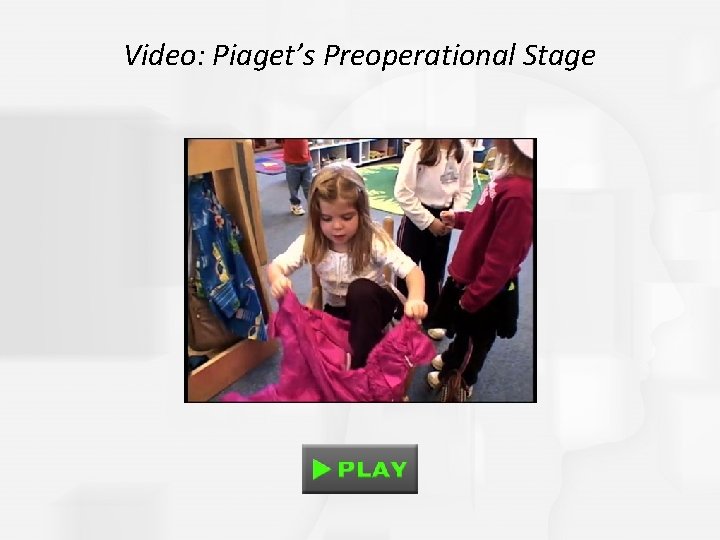
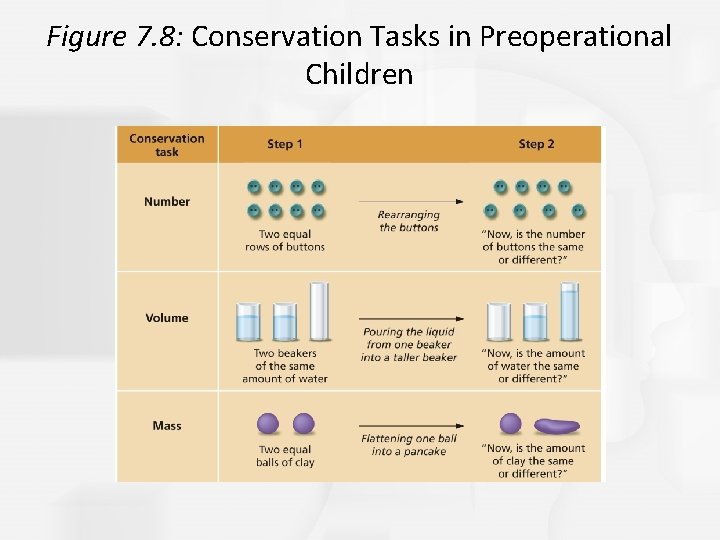
Piaget’s Theory: The Preoperational Period • Preoperational Period: 2 to 7 years of age – Symbolic representation • Language • Pretend play – Gaps in preoperational thinking • • Reversibility Conservation Egocentric Animism
Video: Piaget’s Preoperational Stage
Figure 7. 8: Conservation Tasks in Preoperational Children
The Preoperational Period • Can parents and teachers accelerate logical thinking in preschoolers? – Piaget would have answered “No” • Children develop logical thinking through their own explorations and actions. • Peers might promote cognitive development. • Contemporary challenges to Piaget – Cognitive development is better described as a series of overlapping waves. – Young children understand more than Piaget credited them for.
Theory of Mind • Children’s awareness of their own and other people’s thought processes and mental states – Age 4, watershed in development of theory of mind • False belief task – Cognitive and language abilities are important to development of theory of mind, as are experiences with adults and older children.
Video: False Belief
Video: Self-Concept
Vygotsky’s Sociocultural Theory • Child embedded in a social context and focused on increasing abilities with assistance of others – Zone of proximal development – Scaffolding
Video: Lev Vygotsky: The Zone of Proximal Development and Scaffolding
Guided Participation • Rogoff expanded Vygotsky’s sociocultural theory to examine varied ways children learn their society’s values and practices through participation in family and community activities. • Goes beyond instructional activities to include family and community interactions and stories • Rules for participation vary cross-culturally.
Language and Thought • Relationship between language and thought – Piaget – thought precedes language development • Thought evident in sensorimotor period – Vygotsky – language and thought develop together • First attempts to speak are efforts to establish and maintain social contact – social speech • 3 – 4 years old: children use language as a tool to organize thoughts • Self-directed talk becomes private speech.
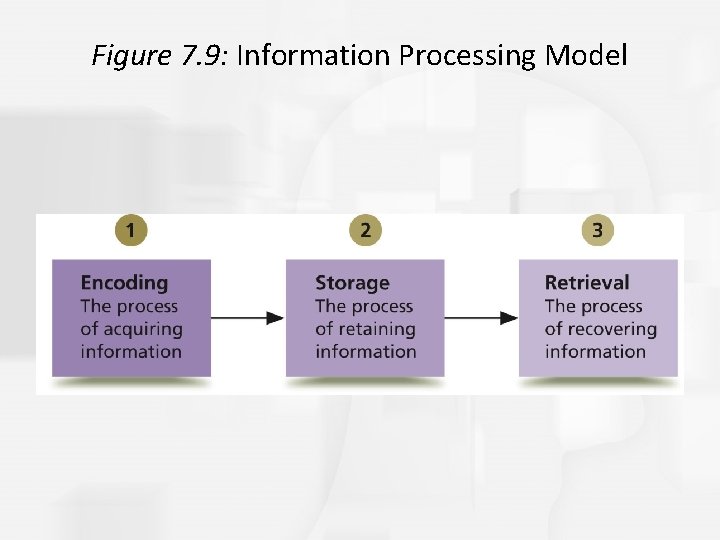
Figure 7. 9: Information Processing Model
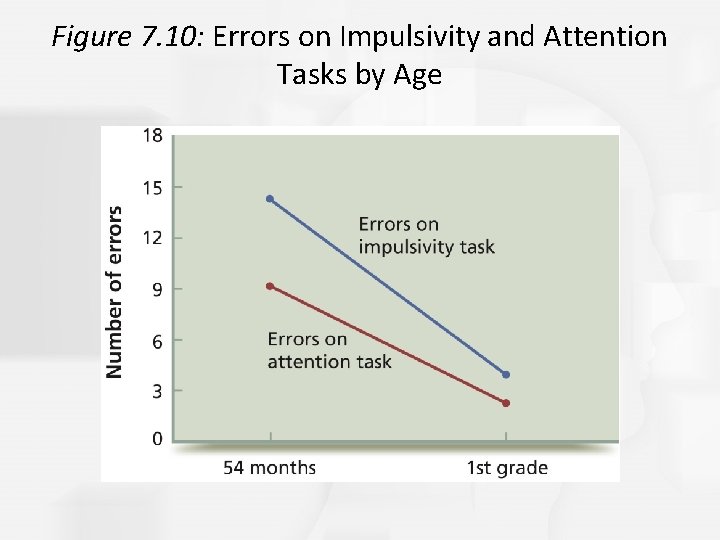
Attention • Focusing on some information while ignoring other information – Continuous Performance Task – Improvements in attention linked to maturation of the prefrontal cortex and basal ganglia. – Also affected by child’s environment and experience with parents
Figure 7. 10: Errors on Impulsivity and Attention Tasks by Age
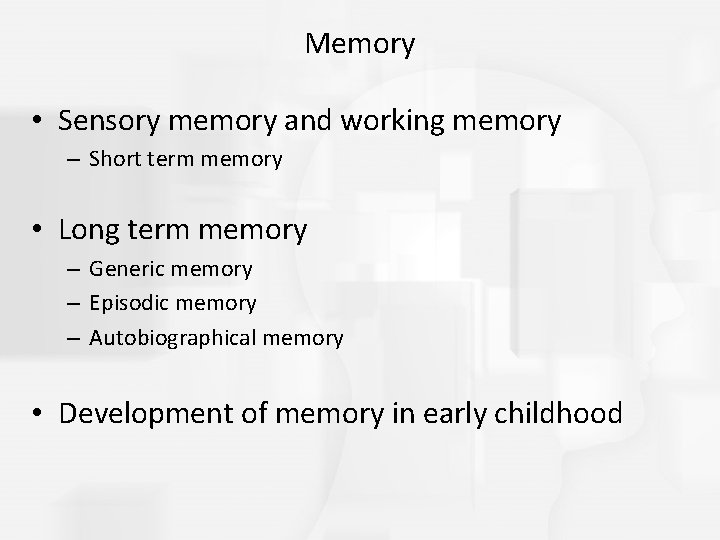
Memory • Sensory memory and working memory – Short term memory • Long term memory – Generic memory – Episodic memory – Autobiographical memory • Development of memory in early childhood
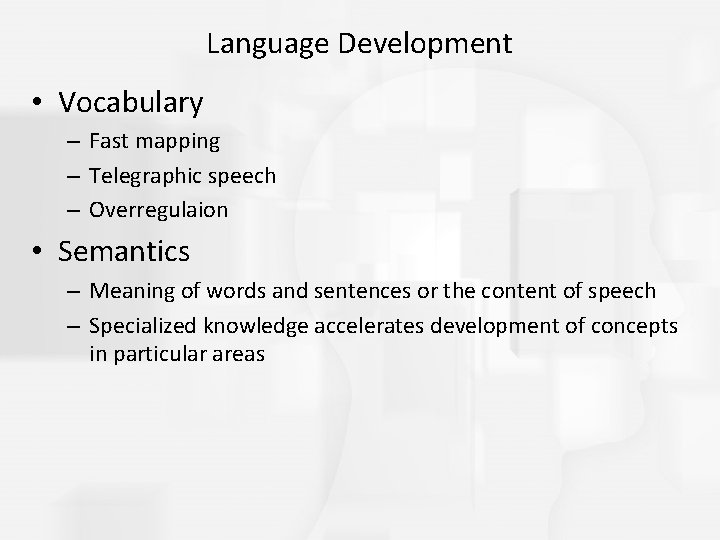
Language Development • Vocabulary – Fast mapping – Telegraphic speech – Overregulaion • Semantics – Meaning of words and sentences or the content of speech – Specialized knowledge accelerates development of concepts in particular areas
Video: Early Childhood: Language Development
Emergent Literacy • Foundations for literacy emerge in early childhood. • Changing expectations for literacy milestones • Exposure to books and language, and parentchild communication, is crucial.
Early Mathematical Thinking • During early childhood, children master a number of mathematical concepts: – – Magnitude Numbers Counting Addition and subtraction
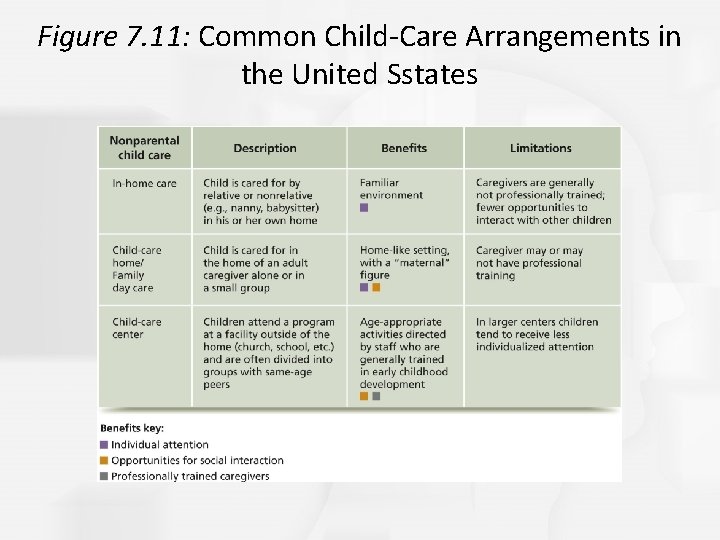
Child Care and Early Education Programs • Widespread use of child care – In-home care – Child-care homes – Child-care centers • Quality of child care linked to cognitive and social development. – Structural quality – Process quality
Figure 7. 11: Common Child-Care Arrangements in the United Sstates
Early Education Programs • • • Perry Preschool Project Abecedarian Project Chicago Parent-Child Centers Head Start Pre-kindergarten programs
Figure 7. 12: Impact of Early Intervention on Later Outcomes
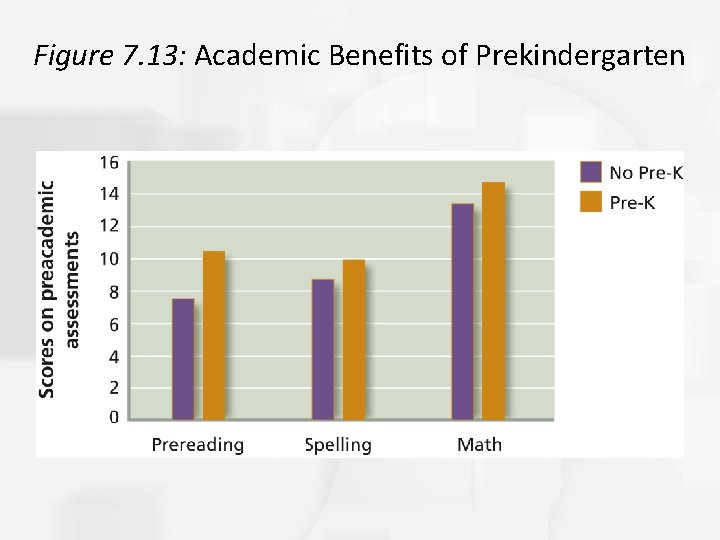
Figure 7. 13: Academic Benefits of Prekindergarten