
Chapter 7 Photosynthesis Chapter 8 Cellular Respiration Segment
- Slides: 21
Chapter 7 Photosynthesis & Chapter 8 Cellular Respiration Segment 3
2. Organisms capture and store free energy for use in biological processes
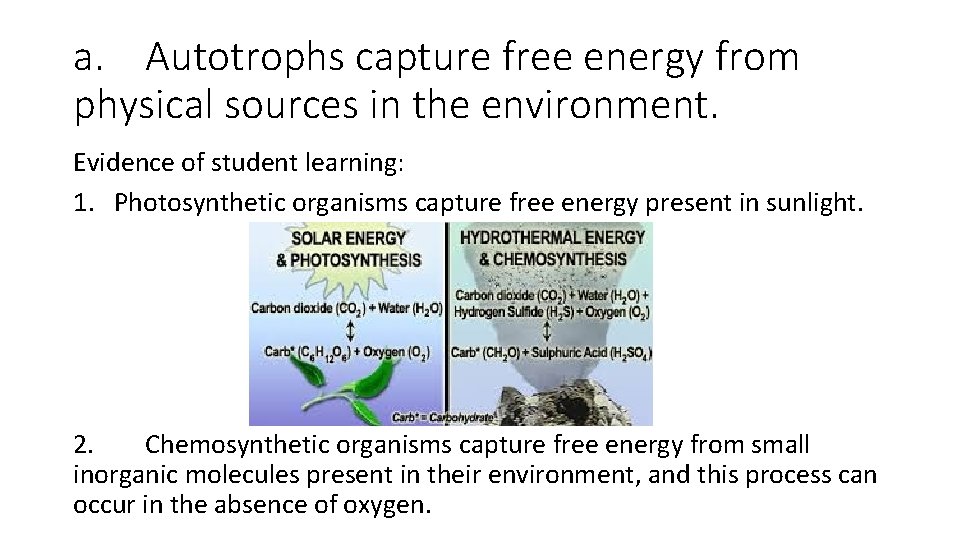
a. Autotrophs capture free energy from physical sources in the environment. Evidence of student learning: 1. Photosynthetic organisms capture free energy present in sunlight. 2. Chemosynthetic organisms capture free energy from small inorganic molecules present in their environment, and this process can occur in the absence of oxygen.
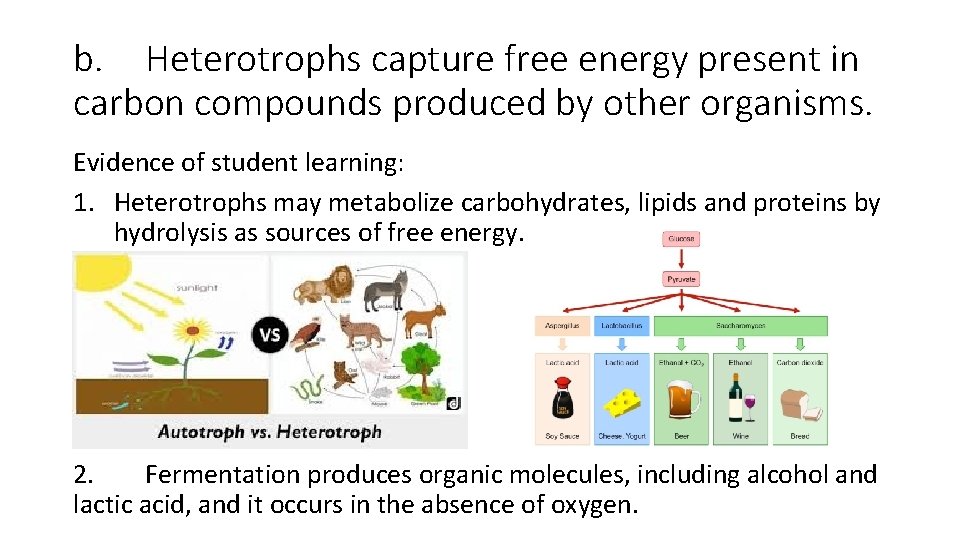
b. Heterotrophs capture free energy present in carbon compounds produced by other organisms. Evidence of student learning: 1. Heterotrophs may metabolize carbohydrates, lipids and proteins by hydrolysis as sources of free energy. 2. Fermentation produces organic molecules, including alcohol and lactic acid, and it occurs in the absence of oxygen.
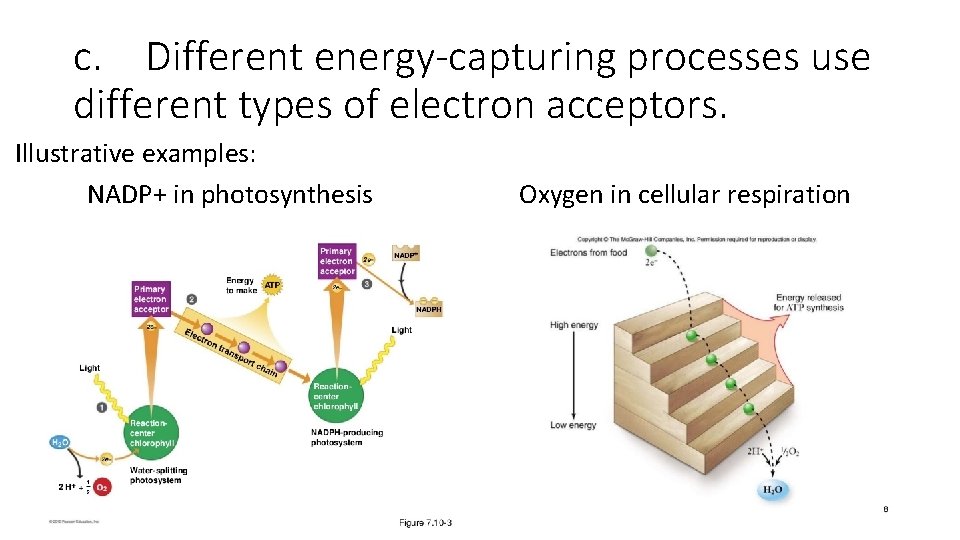
c. Different energy-capturing processes use different types of electron acceptors. Illustrative examples: NADP+ in photosynthesis Oxygen in cellular respiration
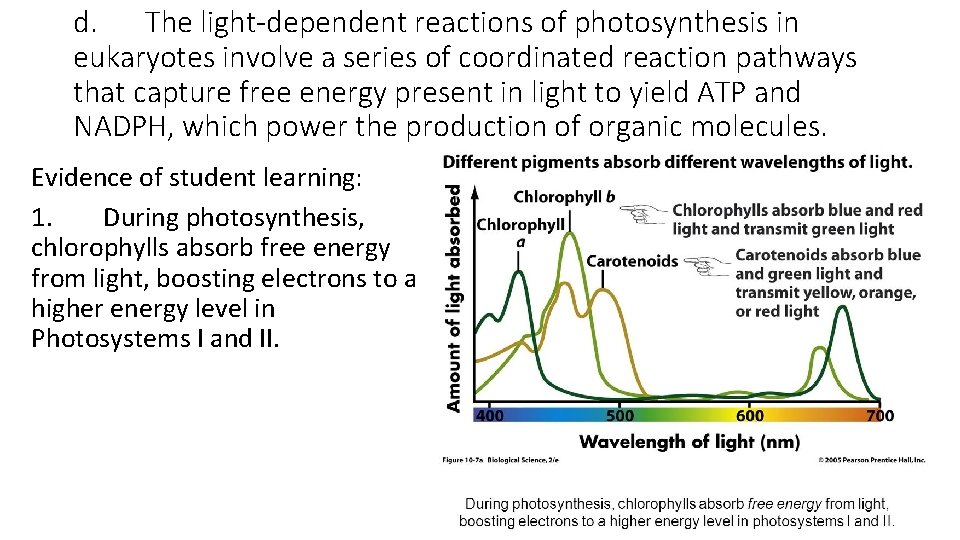
d. The light-dependent reactions of photosynthesis in eukaryotes involve a series of coordinated reaction pathways that capture free energy present in light to yield ATP and NADPH, which power the production of organic molecules. Evidence of student learning: 1. During photosynthesis, chlorophylls absorb free energy from light, boosting electrons to a higher energy level in Photosystems I and II.
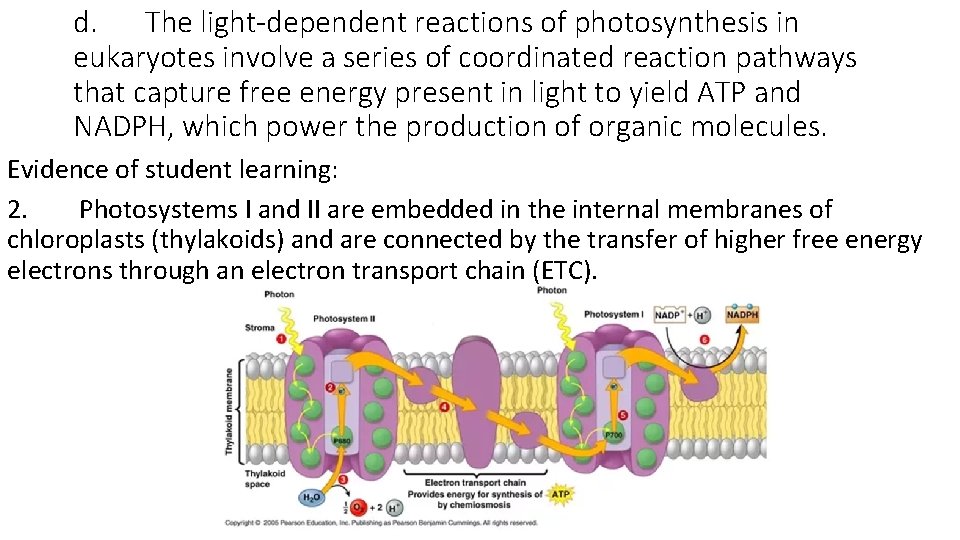
d. The light-dependent reactions of photosynthesis in eukaryotes involve a series of coordinated reaction pathways that capture free energy present in light to yield ATP and NADPH, which power the production of organic molecules. Evidence of student learning: 2. Photosystems I and II are embedded in the internal membranes of chloroplasts (thylakoids) and are connected by the transfer of higher free energy electrons through an electron transport chain (ETC).
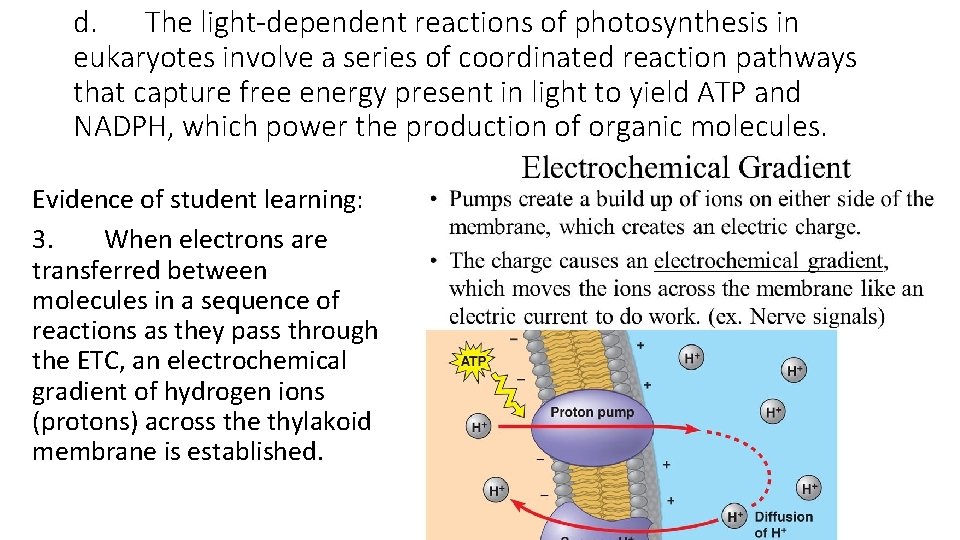
d. The light-dependent reactions of photosynthesis in eukaryotes involve a series of coordinated reaction pathways that capture free energy present in light to yield ATP and NADPH, which power the production of organic molecules. Evidence of student learning: 3. When electrons are transferred between molecules in a sequence of reactions as they pass through the ETC, an electrochemical gradient of hydrogen ions (protons) across the thylakoid membrane is established.
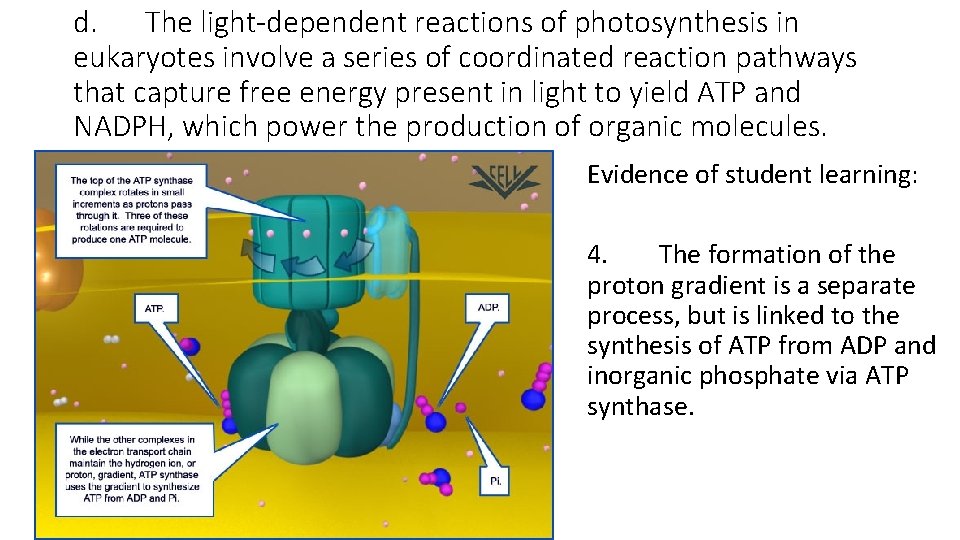
d. The light-dependent reactions of photosynthesis in eukaryotes involve a series of coordinated reaction pathways that capture free energy present in light to yield ATP and NADPH, which power the production of organic molecules. Evidence of student learning: 4. The formation of the proton gradient is a separate process, but is linked to the synthesis of ATP from ADP and inorganic phosphate via ATP synthase.
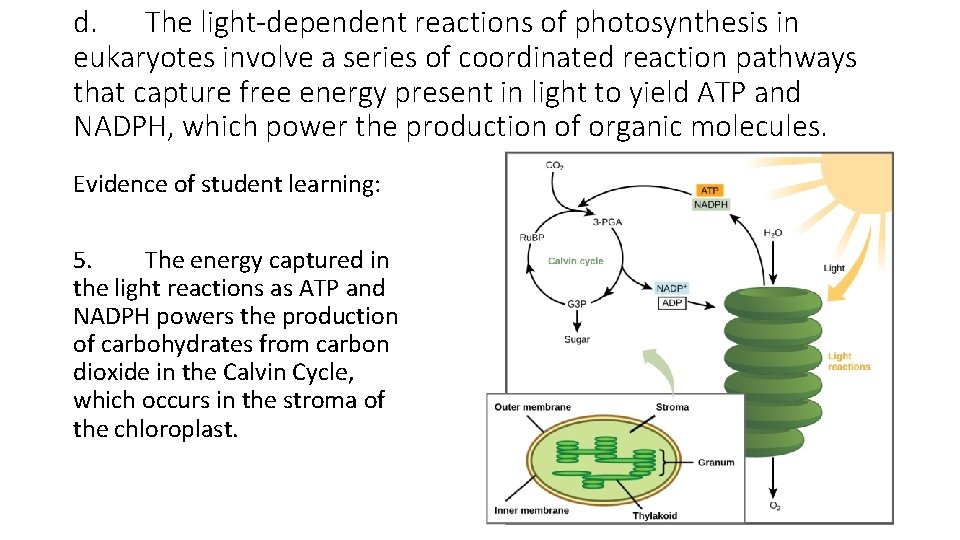
d. The light-dependent reactions of photosynthesis in eukaryotes involve a series of coordinated reaction pathways that capture free energy present in light to yield ATP and NADPH, which power the production of organic molecules. Evidence of student learning: 5. The energy captured in the light reactions as ATP and NADPH powers the production of carbohydrates from carbon dioxide in the Calvin Cycle, which occurs in the stroma of the chloroplast.
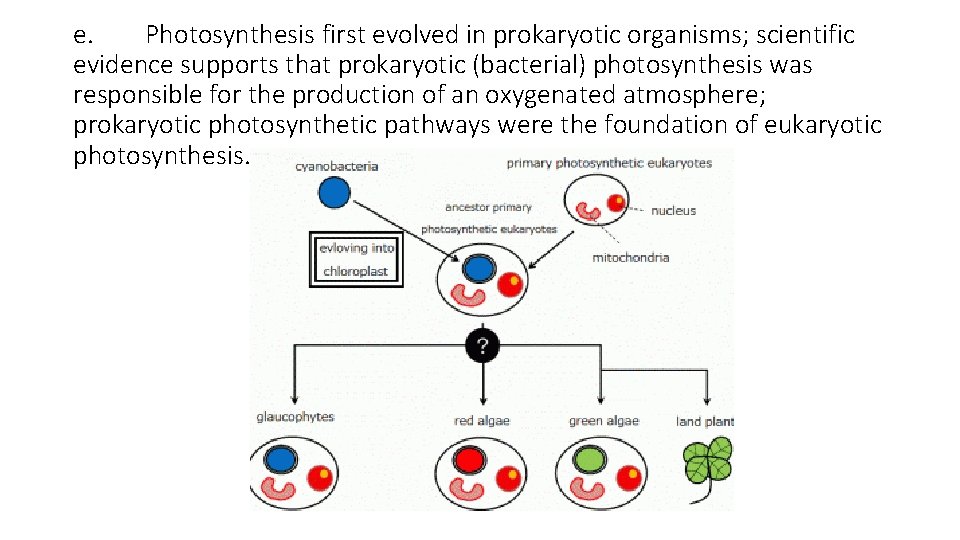
e. Photosynthesis first evolved in prokaryotic organisms; scientific evidence supports that prokaryotic (bacterial) photosynthesis was responsible for the production of an oxygenated atmosphere; prokaryotic photosynthetic pathways were the foundation of eukaryotic photosynthesis.
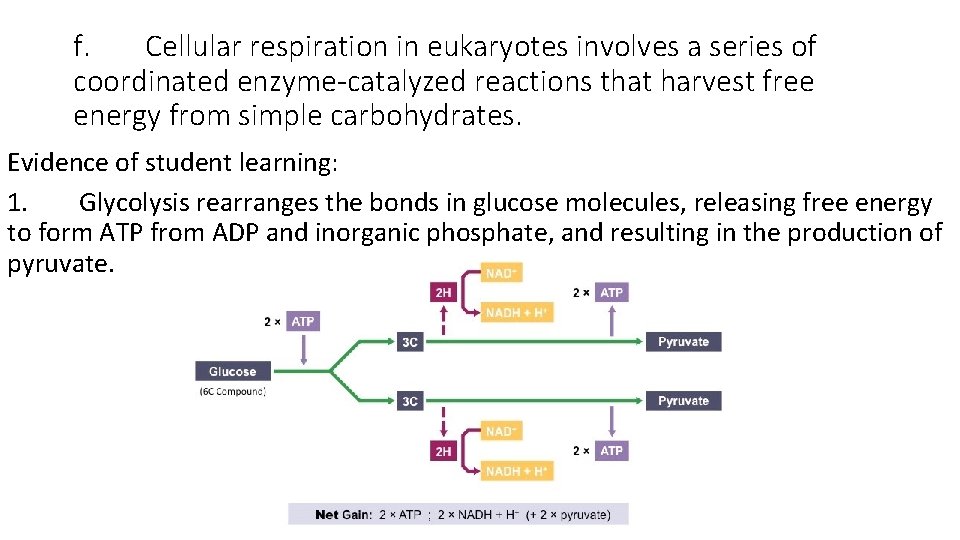
f. Cellular respiration in eukaryotes involves a series of coordinated enzyme-catalyzed reactions that harvest free energy from simple carbohydrates. Evidence of student learning: 1. Glycolysis rearranges the bonds in glucose molecules, releasing free energy to form ATP from ADP and inorganic phosphate, and resulting in the production of pyruvate.
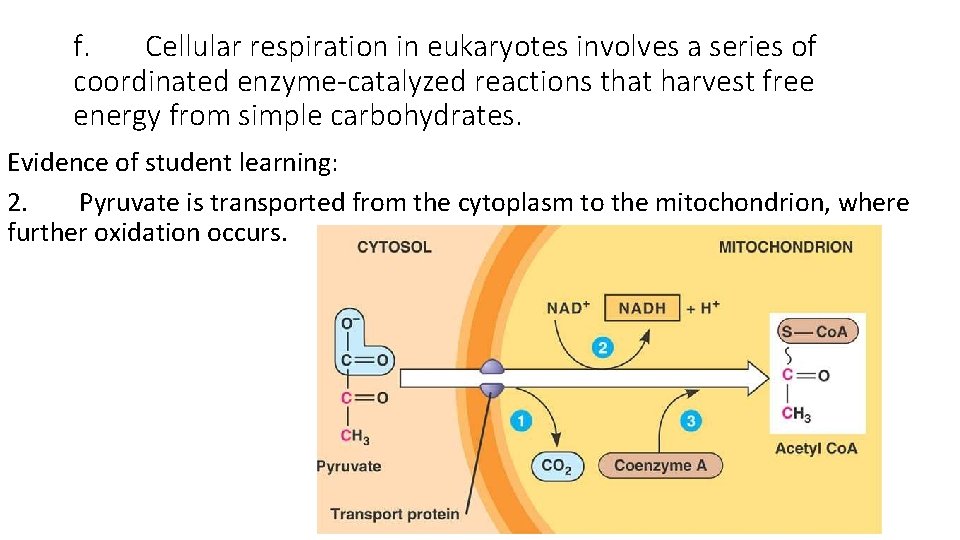
f. Cellular respiration in eukaryotes involves a series of coordinated enzyme-catalyzed reactions that harvest free energy from simple carbohydrates. Evidence of student learning: 2. Pyruvate is transported from the cytoplasm to the mitochondrion, where further oxidation occurs.
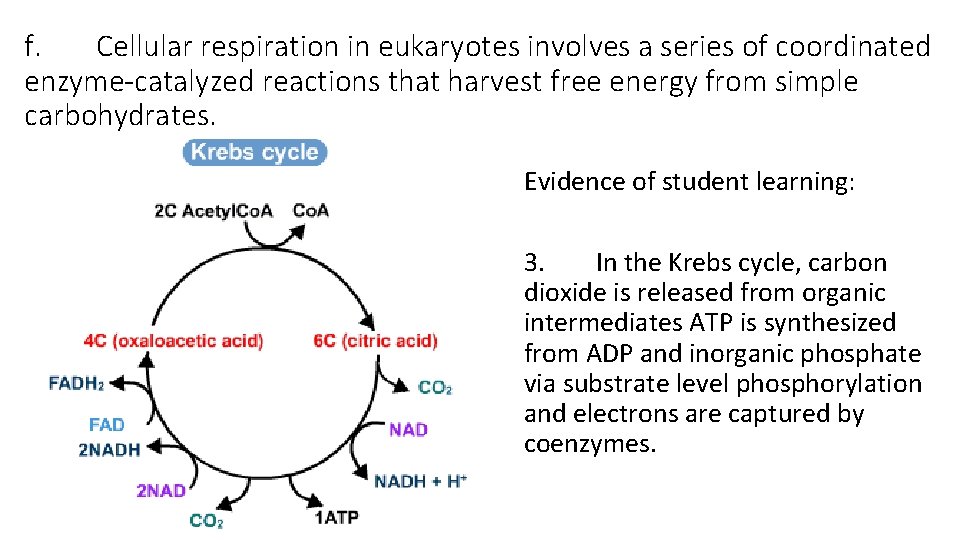
f. Cellular respiration in eukaryotes involves a series of coordinated enzyme-catalyzed reactions that harvest free energy from simple carbohydrates. Evidence of student learning: 3. In the Krebs cycle, carbon dioxide is released from organic intermediates ATP is synthesized from ADP and inorganic phosphate via substrate level phosphorylation and electrons are captured by coenzymes.
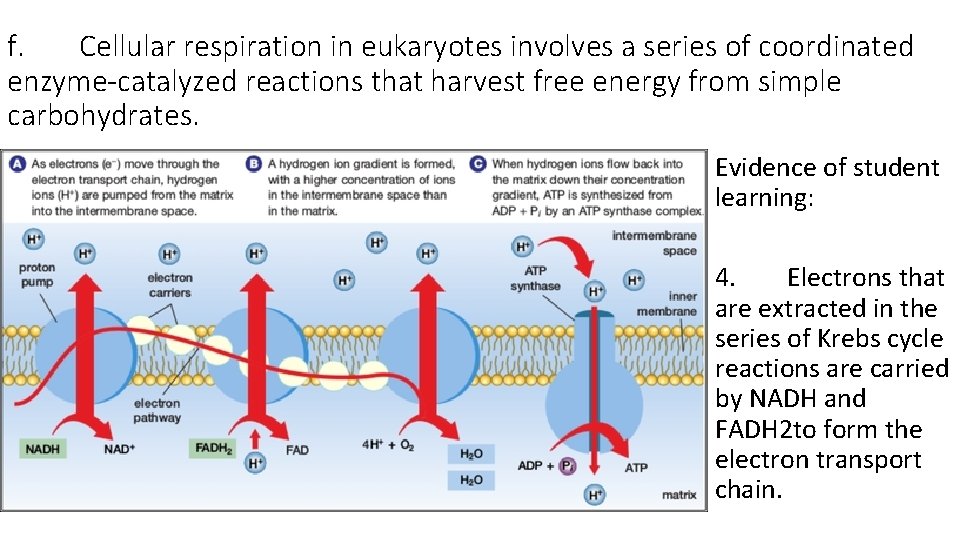
f. Cellular respiration in eukaryotes involves a series of coordinated enzyme-catalyzed reactions that harvest free energy from simple carbohydrates. Evidence of student learning: 4. Electrons that are extracted in the series of Krebs cycle reactions are carried by NADH and FADH 2 to form the electron transport chain.
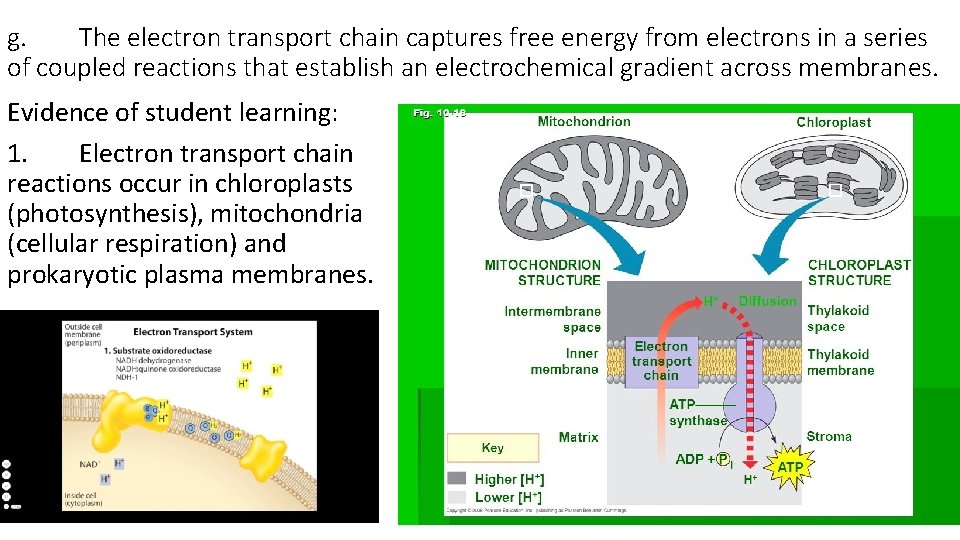
g. The electron transport chain captures free energy from electrons in a series of coupled reactions that establish an electrochemical gradient across membranes. Evidence of student learning: 1. Electron transport chain reactions occur in chloroplasts (photosynthesis), mitochondria (cellular respiration) and prokaryotic plasma membranes.
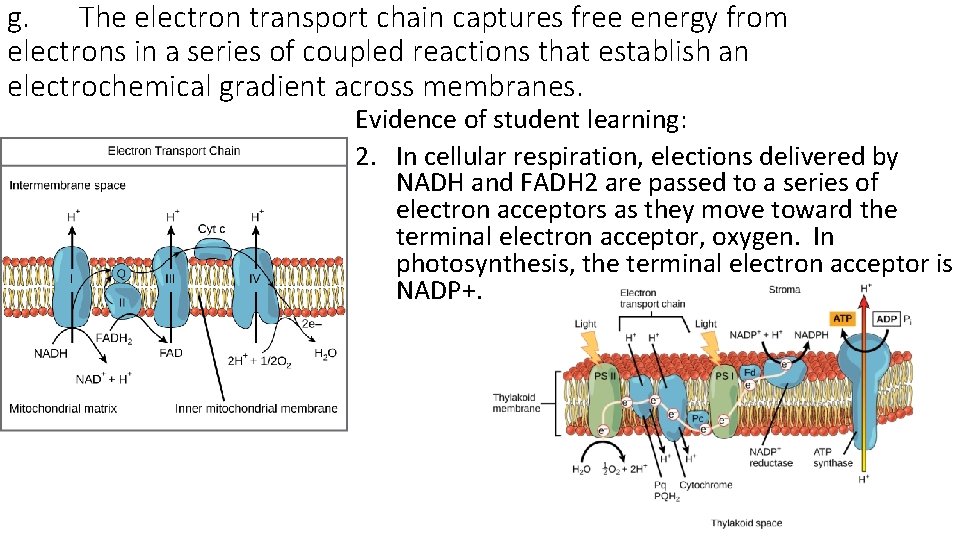
g. The electron transport chain captures free energy from electrons in a series of coupled reactions that establish an electrochemical gradient across membranes. Evidence of student learning: 2. In cellular respiration, elections delivered by NADH and FADH 2 are passed to a series of electron acceptors as they move toward the terminal electron acceptor, oxygen. In photosynthesis, the terminal electron acceptor is NADP+.
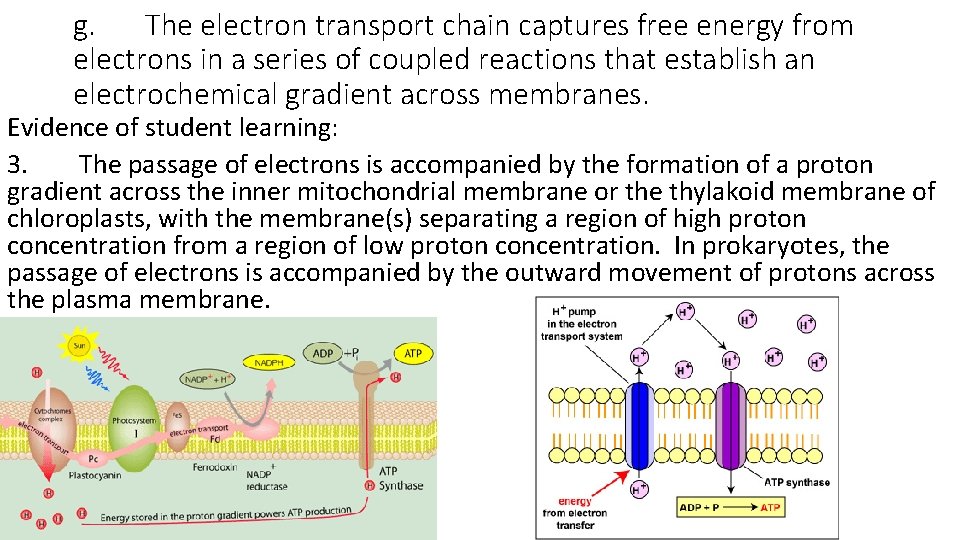
g. The electron transport chain captures free energy from electrons in a series of coupled reactions that establish an electrochemical gradient across membranes. Evidence of student learning: 3. The passage of electrons is accompanied by the formation of a proton gradient across the inner mitochondrial membrane or the thylakoid membrane of chloroplasts, with the membrane(s) separating a region of high proton concentration from a region of low proton concentration. In prokaryotes, the passage of electrons is accompanied by the outward movement of protons across the plasma membrane.
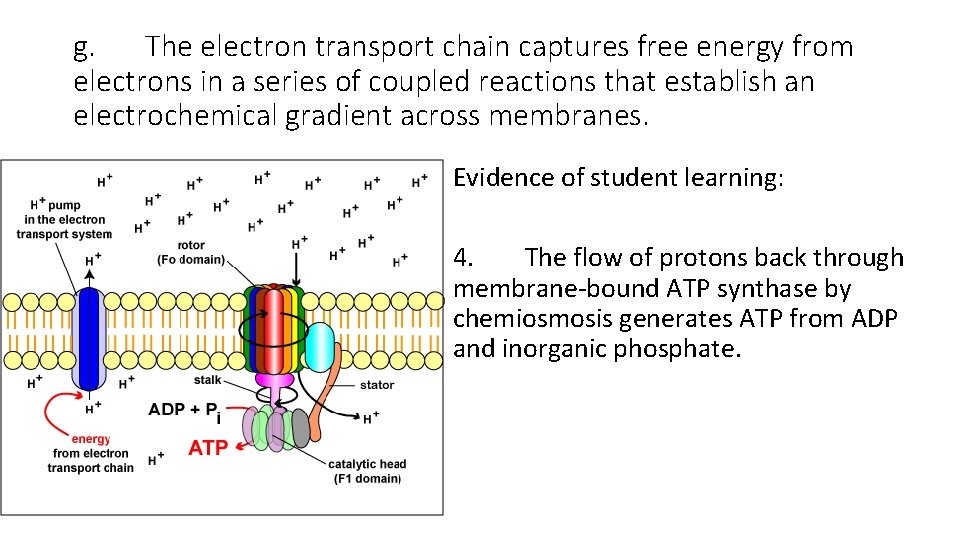
g. The electron transport chain captures free energy from electrons in a series of coupled reactions that establish an electrochemical gradient across membranes. Evidence of student learning: 4. The flow of protons back through membrane-bound ATP synthase by chemiosmosis generates ATP from ADP and inorganic phosphate.
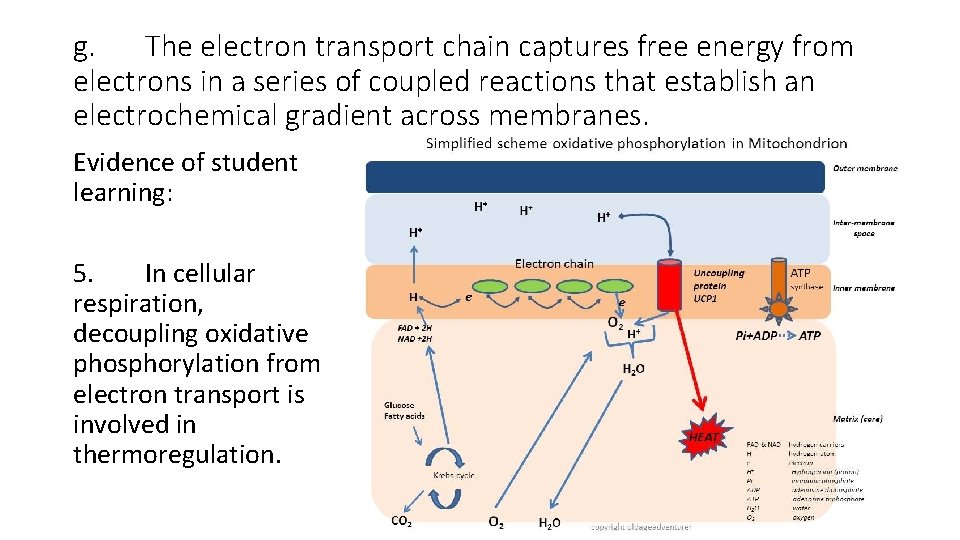
g. The electron transport chain captures free energy from electrons in a series of coupled reactions that establish an electrochemical gradient across membranes. Evidence of student learning: 5. In cellular respiration, decoupling oxidative phosphorylation from electron transport is involved in thermoregulation.
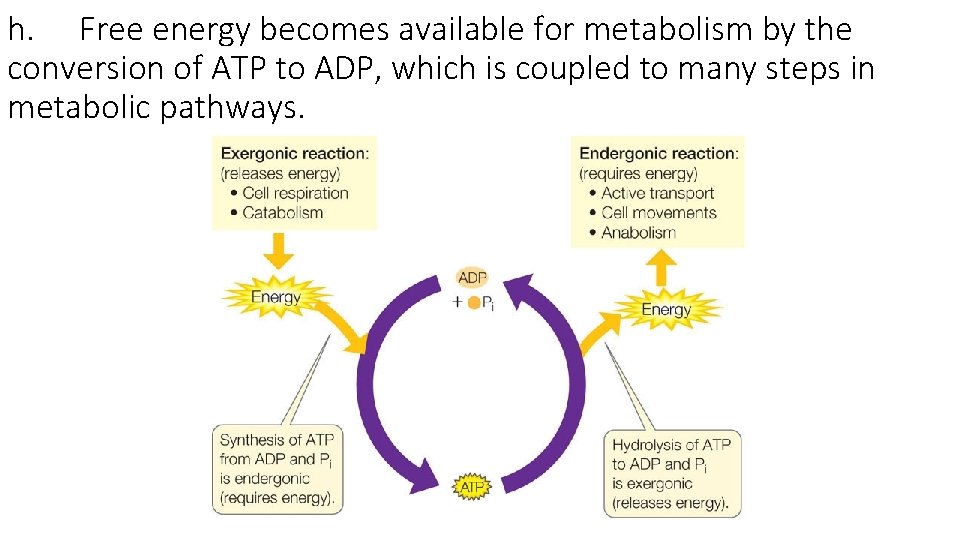
h. Free energy becomes available for metabolism by the conversion of ATP to ADP, which is coupled to many steps in metabolic pathways.