
Chapter 7 Nutrition Objectives 1 Identify nutrition and
Chapter 7 - Nutrition Objectives: 1) Identify nutrition and its importance. 2) Describe the physiology of the digestive system. 3) Identify the 7 constituents and their importance. 4) Describe caloric measurement and metabolism. 5) Identify the standard caloric intake as recommended by “My Plate”. 6) Identify the 3 constituents we can calorically measure. 7) Identify water and fat soluble vitamins. 8) Identify macro-minerals and trace minerals. 9) Identify the most important constituent for survival, water. 10) Identify the importance of food safety.
Nutrition is the science of food and dietary supplements related to the human body’s use for health and disease. United States Food and Drug Administration (USDA) The USDA is responsible for protecting the public health by assuring that foods (except for meat from livestock, poultry, and some egg products which are regulated by the US Department of Agriculture) are safe, wholesome, sanitary and properly labeled. National Academy of Sciences Established in 1863 by an Act of Congress as a private, nongovernmental institution to advise the nation on issues related to science and technology.
Hunger vs. Appetite Hunger is the physiological need to eat. Appetite is the psychological need to eat. Marketing and advertising in the food industry to influence the consumers appeal for sight and sound.
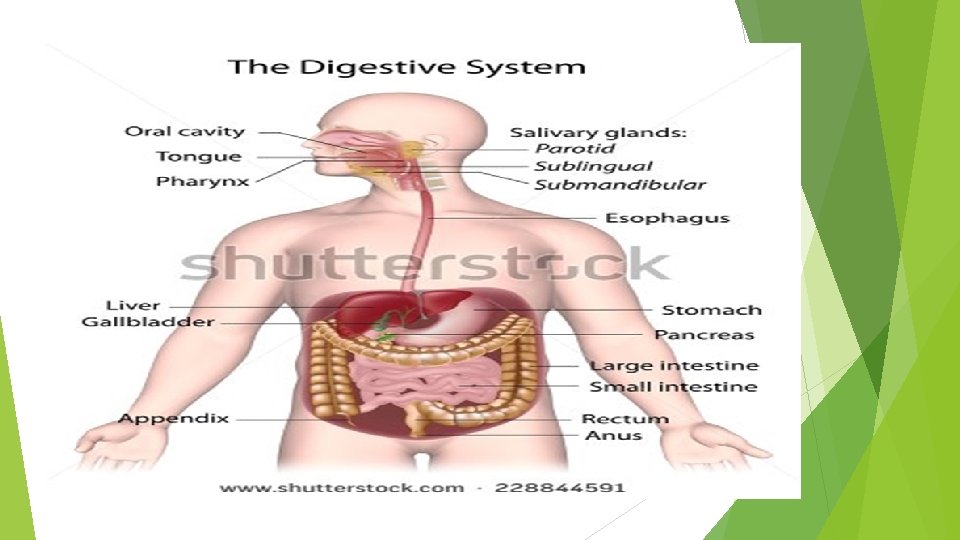
Digestive System Mouth Esophagus Stomach Organ that does the majority of breakdown. Small Intestine Organ that does the majority of absorption. Liver Gall Bladder Pancreas Large Intestine
Energy Expenditure & Metabolism Kilocalorie Inactive Lifestyle 2000 calories are recommended for individuals that lead a normal lifestyle with moderate to no activity Active Lifestyle Represents the amount of heat necessary to raise the temperature of one liter of water by one Celsius. An increase of calories is necessary for individuals requiring more fuel for energy. Many active adults consume between 3000 to 4000 calories daily. Input vs. Output Recognition of one’s energy needs is important for managing weight and the assurance of fuel for energy.
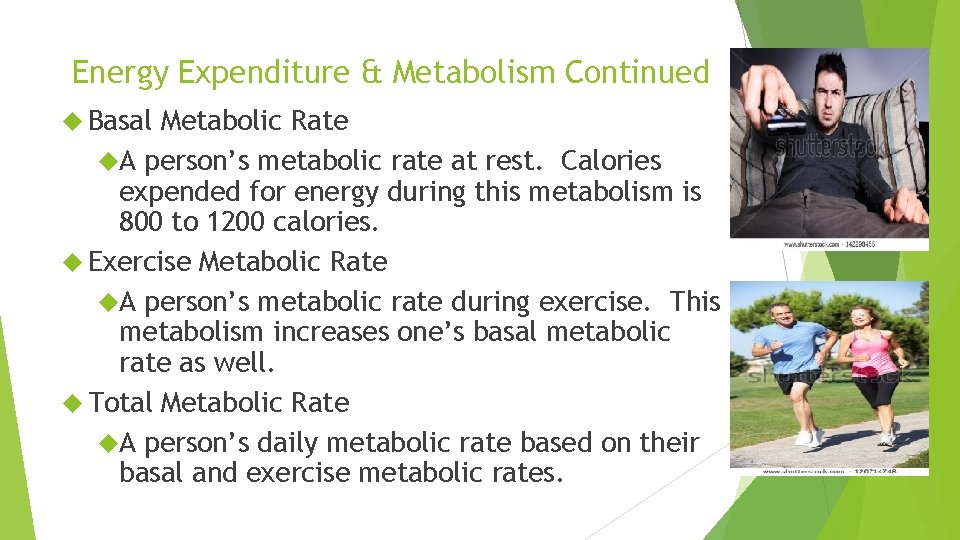
Energy Expenditure & Metabolism Continued Basal Metabolic Rate A person’s metabolic rate at rest. Calories expended for energy during this metabolism is 800 to 1200 calories. Exercise Metabolic Rate A person’s metabolic rate during exercise. This metabolism increases one’s basal metabolic rate as well. Total Metabolic Rate A person’s daily metabolic rate based on their basal and exercise metabolic rates.
6 Constituents for Nutrition Proteins 1 Fats 1 gram is equivalent to 9 calories (most calorically dense nutrient). Carbohydrates 1 gram is equivalent to 4 calories (most immediate source of energy). Vitamins Important Minerals Important for metabolism, but not calorically measured. Water Most important constituent for survival. You can survive weeks without food, but only a few days without water.
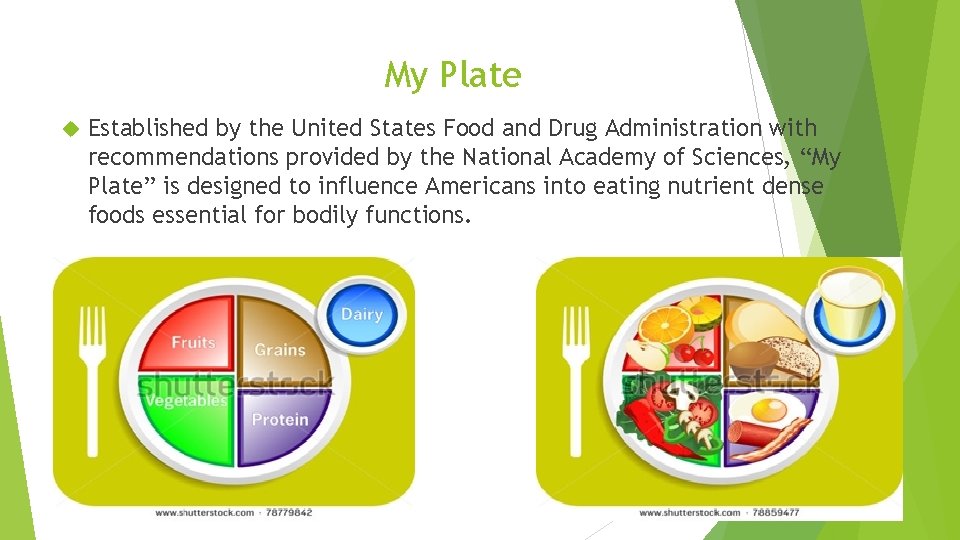
My Plate Established by the United States Food and Drug Administration with recommendations provided by the National Academy of Sciences, “My Plate” is designed to influence Americans into eating nutrient dense foods essential for bodily functions.
Recommended Daily Caloric Intake The breakdown of calorie intake for 2000 calories by percentage. Carbohydrates = 55%-65% Fats = 25% - 30% Protein = 10% - 15%
Protein is an essential nutrient forming the human body’s muscles and bones, for promoting the development of blood, hormones, enzymes and cell membranes. 1 gram of protein = 4 calories. Protein is our body’s last source of energy.
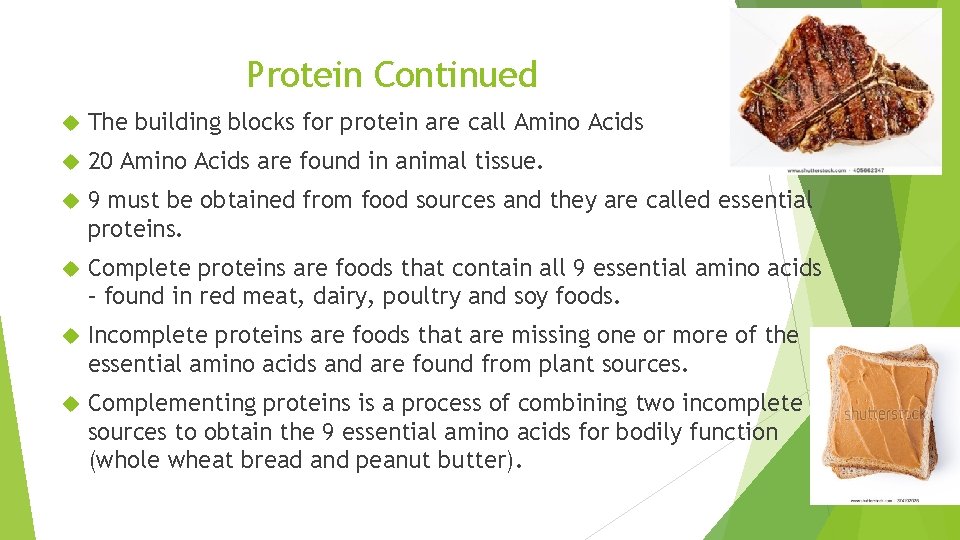
Protein Continued The building blocks for protein are call Amino Acids 20 Amino Acids are found in animal tissue. 9 must be obtained from food sources and they are called essential proteins. Complete proteins are foods that contain all 9 essential amino acids – found in red meat, dairy, poultry and soy foods. Incomplete proteins are foods that are missing one or more of the essential amino acids and are found from plant sources. Complementing proteins is a process of combining two incomplete sources to obtain the 9 essential amino acids for bodily function (whole wheat bread and peanut butter).
Protein Continued The recommended daily intake of protein for adults is calculated by multiplying. 36 grams per pound of body weight. 100 pound person needs 36 grams of protein daily. 200 pound person needs 72 grams of protein daily. Pregnant mothers or mother who are breastfeeding need to increase their daily grams of protein by 10 to 15 grams.
Fats are an essential nutrient for insulating body organs, enabling the use of fat soluble vitamins, and providing energy during rest. 1 gram of fat is equivalent to 9 calories. Consumption of fat should represent 25% - 30% or your daily caloric intake. Fat as represented in the human body: Triglycerides Cholesterol represent 95% of fat in the human body. represents 5% of fate in the human body.
Types of Fat in Food Saturated – Fat is solid at room temperature. Found in complete protein food groups, but very dangerous for Cardiovascular Disease (CVD). This fat influences the liver to produce and release high levels of bad cholesterol called low-density lipoproteins. Consumption of this fat should be less 10%. Unsaturated – Liquid at room temperature. Found in incomplete protein food groups and many oils. Types of unsaturated fat are monounsaturated and polyunsaturated. Monounsaturated fat is found in olive, canola, safflower, and peanut oils. Polyunsaturated fat is found in vegetable, soybean, corn and cottonseed oil.
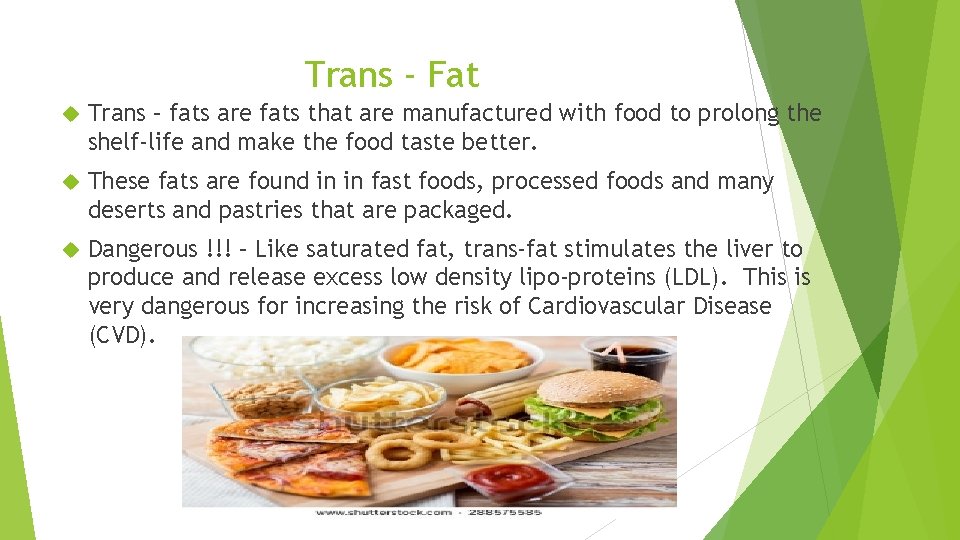
Trans - Fat Trans – fats are fats that are manufactured with food to prolong the shelf-life and make the food taste better. These fats are found in in fast foods, processed foods and many deserts and pastries that are packaged. Dangerous !!! – Like saturated fat, trans-fat stimulates the liver to produce and release excess low density lipo-proteins (LDL). This is very dangerous for increasing the risk of Cardiovascular Disease (CVD).
CARBOHYDRATES Carbohydrates are the most immediate source of energy for cells within the human body. 1 gram of carbohydrate is equivalent to 4 calories. Glucose, blood sugar is the body’s primary source of energy specifically for the nervous system and muscoskeletal system.
Types of Carbohydrates Simple Carbohydrates - are single sugar molecules (monosaccharides) and double sugar molecules (disaccharides). Monosaccharides include glucose, fructose and galactose. Disaccharides include sucrose or table sugar (fructose + glucose), maltose or malt sugar (galactose + glucose). Complex Carbohydrates - are classified as starches or dietary fiber and contain long chains of saccharides. Plants, especially grains (wheat, rye, oats, barley, and rice), potatoes or yams and legumes (dry beans, peas, and lentils) are popular starch food sources. Stored carbohydrates – many starches influence the body to store complex carbohydrates in the muscles and liver of the body. When stored these long chains of sugar molecules is called glycogen.
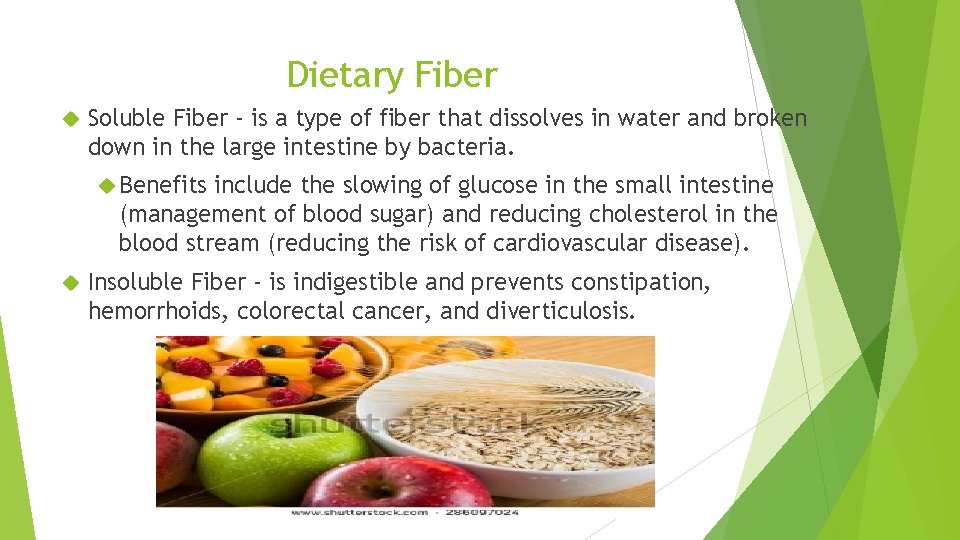
Dietary Fiber Soluble Fiber - is a type of fiber that dissolves in water and broken down in the large intestine by bacteria. Benefits include the slowing of glucose in the small intestine (management of blood sugar) and reducing cholesterol in the blood stream (reducing the risk of cardiovascular disease). Insoluble Fiber - is indigestible and prevents constipation, hemorrhoids, colorectal cancer, and diverticulosis.
Vitamins are an organic substance that help regulate cells. Our body needs approximately 13 different vitamins for cell regulation. 2 Types Water soluble vitamins are transported by water for their respective function. Popular water soluble vitamins include vitamin C, B complex vitamins, thiamin, riboflavin, niacin, Vitamin B-6, folate, vitamin B-12, biotin and pantothenic acid. Fat soluble vitamins are transported by fat. The fat soluble vitamins are vitamin A, vitamin D, vitamin E and vitamin K.
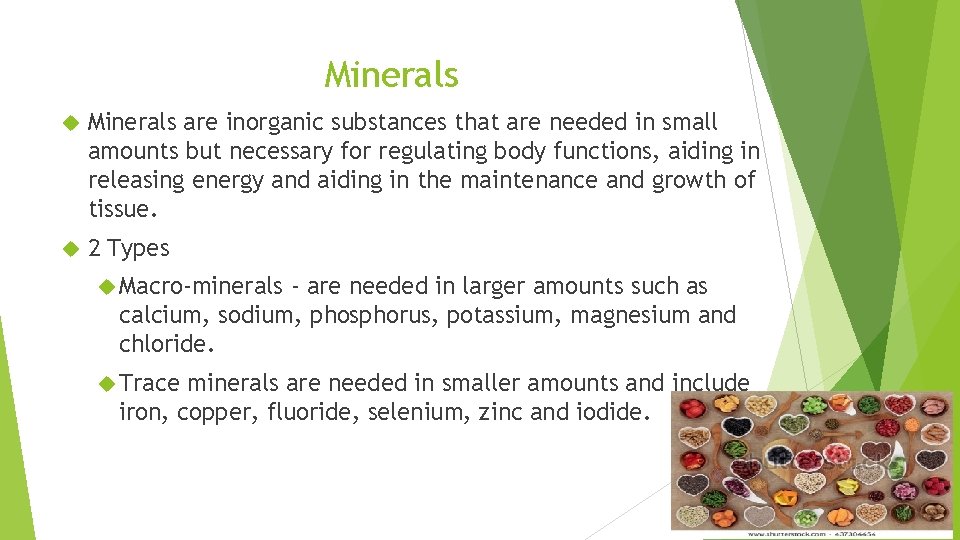
Minerals are inorganic substances that are needed in small amounts but necessary for regulating body functions, aiding in releasing energy and aiding in the maintenance and growth of tissue. 2 Types Macro-minerals - are needed in larger amounts such as calcium, sodium, phosphorus, potassium, magnesium and chloride. Trace minerals are needed in smaller amounts and include iron, copper, fluoride, selenium, zinc and iodide.
Antioxidants and Phytochemicals Antioxidants are found in fruits and vegetables that are dark in pigmentation. Antioxidants are the protectors against oxidation and the threat against free radicals. The phrase “the darker the better” for nutrition directly indicates that the fruit or vegetable is a great source as an antioxidant. Phytochemicals are substances found in plants foods that help prevent chronic diseases like cancer and heart disease. Examples of compounds in food include sulforaphane, found in cruciferous vegetables (broccoli and cauliflower) that blocks many harmful carcinogens, allyl sulfides, found in onions and garlic that boost activity of immune cells and lower cholesterol levels in the blood and substances in soy that help lower cholesterol.
Food Safety To avoid the risk of food borne illnesses, it is recommended you follow the following simple guidelines for food safety: 1) Always clean any environmental objects in contact during the preparation of food (hands, surfaces, and the food itself; especially, fruits and vegetables), 2) Always separate foods that are raw, cooked, and ready to eat foods while shopping, storing, and preparing foods, 3) Always cook foods at safe temperatures and 4) Always refrigerate left over foods and never leave food out for long periods of time.
Regulation of Food Safety Produced Regulated by the United States Department of Agriculture. Processed Regulated by State government related to public safety (California Department of Health). Prepared Regulated Health). by Local government (Fresno County Department of
- Slides: 24