
Chapter 7 Notes Structure of the Skeleton Cranium





- Slides: 43
Chapter 7 Notes Structure of the Skeleton
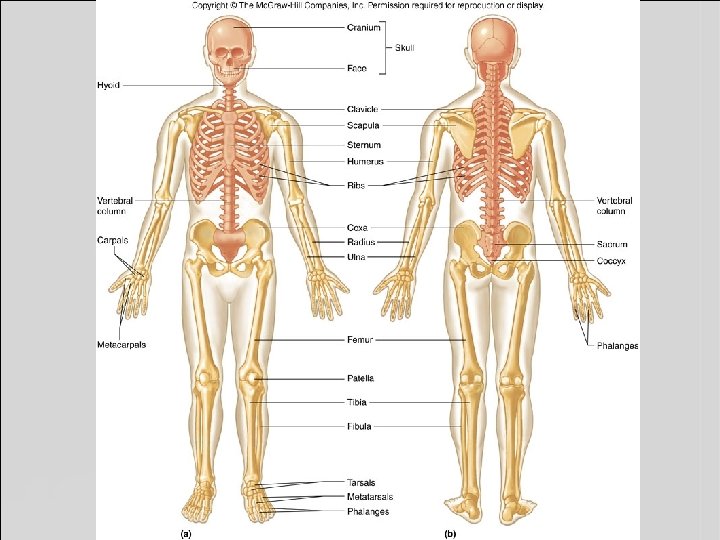
Cranium Mandible Cervical vertebrae Thoracic vertebrae Lumbar vertebrae Coxa/Pelvic girdle Sacrum Coccyx Clavicle Scapula Sternum Rib Humerus Radius Ulna Carpals Metacarpals Phalanges Femur Patella Tibia Fibula Calcaneus Tarsals Metatarsals Phalanges
Structure of the Skeleton • • • Skeletal tissue forms bones. Bones are organized or grouped to form major subdivisions. Coordination of bones with joints and muscles allows for movement.
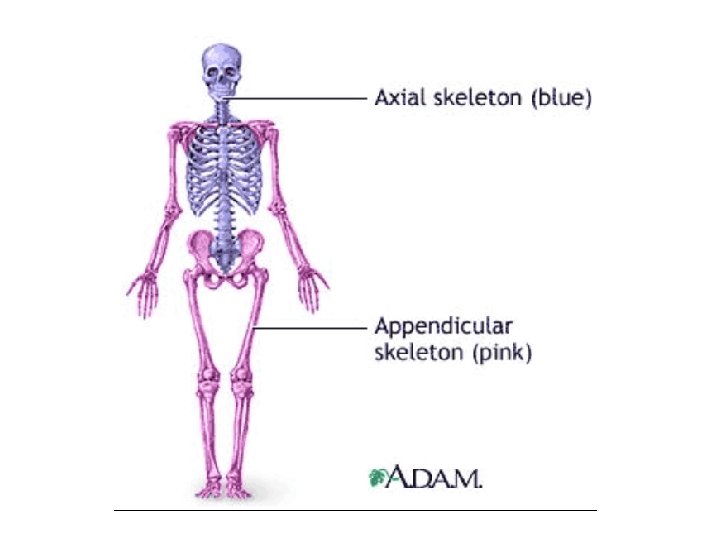
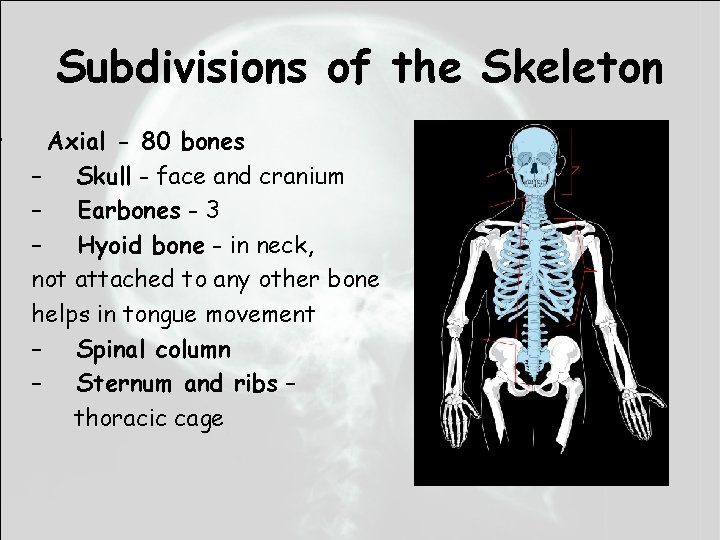
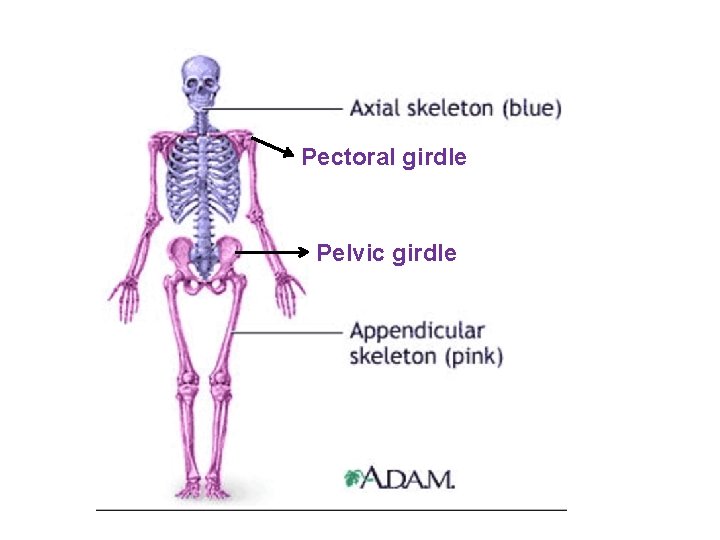
• Subdivisions of the Skeleton Axial - 80 bones – Skull - face and cranium – Earbones - 3 – Hyoid bone - in neck, not attached to any other bone helps in tongue movement – Spinal column – Sternum and ribs – thoracic cage
Hyoid Bone
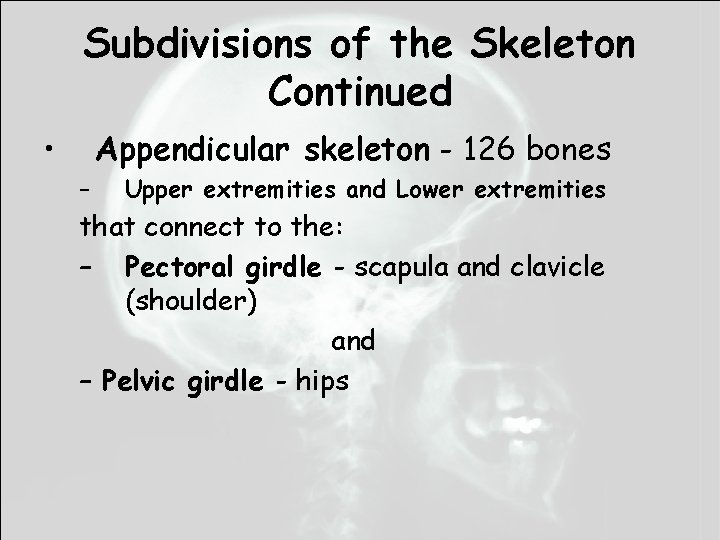
Subdivisions of the Skeleton Continued • Appendicular skeleton - 126 bones – Upper extremities and Lower extremities that connect to the: – Pectoral girdle - scapula and clavicle (shoulder) and – Pelvic girdle - hips
Pectoral girdle Pelvic girdle
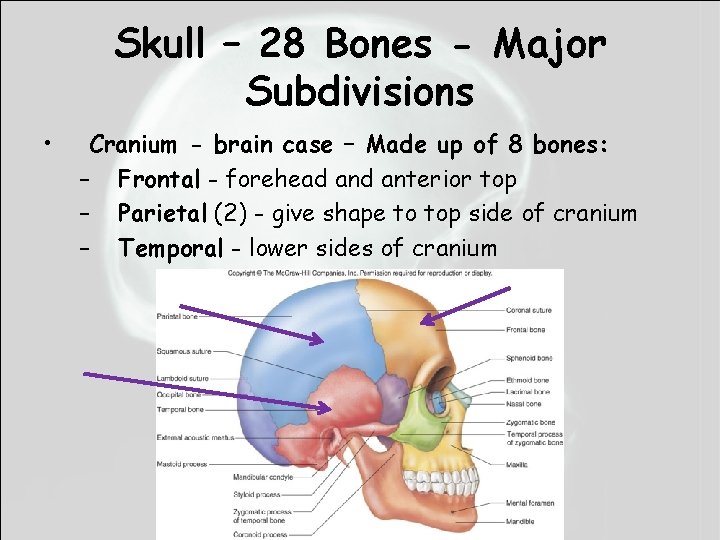
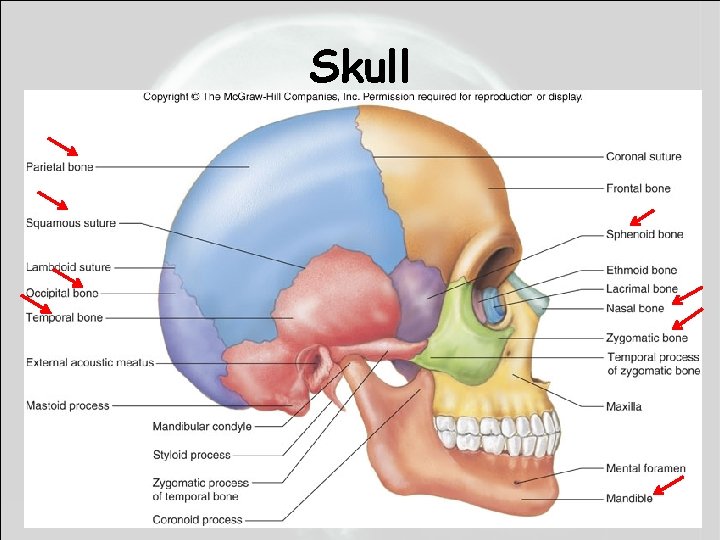
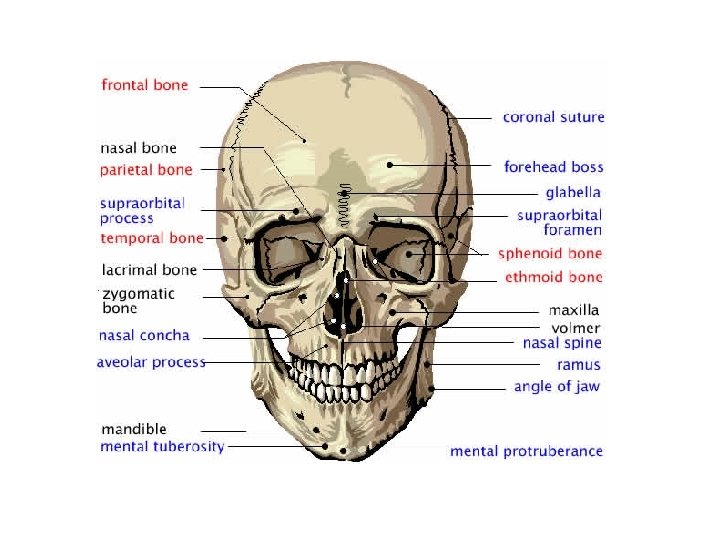
Skull – 28 Bones - Major Subdivisions • Cranium - brain case – Made up of 8 bones: – Frontal - forehead anterior top – Parietal (2) - give shape to top side of cranium – Temporal - lower sides of cranium
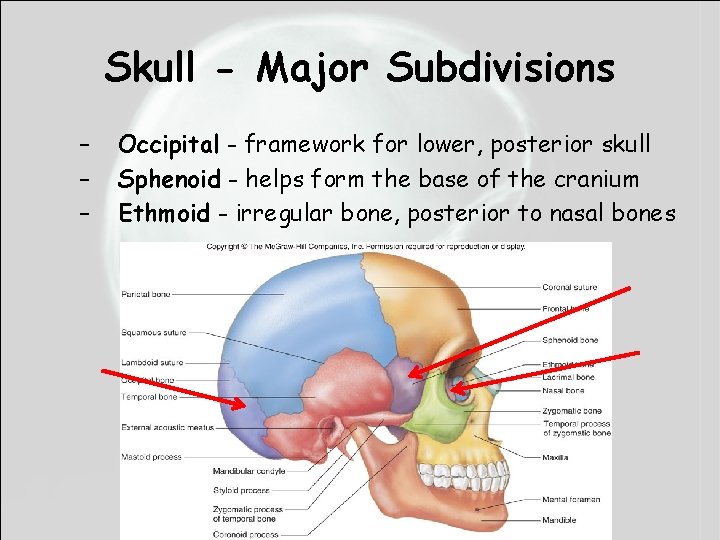
Skull - Major Subdivisions – – – Occipital - framework for lower, posterior skull Sphenoid - helps form the base of the cranium Ethmoid - irregular bone, posterior to nasal bones
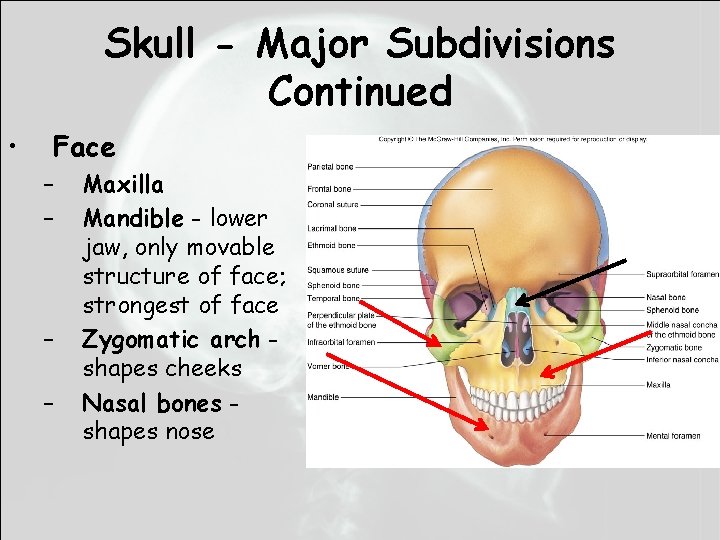
Skull - Major Subdivisions Continued • Face – – Maxilla Mandible - lower jaw, only movable structure of face; strongest of face Zygomatic arch shapes cheeks Nasal bones shapes nose
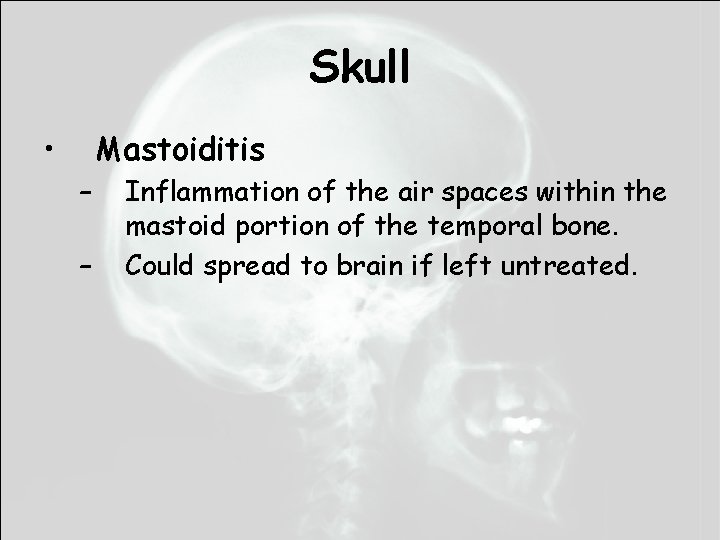
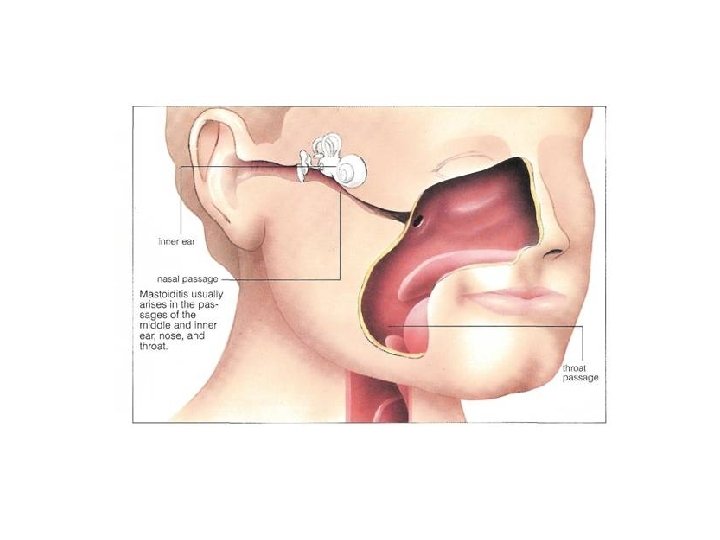
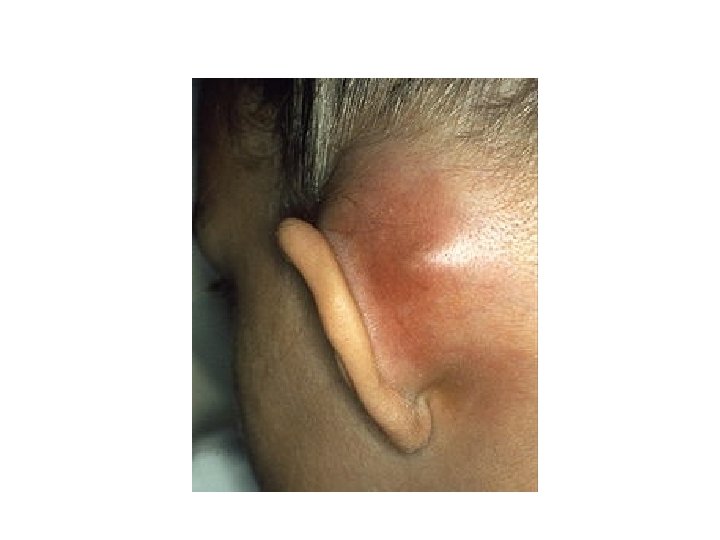
Skull • Mastoiditis – – Inflammation of the air spaces within the mastoid portion of the temporal bone. Could spread to brain if left untreated.
Skull
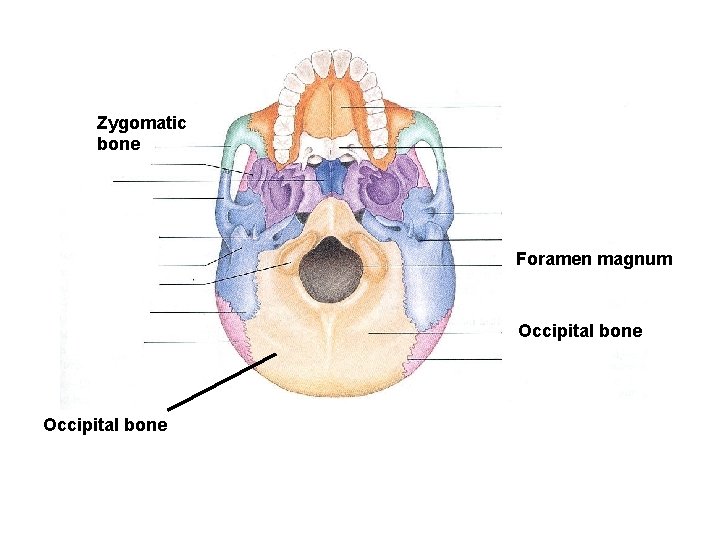
Zygomatic bone Foramen magnum Occipital bone
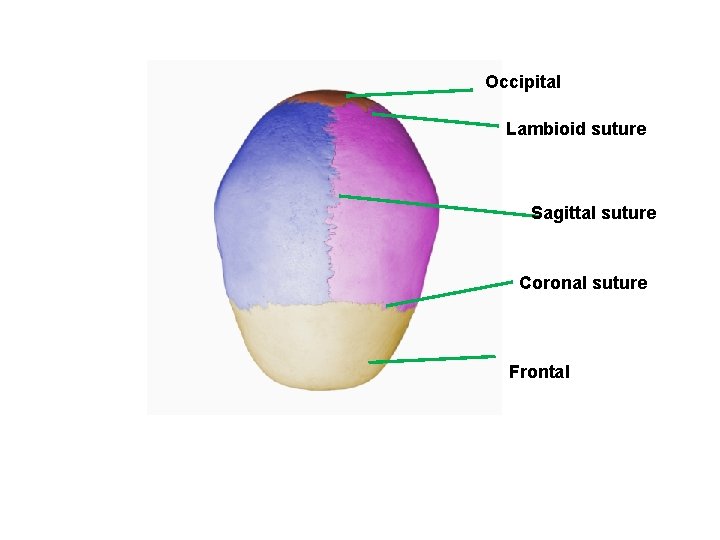
Occipital Lambioid suture Sagittal suture Coronal suture Frontal
Vertebral Column – Spinal Column • • • Longitudinal axis of skeleton Flexible due to segmentation Backbone of body – – head balanced on top ribs suspended in front lower extremities attached below spinal cord enclosed within
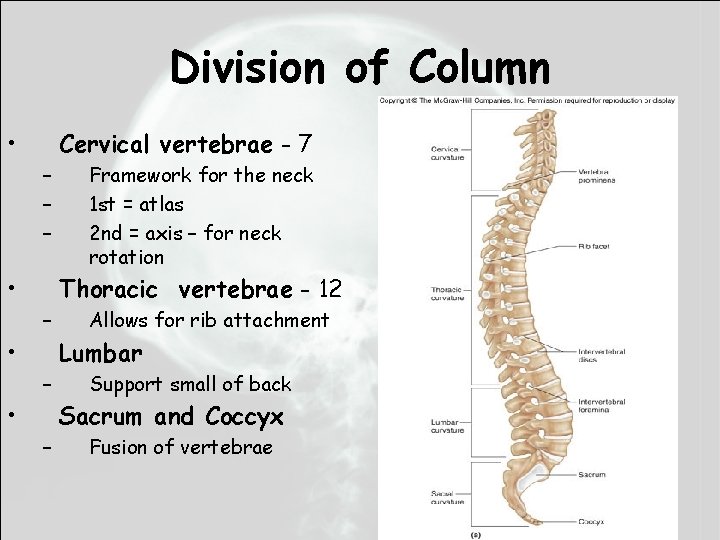
Division of Column • Cervical vertebrae - 7 – – – • Framework for the neck 1 st = atlas 2 nd = axis – for neck rotation Thoracic vertebrae - 12 – • Allows for rib attachment Lumbar – • Support small of back Sacrum and Coccyx – Fusion of vertebrae
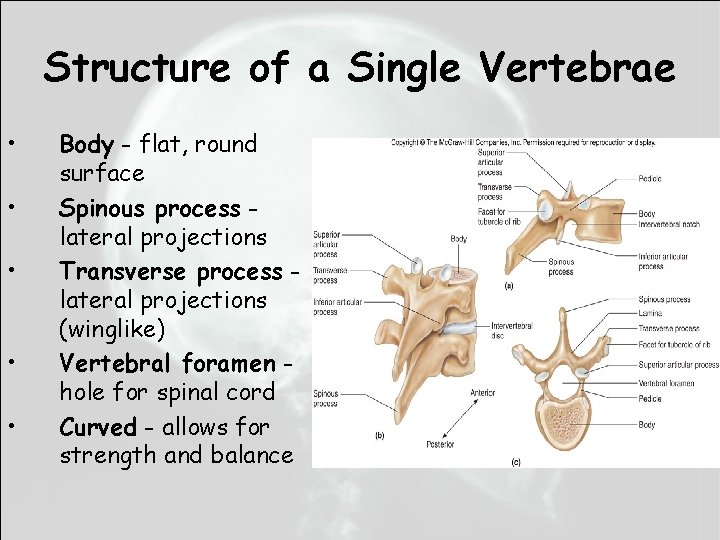
Structure of a Single Vertebrae • • • Body - flat, round surface Spinous process lateral projections Transverse process lateral projections (winglike) Vertebral foramen hole for spinal cord Curved - allows for strength and balance
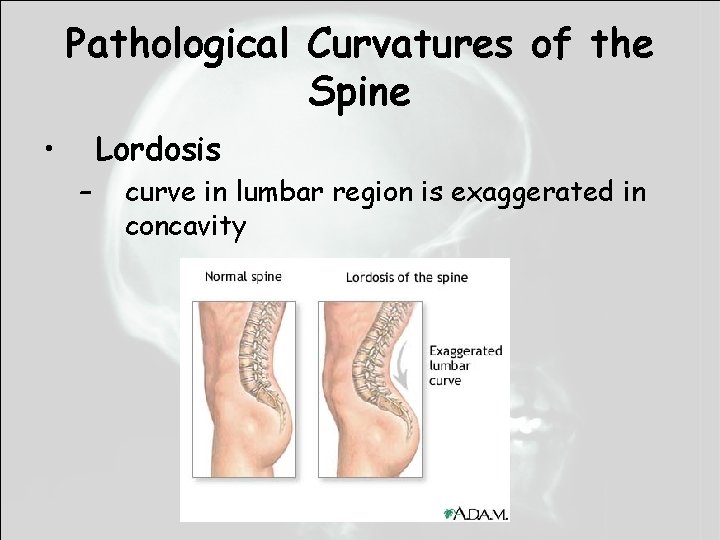
Pathological Curvatures of the Spine • Lordosis – curve in lumbar region is exaggerated in concavity
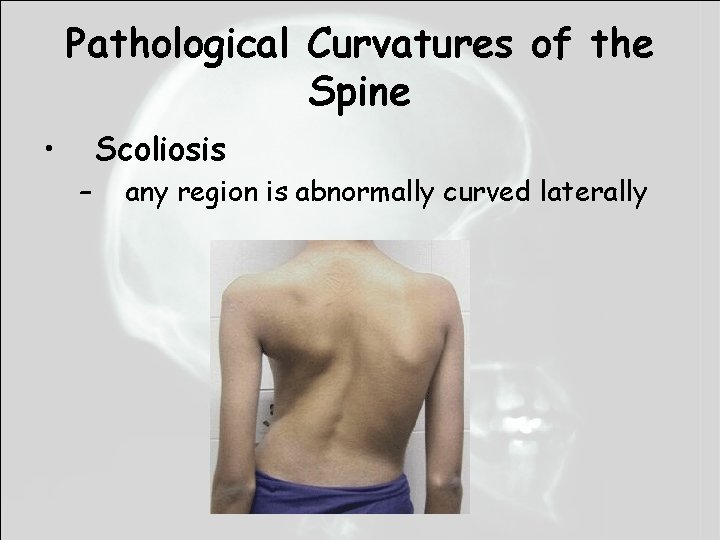
Pathological Curvatures of the Spine • Scoliosis – any region is abnormally curved laterally
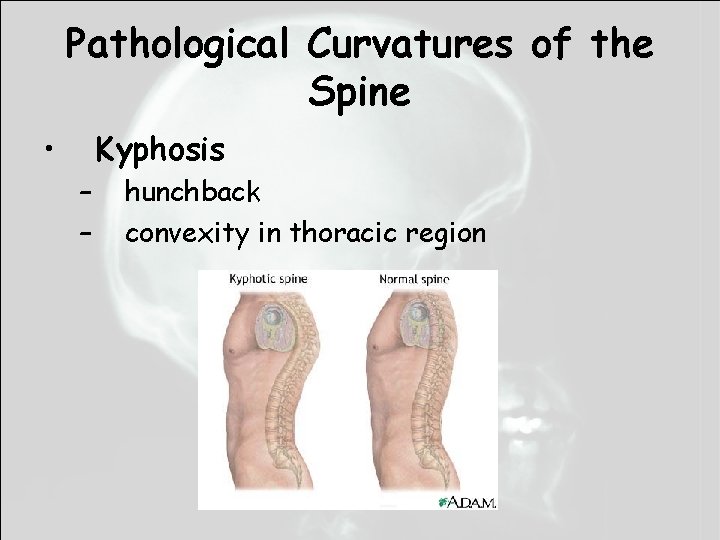
Pathological Curvatures of the Spine • Kyphosis – – hunchback convexity in thoracic region
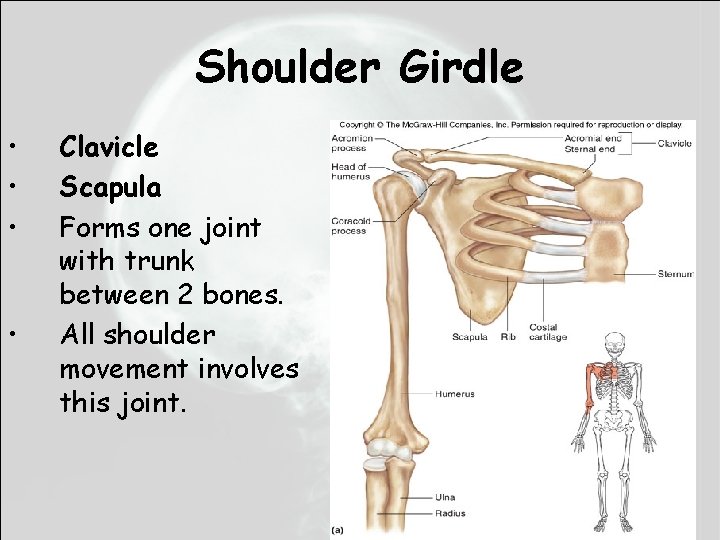
Shoulder Girdle • • Clavicle Scapula Forms one joint with trunk between 2 bones. All shoulder movement involves this joint.
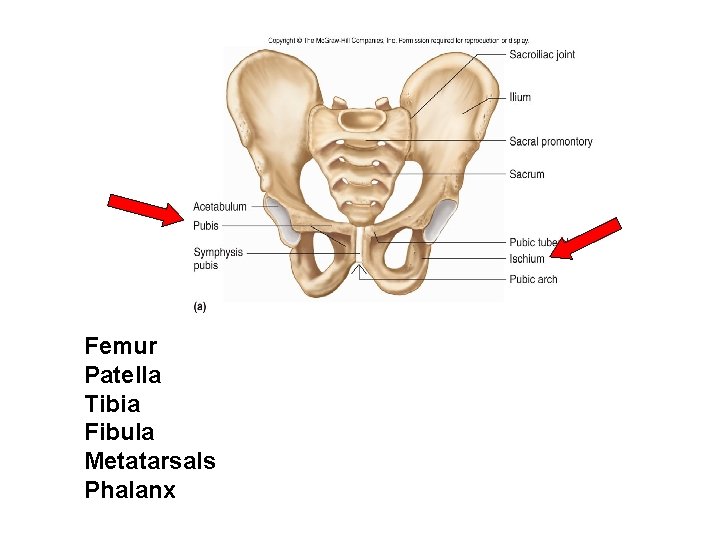
Pelvic Girdle • • – – Stable, circular base, supports trunk and attaches lower extremities. Three Parts Ilium - largest and uppermost bone Ischium - strongest and lowermost bone Pubis - anteriormost bone Strong ligaments attach sacrum to each hip bone.
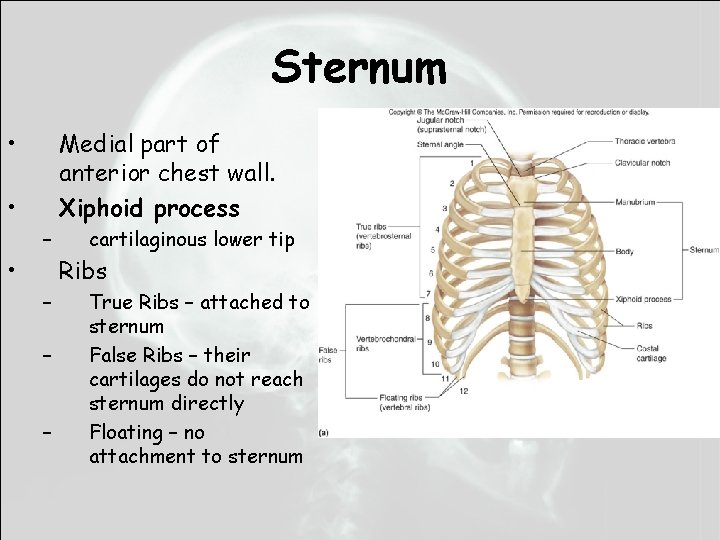
Sternum • Medial part of anterior chest wall. Xiphoid process • – • cartilaginous lower tip Ribs – – – True Ribs – attached to sternum False Ribs – their cartilages do not reach sternum directly Floating – no attachment to sternum
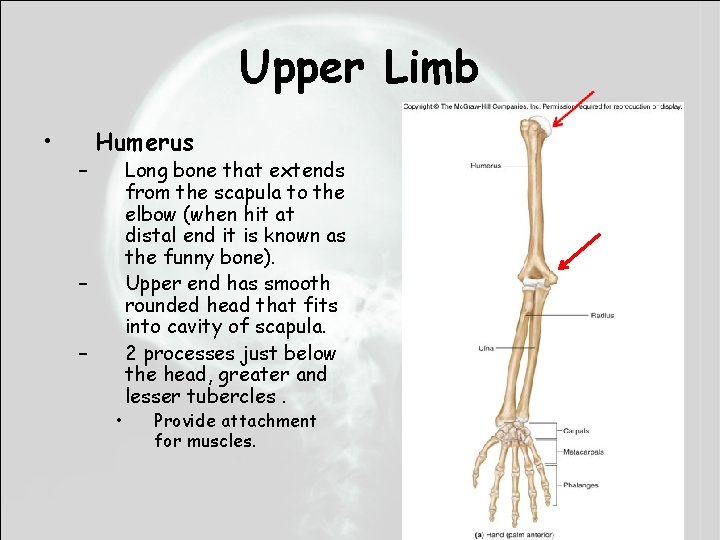
Upper Limb • – Humerus – – • Long bone that extends from the scapula to the elbow (when hit at distal end it is known as the funny bone). Upper end has smooth rounded head that fits into cavity of scapula. 2 processes just below the head, greater and lesser tubercles. Provide attachment for muscles.
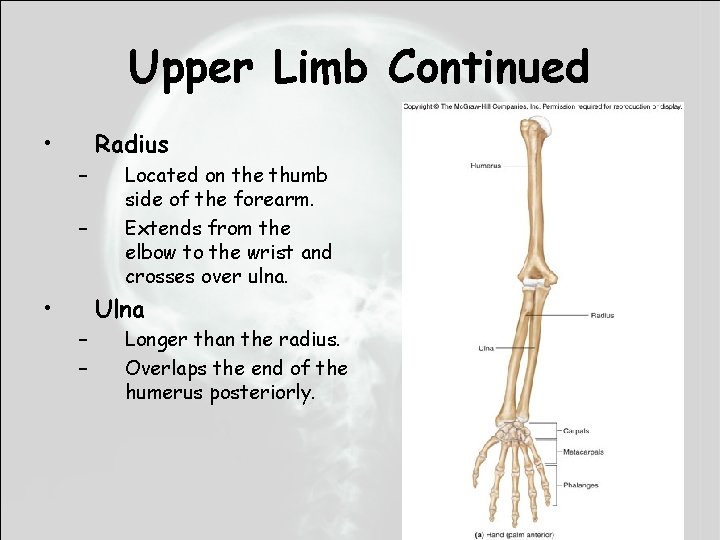
Upper Limb Continued • Radius – – • Located on the thumb side of the forearm. Extends from the elbow to the wrist and crosses over ulna. Ulna – – Longer than the radius. Overlaps the end of the humerus posteriorly.
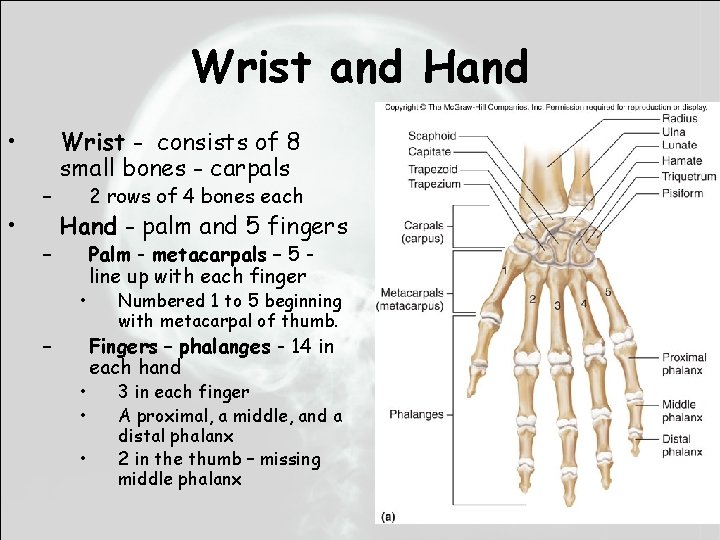
Wrist and Hand • • – – Wrist - consists of 8 small bones - carpals 2 rows of 4 bones each Hand - palm and 5 fingers • – • • • Palm - metacarpals – 5 line up with each finger Numbered 1 to 5 beginning with metacarpal of thumb. Fingers – phalanges - 14 in each hand 3 in each finger A proximal, a middle, and a distal phalanx 2 in the thumb – missing middle phalanx
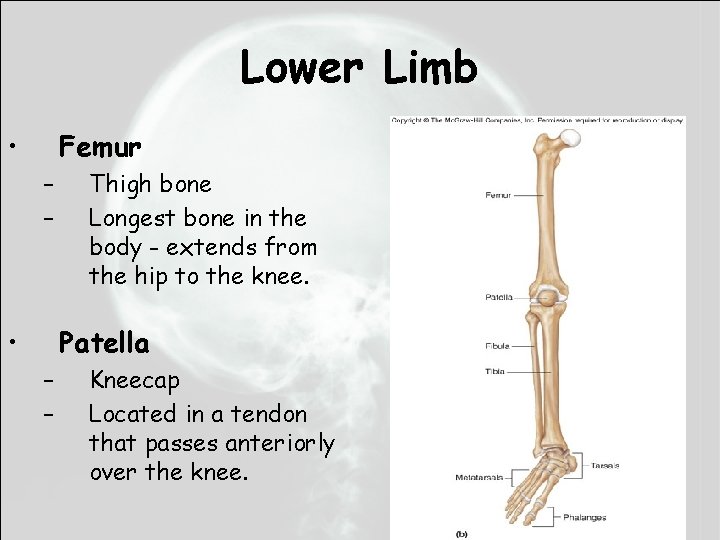
Lower Limb • Femur – – • Thigh bone Longest bone in the body - extends from the hip to the knee. Patella – – Kneecap Located in a tendon that passes anteriorly over the knee.
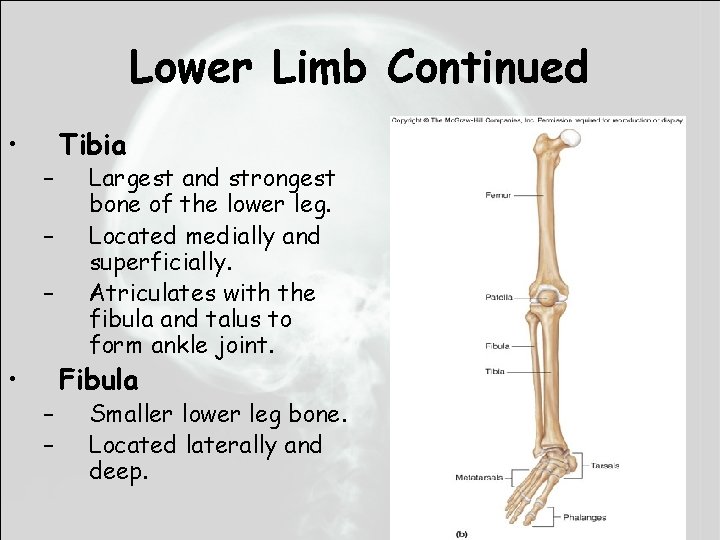
Lower Limb Continued • – – – • – – Tibia Largest and strongest bone of the lower leg. Located medially and superficially. Atriculates with the fibula and talus to form ankle joint. Fibula Smaller lower leg bone. Located laterally and deep.
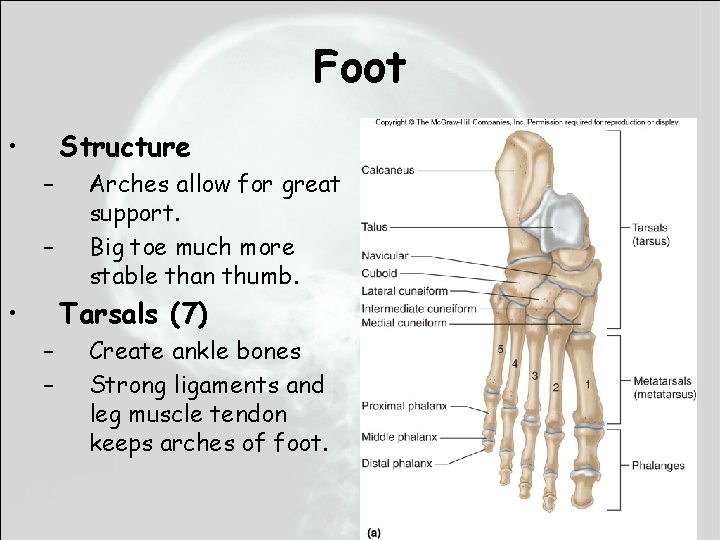
Foot • Structure – – • Arches allow for great support. Big toe much more stable than thumb. Tarsals (7) – – Create ankle bones Strong ligaments and leg muscle tendon keeps arches of foot.
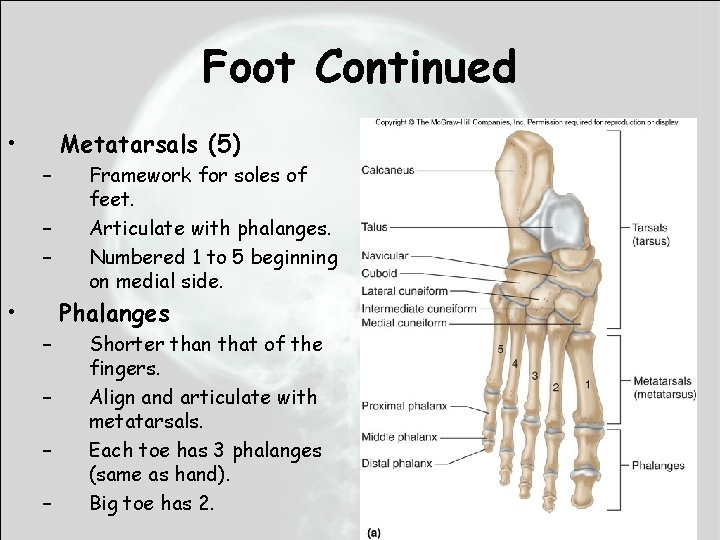
Foot Continued • Metatarsals (5) – – – • Framework for soles of feet. Articulate with phalanges. Numbered 1 to 5 beginning on medial side. Phalanges – – Shorter than that of the fingers. Align and articulate with metatarsals. Each toe has 3 phalanges (same as hand). Big toe has 2.
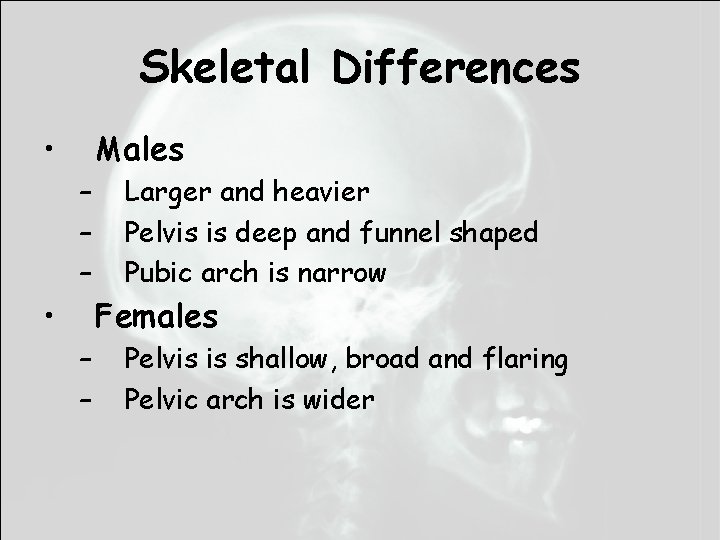
Skeletal Differences • Males – – – • Larger and heavier Pelvis is deep and funnel shaped Pubic arch is narrow Females – – Pelvis is shallow, broad and flaring Pelvic arch is wider
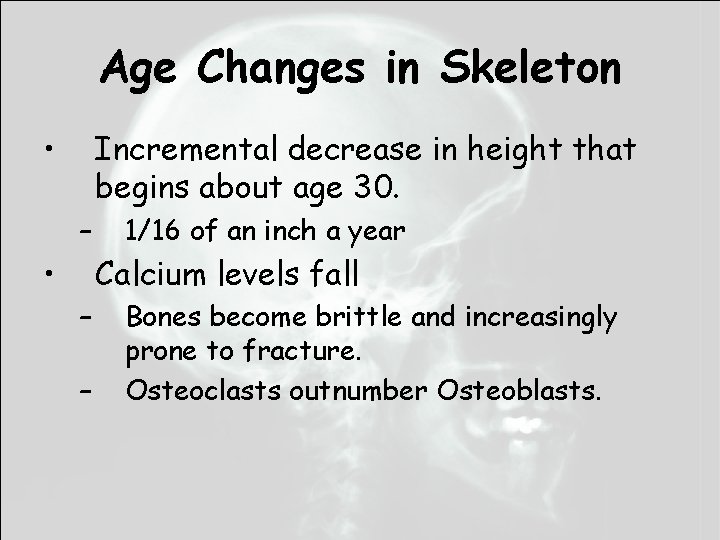
Age Changes in Skeleton • Incremental decrease in height that begins about age 30. – • 1/16 of an inch a year Calcium levels fall – – Bones become brittle and increasingly prone to fracture. Osteoclasts outnumber Osteoblasts.
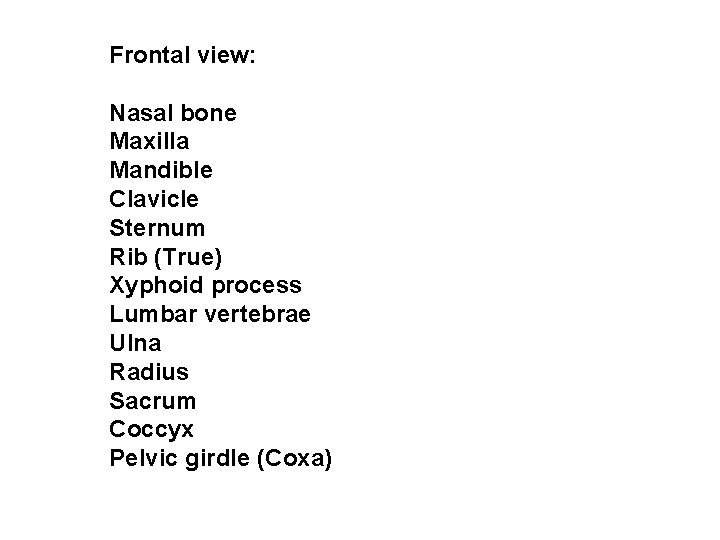
Frontal view: Nasal bone Maxilla Mandible Clavicle Sternum Rib (True) Xyphoid process Lumbar vertebrae Ulna Radius Sacrum Coccyx Pelvic girdle (Coxa)
Femur Patella Tibia Fibula Metatarsals Phalanx
Scapula Humerus Ulna Radius Carpals Metacarpals Phalanx/ Phalanges Calcaneus Ilium Ischium