
Chapter 7 notes Membrane Structure and Function Concept
Chapter 7 notes Membrane Structure and Function
Concept 7. 1 Most abundant lipids in membranes are phospholipids. - phospholipids are amphipathic (head is hydrophilic, tail is hydrophobic ) Phospholipids and proteins are arranged in the “fluid mosaic model”: membrane is fluid w/ proteins embedded in or attached to the bilayer
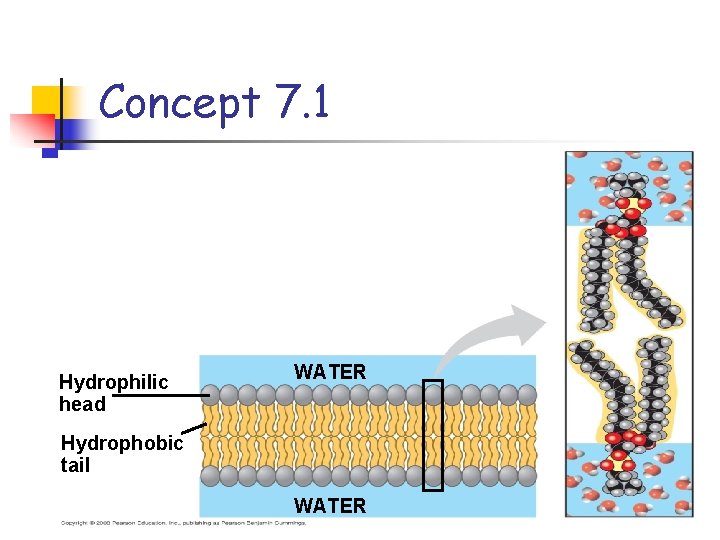
Concept 7. 1 Hydrophilic head WATER Hydrophobic tail WATER
Concept 7. 1 Phospholipids and proteins are arranged in the “fluid mosaic model”: membrane is fluid w/ proteins embedded in or attached to the bilayer - disproved the Davson-Danielli “sandwich” model
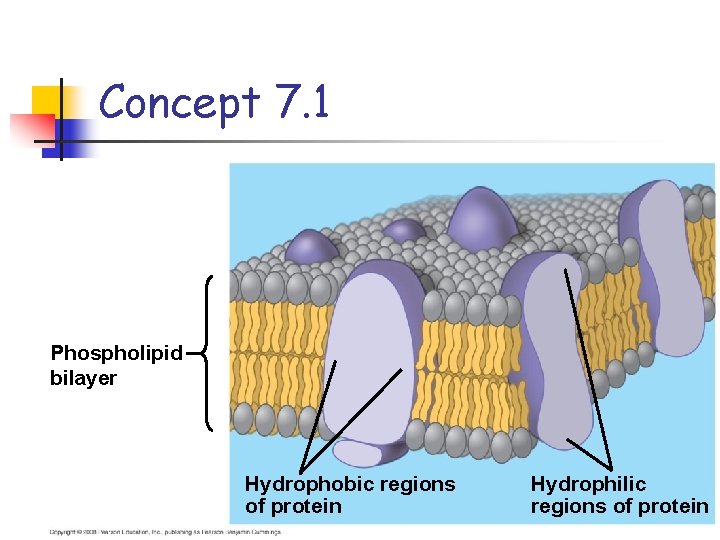
Concept 7. 1 Phospholipid bilayer Hydrophobic regions of protein Hydrophilic regions of protein
Concept 7. 1 The membrane is fluid -membranes are not static sheets of molecules locked in place -the membrane is held together primarily by hydrophobic interactions
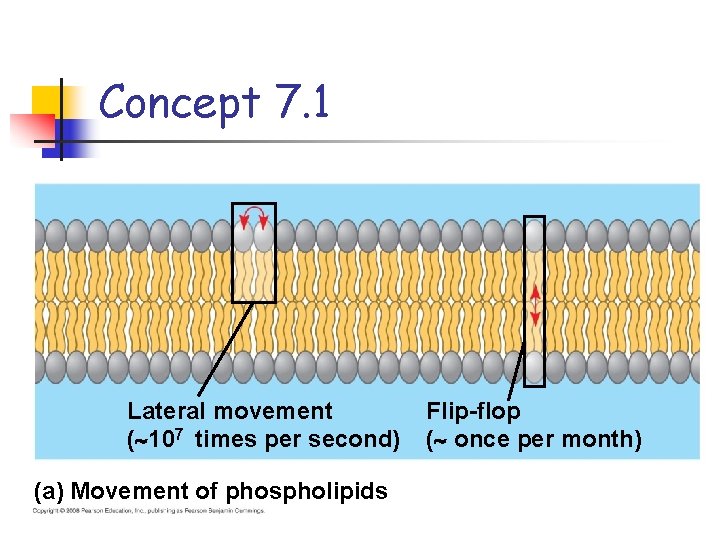
Concept 7. 1 Lateral movement ( 107 times per second) (a) Movement of phospholipids Flip-flop ( once per month)
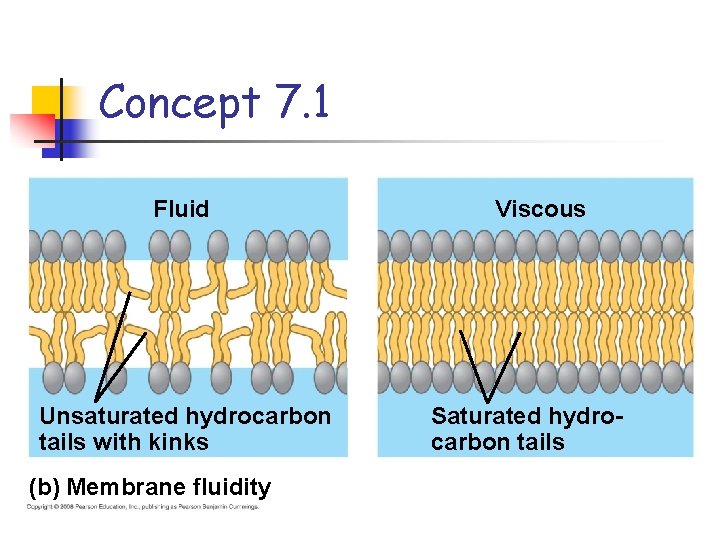
Concept 7. 1 Fluid Unsaturated hydrocarbon tails with kinks (b) Membrane fluidity Viscous Saturated hydrocarbon tails
Concept 7. 1 Membranes are mosaics of structure and function - proteins are embedded in the fluid matrix; the lipid bilayer is the main fabric of the membrane, but proteins determine its specific fcn.
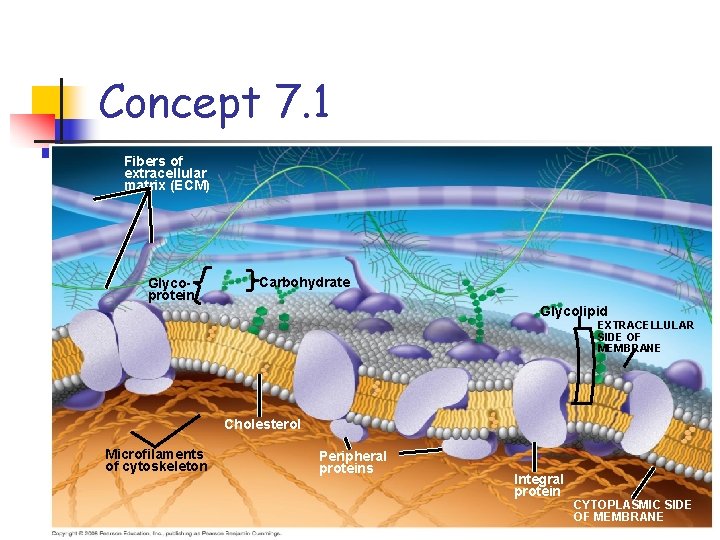
Concept 7. 1 Fibers of extracellular matrix (ECM) Glycoprotein Carbohydrate Glycolipid EXTRACELLULAR SIDE OF MEMBRANE Cholesterol Microfilaments of cytoskeleton Peripheral proteins Integral protein CYTOPLASMIC SIDE OF MEMBRANE
Concept 7. 1 Two major types of membrane proteins: - Integral proteins: penetrate the hydrophobic core of the bilayer; many are transmembrane proteins - Peripheral proteins: appendages loosely bound to the surface of the membrane

Concept 7. 1 N-terminus C-terminus Helix EXTRACELLULAR SIDE CYTOPLASMIC SIDE
Concept 7. 1 Membrane carbohydrates are important for cell-cell recognition - cell-cell recognition is the ability of a cell to distinguish one type of neighboring cell from another - membrane carbohydrates are usually oligosaccharides (can vary greatly)

Concept 7. 1 Signaling molecule Enzymes ATP (a) Transport Receptor Signal transduction (b) Enzymatic activity (c) Signal transduction
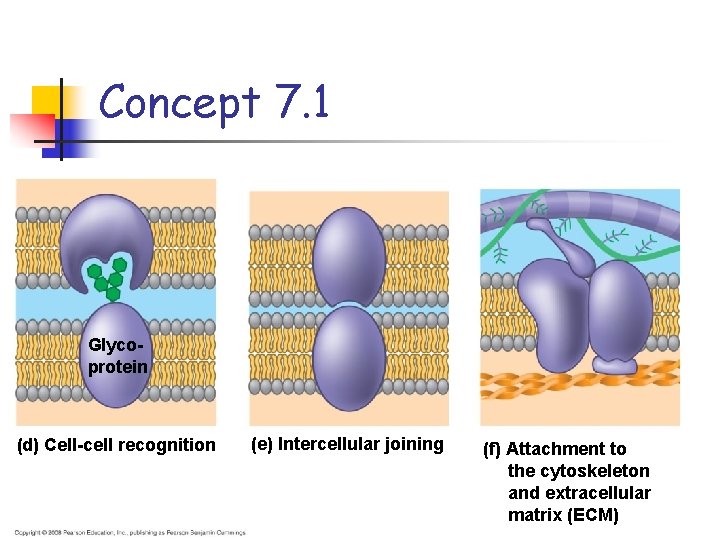
Concept 7. 1 Glycoprotein (d) Cell-cell recognition (e) Intercellular joining (f) Attachment to the cytoskeleton and extracellular matrix (ECM)
Concept 7. 2 Hydrophobic molecules can cross the bilayer with ease. However, ions and polar molecules cannot pass through because they are hydrophilic. - proteins play keys roles in regulating transportation.
Concept 7. 2 Transport proteins: allow hydrophilic molecules to enter and exit the cell. The selective permeability of a membrane depends on the specific transport proteins built into the membrane.
Concept 7. 3 Passive transport involves diffusion across a membrane. - Diffusion: the tendency for molecules of any substance to spread out into available space - any substance will move down a [gradient]. [high] [low]
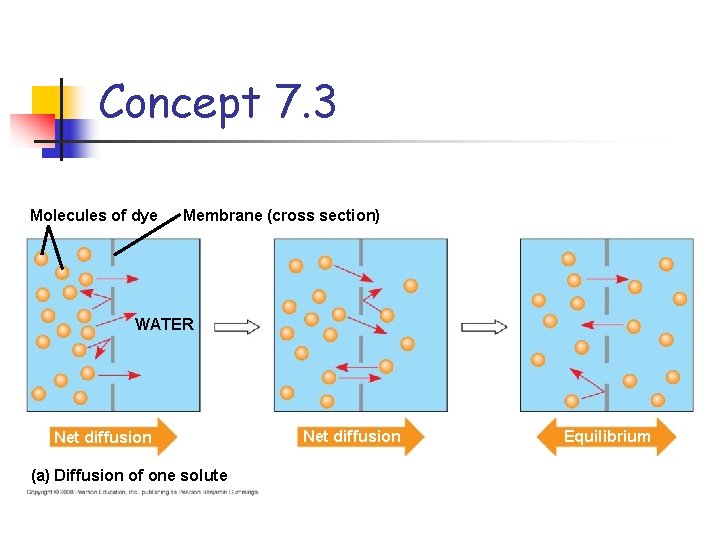
Concept 7. 3 Molecules of dye Membrane (cross section) WATER Net diffusion (a) Diffusion of one solute Net diffusion Equilibrium
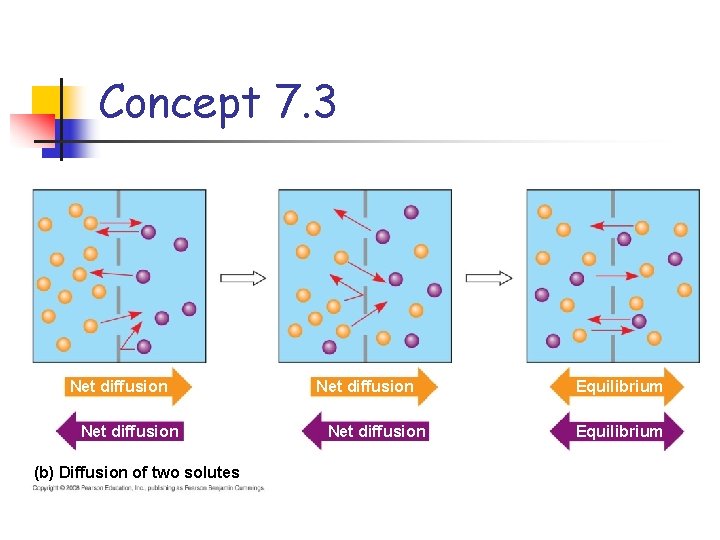
Concept 7. 3 Net diffusion (b) Diffusion of two solutes Net diffusion Equilibrium
Concept 7. 3 Passive transport: diffusion of a substance across a biological membrane. (no energy is used) Osmosis is the passive transport of water - sln. w/ a higher [solute] = hypertonic - sln. w/ a lower [solute] = hypotonic - slns. w/ equal [solute] = isotonic
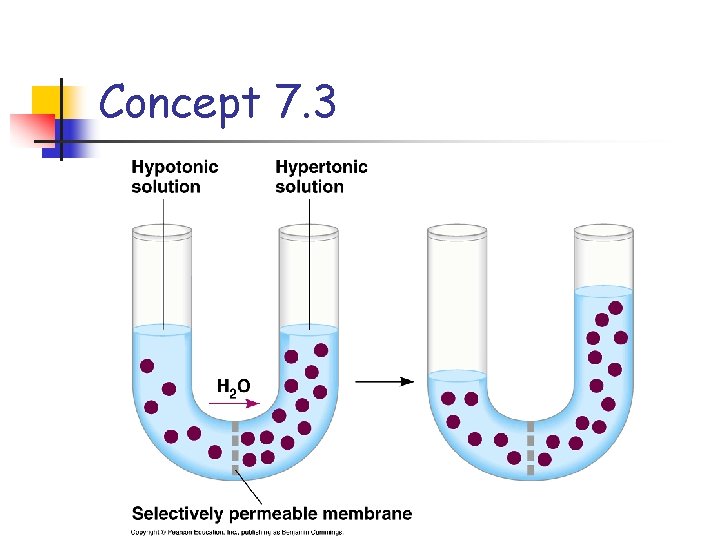
Concept 7. 3
Concept 7. 3 Organisms without cell walls that live in hypertonic or hypotonic environments must have adaptations for osmoregulation, the control of water balance
Concept 7. 3 Organisms with cell walls - turgid (very firm) when placed in a hypotonic sln. - flacid (limp) if the sln. is isotonic - plasmolysis (shriveled) occurs when put in a hypertonic sln.
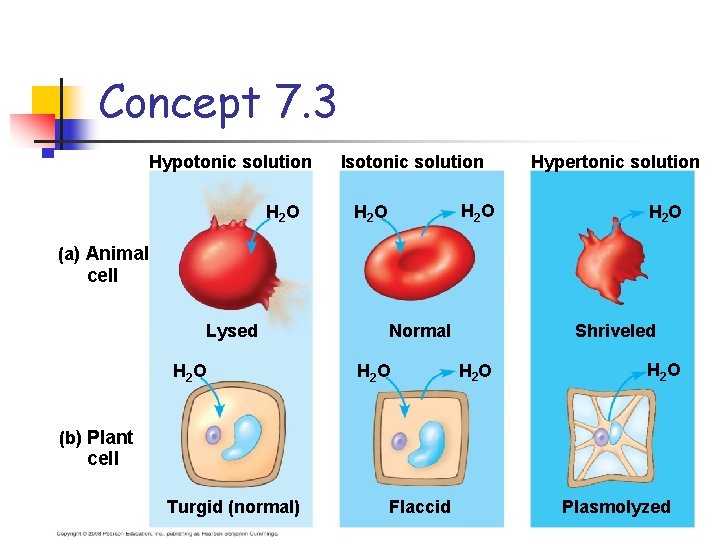
Concept 7. 3 Hypotonic solution H 2 O Isotonic solution H 2 O Hypertonic solution H 2 O (a) Animal cell Lysed H 2 O Normal H 2 O Shriveled H 2 O (b) Plant cell Turgid (normal) Flaccid Plasmolyzed
Concept 7. 3 Facilitated diffusion: passive transport of molecules through transport proteins - each protein is specific for the solute it transports
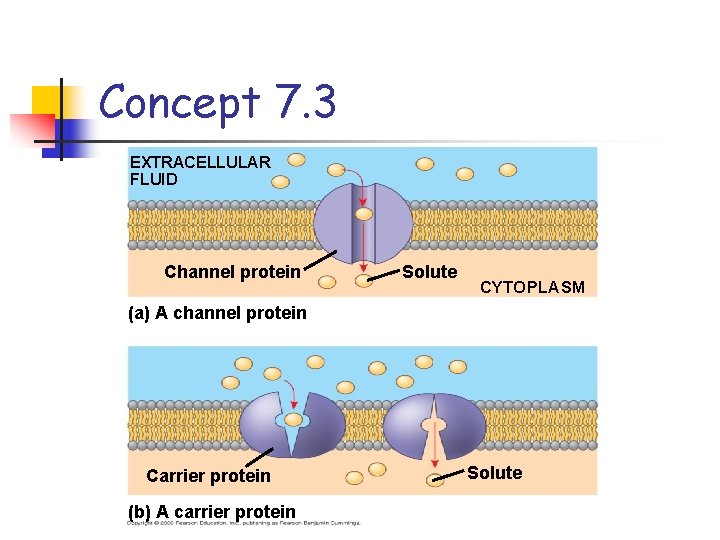
Concept 7. 3 EXTRACELLULAR FLUID Channel protein Solute CYTOPLASM (a) A channel protein Carrier protein (b) A carrier protein Solute
Concept 7. 4 Active transport: movement of molecules across a membrane against the gradient (uses ATP) - sodium-potassium pump: movement of 3 Na+ for every 2 K+ ions
![Concept 7. 4 EXTRACELLULAR FLUID [Na+] high [K+] low Na+ Na+ CYTOPLASM Na+ [Na+]](http://slidetodoc.com/presentation_image_h2/cd509d99371d21b36abf9104045115d2/image-29.jpg "Concept 7. 4 EXTRACELLULAR FLUID [Na+] high [K+] low Na+ Na+ CYTOPLASM Na+ [Na+]")
Concept 7. 4 EXTRACELLULAR FLUID [Na+] high [K+] low Na+ Na+ CYTOPLASM Na+ [Na+] low [K+] high ATP P ADP 2 1 P 3 K+ K+ K K+ 6 K+ K+ + P 5 4 P
Concept 7. 4 Some ion pumps generate voltage across membranes - membrane potential: the voltage across a membrane - electrogenic pump: a transport protein that generates voltage across a membrane (ex. Sodium-potassium pump)
Concept 7. 4 The main electrogenic pump for plants and fungi is a proton pump which transports H+ ion out of the cell.
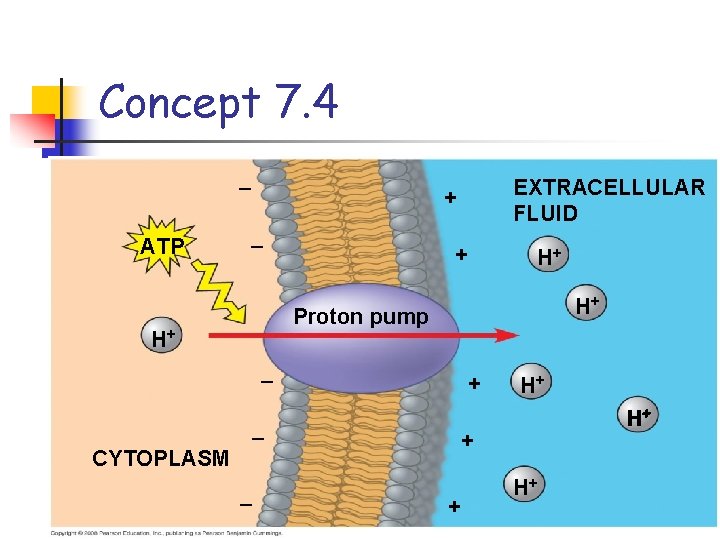
Concept 7. 4 – ATP – + H+ H+ Proton pump H+ – CYTOPLASM EXTRACELLULAR FLUID + + – – H+ H+ + + H+
Concept 7. 4 In cotransport, a ATP powered pump can drive the transport of other solutes. 1) active transport of a substance against a gradient 2) cotransport through a protein w/ 2 nd substance
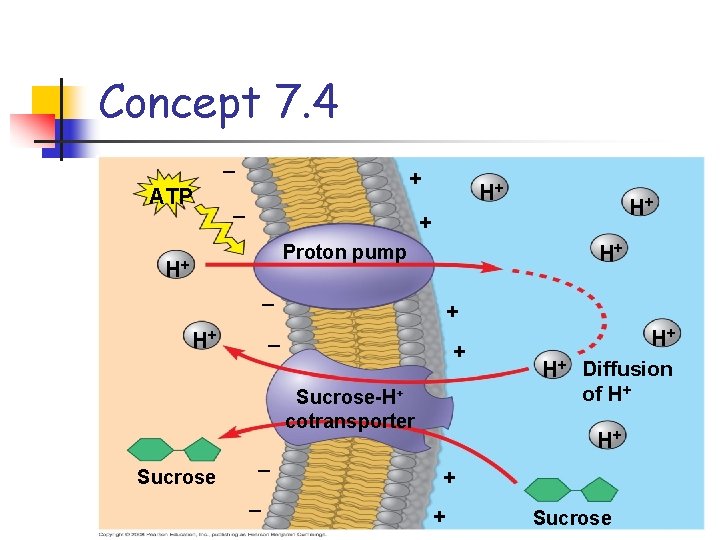
Concept 7. 4 – ATP + – H+ H+ + Proton pump H+ – H+ H+ + – + Sucrose-H+ cotransporter Sucrose – – H+ H+ Diffusion of H+ H+ + + Sucrose
Concept 7. 5 Exocytosis: the secretion of macromolecules by the fusion of vesicles with the plasma membrane Endocytosis: the cell takes in macromolecules by forming new vessicles - 3 types: phagocytosis, pinocytosis, and receptor-mediated endocytosis
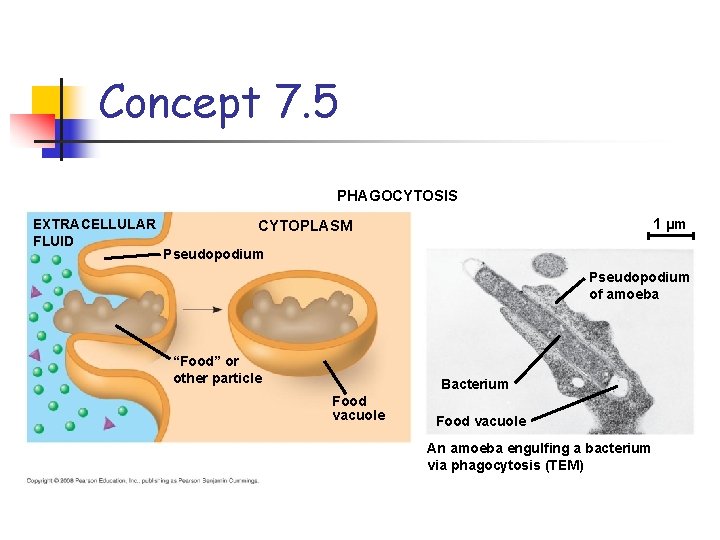
Concept 7. 5 PHAGOCYTOSIS EXTRACELLULAR FLUID 1 µm CYTOPLASM Pseudopodium of amoeba “Food” or other particle Bacterium Food vacuole An amoeba engulfing a bacterium via phagocytosis (TEM)
- Slides: 36