
Chapter 7 Networking Computer Connections 1 Basic Components
Chapter 7 Networking: Computer Connections 1

Basic Components of a Network n n n Sending device Communications link Receiving device
Data Transmission Methods n Digital transmission n n Distinct pulses 0’s and 1’s
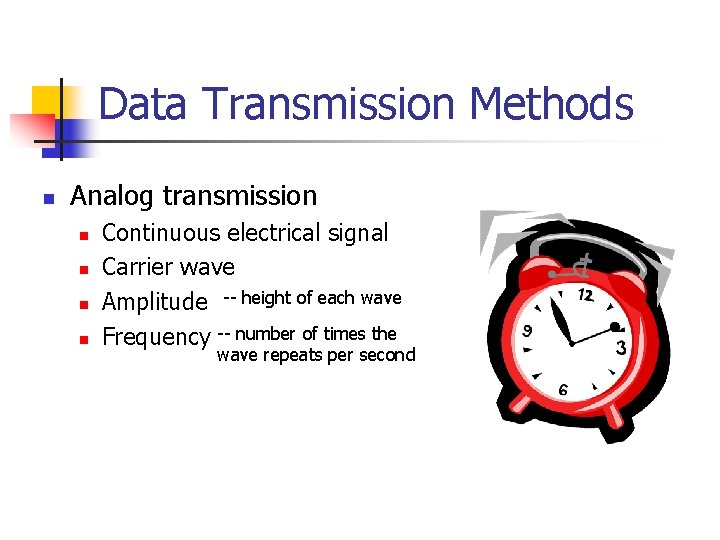
Data Transmission Methods n Analog transmission n n Continuous electrical signal Carrier wave Amplitude -- height of each wave Frequency -- number of times the wave repeats per second

Data Transmission Devices n Modem (MOdulator/DEModulator) n n Capable of 56, 000 bps (56 Kbps) bps = bits per second Receive speed limited to 53 Kbps Transmit speed limited to 31 Kbps ← FCC restrictions

Data Transmission Devices n ISDN n n n -- Integrated Services Digital Network Digital data Speeds of 128, 000 bps Connect and talk on the phone at the same time Requires an adapter & upgraded phone service Expensive to set up + requires monthly fees
Data Transmission Devices n DSL n n n – Digital Subscriber Line Conventional telephone lines DSL modem: converts digital analog Many times faster than 56 K modem Computer and voice share phone line Must be within 3 miles of telephone company switching office

Data Transmission Devices n Cable modems n n n Coaxial cables Does not interfere with cable TV Up to 10 million bps Always on Shared capacity: More users mean slower Security problem
Data Transmission Devices n Cellular Modems n n Useful for people on the move Slow speed
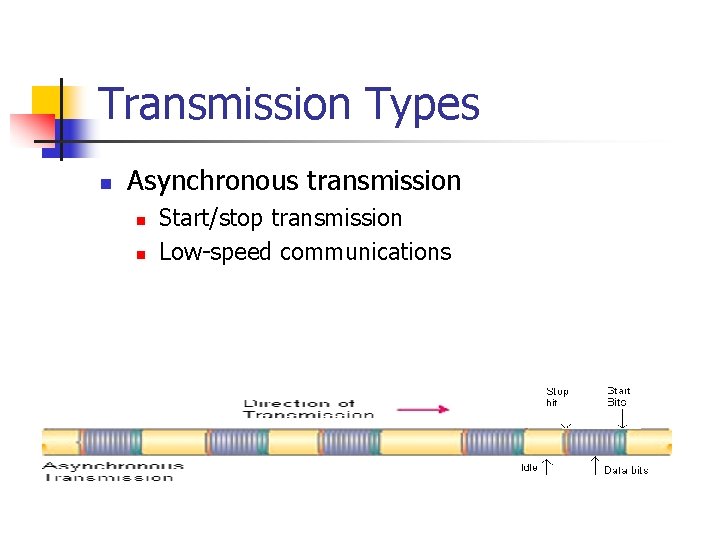
Transmission Types n Asynchronous transmission n n Start/stop transmission Low-speed communications
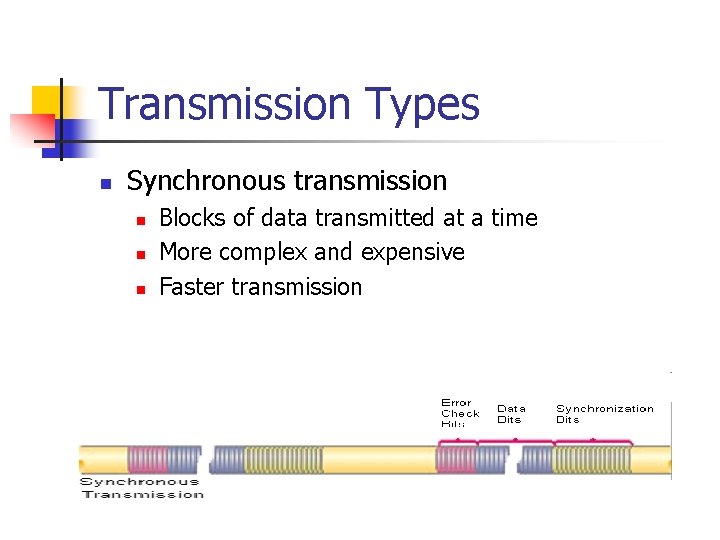
Transmission Types n Synchronous transmission n Blocks of data transmitted at a time More complex and expensive Faster transmission
Transmission Types n Simplex n n Half-duplex n n n One direction only Either direction Only one way at a time Full-duplex n Both directions at once
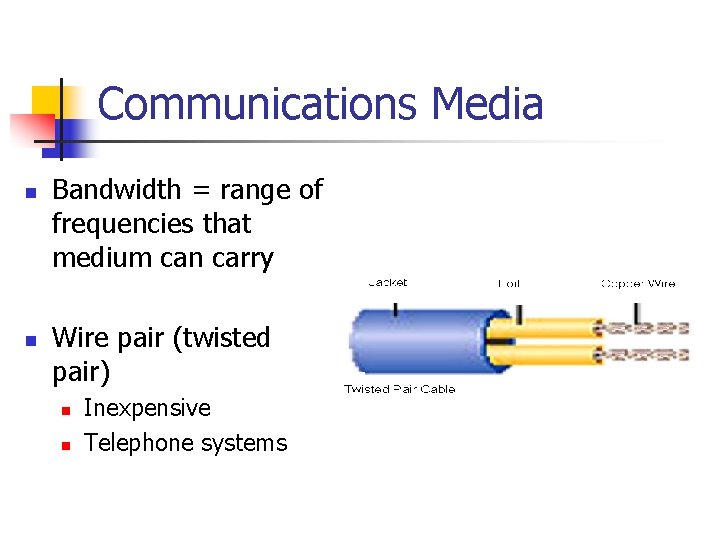
Communications Media n n Bandwidth = range of frequencies that medium can carry Wire pair (twisted pair) n n Inexpensive Telephone systems
NOISE n n n Electrical interference Anything that disrupts the signal High voltage equipment Lightning Even the sun cause noise
Communications Media n Shielded twisted pair n n n Protective sheath Reduces noise Increases speed
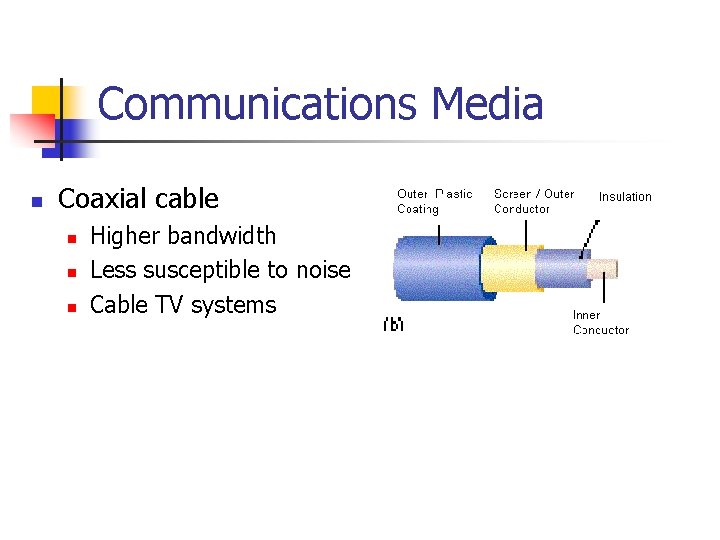
Communications Media n Coaxial cable n n n Higher bandwidth Less susceptible to noise Cable TV systems
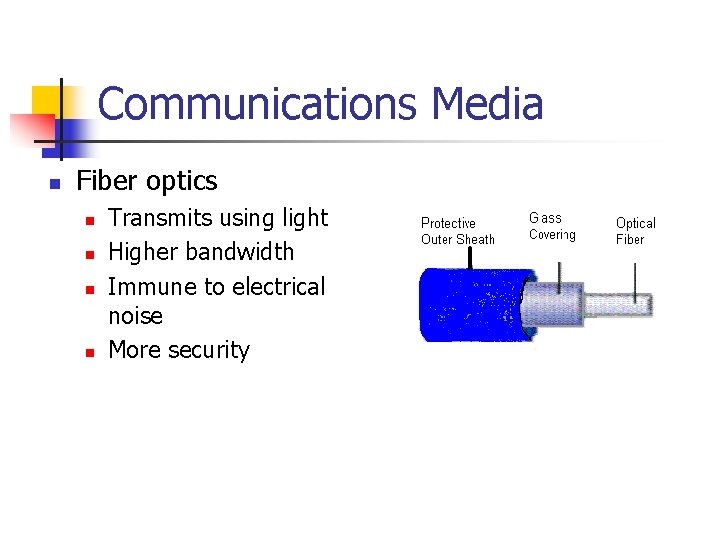
Communications Media n Fiber optics n n Transmits using light Higher bandwidth Immune to electrical noise More security
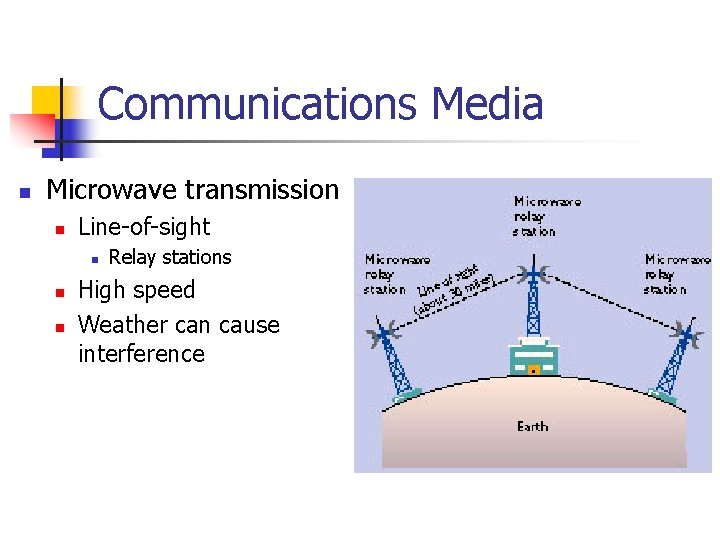
Communications Media n Microwave transmission n Line-of-sight n n n Relay stations High speed Weather can cause interference
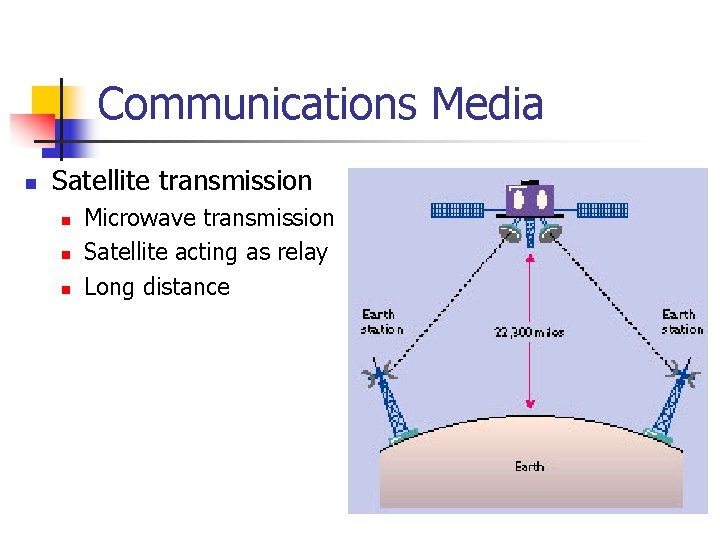
Communications Media n Satellite transmission n Microwave transmission Satellite acting as relay Long distance
Satellite Transmission n Uplink – signal travels from the earth to the satellite Downlink – signal travels from the satellite to the earth Geosynchronous orbit – communication satellites stay positioned over the same point on the earth
Protocols n Set of rules to exchange data n n What form of data transmission will be used? What is the transmission speed? What duplex setting is needed? Without a protocol, computers cannot communicate with each other
Protocols n Standards n n Assists with coordination TCP/IP n n Transmission Control Protocol/Internet Protocol Permits any computer to communicate with the internet
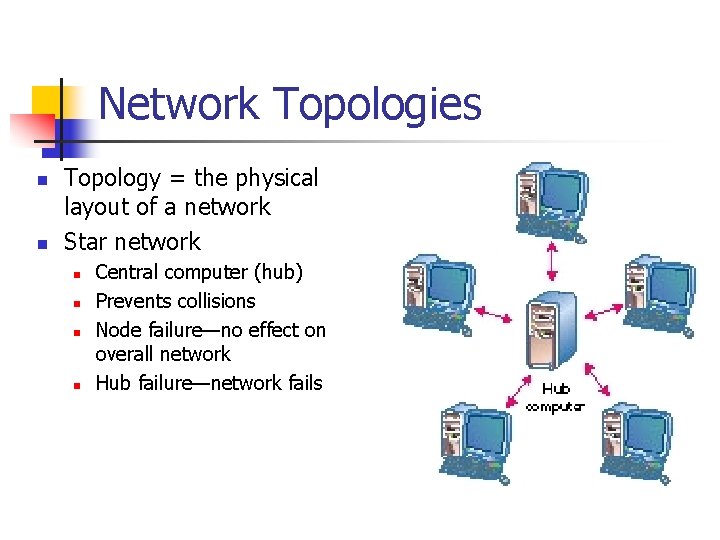
Network Topologies n n Topology = the physical layout of a network Star network n n Central computer (hub) Prevents collisions Node failure—no effect on overall network Hub failure—network fails
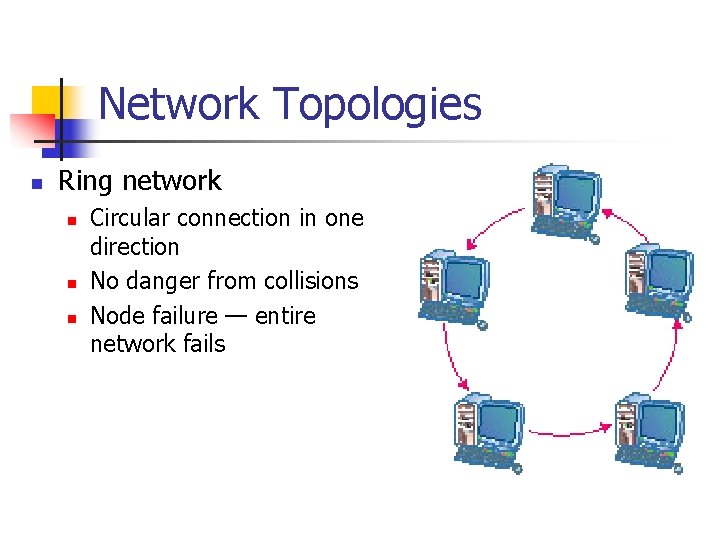
Network Topologies n Ring network n n n Circular connection in one direction No danger from collisions Node failure — entire network fails
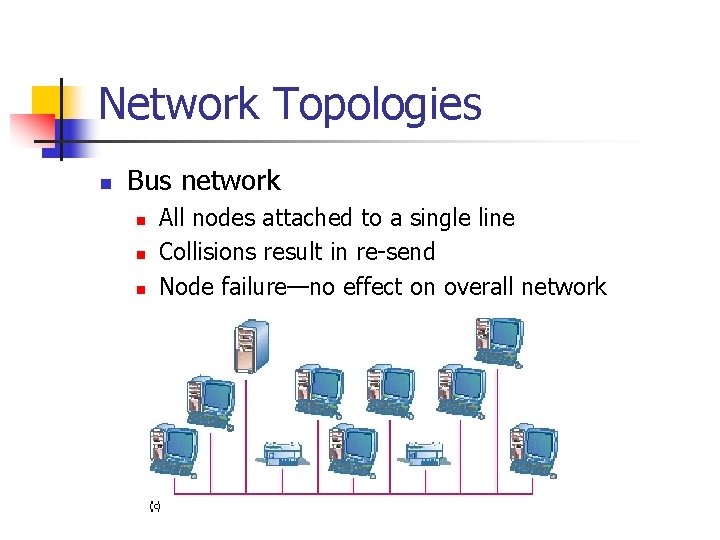
Network Topologies n Bus network n n n All nodes attached to a single line Collisions result in re-send Node failure—no effect on overall network
Wide Area Networks n n Large geographical area Dial-up service n n n Temporary connection POTS Dedicated service n n n Permanent connection Own dedicated circuits Leased lines
Network Software n File transfer software (FTP) n n Download – copy a file from another computer to your computer Upload – copy a file from your computer to another computer
Local Area Network Components n n n PCs Network cable Network Interface Card (NIC)
Connecting LANs n Bridge n n Router n n Connects LANs with similar protocols Directs traffic to best path Gateway n Connects LANs with varying protocols
Uses of Networks n n E-mail Facsimile (FAX) Groupware Teleconferencing and video conferencing
Uses of Networks n n n Electronic Fund Transfers ATM Telecommuting Online services The Internet
- Slides: 31