
Chapter 7 NERVOUS SYSTEM DISEASES SEIZURES Chronic or
- Slides: 14
Chapter 7 NERVOUS SYSTEM DISEASES
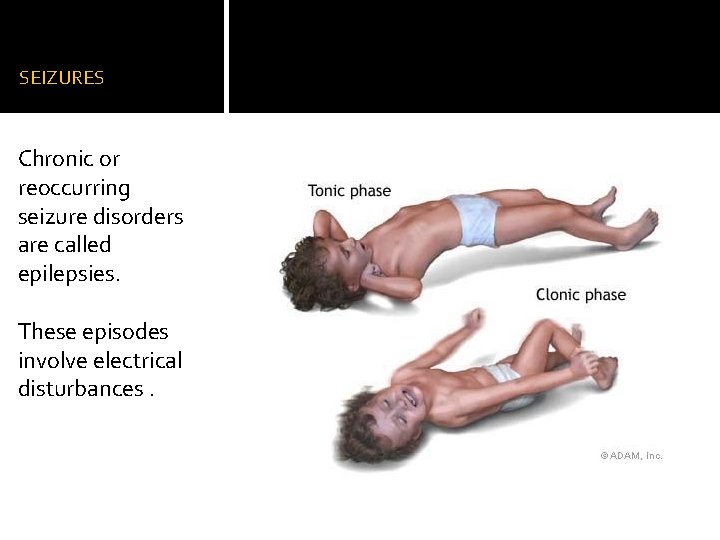
SEIZURES Chronic or reoccurring seizure disorders are called epilepsies. These episodes involve electrical disturbances.
2 Types of seizures: *Petit Mal epilepsy: brief episodes (10 -30 seconds) Eye or muscle fluttering, mouth movements etc. • Grand Mal seizures: there is a loss of consciousness with firm and violent spasms, labored breathing, tongue biting, and incontinence. • Seizures can be controlled with medication • Causes include: brain injury, genetic disorders, brain tumors etc.
ALZHEIMER’S DISEASE
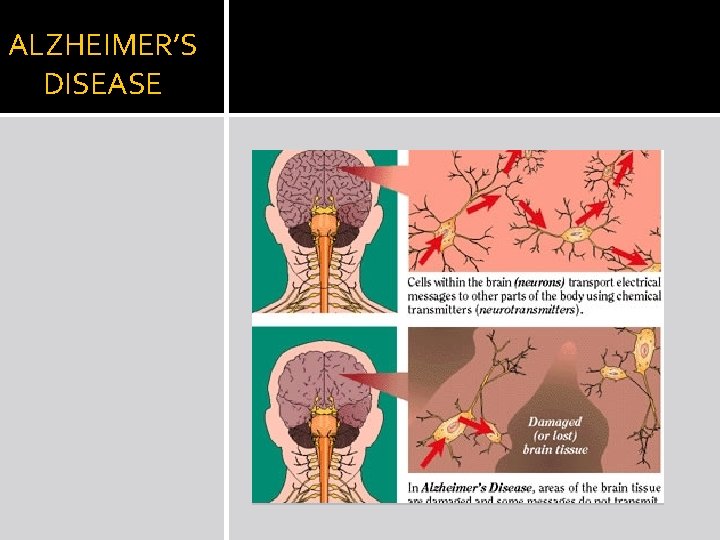
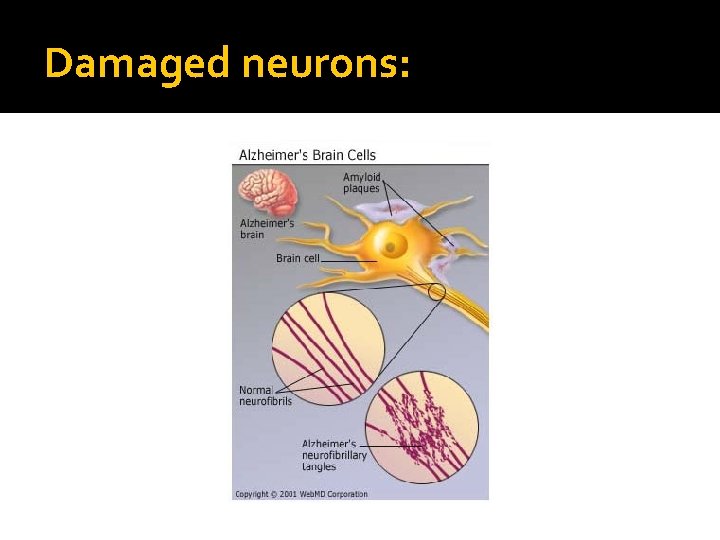
Alzheimer’s Disease: Progressive Causes memory loss and serious mental deterioration Small lesions called plaques develop in the brain that disrupts the electrical pathways in the neurons Leading cause of senile dementia
Damaged neurons:
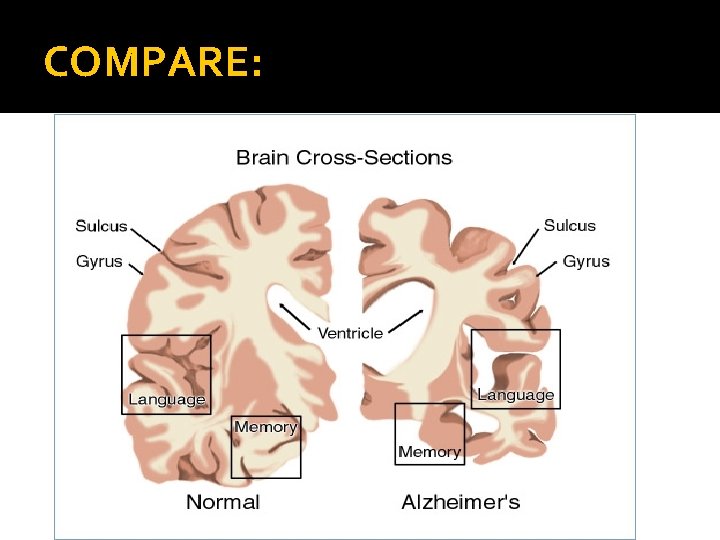
COMPARE:
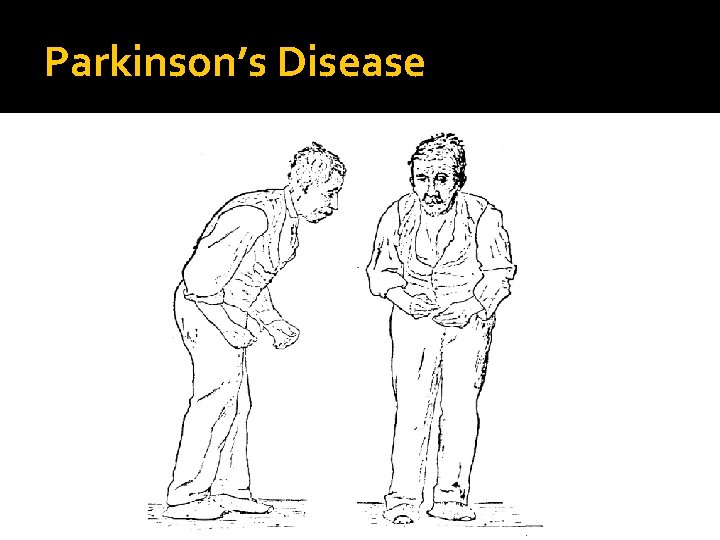
Parkinson’s Disease
Parkinson’s Disease Shaking palsy Affects the portion of the brain controlling movement Patient develops: nodding of head, tremors, shuffling gait, eyes unblinking
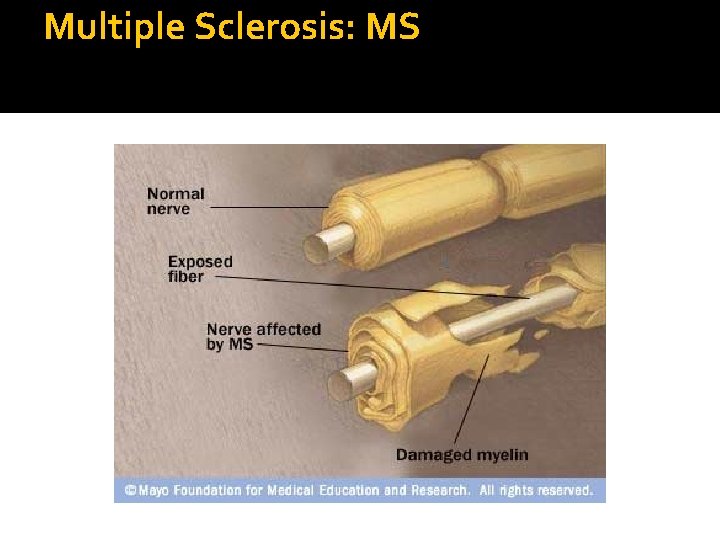
Multiple Sclerosis: MS
MS: Progressive degenerative disease of the CNS Inflammation, hardening, and loss of myelin throughout the spinal cord and brain. Symptoms include: tremors, muscle weakness, slowness of movement Patient eventually becomes bedridden, death occurs 7 -30 years after onset. Young adults (usually women) are affected
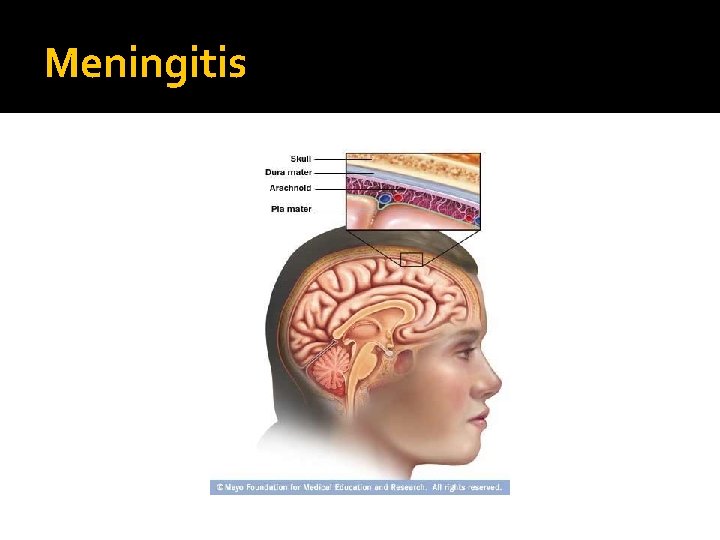
Meningitis
Meningitis Inflammation of the meninges Serious threat to the brain Can be bacterial or viral Diagnosed by taking a sample of cerebrospinal fluid
Concussions When a person gets a head injury, the brain can move around inside the skull and even bang against it. This can lead to bruising of the brain, tearing of blood vessels, and injury to the nerves. When this happens, a person can get a concussion — a temporary loss of normal brain function