
Chapter 7 Multimedia 7 1 Introduction to multimedia

- Slides: 32
Chapter 7 Multimedia 7. 1 Introduction to multimedia 7. 2 Multimedia files 7. 3 Video compression 7. 4 Multimedia process scheduling 7. 5 Multimedia file system paradigms 7. 6 File placement 7. 7 Caching 7. 8 Disk scheduling for multimedia 1
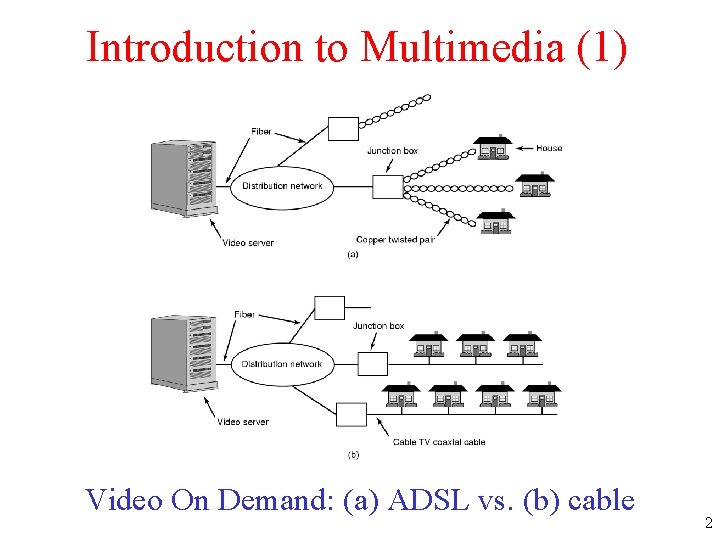
Introduction to Multimedia (1) Video On Demand: (a) ADSL vs. (b) cable 2
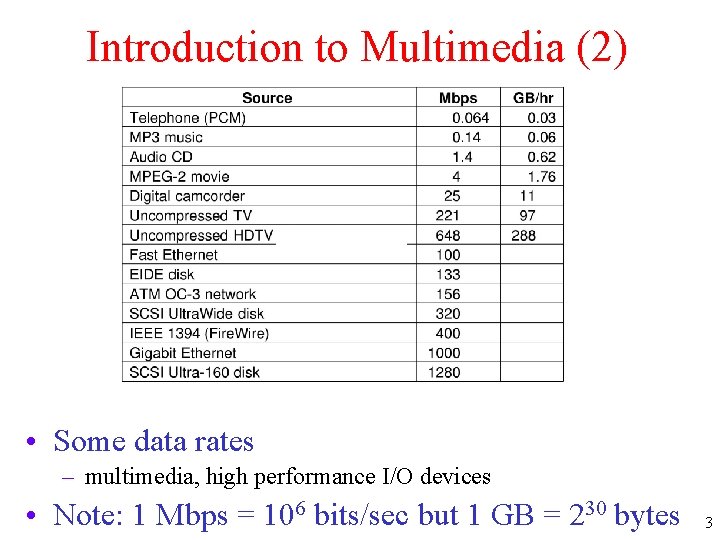
Introduction to Multimedia (2) • Some data rates – multimedia, high performance I/O devices • Note: 1 Mbps = 106 bits/sec but 1 GB = 230 bytes 3
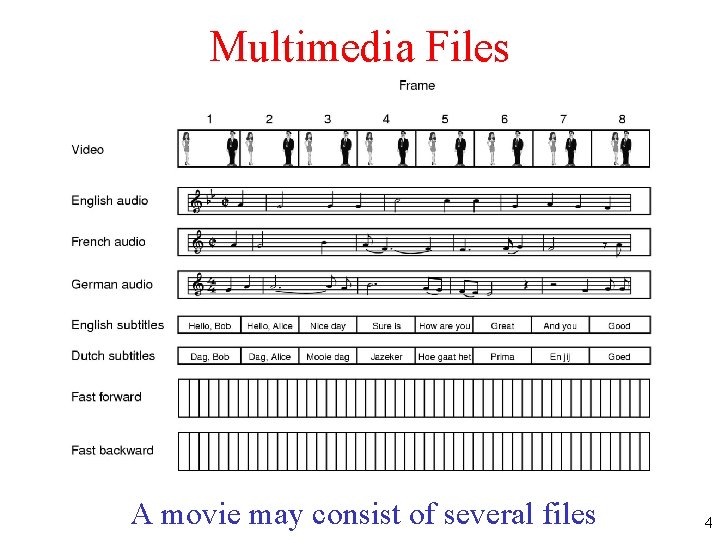
Multimedia Files A movie may consist of several files 4
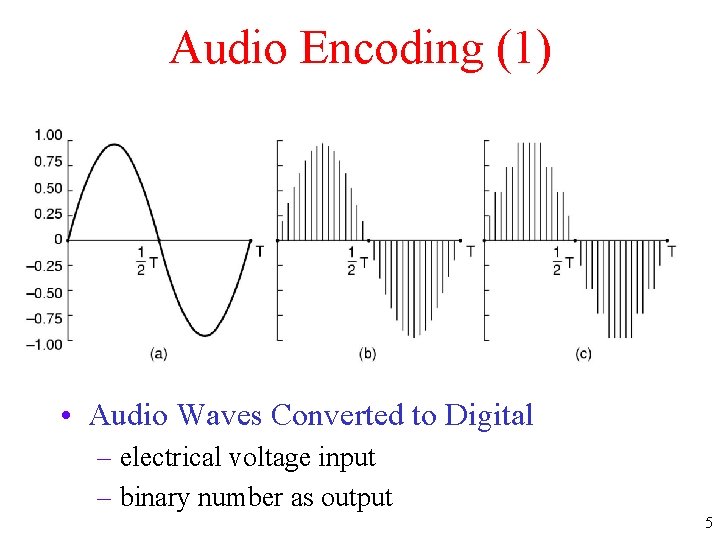
Audio Encoding (1) • Audio Waves Converted to Digital – electrical voltage input – binary number as output 5
Audio Encoding (2) • Error induced by finite sampling – called quantization noise • Examples of sampled sound – telephone – pulse code modulation – audio compact disks 6
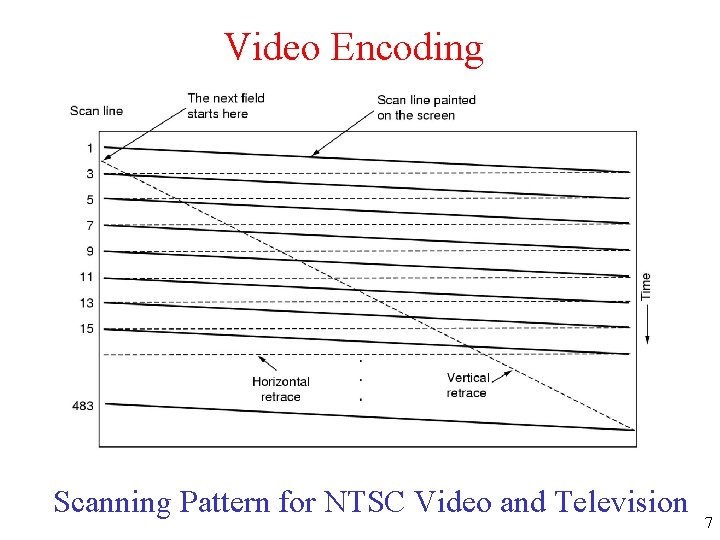
Video Encoding Scanning Pattern for NTSC Video and Television 7
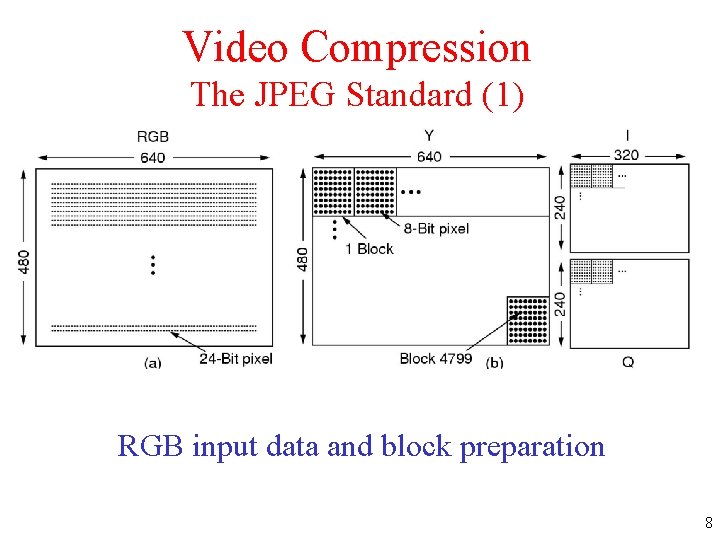
Video Compression The JPEG Standard (1) RGB input data and block preparation 8
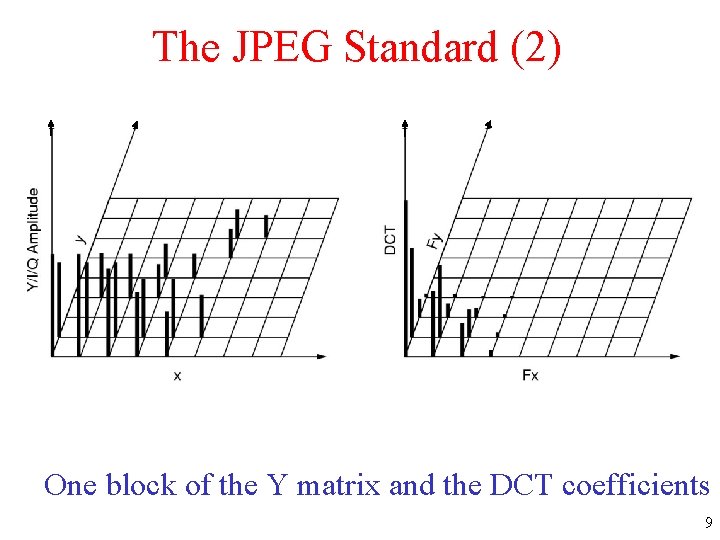
The JPEG Standard (2) One block of the Y matrix and the DCT coefficients 9
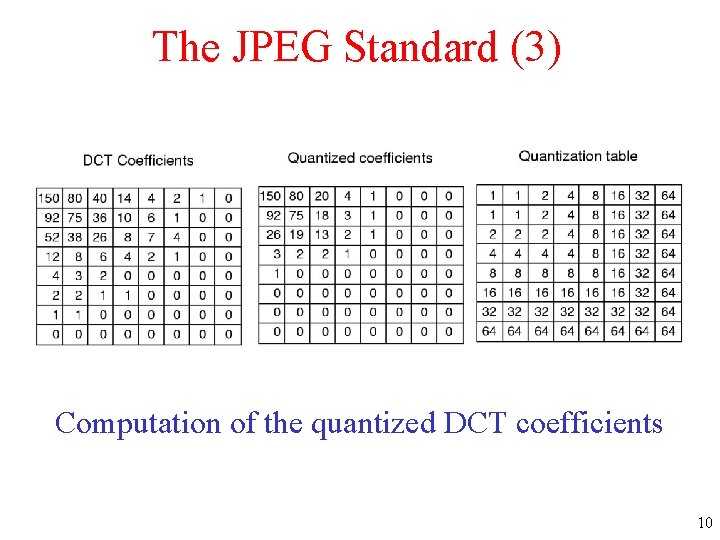
The JPEG Standard (3) Computation of the quantized DCT coefficients 10
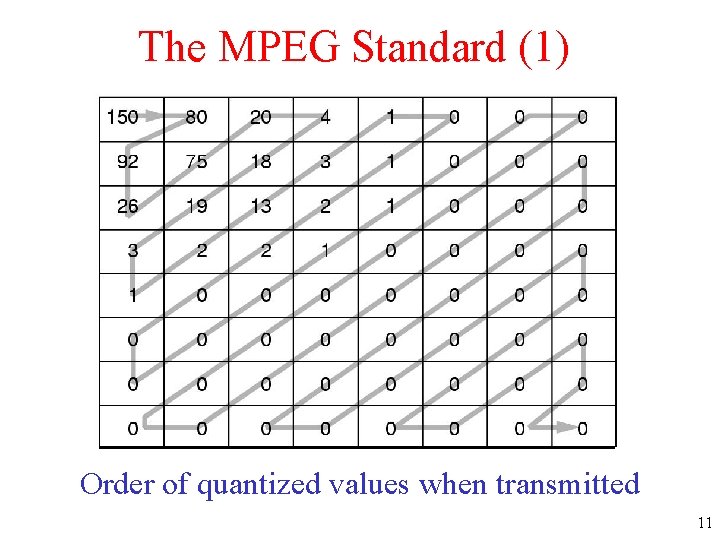
The MPEG Standard (1) Order of quantized values when transmitted 11
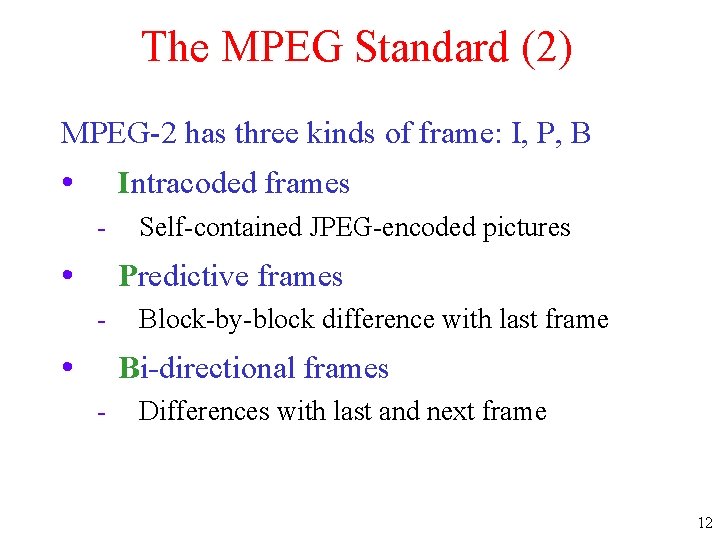
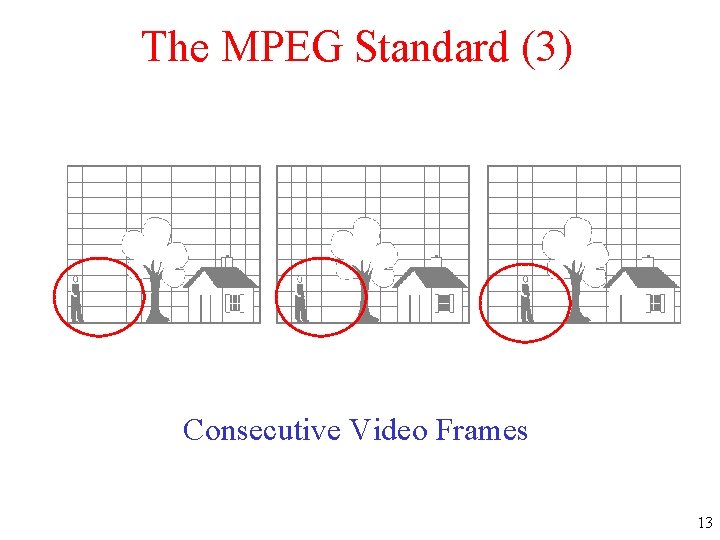
The MPEG Standard (2) MPEG-2 has three kinds of frame: I, P, B • Intracoded frames - • Self-contained JPEG-encoded pictures Predictive frames - • Block-by-block difference with last frame Bi-directional frames - Differences with last and next frame 12
The MPEG Standard (3) Consecutive Video Frames 13
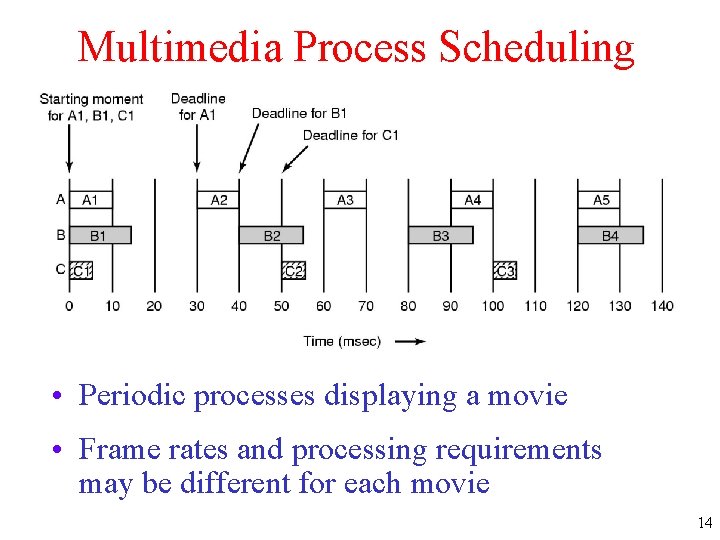
Multimedia Process Scheduling • Periodic processes displaying a movie • Frame rates and processing requirements may be different for each movie 14
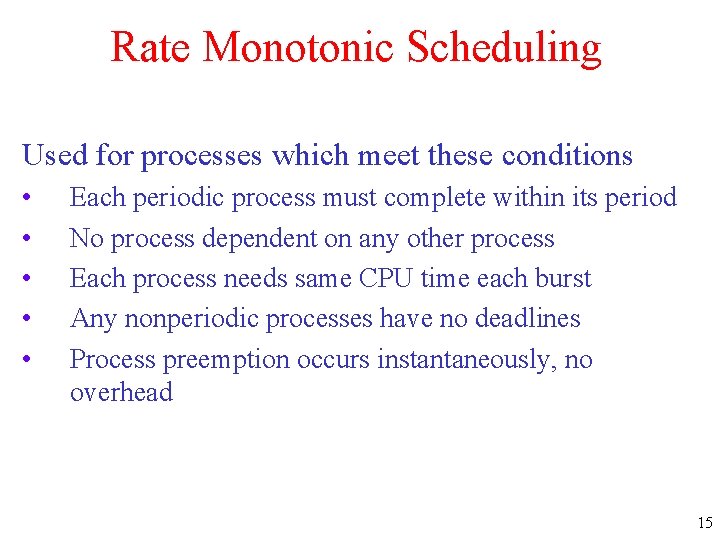
Rate Monotonic Scheduling Used for processes which meet these conditions • • • Each periodic process must complete within its period No process dependent on any other process Each process needs same CPU time each burst Any nonperiodic processes have no deadlines Process preemption occurs instantaneously, no overhead 15
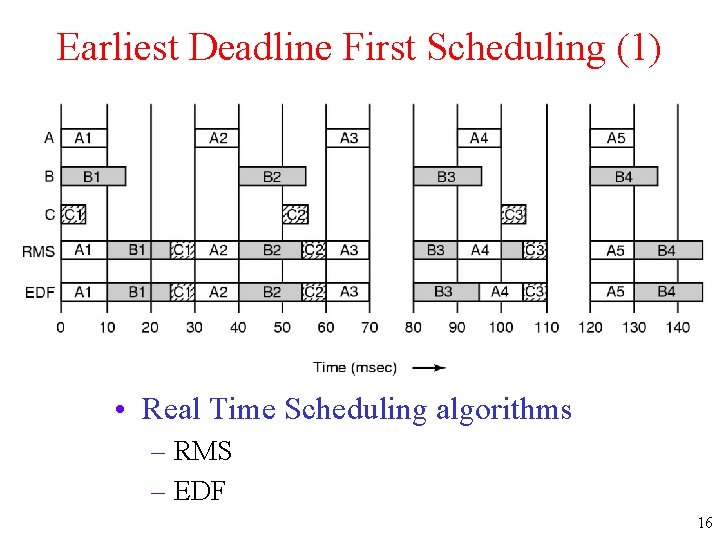
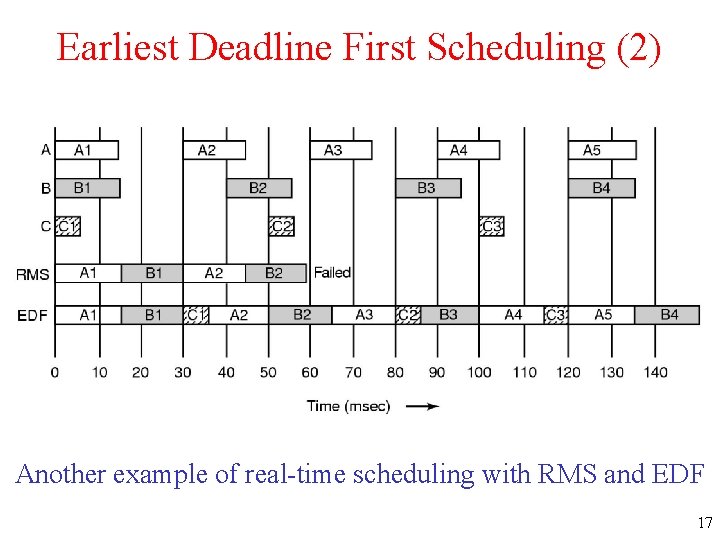
Earliest Deadline First Scheduling (1) • Real Time Scheduling algorithms – RMS – EDF 16
Earliest Deadline First Scheduling (2) Another example of real-time scheduling with RMS and EDF 17
Multimedia File System Paradigms Pull and Push Servers 18
VCR Control Functions • Rewind is simple – set next frame to zero • Fast forward/backward are trickier – compression makes rapid motion complicated – special file containg e. g. every 10 th frame 19
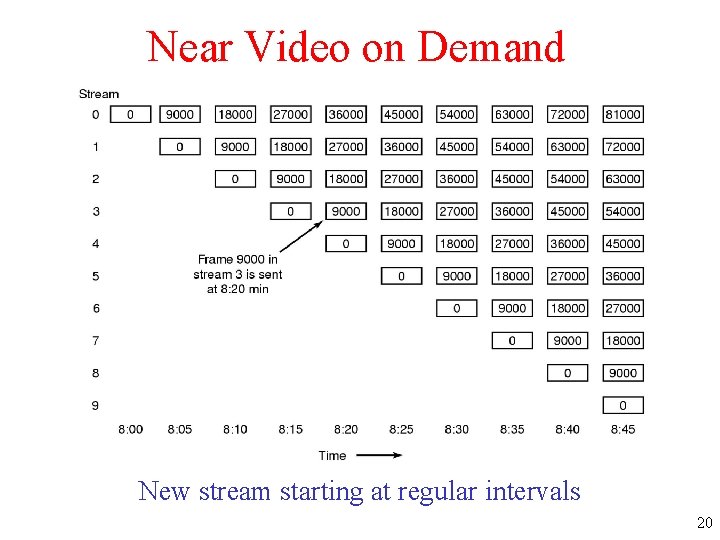
Near Video on Demand New stream starting at regular intervals 20
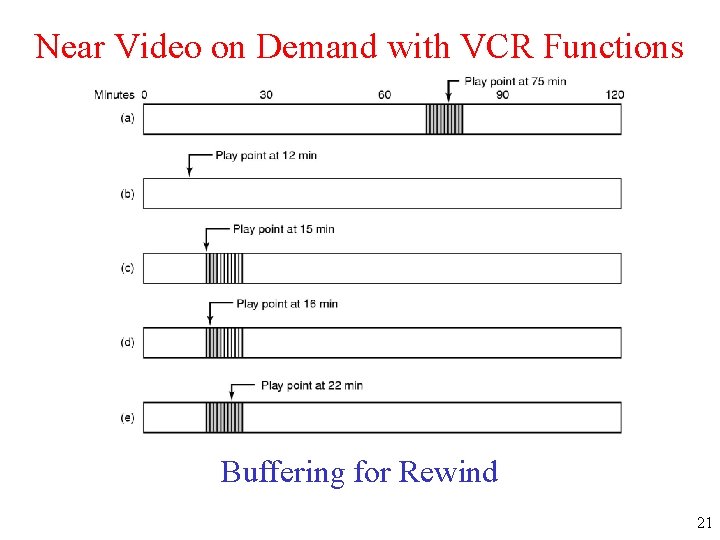
Near Video on Demand with VCR Functions Buffering for Rewind 21
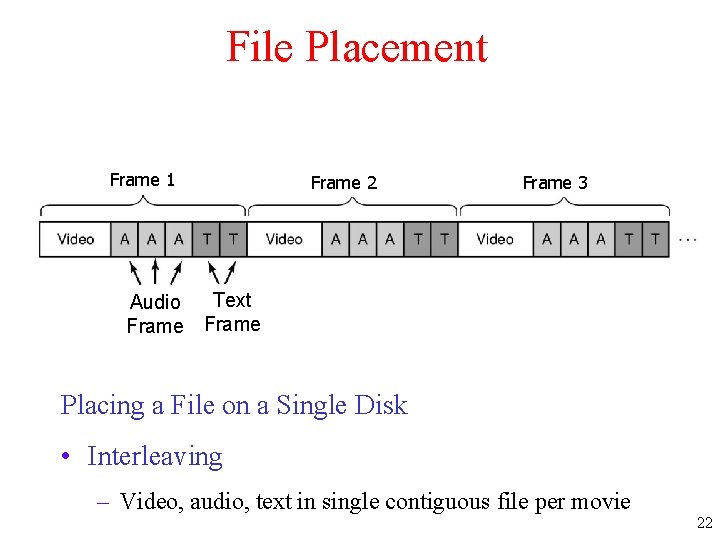
File Placement Frame 1 Frame 2 Frame 3 Text Audio Frame Placing a File on a Single Disk • Interleaving – Video, audio, text in single contiguous file per movie 22
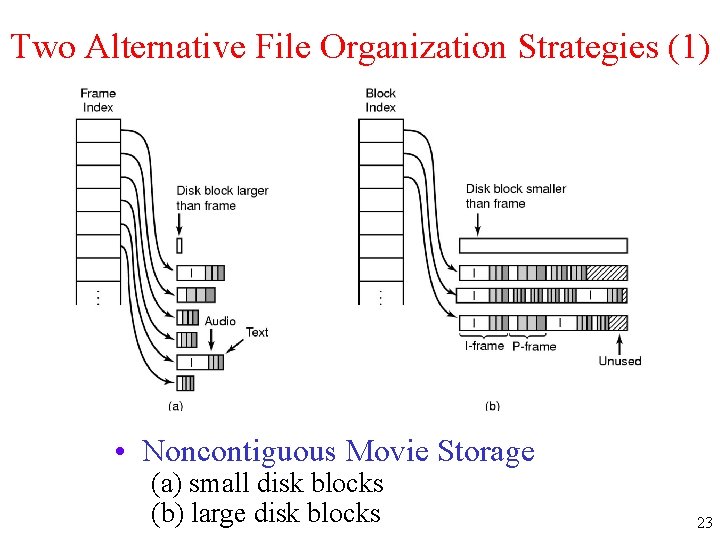
Two Alternative File Organization Strategies (1) • Noncontiguous Movie Storage (a) small disk blocks (b) large disk blocks 23
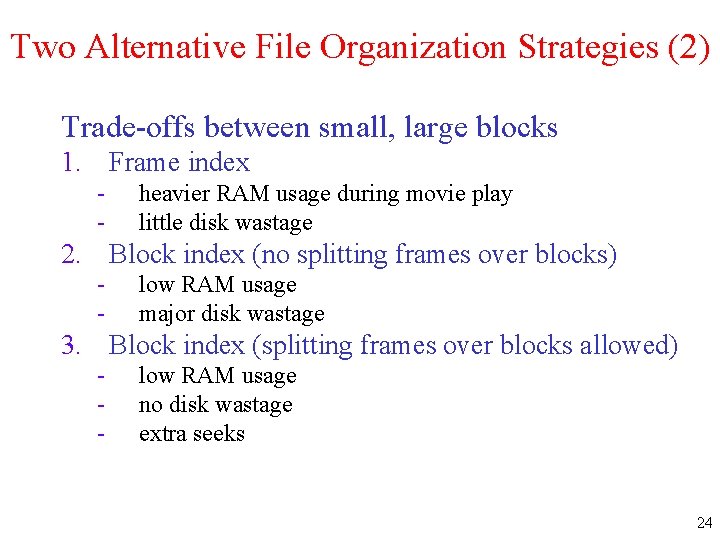
Two Alternative File Organization Strategies (2) Trade-offs between small, large blocks 1. Frame index - heavier RAM usage during movie play little disk wastage 2. Block index (no splitting frames over blocks) - low RAM usage major disk wastage 3. Block index (splitting frames over blocks allowed) - low RAM usage no disk wastage extra seeks 24
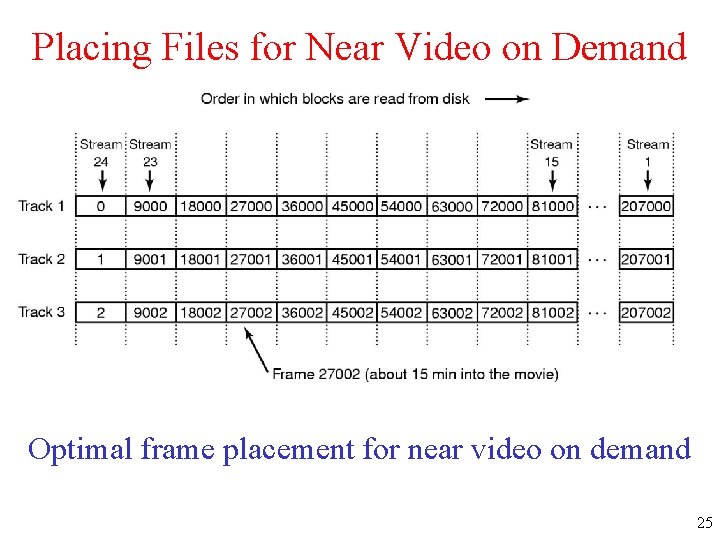
Placing Files for Near Video on Demand Optimal frame placement for near video on demand 25
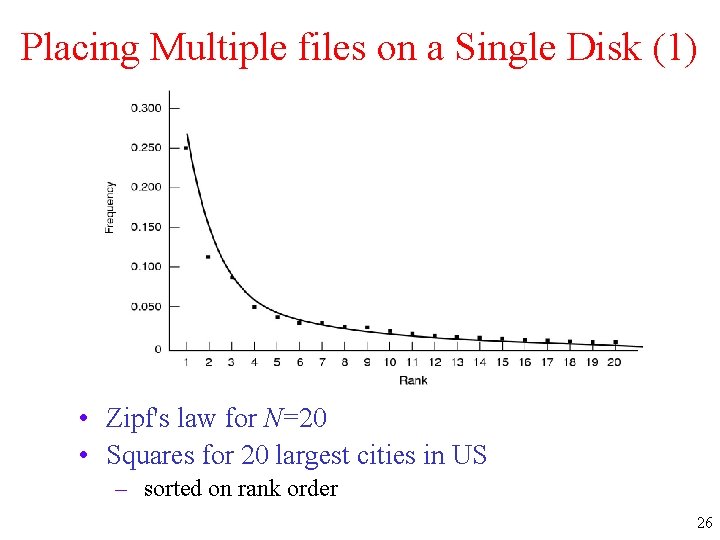
Placing Multiple files on a Single Disk (1) • Zipf's law for N=20 • Squares for 20 largest cities in US – sorted on rank order 26
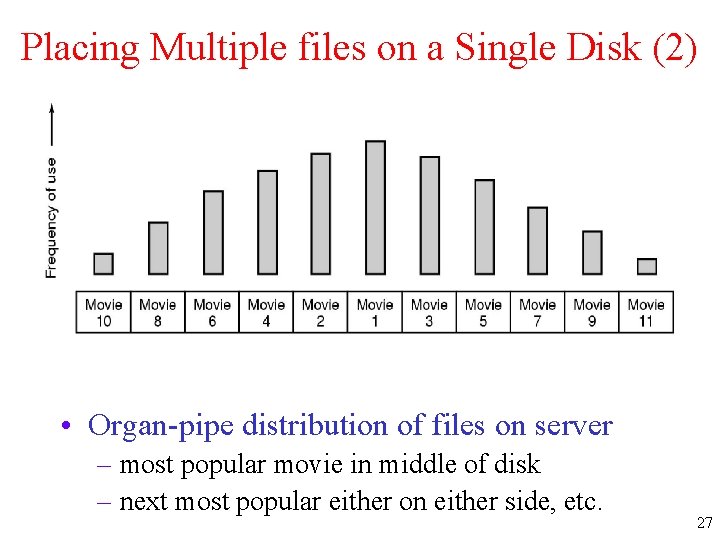
Placing Multiple files on a Single Disk (2) • Organ-pipe distribution of files on server – most popular movie in middle of disk – next most popular either on either side, etc. 27
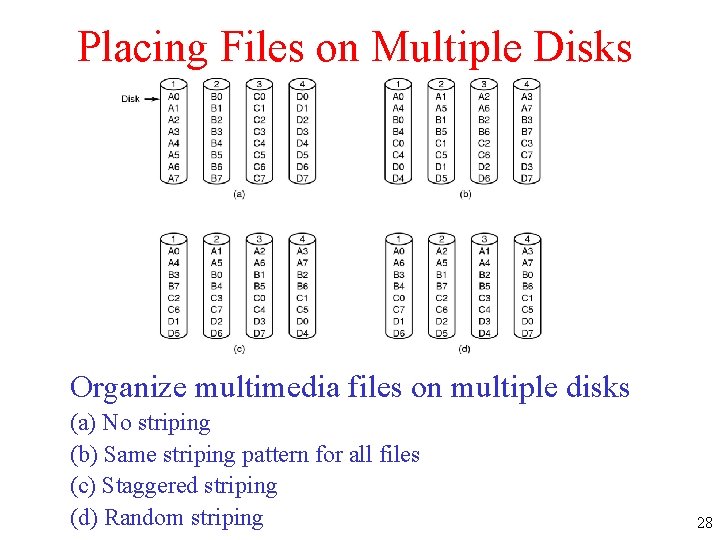
Placing Files on Multiple Disks Organize multimedia files on multiple disks (a) No striping (b) Same striping pattern for all files (c) Staggered striping (d) Random striping 28
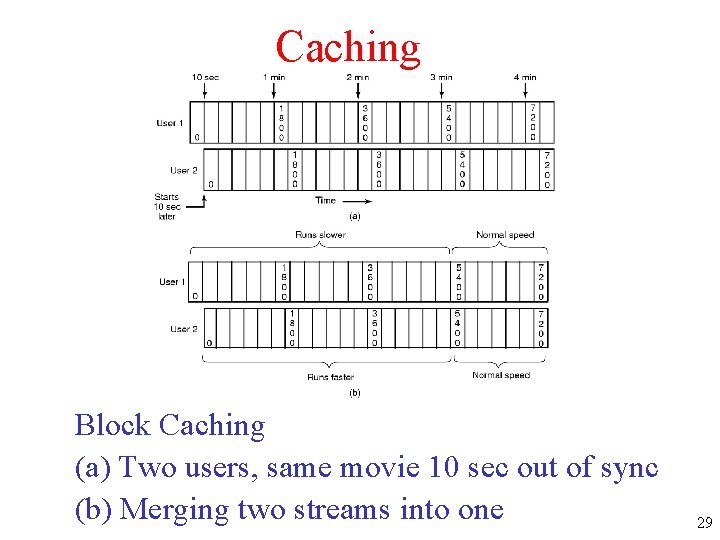
Caching Block Caching (a) Two users, same movie 10 sec out of sync (b) Merging two streams into one 29
File Caching • Most movies stored on DVD or tape – copy to disk when needed – results in large startup time – keep most popular movies on disk • Can keep first few min. of all movies on disk – start movie from this while remainder is fetched 30
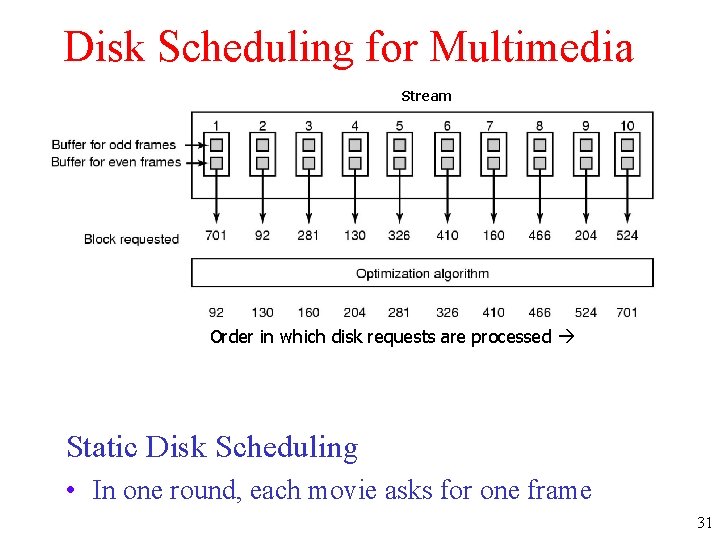
Disk Scheduling for Multimedia Stream Order in which disk requests are processed Static Disk Scheduling • In one round, each movie asks for one frame 31
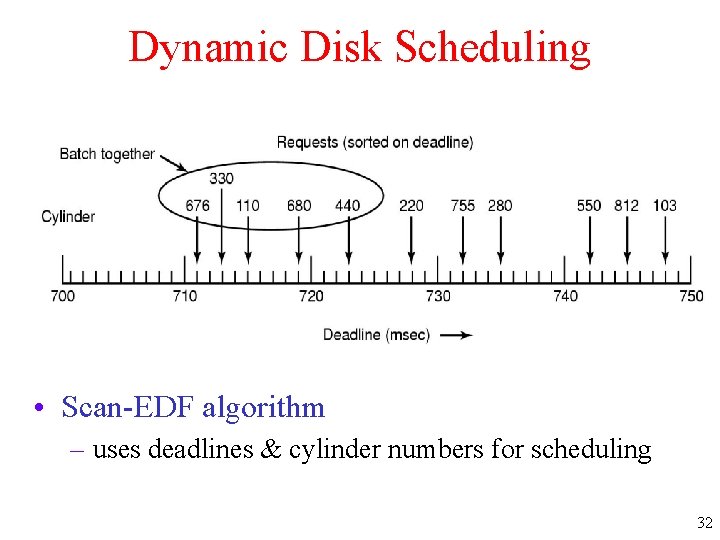
Dynamic Disk Scheduling • Scan-EDF algorithm – uses deadlines & cylinder numbers for scheduling 32