
Chapter 7 Modeling the Geographical Spread of Invasive
- Slides: 10
Chapter 7: Modeling the Geographical Spread of Invasive Species By Marieke Kester and Carla Severe
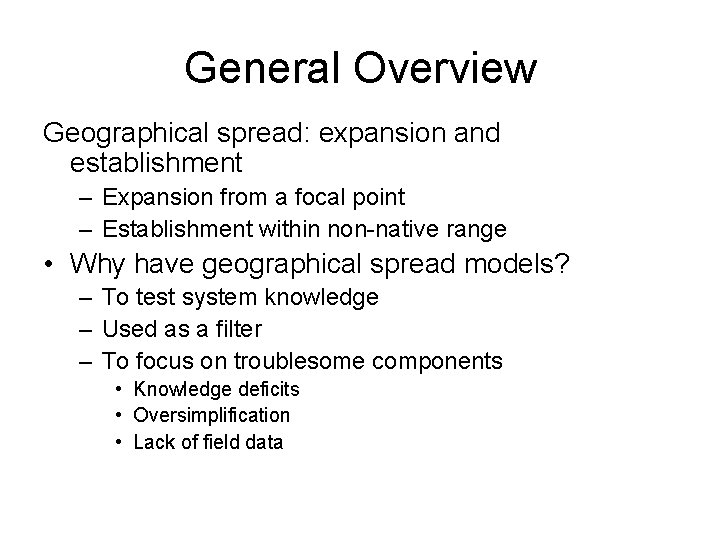
General Overview Geographical spread: expansion and establishment – Expansion from a focal point – Establishment within non-native range • Why have geographical spread models? – To test system knowledge – Used as a filter – To focus on troublesome components • Knowledge deficits • Oversimplification • Lack of field data
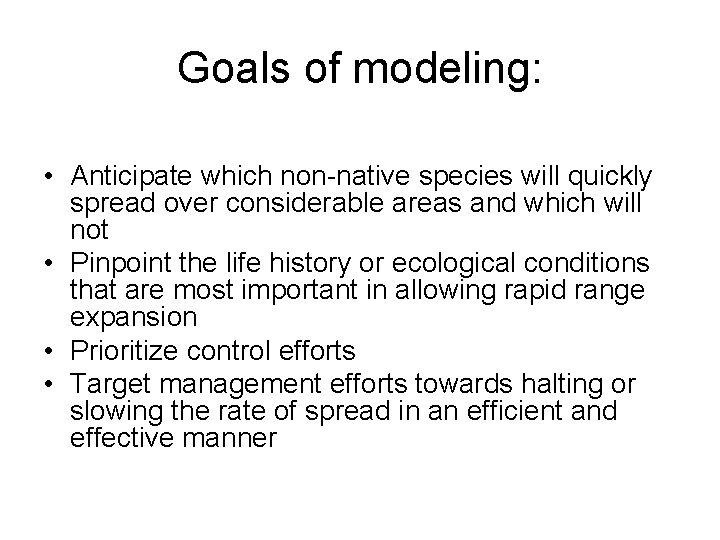
Goals of modeling: • Anticipate which non-native species will quickly spread over considerable areas and which will not • Pinpoint the life history or ecological conditions that are most important in allowing rapid range expansion • Prioritize control efforts • Target management efforts towards halting or slowing the rate of spread in an efficient and effective manner
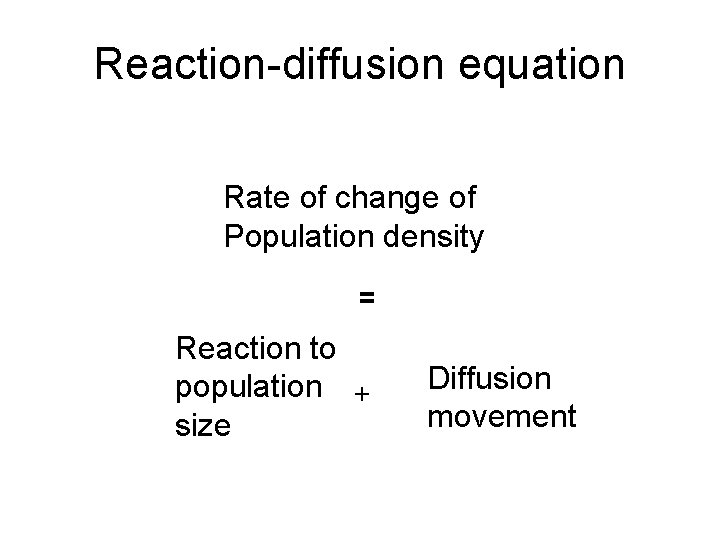
Reaction-diffusion equation Rate of change of Population density = Reaction to population + size Diffusion movement
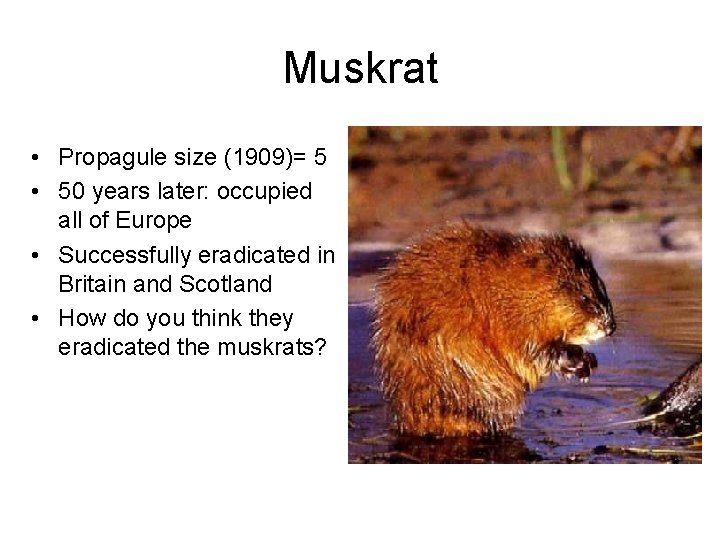
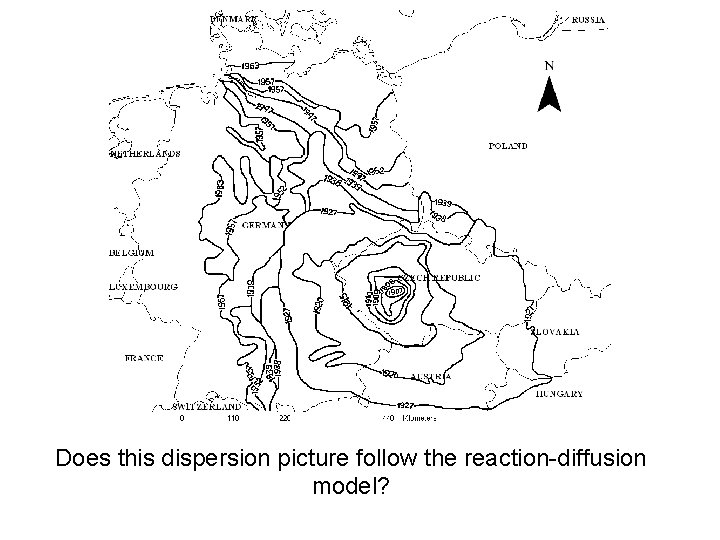
Muskrat • Propagule size (1909)= 5 • 50 years later: occupied all of Europe • Successfully eradicated in Britain and Scotland • How do you think they eradicated the muskrats?
Does this dispersion picture follow the reaction-diffusion model?
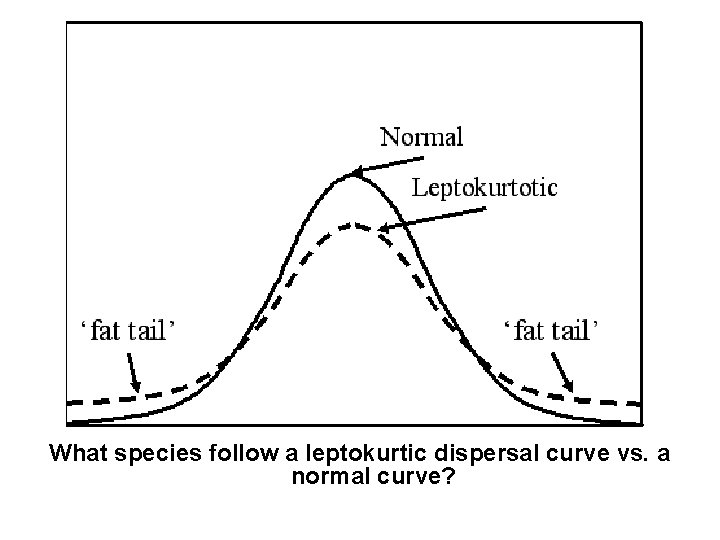
What species follow a leptokurtic dispersal curve vs. a normal curve?
• Are there any species for which the reaction-diffusion model is accurate? • What the limits and benefits of the reaction -diffusion model?
The reaction diffusion model underestimates the spread of terrestrial species, but overestimates the spread of marine species. Why?
• The diffusion coefficient requires a number of marked individuals to be recaptured. Can this be adapted to work for plants?