
Chapter 7 Membrane Structure Function Membrane Structure I
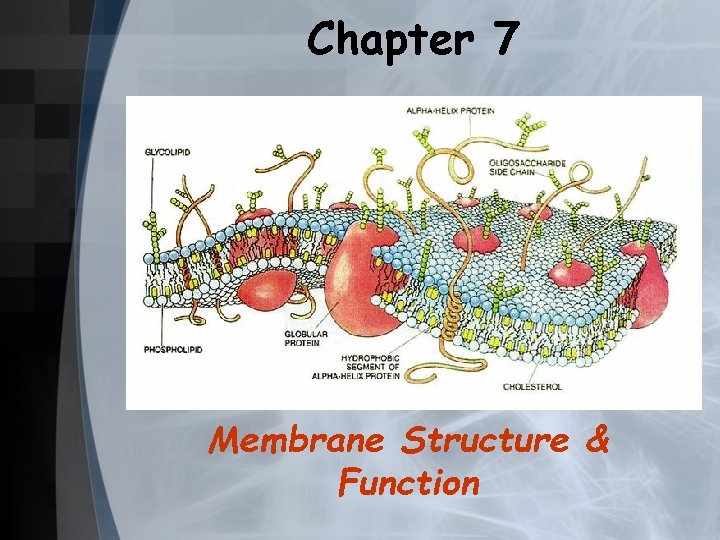
Chapter 7 Membrane Structure & Function
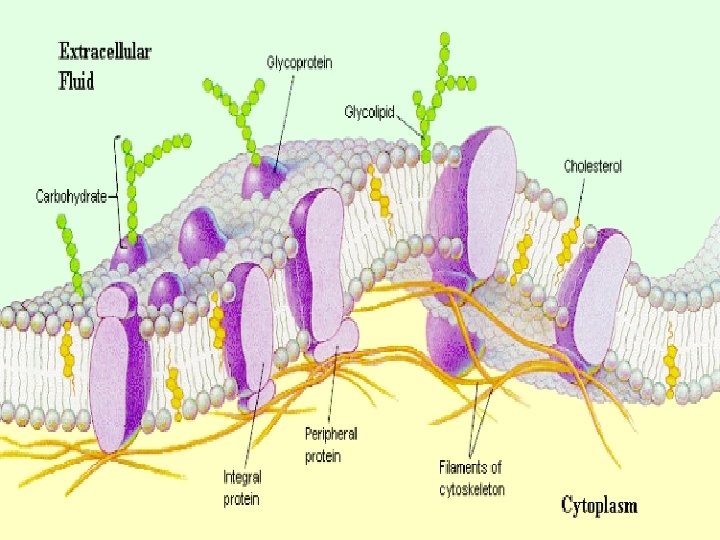
Membrane Structure, I v. Shows Selective permeability v. Known as the plasma membrane v. Amphipathic - hydrophobic & hydrophilic regions v. Singer-Nicolson developed the fluid mosaic model
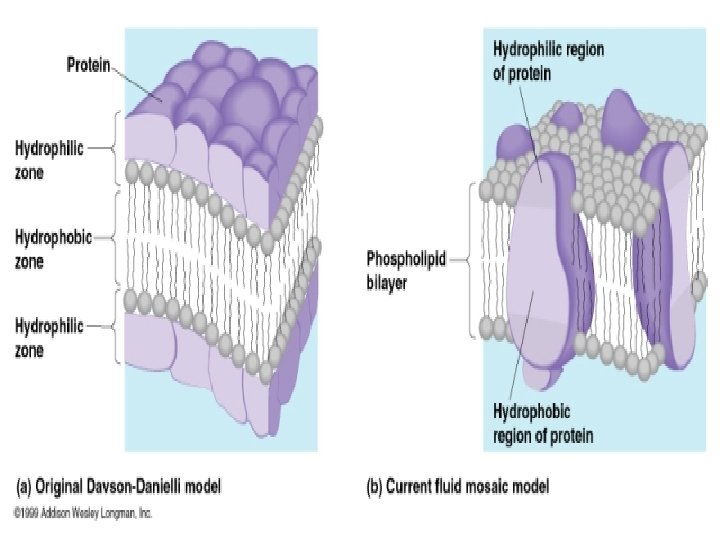
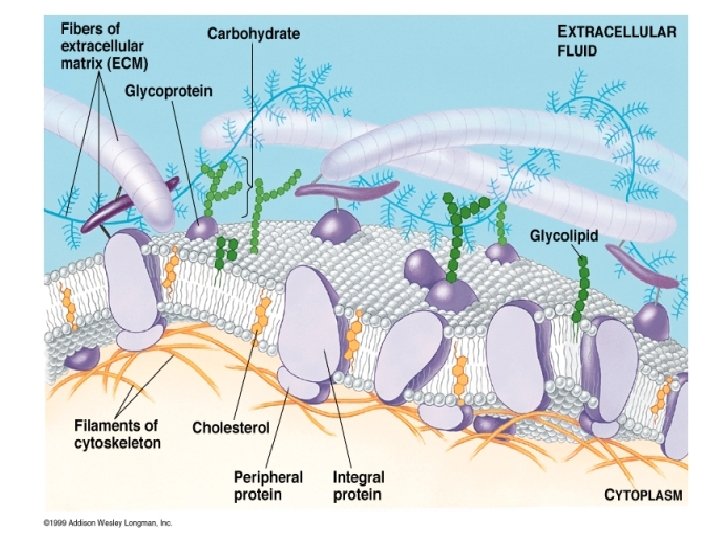
Membrane Structure, II v. Phospholipids - membrane fluidity v. Cholesterol - membrane stabilization “Mosaic” Structure due to: v. Integral proteins - transmembrane proteins v. Peripheral proteins - surface of membrane v. Membrane carbohydrates -~ cell to cell recognition; oligosaccharides (cell markers); glycolipids; glycoproteins

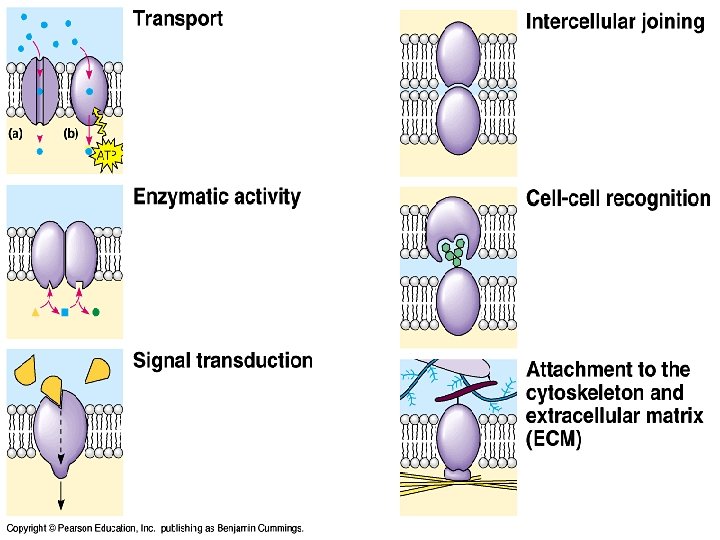
Membrane Structure, III Membrane protein functions: v. Transport v. Enzymatic activity v. Signal transduction v. Intercellular joining v. Cell-cell recognition v. ECM attachment
Membrane Traffic v. Diffusion - tendency of any molecule to spread out into available space v. Concentration gradient – moves from high to low v. Passive transport - diffusion of a substance across a biological membrane v. Osmosis - the diffusion of water across a selectively permeable membrane; DOWN the concentration gradient

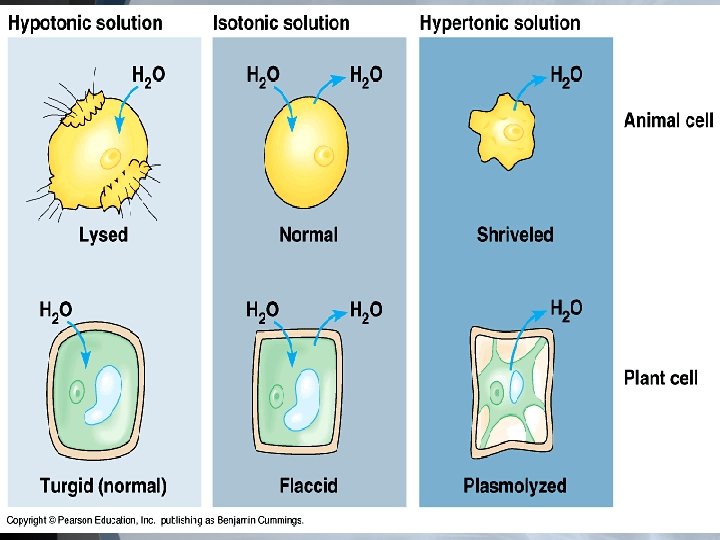
Water Balance v. Osmoregulation - control of water balance v. Hypertonic - higher concentration of solutes v. Hypotonic - lower concentration of solutes v. Isotonic - equal concentrations of solutes
Water Balance Cells with Walls (plants, bacteria): v. Require hypotonic external environments to keep their turgor pressure (water pressure pushing cell membrane out against cell wall) v. Become limp or flaccid when lose turgor pressure v. Plasmolysis - plasma membrane pulls away from cell wall
Water Balance Cells without Walls (animals, most protist): v. Require isotonic external environments v. Hypertonic environments – cells swell & may burst with too much water pressure (Cytolysis) v. May have contractile vacuoles (some protists) to control internal water pressure
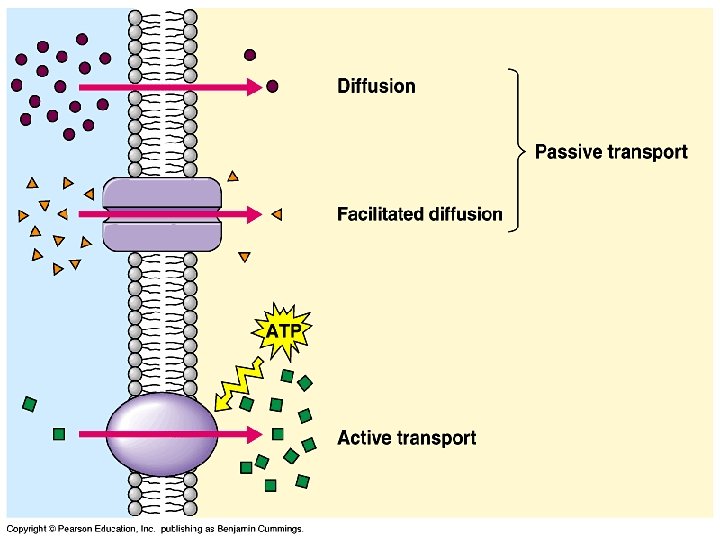
Specialized Transport v. Transport proteins (with or without channels) v. Facilitated diffusion - passage of molecules and ions with transport proteins across a membrane down the concentration gradient v. Active transport - movement of a substance against its concentration gradient with the help of cellular energy
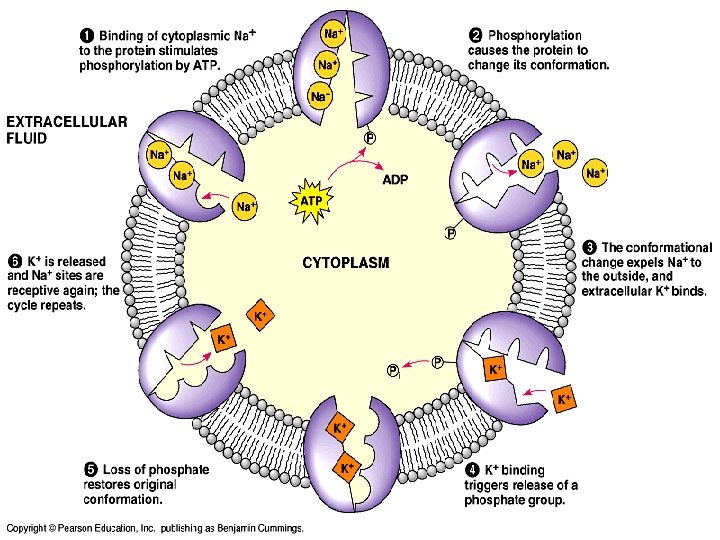
Types of Active Transport v. Sodium-potassium pump v. Exocytosis - secretion of macromolecules by the fusion of vesicles with the plasma membrane v. Endocytosis - import of macromolecules by forming new vesicles with the plasma membrane v. Phagocytosis –cell “eating” v. Pinocytosis – cell “drinking” v. Receptor-mediated endocytosis (ligands)
- Slides: 19