
CHAPTER 7 Media Planning Essentials 7 1 Copyright
- Slides: 29
CHAPTER 7 Media Planning Essentials 7 -1 Copyright © 2009 Pearson Education Canada
Learning Objectives § Assess roles & responsibilities of both client and agency in media planning § Differentiate among media objectives, media strategies and media execution § Utilize terminology used in media planning Continued… 7 -2 Copyright © 2009 Pearson Education Canada
Learning Objectives (cont. ) 7 -3 § Describe the steps involved in the media selection process § Identify the factors affecting the size of an advertising budget § Describe the methods of determining the size of an advertising budget Copyright © 2009 Pearson Education Canada
Media Planning Process of developing a plan of action for communicating messages § to the right people (target) § at the right time, and § with the right frequency. §Efficiency in media planning can be loosely defined as gaining maximum impact or exposure at minimum cost to the client. 7 -4 Copyright © 2009 Pearson Education Canada
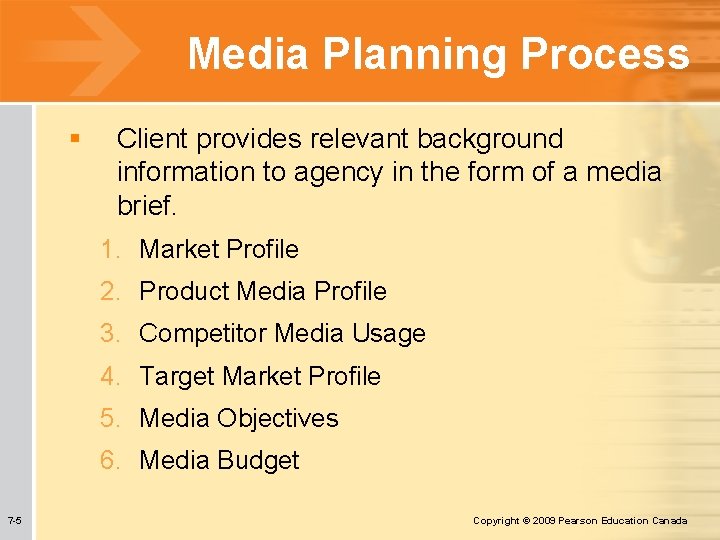
Media Planning Process § Client provides relevant background information to agency in the form of a media brief. 1. Market Profile 2. Product Media Profile 3. Competitor Media Usage 4. Target Market Profile 5. Media Objectives 6. Media Budget 7 -5 Copyright © 2009 Pearson Education Canada
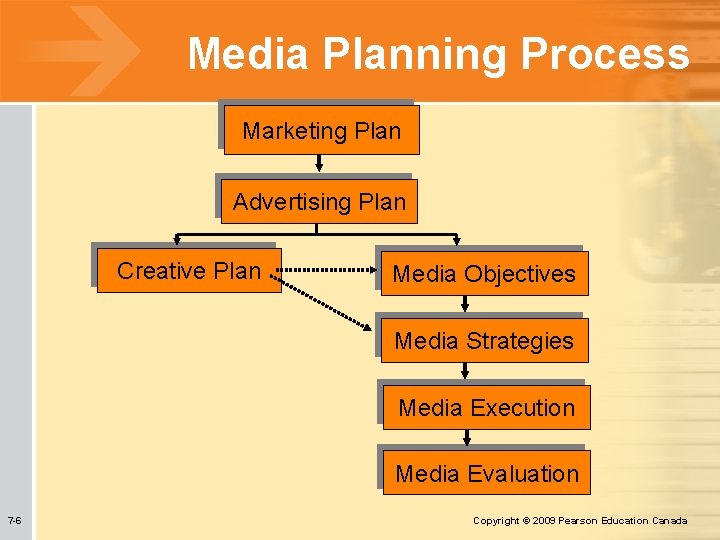
Media Planning Process Marketing Plan Advertising Plan Creative Plan Media Objectives Media Strategies Media Execution Media Evaluation 7 -6 Copyright © 2009 Pearson Education Canada
The Media Plan Document that outlines all relevant details including: §How a client’s budget will be spent §Clearly defined objectives §Rationalized strategies §Precise execution details 7 -7 Copyright © 2009 Pearson Education Canada
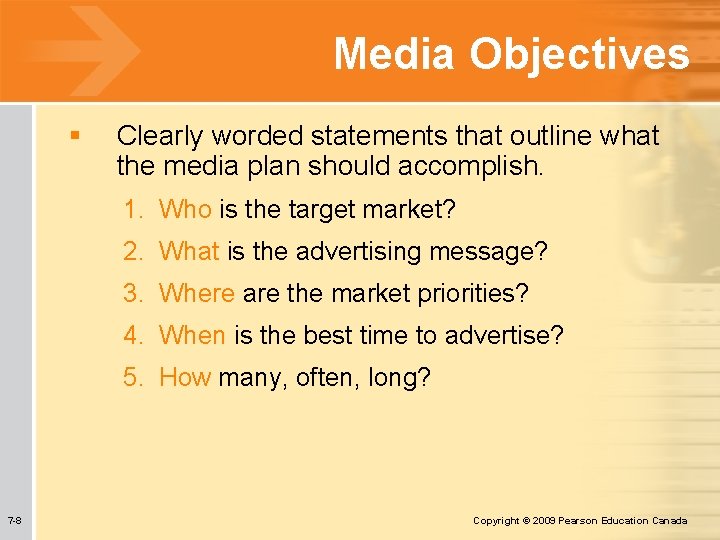
Media Objectives § Clearly worded statements that outline what the media plan should accomplish. 1. Who is the target market? 2. What is the advertising message? 3. Where are the market priorities? 4. When is the best time to advertise? 5. How many, often, long? 7 -8 Copyright © 2009 Pearson Education Canada
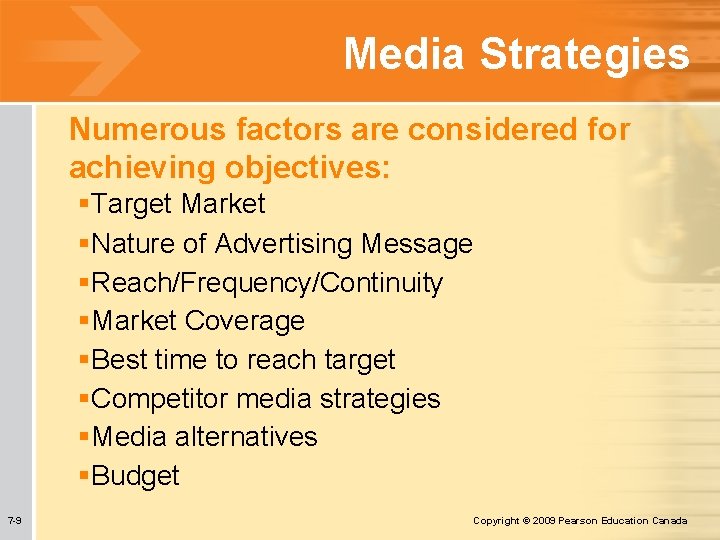
Media Strategies Numerous factors are considered for achieving objectives: §Target Market §Nature of Advertising Message §Reach/Frequency/Continuity §Market Coverage §Best time to reach target §Competitor media strategies §Media alternatives §Budget 7 -9 Copyright © 2009 Pearson Education Canada
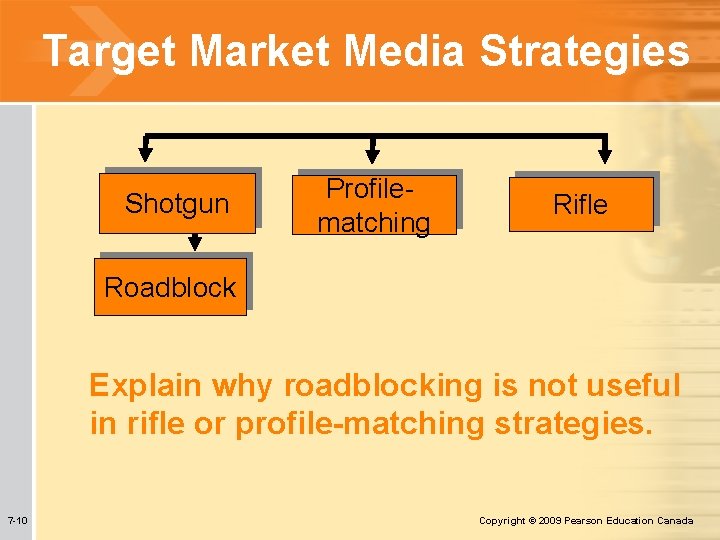
Target Market Media Strategies Shotgun Profilematching Rifle Roadblock Explain why roadblocking is not useful in rifle or profile-matching strategies. 7 -10 Copyright © 2009 Pearson Education Canada
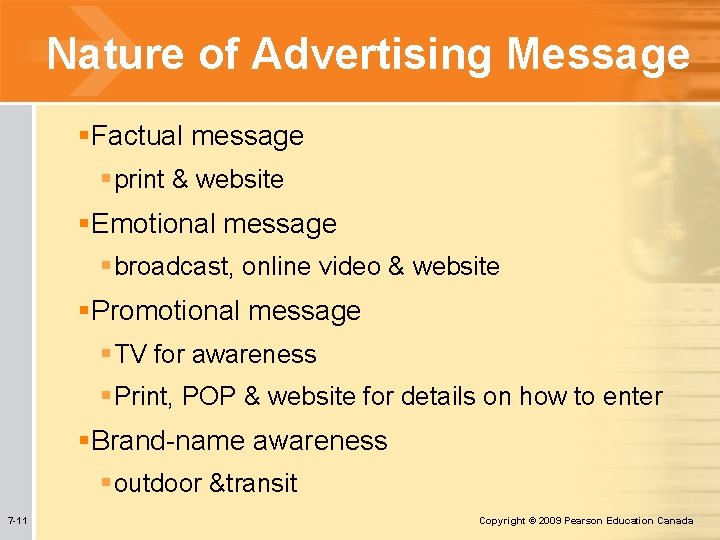
Nature of Advertising Message §Factual message § print & website §Emotional message § broadcast, online video & website §Promotional message § TV for awareness § Print, POP & website for details on how to enter §Brand-name awareness § outdoor &transit 7 -11 Copyright © 2009 Pearson Education Canada
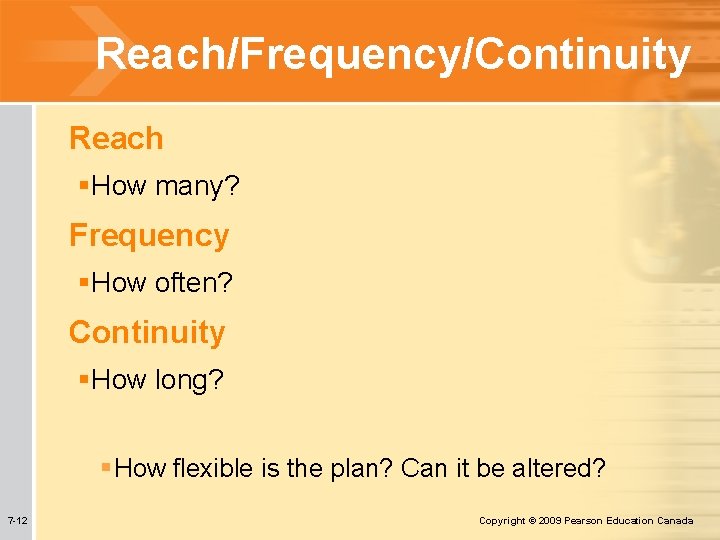
Reach/Frequency/Continuity Reach §How many? Frequency §How often? Continuity §How long? § How flexible is the plan? Can it be altered? 7 -12 Copyright © 2009 Pearson Education Canada
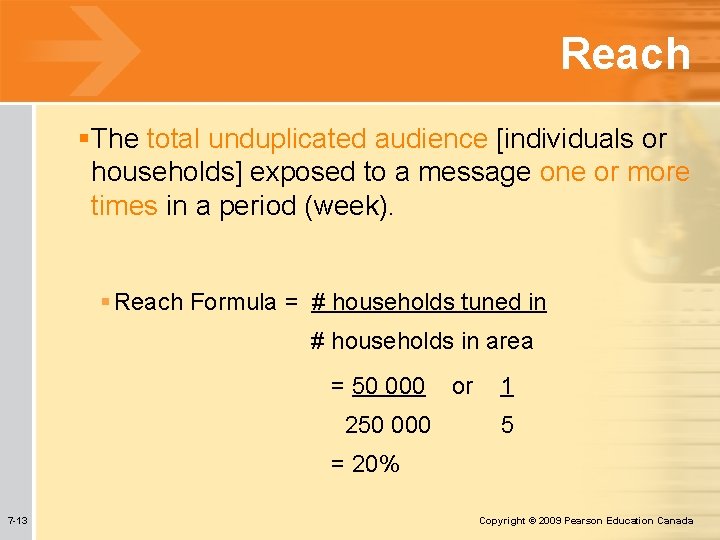
Reach §The total unduplicated audience [individuals or households] exposed to a message one or more times in a period (week). § Reach Formula = # households tuned in # households in area = 50 000 250 000 or 1 5 = 20% 7 -13 Copyright © 2009 Pearson Education Canada
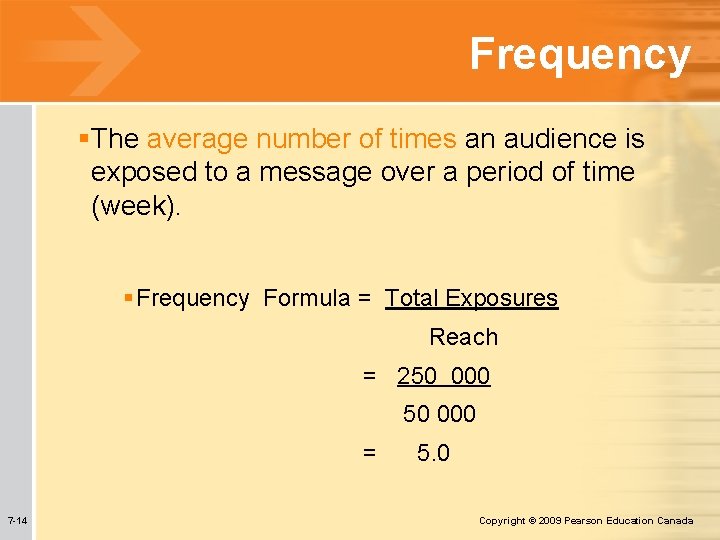
Frequency §The average number of times an audience is exposed to a message over a period of time (week). § Frequency Formula = Total Exposures Reach = 250 000 = 7 -14 5. 0 Copyright © 2009 Pearson Education Canada
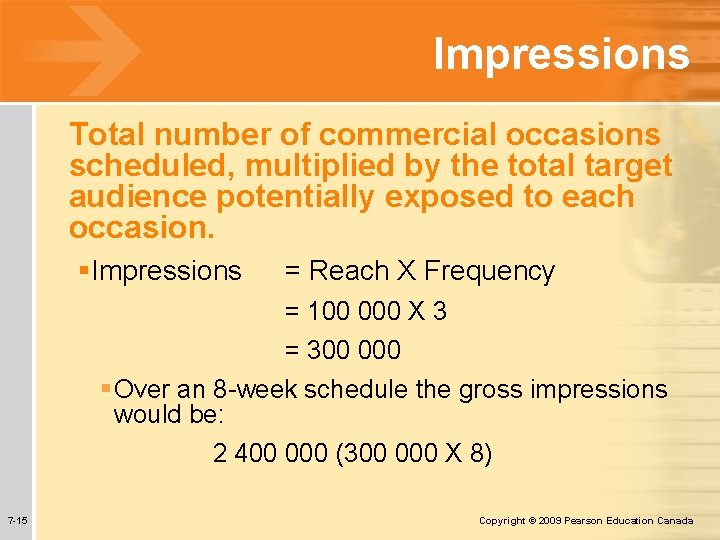
Impressions Total number of commercial occasions scheduled, multiplied by the total target audience potentially exposed to each occasion. §Impressions = Reach X Frequency = 100 000 X 3 = 300 000 § Over an 8 -week schedule the gross impressions would be: 2 400 000 (300 000 X 8) 7 -15 Copyright © 2009 Pearson Education Canada
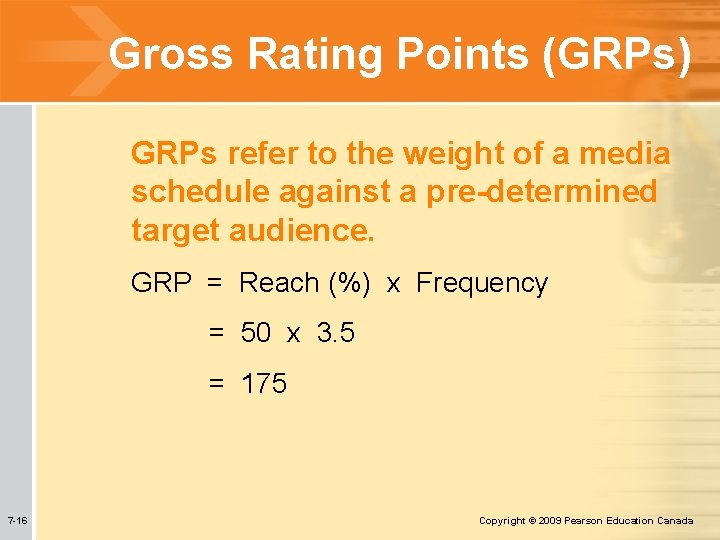
Gross Rating Points (GRPs) GRPs refer to the weight of a media schedule against a pre-determined target audience. GRP = Reach (%) x Frequency = 50 x 3. 5 = 175 7 -16 Copyright © 2009 Pearson Education Canada
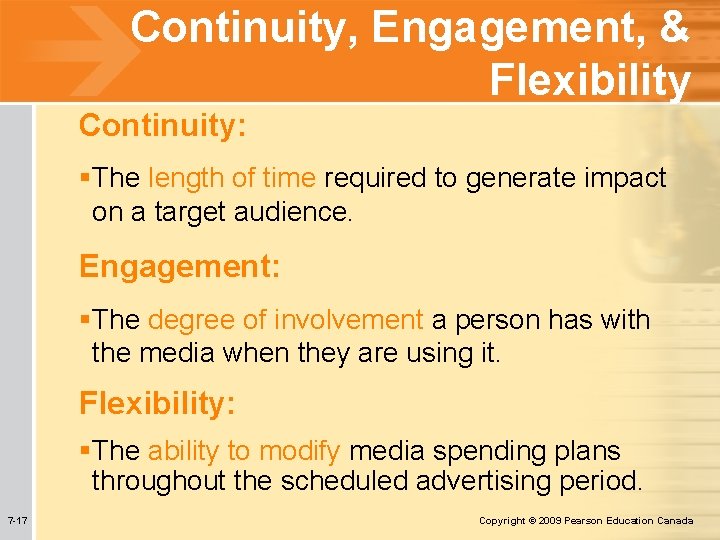
Continuity, Engagement, & Flexibility Continuity: §The length of time required to generate impact on a target audience. Engagement: §The degree of involvement a person has with the media when they are using it. Flexibility: §The ability to modify media spending plans throughout the scheduled advertising period. 7 -17 Copyright © 2009 Pearson Education Canada
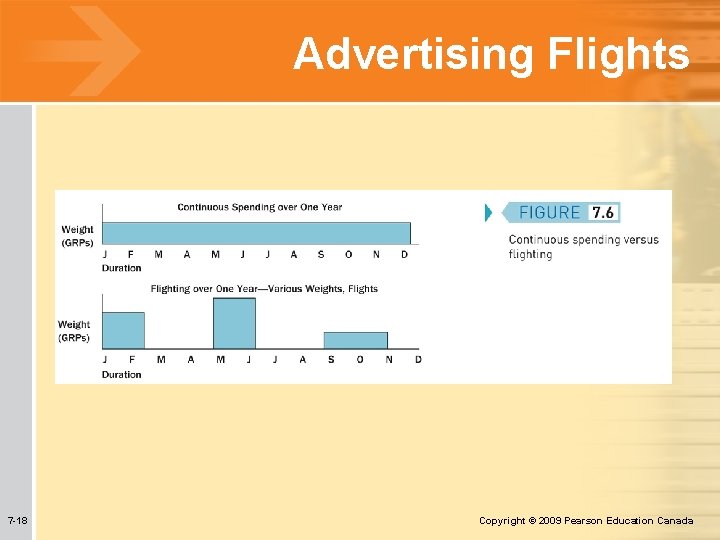
Advertising Flights 7 -18 Copyright © 2009 Pearson Education Canada
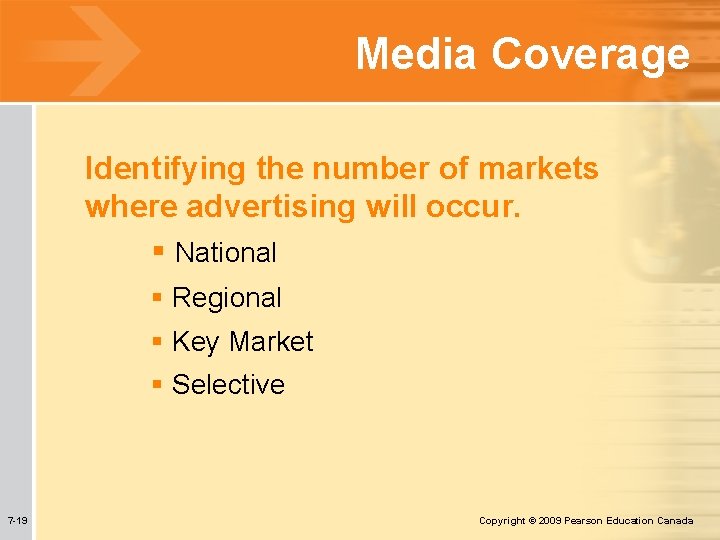
Media Coverage Identifying the number of markets where advertising will occur. § National § Regional § Key Market § Selective 7 -19 Copyright © 2009 Pearson Education Canada
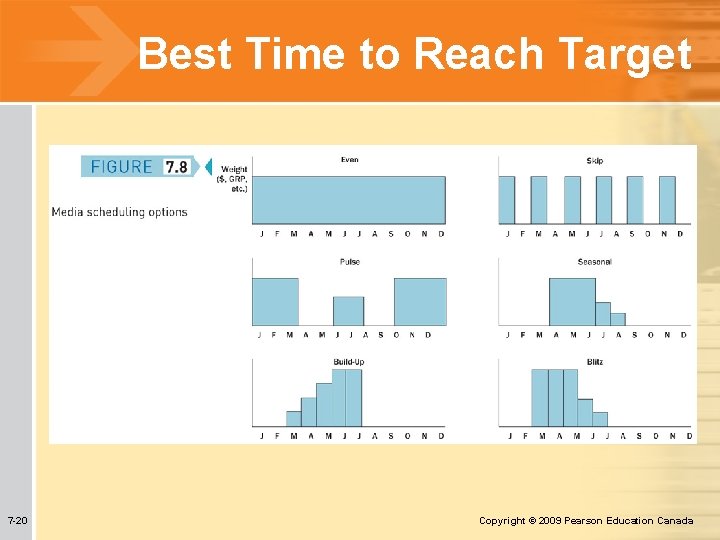
Best Time to Reach Target 7 -20 Copyright © 2009 Pearson Education Canada
Competitor Media Strategies Media planners should analyze competitors’ media usage and expenditure patterns. §Should you follow a similar pattern? §Should you recommend a unique strategic direction? 7 -21 Copyright © 2009 Pearson Education Canada
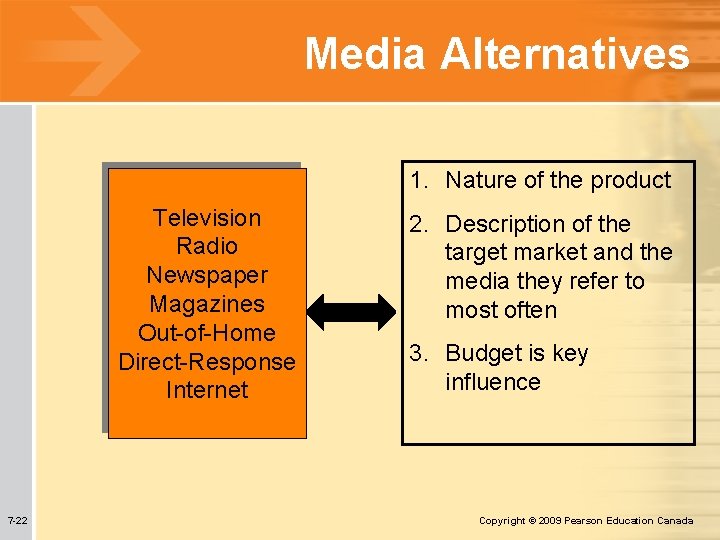
Media Alternatives 1. Nature of the product Television Radio Newspaper Magazines Out-of-Home Direct-Response Internet 7 -22 2. Description of the target market and the media they refer to most often 3. Budget is key influence Copyright © 2009 Pearson Education Canada
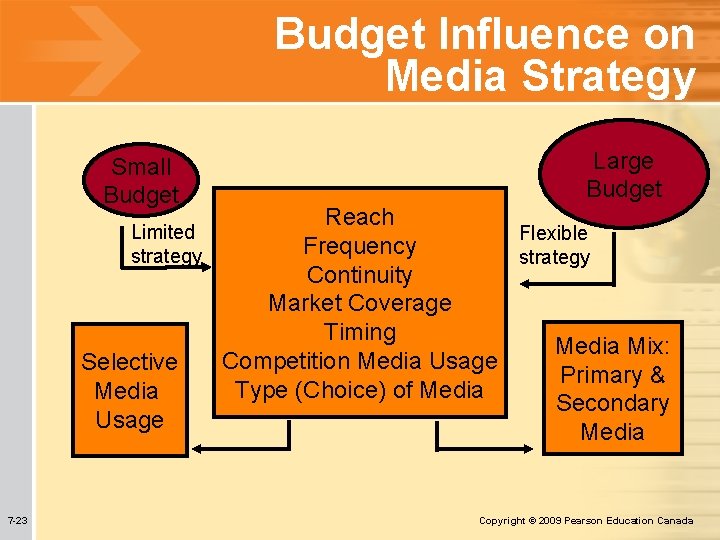
Budget Influence on Media Strategy Small Budget Limited strategy Selective Media Usage 7 -23 Large Budget Reach Flexible Frequency strategy Continuity Market Coverage Timing Media Mix: Competition Media Usage Primary & Type (Choice) of Media Secondary Media Copyright © 2009 Pearson Education Canada
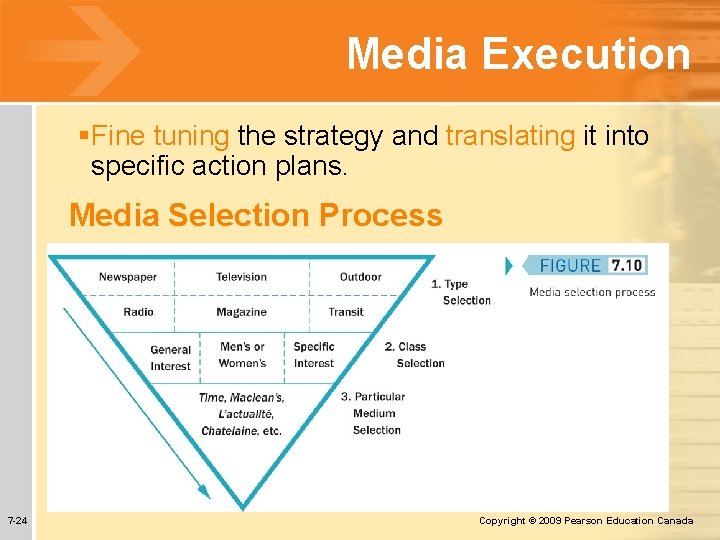
Media Execution §Fine tuning the strategy and translating it into specific action plans. Media Selection Process 7 -24 Copyright © 2009 Pearson Education Canada
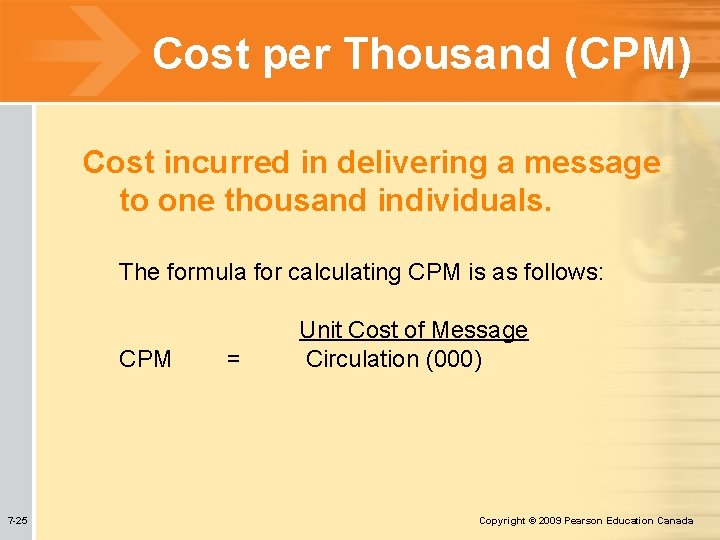
Cost per Thousand (CPM) Cost incurred in delivering a message to one thousand individuals. The formula for calculating CPM is as follows: CPM 7 -25 = Unit Cost of Message Circulation (000) Copyright © 2009 Pearson Education Canada
Media Scheduling and Budgeting §Media schedule is normally presented in a calendar format, often referred to as a blocking chart. § Outlined in one or two pages § Media usage § Market coverage § Weight levels § GRPs § Reach § Frequency § Timing 7 -26 Copyright © 2009 Pearson Education Canada
Media Buying §Once the media plan is approved, the media buyer negotiates the buy with media representatives to obtain the most effective and efficient buy within the guidelines of the plan. §User-friendly software developed by BBM Bureau of Measurement, Nielsen Media Research, etc. lets media buyers makes reasoned and detailed decisions. 7 -27 Copyright © 2009 Pearson Education Canada
The Media Budget Factors affecting budget size: § Size of Customer Base § Degree of Competition § Stage in the Product Life Cycle § Product Characteristics § Management Philosophy about Advertising 7 -28 Copyright © 2009 Pearson Education Canada
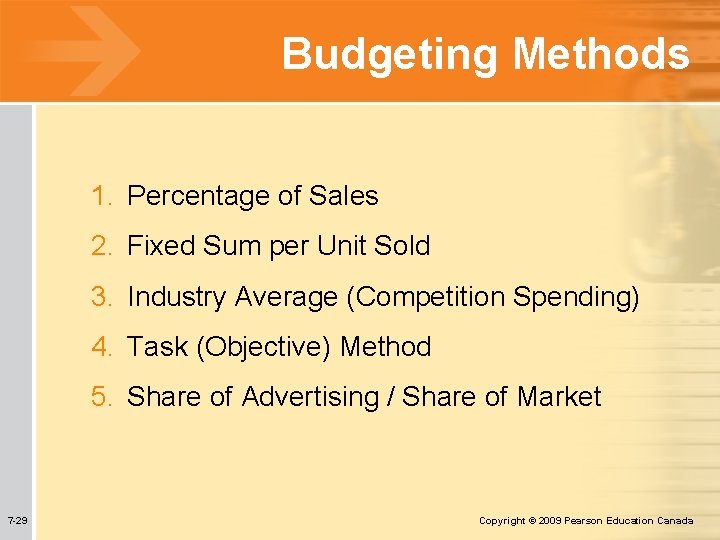
Budgeting Methods 1. Percentage of Sales 2. Fixed Sum per Unit Sold 3. Industry Average (Competition Spending) 4. Task (Objective) Method 5. Share of Advertising / Share of Market 7 -29 Copyright © 2009 Pearson Education Canada