
Chapter 7 Measurement of Variables Scaling Reliability Validity
Chapter 7 Measurement of Variables: Scaling, Reliability, Validity © 2009 John Wiley & Sons Ltd. www. wileyeurope. com/college/sekaran 1
Scale § Scale: tool or mechanism by which individuals are distinguished as to how they differ from one another on the variables of interest to our study. © 2009 John Wiley & Sons Ltd. www. wileyeurope. com/college/sekaran 2
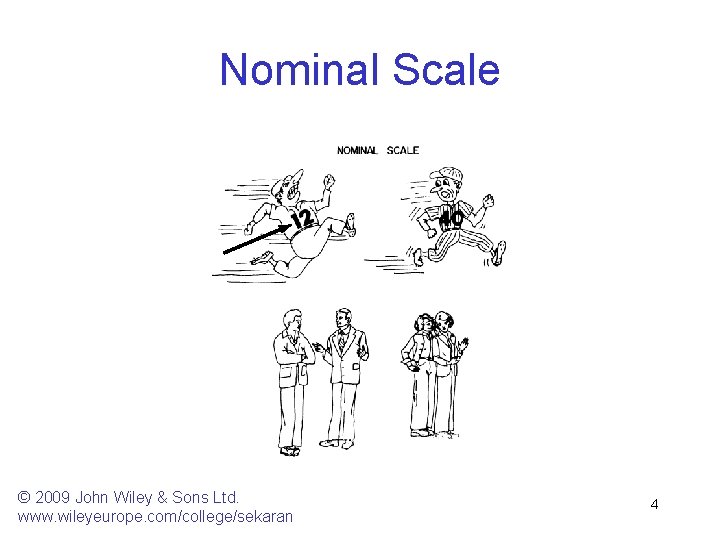
Nominal Scale § A nominal scale is one that allows the researcher to assign subjects to certain categories or groups. § What is your department? O Marketing O Maintenance O Production O Servicing Personnel O Sales O Public Relations O Finance O O Accounting § What is your gender? O Male O Female © 2009 John Wiley & Sons Ltd. www. wileyeurope. com/college/sekaran 3
Nominal Scale © 2009 John Wiley & Sons Ltd. www. wileyeurope. com/college/sekaran 4
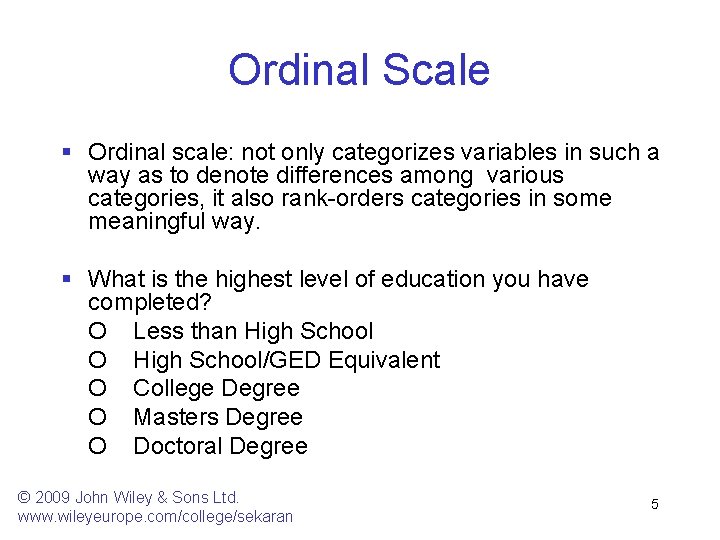
Ordinal Scale § Ordinal scale: not only categorizes variables in such a way as to denote differences among various categories, it also rank-orders categories in some meaningful way. § What is the highest level of education you have completed? O Less than High School O High School/GED Equivalent O College Degree O Masters Degree O Doctoral Degree © 2009 John Wiley & Sons Ltd. www. wileyeurope. com/college/sekaran 5
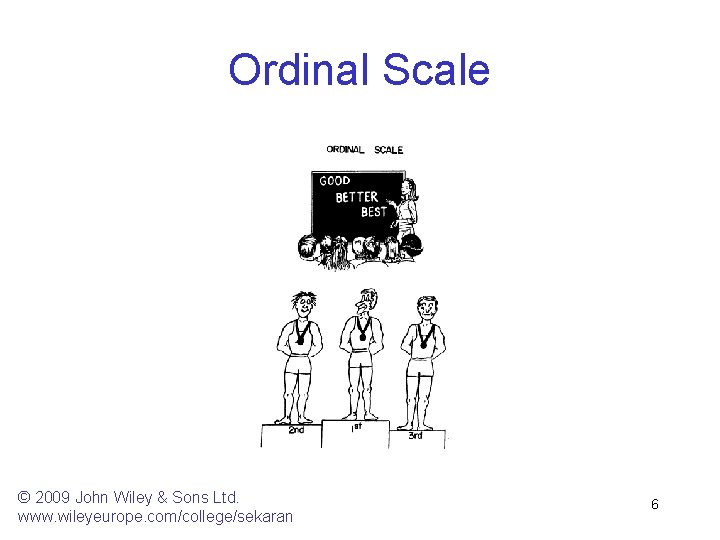
Ordinal Scale © 2009 John Wiley & Sons Ltd. www. wileyeurope. com/college/sekaran 6
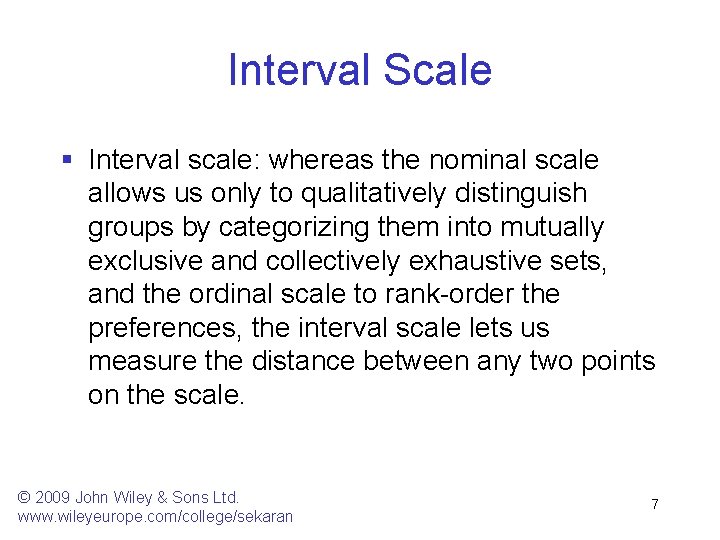
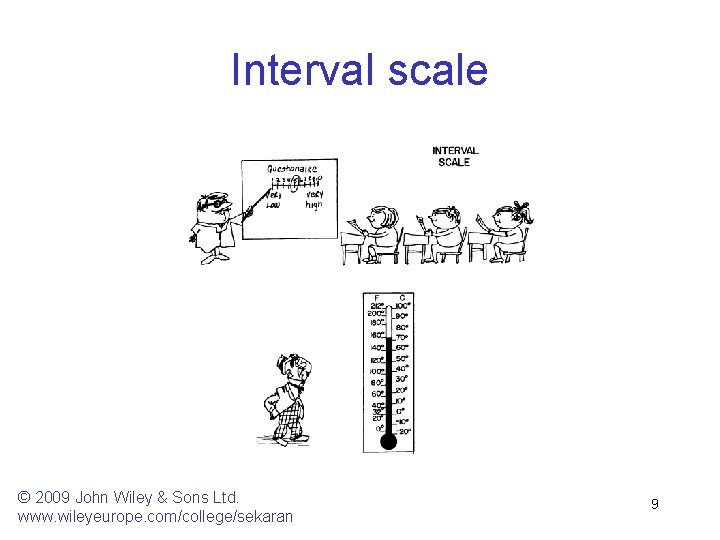
Interval Scale § Interval scale: whereas the nominal scale allows us only to qualitatively distinguish groups by categorizing them into mutually exclusive and collectively exhaustive sets, and the ordinal scale to rank-order the preferences, the interval scale lets us measure the distance between any two points on the scale. © 2009 John Wiley & Sons Ltd. www. wileyeurope. com/college/sekaran 7
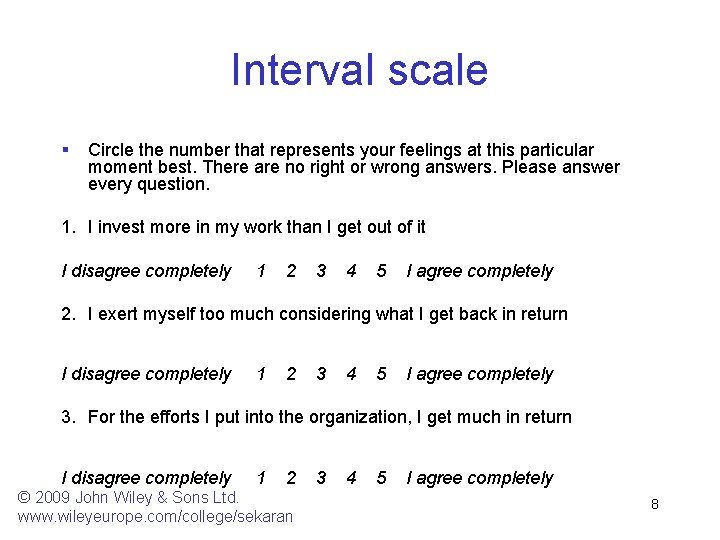
Interval scale § Circle the number that represents your feelings at this particular moment best. There are no right or wrong answers. Please answer every question. 1. I invest more in my work than I get out of it I disagree completely 1 2 3 4 5 I agree completely 2. I exert myself too much considering what I get back in return I disagree completely 1 2 3 4 5 I agree completely 3. For the efforts I put into the organization, I get much in return I disagree completely 1 2 © 2009 John Wiley & Sons Ltd. www. wileyeurope. com/college/sekaran 3 4 5 I agree completely 8
Interval scale © 2009 John Wiley & Sons Ltd. www. wileyeurope. com/college/sekaran 9
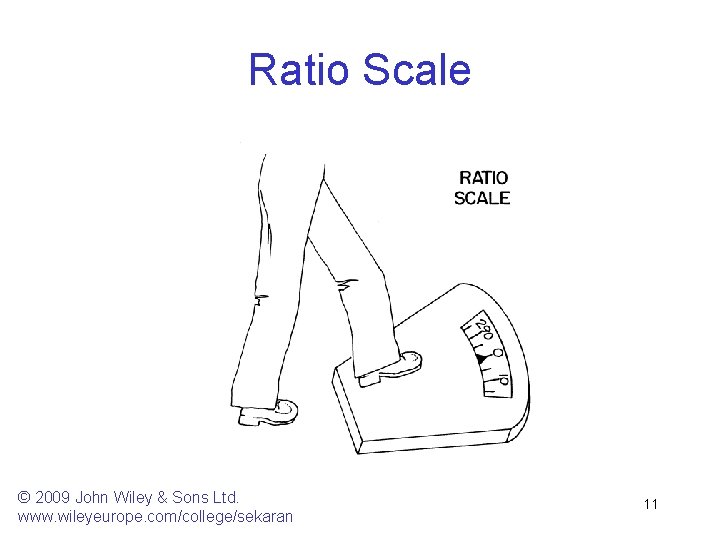
Ratio Scale § Ratio scale: overcomes the disadvantage of the arbitrary origin point of the interval scale, in that it has an absolute (in contrast to an arbitrary) zero point, which is a meaningful measurement point. § What is your age? © 2009 John Wiley & Sons Ltd. www. wileyeurope. com/college/sekaran 10
Ratio Scale © 2009 John Wiley & Sons Ltd. www. wileyeurope. com/college/sekaran 11
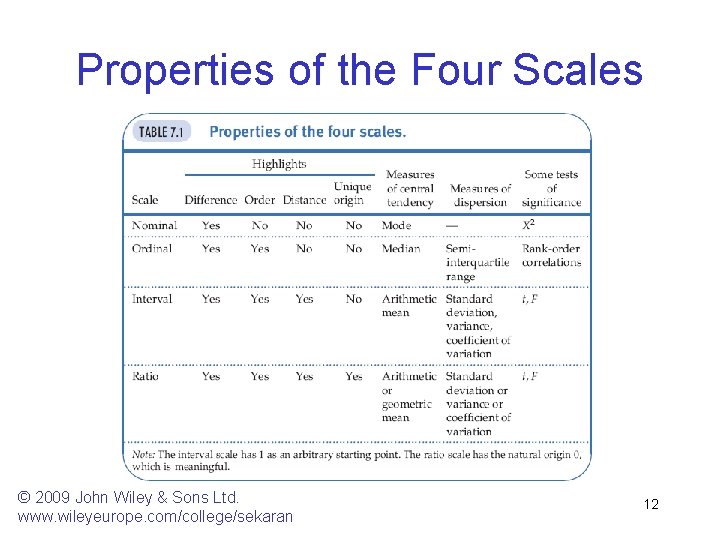
Properties of the Four Scales © 2009 John Wiley & Sons Ltd. www. wileyeurope. com/college/sekaran 12
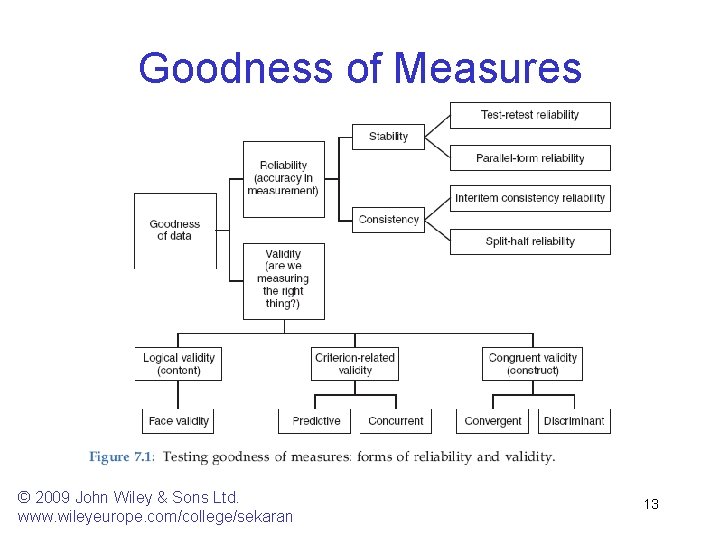
Goodness of Measures © 2009 John Wiley & Sons Ltd. www. wileyeurope. com/college/sekaran 13
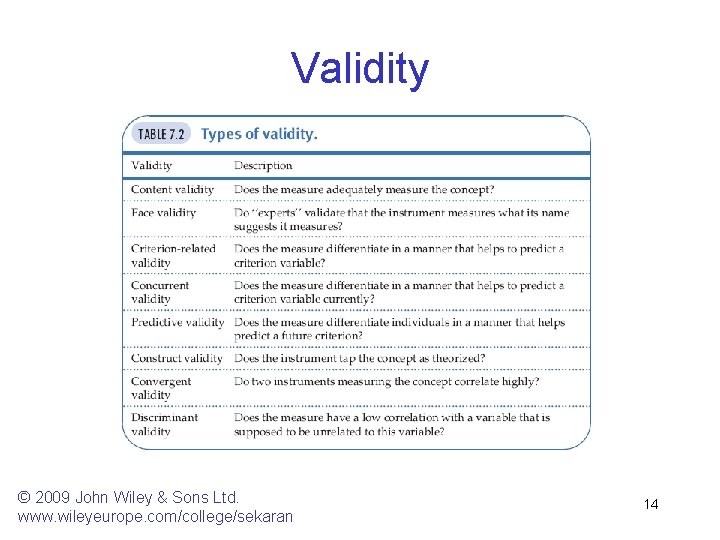
Validity © 2009 John Wiley & Sons Ltd. www. wileyeurope. com/college/sekaran 14
Reliability § Reliability of measure indicates extent to which it is without bias and hence ensures consistent measurement across time (stability) and across the various items in the instrument (internal consistency). © 2009 John Wiley & Sons Ltd. www. wileyeurope. com/college/sekaran 15
Stability § Stability: ability of a measure to remain the same over time, despite uncontrollable testing conditions or the state of the respondents themselves. – Test–Retest Reliability: The reliability coefficient obtained with a repetition of the same measure on a second occasion. – Parallel-Form Reliability: Responses on two comparable sets of measures tapping the same construct are highly correlated. © 2009 John Wiley & Sons Ltd. www. wileyeurope. com/college/sekaran 16
Internal Consistency § Internal Consistency of Measures is indicative of the homogeneity of the items in the measure that tap the construct. – Interitem Consistency Reliability: This is a test of the consistency of respondents’ answers to all the items in a measure. The most popular test of interitem consistency reliability is the Cronbach’s coefficient alpha. – Split-Half Reliability: Split-half reliability reflects the correlations between two halves of an instrument. © 2009 John Wiley & Sons Ltd. www. wileyeurope. com/college/sekaran 17
- Slides: 17