
Chapter 7 MARKET EFFICIENCY CONCEPT AND REALITY What



- Slides: 13
Chapter 7 MARKET EFFICIENCY: CONCEPT AND REALITY • What is the efficient market hypothesis? • What are three traditional forms of market efficiency? • How is the efficient markets hypothesis tested? • What evidence supports the efficient markets hypothesis? • Can investors profit from anomalies?
Random walks and efficient markets • • What is a random walk? An example Random walks and forecasting The source of market efficiency: competition Implications of market efficiency Technical analysis Fundamental analysis Active and passive portfolio management
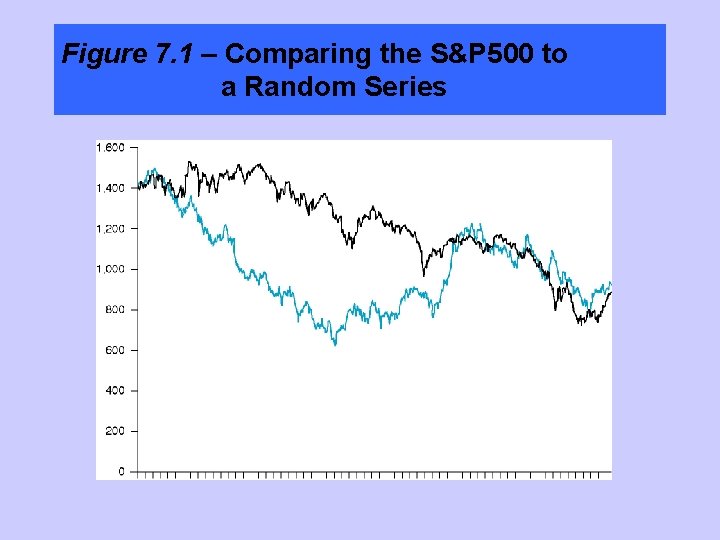
Figure 7. 1 – Comparing the S&P 500 to a Random Series
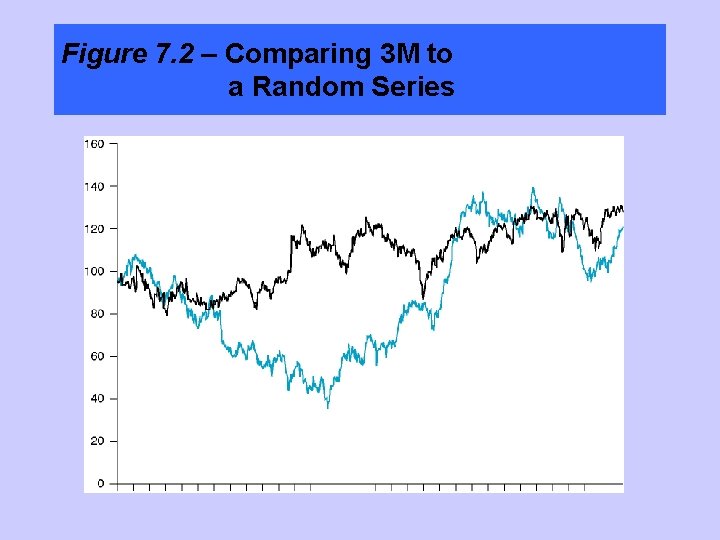
Figure 7. 2 – Comparing 3 M to a Random Series
Traditional forms of market efficiency • Weak form • Semi-strong form • Strong form
Testing market efficiency • • Types of tests Direct tests Indirect tests Establishing a benchmark The time factor Kiss and tell Qualitative and quantitative efficiency
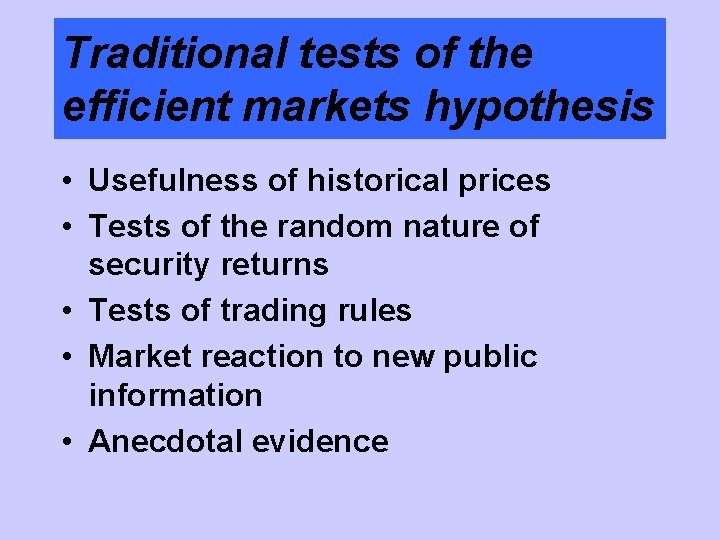
Traditional tests of the efficient markets hypothesis • Usefulness of historical prices • Tests of the random nature of security returns • Tests of trading rules • Market reaction to new public information • Anecdotal evidence
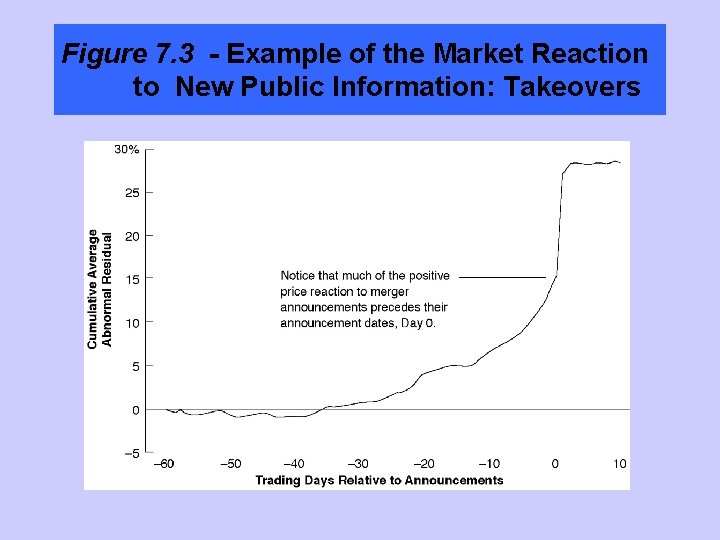
Figure 7. 3 - Example of the Market Reaction to New Public Information: Takeovers
Traditional tests of the efficient markets hypothesis – Cont. • • Scientific evidence Value of private information Mutual fund managers Event studies
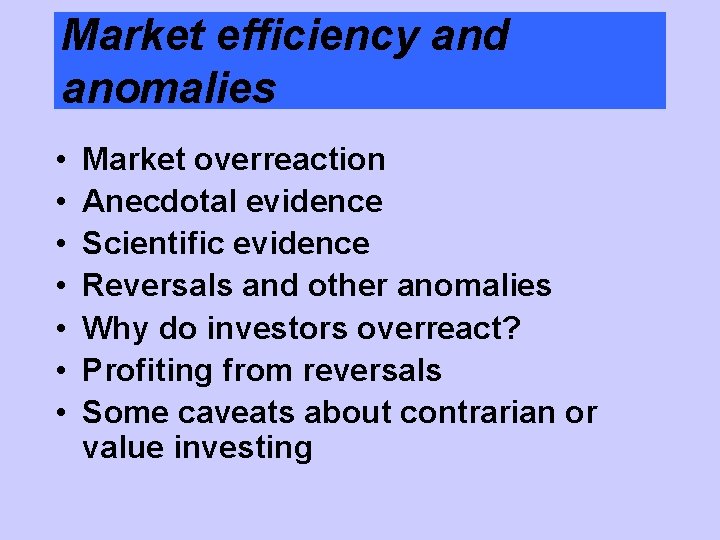
Market efficiency and anomalies • • Market overreaction Anecdotal evidence Scientific evidence Reversals and other anomalies Why do investors overreact? Profiting from reversals Some caveats about contrarian or value investing
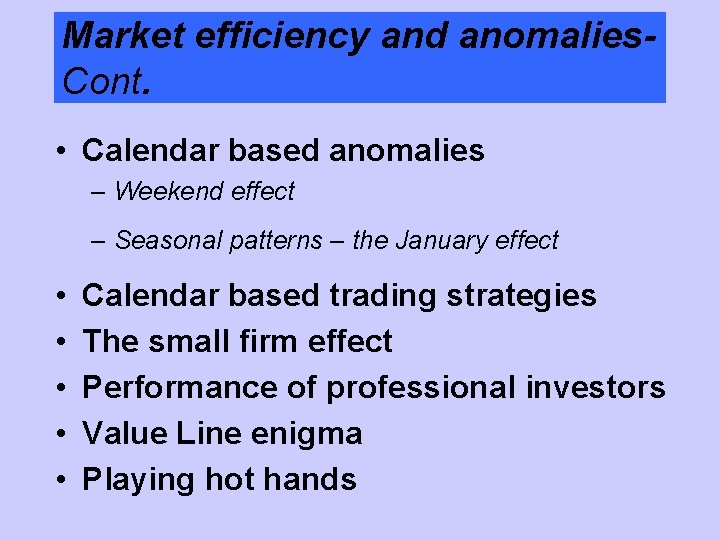
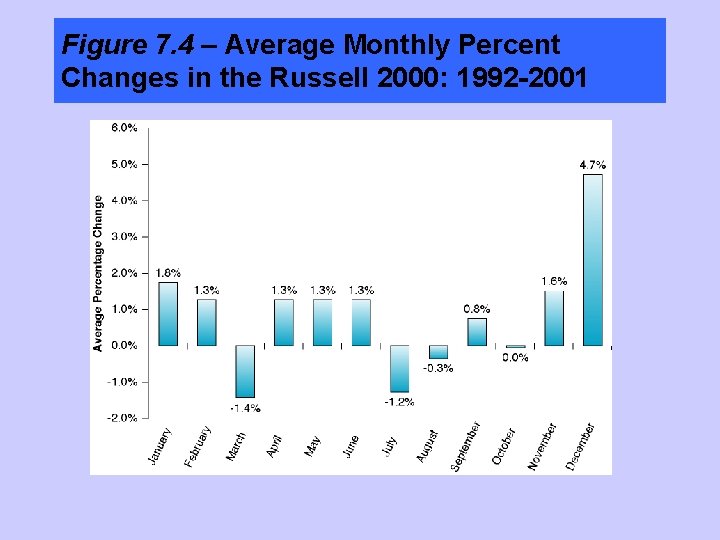
Market efficiency and anomalies. Cont. • Calendar based anomalies – Weekend effect – Seasonal patterns – the January effect • • • Calendar based trading strategies The small firm effect Performance of professional investors Value Line enigma Playing hot hands
Figure 7. 4 – Average Monthly Percent Changes in the Russell 2000: 1992 -2001
So, are the markets efficient? • Some evidence contradicts EMH • But much evidence supports EMH – Abnormal profits are rare