
Chapter 7 Lymphatic System and Immunity Points to
- Slides: 41
Chapter 7 Lymphatic System and Immunity
Points to Ponder • What is the connection between microbes and humans? • What are the parts of the lymphatic system and what are their functions? • What are the first and second line of defense in nonspecific immunity? • What is cell-mediated antibody- mediated immunity in the third line of defense? • What are the different types of B cells in these processes? • What is active and passive immunity? Be able to describe how they are different and examples of each. • Understand allergic reactions, tissue rejection and immune system disorders as problems that the immune system faces.
7. 1 Microbes, pathogens and you What about the interaction between microbes and humans? • Microbes are very abundant in the environment and as well as in and on our bodies • We use microbes to make many foods and we even use them to make drugs • Microbes are important as decomposers to recycle nutrients • Some microbes cause disease in humans, we call these pathogens
7. 1 Microbes, pathogens and you What are microbes? • Microbes are microscopic organisms and particles that include: – Bacteria – Viruses – Prions – Others (fungi, multicellular parasites, singlecelled protistans)
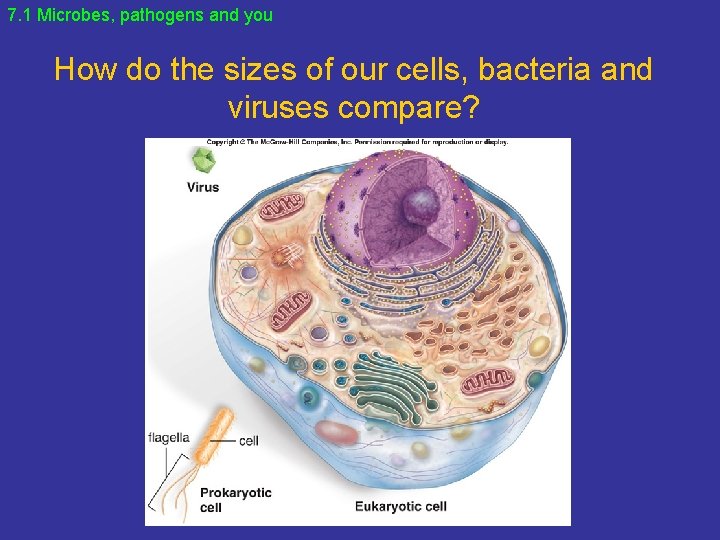
7. 1 Microbes, pathogens and you How do the sizes of our cells, bacteria and viruses compare?
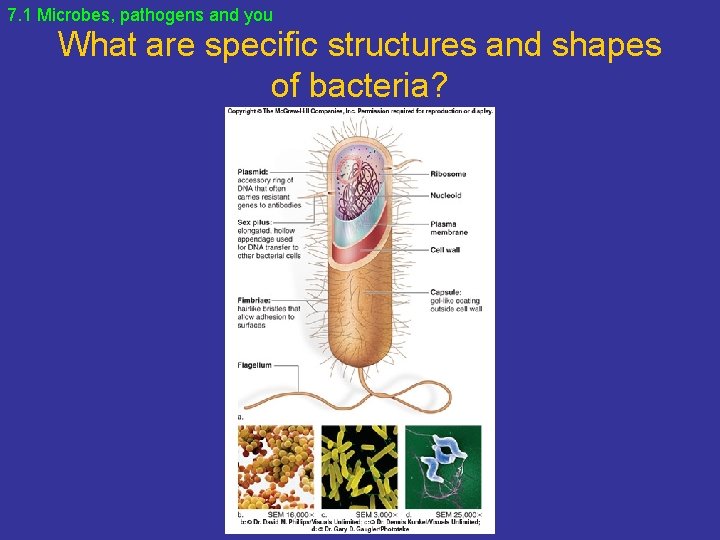
7. 1 Microbes, pathogens and you What are bacteria? • • • Prokaryotic cells Single-celled Almost all have a cell wall Have DNA in a single chromosome Have ribosomes Some have accessory rings of DNA called plasmids
7. 1 Microbes, pathogens and you What are specific structures and shapes of bacteria?
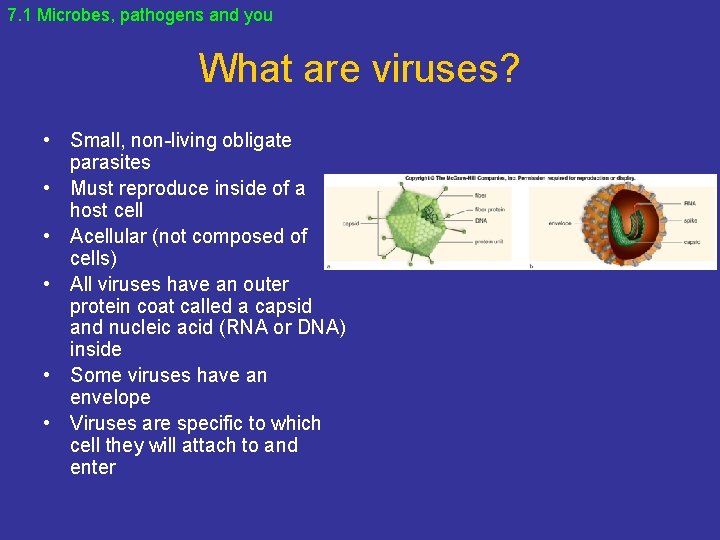
7. 1 Microbes, pathogens and you What are viruses? • Small, non-living obligate parasites • Must reproduce inside of a host cell • Acellular (not composed of cells) • All viruses have an outer protein coat called a capsid and nucleic acid (RNA or DNA) inside • Some viruses have an envelope • Viruses are specific to which cell they will attach to and enter
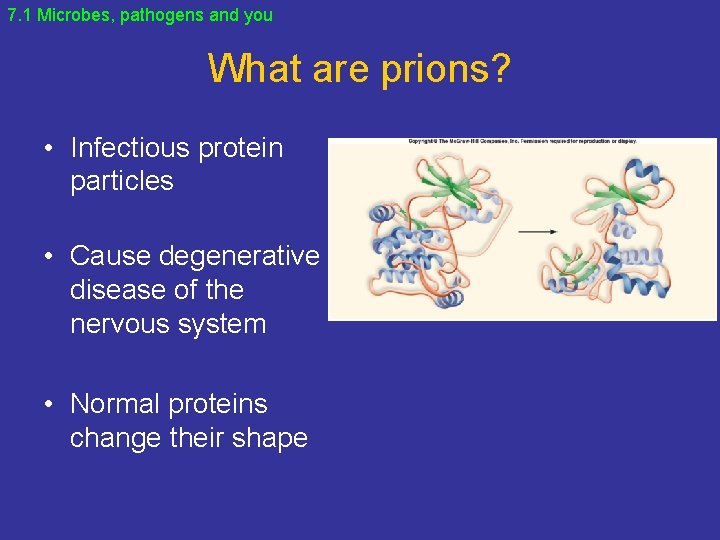
7. 1 Microbes, pathogens and you What are prions? • Infectious protein particles • Cause degenerative disease of the nervous system • Normal proteins change their shape
7. 2 The lymphatic system 4 functions of the lymphatic system • Lymphatic capillaries absorb excess tissue fluid and return it to the bloodstream • Lymphatic capillaries (lacteals) in the small intestine absorb fats associated with proteins • Works in the production, maintenance and distribution of lymphocytes in the body • Helps in defense against pathogens
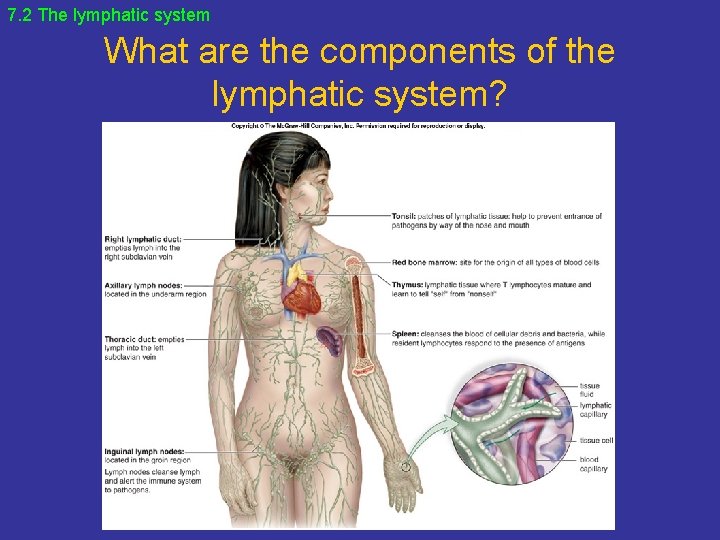
7. 2 The lymphatic system What are the components of the lymphatic system?
7. 2 The lymphatic system Lymphatic vessels • One-way valve system that carries fluid called lymph • Made of capillaries, vessels and ducts • Function to return tissue fluid (includes water, solutes and cell products) to the bloodstream • The larger vessels are similar in structure to veins and even have valves
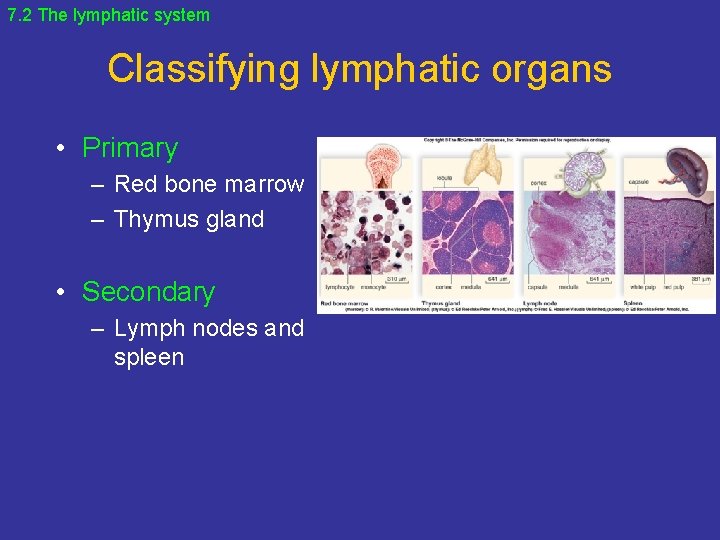
7. 2 The lymphatic system Classifying lymphatic organs • Primary – Red bone marrow – Thymus gland • Secondary – Lymph nodes and spleen
7. 2 The lymphatic system Primary lymphatic organs • Red bone marrow – Site of blood cell production – More bones in children have red marrow and it decreases as we age – Some white blood cells mature here • Thymus gland – Bilobed gland found in the thoracic cavity superior to the heart – Largest in children and shrinks as we age – Immature T lymphocytes move from the marrow to the thymus where they mature and 95% will stay
7. 2 The lymphatic system Secondary lymphatic organs • Lymph nodes – Small, oval-shaped structures found along the lymphatic vessels filled B cells, T cells and macrophages – Common in the neck, armpit and groin regions • Spleen – In the upper left region of the abdominal cavity – Filled with white pulp containing lymphocytes and red pulp is involved with filtering the blood
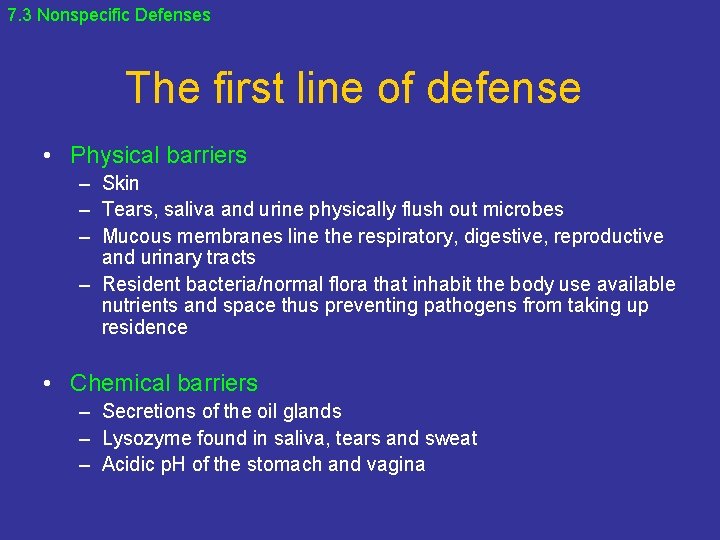
7. 3 Nonspecific Defenses What do the nonspecific defenses include? • First line of defense: – Barriers to entry: physical and chemical • Second line of defense: – Phagocytic white blood cells – Inflammatory response – Protective proteins: complement and interferons
7. 3 Nonspecific Defenses The first line of defense • Physical barriers – Skin – Tears, saliva and urine physically flush out microbes – Mucous membranes line the respiratory, digestive, reproductive and urinary tracts – Resident bacteria/normal flora that inhabit the body use available nutrients and space thus preventing pathogens from taking up residence • Chemical barriers – Secretions of the oil glands – Lysozyme found in saliva, tears and sweat – Acidic p. H of the stomach and vagina
7. 3 Nonspecific Defenses The second line of defense: Phagocytic white blood cells • Includes neutrophils and macrophages • Both leave circulation and move into tissue • Cells that are important in the inflammatory response
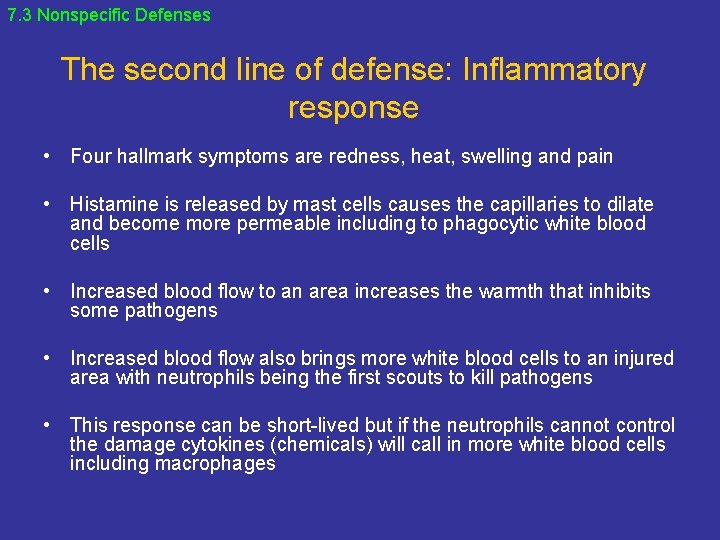
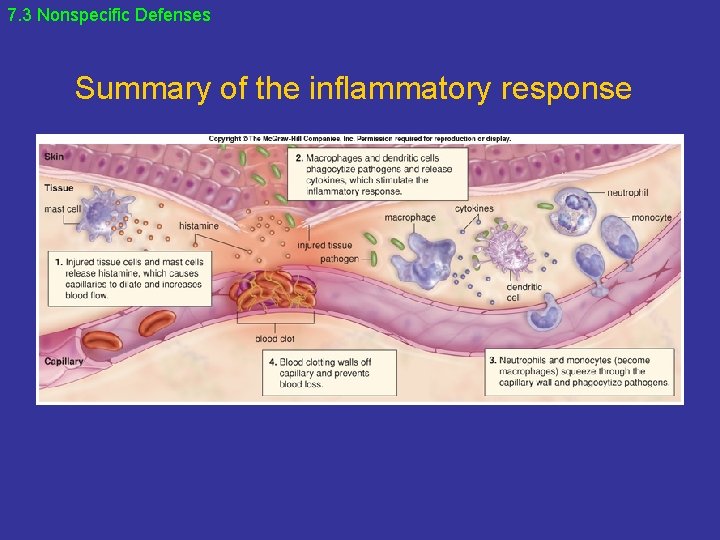
7. 3 Nonspecific Defenses The second line of defense: Inflammatory response • Four hallmark symptoms are redness, heat, swelling and pain • Histamine is released by mast cells causes the capillaries to dilate and become more permeable including to phagocytic white blood cells • Increased blood flow to an area increases the warmth that inhibits some pathogens • Increased blood flow also brings more white blood cells to an injured area with neutrophils being the first scouts to kill pathogens • This response can be short-lived but if the neutrophils cannot control the damage cytokines (chemicals) will call in more white blood cells including macrophages
7. 3 Nonspecific Defenses Summary of the inflammatory response
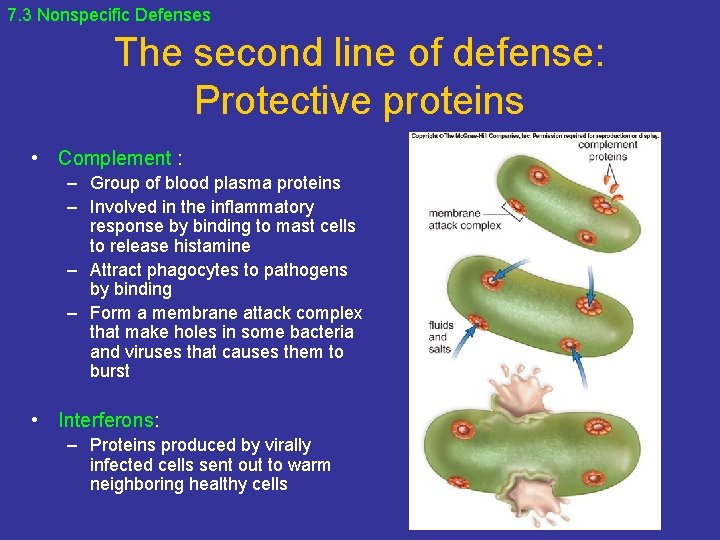
7. 3 Nonspecific Defenses The second line of defense: Protective proteins • Complement : – Group of blood plasma proteins – Involved in the inflammatory response by binding to mast cells to release histamine – Attract phagocytes to pathogens by binding – Form a membrane attack complex that make holes in some bacteria and viruses that causes them to burst • Interferons: – Proteins produced by virally infected cells sent out to warm neighboring healthy cells
7. 4 Specific Defenses What do the specific defenses include? • Third line of defense: – Helps protect us against specific pathogens when nonspecific defenses fail – Helps protect us against cancer – Depends on the action of B and T cells (remember that these are lymphocytes)
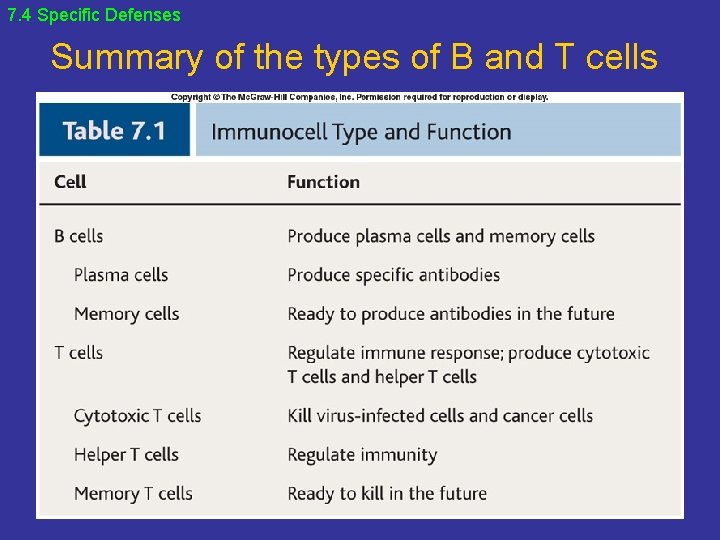
7. 4 Specific Defenses Summary of the types of B and T cells
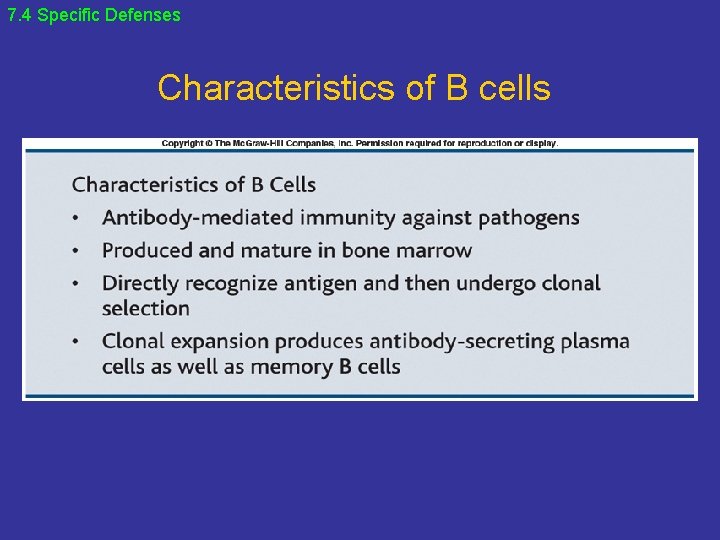
7. 4 Specific Defenses Characteristics of B cells
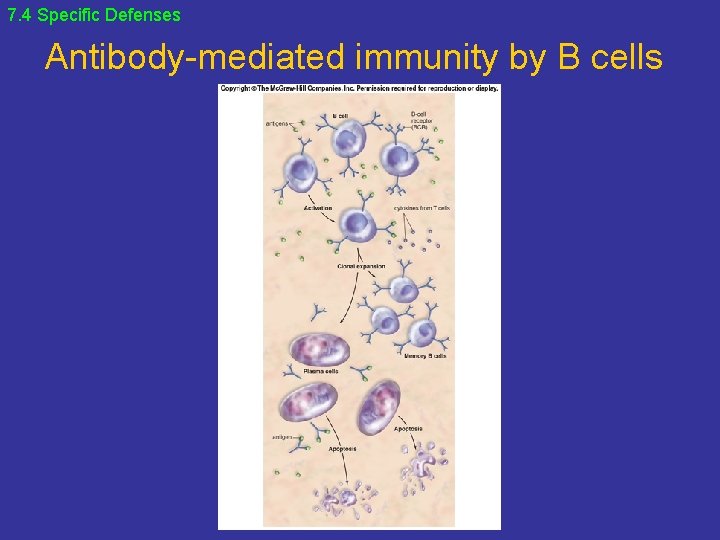
7. 4 Specific Defenses Third line of defense: Antibody-mediated immunity by B cells • Each B cell has a unique receptor called a BCR that binds a specific antigen • This binding and cytokines secreted by helper T cells result in clonal expansion in which this B cell makes copies of itself • Most of the cells produced are plasma cells that secrete antibodies • Other cells become memory cells which result in long-term immunity • After an infection has passed plasma cells undergo apoptosis (programmed cell death) leaving memory cells
7. 4 Specific Defenses Antibody-mediated immunity by B cells
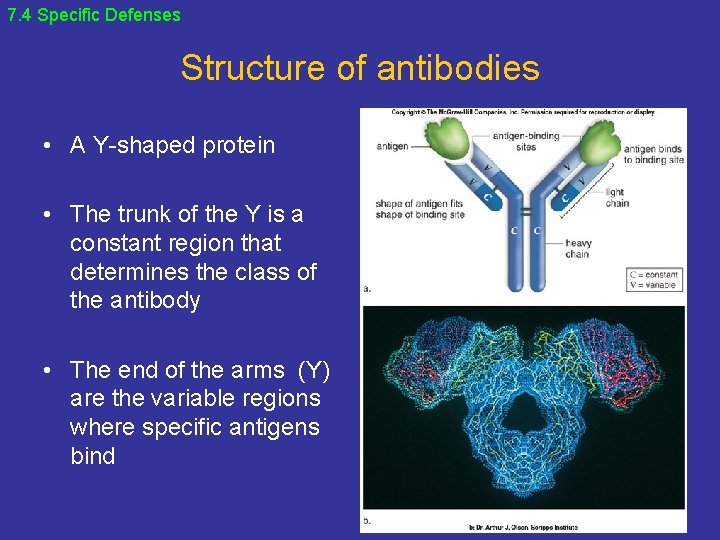
7. 4 Specific Defenses Structure of antibodies • A Y-shaped protein • The trunk of the Y is a constant region that determines the class of the antibody • The end of the arms (Y) are the variable regions where specific antigens bind
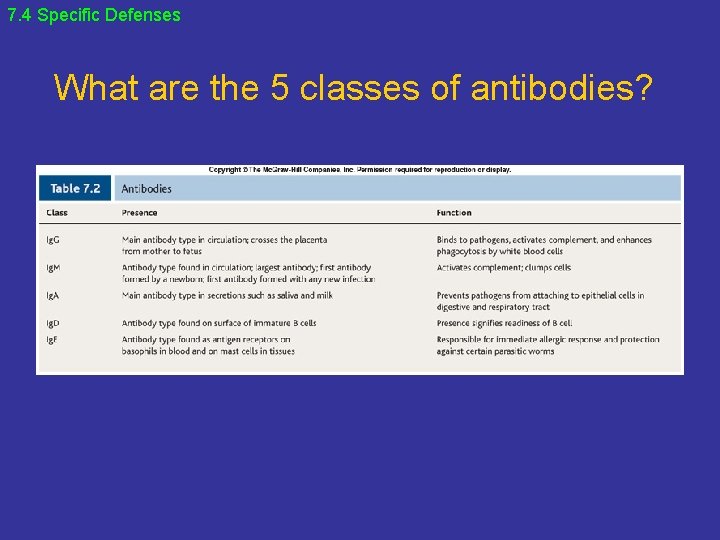
7. 4 Specific Defenses What are the 5 classes of antibodies?
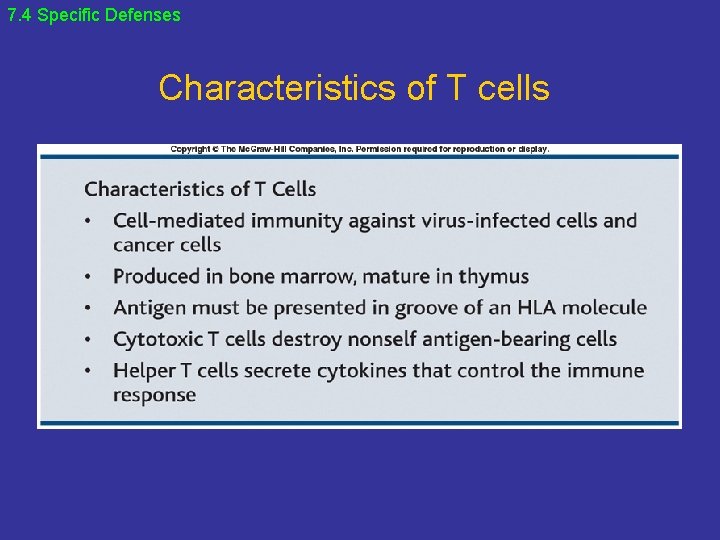
7. 4 Specific Defenses Characteristics of T cells
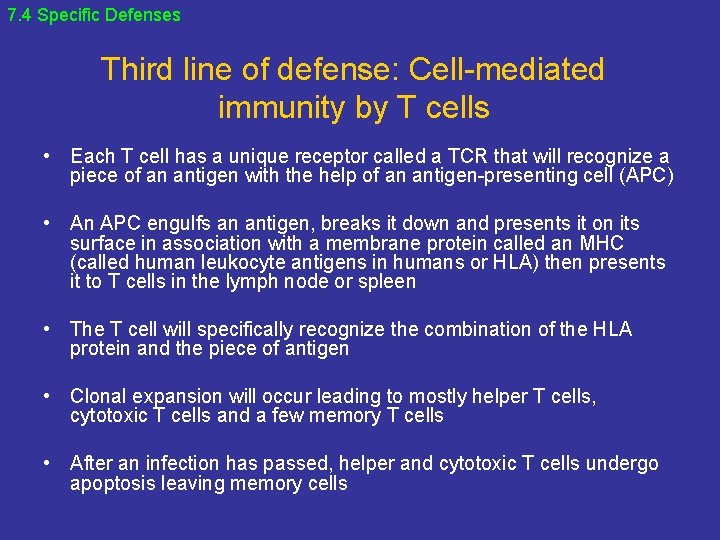
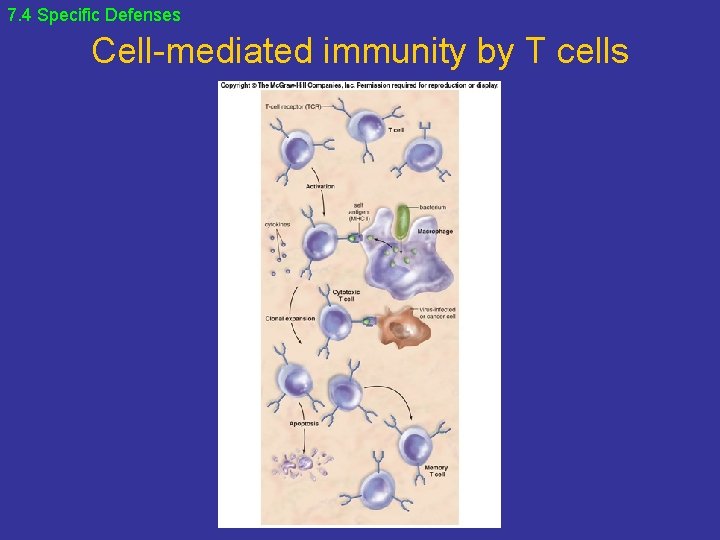
7. 4 Specific Defenses Third line of defense: Cell-mediated immunity by T cells • Each T cell has a unique receptor called a TCR that will recognize a piece of an antigen with the help of an antigen-presenting cell (APC) • An APC engulfs an antigen, breaks it down and presents it on its surface in association with a membrane protein called an MHC (called human leukocyte antigens in humans or HLA) then presents it to T cells in the lymph node or spleen • The T cell will specifically recognize the combination of the HLA protein and the piece of antigen • Clonal expansion will occur leading to mostly helper T cells, cytotoxic T cells and a few memory T cells • After an infection has passed, helper and cytotoxic T cells undergo apoptosis leaving memory cells
7. 4 Specific Defenses Cell-mediated immunity by T cells
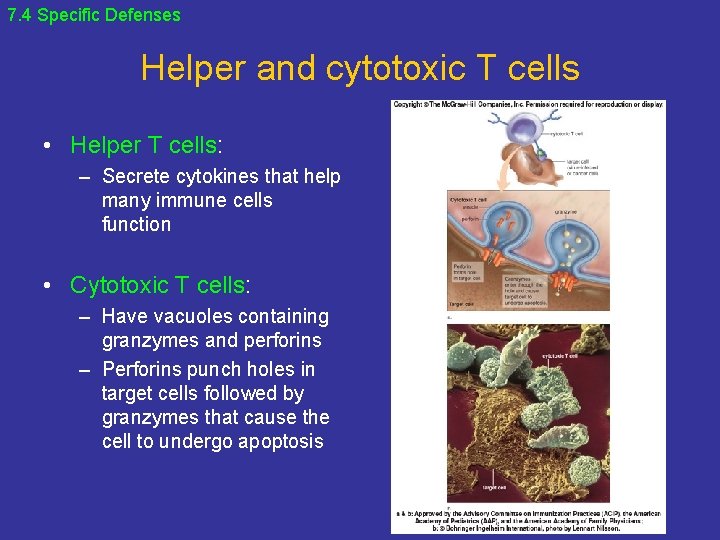
7. 4 Specific Defenses Helper and cytotoxic T cells • Helper T cells: – Secrete cytokines that help many immune cells function • Cytotoxic T cells: – Have vacuoles containing granzymes and perforins – Perforins punch holes in target cells followed by granzymes that cause the cell to undergo apoptosis
7. 5 Acquired immunity Immunity • Is the ability to combat diseases and cancer • Can be brought about naturally through an infection or artificially through medical intervention • There are two types of immunity: active and passive
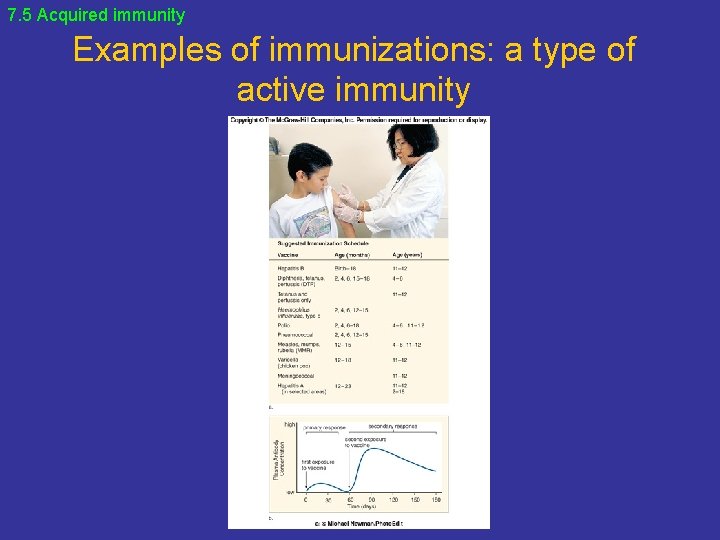
7. 5 Acquired immunity Active immunity • The individual’s body makes antibodies against a particular antigen • This can happen through natural infection or through immunization involving vaccines • Primary exposure is shorter-lived and slower to respond while a secondary exposure is a rapid, strong response • This type of immunity is usually long-lasting • It depends on memory B and T cells
7. 5 Acquired immunity Examples of immunizations: a type of active immunity
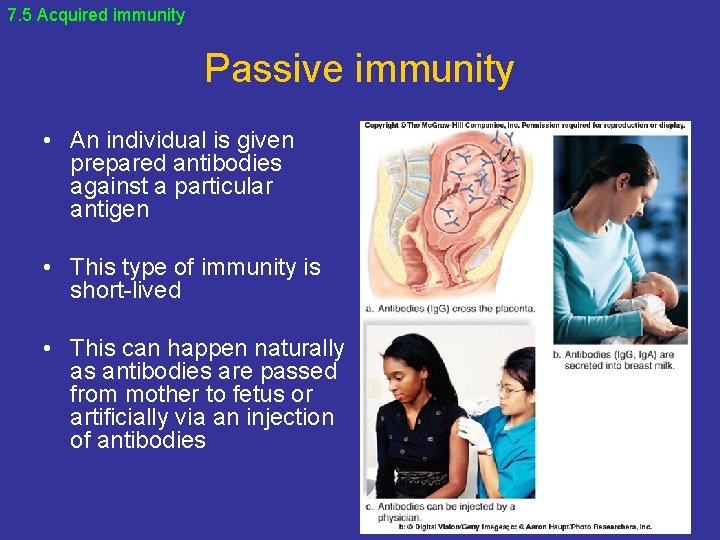
7. 5 Acquired immunity Passive immunity • An individual is given prepared antibodies against a particular antigen • This type of immunity is short-lived • This can happen naturally as antibodies are passed from mother to fetus or artificially via an injection of antibodies
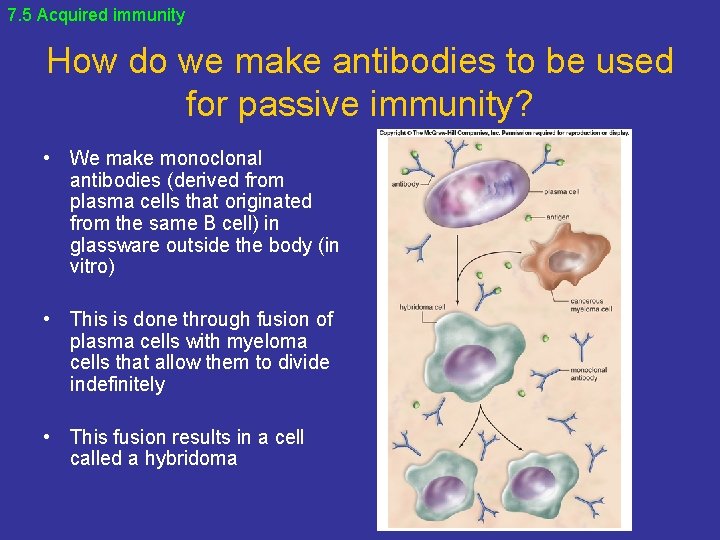
7. 5 Acquired immunity How do we make antibodies to be used for passive immunity? • We make monoclonal antibodies (derived from plasma cells that originated from the same B cell) in glassware outside the body (in vitro) • This is done through fusion of plasma cells with myeloma cells that allow them to divide indefinitely • This fusion results in a cell called a hybridoma
7. 6 Hypersensitivity reactions How can the immune system react that maybe harmful to the body? • Allergies • Tissue rejection • Immune system disorders
7. 6 Hypersensitivity reactions Allergies • Hypersensitivities to harmless substances such as pollen, food or animal hair • An immediate allergic response is caused by the Ig. E antibodies that attach to mast and basophils. When allergens attach to these Ig. E molecules histamine is released and we see allergy symptoms. • A immediate allergic response that occurs when the allergen enters the bloodstream is anaphylactic shock in which the blood pressure drops and is life-threatening • Delayed allergic responses are initiated by memory T cells such as seen with poison ivy
7. 6 Hypersensitivity reactions Tissue rejection • This can occur when cytotoxic T cells respond to tissue that is not recognized as “self” tissue • This can be controlled by giving patients immunosuppressive drugs and by transplanting organs that have the same MHC proteins in the donor and recipient • Currently we are trying to grow organs in the lab that can be transplanted with less rejection
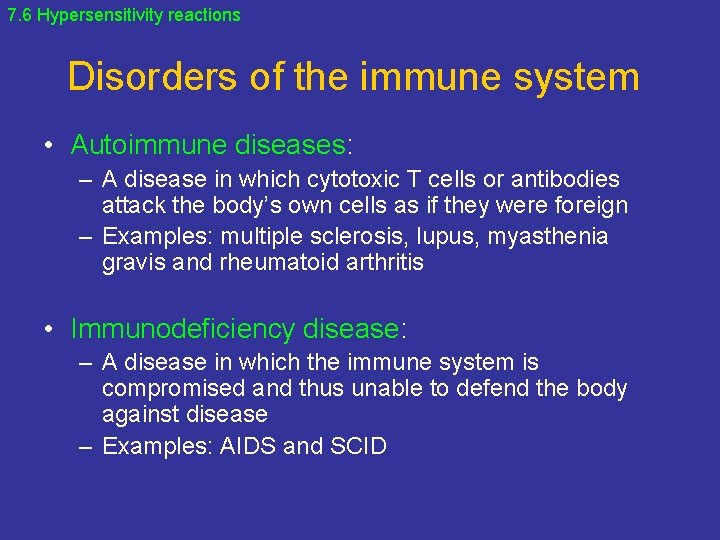
7. 6 Hypersensitivity reactions Disorders of the immune system • Autoimmune diseases: – A disease in which cytotoxic T cells or antibodies attack the body’s own cells as if they were foreign – Examples: multiple sclerosis, lupus, myasthenia gravis and rheumatoid arthritis • Immunodeficiency disease: – A disease in which the immune system is compromised and thus unable to defend the body against disease – Examples: AIDS and SCID